Leaders Never Fully Ripen
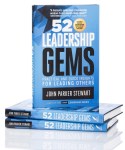
 Gem #11 entitled, “When You’re Green You Grow. When You’re Ripe You Rot” in 52 Leadership Gems: Practical and Quick Insights For Leading Others by John Parker Stewart reminded us that when we quit learning and growing we become like an over-ripe apple and rot. This is an interesting topic because we do not want to just continue to be a green apple that has not ripened in certain areas and is not good for anything, but we do not want to ever take the attitude we have arrived – or ripened, so to speak – and we have nothing else to learn. I believe we need to look at this in terms of having “green apple” traits and “ripe apple” traits. We will always have those things, “green apple traits,” that we need to work on, grow and mature in, and develop. In other words we need to be participating in our own personal and professional growth to ripen. What we do not want to do is just be content to fully ripen where we are. Personally, I do not ever want to quit learning, or arrive.
“Look for ways to improve any aspect of your capabilities and skills. Stay fresh and green. Like good fresh apples, you will be in high demand.” ~ John Parker Stewart
 How sad is it that I have literally heard people say, “I have many years experience and am old enough that I don’t need to participate in professional development activities”? I guess these people think time is standing still, but really they are becoming over-ripe rotten apples. Being a leader means being willing to continually grow and develop. If we don’t want to become over-ripe we must develop our insights about ourselves and our areas for growth.
Servant Leadership; Not Just Cliche`
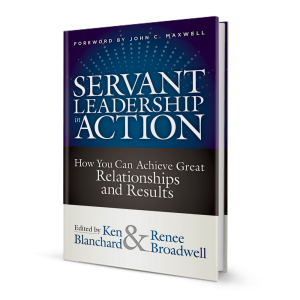
 Servant Leadership in Action: How You Can Achieve Great Relationships and Results by Kenneth H Blanchard
My rating: 5 of 5 stars
I began reading Servant Leadership in Action from a somewhat jaded view. It had seemed to me that the term and thought of servant leadership has become somewhat of just a cliche`. I have watched leaders become doormats in the guise of being a servant leader. Or poor leaders making the excuse of not producing because of being a servant leader. This book reminds us that servant leadership is about influence and action and not just cliche`. My favorite thing about this book is all the great leaders that Ken Blanchard had write chapters, or really essays, that are collected in the book. I have read most, if not all, of the books by many of the chapter authors in this book. It is a great review of many of the great leaders of our time. We are guided through how to truly be a servant leader to those we serve. We are taught that servant leadership is about relationships and a desire to lift up those around us. Great leaders, we are reminded, are always looking for ways to develop and advance those in their organizations. This book is designed in six sections to help us understand how to do this. Additionally we are given exemplars that have been lifted up as the models for servant leadership. If you want to do more for the people you serve and care more about people, then read this book to learn how to empower them to use common sense and good judgment. you want to start catching people doing the right things, and great things, read this book!
~Dr. Byron L. Ernest
Empowering To Pull Together
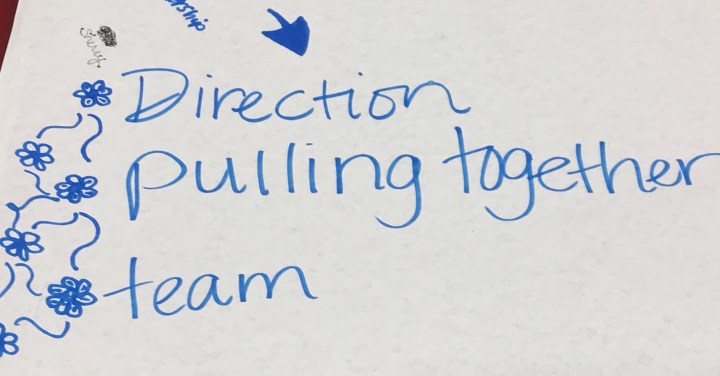
 This past week during our 3D Leadership gatherings a theme kept coming out about empowerment and having everyone pulling together. We talked about this and that empowerment does not just mean making sure everyone is doing something. So many times we, as leaders, fall into the trap of getting wrapped up in our own things and we forget that true empowerment means making sure everyone understands the vision, is pulling in the same direction, and have had the skills developed to do the right things and do things right. There must be a common language and a common approach, which helps to communicate the goals and objectives and create a winning culture, with increased teamwork and ensures that we are all pulling in the same direction.
 I believe in a more distributed leadership model. This model secures team members’ full participation in the organization’s or school’s decision-making processes, promotes meaningful collaboration and harmonious work relations, generates passion for accomplishing goals, and boosts student and teacher productivity. I was reminded of how powerful this is in Gem #8 entitled “People Tend To Support What They Create” in 52 Leadership Gems: Practical and Quick Insights For Leading Others by John Parker Stewart. In this lesson Stewart reminded us that creation is a pervasive instinct for we humans. So, we naturally become much more engaged when we have a part in creation of programs, processes, procedures, and policies. I really believe this is why I loved teaching so much. This is what it is like in an effective classroom with students. It should be that way in a well run school or organization too.
Done properly, team members take leading roles, assume responsibility, and act independently as individuals or groups. The thing I really like about a more distributed model is that it promotes the staff’s full participation in key decision-making and implementation processes and also makes them accountable. But, it does require us, as the leader to serve as both chief coordinator and evaluator of processes and results. In other words, we need to be in the boat rowing 🚣♀️ too.
How can you help your team become involved in decision making and creation?
Leading Like Billy Graham
 With the passing of the great leader, Billy Graham, this week I feel compelled to reflect on what made him a great leader. It just so happened I was in Charlotte, North Carolina working with school leaders and teachers this week and had the opportunity to go to the Billy Graham Library, pay my respects, and reminisce about growing up with Billy Graham on our television set.
 I grew up watching Billy Graham while sitting beside my dad on the couch in our living room. Growing up in a rural Christian home, we could relate to the teachings of this North Carolina man who, as his daughter has described him, was always a farmer at heart. Little did I know at the time I was witnessing one of the greatest leaders that would ever walk the earth (besides Jesus, of course) for 99 years. Also, little did I know he was teaching me to lead like Jesus.
It has been said that there are three very important questions that leaders must answer:
- Who am I?
- Who do I want to be?
- How do I make a difference in the greater world and bring influence to others?
Certainly, Billy Graham modeled answering these three leadership questions for us. There was never any doubt who Billy Graham was. He believed in Jesus, told the stories of Jesus, and that was who he was. He led with integrity because who he was on the outside was who he was on the inside, period. That was who he was and who he wanted to be. Bottom line: he wanted everyone to know Jesus, and that was that. As we would say today, “drop the mic!”
 Furthermore, as a believer in the idea that leadership is influence, I am not sure you could name me anyone else who has influenced more people in a life span, other than Jesus of course. This morning as I was studying the day’s tweets, I came across one from Billy Graham’s daughter, Anne Graham Lotz. She had written a tribute to her dad, “Daddy Is Home.” Needless to say, I was inspired. Click here to read it, because you’ll be inspired too.
A sentence Anne wrote in the statement really stood out to me. She said, “While he may be physically absent and his voice silent, I am confident that his message will continue to reverberate throughout the generations to come.” Wow! If leadership is influence, then this says it all. Even after passing, Billy Graham’s influence of changing the world and influencing others lives on. Powerful!
“While he may be physically absent and his voice silent, I am confident that his message will continue to reverberate throughout the generations to come. My prayer on this day of his move to Our Father’s House is that his death will be a rallying cry. That tens of thousands of pastors, teachers, evangelists, and ordinary men and women will rise up to take his place. That they will take up his message like a baton being passed in a relay race and faithfully pass it on to those with whom they come in contact. Because Daddy’s message is God’s message. And it’s a message of genuine hope for the future, of love for the present, of forgiveness for the past.” ~ Anne Graham Lotz
We all look for leaders who can appreciate our vulnerability and inspire us, understand us, support us, and guide us through looming chaos. We are inspired and influenced when this happens. As leaders, we need to understand who we are, why we are doing something, and be clear about about our own core values and goals when applying our skills of influence. That way, influence comes from a place of authenticity and has the greatest impact. Remember, to be truly influential, we need to be the same person on the outside that we are on the inside.
Leadership Algorithms
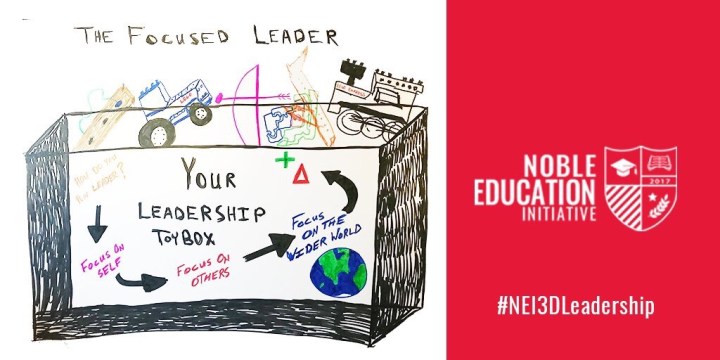 This past Tuesday I facilitated a gathering of our South Carolina 3D Leadership Program cohort. The through line was “Your Leadership Toy Box.” The idea was to use toys to discover ways to be focused leaders. At the beginning of the gathering I had each participant grab a toy and answer the question of how the toy they chose represented leadership. Participants were given 10 minutes to prepare a response in any format they chose. Needless to say, the responses were awesome, inspiring, and most importantly – FUN!
 One of the toys chosen was a Rubik’s Cube. As was the plan, this toy caused a lot of reflection, and even more for me after the participant reported out. Click below to watch the video of her presentation: Leadership Algorithms. It’s awesome!
Her reflection really got me to thinking about leadership and education. I thought about how this game reveals lessons that we all face as educators and leaders. Every year, we encounter and solve challenges that must be addressed on several levels, just as the Rubik’s Cube must be solved side by side and layer by layer. Every day teachers make decisions before, during, and after classroom lessons to successfully engage students and lead the learning process, maneuvering through numerous machinations to address diverse learning styles and skills. This is what teacher leaders do. School leaders must search for ways to enable continual school improvement, which requires school leaders to study, plan, implement, analyze, react, and adjust throughout the decision-making and implementation processes. These are the same skills and actions necessary to conquer the Rubik’s Cube.
So what did we learn from the Rubik’s Cube algorithms? Leadership requires us to step back from time to time and re-assess the situation in order to move forward. Successful leaders are continually convening the team to assess and re-assess processes in order to improve. We also learned that making one twist of the cube leads to multiple changes on the cube. When we make changes as leaders, we have to understand there is a ripple effect that affects the team and the organization. Leadership is so much like the Rubik’s Cube because to be a successful leader, we must think several moves ahead of the one we are actually working on. In talking to those who have solved the Rubik’s Cube, they tell me you have to think ahead and there are algorithms. What is your leadership algorithm?
The Servant Leadership: Self-Esteem Connection
 The Servant Leadership: Self-Esteem Connection
By Ken Blanchard
Originally Appeared on the Ken Blanchard Companies Blog
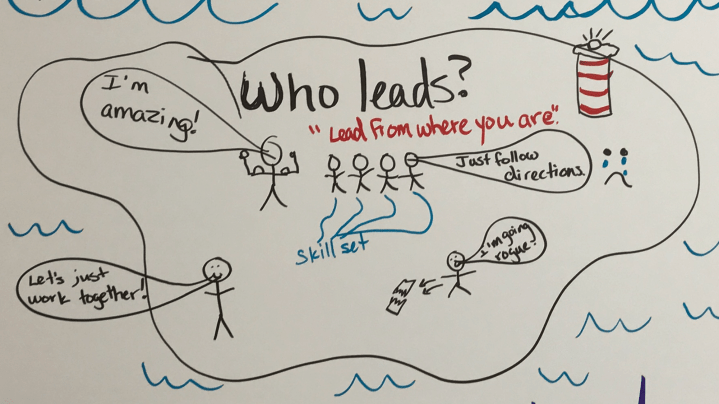
Servant leadership is best described as an others-focused form of leadership. It’s not an easy model to follow for leaders who believe in commanding and controlling their people—but it is easy for leaders with high self-esteem. Such people have no problem giving credit to others. They have no problem listening to other people for ideas. They have no problem building other people up. They don’t see praising others as a threat to themselves in any way. People with high self-esteem buy into the ancient Chinese philosophy of Lao Tzu:
“A leader is best when people barely know he exists; when his work is done, his aim fulfilled, they will say, ‘We did it ourselves.’”
Leaders who place themselves in the center of the universe and think everything must rotate around them are really covering up not-okay feelings about themselves. This is an ego problem that manifests as either fear or false pride. When you don’t feel good about yourself, you have two choices. You can either hide and hope nobody notices you, or you can overcompensate and go out and try to control your environment. I think people who feel the need to control their environment are just scared little kids inside.
I learned from the late Norman Vincent Peale that the best leaders combine a healthy self-acceptance with humility. Norman liked to say, “Leaders with humility don’t think less of themselves—they just think about themselves less.” To me, this approach sounds like a great way to begin for an aspiring servant leader.
Coaching and Self-Esteem
To me, servant leadership is a good way to describe the role that managers are expected to play today to help their people win. Judging and evaluating people erodes their self-esteem, but servant leadership builds self-esteem and encourages individual growth while attaining the organization’s objectives.
Servant leadership is something people need. Leaders need to support and help individuals in the organization to win. The days of the manager being judge, jury, and critic are over. Today, a manager needs to be a cheerleader, facilitator, and listener. Managers who are servant leaders are the ones most likely to achieve both lasting relationships and great results.
**************************************************************************************
 More about Ken Blanchard
Ken Blanchard is a best-selling business author with over 21 million books sold. His newest book, Servant Leadership in Action, is being released on March 6. Ken is also hosting a free Servant Leadership in Action Livecast on February 28 featuring more than 20 authors, CEOs, and thought leaders speaking on the topic. Learn more here!
 Byron's Babbles
leave a comment