Leading Like Yeast
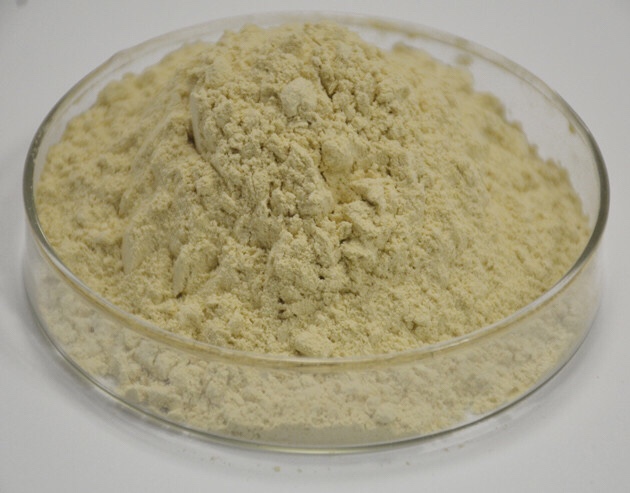 During my personal growth time this morning I was reading more in the great book, Leading Like Madiba: Leadership Lessons From Nelson Mandela by Martin Kalungu Banda. In the passages I was reading this morning Kalungu-Banda used the metaphor of leaders being like yeast saying, “Inspirational leaders are like yeast that permeates ordinary flour and water, making them rise into a good dough. This is a lot of what leadership is about: imperceptibly raising others to realise their own greatness and the esteem they deserve. A lot of the effect is gained simply by listening to people with respect.” Is that not awesome and so true!
“Inspirational leaders are like yeast that permeates ordinary flour and water, making them rise into a good dough. This is a lot of what leadership is about: imperceptibly raising others to realise their own greatness and the esteem they deserve. A lot of the effect is gained simply by listening to people with respect.” ~ Martin Kalungu Banda
This got me to thinking about the yeast we feed in our dairy herd. Yeast is a simple single-cell fungus. That is why I love Kalungu-Banda’s metaphor. As leaders, we are all pretty simple human beings but by creating the right environment we can do great things. The yeast that we usually mean in the context of food and livestock feed is the species named Saccharomyces cerevisiae. Saccharomyces cerevisiae has been used by man for millennia to produce alcoholic beverages, including beer and most spirits, and to enable bread to rise during the baking process.
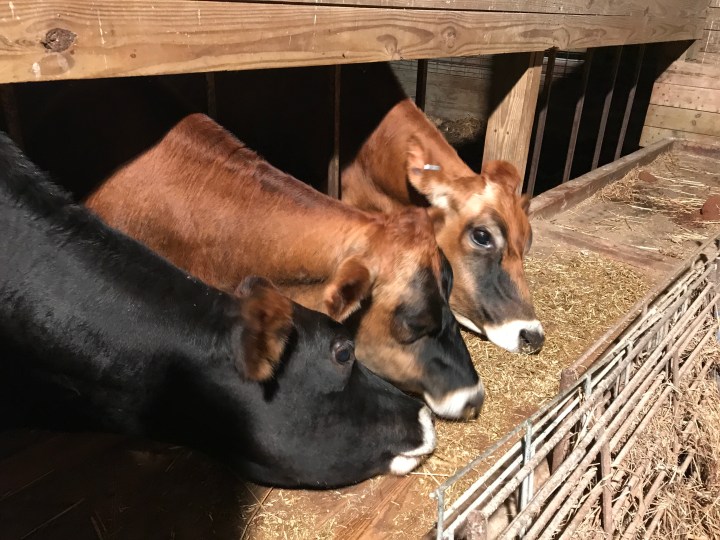 During the early 1980’s when I went to Purdue University and was getting my Animal Science Degree, we were just beginning to research the use of yeast in ruminant (cattle are a ruminant – meaning four compartment stomach) feeds. The research being done was on the effect of yeast culture on ruminant production and rumen microbial metabolism. Effects on production were always small, which led to many questioning their statistical validity. The reported effects on rumen metabolism often seemed unrelated: Stabling pH, improved fibre digestion, lower lactate concentrations, altered fermentation product proportions in favour of propionic acid, lower methane emission, increased concentrations of cellulolytic bacteria, increased concentrations of cellulolytic bacteria, lower soluble sugar concentrations, decreased ammonia concentrations, all by the supplementation of a few grams of yeast to a cow with a rumen volume of 100-150 liters. Thus, if yeast could maintain a more stable, neutral pH, ruminal micro-organisms would be healthier: healthier ruminal micro-organisms lead to a more productive animal. Remember, this is all with only a few grams of yeast.
Therefore, I would add to Kalungu-Banda’s use of yeast as a metaphor and say that by just doing the right small things can create an environment where people can grow and flourish. When studying the effectiveness of yeast culture we needed to understand yeast’s mode of action at the molecular and cellular level. Sound like leadership?
Leaders develop their team members. They serve as the yeast by helping the team members gain new skills to help the team increase its ability to reach the organization’s goals. One important skill the leader teaches the team is leadership. Just like yeast, we need to be doing the little things that might seem like much, but will have big effects on those we serve and our organization. Are you leading yeast?
Applying A Little Heat
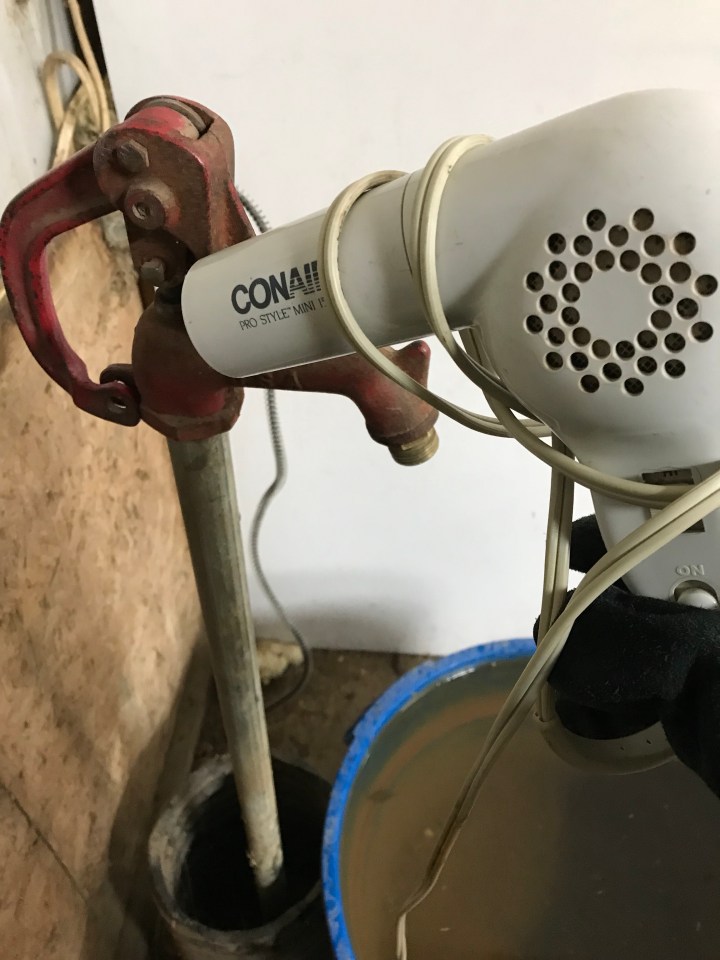 This morning, I walked to the barn to do the morning feeding and the thermometer 🌡 read 4 degrees Fahrenheit. I don’t mind the cold, but I always have to be cognizant that many things don’t work right, or at least need a little help to work right in this kind of weather. One of those things are frost free water hydrants.
For those who don’t know what that is, it is a water hydrant (pictured here) that is buried below the frost line and is designed so the on/off valve is at the bottom below the freezing point. Then when the water is turned off the water in the pipe drains down and out, and amazingly, no frozen water line. These are a great farm invention. They do, however, get a little moisture built up around the mechanism at the top for turning the water on and off.
Actually they are designed to withstand pulling the handle and turning them on, but I am always nervous in this kind of weather doing that. As we all know, things just have a way of going wrong in sub-freezing temperatures. Our way of mitigating this is to take a small hair dryer and running it for about 30-60 seconds on the valve. This small amount of heat makes it work perfectly – like it was 80 degrees out.
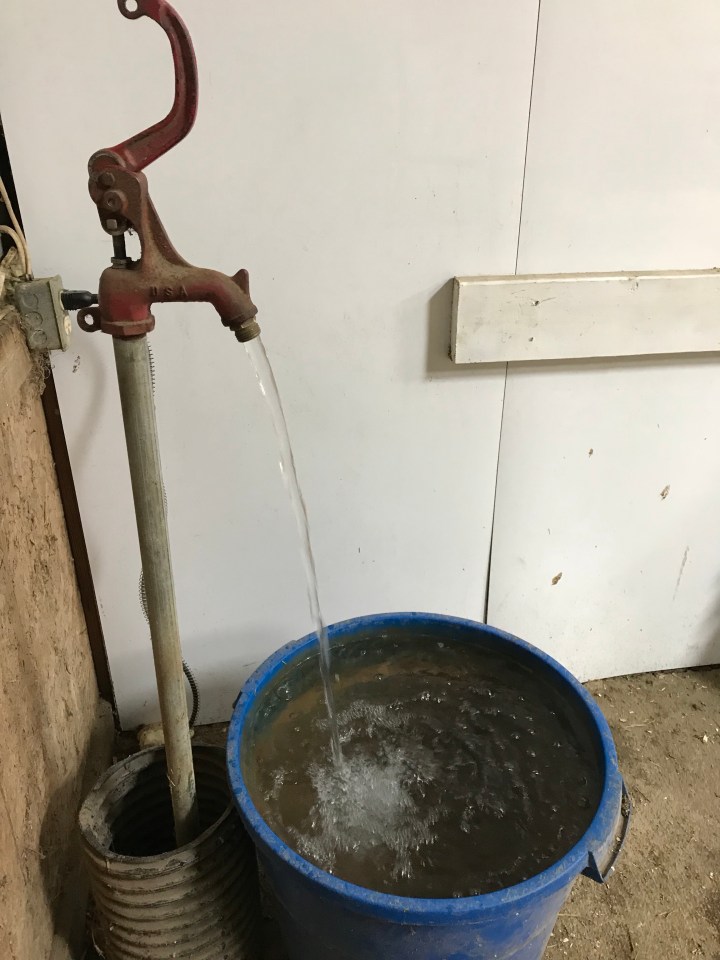 This morning, as I was doing this, I was reminded how a little heat being applied is good for all of us. I have always said that the best way to learn and grow is to be doing/trying something that causes a little fear. In fact I have blogged about it several times in: Leadership Lessons Of Mt. St. Helens, Telling Your Leadership Story, and Finding Your Leadership Voice just to mention a few.
As leaders we need to make sure we are enabling our team members to experience growth through real time projects and responsibilities that will, at times, cause a little “heat” and “pressure” to grow. The most effective leaders create unique experiences for themselves and others by taking calculated risks that put them and team members into situations that challenge their thinking, expand their perspective, make them feel vulnerable, and enable them to mature throughout the process.
Now, I am not saying throw yourself or your colleagues to the wolves. I am saying to act as the “hair dryer” I have used as the metaphor for this post and apply a little heat for growth to occur. This will allow us and those we serve to take key learnings from each of these experiences and apply them to similar circumstances we may be faced with. One of the ways I have learned to do this effectively is with task forces. Task forces gives teams of individuals a chance to form a community and create something for the organization.
The heat has been applied in my own personal life from being involved in turning schools around. Turnaround work can be one of the most thrilling and challenging adventures you can experience. Let me tell you, the “hair dryer” is pretty powerful and on high at all times. Turning around a struggling or failing situation teaches us to maximize the full potential of opportunities present in any situation and stretch the individual capabilities of ourself and other people. We learn that there is always a way out and forward when there is an effective use of tools, resources, people, and money.
So, instead of letting a little heat, pressure, or fear intimidate us; let’s welcome and embrace it. Remember, sometimes a little heat from the “hair dryer” can be good for us all.
Leading From The Tractor Seat
 I like to tweet out pictures from when I am sitting in my favorite chair – the tractor seat. As a leader I sit in a lot of seats, but I have to say, as the eternal farm kid, the tractor seat is my favorite. On this beautiful Christmas morning, I tweeting a sunrise picture from the tractor cab and some pictures spreading manure. Yep, even on Christmas morning there was work to be done and I loved every minute of it.
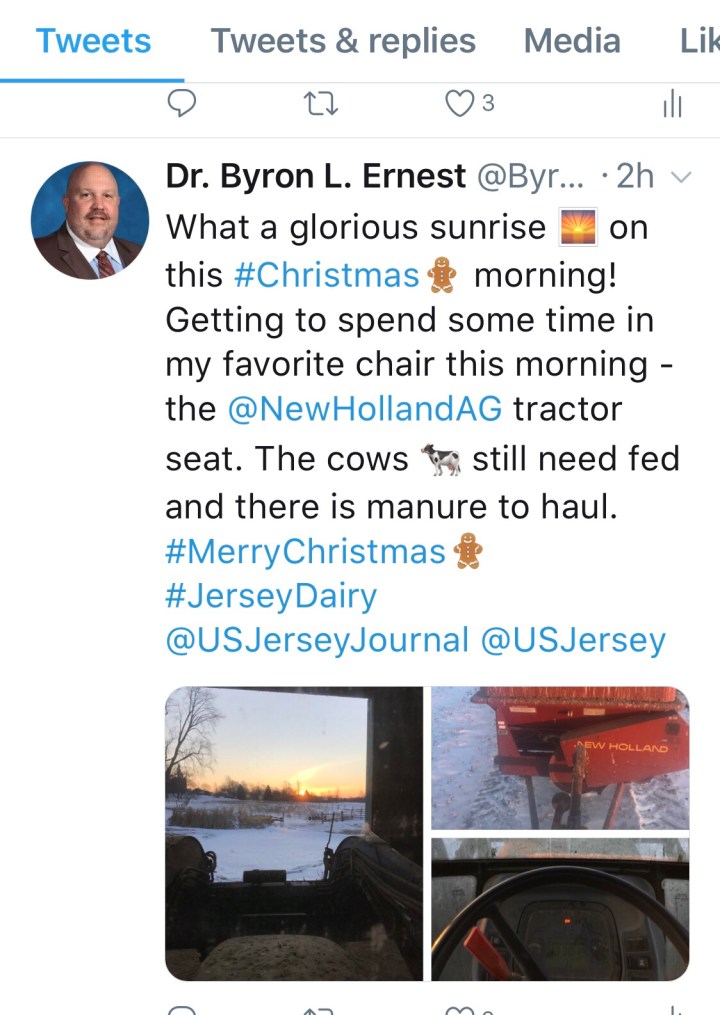 It got me to thinking about the leadership lessons available in a tractor cab. So, as a New Holland tractor guy I am going to use the New Holland cab for the metaphor. Here is what New Holland says about my tractor cab: “Ultimate comfort with the VisionViewTM cab designed around the operator’s needs” (from http://agriculture1.newholland.com/eu/en-uk/about-us/whats-on/news-events/2017/new-holland-launches-new-t5-tractor-range ). Think about that statement to start with. Aren’t we as leaders supposed to provide those we serve comfort and provide for their needs?
 So, the description on the web went on to say the following (I am going to add in my leadership thoughts): The spacious VisionView cab provides outstanding all-round visibility, – as leaders we need to see everything from 30,000 foot, 10,000 foot and from the balcony – which has been further improved by the new single wiper blade with 200-degree movement – we need obstructions removed and those we lead to tell everything, whether good or bad – and extra wide-angle mirrors. – it is important to take a look at what has been done (lagging indicators) and know we are getting the job done right. While we should all leverage our strengths and seek out others whose strengths complement ours, we also need to practice new behaviors where we have identified blind spots. – For loader operation, a roof hatch can be specified to provide unrestricted view on the raised arms. – all leaders need not assume that position equals influence but instead to enter a meeting with a clean slate and make your observations from an unobstructed view. Remember that nearly every great leader was once a typical employee sitting in meetings with bosses and coworkers.
All the controls in the cab are ergonomically laid out, while many elements are adjustable to create a comfortable work station tailored to the operator. – Leaders who get to know their employees are better able to tailor recognition efforts and personalize the experience to the individual.Leaders who get to know their employees personally can tailor the ways for personal professional growth. The instrument cluster moves in conjunction with the fully tiltable steering column, ensuring a permanently unobstructed view. – in terms of vision, it’s being able to sense what’s going on in the world, see the unexploited opportunities and lurking dangers, and use that to figure out what to focus on and what not to focus on. – The IntelliViewTM IV touch screen monitor puts the operator in control of all the main parametres. I always say that the most important decision I make as a leader is “what to have my hands on” or “what to have my hands in.”
A choice of seats is available, offering varying degrees of comfort all the way up to the deluxe air-suspension version, as well as a full-sized instructor seat. – it is great to have someone sitting alongside us learning. My son learned to bale hay, use the monitor, and wrap bales while sitting in the cab next to me. We must be shoulder to shoulder with those we lead. – The efficient air conditioning system can deal with the hottest conditions as well as the coldest days. – as leaders we must learn to adjust our lives to not only survive but be fruitful.
Hopefully you’ve enjoyed a view through my cab window into why I love spending time in the tractor seat.
Learning To Appreciate All Who Contribute To The Success
“Quite often it takes more than just ourselves to achieve the success we claim to have made. Our success is a result of many people’s contributions: those of our parents and other family members, fellow workers, peers, teachers, and advisers.” ~ Martin Kalungu Banda
We’ve all seen it in a TV show. The character goes to her boss or parents with a bright idea, the idea is ridiculed, and then (sometimes in the same breath), the idea is repeated right back, word for word. And, get this, it then becomes a great idea and he is glad he thought of it, too!
Unfortunately, these people do exist. In every company, in every organization, in every community, in every political party. Some might not have as bad a case of it as others, but at some point, we will run into one of these people, or an entire organization of these vane people.
Furthermore, I have even experienced not being able to reach compromise or consensus because certain individuals ideas weren’t being used or he had not come up with the idea. This level of ego and vanity is amazing to me.
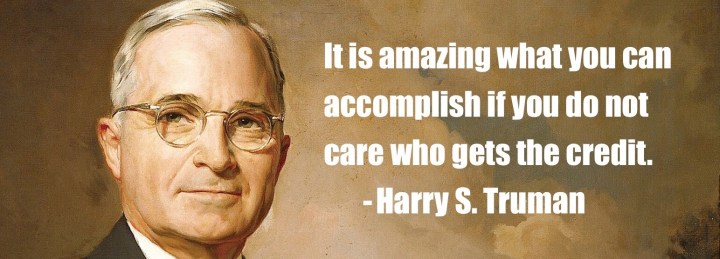
“It Is Amazing What You Can Accomplish If You Do Not Care Who Gets the Credit.” ~ President Harry S. Truman
When faced with these type of situations I always remind myself and the group I am working with of the great thought of our 33rd President, Harry S. Truman, “It Is Amazing What You Can Accomplish If You Do Not Care Who Gets the Credit.” My choice has always been to favor the accomplishment of the idea, rather than worrying about getting credit for it. Really, very few accomplishments can be credited to any single person anyway.
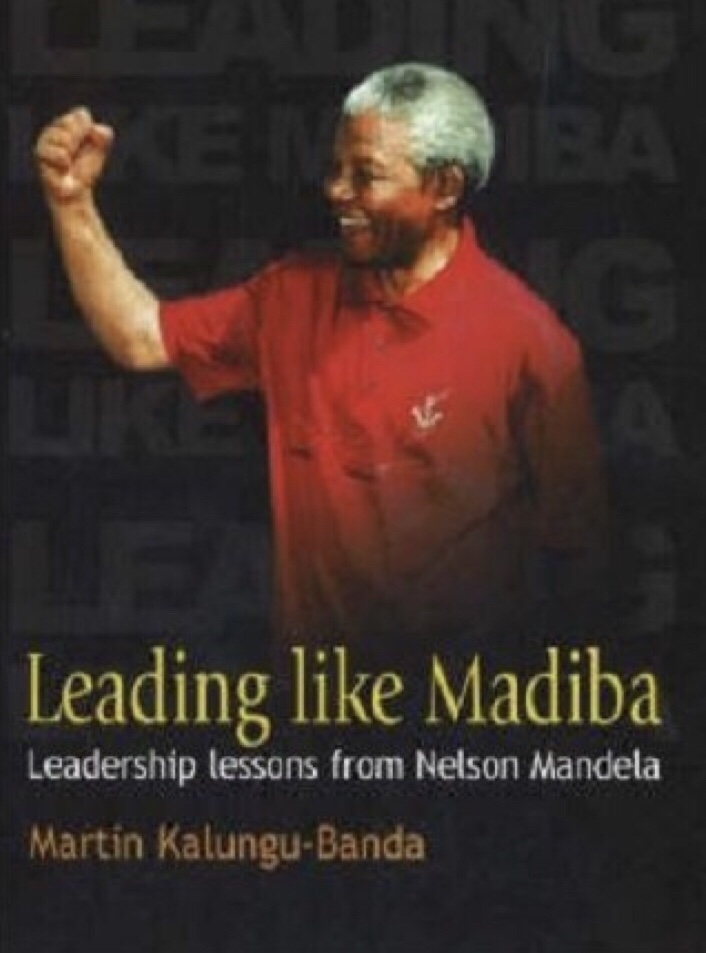 This very topic was the subject of the chapter I was reading this morning in the awesome book I am currently reading, Leading Like Madiba: Leadership Lessons From Nelson Mandela by Martin Kalungu Banda. In this chapter, Kalungu Banda teaches us that sharing the credit is a mark of great leadership. An interview of Nelson Mandela is the subject here where he shows that success is often the result of concerted effort by many people. In the interview Mandela says, “…the reality of our struggle is that no individual among us can claim to have played a greater role than the rest.” To me, this says it all – it took (or will take) everyone, not just one!
“Being praised for what we have done is such a sweet feeling. Then we know that our efforts are being recognised and appreciated by others. We all need that kind of feedback from those around us. But I suspect we are sometimes too eager to receive praise for ourselves. Then we end up forgetting those we worked with to achieve the very things we are being praised for. Selfishly we make ourselves the centre of a reality that is much larger and greater than us alone. We exaggerate our contribution out of all proportion. Without meaning to, we start radiating negative energies that repel others from wanting to cooperate with us.” ~ Martin Kalungu Banda
We have all seen people who have become so caught up in what they think they have accomplished that they forget there are/were a lot of of others working on that same issue with them.
“The paradox is that the more we acknowledge and celebrate the capacities and contributions of those around us, the more we deepen the strength and prowess of our own character. We become poised to do greater things because others feel confident enough to win with us.” ~ Martin Kalungu Banda
The fact is, great leaders recognize and honor the contributions of others. In fact, the greatest of leaders deflect credit from themselves to others. We need to learn from Mandela and create the space for others to be acknowledged. Here are a couple of questions to consider:
- Even if it is your idea, would you rather be right, or get the idea implemented?
- How much do you value your vanity, your pride?
What Inspires You?
 Yesterday I had a person ask me, “Byron, how do I deal with the person who does not want to learn or go through any professional growth experiences?” She went on to explain this was an experienced leader who believes she has seen it all. I explained that was a tough one. I have experienced these type of individuals. The type who say, “When you’ve been around as long as I have you’ve seen it all and know how to deal with…” Really, seen it all? I think not! Amazing!
In all honesty, I’m not sure there is a lot you can do with a person with that disposition. I say disposition because while I do believe leaders can be developed and don’t have to be born automatically a leader, I do believe that there are certain dispositions you must possess to be a great leader. One of those is a propensity to be a lifelong learner. I actually just blogged about lifelong learning this week in Lifelong Learning: The Farm Way.
So what was my advice? To have the tough conversation about the fact that all leaders need to continue to learn and find inspiration. I am a huge believer that those we serve as leaders need to see us learning and taking part in self development. Even better if they can experience this alongside us. If that doesn’t happen, I’m not sure how that person can be effective and I’m not sure how long they could continue in an organization that believes in growing its team members and being a learning organization.
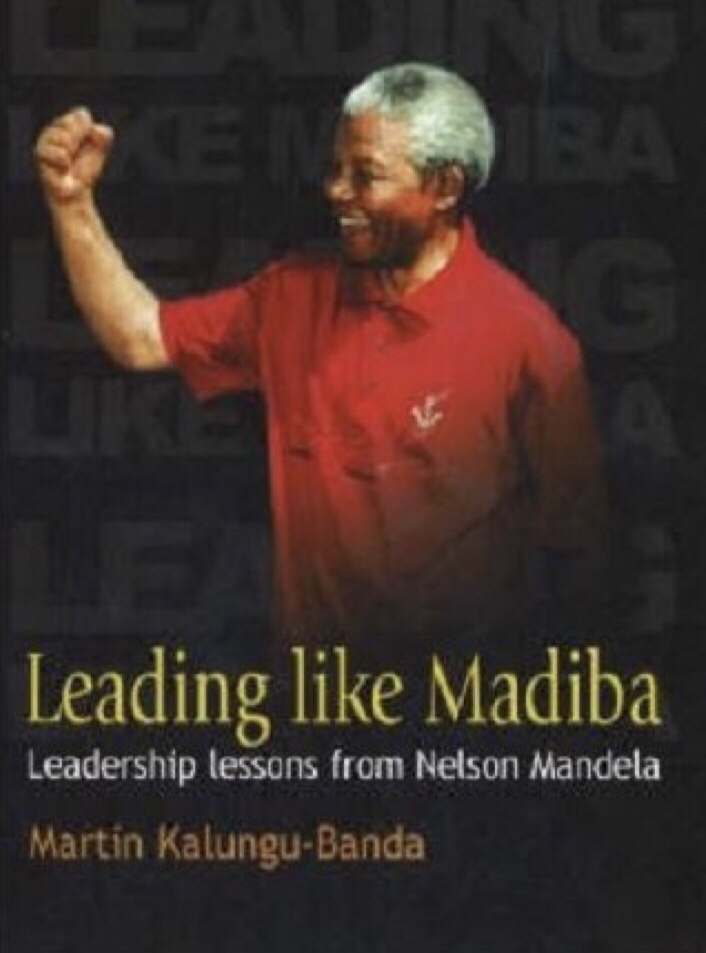 During my own personal growth time this morning I had this thinking affirmed in the great book I am currently reading, Leading Like Madiba: Leadership Lessons From Nelson Mandela by Martin Kalungu Banda. I was inspired to study Nelson Mandela by Richard Branson. Madiba is one of Branson’s leadership heroes. Just as Richard Branson is one of mine. Talk about a guy (Branson) who continues to learn, grow, try new things, and start new thing. Pretty sure he has never said, “I’ve seen it all and know it all.”
In Kalungu Banda’s book he tells the story of Mandela going into the locker room before a soccer match and asking his favorite professional soccer player, Mark Fish, to switch jerseys with him. Mandela was wearing a jersey with Fish’s number on it. Fish agreed and Mandela went on to explain how much he was inspired by him and learned from him. Fish was very touched and inspired by this and said that any time he wore or even looked at the jersey he had gotten from Mandela it inspired him to get better. What the story about Mark Fish in this great book shows is that great leaders also need to be inspired. Mark might think that it was Mandela who inspired him and not the other way round, but it is clear from the story that Mandela had long been inspired by Fish.
Martin Kalungu Banda gives some great, what he calls in the book, Food For Thought on this story:
“We often do not imagine great leaders to be in the process of learning. Indeed, most leaders do not look as if they want to learn or have the time for it. They are either giving advice or opening a workshop for other people. We are surprised when we hear that a leader spent a day at a conference as a participant.”
As I said earlier, we need to be seen by those we serve, learning. Even better to be learning right next to them.
“Imagine what becomes of leaders who do not find anything to inspire them. My guess is that they soon dry up. They cease to inspire others because they have no replenishment themselves. We can only give what we have. So, to be leaders who inspire our organisations and communities, I am convinced we need clear sources of inspiration ourselves. Inspirational leaders continue to be moved by the surprises and wonders of life –people and nature, and the interaction between the two. Such leaders position themselves so that they continue to experience the awesome character of the world that surrounds them and the profundity of human life.”
What inspires you? You cannot inspire other people unless you get inspired and continue learning yourself.
“They [leaders] are always learning. Learning is about lending oneself, through practice, to the ‘how’ question: How can I hear other people better? How can I do this better? How can I understand this situation better? This style could explain why in spite of his age Madiba beams with the joy and vitality of a 21-year-old. It could be his ability to be inspired by other people. The readiness to be inspired by a footballer.”
When we feel so knowledgeable that all we want to do is impart what we know on others, it is a sign that we have stopped learning. There is no such thing as standing still in learning, however. You are either learning or you are regressing. I don’t know about you, but I do not want to regress!
Leading Like A Glue Stick
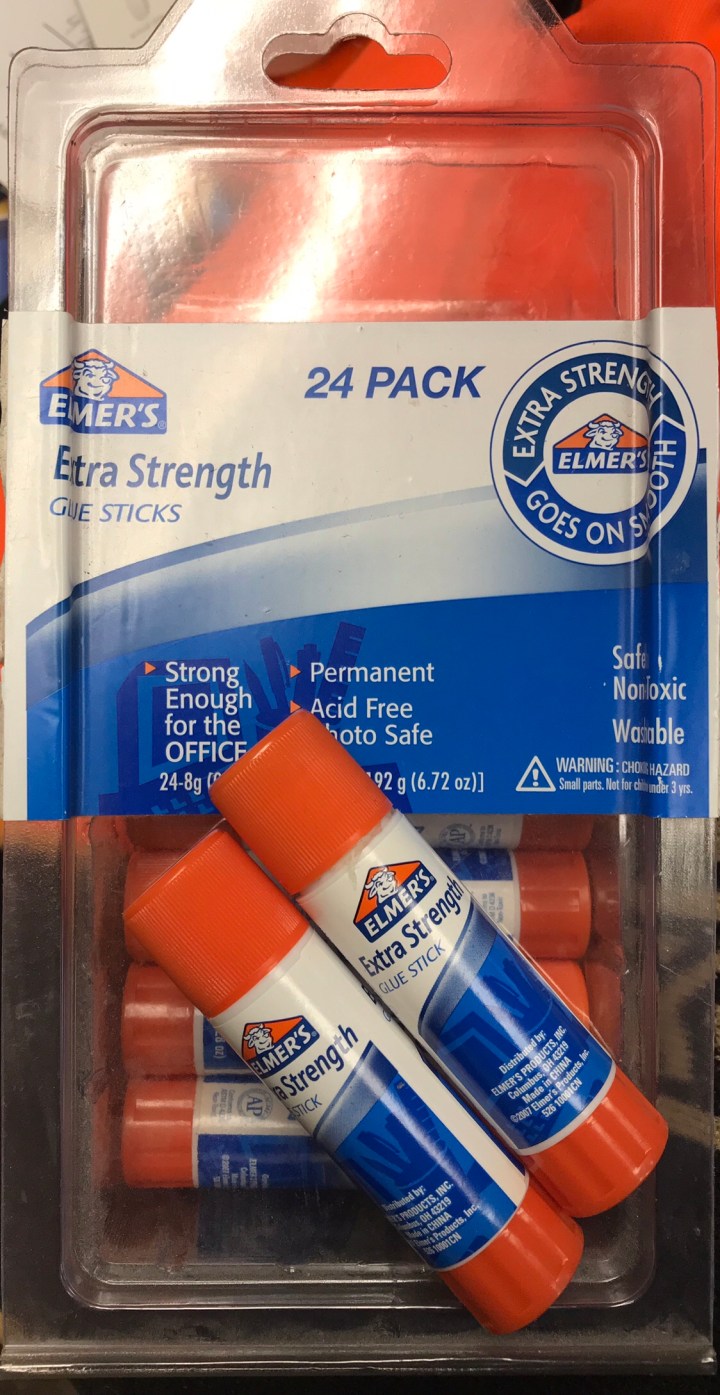 As an educator and leader I understand the value of a good glue stick. Glue sticks are very convenient for class and leadership retreat activities, but don’t last as long. The time they save in the classroom and the ability to create quickly is worth it. I can’t even imagine having to go back to bottles of messy glue that takes forever (it seems) to hold things in place. All of that being said, however, I would like this morning to look at the glue stick as a leadership metaphor.
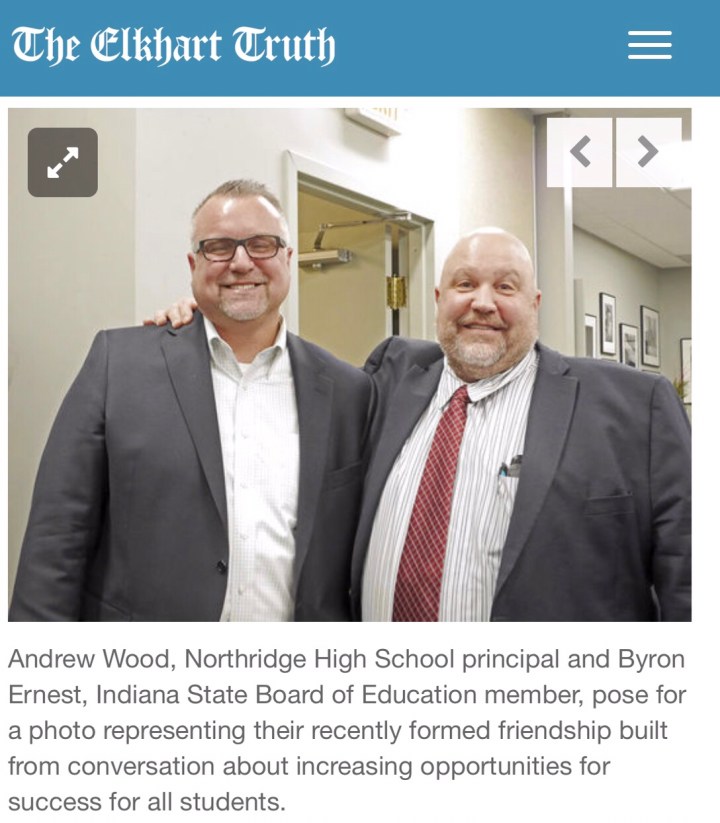
This past week I had the opportunity to be a part of a convening of business/industry leaders, local/state government officials, school leaders, and community stakeholders in Goshen, Indiana – Elkhart County Indiana. The group was convened by Horizon Education Alliance (HEA). Dr. Jason Harrison, Director Of Facilitation for HEA, did an outstanding job of facilitating our convening. It is awesome how HEA has become the glue stick for Elkhart County to come together to improve all aspects of the community. Specifically, how to make sure our young scholars are prepared for any post secondary endeavor they choose. The idea is for all stakeholders to understand the needs and obstacles of each other. Then remove the obstacles and create great things for everyone in the community. Now that’s leading like a glue stick!

Here is an article in The Elkhart Truth I was interviewed for at the conclusion: http://www.elkharttruth.com/news/listening-and-collaborating-at-local-state-level/article_ab40b62f-4841-5fd8-8d39-fa086a79e9d5.html
 Additionally, I had a former team member text me this morning and I texted back to keep being the glue of the organization. She texted back and said that sometimes we need to be Super Glue. True. Then I got to thinking, what does it take to be the glue stick of an organization? I have heard it said that the indicators of a great team are its level of grit and the strength of its glue.
To me the glue of an organization measures how a team sticks together and how its members meld into an effective team, especially in tough times. Abraham Lincoln is famous for a quote he used when describing the division during the Civil War in the United States 🇺🇸: “A house divided against itself cannot stand.” He actually borrowed that phrase from the New Testament of the Bible. Probably why it is such a powerful quote no matter what divisions are being struggled with. The “house” can apply to our state or federal governments, our organizations, our teams, our local communities, or our families.
Relationships matter. Really, we need to know each other, trust each other, and hold a healthy respect for each other to achieve excellent results. Mutual respect and understanding of each other’s beliefs and values is key. These relationships are the glue that holds us together. Leaders need to create the space for team members to work together and encourage them to take the time to really see and learn from each other. This also means giving all team members the ability to lead from where they are. Everyone is a leader, and if treated as such, this can be Super Glue.
Furthermore, these relationships serve as glue sticks because teammates who build each other up, show appreciation for one another, and connect with each other are key parts of any great team. When we all work to be the leadership glue sticks of an organization it becomes a community working toward a common vision. This allows big and bold things to happen.
Are you a glue stick in your organization? How can you better distribute and develop all the glue sticks in your organization?
Graphic Recording: Good Quirky Or Too Off The Wall?
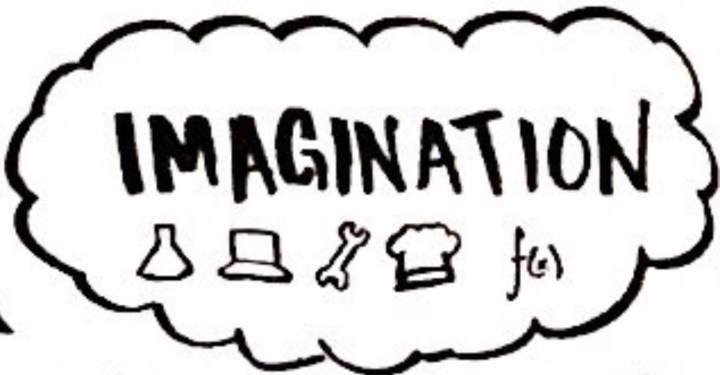 Recently I have been both criticized and lauded for using graphic/visual representations in my meetings. So, in reflecting on the negative reactions, I have thought deeply about the value. My first reaction was that “Wow, these people are very antiquated in their thinking and have had no experience with this great way of facilitating and thinking.” In all fairness, however, I wanted to dig a little deeper. In convenings I have facilitated the results have been positive and far-reaching. Engagement is improved and graphics give the group a way to quickly review thoughts and work that has been completed. In other words, a birds eye view into the work. What we have experienced makes sense given that 65% of the population are visual learners and there is evidence that we retain information as much as six times more effectively when it’s presented through a mixture of speech and visuals rather than speech alone.
There is so much work being done right now using graphics and visualizations to help convening groups understand the work they are doing. It is one of the key practices recommended in a book I am reading right now, Creating Great Choices: A Leader’s Guide to Integrative Thinking by Jennifer Riel and Roger Martin. This great book blends storytelling, theory, and hands-on advice to help any leader or manager facing a tough choice. In the book the authors recommend drawing pictures of the choices and visualizing the possible solutions. I have found this to be such a powerful way to work through creating the best choices. Every person’s thoughts and ideas become very real when they are put on the board.
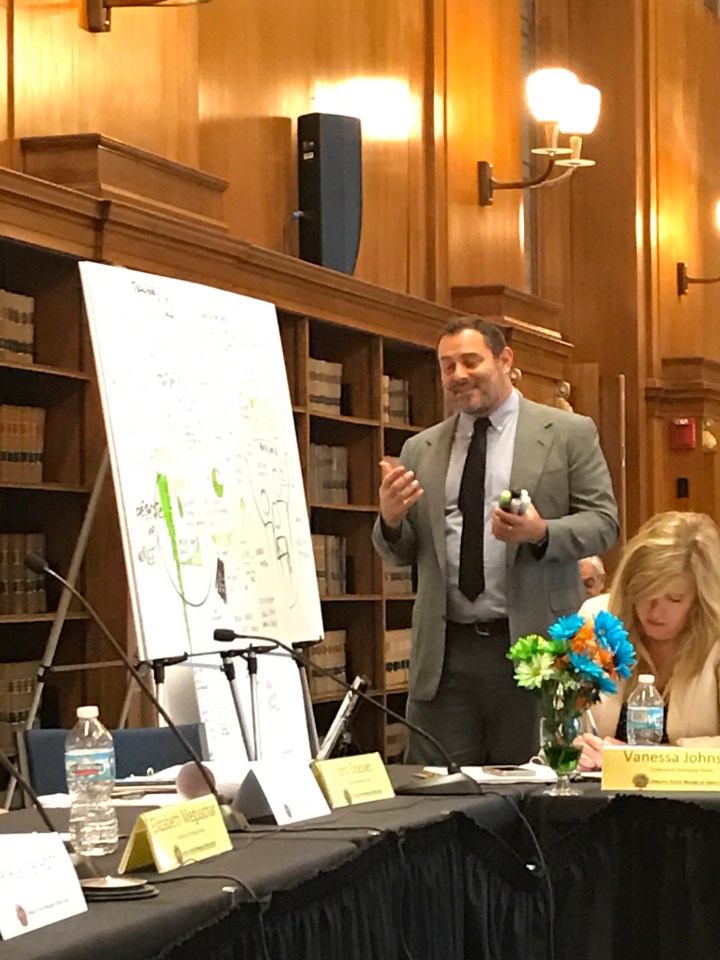
 There is such power in seeing your own words be put up on the board. This was powerful as a classroom teacher and also powerful when facilitating the convening of meetings. Top facilitators make sure all participants’ words are recorded instead of their own. They write what was said, regardless of theperception of value by anyone collaborating at the time. When working with groups long term, I really like to get them to begin to do their own graphic recording. This is very powerful when the group takes ownership and owns this. Once written, follow-up questions can be used to get the participant to clean up the words and flesh out other thoughts.
 Furthermore, the use of graphics make an outstanding way to do a review at the end of a meeting or any time further clarification is necessary. I have made it a custom in any convening I facilitate to do a review at the end. This has proven to be a very powerful way to end meetings and make sure everyone is on the same page. This review can be very quick or very detailed depending on the work that is being done. It is also great to have the visuals available when reporting out from small group or breakout group work. It allows fellow collaborators to actually see the work that is being done and literally watch it develop. Really, this all works on the principle known as the picture superiority effect. Basically, using effective visuals will improve learning. The principle states that people generally have a better memory for pictures than for corresponding words.
Finally, the use of the graphic story boards from previous meetings serve as an awesome gallery walk prior to the next meeting. In fact it was awesome in a project I recently chaired to watch individuals get to the meeting early to review all the graphics from prior meetings. I have to give credit where credit is do and say that I learned the best practice of the gallery work review to my experience with the Harvard Learning Innovation Lab (LILA). Graphic recordings can help learners comprehend abstract concepts using visual language to depict meaning. In other words, the idea is to concretize abstract information with a corresponding visual when possible.
I also believe graphic recordings enrich the meeting space. Displaying the graphic recordings in the meeting space itself is one of the most effective ways to ensure the visuals are part of the ongoing discussion. People will naturally refer back to what was said — the graphic recordings serve as a tangible record in full view of everyone. Again, as I stated earlier by displaying the graphic recordings, you’re showing participants that their words and thoughts are valued and you’re encouraging people to review and discuss the content. This creates a safe environment to share ideas and conflicting opinions.
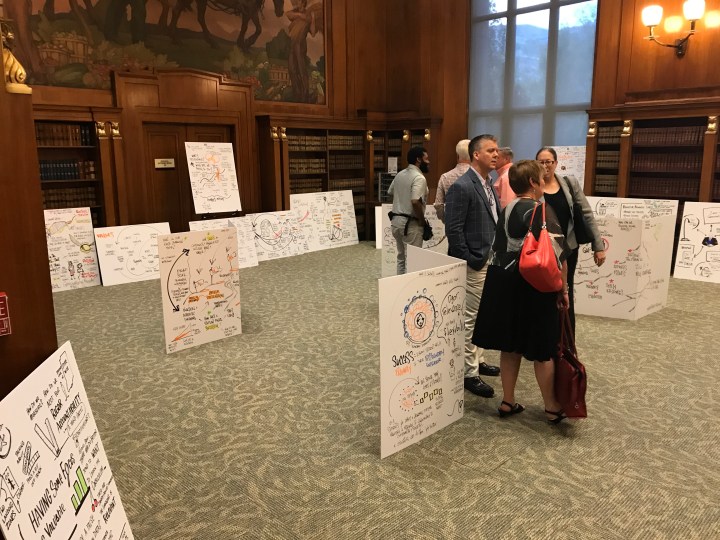
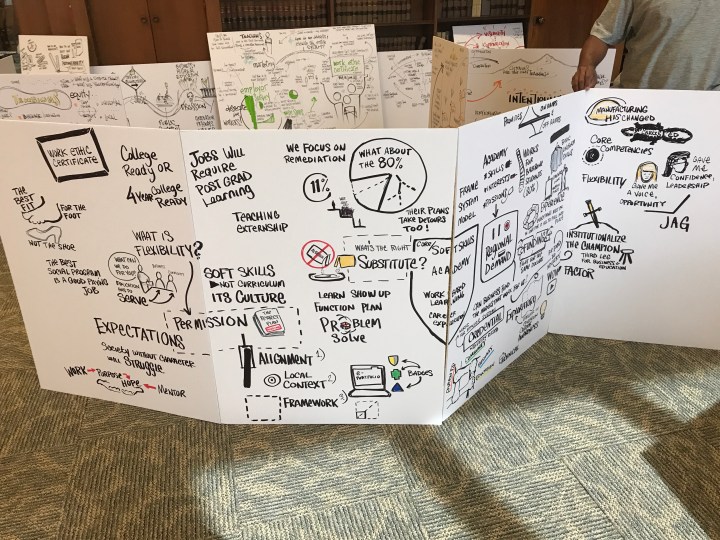 Bottom-line: Why do companies like Google, the Gap, Lego and Johnson & Johnson use graphic facilitation? Because they know how valuable their meetings are, and they know how graphic recording helps them get the most from their investment of time, money and talent to get their best people in one room. Therefore, I believe making a graphic recording makes the discussion visual. This enables those convened to have snapshot of the ground that has been covered so far. Almost immediately, you can see which points need to be built out and which have yet to be explored. We can “read” images much faster that written word, so the feedback loop is much quicker.
While some may think is quirky, I am a major believer in the use of graphic facilitation. I believe that when the meeting, leadership training, retreat, or any other type of convening really matters, graphic recording and facilitation will make that meeting more effective and productive.
Pictures in this post are of graphic recordings done by Mike Fleisch. I have learned a great deal from Mike and value the experience of having him facilitate many convenings with me.
Leading With Intellectual Honesty
 I am reading a great book right now that is super hard to put down every time I get a chance to sit down and do some reading. The book is by one of my favorite Presidents, Harry S. Truman. Where The Buck Stops: The Personal and Private Writings Of Harry S. Truman. This great book was published by President Truman’s daughter, Mary Margaret Truman Daniel. Although the book is entirely written by President Truman, with the exception of the introduction, he did not want it published till after he and the former First Lady, Bess Truman, had both passed away. The reason was that he is very critical of some of the presidents before and after him and did not want his thoughts released while he was alive. In the book, our 33rd U.S. President gave his “cut to the chase” theories and opinions on leadership and what it takes to be a great leader. He even gave his picks for best and worst presidents and, in detail, defended his reasoning.
 It would seem that my post today is to promote the book, but really that is not the case. Although, I would recommend reading the book. I was intrigued by a comment President Truman made in the book when arguing that the appearance, height, or stature of President has nothing to do with greatness. President Truman said:
“A president has got to have qualifications to do the job that he’s supposed to do. He has got to be honest. Particularly, he’s got to be intellectually honest, and if he isn’t, it doesn’t make any difference what kind of appearance he makes. In the long run, his good looks or good public presence doesn’t amount to anything because he’ll do a bad job, and he’ll be found out. Or even worse, as I’ve been pointing out in this book, some presidents go into the presidency and don’t do any kind of job at all.” ~ Harry S. Truman in Where The Buck Stops (Kindle Location 1369 of 6958)
I bolded the term that intrigued me: “intellectually honest” or intellectual honesty. What is intellectual honesty? It means always seeking the truth regardless of whether or not it agrees with your own personal beliefs. President Truman was reminding us that the great leaders approach problems and decision-making as rationally as possible. In other words we make arguments we believe are true as opposed to arguments we are supposed to by popular opinion or public pressure. We should not be afraid to show vulnerability or admit when we are wrong or don’t not know something. Probably a President, more than anyone else, can appreciate that facts and information may likely change, requiring a shift in execution.
 The best leaders I have observed have the curiosity to learn and improve — and an innate desire to create, innovate, iterate, and discover better and more efficient ways of doing things. When great leaders see change as an opportunity for growth they are able to pivot and execute effectively. We must work really hard to not cover up what we don’t know, or let personal beliefs interfere with our pursuit of the truth. As President Truman pointed out, this is not easy. We must continually work at it.
Leading Like Sitting Bull
 As a note taker who always has a notepad or notebook with me, I am always finding notebooks or find myself studying old notes from the past. This week I came across a notepad (see picture) that referred to the book The Genius Of Sitting Bull: Thirteen Heroic Strategies For Today’s Business Leadersby Emmett Murphy and Michael Snell. These were notes from a workshop back in the ’90’s. Interestingly, I only wrote down nine of the strategies – not sure why not all 13. The lessons, however, are still very applicable today in 2017.
Having traveled to the Black Hills in South Dakota this past summer and studying and retracing the steps of such historic figures as Sitting Bull, Crazy Horse, and General Custer it was very cool to come across this notepad. Here are the 13 strategies:
- Commitment
- Integrity/Trust
- Empowerment – Intent based leadership
- Living among your people – working shoulder to shoulder
- Healing – be responsible for the welfare of others
- Communicate
- Strategic Vision
- Respect the competition
- Redefine the rules of battle
- Guardianship – knowing the terrain
- Right people in the right places
- Courageous – welcome crisis
- Success – measure the results

It was great to reflect back on the lessons learned from Sitting Bull, particularly after taking a journey this past summer in his homeland. Hopefully this will prompt you to reflect on the 13 heroic leadership strategies and how you are doing related to them. If you are like me there is always a lot of room for continuous improvement.
Why Aren’t You Perfect Already?
 Originally published on the Flynn Heath Holt Blog by Diana Faison, Mary Davis Holt, Kathryn Heath, and Jill Flynn
What’s on your to-do list this season? We’re guessing there’s a “make this,” a “go here,” a “buy that.” We’re also guessing is there isn’t a “do this for myself” on it anywhere either. Besides wrestling other shoppers for the last turkey at the grocery store, you may be lifting your feet for the office janitor to vacuum the floor, trying to get year end projects finished. But why not keep your sanity this year? We have a few ideas of how you can.
One of the rules we ask women to break is the “it’s all or nothing” point of view. The holidays are particularly tricky in trying to get it right both at work and at home, but it’s not all or nothing, it’s both-and. We’ve seen women in our coaching set themselves up for failure by trying to do it all and make it look easy. You can have your fruit cake and eat it too- you just may have to tweak the way you do it.
 Delegate. Have a teenage son who’s at home from school on break? Give him the grocery list. Maybe the intern who’s been waiting for a project should write that memo so you can finish your expense report. Don’t do every little thing yourself- only the important things.
Prioritize. Focus on that which makes you the happiest, and have realistic goals you can build on. If decorating your home is your thing, do it; but go buy the pie you’re in charge of bringing to your parents’. Blend your work-life and consider compromise. Sometimes we’d be a lot happier if we simply decided to let go of the little things that don’t amount to much.Give yourself a break! Take some time during your day to leave the office and read a magazine, call a friend, or take a walk. Make some time for you this holiday season- even if it’s just 20 minutes. You’ll feel recharged and more positive both in the office and at home.
Whatever your holiday plans this year, try not to get burnt out; it does nothing for your career or your personal life. Stay positive. Move forward. And Happy Holidays from your friends at Flynn Heath Holt!
*****************************************
About Kathryn Heath:
Kathryn Heath is a founding partner at FHHL who develops leadership programs, coaches executives, and designs training. She co-authored Break Your Own Rules, which landed on the best-seller lists of The New York Times, The Wall Street Journal, USA Today and The Washington Post. She also co-authored The Influence Effect: A New Path to Power for Women Leaders Previous to FHHL, Kathryn was Senior Vice President and Director of First University at the nation’s fourth-largest bank, First Union (now Wells Fargo), where her inventive and results-focused approach won her numerous awards in the field of learning and development.
About Diana Faison:
Diana Faison is a partner at FHHL and worked with the firm as a consultant for over 10 years prior to her partnership. She began her career as a teacher of Leadership Development studies and a Dean in Student Affairs at Queens University and the University of North Carolina—Charlotte. Diana is a sought-after keynote speaker on business leadership topics such as political savvy, brand, personal power, authentic leadership, and well-being. She is also the co-author of The Influence Effect: A New Path to Power for Women Leaders.
About Mary Davis Holt:
Mary Davis Holt is a partner and co-author of Break Your Own Rules, and The Influence Effect: A New Path to Power for Women Leaders. She is an in-demand speaker who shares her hard-won insights and promotes the firm’s new rules for success to a wide range of audiences. Mary is also a sought-after facilitator, executive coach, and she works with companies to plan strategies that change the culture to support women leaders. Prior to joining FHHL, Mary held executive positions at Time Warner with oversight that ranged from finance to information technology, marketing, human resources, manufacturing and distribution.
About Jill Flynn:
Jill Flynn is a founding partner at FHHL and a co-author of Break Your Own Rules and her latest co-authored book, The Influence Effect: A New Path to Power for Women Leaders. Jill previously served as Senior Vice President at the nation’s fourth largest bank, First Union (now Wells Fargo), where she established their leadership development, diversity, organizational consulting and employee satisfaction initiatives. As the corporation grew exponentially during her tenure, Jill and her team prepared a cadre of high-potential leaders to assume senior positions. Within a three-year timeframe, the number of women in these roles increased from 9% to 26%.
 Byron's Babbles
leave a comment