Leading Like Yeast
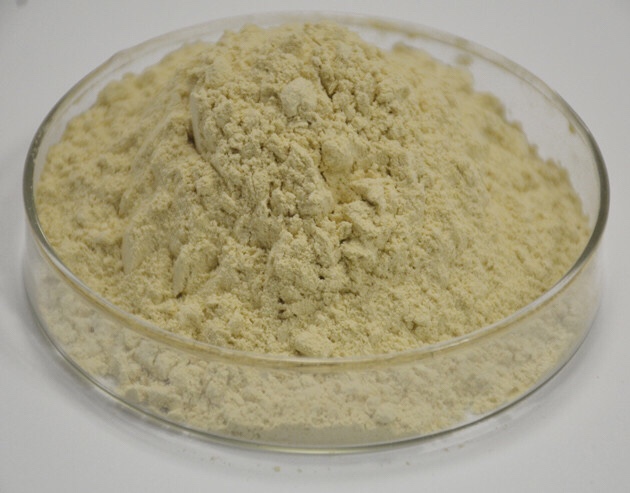 During my personal growth time this morning I was reading more in the great book, Leading Like Madiba: Leadership Lessons From Nelson Mandela by Martin Kalungu Banda. In the passages I was reading this morning Kalungu-Banda used the metaphor of leaders being like yeast saying, “Inspirational leaders are like yeast that permeates ordinary flour and water, making them rise into a good dough. This is a lot of what leadership is about: imperceptibly raising others to realise their own greatness and the esteem they deserve. A lot of the effect is gained simply by listening to people with respect.” Is that not awesome and so true!
“Inspirational leaders are like yeast that permeates ordinary flour and water, making them rise into a good dough. This is a lot of what leadership is about: imperceptibly raising others to realise their own greatness and the esteem they deserve. A lot of the effect is gained simply by listening to people with respect.” ~ Martin Kalungu Banda
This got me to thinking about the yeast we feed in our dairy herd. Yeast is a simple single-cell fungus. That is why I love Kalungu-Banda’s metaphor. As leaders, we are all pretty simple human beings but by creating the right environment we can do great things. The yeast that we usually mean in the context of food and livestock feed is the species named Saccharomyces cerevisiae. Saccharomyces cerevisiae has been used by man for millennia to produce alcoholic beverages, including beer and most spirits, and to enable bread to rise during the baking process.
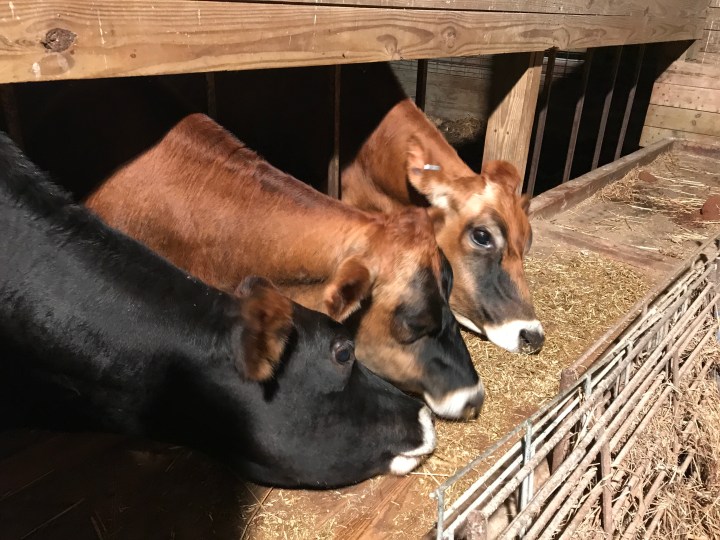 During the early 1980’s when I went to Purdue University and was getting my Animal Science Degree, we were just beginning to research the use of yeast in ruminant (cattle are a ruminant – meaning four compartment stomach) feeds. The research being done was on the effect of yeast culture on ruminant production and rumen microbial metabolism. Effects on production were always small, which led to many questioning their statistical validity. The reported effects on rumen metabolism often seemed unrelated: Stabling pH, improved fibre digestion, lower lactate concentrations, altered fermentation product proportions in favour of propionic acid, lower methane emission, increased concentrations of cellulolytic bacteria, increased concentrations of cellulolytic bacteria, lower soluble sugar concentrations, decreased ammonia concentrations, all by the supplementation of a few grams of yeast to a cow with a rumen volume of 100-150 liters. Thus, if yeast could maintain a more stable, neutral pH, ruminal micro-organisms would be healthier: healthier ruminal micro-organisms lead to a more productive animal. Remember, this is all with only a few grams of yeast.
Therefore, I would add to Kalungu-Banda’s use of yeast as a metaphor and say that by just doing the right small things can create an environment where people can grow and flourish. When studying the effectiveness of yeast culture we needed to understand yeast’s mode of action at the molecular and cellular level. Sound like leadership?
Leaders develop their team members. They serve as the yeast by helping the team members gain new skills to help the team increase its ability to reach the organization’s goals. One important skill the leader teaches the team is leadership. Just like yeast, we need to be doing the little things that might seem like much, but will have big effects on those we serve and our organization. Are you leading yeast?
Applying A Little Heat
 This morning, I walked to the barn to do the morning feeding and the thermometer 🌡 read 4 degrees Fahrenheit. I don’t mind the cold, but I always have to be cognizant that many things don’t work right, or at least need a little help to work right in this kind of weather. One of those things are frost free water hydrants.
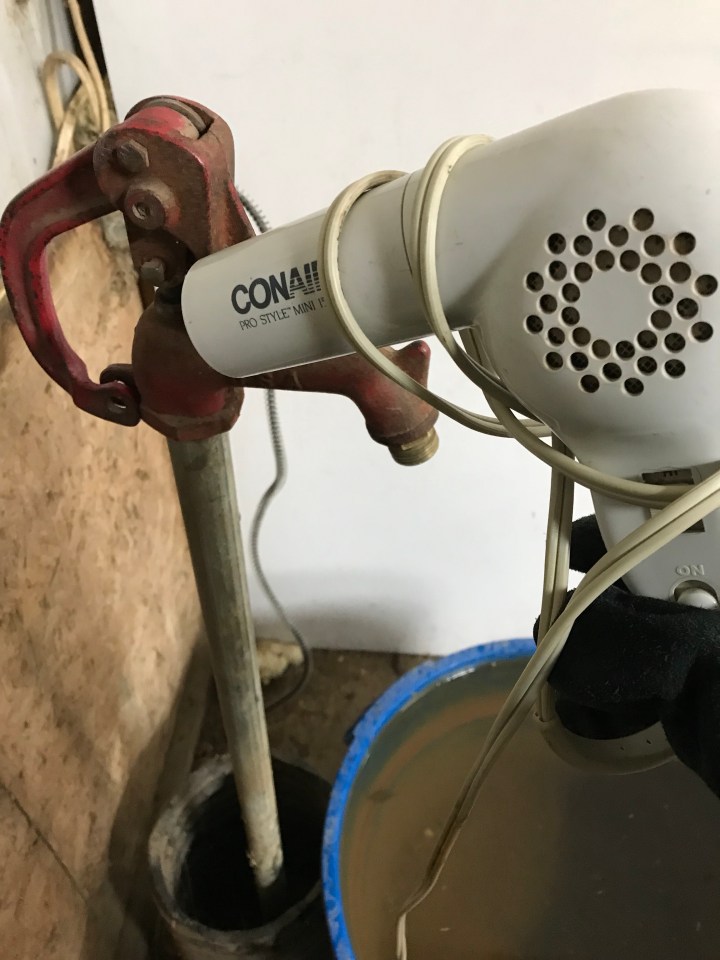
For those who don’t know what that is, it is a water hydrant (pictured here) that is buried below the frost line and is designed so the on/off valve is at the bottom below the freezing point. Then when the water is turned off the water in the pipe drains down and out, and amazingly, no frozen water line. These are a great farm invention. They do, however, get a little moisture built up around the mechanism at the top for turning the water on and off.
Actually they are designed to withstand pulling the handle and turning them on, but I am always nervous in this kind of weather doing that. As we all know, things just have a way of going wrong in sub-freezing temperatures. Our way of mitigating this is to take a small hair dryer and running it for about 30-60 seconds on the valve. This small amount of heat makes it work perfectly – like it was 80 degrees out.
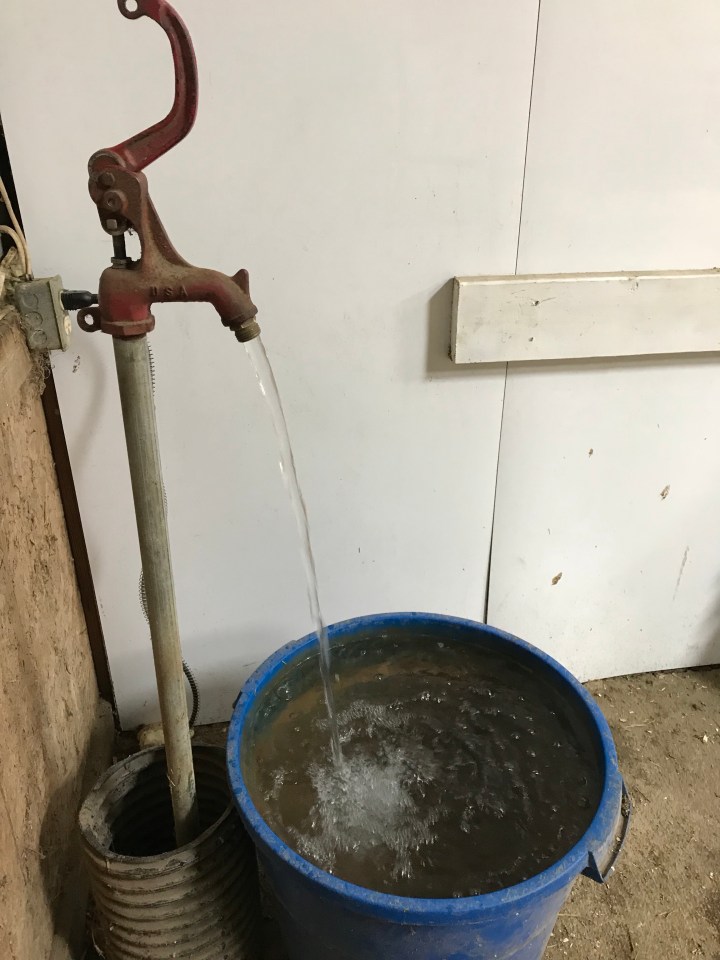 This morning, as I was doing this, I was reminded how a little heat being applied is good for all of us. I have always said that the best way to learn and grow is to be doing/trying something that causes a little fear. In fact I have blogged about it several times in: Leadership Lessons Of Mt. St. Helens, Telling Your Leadership Story, and Finding Your Leadership Voice just to mention a few.
As leaders we need to make sure we are enabling our team members to experience growth through real time projects and responsibilities that will, at times, cause a little “heat” and “pressure” to grow. The most effective leaders create unique experiences for themselves and others by taking calculated risks that put them and team members into situations that challenge their thinking, expand their perspective, make them feel vulnerable, and enable them to mature throughout the process.
Now, I am not saying throw yourself or your colleagues to the wolves. I am saying to act as the “hair dryer” I have used as the metaphor for this post and apply a little heat for growth to occur. This will allow us and those we serve to take key learnings from each of these experiences and apply them to similar circumstances we may be faced with. One of the ways I have learned to do this effectively is with task forces. Task forces gives teams of individuals a chance to form a community and create something for the organization.
The heat has been applied in my own personal life from being involved in turning schools around. Turnaround work can be one of the most thrilling and challenging adventures you can experience. Let me tell you, the “hair dryer” is pretty powerful and on high at all times. Turning around a struggling or failing situation teaches us to maximize the full potential of opportunities present in any situation and stretch the individual capabilities of ourself and other people. We learn that there is always a way out and forward when there is an effective use of tools, resources, people, and money.
So, instead of letting a little heat, pressure, or fear intimidate us; let’s welcome and embrace it. Remember, sometimes a little heat from the “hair dryer” can be good for us all.
Leading From The Tractor Seat
 I like to tweet out pictures from when I am sitting in my favorite chair – the tractor seat. As a leader I sit in a lot of seats, but I have to say, as the eternal farm kid, the tractor seat is my favorite. On this beautiful Christmas morning, I tweeting a sunrise picture from the tractor cab and some pictures spreading manure. Yep, even on Christmas morning there was work to be done and I loved every minute of it.
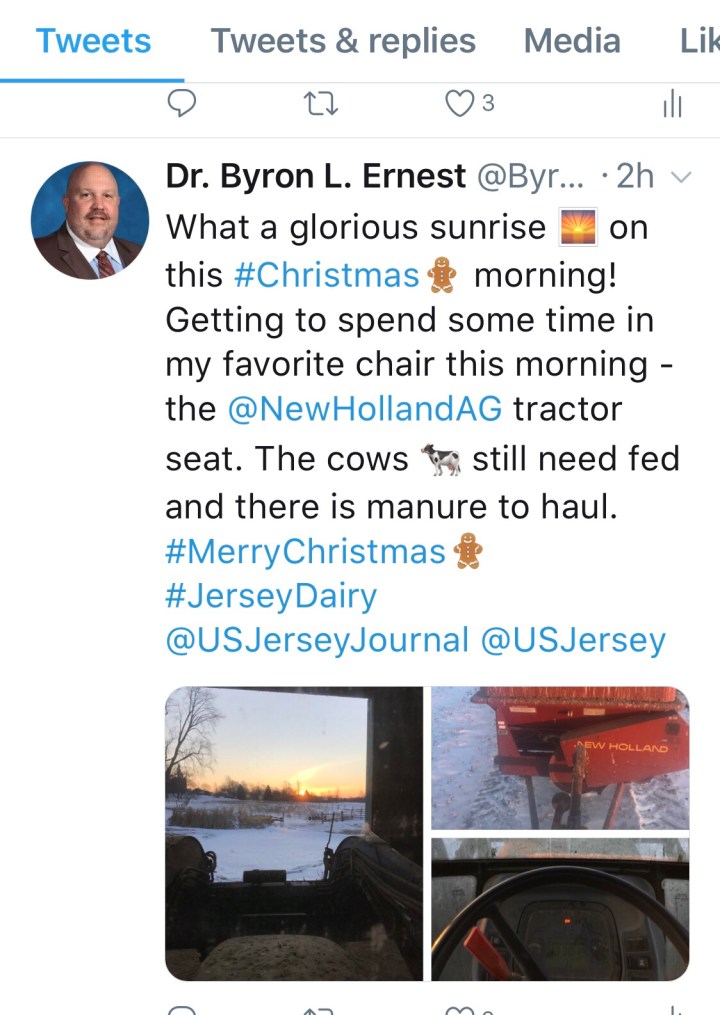 It got me to thinking about the leadership lessons available in a tractor cab. So, as a New Holland tractor guy I am going to use the New Holland cab for the metaphor. Here is what New Holland says about my tractor cab: “Ultimate comfort with the VisionViewTM cab designed around the operator’s needs” (from http://agriculture1.newholland.com/eu/en-uk/about-us/whats-on/news-events/2017/new-holland-launches-new-t5-tractor-range ). Think about that statement to start with. Aren’t we as leaders supposed to provide those we serve comfort and provide for their needs?
 So, the description on the web went on to say the following (I am going to add in my leadership thoughts): The spacious VisionView cab provides outstanding all-round visibility, – as leaders we need to see everything from 30,000 foot, 10,000 foot and from the balcony – which has been further improved by the new single wiper blade with 200-degree movement – we need obstructions removed and those we lead to tell everything, whether good or bad – and extra wide-angle mirrors. – it is important to take a look at what has been done (lagging indicators) and know we are getting the job done right. While we should all leverage our strengths and seek out others whose strengths complement ours, we also need to practice new behaviors where we have identified blind spots. – For loader operation, a roof hatch can be specified to provide unrestricted view on the raised arms. – all leaders need not assume that position equals influence but instead to enter a meeting with a clean slate and make your observations from an unobstructed view. Remember that nearly every great leader was once a typical employee sitting in meetings with bosses and coworkers.
All the controls in the cab are ergonomically laid out, while many elements are adjustable to create a comfortable work station tailored to the operator. – Leaders who get to know their employees are better able to tailor recognition efforts and personalize the experience to the individual.Leaders who get to know their employees personally can tailor the ways for personal professional growth. The instrument cluster moves in conjunction with the fully tiltable steering column, ensuring a permanently unobstructed view. – in terms of vision, it’s being able to sense what’s going on in the world, see the unexploited opportunities and lurking dangers, and use that to figure out what to focus on and what not to focus on. – The IntelliViewTM IV touch screen monitor puts the operator in control of all the main parametres. I always say that the most important decision I make as a leader is “what to have my hands on” or “what to have my hands in.”
A choice of seats is available, offering varying degrees of comfort all the way up to the deluxe air-suspension version, as well as a full-sized instructor seat. – it is great to have someone sitting alongside us learning. My son learned to bale hay, use the monitor, and wrap bales while sitting in the cab next to me. We must be shoulder to shoulder with those we lead. – The efficient air conditioning system can deal with the hottest conditions as well as the coldest days. – as leaders we must learn to adjust our lives to not only survive but be fruitful.
Hopefully you’ve enjoyed a view through my cab window into why I love spending time in the tractor seat.
Learning To Appreciate All Who Contribute To The Success
“Quite often it takes more than just ourselves to achieve the success we claim to have made. Our success is a result of many people’s contributions: those of our parents and other family members, fellow workers, peers, teachers, and advisers.” ~ Martin Kalungu Banda
We’ve all seen it in a TV show. The character goes to her boss or parents with a bright idea, the idea is ridiculed, and then (sometimes in the same breath), the idea is repeated right back, word for word. And, get this, it then becomes a great idea and he is glad he thought of it, too!
Unfortunately, these people do exist. In every company, in every organization, in every community, in every political party. Some might not have as bad a case of it as others, but at some point, we will run into one of these people, or an entire organization of these vane people.
Furthermore, I have even experienced not being able to reach compromise or consensus because certain individuals ideas weren’t being used or he had not come up with the idea. This level of ego and vanity is amazing to me.
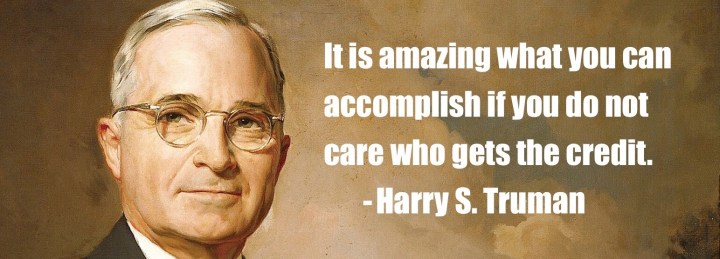
“It Is Amazing What You Can Accomplish If You Do Not Care Who Gets the Credit.” ~ President Harry S. Truman
When faced with these type of situations I always remind myself and the group I am working with of the great thought of our 33rd President, Harry S. Truman, “It Is Amazing What You Can Accomplish If You Do Not Care Who Gets the Credit.” My choice has always been to favor the accomplishment of the idea, rather than worrying about getting credit for it. Really, very few accomplishments can be credited to any single person anyway.
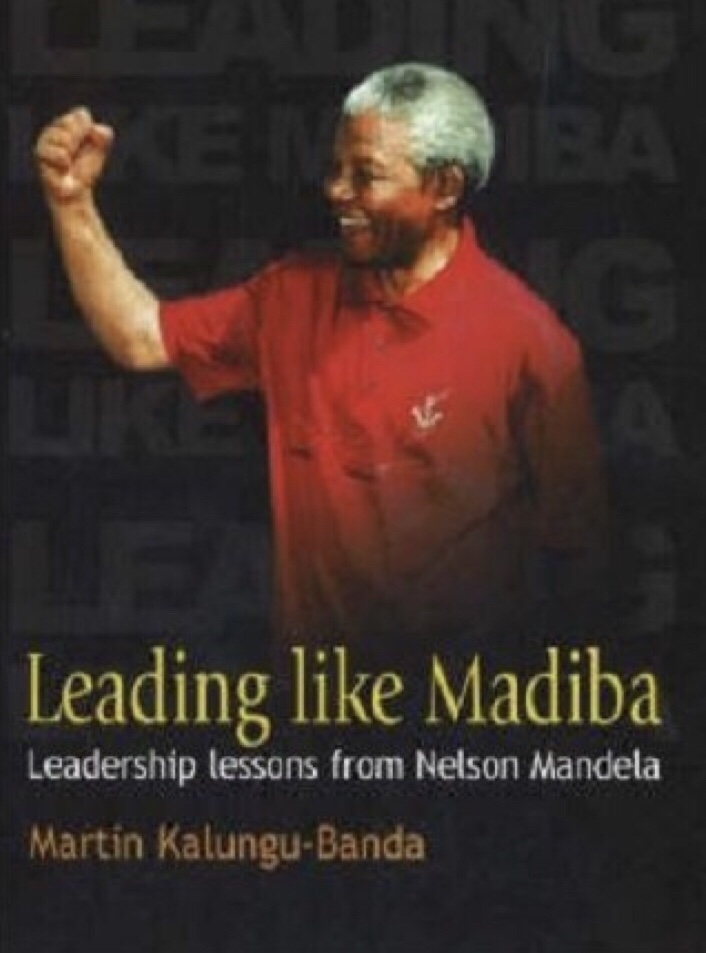 This very topic was the subject of the chapter I was reading this morning in the awesome book I am currently reading, Leading Like Madiba: Leadership Lessons From Nelson Mandela by Martin Kalungu Banda. In this chapter, Kalungu Banda teaches us that sharing the credit is a mark of great leadership. An interview of Nelson Mandela is the subject here where he shows that success is often the result of concerted effort by many people. In the interview Mandela says, “…the reality of our struggle is that no individual among us can claim to have played a greater role than the rest.” To me, this says it all – it took (or will take) everyone, not just one!
“Being praised for what we have done is such a sweet feeling. Then we know that our efforts are being recognised and appreciated by others. We all need that kind of feedback from those around us. But I suspect we are sometimes too eager to receive praise for ourselves. Then we end up forgetting those we worked with to achieve the very things we are being praised for. Selfishly we make ourselves the centre of a reality that is much larger and greater than us alone. We exaggerate our contribution out of all proportion. Without meaning to, we start radiating negative energies that repel others from wanting to cooperate with us.” ~ Martin Kalungu Banda
We have all seen people who have become so caught up in what they think they have accomplished that they forget there are/were a lot of of others working on that same issue with them.
“The paradox is that the more we acknowledge and celebrate the capacities and contributions of those around us, the more we deepen the strength and prowess of our own character. We become poised to do greater things because others feel confident enough to win with us.” ~ Martin Kalungu Banda
The fact is, great leaders recognize and honor the contributions of others. In fact, the greatest of leaders deflect credit from themselves to others. We need to learn from Mandela and create the space for others to be acknowledged. Here are a couple of questions to consider:
- Even if it is your idea, would you rather be right, or get the idea implemented?
- How much do you value your vanity, your pride?
What Inspires You?
 Yesterday I had a person ask me, “Byron, how do I deal with the person who does not want to learn or go through any professional growth experiences?” She went on to explain this was an experienced leader who believes she has seen it all. I explained that was a tough one. I have experienced these type of individuals. The type who say, “When you’ve been around as long as I have you’ve seen it all and know how to deal with…” Really, seen it all? I think not! Amazing!
In all honesty, I’m not sure there is a lot you can do with a person with that disposition. I say disposition because while I do believe leaders can be developed and don’t have to be born automatically a leader, I do believe that there are certain dispositions you must possess to be a great leader. One of those is a propensity to be a lifelong learner. I actually just blogged about lifelong learning this week in Lifelong Learning: The Farm Way.
So what was my advice? To have the tough conversation about the fact that all leaders need to continue to learn and find inspiration. I am a huge believer that those we serve as leaders need to see us learning and taking part in self development. Even better if they can experience this alongside us. If that doesn’t happen, I’m not sure how that person can be effective and I’m not sure how long they could continue in an organization that believes in growing its team members and being a learning organization.
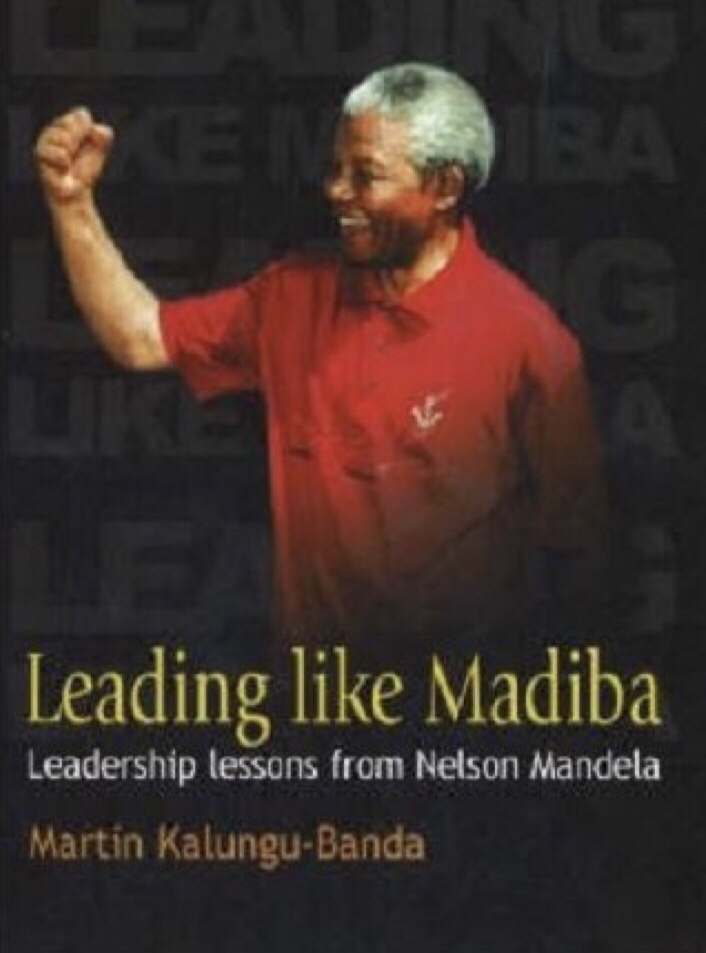 During my own personal growth time this morning I had this thinking affirmed in the great book I am currently reading, Leading Like Madiba: Leadership Lessons From Nelson Mandela by Martin Kalungu Banda. I was inspired to study Nelson Mandela by Richard Branson. Madiba is one of Branson’s leadership heroes. Just as Richard Branson is one of mine. Talk about a guy (Branson) who continues to learn, grow, try new things, and start new thing. Pretty sure he has never said, “I’ve seen it all and know it all.”
In Kalungu Banda’s book he tells the story of Mandela going into the locker room before a soccer match and asking his favorite professional soccer player, Mark Fish, to switch jerseys with him. Mandela was wearing a jersey with Fish’s number on it. Fish agreed and Mandela went on to explain how much he was inspired by him and learned from him. Fish was very touched and inspired by this and said that any time he wore or even looked at the jersey he had gotten from Mandela it inspired him to get better. What the story about Mark Fish in this great book shows is that great leaders also need to be inspired. Mark might think that it was Mandela who inspired him and not the other way round, but it is clear from the story that Mandela had long been inspired by Fish.
Martin Kalungu Banda gives some great, what he calls in the book, Food For Thought on this story:
“We often do not imagine great leaders to be in the process of learning. Indeed, most leaders do not look as if they want to learn or have the time for it. They are either giving advice or opening a workshop for other people. We are surprised when we hear that a leader spent a day at a conference as a participant.”
As I said earlier, we need to be seen by those we serve, learning. Even better to be learning right next to them.
“Imagine what becomes of leaders who do not find anything to inspire them. My guess is that they soon dry up. They cease to inspire others because they have no replenishment themselves. We can only give what we have. So, to be leaders who inspire our organisations and communities, I am convinced we need clear sources of inspiration ourselves. Inspirational leaders continue to be moved by the surprises and wonders of life –people and nature, and the interaction between the two. Such leaders position themselves so that they continue to experience the awesome character of the world that surrounds them and the profundity of human life.”
What inspires you? You cannot inspire other people unless you get inspired and continue learning yourself.
“They [leaders] are always learning. Learning is about lending oneself, through practice, to the ‘how’ question: How can I hear other people better? How can I do this better? How can I understand this situation better? This style could explain why in spite of his age Madiba beams with the joy and vitality of a 21-year-old. It could be his ability to be inspired by other people. The readiness to be inspired by a footballer.”
When we feel so knowledgeable that all we want to do is impart what we know on others, it is a sign that we have stopped learning. There is no such thing as standing still in learning, however. You are either learning or you are regressing. I don’t know about you, but I do not want to regress!
Lifelong Learning: The Farm Way
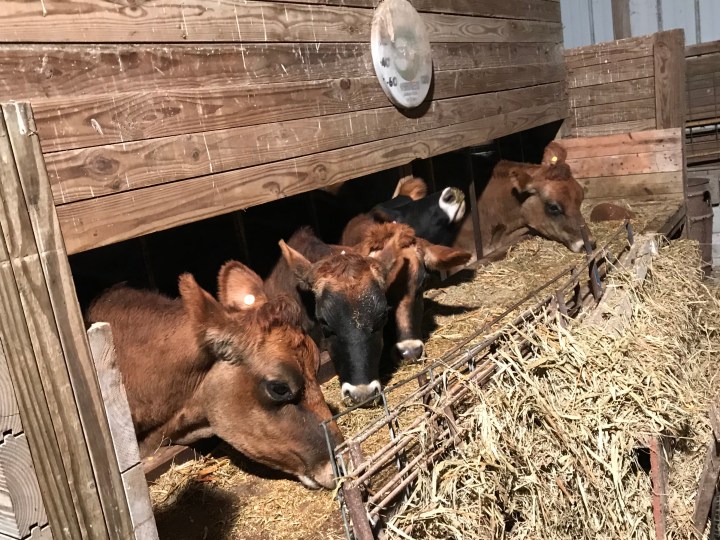 Many times leaders wonder what they can do to become well-rounded and competitive while increasing both their success and significance. An often overlooked yet simple way to improve is to increase our knowledge by being a lifelong learner. Structured education and professional growth opportunities are very important, but much success is derived from highly motivated individuals that have dedicated their lives to the concept of lifelong learning. Many times this learning is unstructured and just involves us paying attention and recognizing opportunities to learn. We all need look for these opportunities and prioritize the creation of time in our busy lives each day to educate ourselves on new concepts and ideas.
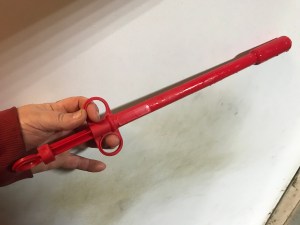 Last week I had an opportunity to learn just by observing the technique of someone else. We had two of our show heifers dehorned and we always get pain medicine (comparable to Tylenol® or Ibuprofen) in the form of boluses (big pills) to give for seven days. These are given orally with a bolus gun (pictured here). Growing up as a farm kid I have done this hundreds of times. It always seems, however, I end up fighting with the animal before I get the pill given. This time, though, I watched as the veterinary technician gave the first round while still at the vet’s office. She had an interesting technique and I took note of the way she held the calf’s mouth open. The calf did not fight and the pill went right down. The next day I used her technique and voila′ it worked perfectly. Let me tell you, I gave the seventh and last bolus tonight and all went perfectly with no fights every night. I am very excited to have learned a new technique.
This experience reminded me just how important it is to take advantage of every opportunity to learn. I try to learn something in everything I do. In fact there is a direct correlation between individuals who strive for growth in their personal lives and those who thrive in their professional lives. I really believe that the learning I do in my farm life does help me grow as a leader in my professional life. In an ever-changing world, it is more important than ever to stay current, competitive, and up to date – both in our personal and professional lives. We must rid ourselves of assumptions and convictions so that we can be open and receptive to new information and learning. The uncomfortable part is that at times the things we are observing or learning may contradict what we believe to be true. If we truly open our minds to lifelong learning we will come across information that challenges your worldview. We need to strive to jump out of our comfort zone, use this time to stop, reflect and shed light on these ideas in a way that can develop and expand our knowledge and vision. Just like my learning a new way to give calf boluses by watching someone who does it many times per day.
Now, I realize that my story from the vet’s office is a simple one, but the concept is important. We need to always be on the lookout for ways to improve and learn. Again, these do not need to be structured, and I would argue many times the best learning comes from paying attention and observing. Think about it, I could have just said, “That’s not the way I do that.” All that would have got me is the same old inefficient way of giving boluses and continuing to wrestle with calves every time I do it. Amazing what an open mind can bring us.
Hopefully this reflection will give us all a renewed commitment to learn new ways to expand and to sharpen our personal and professional skills. Reading great books, consuming excellent electronic media, and participating in engaging continuing education programs, from varied sources, will keep us informed, in touch with, and energized by new ideas – but only if we commit to our own learning. And, pay attention to lessons happening around us. Will you commit with me to being a dedicated lifelong learner?
 Byron's Babbles
leave a comment