Minding Our Imagery

“What and how we think shapes reality and shapes our future – no crystal ball necessary.” I love this in Chapter 33, “Mind Your Thoughts,” in Mindset Mondays with DTK by David Taylor-Klaus (DTK). “No philosophy,” William James argued, “can ever be anything but a summary sketch, a picture of the world in abridgment, a foreshortened bird’s-eye view of the perspective of events.” So it goes also with our thoughts. Our thoughts can only ever be rough drafts of what we’re perceiving, terse outlines of an unfathomably huge cosmos. But, change cannot occur without these rough drafts (thoughts) happening. If there is no imagery, then there can be no action.
Our thoughts compel us to move, to realign, to refocus and evolve. The links between the function of thought and the habits of behavior, actions, and results are our identity, beliefs, and feelings. With them we can imagine new imaginings; we can capitalize upon our identity to guide our thoughts by rearranging them into novel constructs that create new worlds for new creating.
Our thoughts become our reality. Our thoughts, affect our perception and therefore, our interpretation of reality. We need to make sure we get back to our true identity to shape our beliefs and feelings and ultimately have our thoughts be the actions we want to create in the world.
Avoiding The Cul-De-Sac Of Regret

The heart is the perfect metaphorical keeper of all our feelings and emotions, the heart drives us forward. It is the perfect construct of muscles which never stop. A sentence in the great novel FAULTLAND by Suzy Vitello which had culminated from all that Sherman and Wanda had been through in the aftermath of a Portland, Oregon earthquake – the biggest natural disaster in U.S. history, really jumped out at me. The comment was, “Sherman wants to pull her in. To feel her sadness meet his sadness. Two people grieving and yet somehow marveling at humanity’s breadth, the capacity of a heart.” Our hearts have great depth and breadth for flexing to the greatest spikes of joy to the lowest depths of grief, and then back.

These extreme ranges of joy and pains are what it means to human. And, as is pointed out in FAULTLAND we should marvel at the capacity of our hearts. I’m reminded of the line in the song “Heart” in the Broadway musical Damn Yankees, “You gotta have heart. All you really need is heart. When the odds are saying you’ll never win, that’s when the grin should start.” There are actually some parallels between the book and the musical. Choices are made, paths taken, things done, and regrets of things undone. But then there are the times when we dig deep for humanity and find the true capacity of our hearts.
A great metaphor that Vitello introduced in the book is “a cul-de-sac of regret.” Vitello writes, “…he [Sherman] lets his mind wander, and as usual, it finds a cul-de-sac of regret. His one true sadness-he never parlayed his passion for science into anything substantial.” A cul-de-sac is a dead end in a neighborhood that leads nowhere. A perfect metaphor because regrets really are dead ends. I’ll ask you and myself the same question Christopher asked Morgan in FAULTLAND, “What adventures do you feel you’ve put on hold?”
WAIT and Listen
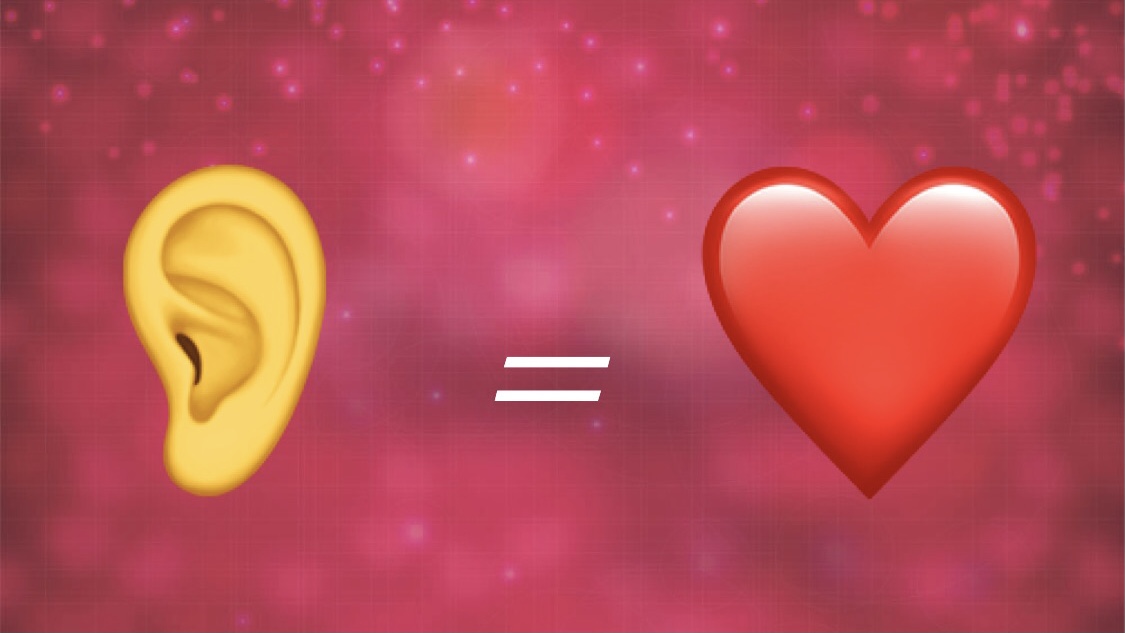
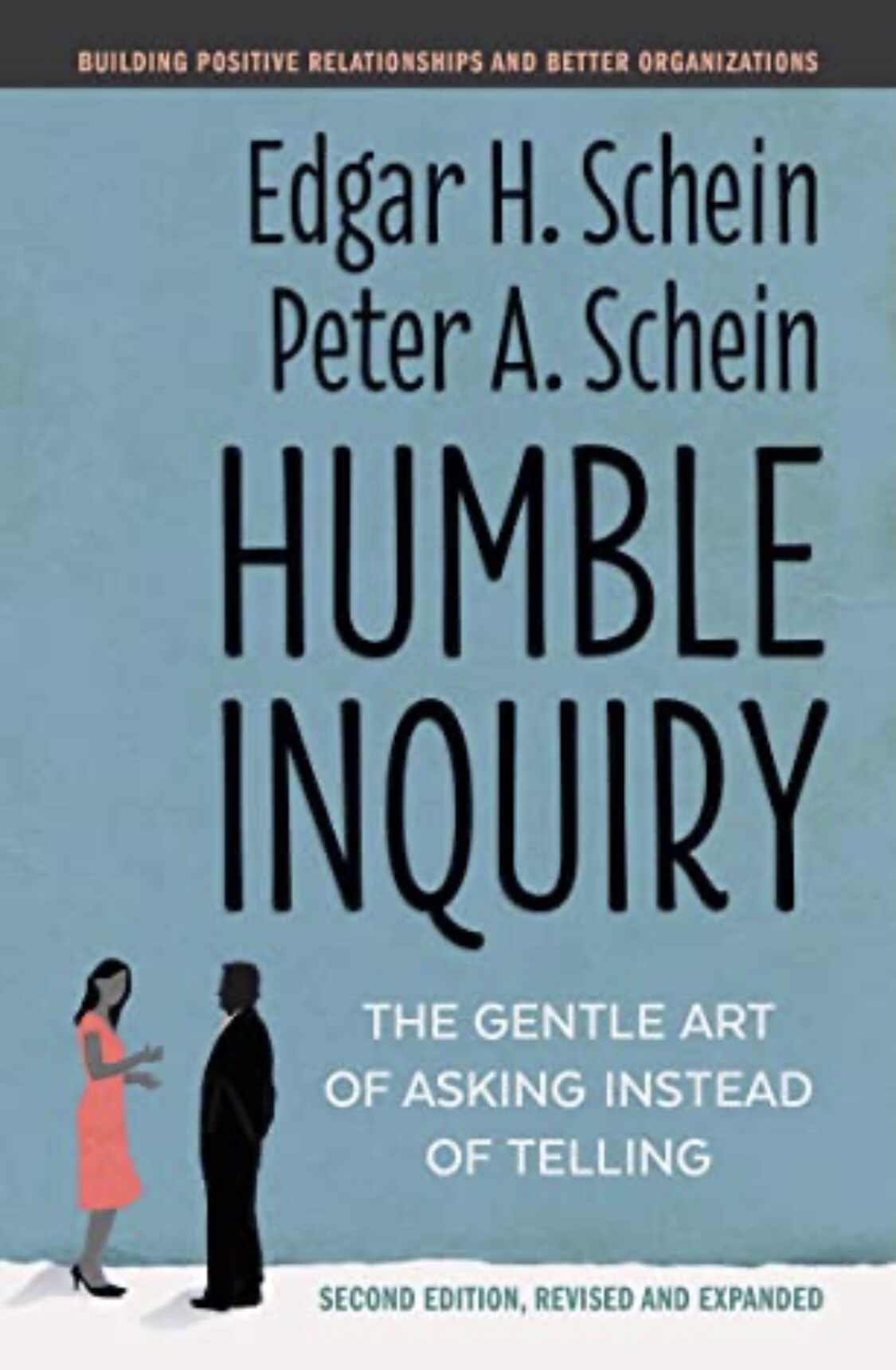
This week in Chapter 32, “Listening Is Love,” in Mindset Mondays with DTK by David Taylor-Klaus (DTK) I was reminded of two very influential books I have read this year. I wrote these notes down while reading the second revised and expanded edition of Humble Inquiry: The Gentle Art Of Asking Instead Of Telling by Edgar H. Schein and Peter A. Schein:
- We get opinionated distortions
- We value telling over listening
- We may need to know what others know in order to solve our own problems
- We need to access our ignorance
Additionally I was reminded of some notes I took while reading the sixth edition of the great book by Beverly Kaye and Sharon Jordan-Evans Love ‘Em Or Lose ‘Em. Here are a few of the many things I wrote down:
- Ask so you don’t have to guess
- Let your people mentor you
- Think “what if” before you think “no”
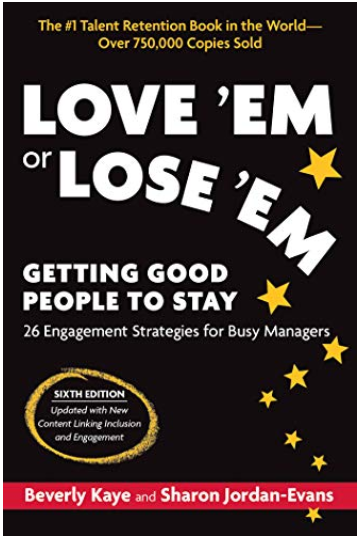
As you can see, these two books were impactful to my own development on this topic of loving others through listening. I love (pun intended) that Kaye and Jordan-Evans taught us that loving those we work with is the correct terminology. If we want to relate with others, as DTK relates, we need to form our relationships empathically, not transactionally. Here are some of my blog posts that were inspired by these books:
- The Gap Between Intent & Impact
- Do Not Forget The Small Talk
- Elegant Currency
- What if?
- Accessing Our Own Ignorance
DTK said, “In coaching, our job is to put all of our attention over there (on the other person) and dance with what arises, instead of pre-planning any response or follow up” (p. 236). It was also discussed in this chapter that we need to put a focus on what we want for other individuals instead of from them. To do this we must really show our love by listening. A great tool DTK introduced was WAIT – Why Am I Talking? Many times, instead of deeply listening we start thinking about what we can ask or what we know. We start telling instead of listening. So, I love this tool of asking ourselves “Why am I talking?” In the book Working, Robert Caro discussed that when doing research interviews for his biographies, he writes “Shut Up!” in his notes to remind himself he is there to listen and not do all the talking and asking. We all need to continue to hone our skills. If you’re like me, you have gone to meetings and know that you and others won’t talk much because __________ McTalksalot (yes, I actually have nicknames for some of these people) will do all the talking. Let’s show our love by listening.
Are you showing your love for those you serve by truly hearing them?
The Centrifuge That Is Life

Rules of Civility by Amor Towles
My rating: 5 of 5 stars
Every so often a book comes along that makes me reflect on many aspects of my own life. This great book, Rules Of Civility by Amor Towles, did that for me. I had pages of notes and quotes when I was done reading. Additionally, I had blog posts that were inspired by Rules of Civility – Visions & Revisions and What Do You Look Forward To?. This book brilliantly took the reader back to Manhattan in 1938, where authentic, human characters inhabit a playground that comes alive with the manners of a society on the verge of radical upheaval. George Washington’s Rules of Civility and Descent Behavior were weaved into the book throughout and were actually all listed at the end of the book.

At the end of the book we realize we’ve had a look back from the protagonist, Katey Kontent’s, 1966 perspective and that we have experienced all the twists and turns of the characters’ lives. This made me think of all twists and turns in my own life and the non-linear nature of our lives. One of my favorite quotes in the book is, “Should old acquaintance be forgot, and never brought to mind? Sometimes, it sure seems that’s what life intends. After all, it’s basically like a centrifuge that spins every few years casting proximate bodies in disparate directions. And when the spinning stops, almost before we can catch our breath, life crowds us with a calendar of new concerns.” I thought about all the people who have come and gone in my own life and those that have come and gone and come back. This also made me think about the peoples’ live I have come and gone from. What influence were they on what the portrait, that is my life, looks like today? What influence have I had on others’ portraits?
As Shakespeare taught us, “All the world’s a stage, And all the men and women merely players; They have their exits and their entrances; And one man in his time plays many parts, His acts being seven ages.” This book was a powerful reminder that people come into our lives and we enter other peoples lives for a reason, a season, or a lifetime. Also, as a person who believes we should create space in our lives for serendipity, I think about the chance meetings of people who have then become influential in my life. What if characters in the book had shown up at a bar on a different night? Think of all the “what ifs…?” in your own life. When we treat every encounter as a chance to impact, influence, or inspire we bring purpose to our lives. Most people that enter our lives are seasonal and they’re with us for a reason. Once that reason is fulfilled life has a way of moving them on.
View all my reviews
Opening The Door To Alignment
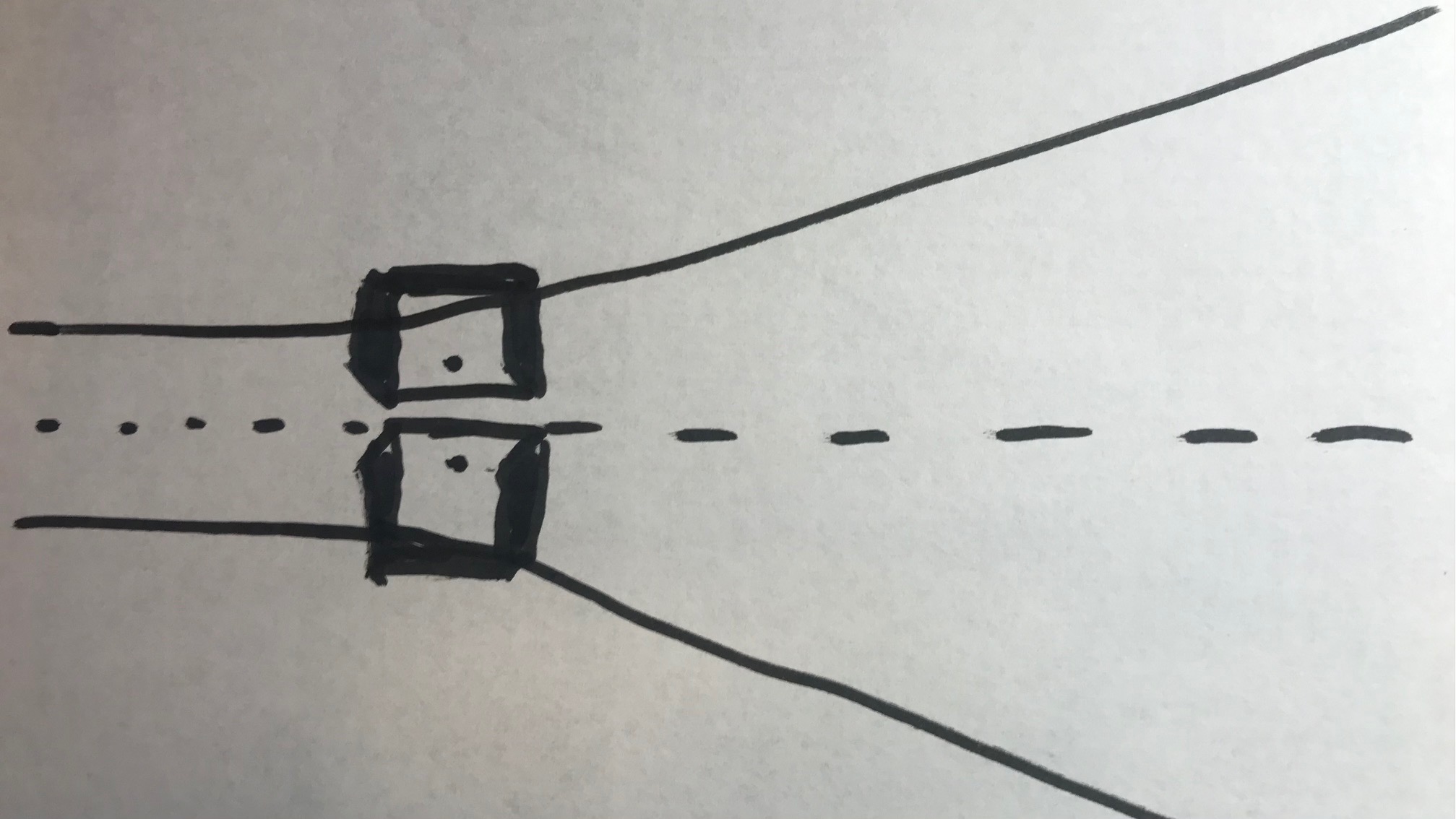
Chapter 31 entitled “Co-create Alignment” in Mindset Mondays with DTK by David Taylor-Klaus (DTK) dealt with seeking alignment when agreement is not possible. In my policymaking life I deal with this all the time. It was great to get DTK’s insight on the subject. He said, “Seeking alignment opens you onto a wide road” (p. 229). While consensus is what everyone is striving for in decision making, it is not always feasible or attainable in all situations. I would even argue it might not be the best course of action. Instead of setting consensus or full agreement as the goal, if we instead focus on finding alignment, the goal becomes finding a piece of the situation to align around as a common goal or interest. When we focus on finding alignment, conflict or disagreement can actually become a creative act that allows both parties to come to a more creative solution than either of party could come up with on their own.
We have learned much about leading through a crisis during the past year. The pandemic has challenged us to be more nimble and creative in our decision-making. When we rethink the meanings, the way we do things, philosophies, policies, and the myriad of other social issues, there’s a cascade of consequences. Therefore, alignment becomes critical. By focusing on what we and another person share in any situation, instead of what we do not, helps lead towards more creative solutions that honor both person’s ideas. By seeking alignment we can get to task-based conflict which allows us to focus on the strategies and methods for getting things done over emotions and personal dislikes. Alignment allows us to find the places we can agree and honors those disagreements we both have.
Context, as it always does, also matters here. If what we are truly seeking is collaboration then we must also have context seeking. When context is gained and clearly articulated we will be able to understand differences and account for them. This is very important and is necessary for everyone to believe they have been heard. With this clear understanding of opinions we will be able to decide whether we are or are not in alignment. Remember this, Alignment always takes precedent over the need to agree. Some of the best forms of alignment have been born out of a series of disagreements and differences. Are you opening the door to the wide road?
Play Big
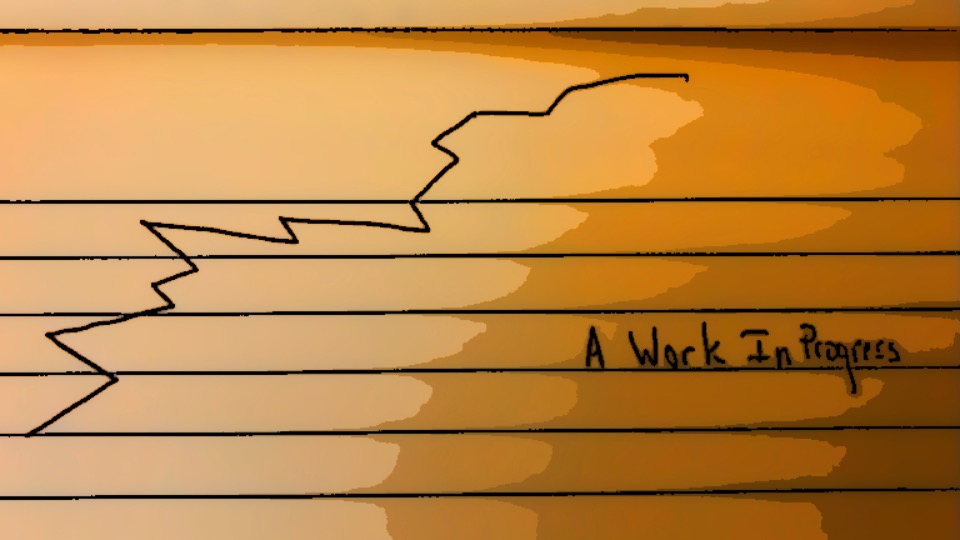
“We are, after all, a work in progress.” This was the last sentence in Chapter 30 entitled “Work in Progress” of Mindset Mondays with DTK by David Taylor-Klaus (DTK). Actually, I talk about this a lot. I use the metaphor that my portrait will never be finished. Even when I die I don’t want it to be finished, but still be adding brush strokes of something significant. DTK had a drawing of success really looking like a squiggly line, as opposed to the straight line many imagine or try to achieve. So, I took a moment and roughly plotted out my life’s journey (featured image of this post). Upon further reflection I would make a few more dips in it, but you get the idea. I would encourage you to do this little exercise. It will make you reflect deeply about your journey.
Bottom-line is that a significant life takes many twists and turns. DTK taught us that we should not make our definition of success too narrow. I would argue we also need to focus on being significant over successful. Had I stayed on a straight path to, so called, success from college till now without all the twists, turns, valleys, and peaks I probably would be disappointed. By not getting caught up in what DTK called “hyper-specific outcomes” I have had some amazing experiences and opportunities I never could have planned for, or left canvas space in the portrait that has become my life. In other words, I could have never planned out those specific outcomes in my wildest dreams. Fortunately, I have had the opportunity to play big. Are you allowing your portrait to take some twists and turns of the brush as you go?
Visions & Revisions

In this week’s Mindset Mondays with DTK lesson in Chapter 29 entitled “Make ‘Em Proud,” David Taylor-Klaus (DTK) posed this question to us: “Would the child you were be proud of the adult you are?” He told us this was very complex because as kids we had all kinds of things we wanted to do and then as adults the world tells us we can’t be all those things. The problem is that none of this talk from the world is true. Somewhere along the way we lose our wonderment with the world and begin to believe the lies of our limitations. I loved how this wonder was described in Rules Of Civility by Amor Towles, “Anyone can buy a car or a night on the town. Most of us shell our days like peanuts. One in a thousand can look at the world with amazement. I don’t mean gawking at the Chrysler Building. I’m talking about the wing of a dragonfly. The tale of the shoeshine. Walking through an unsullied hour with an unsullied heart.” We must fight being constrained by other people’s truths.

DTK asks us if it could be as simple as, “The childhood you, when faced with something they didn’t like, would set out to create something different.” I believe it could be that simple. We should never stop exploring, learning, growing and evolving. I loved another description of life from Amor Towles in Rules Of Civility that said, “It is a bit of a cliché to characterize life as a rambling journey on which we can alter our course at any given time–by the slightest turn of the wheel, the wisdom goes, we influence the chain of events and thus recast our destiny with new cohorts, circumstances, and discoveries. But for the most of us, life is nothing like that. Instead, we have a few brief periods when we are offered a handful of discrete options. Do I take this job or that job? In Chicago or New York? Do I join this circle of friends or that one, and with whom do I go home at the end of the night? And does one make time for children now? Or later? Or later still? In that sense, life is less like a journey than it is a game of honeymoon bridge. In our twenties, when there is still so much time ahead of us, time that seems ample for a hundred indecisions, for a hundred visions and revisions—we draw a card, and we must decide right then and there whether to keep that card and discard the next, or discard the first card and keep the second. And before we know it, the deck has been played out and the decisions we have just made will shape our lives for decades to come.” I believe this is true, but one caveat I make is that the deck is not limited to 52 cards and is infinite. We never have to quit shaping our lives – we get to keep drawing cards till the very end.
So, in honor of that inner child that is always with us, we need to ask ourselves how we are doing in the card game of life – keeping, discarding, asking for a new card, or even shuffling the deck. Let’s make the childhood versions of ourselves proud.
Where Were You Era

Today marks the one year anniversary of the COVOD-19 Global Pandemic. We are now officially on Day 366. Yesterday I blogged about the moment when I realized we were in this for the long haul in The Good News Is. I discussed my “Where were you?” moment. Now on Day 366 I believe Joseph Michelli’s describing the events of the global pandemic as a “Where were you?” era in Stronger Through Adversity is a better descriptor. In that same chapter, Dr. Michelli posed the question, “So, what will you remember about the pandemic?”
One of my first deep reflections came in the form of a blog post on May 8, 2020 entitled The Day We Started Down The Path With No Footprints. A year ago our lives shrank and routines were turned upside down, children were sent home from school and parents became teachers for months without breaks. Offices, restaurants, theaters, sporting events and arenas emptied. My least favorite words became “unprecedented” and “pivot.” I still cringe when I hear those words.
Today we are beginning our second year of pandemic life. While things we found to be novelties last year, may not be so cool this year, we still need to find ways think of new and improved ways of doing things. We need to use this anniversary as a profound opportunity to take inventory of what we might have been missing pre-COVID, what we’ve improved, reflect on lessons learned, and acknowledge what we’ve lost or missed. These are very important conversations to have.
Because I believe we all are leaders, I believe we should take Dr. Joseph Michelli’s advice from Stronger Through Adversity and have conversations. He suggested we develop a leadership legacy statement that highlights our optimal leadership impact (competence, purpose, or character). Here is mine that I wrote:
“Hopefully I’ll be remembered as a thoughtful leader who showed love for those I served by providing growth and development.” My Legacy Statement
I would love to hear your desired legacy. Dr. Michelli taught us we need to be having conversations that “…lead to more discussions where you encourage one another, commiserate setbacks, celebrate victories, and problem-solve barriers along your path to realizing your full potential as a leader.” He went on in the book to say, “Productive dialogue can only occur when we ask, find, and share wisdom each of us collects along our journey.” I love having those conversations and learning what others are doing to improve, cope, learn, and take advantage of opportunities during this global pandemic. Let’s keep the conversation going.
Pandemic Tested Lessons
Stronger Through Adversity: World-Class Leaders Share Pandemic-Tested Lessons on Thriving During the Toughest Challenges by Joseph Michelli
My rating: 5 of 5 stars
I am a huge believer in intersectional learning. This is the learning that can be accomplished from the commonalities and complexities of different industries, businesses, and organizations. I have always been a fan of Joseph Michelli’s work and books. He has knocked it out of the park with this latest book. This book is the encyclopedia of intersectional learning. I learned and reflected on so many things while reading this book.
I finished the book on the evening before the one year anniversary of the COVID-19 Global Pandemic. We need to use this anniversary as a profound opportunity to take inventory of what we might have been missing pre-COVID, what we’ve improved, reflect on lessons learned, and acknowledge what we’ve lost or missed. These are very important conversations to have. This book gives us the context to have the deep and meaningful conversations to help our communities of organizations, families, and businesses, cope, improve, and find the silver linings.
If you are one who likes to learn from others and then apply that learning to your own context, then this book is for you. He has studied and chronicled, in-depth, the many companies he has worked with, improved, consulted, and learned from. Every leader should read this book.
View all my reviews
The Good News Is

In A Tale Of Two Cities Charles Dickens wrote “It was the best of times, it was the worst of times, it was the age of wisdom, it was the age of foolishness, it was the epoch of belief, it was the epoch of incredulity, it was the season of Light, it was the season of Darkness, it was the spring of hope, it was the winter of despair, we had everything before us, we had nothing before us, we were all going direct to heaven, we were all going direct the other way – in short, the period was so far like the present period, that some of its noisiest authorities insisted on its being received, for good or for evil, in the superlative degree of comparison only.” It’s like Dickens was writing about the past 365 days of the COVID-19 Global Pandemic. Read it again and I believe you’ll agree it is a pretty good description of what we’ve been through.
365 days ago today, March 10, 2020, I realized while enjoying an Indiana Pacers game with some great friends from the Purdue University Krannert School of Management that we were headed for the worst of times. I made the comment toward the end of the game, “What happens if someone in the arena has the coronavirus? Or, what happens if someone on one of these teams has coronavirus?” I guess it was one of those “Where were you?” moments. Well, we found out the very next day. Rudy Gobert, of the Utah Jazz, was diagnosed with the virus on March 11, and the NBA suspended its season following play that night. Also, it was March 11, 2020 that the World Health Organization officially declared the COVID-19 Global Pandemic. Thus began the worst of times.

This morning I read Chapter 20 in Joseph Michelli’s great book (one of the silver linings of the pandemic that you all should read) Stronger Through Adversity. The title of the chapter, “Run Toward The Future,” is such a perfect descriptor for how I, and those I look to as examples and mentors, have been trying to approach this crisis. The book is a great guide on how to continue running toward the future, no matter what field you are in. It was evident from that moment at the Pacers game a year ago that life was never going to be the same. I quickly came to the realization that I was going to have to adapt, learn, grow, and get uncomfortable in order to survive. I was kind of asking myself if I had the wisdom and belief to somehow make this the best of times. I love how Dr. Michelli put it, “Some leaders only ran from danger, while others also ran toward the future” (p. 248). After a few days of getting my bearings, I consciously made the decision to use every day of the pandemic to become a better me. I can honestly say I have grown personally and professionally in the past 365 days in ways that would have never been possible under pre-pandemic circumstances.
Additionally, I made a commitment to be a beacon of hope and positivity for others. Every professional development event, meeting, or gathering I always start with something related to what day of the pandemic it is. It has actually kind of become my trade mark. For me it became and continues to be about looking for the silver linings and helping others find the silver linings. I continue to ask the questions of:
- What’s the opportunity after the opportunity? (think about that a little and it will make sense)
- What have we stopped doing during the pandemic that needs to be stopped permanently?
- What have we started doing that needs to continue?
For example, I’m a pretty good in person facilitator and speaker, but I’ve got to tell you I was apprehensive about going virtual. But overnight, literally, going virtual with presentations was what I did. Now, the opportunity after the opportunity is programs developed to be either in person or virtual, whichever the client wants. And, we stopped traveling for short, less than a day, events in luau of doing them virtually- that needs to continue. Not to mention I have improved my listening skills, ability to remember names, ability to read non-verbal queues, and make sure every voice is heard. My point is the last 365 days have enabled me to improve my craft. For a while in the spring I was doing three and four webinars a day, as we were providing free in-service for teachers. As I was helping teachers learn remote learning best practices, I was becoming a better facilitator. Those days were grueling, but as I look back they were very rewarding. Teachers tell us all the time that was some of the best development they’ve ever had and wish we could go back to offering that much development. Hear that opportunity?
Even though it has been the worst of times, there have been many moments of the best of times. And, we have certainly seen wisdom, foolishness, and belief during the past 365 days. Let’s go back to Stronger Through Adversity, where Dr. Michelli quoted James McElvain, PhD, Chief of Police for the Vancouver, Washington, Police Department, as saying, “Being a leader means you are in the forever business…” (p. 255). On day 365, and who knows how many more days of the pandemic are ahead, we need to be asking ourselves, “How are you running to the future as a leader of a forever business?”


leave a comment