Your True Nature

Many of you will remember the great show Frasier, starring Kelsey Grammer as psychiatrist Dr. Frasier Crane. There was always so much going on in each episode and many times the plot revolved around the extreme vanity of Frasier and his brother Dr. Niles Crane, played by David Hyde Pierce. One of my favorite parts of the show was the animated title screen at the beginning. It would show the title, Frasier, with a sketch of the Seattle skyline. There would always be some animation as simple as the blinking red light on top of the Space Needle, to a helicopter, to a lightning bolt, or the Seattle Monorail (my favorite). I’ve got to admit, sometimes I turn to the beginning of the show just to see that title screen come on. Click here to see a compilation of all the animated title screens.
Anyway, last night I was watching and Frasier said to Niles, “You can never deny your true nature.” This is so correct. We can’t fake it. It will hinder us from becoming all we can be and ruin our relationships with others. So, why do we all, at some time or another, stand in the way of our own happiness by denying who we are and inhibit our own freedoms? What we can learn from Frasier is that fear, vanity, ambition, stubbornness, and money all play a part. We ultimately deny our true selves because of things that are inconsequential in the long run. Think about this, too: when you deny your true nature, you are not only denying yourself, but you are also denying others the opportunity to know the true “you.” How sad is that?

As a result we present the world with a diluted version of ourselves, kind of like the markers you grab to write on the white board that are dried and out of ink and only make faint and muted tones instead of the rich vibrancy of a brand new marker. Or, perhaps the version we offer to others is altogether a farce. We end up showing the world what we think they will accept because that is easier than the thought of rejection we might face if they see our true nature.
Each one of us was born with the propensity for things that we cannot escape. We can’t be someone we are not. So, we need to be the best me “me” we can be. Don’t deny who you are out of a stubborn notion of who you wish to be, or perhaps who you think you should be. Each of us has special gifts, so let’s let our best selves begin to unfold and take flight.
Authentic & Genuine

During some leadership development & workshop presenting training I’ve been doing the last couple of days I’ve been discussing the need to be authentic and genuine. A participant asked if being authentic and being genuine are the same thing. Sometimes they get used interchangeably, but I like to use them with”and” because I believe they are two separate and important qualities.
“Authentic” refers to how we are being ourself. It is a reference to self-expression. In other words, how we express ourself reflects how we really are inside, what we are thinking, feeling, perceiving and believing. Being authentic means we externalize the same things as our inner world of thoughts.
Being “genuine” means we are exactly what we appear to be. This is about not faking it or being imitation. When our emotions are real and not pretended, we are genuine. This is about how we relate to others and interacting in a caring way. Being genuine is also about caring for others.
When being authentic and genuine we will show our vulnerabilities and imperfections. It’s about being present in the moment. We will also share our true thoughts, beliefs, and opinions with the world.
You Wanted The Best, You Got The Best!

In Chapter 44, “Trust Yourself to Create” of Mindset Mondays with DTKby David Taylor-Klaus (DTK), DTK told us, “Personally, I’d rather be judged by the world for what I do than judged by myself for what I don’t do” (p. 307). Many times we let the thought of failure or being judged keep us from getting started. We live in a world where we judge ourselves, judge others, and get judged by others. As I was watching A & E’s great Biography: KISStory Volume I last night it was said that KISS was not a critic’s band, but a band of the people. What that meant was that KISS didn’t care how the critics judged them. They cared that the fans believed they were getting the best show in the world!

Some measure life through money and accolades. Others measure it through beauty and popularity. Others measure it through family and relationships. Others measure it through service and good deeds. Chances are you measure it through some combination of all of these things, but one in particular matters most to you. This is where our values and our own identity come into play. As Gene Simmons said, “Figure out for yourself what makes you special and then create it.” “We [KiSS] were authentically us.” No one else can tell you what that is. Paul Stanley weighed in on this when he said, “No matter who you aspire to be, and how hard to try to be them, you will never be better than they are at it, so you must be the best at being who you are.” In other words we must know who we are, what we stand for, and what our competitive advantage is.
The more we are able to measure ourselves by our own internal metrics the better off we will be. The more external (the critics) our metrics for our own value and self-worth, the more we screw everything up for ourselves. An important part of our own personal growth is to recognize our own fixation, to recognize how we measure ourselves and consciously choose our internal metrics for ourselves. We must also recognize that everyone else in the world have their own metrics for judging that might, or might not, match our own. Paul Stanley shared, “We were the ones that weren’t supposed to succeed. We followed our own instincts.” Had KISS listened to the critics we might not be celebrating nearly 50 years of the greatest rock and roll band ever. Be best according to the metrics you determine.
What’s The Next Step?

“You don’t need to have all the answers but you do need to have a next step.” Sabrina Horn told us that in her great book Make It, Don’t Fake It: Leading With Authenticity For Real Business Success. I discuss this with teachers a lot. Some in the teacher development arena will tell new teachers they need to have all the answers. This advice includes faking it and not letting students know the teacher doesn’t know the answer. This is very bad advice. Just as this is not true in Sabrina’s world as a CEO, it is not true for teachers. Some of the best labs and lessons I had as a teacher were when something didn’t go as planned. I would say, “I have no idea why this didn’t work, but let’s all dig into this and figure it out together.” The students and I learned so much from this humble act. It was so much fun and I was modeling an important leadership skill for my students. All leaders would do well to learn this.
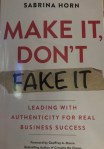
This humility does not show weakness or confidence. It shows we recognize something pretty obvious – no one knows everything. The great leaders know what they don’t know and understand there are things they don’t know they don’t know. But, learning from and with others, asking questions, and asking for help are hallmarks of an effective and humble leader. This growth mindset modeled curiosity, collaboration, and a plan for discovery with my students. This same mindset also worked for me as a principal and superintendent. Many times the next step might be pausing to learn the answers together as a team.
The Goal Setting Paradox

I have always had an interesting relationship with goal setting. I’ve always had goals, but I’ve also always believed in living life and believing there were people and opportunities that show up at the right moments for me to choose how to use the effects of – kind of like a chemical reaction. Everly, a character in Patti Callahan Henry’s great historical novel, Surviving Savannah said it best, “Anyone who is engaged in life at all is brave.” Now don’t take this to say I am against goal setting. It’s just that I believe we must recognize the paradoxical effects that goal setting can have.

This reflection on goal setting was prompted by Chapter 43, “Raise The Bar” in Mindset Mondays with DTKby David Taylor-Klaus (DTK). He taught us that we are motivated by reasonable stretches. We need to go beyond the common endpoint to what he called the “visionary goal.” He told us “…there’s something extraordinary that happens when your marshaling your energy in the direction of a stretch goal.” I totally get that and have been blessed to experience that. But, this is also where the paradox begins.

In the great book by my good friend, David Marquet, Leadership Is Language, David reminded us that strict goals plus steep hierarchies can create an environment fertile for unethical behavior. He also reminded us that, “Strategies to achieve goals are often at odds with learning.” Now, I know this was in no way where DTK was going in Chapter 43, but the paradox is worth noting. I believe it needs to become the litmus test for goals. Individuals and organizations need to keep a close eye on whether goals are creating the desired effect of stretching us toward our greater purpose. I have witnessed ambition taking over purpose and there are well documented cases of this. In fact I’ve blogged a great deal about it. If you want to check out a couple, read Passion At Ambition’s Command and When Purpose & Passion Turn Into Ambition. To counteract this, DTK taught us to remember that failure along the way, if used for learning and course correcting, is a key contributor to the ultimate success of a goal.

So, thinking back to what Everly said in Surviving Savannah, if to be engaged in life is to be brave, let’s be brave and set the bar high, make sure we don’t let the goal get in the way of learning, and never let goals turn into purposeless ambition. Remember the litmus test for goal setting.
Don’t Be Colonel Klink

I just finished re-reading the classic great book, How To Win Friends & Influence People by Dale Carnegie. There is so much great stuff in that book. One part made me pause and think, however. Carnegie talked about how to get people in an affirmative state of mind by asking questions that nudge them in the right direction, he argued this as a way to help others arrive at your conclusions or ideas on their own. This feels very coercive to me. But, I am also all too aware of coercive leaders who if it is not their idea, your idea won’t be considered. So sad, but still happens way too much.

I’ve been thinking about this for the last week or so. Then last night I flipped on Hogan’s Heroes to wind down from the day. You know, the fictional comedy based in a Nazi prisoner of war camp, Stalag 13, that ran from 1965-1971 (my childhood). Colonel Hogan was the ranking P.O.W. officer and the throughline of the show was that a group of prisoners, under Hogan’s leadership, were running special operations for the Allied Forces out of the camp. I love watching the show because there are both good and bad leadership examples to think about in a very funny setting. The Commandant, Colonel Klink, is a bumbling, self absorbed, ambitious, and very vane leader who is so inept that he boasts having a no escape record, but has a major underground (literally) Allied operation being run from the camp by prisoners.
Now, back to the topic of nudging ideas in our direction. In almost every episode Hogan will get Klink to do what he wants by putting Kink’s vanity to work. He’ll begin asking Kink things like, “If you would do_____, then you’ll look very innovative.” or “Wow if you”ll order_______, Hitler would probably give you an award or promote you.” Then Klink will turn around and say, “Hogan, I have an idea…” and repeat back the very idea Hogan planted. The best is when Hogan then says to Klink, “I just don’t know how you do it, sir. You come up with the greatest ideas. You have the mind of a great leader.” When in reality Klink couldn’t think himself out of a paper bag.
“Did House interrupt him and say, “That’s not your idea. That’s mine”? Oh, no. Not House. He was too adroit for that. He didn’t care about credit. He wanted results. So he let Wilson continue to feel that the idea was his. House even did more than that. He gave Wilson public credit for these ideas.”
“Let’s remember that everyone we come in contact with is just as human as Woodrow Wilson. So let’s use Colonel House’s technique.”
Dale Carnegie in How To Win Friends & Influence People
In the book, Carnegie used President Woodrow Wilson and Colonel Edward House as examples. House used the strategy, when Woodrow Wilson was president, of rather than giving Wilson explicit advice, the colonel would very casually mention a proposal of his in conversation or ask questions about it. Then, over time, the idea that Colonel House had planted would take root in Wilson’s mind – so much so that Wilson often thought the plan was entirely his own. Of course, House never corrected him. The most important part of this lesson is that House did not care about credit, he just wanted results.
So, if you have that boss (I won’t call them a leader because they don’t deserve it) that everything has to be their idea, give some nudges. But, if you’re that boss – QUIT being Colonel Klink!
What Are You Here For?

If we want to shift from looking at the world to validate and respond to our needs and desires to serving life’s purpose, it requires us to start from within using our profound, magical, and miraculous energy to make shifts to better the world. To do this we must draw on our inner fire. This is really the essence of shifting from surviving into thriving. We must move from ambition to meaning. This life of meaning is a life where everything is primarily influenced by purpose.
Meaning is really how all the moments of our existence are evaluated. If we want to fulfill our greatest calling then we must consciously undertake the journey from ambition to meaning. Then, and only then can transform our individual lives and influence the destiny of our sacred planet as well.
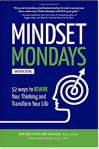
In Chapter 42, “Your Inner Fire” of Mindset Mondays with DTK by David Taylor-Klaus (DTK). He argued “Whether you call it your life purpose, mission, or quest, the work that you do in the world – that for which you are here at this time – is fueled by your inner fire” (p. 294). Only you can identify and put the accelerant on that inner fire. DTK went on to say, “I believe that every human is here to create some sort of a shift” (p. 295). I believe that too. For me, that meaning has become providing growth and development for others, either by working with them directly, or creating the policies and on-ramps to make that personal growth possible. How about you? What are you here for?
The Best Advice

I am so blessed to still be getting inspiration from Paul Stanley. Yesterday he tweeted “Any advice that starts with ‘If I were you’ should be disregarded” in response to the question “What’s the best advice you can give anyone?” asked by Eric Alper. I’ve always hated the “If I were you” advice starter. If someone giving advice starts a sentence with “If I were you…” the result is often the other person shutting down. Think about it, that person isn’t you, right?
A Psychology Today study explained there are four different types of advice; they are advice for, advice against, information, and decision support. The study found that information advice was the most effective. Information advice provides additional knowledge that the advice seeker may not know, that can shed light on other options for the present, and later down the line.
Before even giving advice I believe in taking a position of humble inquiry. Sometimes when someone is seeking advice I like to take a position of inquiry. This allows understanding the context, nuances, and entire situation. This position of inquiry also allows for empathy. Giving advice to someone is an emotional, intimate thing. I try to live by the quote of an unknown person that says, “To argue with someone else’s experience of reality is futile. To add their experience to your own is possibly useful.” The best advice I’ve gotten over the years has felt selfless from the other person.
Opening The Door To All Possibilities

Yesterday in a discussion I was a part of an individual said that we might just need to use the “get a foot in the door” technique. This immediately felt very coercive to me. It was a good discussion and now we had someone wanting to already take a step toward her own ultimate goal. In fact the group was leaning away from some of her ideas. Because this was a policy discussion, suggestion or use of this approach would be a very binary and old industrial model way of doing things. The context here was very different than someone wanting to get a foot in the door so someone, for example, could become familiar with the good work you do. The foot in the door technique referred to in the meeting was a compliance tactic that assumes agreeing to a small change increases the likelihood of agreeing to a second, larger change later.
This has actually been studied extensively. Initially you make a small request and once the person agrees to this they find it more difficult to refuse a bigger one (Freedman & Fraser, 1966). Why does it work so well? Because we like consistency and we like to be consistent. So, for the technique to work, all we have to do is have the second, larger request, be consistent with or similar in nature to the original small request. Do that and the technique will work (Petrova et al., 2007).
This theory was tested in 1980 in my own state of Indiana. Residents were called by Sherman (1980) and asked if, hypothetically, they would volunteer to spend 3 hours collecting for the American Cancer Society. Then, the same group of people were called by a different person three days later and actually asked for help – 31% agreed to help. Of the group that did not get the hypothetical ask, only 4% volunteered to help.
This feels very disingenuous to me. I can think back, even recently, to where this has been done to me in some form or another. This is another form of getting to “buy in.” Which as I always say if you have to go get “buy in” you’ve already failed. Why not do the work of including stakeholders from all vantage points with all different diverging and converging views to start with. Only when everyone has been heard and had a part in the crafting of ideas, can the door be open fully.
References
Freedman, J. L., & Fraser, S. C. (1966). Compliance without pressure: the foot-in-the-door technique. Journal of personality and social psychology, 4(2), 195.
Petrova, P. K., Cialdini, R. B., & Sills, S. J. (2007). Consistency-based compliance across cultures. Journal of Experimental Social Psychology, 43(1), 104-111.
Sherman, S. J. (1980). On the self-erasing nature of errors of prediction. Journal of Personality and Social Psychology, 39(2), 211-221.
Keep Pitching!

I’ve been in southwest Florida doing some professional development for teachers this week, so it’s appropriate that I am watching the Tampa Bay Rays hosting the Washington Nationals to unwind this evening. I love watching baseball and all the details of the game. Just now, in the third inning, I was reminded how important it is to stay focused and keep battling even when things aren’t going exactly as planned.
Shane McClanahan is pitching for the Rays in the third inning and just gave up a home run to Ryan Zimmerman for the Nationals. He then ended up with runners on second and third with two outs in that same inning. I thought to myself, “just keep pitching!” He did and struck out the next man up to get the third out and strand the runners. It is so tough to pitch out of a situation like that. It takes concentration and the ability to just keep pitching and finding command of location.
No matter what the rest of us do for a living, we must, at times, pitch ourselves out of a situation. In other words, keep pitching! Pitchers rely on their teammates, thinking through the fundamentals and the mechanics to keep them maximizing performance. We all can learn from this. Again, lets keep pitching!


leave a comment