Managing Strategies for Engagement
This post is an excerpt from the book Authentic Conversations by James Showkeir and Maren Shokeir. This book is included in BKpedia, a new digital subscription service from Berrett-Koehler Publishers. Please visit bkpedia.bkconnection.com for graphics, tweets, and other resources.
Managing Strategies for Engagement
Engagement means being able to make meaningful decisions and to have the resources to act on those decisions.
The marketplace demands results now. Your customers want attention in this moment. The necessity for flexibility and speed in the face of change is paramount. The question is how to create an organization that can:
• Quickly create and apply new knowledge
• Grant exceptions and deliver unique responses
• Foster passion and accountability throughout the entire enterprise
For these significant changes to occur, three areas in the organization must be affected: (1) culture and management/governance practices, (2) architecture, which includes the ways jobs are designed and how people are grouped, and (3) the ways in which employees are rewarded. For all these changes to be planted and take root, new conversations are required.
Individuals must accept personal accountability for the success of the whole business and be responsible for their own motivation and morale. The culture must generate passion for the work and action in service of customers and good results. This requires less focus on personal ambition and a sincere commitment to the success of others.
Organizations have to create and sustain universal business literacy and adult-to-adult conversations, one person at a time. Management practices, such as budgeting, meetings, training, objective setting, performance reviews, and so on, must be recreated to encourage partnership. Dissent must be viewed as healthy. Through different conversations, knowledge and collaboration are baked into the work process, replacing compliance and control as the operating values.
Where to start? If the longest journey begins with a single step, it won’t surprise you that our advice is to begin by changing the conversations. Better conversations will reap rich, diverse information. They will encourage an examination of who plays key roles in improving business results. They will allow you to address difficult issues in a constructive way.
New conversations will champion the kind of learning and resourcefulness that lead to innovation, cost efficiency, and personal accountability—essential elements in addressing the complex problems of organizational renovation.
*****
James Showkeir and Maren Showkeir are principals of Henning-Showkeir & Associates, Inc., whose clients include 3M, Ford Motor Company, Kaiser Permanente, British Airways, Coca-Cola, Hewlett-Packard, Levi Strauss, the Greenleaf Center for Servant-Leadership, and the Nature Conservancy. Together they authored Authentic Conversations and Yoga Wisdom at Work. James passed away in August of 2015.
Compelling Purpose
 It was such an honor to support the launch of the 10-year anniversary edition of The Serving Leader. I love having the opportunity to collaborate with Becky Robinson and all the great individuals at Weaving Influence. Being part of their launch teams has enabled me to grow personally as a leader and hopefully provide valuable information about potential books for other leaders to read, both through my blog posts and Tweets.
I am particularly glad I had the opportunity to read The Serving Leader, not only because it is a great book, but also because it really hit home with some things I am experiencing first hand right now as a school leader. I love the way the book has provided us with ways to navigate so many of the real-life challenges and opportunities that face leaders every day. By reading and reflecting on the book, I was able to put myself in those situations or go back and think about past experiences and think through the proper way to respond. The key word here is “respond,” instead of reacting. The book gives lessons on Five Powerful Actions:
- Run to Great Purpose
- Upend the Pyramid
- Raise the Bar
- Blaze the Trail
- Build on Strength
 For this post, I want to focus on “running to a great purpose” and “building on strengths.” I believe Kenneth Jennings and John Stahl-Wert (2016) got it right when they said, “Failing to provide workers with a link between their daily tasks and a great and compelling purpose is tantamount to managerial malpractice (p. 137).” It is possible for everyone in an organization and even the stakeholders supporting the organization to run toward a greater purpose. As a school leader of turnaround schools that have been in need of cultural, operational, and academic changes I have learned that the team needs a compelling purpose. For us, this has become being a “Real School” and “Students First.” Think about it…doesn’t every student deserve a “real school” and to be put at the top of the priority list.
This book really reinforced the idea that part of being a serving leader is to create and cultivate an exciting fully engaged workforce. We all know that workforce engagement, or the idea that we all believe that what we are doing makes a difference for the organization we work for and the people we serve. To that end it is very important that every individual understands his/her role in carrying out the purpose of the organization. We must, as is pointed out in the book, recognize that those we lead are looking to us to help them understand why the role he/she is playing is crucial to carrying out the great purpose.
I’m really proud of how we have been running toward a great purpose as a school. Through our Focused Leader Academy, becoming a learning organization, and making decisions in a collaborative fashion we are building on the strengths of our staff, which is becoming very engaged. Our teachers do understand the difference they are making in the world. Every day I see more of our teachers stepping up into teacher leadership roles. I would like to share a couple of comments written by a teachers applying to be part of our School Improvement Team. I believe that our vision is being translated into every daily work assignment (Jennings & Stahl-Wert, 2016). Here are the comments:
“As a school, our primary focus is upholding the expectation that all students will achieve academically. As educators, we strive to close the achievement gap between our low-performing students and their more average achieving peers. My commitment to school-wide change and my understanding of how to apply the collective knowledge of my colleagues in order to improve teaching and learning in my course has prompted me to apply for this excellent opportunity”
“…I have seen the school grow by leaps and bounds into something quite brilliant. I want to see the program continue to grow and evolve with the needs of our students, families, and staff. A school like ours is desperately needed by so many across the state. It would truly be a huge disservice if we simply dug our heals in and continued to just “do what we’ve always done.” We must keep our machine well-oiled, maintained, and on the cutting edge and the only way to accomplish that is to make improvements along the way.”
As you can see we are making progress toward a culture of excellence where our staff is becoming engaged in true contribution. By encouraging risk and encouraging failing forward our staff is excited to take on new and challenging leadership assignments with the goal of carrying out our compelling purpose.
Reference
Jennings, K. R. & Stahl-Wert, J. (2016). The serving leader: five powerful actions to transform your team, business, and community. Oakland, CA: Berrett-Koehler Publishers, Inc.
Reading You Like A Book
 Lesson #21 in The Disciplined Leader (2015) by John M. Manning is about how as leaders it is important for us to understand what kind of nonverbal communication cues we are sending. In reading this lesson I was reminded of the incredible book by Dr. Nick Morgan, Power Cues (2014). Power Cues reports new brain and behavioral science about how humans communicate, and the importance of authentic face-to-face interactions. Dr. Morgan goes into detail on the visual cues, subtle gestures, sounds and signals that elicit emotion. As Manning (2015) taught us, leaders who are not in tune with putting on the right game face on are not effective with their teams. Manning (2015) said, ‘Leaders tend to pay way more attention to their verbal communication than their nonverbal communication. Many leaders often aren’t aware of what their nonverbal habits are and how they regularly affect others (Kindle Locations 1216-1217).” Leaders who understand how to become more persuasive and how to communicate more effectively will create more influence in all dealings, and as we know, leadership is about influence.
“No one gets led anywhere they don’t want to go. Machiavelli was wrong; leadership is not manipulation, not in the long run. It’s alignment, the leader with the group and the group with the leader. But you first have to maximize and focus your leadership strengths in order to be ready when your moment comes.” ~ Dr. Nick Morgan

“What this means is that body language doesn’t lie and can make or break what and how well you communicate to others.” ~ John M. Manning
The first three Power Cues deal with non verbal communication (Morgan, 2014):
- The first power cue is all about self-awareness. How do you show up when you walk into a room?
- The second power cue involves taking charge of your nonverbal communications in order to project the persona you want to project— through your emotions. What emotions do you convey through your body language for important moments, conversations, meetings, and presentations?
- The third power cue helps you learn to read unconscious messages. What unconscious messages are you receiving from others?
So, as you can see it is important for us to think about the nonverbal cues we are sending, but it is also important for effective leaders to read the nonverbal signals of others. Morgan (2014) told us that body language always trumps the spoken content. He also taught us in Power Cues that most of the emotional colors and tones of conversation are set through gestures (Morgan, 2014). For those involved in education reading this, Morgan (2014) pointed out that researchers have studied how children learn and have determined that they learn nonverbally first.
The bottom line is we need to be very aware of what message we are sending in our gestures, eye contact, hands, arms, stance, and attentiveness. As Morgan (2014) pointed out, the nonverbal communications, such as gesture, happen in the brain ahead of the verbal (spoken) communication. These nonverbal signals send messages that speak to the whole person and influence our ability to build effective relationships with our teams, influence those individuals, and lead our organizations.
If you want to dig deeper I would recommend getting a copy and reading Power Cues (2014) by Dr. Nick Morgan. Combine that with reading Manning’s The Disciplined Leader (2015) and you are taking major leaps toward your professional growth and becoming an even more influential leader.
References
Manning, John (2015-06-15). The disciplined leader: Keeping the focus on what really matters. Berrett-Koehler Publishers. Kindle Edition.
Morgan, Nick (2014). Power cues: The subtle science of leading groups, persuading others, and maximizing your personal impact. Cambridge, MA: Harvard Business Review Press. Kindle Edition.
Language Matters!
 Have you ever had someone call you out for something you said? Have you ever regretted saying something in the way you said it? Have you ever wondered why your team did not understand what you said? Have you ever been offended by something someone said? I think you probably get the idea of where I am going in this post – Language Matters. Say what you mean. Mean what you say. Lesson #20 in John M. Manning’s book The Disciplined Leader (2015) deals with choosing the right words. Another way of looking at this is to “think before you speak.”
The truth is, leaders rise and fall by the language they use. Sometimes whole visions live and die on the bases of the words the leader chooses for articulating that vision. Using the right message can build champions in your corner. The right words make your ideas and vision memorable and powerful. Additionally, relationships are formed or torn apart by the words chosen. Using the right language and making the implicit explicit gives our stakeholders an insider type language that can bring an entire community of stakeholders together around a change, an idea, or a vision. It’s a battle cry of sorts.
Those I work with will tell you I take a great deal of time constructing how things will be communicated. Sometimes, I have been known to take several days to come up with just the right word or phrase. I want to find just the right way to capture the imagination, reality of context, or lift the spirit of the organization and all stakeholders. I am not suggesting that the time I spend on this is necessarily good – sometimes I am slow to get a message out. We could argue whether this is right or wrong, but I chose to strive to go out with the right thing, not the quickest thing.
 I still remember being inspired by the battle cry that the greatest rock and roll band ever, in my opinion, KISS, uses: “You wanted the best, you got the best. KISS!” Think about that – I wanted to go to the greatest rock show, and I always got it. Language Matters! But then we also know, we must then Walk the Talk!
Choosing the right words will help us set up everyone we lead for a level of effectiveness that will bolster a culture of excellence and steady it against the winds of change. I remember Gene Simmons talking about how the rallying cry of “You wanted the best, you got the best!” brought the entire Kiss Army together and began the huge following that still exists. Again, language matters!
If your not buying into what I am saying, think about this: KISS was started in 1973 with me as an immediate fan at age 10. Now, in the year I will turn 53, I am recalling the rallying cry of a group I still look to as a leadership example and an individual, Gene Simmons, who is on my personal Mount Rushmore as a leader. The bottom line is that the words you choose really do matter. Leaders must make the investment in time and energy and pay the price for choosing the right words based on the context and stakeholders. When we, as leaders, make this investment, the payoff is of “rock star” proportions.
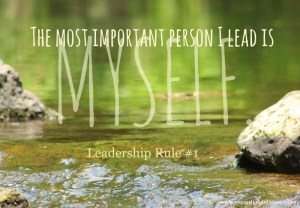
My Vital Few for Leading Myself
 This week I completed Part I of John M. Manning’s great book, The Disciplined Leader (2015). It has been an incredible journey, so far, for our Focused Leader Academy participants and I to read this this book one lesson at a time each week and blog about it. Part I’s 19 lessons have been incredible. Every one of the lessons was applicable at the time I was reading them. At the end of Part I, Manning (2015) encourages us to pick the Vital Three of the lessons in Part I that we need to focus on. Well, honestly, I need to continue improvement in all 19, but I picked one I really need to get better at, “Plan Each Day;” one I always need to remind myself to do, “Tackle the Tough Stuff;” and one I really had some great development of working with our Focused Leader Academy participants on, “Zero In On Your Values.” What I would like to do is share the original post for each of these lessons and explain why it is one of my vital few.
Plan Each Day
Click here to read my original post, “Turning Scattered Ways Into Saner Days.”
Having our day planned out, as leaders, is so important. It is so easy to have our days hijacked. It is important to note that this hijacking is not necessarily for things that are not important, but touch points that just happen. As a school leader, most of my time is spent on people, our most important asset, but I also owe it to our students to get the other important work done as well. I used to say, when I was a principal, “People by day, paperwork at night.” It works, and I still do some of this, but still not the most efficient way to get things done. Therefore, I have adopted the practice of spending at least 15 minutes at the start of each day; creating a plan for the day. It is vital that I do this with fidelity.
 Tackle The Tough Stuff
Click here to read my original post, “Deadline: Yesterday!”
In my world, the toughest stuff is usually working out situations being experienced by students, families, and staff. I have to remember that any issue being experienced by these stakeholders is the most important thing in their life at that moment, and rightly so. It is important for me to tackle this tough stuff first. What is your tough stuff as a leader? Are you tackling the tough stuff first?
Zero In On Your Values
Click here to read my original post, “Values Define Your Unique Leadership Identity.”
I must say in the last seven months on my journey facilitating the Focused Leader Academy that I have been profoundly changed in the areas of vision, mission, and core values development. I have now truly experienced organic organizational development. What started as a simple lesson for Focused Leader Academy participants in vision, mission, and core values development turned into a four month process. I watched in amazement as our 15 participants developed vision, mission, and core value models. I was amazed as we had discussions about core values and we developed our network of school’s core values and honed our own personal core values at the same time. In fact, on February 12th our Focused Leader Academy participants are going to lead a retreat session for our school board on our school’s vision, mission, and core values. 
As you can see, the first 19 lessons in The Disciplined Leader have been an incredible journey. Do you know your vital few for leading yourself? If not, I encourage you to get the book and join us in the journey. You can follow along with all our Focused Leader Academy sessions, blogs, and learning by using the Twitter hashtag: #HoosierFLA.
Reference
Manning, John (2015). The disciplined leader: Keeping the focus on what really matters. Berrett-Koehler Publishers.
Better Implementation!
 Last week I wrote “Consensus to Implementation.” In that blog post I focused on consensus. Click here to read the post. For this post I want to focus on the implementation piece. So, here is my definition of implementation: A process that includes and respects all parties, and generates as much agreement as possible sets the stage for greater cooperation in implementing the resulting decisions.
“Where do great initiatives go to die: implementation.”
It is sad, but we see it all the time; great initiatives, ideas, or legislation die during implementation. I have seen this during my time on the Indiana State Board of Education, in schools, and many other organizations. Sometimes this is by design, which is very sad and a whole other story – thus why monitoring will be one of the keys I mention to successful implementation. As I see it, there are keys to successful implementation of anything:
- Organization
- Role development
- Planning
- Resources
- Communication
- Monitoring
I want to speak to two of these specifically. One of the great things I learned at Harvard is how important the role development part of implementation is. It is an element that many leave out of the process. But, it is very important for everyone involved in the implementation of anything that he or she understand their role in carrying out the initiative. This might be the most important element, but is many times left out.
The other important piece is monitoring. As leaders, we must get optics on the necessary data to make sure initiatives are being implemented with fidelity. This might be one of the toughest elements, particularly when it comes to legislative/policy initiatives. Sometimes the optics on the data just is not possible. Therefore, initiatives that really could have done a great deal of good, become failures – not because the concept was bad, but because of implementation. Again, make no mistake, sometimes implementation failure is by design. This is a sad, but true, fact.
Therefore, it is very important that the ability for the correct individuals, governing bodies, or stakeholders be built into the consensus to implementation process. If it is not then great ideas, legislation, and initiatives are doomed to die in implementation. Let’s all strive for Better Implementation!
Great Leaders Never Stop Evolving
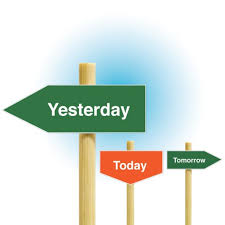 Being a great leader is about adapting and evolving as we go through our journey. I am not talking about adaptive leadership in the sense of adapting to different circumstances. I am talking about growth. This week’s lesson from John M. Manning in The Disciplined Leader was about believing in one’s potential. I am putting a little different twist on this and submitting to you that the way to believe in one’s potential is to develop a mindset of continual honing of one’s potential. This takes us back to the idea of personal growth I blogged about earlier this week. Click here to read “Professional Growth Puzzle.”
Confidence comes from our continuous personal and professional growth. Therefore we must continue to adapt and evolve. I still amazed and excited by the amount of learning that still goes on in my life every day. This is not by chance, however. This comes from being open to learning and realizing I still have a lot of learning to do. This does not mean that I think I dumb; it means I have a mindset of learning in every situation of my life’s leadership journey… and it is o.k. to say, “I’m not there yet.”
“Be realistic and expect an imperfect journey. But always believe in a fulfilling experience regardless of any imperfections.” ~ John M. Manning
 So, be confident is where you are in your professional and personal leadership journey! Know that you will not be perfect in this journey and adopt the mindset of continuous improvement. Learning can be so exciting so I encourage you to love every minute of your own evolution and adaptation as a leader. I’ll leave you with my favorite John F. Kennedy quote:
“Learning and leading are indispensable to each other.” ~ John F. Kennedy
Reference
Manning, John (2015-06-15). The disciplined leader: Keeping the focus on what really matters. Berrett-Koehler Publishers. Kindle Edition.
Consensus To Implementation
 I received an email a couple of days ago from Kris Amundson, Executive Director of the National Association of State Boards of Education posing the question: is consensus even possible in today’s polarized environment? The question gave me pause and is something I have thought about in the context of partisanship and in the context of boards I am a part of. My immediate reaction was to say, “sure.” Particularly because of my own experience when asking Indiana Speaker of the House, Brian Bosma, what success would look like in his eyes after appointing me to the Indiana State Board of Education. His answer was, “Consensus to implementation.” This was a very powerful statement and one I have reflected on a great deal and have tried to live. In fact I have included thoughts on consensus in other blog posts. Click here to read “Civilized Disdain Vs. Political Correctness.” You can also click here to read “The Sheer Guts of Leadership.”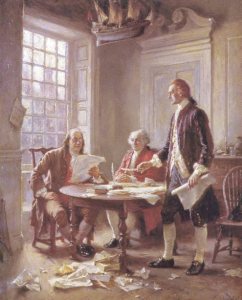
Now, back to the question at hand: is consensus possible? I sure hope so! Within every member of any group there is a lifetime of experiences and knowledge. Consensus is a way to tap the collective knowledge of the group to craft the best decisions possible. I get concerned when everyone wants to argue that we have become polarized because of partisan beliefs. I still firmly believe that these partisan beliefs are what get us to greatness. Where would our country be today had our founding fathers not had the heated debates/arguments about the framing of our democracy. In the end they reached consensus and implemented. The problem is when we let our own beliefs polarize us from truly listening to others’ perspectives, and a lack of willingness to share our own perspectives. We must also have the humility to understand that our own ideas may not be the best ones.
Furthermore, as we study consensus, it is important to remember that consensus is not unanimous agreement. Group members may consent to a decision, or part of a plan they disagree with, but recognize the consented upon decision best meets the needs of the group or organization, and therefore give permission to it. The key here is a commitment by each individual to honor the best interests of the group. In fact I have adopted the idea of “consensus to implementation” as one of my core values. I would submit that every person, organization, and government should do the same.
Using the core value of “consensus to implementation” allows a cooperative interest, where members are willing to work together to find the solution that meets the needs of the group. Consensus allows us to work together and create the best solution. Relationships matter when using consensus. Group members then hold each other accountable to then begin implementation upon reaching consensus.
Here are the keys to practicing in a culture of consensus, as I see it:
- Effective listening
- Humility
- Respect for others’ opinions
- Not using a right or wrong judgmental mindset of everything
- Be prepared explain your own views
- Put the group’s best interest ahead of your own
- Be visionary
- Welcome feedback
- Work to understand others’ opinions and beliefs
- Share your individual expertise
The fundamental idea of consensus is for all people to be able to express themselves in their own words and of their own free will. Consensus assures all can speak and be heard. I would argue that when we say consensus is not happening, or even possible at all, it is because we are really practicing coercion, trade-offs, and being self serving. Consensus allows us to develop creative alternatives, transforming alternatives, and compromise with synthesis.
So, do you agree with me when I say consensus is still possible? As for me, I will continue to work for “consensus to implementation.”
Professional Growth Puzzle
 It never ceases to amaze me how when reading a book with 52 weekly lessons, how each week can somehow be related to something in my weekly leadership journey. This week is no exception. Lesson #18 in The Disciplined Leader (2015) by John M. Manning was titled “Write Your Professional Development Plan.” I am a firm believer that personal professional growth must be personal. In fact I blogged about this back in 2011 back in 2011 after being a part of reimagining 21st century education with the Pearson Foundation and the Smithsonian Institution. Click here to read Autonomy – Professional Growth Must Be Personal.
At the completion of our January Focused Leader Academy session yesterday I had a teacher ask me if at the end of the program in June if I would be doing an evaluation of each participant to see where they were as a leader and what they still needed to work on. Honestly, I had not given that a lot of thought yet, but my answer was: “I hadn’t thought about that yet, but yes that must happen.” Then I told her that part of that would have to be developing a personal professional growth plan. As I explained to her, leaders must own their own professional growth and she would need to continue to take responsibility for it. It is simply ludicrous to think that any organization can provide every piece of professional develop that every individual needs. As Manning (2015) pointed out, “having a professional development plan— a blueprint for where we want to go, what we want to be, and the steps we need to take to achieve it— can make the difference between professional fulfillment and failure (Kindle Location 1053-1055).” Now, it is part of mine and the organization’s responsibility to help mentor this teacher leader and help her to develop her plan. That is really an important part of the Focused Leader Academy.
Our knowledge base is growing so quickly that individuals will no longer be able to think in terms of career education, but rather of a lifetime of multiple careers. It is the job of the organization to assist its employees in coping with this rapid change. The organization must be prepared to help its employees avoid the erosion of their skills and the onset of individual obsolescence. This is such an important concept as a believer that every person must lead from where they are. A professional development effort is most effective when it is integrated in the organization and internalized by the participant. It is why our Focused Leadership Projects are such an important part of our Focused Leader Academy.
“Even leaders with the best of intentions often do not realize the dramatic impact they can exert by being a role model or by providing guidance to employees seeking new paths to career satisfaction.” ~ Beverly L. Kaye
I appreciated this reminder of how important it will be for each of our teacher leaders to develop a professional growth plan. I will need to help mentor each participant and provide feedback. But… the plan will need to be owned by each individual. As Manning (2015) taught us, “Disciplined Leaders have been self-driven, lifelong learners who always put their goals down on paper and assigned a timeline with action steps for accomplishing those goals. They remained personally accountable to whatever they were pushing themselves to learn, do, or achieve (Kindle Locations 1065-1067).” In response to the original question of providing an evaluation – I prefer to call this feedback – I would posit that the feedback must be focused on behavior rather than on personality, that is based on observations rather than opinions, that is descriptive rather that judgmental. She will need for me to share ideas and information, that is specific about situations, and that is given at the appropriate time.
During the writing of this post I am reminded that in addition to taking responsibility for my own professional growth, I must also take personal responsibility for supporting the professional growth of all those I lead.
Reference
Manning, John (2015). The disciplined leader: Keeping the focus on what really matters. Berrett-Koehler Publishers. Kindle Edition.
Turning Scattered Ways Into Saner Days
 It seems that any time leadership is discussed the topic of planning and time management comes up, and rightly so. If you think about it, it really makes sense as to why so many of us do a poor job of planning our day – we are “doers.” We want to get our day started and do something, not plan it. But, John Manning (2015) reminded us in this week’s lesson in The Disciplined Leader that, “Planning helps you plot out the best strategies and actions for achieving your vital goals and how to overcome foreseeable obstacles (Kindle Locations 1011-1012).” It is important to remember that planning is an important part of being a disciplined leader.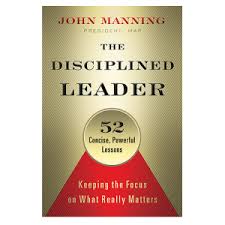
We must make time to plan our day if we want to get the most out of our time and be focused on the things that matter. Carving out time, any amount of time, in the day to focus on true strategy or long term planning is also critical. Another very important thing leaders should spend their time on is carving out some time every day for themselves. Time spent improving yourself, your skills and even learning new skills, is never time wasted. It is one more critical action you can take as you model the behavior of great leaders!
For me this really becomes more about doing the right things each day. Manning (2015) pointed out that we must attack our day by having a plan ready the night before for the next day. Great advice! I also read a few years ago, and follow the advice of spending 15 minutes of my morning personal professional development time each morning planning out the day. This has worked well for me. Also, keeping a running list of things I need to do and then looking at this list each day to see what needs to be added to that days priorities also works. Now, I don’t want you to get the idea that I am good at this – I’m not. Some days, in fact, I am terrible at it. If we are all honest, we probably all struggle to be good at this all the time.
The bottom-line is we must take time to plan and review our day, every day. As I stated above, I set aside the first 15 minutes in the morning to note the tasks I need to accomplish each day. Some leaders I know do this as they commute to work. Because I prefer to listen to books when I commute, I don’t use my commute as planning time. We also need to remember to finish the day by reflecting on what went particularly well and where we could improve our performance. We need to take time to reflect on what went well and how conversations or meetings could have gone better.
A little planning can help us to us to turn our scattered ways into saner days. How can you improve your daily plan?
Reference
Manning, John (2015). The disciplined leader: Keeping the focus on what really matters. Berrett-Koehler Publishers. Kindle Edition.


leave a comment