Leading Like Charlotte’s Web
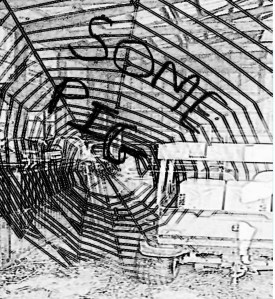
You all know I love intersectional learning, where I, or I have others, take a random object and create meaning about a seemingly unrelated topic. I never thought that a spider web would lead to the unbelievably deep conversation it did with our Florida 3D Leadership participants last night. To get things started for the evening, I asked them to look at a picture of a spider web I had come across in my barn to the journey they are on right now. When our small groups came back from their discussions I could tell from the energy it was going to be an amazing evening. When the first group started to report out, the participant said, “I loved my group.” Those of you who have facilitated before know how good that sounds and feels.
The participant went on to say that Lauren Berry, Curriculum Resource Teacher at Collier Charter Academy in Naples, Florida, had thought of all the lessons from Charlotte’s Web. You know, the 1952 classic written by E.B. White and then turned into a great movie in 2006. The genius of White’s work was that he used a deceptively mundane and ordinary setting, set of characters, and plot to explain the profundity of life in ways that people of all ages can understand. The perfect definition of intersectional learning! Without knowing it I had spurred this deep discussion with something as mundane, but incredibly complex, as a spider web – in a barn of all places.
So, what did Lauren and her group teach us? First of all, to sum up a 184 page book in a couple of sentences, Wilbur, a pig given to a little girl, Fern, yearns for companionship but is snubbed by the other animals. When he finds out he is be raised for slaughter he is befriended by a barn spider named Charlotte, whose web sits in a doorway overlooking Wilbur’s enclosure. Here are the points that Lauren and her group made to us:
- Friendship and relationships are at the core of everything. Charlotte said, “After all, what’s a life, anyway? We’re born, we live a little while, we die. A spider’s life can’t help being something of a mess, with all this trapping and eating flies. By helping you, perhaps I was trying to lift up my life a trifle. Heaven knows anyone’s life can stand a little of that.” Life is precious, wonderful and beautiful, especially when it is well-lived.
- Celebrate diversity. Wilbur and Charlotte are very different, but friendship makes it possible to transcend those differences. Even Templeton the Rat, the self-serving one even learns to be a team player (sorry, I couldn’t help but put the rat in the mix, too).
- Wilbur was humble. “Why did you do all this for me?” Wilbur asked. “I don’t deserve it. I’ve never done anything for you.” “You have been my friend,” replied Charlotte. “That in itself is a tremendous thing.” People respond well to humility because it shows that you place yourself at the same level as others, and not above them.
We were so blessed to be reminded of this story last night. My hope is that we will always keep in our hearts the lessons of friendship, life, and loss that will help us navigate through our lives to be better leaders, friends, and people in this diverse world.
The Path To Brilliance
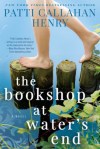
Have you ever been called brilliant? Have you ever called someone else brilliant? Have you ever looked at something and said, “Brilliant!”? Yes, you guessed it, I’m writing about brilliance. It is such a versatile word that has many meanings and connotations. Actually, brilliance is subjective. What’s brilliant to me may not be brilliant to you. What speaks to me may not speak to you. I loved the line in The Bookshop At Water’s End by Patti Callahan Henry where Mimi tells Piper, “There’s more than one way to be brilliant.” I looked up the word brilliant and found it to mean bright, radiant, clever or talented, outstanding, and impressive. Do you get the idea of why that word is so versatile? Also, I can think of people or art that fit one or two of those definitions, but not necessarily all. Brilliant people are those who stand for something larger than themselves. Brilliant people are those that have found their own niche or are creating their own niche.
We can all be brilliant. Mimi also reminded Piper that, “We all take different paths.” But, it must be on our terms – our own vision and place in the world. Each of us has a place in this world. Each of us has a different path to brilliance – that creativity and unique perspective that each of us has. For those we serve, whether teammates, employees, or student scholars, let’s not forget “There’s more than one way to be brilliant.” How are you being brilliant?
Leading Like Columbo

Many of you probably could have guessed that after a week of celebrating 50 years of Columbo that I would do a post about the rumpled and disheveled, but brilliant homicide detective played by Peter Falk. I blogged about him before in Listen and Look, Look and Listen. This past Wednesday, September 15th marked 50 years to the day since the first episode. Cozi TV 📺 did a Columbo marathon yesterday, and I made time last night for an episode I had not seen. The episode I watched was Murder, A Self Portrait. A new book, Shooting Columbo, by David Koenig just released this fall and is on my to read list. And…one more thing…I need to go back and reread Falk’s great book Just One More Thing.
There are many lessons that can be learned from the character, Lieutenant Columbo. For example, the conversation with Oliver Brandt in the Bye-Bye Sky High IQ Murder Case: “You know, sir, it’s a funny thing. All my life, I kept running into smart people. In school, there were lot’s of smarter kids, and when I first joined the force, sir, they had some very clever people there and I could tell right away it wasn’t going to be easy making detective as long as they were around. But I figured if I worked harder than they did, put in more time, read the books, kept my eyes open, maybe I could make it happen. And I did. And I really love my work, sir.” Did you catch that? He decided to work harder than everyone else.
Columbo has zero vanity. Most who know me, know I have little use for vanity. For many, vanity and ambition rule their passion. I loved the line in The Bookshop At Water’s End by Patti Callahan Henry that says, “His ego was dented, not his heart.” This was referring to Piper rejecting the plea of the boyfriend who had dumped her to get back together. In other words he really didn’t love her, he just didn’t like being seen as being rejected himself – vanity. It is the lack of vanity and his best feature of humility that give Columbo the skills to work with famous artists, as in the episode I watched last night or a homeless alcoholic in Negative Reaction. He is an authentic person with no false airs about him.
Status symbols don’t matter to Columbo. Just look at his beat up car. He is happy being who he is and being very good at it. That really is a big part of the success of the character of Columbo – being underestimated. It’s a reminder of how much credence we give to images. There are no delusions of grandeur. He’s absolutely content with what he has. We could all learn a lot from this.
“Everything under the surface,” “I would have had to keep digging,” and “You have to finish the painting” were all quotes that were meaningful at the end of the episode I watched last night and spoke to Columbo’s tenacity and thoroughness. Had Columbo not taken the time to read a book about the murdering artist he would not have known about a special paint, Barsini Red, that made solving the case possible. We must keep digging and know there is always more under the surface.
The Power For Change
I have always been a believer that we need to view our worlds from the perspective that there are no wrong decisions as long as we base them on all the information we have at the time. I was reminded of this last week and have now taken time to pause and reflect about this. The reminder was a comment in The Bookshop At Water’s End by Patti Callahan Henry. The book was amazing and I highly recommend it. Here is what was written: “We do what we can with what we know at the time. And, with what we believe.” This is so true. Our knowledge, wisdom, and beliefs come into play when making decisions. Additionally, our emotions play a role and I believe this is a good thing. Every moment of success in our lives has been a result of all the decisions we’ve made combined, whether we call them bad or good, or right or wrong. Our decisions are additive.
I love another line in the book where the character said, “We can’t subtract or undo decisions but we can make new ones.” This speaks to the additive nature of decisions I spoke about. What I really reflected on while reading this great book was that while some decisions open doors wide to success, others pull us into real and sometime perceived problems. But, it’s our attitude toward those decisions that decide our fate, not the nature of those decisions.
Let me share one more quote from the book to help make my final point: “Inside the very worst things you can find the power for change.” Sometimes decisions that seemed wrong at the time, help us make the right decision. For example, the student who chooses to do an internship in a medical office and hates it. The decision was not wrong, it was the right decision to let her know she didn’t like that field and should pick something else. So don’t judge your past decisions too harshly, instead learn from them and move on. Don’t use them as an excuse to affect your present.
A Scholar’s Book Of Life

Yesterday, we used pumpkins in our leadership development workshop in Georgia. Participants carved out an image of their leadership mantra on one side and their leadership legacy on the other. I always love seeing these and hearing the explanations. They were all very meaningful and inspiring, but one really caused me to pause as an educator and leader. The participant had carved a book into the pumpkin (the featured picture of this post).
The teacher leader then went on to explain that the book represented each students’ book of life and she wanted her legacy to be entered in the book as having taught the student something and having positively influenced her or his life in some way. I thought this book was a pretty great metaphor.
In some professional development at another school this week we discussed how every teacher needs to own every scholar in the school regardless if she or he is in your class or not. The pumpkin carving reminded us that we are impacting students even when we don’t know it. Here’s the best part: to make it in a student’s book of life, teachers don’t have to be perfect.
Students remember teachers for all kinds of reasons. Students might be inspired by teachers who were kind, funny, brilliant, or passionate. The kids we serve remember the teachers who really cared about them. Our scholars remember teachers who were supportive or encouraging or saw something in them no one else did and then challenged them and made them think. Finally, our students also remember teachers who were maybe just a little quirky. Thank goodness!
Every staff member in the school represents the next entry or chapter of our scholar’s stories. Let’s fill up the pages of those books!
Telling Our Stories

I am so loving The Bookshop At Water’s End by Patti Callahan Henry. Patti has done such an incredible job of developing the characters in this novel. It is yet another affirmation that we can learn so much from fictional characters. We get to know everything about these characters. In real-life and non-fiction we only get to know what is revealed, based on authenticity. In the book it was said that, “Some things can only be told by those living them.” This is why how we live, lead, serve, and tell the story is so important.
Another line in the book, “Sometimes we tell our stories, and sometimes our stories tell us.” If that statement doesn’t cause you to stop, think, and take stock, I’m not sure what will. As I have watched interviews, reflected, and remembered 9/11 today these quotes from the book are even more powerful. Every person who was living on that day experienced the event differently. Those stories can only be told by each of us in the context we lived it. And, for some the stories tell much about the person.

Additionally, I had the chance to eat dinner with my son on Thursday night and his sliders came in a basket lined with cool paper printed with actual news stories. His paper had an article about November 9, 1989 when the Berlin Wall fell and an article about when the Titanic was found. He wanted to talk about these two things. I was around for those events, but didn’t have much connection with the Titanic. I did, however, live through the Cold War and have stood where the Berlin Wall was and brought home pieces of the Berlin Wall.
As leaders we need to remember these statements. It is why relationships are job one. If we want to live by the Platinum Rule, “Do unto others as they would want to be done to them,” we must know the stories of those we serve. Notice the difference between the Platinum Rule and Golden Rule is only changing “you” to “they” and “them.” Now Jesus might not be happy with me promoting the platinum over the golden, but when we study the leadership of Jesus we find that he also took time to hear the stories and context of those he served. He met people where they were regardless of their story. One thing is for sure: we all have a story. We either tell that story, or it tells us.
1000 Blog Posts Later

I had a great friend and mentor early in my now nearly six decades who would say, “Now I’m just talking out loud here.” I always knew it was coming, but I always thought or said, “That’s the only way you can talk, or your not talking.” Of course, he was being funny and really saying that he was thinking out loud, but I think of him and that phrase often. As I write this 1000th post to my blog I contemplate the reality that blogging is really writing out loud. Blogging feels like what I would imagine extreme sports to be: more free-form, more accident-prone, less formal, and more alive.
When I first started blogging I was much more formal and tried to think of things to blog that someone might want to read. That really wasn’t very satisfying. Now my posts are based on some inspiration or something that has caused me to dig in deeper on some subject. I am approaching this more like a songwriter approaches songs. I now let the inspiration happen organically – it might be something said in a television show, lines in a novel, book topics, something someone says during a meeting or one of my workshops, or something as mundane as a spider web in the barn. It has become so much fun!
Extreme sports have several associated uncontrollable and dynamic variables, because extreme sports take place where the natural phenomena are and generally vary, like wind, snow, and mountains. These natural phenomena affect the outcome or the result of the activity or the extreme sporting event for that matter. Sound familiar? Life!
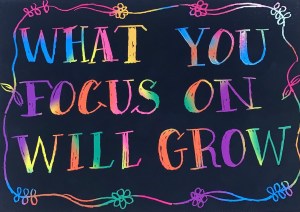
I end up writing about myself, because I am a relatively fixed point in the constant interaction with the ideas and facts of the exterior world. And in that sense, the historic form closest to blogs is the diary. But, a diary is usually kept private. Its raw honesty, its dedication to marking life as it happens and remembering life as it was, makes it a terrestrial log. Sometimes there are diaries that are meant to be read by others, of course, just as correspondence could be. I’m thinking here of the captain’s log on Star Trek, a trucker’s log book, or a flight log. But, usually diaries are read posthumously, or as a way to compile facts for a more considered autobiographical rendering. But a blog, unlike a diary, is instantly public. It transforms this most personal and retrospective of forms into a painfully public and immediate one. It combines the confessional genre with the log form and exposes the author to anyone and everyone in the touch of a “Publish Now” icon.
I just see myself as a curious individual, who likes to share what he has learned. I want to share the life lessons I’ve learned so far and learn every day. And, I want to share what I’m currently working on, what I’m currently thinking; mostly imperfect things in-progress. Blogging has enabled me to Share my thoughts and lessons learned.
I blog usually three to four times per week and I believe blogging is helpful and beneficial to share my thoughts, and lessons learned online because someone might find the lessons learned useful. These “someone’s” are many times those I lead or have the opportunity to help and serve. Therefore, it provides a constant window into the things I am doing, what I’m thinking about, things I’m curious about, new and evolving thinking, and who I am. Even if it doesn’t do that for everyone, it still serves as my journal. I go back and pull things from the archives many times per week. It is an electronic filing cabinet of my brain that is very well organized. This in a brain, I might add, that is not always well organized.
Finally, blogging is very personal for me. When I pull up a blank page to start a new post it’s like beginning a new adventure in learning. As I close, I must give credit where credit is due. Back in 2010 my good friend and great leadership guru, Kevin Eikenberry, The Kevin Eikenberry Group, suggested I needed to start blogging. Of course, I resisted. But, Jenny Pratt who was on Kevin’s team at the time and is now Director of Major and Planned Gifts for The Muny, took it upon herself to build my blog site even to the point of naming it Byron’s Babbles. Who does that? Jenny! She told me, “now you can change the name and the way I have formatted it for you later.” 1000 posts and 12 years later I have changed nothing. Byron’s Babbles is still the appropriate name today – it’s authentic and what my blog is: my organized babbles. I hope you have enjoyed my 1000th babble.
Anything & Everything
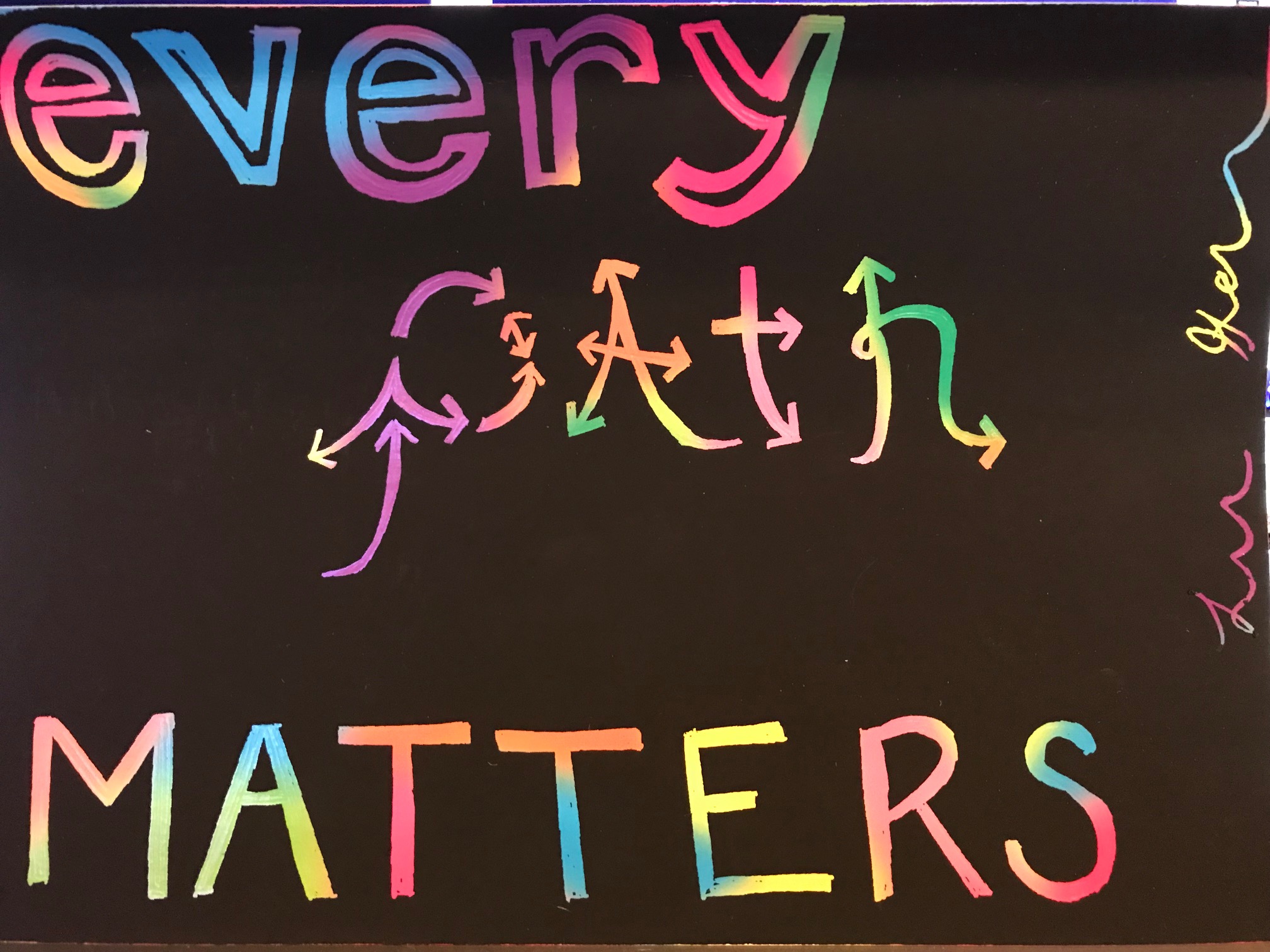
David Allen once said, “You can do anything, but you cannot do everything.” I was reminded of this quote while reading The Bookshop At Water’s End by Patti Callahan Henry. The line in the book that inspired this post was, “There was no ‘either’ ‘or.’ There was ‘anything’ and ‘everything’.” This was in the context of the way two young girls were spending their summer vacation (you really need to read the book!). I loved this because it was not about choosing, it was about doing it all. I totally get where David Allen comes from in saying we cannot do it all, but for young people, especially, shouldn’t it be about experiencing it all. We actually spent time diving in on this in recent leadership development workshops I have been doing on core values by contemplating that a core value of “Every path matters” is much more livable than just saying “students first” as many do. As I teach, for core values to mean anything they must be livable. We must help students understand what possibilities are out there. And, give them a chance to realize those possibilities.
This line, “There was no ‘either’ ‘or.’ There was ‘anything’ and ‘everything'” in this novel reminded me we must be exposing our students to as many paths as possible. Nor, should we be excluding paths, but making sure our students understand where each path can or cannot take them. It must ultimately be their decision. We need to help them determine their interests and talents. We must also help and encourage our students to fall in love with learning. We need to be the people their lives that challenge them and hold them accountable. We need to be the ones who will offer questions and share their experiences. Let’s try to create the environments where our young people like Bonny and Lainey, who in the novel read, swam, and made wishes about their dream lives, don’t have to worry about doing “either” “or,” but can to “anything” and “everything.” Every path matters!
Good Done Right

Most of you know the story of Wendy’s. For those that don’t, click here. I’ve been doing quite a bit of facilitation of learning around core values lately and it has caused me to keep an even closer eye out for those that are walking the talk. I already blogged about DryBar in Core Values Are The Heart & Soul. Then, last night I pulled into the local Wendy’s drive through and was reminded how important it is to have shared core values and have our personal core values match the organizations we are a part of. I’ve always been impressed with this particular Wendy’s location. Everyone always seems so happy and they always get your order right; even down to getting the extra sauce you ordered in the bag. At this Wendy’s you don’t have to check it. For those from Wendy’s reading this, click here for the actual store and location.
Here’s the deal: when I was paying last night, the young man said, “How’s your day?” I said, “Couldn’t be any better. Thanks for asking. How’s your day?” He said, “Mine couldn’t be any better, I love being here!” I was a little blown away, because typically you get the answer, “Well, in one hour 31 minutes and 17 seconds when I get off work it will be a lot better.” But, no, not in this case. The young man liked being there. So I said, “Please tell me why you like being here so much?” I explained that I teach about this stuff and really wanted to know. He explained, “I really enjoy being here. My team is made up of really cool people and we help each other. I’m learning a lot and get to meet great people.” Need I say more about why this Wendy’s always seems to get things right with friendly and helpful team members?
Could it be they are living the Wendy’s core values of “Do the right thing, treat people with respect and give something back.” So many places have core values posted on the wall, but that’s where they live. No one in the organization lives them, especially not the top leadership, in many cases. Let’s take this as a reminder to live out what we value.
What Are You Prepared To Do?

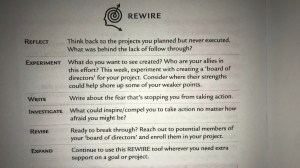
Back on day 170 of the COVID-19 Global Pandemic, August 31, 2020, I committed to a 52 week journey in a new book. Click here to read that first of 52 posts. I had received an advanced copy of Mindset Mondays With DTK: 52 Ways to REWIRE Your Thinking and Transform Your Life. The author, David Taylor-Klaus (DTK), told us that the book was to be savored over time and used every week for a year. As most of you know, I love books that are organized in 52 lessons to use over a years time. That gives me a chance to also do weekly reflection blog posts. This post is the 52nd and final post. Today, on day 538 of the continuing global pandemic, one day shy of a full year later, I complete the 52 week journey of learning. But really it’s not a completion, but a beginning because of being able to live an even better and REWIRED (see photo) life from having read this book and encountered DTK.
Ironically, Chapter 52, entitled Venture Ahead, is very related to some leadership development lessons I have been teaching in the past week. I’ve been using the driving question of “What Are You Prepared To Do?” After discussions of core values, shape shifting, leadership mantras, and legacies, I always show this video clip from The Unstoppables:
I also chuckle at the fact that I have used quotes Václav Havel while facilitating in the last week and DTK has quoted him in this chapter. Here is the quote I’ve been using:
“…it is clearly necessary to invent organizational structures appropriate to the multicultural age. But such efforts are doomed to failure if they do not grow out of something deeper; out of generally held values.”
~ Václav Havel
Here’s the quote from Havel in Chapter 52 used by DTK:
“Vision is not enough. It must be combined with venture. It is not enough to stare up the steps; we must also step up the stairs.”
~ Václav Havel

The 52 lessons of this book have given me structured time to think about the things I believe in and want to leave as a legacy. It has also given me an opportunity to take stock of where I am and next steps. DTK called this “Tak[ing] stock of who you’ve become through the work you’ve done” (p. 354). Now I need to up the metaphorical staircase by taking the first step.
“Who you are is who you choose to be. It’s what you think, and what you do with what you think, and what you give, and what you ask for, and ultimately what you stand for” (p. 355). What are you prepared to do?


1 comment