Leadership Lessons From Super Bowl LII
 How about this? Last night the underdog Philadelphia Eagles upset the defending champion New England Patriots, 41-33, to win their first Super Bowl ever. As is our family tradition, we went to our good friend’s home to watch and enjoy the Super Bowl. For this game I really did not have any dog in the fight, but found three things very interesting to reflect on during the game. First, it is such a credit to the Patriots to have been in the position of going for a record 6th Super Bowl title. Think about it, we say all the time it is tougher to stay at the top than to get there. So, kudos to the New England Patriots for that – staying at the top of the game. Secondly, the Philadelphia Eagles had to work from being the underdog. In fact they were the underdog in all post-season games. Not an easy thing to do. Finally, my third area for reflection, and maybe the most important story, is the bench-building work of the Philadelphia Eagles. In other words, to lose a franchise quarterback and have one ready to take over like, Nick Foles, is amazing.
Nick Foles is quite the story when you think about the fact that he was considering walking away from professional football as recently as this past off-season. Then he won the Super Bowl Most Valuable Player award after leading the Eagles past the New England Patriots, 41-33, in Super Bowl LII. There is no doubt that Carson Wentz was in control of the quarterback room prior to his injury, but it is also clear that the backup quarterbacks Nick Foles and Nate Sudfeld were paying attention and learning. Credit Carson Wentz with leading by example in the quarterback room so that when it became Foles’ responsibility to hold the clicker, run the video, dissect the plays and report his insights, Foles was ready.
Additionally, I saw it reported somewhere that John DeFilippo, the Eagles’ quarterback coach, asked Foles to study the offensive plays he liked and choose 25 he thought worked best for him. DeFilippo wanted Foles’ input on plays and the concepts, too. Think about this leadership move by DeFilippo to create an effective package of run-pass option plays that suited Foles’ strengths. Since getting the starting nod in the game at Los Angeles, the Eagles offense has continually morphed into one for Foles rather than for Wentz. I would argue you cannot do this having some intentionality about bench building as an organization. In fact, we see other NFL teams that have done this well; the Dallas Cowboys come to mind. We have also teams not do this well, our Indianapolis Colts this past season when losing Andrew Luck. I am amazed how some teams are able to lose a paramount player and just keep going without missing a beat and others really struggle.
Could it be that it starts in the team room with how the bench is being modeled to, how the bench is being interacted with, and ultimately how the game plan was tweaked, adjusted, and iterated to meet the strengths of the backup? I would argue that it does. Certainly some lessons to be learned here from some reflection on the Super Bowl. What have you been reflecting on since Super Bowl LII?
Creating Places of Innocence

My Son, Heath, And I On a Dad and Lad Adventure
Yesterday in a meeting of North & South Carolina principals, the comment was made that we need to create places where innocence is fostered for our children. This really got me thinking about how we do this both with our own children and the students we serve in our schools. The notion of innocence refers to children’s simplicity, their lack of knowledge, and their purity not yet spoiled by mundane affairs. Such innocence is taken as the promise of a renewal of the world by the children. One of the most delightful things about children is their sense of innocence and wonder, yet helping them maintain that sense of wonder can be challenging in our sophisticated, hurried society.
This rapid and early gain of knowledge by our children is quite the paradox. We all know that knowledge is powerful, but when children learn the wrong things too early it can really be detrimental. Vast amounts of knowledge and information is readily available to our children, and we, as parents, want our children to have this knowledge because we believe it will help them grow and compete. However, this same knowledge can ruin their innocence.
Here are a few things I believe can help us in the creation of places of innocence:
Have fun. Build time into your schedule to allow for silliness, downtime, and play.
Leverage nature and the scenery around us. Children are instinctively attuned to the wonders of nature. We do not have to prompt students to enjoy playing in the mud, seeing the beauty of flowers, watching kittens play. I love the idea I heard one time of planting a family tree and then having family time at each season change to note changes in the tree. My family has a Pin Oak tree that my son brought home from school when he was in the 4th grade that we use for this. In fact, I blogged about this tree in Lesson Of A Pin Oak.
Reading together. This is so important and can even be done with high-school age students. For example, I have chosen to read the same books my son has to read for school. For example, I just read Tough As They Come by Travis Mills because my son was reading it for a class. Wow, what great conversations this spurred for he and I. All I can say is, “try it.”
Use technology wisely and discreetly. Children should not be burdened with information that is too adult in nature. They have neither the cognitive nor social-emotional skills to process this information.
Family events. Or, family events where the children bring a friend. We do a lot of family activities and my son and I do Dad and Lad events/trips. The beauty of these is that we control our own content.
This is way too complex an issue to solve with a blog post, but I believe we all need to be reflecting on creating places of innocence. Most importantly we need to be mindful of what our children are being exposed to and give them more age appropriate choices. If you have thoughts on this important and complicated issue, please comment/respond to this post.
Drumming Up Relationships
 As a teacher my personal mission statement was, “I strive to use rigor, relevance and relationships to be a steward of high student achievement.” This past weekend I was reminded just how important this really is. My son, Heath, and I took a Dad & Lad trip to New Orleans to watch Drew Brees and the New Orleans Saints beat the Carolina Panthers in the first round of the NFL Playoffs.
 During our exploring in the French Quarter we came across some boys playing the drums (five gallon buckets) for tips. For those who know me, it won’t surprise you that I decided to ask them if I could sit down and play the drums with them and get to know them. During my reading of The World That Made New Orleans: From Spanish Silver To Congo Square by Ned Sublette I learned that drum playing is a major part of New Orleans history and culture. In fact a drum according to New Orleans culture is anything that can create sound that carries. Well, as a farm kid I have been using five gallon buckets all my life.
The boys and I negotiated an appropriate tip to let me join in for a few minutes. It was awesome! We had a great time and I learned a lot from visiting with them. Click here to watch a video of my experience: https://youtu.be/5ly3v3YvuE4
I learned each one of the boys is his own independent contractor, so I needed to tip each one individually. They came together, however to make better music together as a trio than each could make alone. Additionally, I learned that part of the money earned was used for family needs (food, et cetera) and part for a savings account. Wow, I was impressed – these boys were contributing to caring for family and learning entrepreneurial skills.
“A child’s play is not simply a reproduction of what he has experienced, but a CREATIVE REWORKING of the impressions he has acquired.”~Vygotsky
We also talked about the fact that I had been a teacher. One of the boys said, “You’re pretty cool, I’ve never had a teacher like you that would come out and sit down and drum with me.” This statement really had a huge impact on me. In reflection, I thought about just how important it is that every student deserves having someone pull up a bucket and get shoulder to shoulder with him and learn about him. In fact, I tweeted the following: “Hey @drewbrees! I understand why you love @VisitNewOrleans! I love these kids. As a former principal of an urban turnaround school I understand you have to sit shoulder to shoulder w/the kids and love them and participate with them building relationships. Go @Saints #WhoDatNation.” Bottom line: We need to be right alongside children playing and reworking with them!
 As we were walking away my son commented, “Dad, that is why your students love you, because you want to get to know them and know what makes them tick.” So glad I was able to model that for him. No matter what we do, teaching or leadership – Relationships Matter!
Truly pulling up next to students and building relationships posits that teachers who have knowledge about their students will be better able to teach them. Teaching through relationships is more than that, however. Ultimately, it describes the complex social environment in which students and teachers converse, share experiences, and participate in activities that, together, make for engaged learning. Relationship building means getting to know our students’ learning styles and each students’ knowledge, abilities, and potential. Most importantly, it also means getting to know their interests, personality, and background. For me, just like sitting shoulder to shoulder with the boys playing the drums, this body of knowledge opens up the possibilities of growth and dramatic learning opportunities.
The framework for the research that led to the writing of my book, The Hand In The Back Of The Room came from Vygotski. Vygotsky’s theory promoted a learning environment consisting of contexts where the student plays an active role in the learning. Vygotsky believed there were cognitive connections between students and the sociocultural context in which they live through shared experiences. According to Vygotsky, there should be collaboration between the teacher and student, which in turn would facilitate the construction of meaning for the students. According to Vygotsky, the roles of teacher and student need to be shifted, as teacher collaborates more with his or her students, meaning construction is facilitated for the student. Learning therefore becomes a reciprocal experience for the students and teacher.
Relationships are the cornerstone for student learning.
HOW TO LEAD LIKE MADIBA
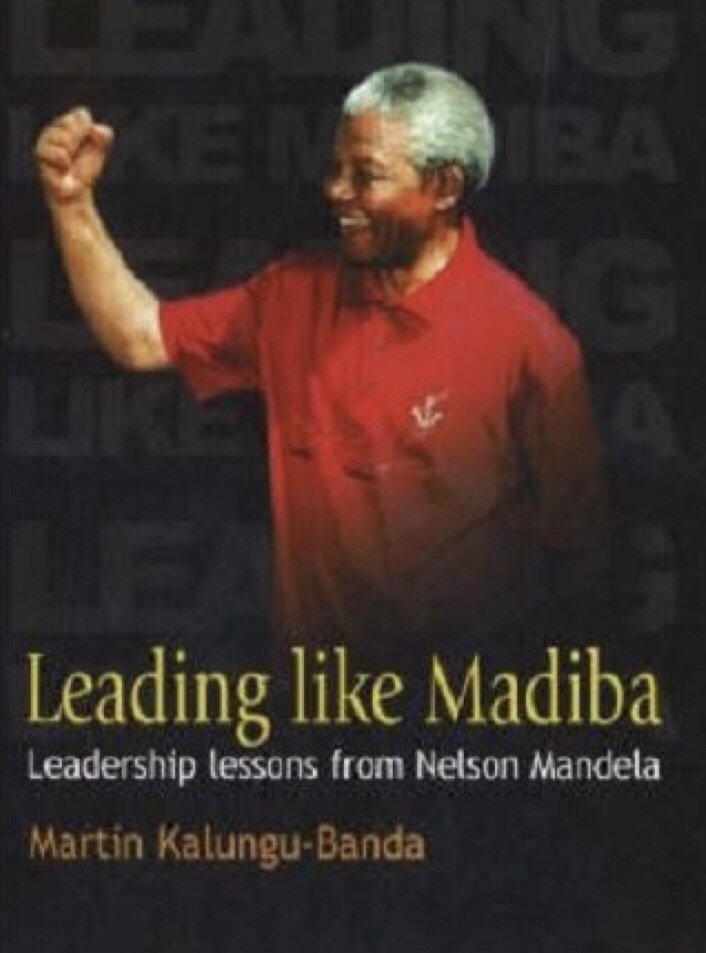
I just finished an awesome book to finish out my 2017 reading challenge. In fact I read 90 books with a goal of 87 for 2017. The great book I just finished was, Leading Like Madiba: Leadership Lessons From Nelson Mandela by Martin Kalungu Banda. Kalungu-Banda taught us in this book that great leaders create trails that we can follow to find our own greatness. This does not mean we become their clones –that would be impossible, and anyway it would mean losing the rich variety of our personalities. But these great people inspire us as role models and their example helps us see what to aim for as we nurture our own style.
At the end of the book Kalungu-Banda gave us ten guidelines for leadership growth that he called: “Madiba path to leadership.” Here they are:
- Cultivate a deep sense of awe for human beings. Leadership is about people, and every single person matters. Mr Mandela, like Mahatma Gandhi and Mother Teresa, did not have a business plan to begin his mission. He just had a deep-seated respect for people.
- Allow yourself to be inspired by the giftedness of other people. In a practical way, show that you recognise that every person has special gifts to use for their own wellbeing as well as for their community or organization.
- Grow your courage. Great leaders have courage. This does not mean absence of fear but learning how to recognise your fears, face the harsh realities of your situation, and nevertheless choose to follow what you consider the right course of action. At first this is not easy to do. Repeated practice will help you build courage as one of your virtues.
- ‘Go and preach the Gospel. Where necessary, use words.’ Lead by example. You should not ask of others what you are not ready to do yourself. Leading by action, you will inspire people more than by simply telling them what needs doing. Your active role will leave a deep and lasting impression on those you are privileged to lead.
- Create your own brand of leadership. A leader’s name and image must be consistently related to a set of values. This is what makes you really effective. When people think of you as a leader, they must immediately think of your principles. These are essential to guide your organisation or community through the various ethical conundrums they will inevitably have to face.
- Practice humility. Great leaders acknowledge their failings. Instead of making people lose faith in you, admitting your mistakes and limitations will draw people to help and work with you. By being able to apologise for your wrongs, you send the message that the search for right thought and action is a common enterprise. It is not owned or controlled by you or any other leader.
- Learn to live with the Madiba paradox. Life is a mix of hope and hopelessness, joy and pain, success and failure, vision and disillusionment. You as a leader have the task of helping others to live successfully with these apparent contradictions.
- Surprise your opponents by believing in them. There will always be people who disagree with your leadership style and what you do. Do not seek to silence, humiliate or vanquish them. Try to understand their point of view and deliberately work at identifying the positive elements there.
- Celebrate life. Activity and achievement of any kind are signs of life that affect life in turn. We work in order to enhance our life. We seek to excel for the same reason, not just to look good. In this spirit, we should celebrate not only individual performance and giftedness but life itself. You as a leader must participate in practices and ceremonies that honour the life of the people you are privileged to serve.
- Know when and how to make yourself replaceable. Great leaders know how to move themselves from centre stage. They know also when it is time to go. They prepare for it and make sure they have a successor who will build on what they have achieved. They enable other people to emerge as potential candidates. This is what sustains the leader’s legacy while guaranteeing a smooth transition.
As you can see, this is an incredible book and should be a part of every leader’s bookshelf. As Kalungu-Banda said, “Inspirational leadership makes all of us dig deep into the innermost parts of our being to find the very best that lies there and make it available to ourselves and others. This, in my view, is what great leadership is all about.” Are you practicing inspirational leadership at the highest level?
Applying A Little Heat
 This morning, I walked to the barn to do the morning feeding and the thermometer 🌡 read 4 degrees Fahrenheit. I don’t mind the cold, but I always have to be cognizant that many things don’t work right, or at least need a little help to work right in this kind of weather. One of those things are frost free water hydrants.
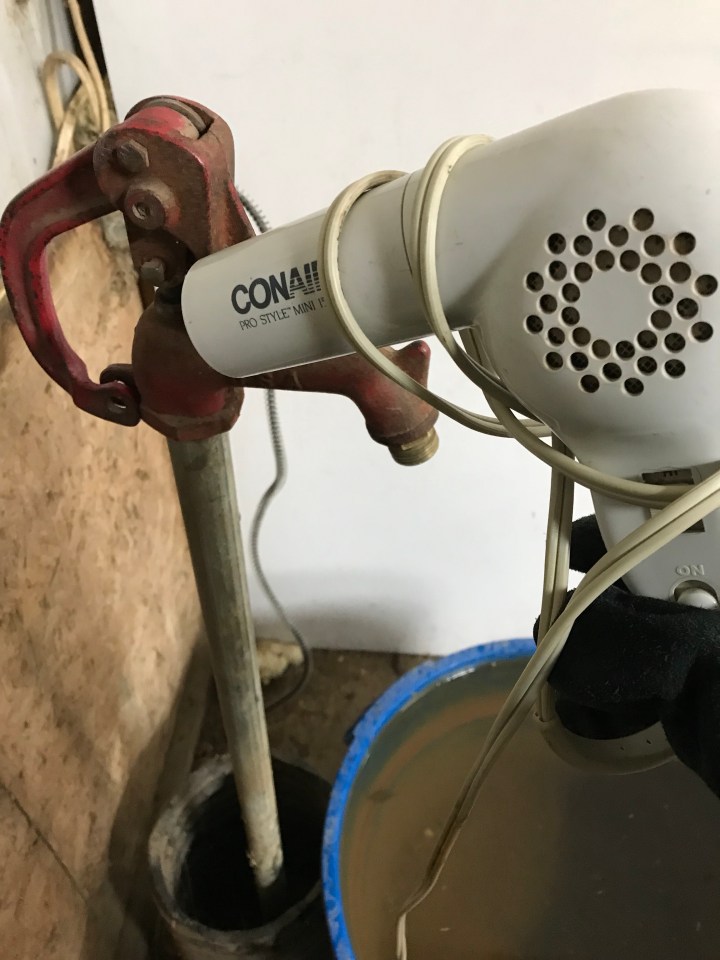
For those who don’t know what that is, it is a water hydrant (pictured here) that is buried below the frost line and is designed so the on/off valve is at the bottom below the freezing point. Then when the water is turned off the water in the pipe drains down and out, and amazingly, no frozen water line. These are a great farm invention. They do, however, get a little moisture built up around the mechanism at the top for turning the water on and off.
Actually they are designed to withstand pulling the handle and turning them on, but I am always nervous in this kind of weather doing that. As we all know, things just have a way of going wrong in sub-freezing temperatures. Our way of mitigating this is to take a small hair dryer and running it for about 30-60 seconds on the valve. This small amount of heat makes it work perfectly – like it was 80 degrees out.
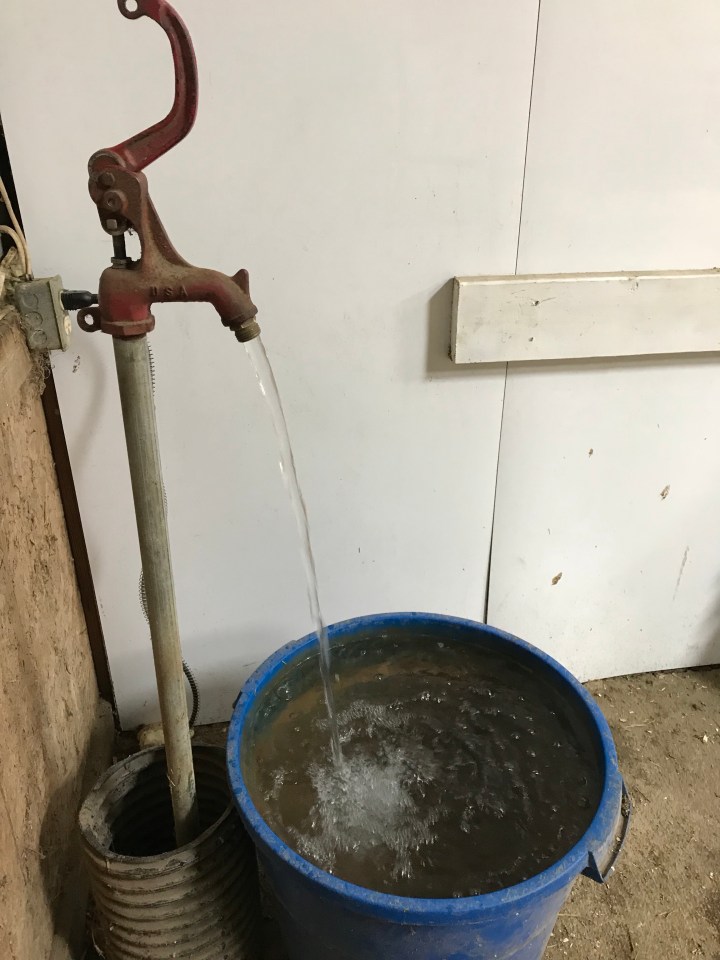 This morning, as I was doing this, I was reminded how a little heat being applied is good for all of us. I have always said that the best way to learn and grow is to be doing/trying something that causes a little fear. In fact I have blogged about it several times in: Leadership Lessons Of Mt. St. Helens, Telling Your Leadership Story, and Finding Your Leadership Voice just to mention a few.
As leaders we need to make sure we are enabling our team members to experience growth through real time projects and responsibilities that will, at times, cause a little “heat” and “pressure” to grow. The most effective leaders create unique experiences for themselves and others by taking calculated risks that put them and team members into situations that challenge their thinking, expand their perspective, make them feel vulnerable, and enable them to mature throughout the process.
Now, I am not saying throw yourself or your colleagues to the wolves. I am saying to act as the “hair dryer” I have used as the metaphor for this post and apply a little heat for growth to occur. This will allow us and those we serve to take key learnings from each of these experiences and apply them to similar circumstances we may be faced with. One of the ways I have learned to do this effectively is with task forces. Task forces gives teams of individuals a chance to form a community and create something for the organization.
The heat has been applied in my own personal life from being involved in turning schools around. Turnaround work can be one of the most thrilling and challenging adventures you can experience. Let me tell you, the “hair dryer” is pretty powerful and on high at all times. Turning around a struggling or failing situation teaches us to maximize the full potential of opportunities present in any situation and stretch the individual capabilities of ourself and other people. We learn that there is always a way out and forward when there is an effective use of tools, resources, people, and money.
So, instead of letting a little heat, pressure, or fear intimidate us; let’s welcome and embrace it. Remember, sometimes a little heat from the “hair dryer” can be good for us all.
Learning To Appreciate All Who Contribute To The Success
“Quite often it takes more than just ourselves to achieve the success we claim to have made. Our success is a result of many people’s contributions: those of our parents and other family members, fellow workers, peers, teachers, and advisers.” ~ Martin Kalungu Banda
We’ve all seen it in a TV show. The character goes to her boss or parents with a bright idea, the idea is ridiculed, and then (sometimes in the same breath), the idea is repeated right back, word for word. And, get this, it then becomes a great idea and he is glad he thought of it, too!
Unfortunately, these people do exist. In every company, in every organization, in every community, in every political party. Some might not have as bad a case of it as others, but at some point, we will run into one of these people, or an entire organization of these vane people.
Furthermore, I have even experienced not being able to reach compromise or consensus because certain individuals ideas weren’t being used or he had not come up with the idea. This level of ego and vanity is amazing to me.
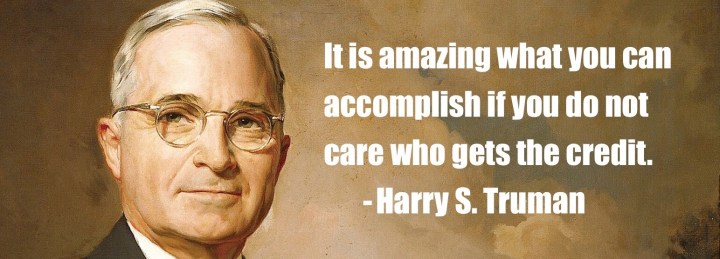
“It Is Amazing What You Can Accomplish If You Do Not Care Who Gets the Credit.” ~ President Harry S. Truman
When faced with these type of situations I always remind myself and the group I am working with of the great thought of our 33rd President, Harry S. Truman, “It Is Amazing What You Can Accomplish If You Do Not Care Who Gets the Credit.” My choice has always been to favor the accomplishment of the idea, rather than worrying about getting credit for it. Really, very few accomplishments can be credited to any single person anyway.
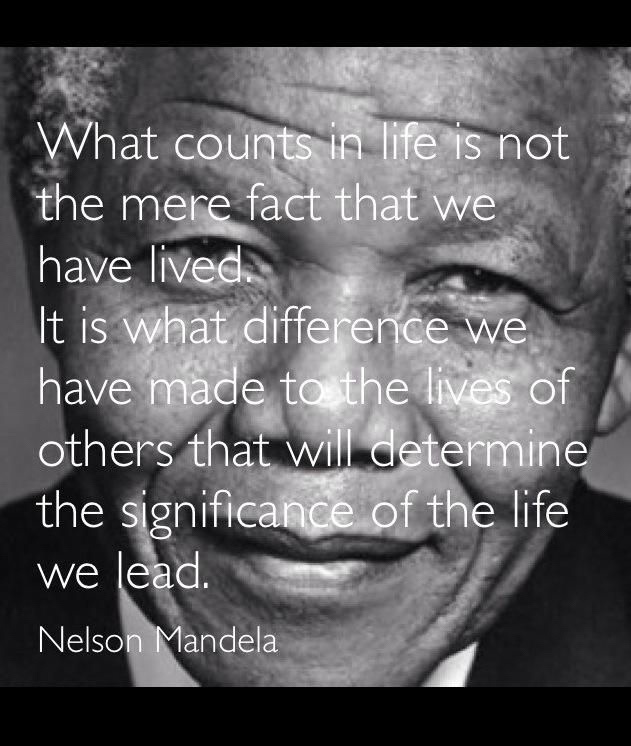
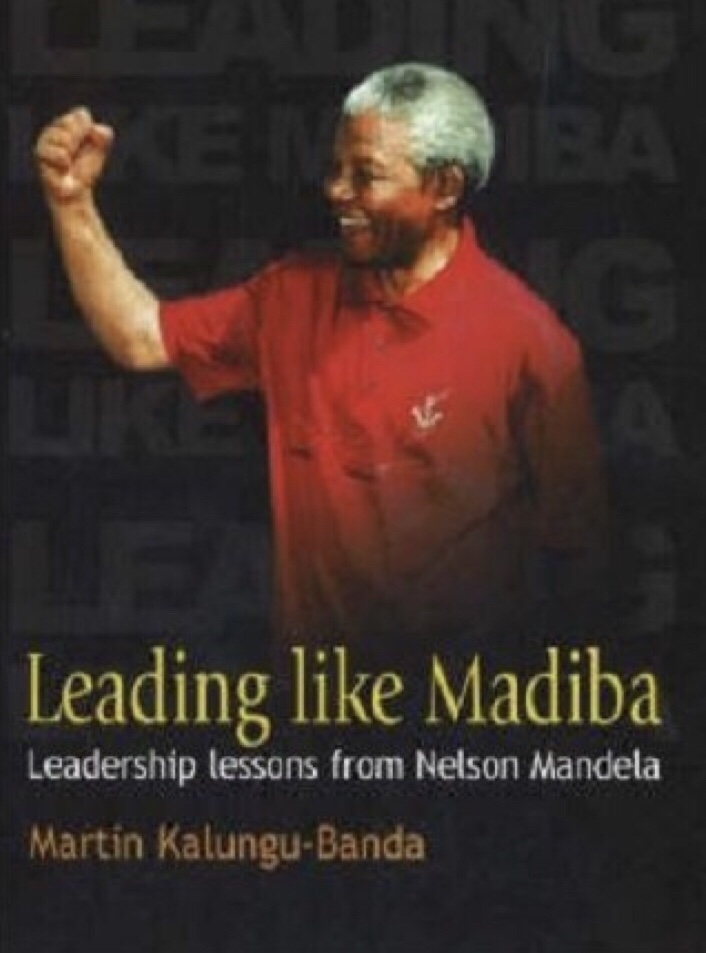 This very topic was the subject of the chapter I was reading this morning in the awesome book I am currently reading, Leading Like Madiba: Leadership Lessons From Nelson Mandela by Martin Kalungu Banda. In this chapter, Kalungu Banda teaches us that sharing the credit is a mark of great leadership. An interview of Nelson Mandela is the subject here where he shows that success is often the result of concerted effort by many people. In the interview Mandela says, “…the reality of our struggle is that no individual among us can claim to have played a greater role than the rest.” To me, this says it all – it took (or will take) everyone, not just one!
“Being praised for what we have done is such a sweet feeling. Then we know that our efforts are being recognised and appreciated by others. We all need that kind of feedback from those around us. But I suspect we are sometimes too eager to receive praise for ourselves. Then we end up forgetting those we worked with to achieve the very things we are being praised for. Selfishly we make ourselves the centre of a reality that is much larger and greater than us alone. We exaggerate our contribution out of all proportion. Without meaning to, we start radiating negative energies that repel others from wanting to cooperate with us.” ~ Martin Kalungu Banda
We have all seen people who have become so caught up in what they think they have accomplished that they forget there are/were a lot of of others working on that same issue with them.
“The paradox is that the more we acknowledge and celebrate the capacities and contributions of those around us, the more we deepen the strength and prowess of our own character. We become poised to do greater things because others feel confident enough to win with us.” ~ Martin Kalungu Banda
The fact is, great leaders recognize and honor the contributions of others. In fact, the greatest of leaders deflect credit from themselves to others. We need to learn from Mandela and create the space for others to be acknowledged. Here are a couple of questions to consider:
- Even if it is your idea, would you rather be right, or get the idea implemented?
- How much do you value your vanity, your pride?
What Inspires You?
 Yesterday I had a person ask me, “Byron, how do I deal with the person who does not want to learn or go through any professional growth experiences?” She went on to explain this was an experienced leader who believes she has seen it all. I explained that was a tough one. I have experienced these type of individuals. The type who say, “When you’ve been around as long as I have you’ve seen it all and know how to deal with…” Really, seen it all? I think not! Amazing!
In all honesty, I’m not sure there is a lot you can do with a person with that disposition. I say disposition because while I do believe leaders can be developed and don’t have to be born automatically a leader, I do believe that there are certain dispositions you must possess to be a great leader. One of those is a propensity to be a lifelong learner. I actually just blogged about lifelong learning this week in Lifelong Learning: The Farm Way.
So what was my advice? To have the tough conversation about the fact that all leaders need to continue to learn and find inspiration. I am a huge believer that those we serve as leaders need to see us learning and taking part in self development. Even better if they can experience this alongside us. If that doesn’t happen, I’m not sure how that person can be effective and I’m not sure how long they could continue in an organization that believes in growing its team members and being a learning organization.
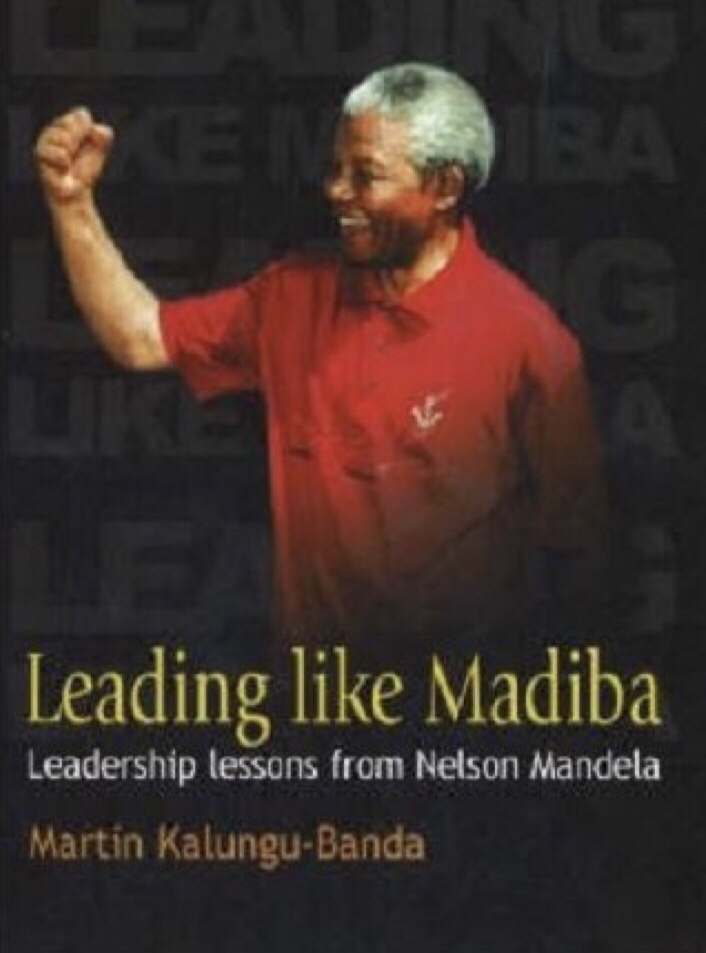 During my own personal growth time this morning I had this thinking affirmed in the great book I am currently reading, Leading Like Madiba: Leadership Lessons From Nelson Mandela by Martin Kalungu Banda. I was inspired to study Nelson Mandela by Richard Branson. Madiba is one of Branson’s leadership heroes. Just as Richard Branson is one of mine. Talk about a guy (Branson) who continues to learn, grow, try new things, and start new thing. Pretty sure he has never said, “I’ve seen it all and know it all.”
In Kalungu Banda’s book he tells the story of Mandela going into the locker room before a soccer match and asking his favorite professional soccer player, Mark Fish, to switch jerseys with him. Mandela was wearing a jersey with Fish’s number on it. Fish agreed and Mandela went on to explain how much he was inspired by him and learned from him. Fish was very touched and inspired by this and said that any time he wore or even looked at the jersey he had gotten from Mandela it inspired him to get better. What the story about Mark Fish in this great book shows is that great leaders also need to be inspired. Mark might think that it was Mandela who inspired him and not the other way round, but it is clear from the story that Mandela had long been inspired by Fish.
Martin Kalungu Banda gives some great, what he calls in the book, Food For Thought on this story:
“We often do not imagine great leaders to be in the process of learning. Indeed, most leaders do not look as if they want to learn or have the time for it. They are either giving advice or opening a workshop for other people. We are surprised when we hear that a leader spent a day at a conference as a participant.”
As I said earlier, we need to be seen by those we serve, learning. Even better to be learning right next to them.
“Imagine what becomes of leaders who do not find anything to inspire them. My guess is that they soon dry up. They cease to inspire others because they have no replenishment themselves. We can only give what we have. So, to be leaders who inspire our organisations and communities, I am convinced we need clear sources of inspiration ourselves. Inspirational leaders continue to be moved by the surprises and wonders of life –people and nature, and the interaction between the two. Such leaders position themselves so that they continue to experience the awesome character of the world that surrounds them and the profundity of human life.”
What inspires you? You cannot inspire other people unless you get inspired and continue learning yourself.
“They [leaders] are always learning. Learning is about lending oneself, through practice, to the ‘how’ question: How can I hear other people better? How can I do this better? How can I understand this situation better? This style could explain why in spite of his age Madiba beams with the joy and vitality of a 21-year-old. It could be his ability to be inspired by other people. The readiness to be inspired by a footballer.”
When we feel so knowledgeable that all we want to do is impart what we know on others, it is a sign that we have stopped learning. There is no such thing as standing still in learning, however. You are either learning or you are regressing. I don’t know about you, but I do not want to regress!
Learning By Serving & Making The World A Better Place
 If we want our young scholars to be more successful in the classroom and ultimately in life, then we need to be deliberate in giving them civic experience and experience with community service. Let’s not just tell them to hit the books and study more. Don’t get me wrong; that’s important, too. Instead, let’s help them to head out into the community to help others. Let’s help them come up with projects and work along side them as coaches and mentors.
We need to facilitate our students volunteering their time to make the community and world a better place. I was reminded of this tonight when out shopping for four families in need for a project I am working on. At the completion of shopping I was beginning to stress over wrapping and organizing all the gifts in a presentable way for the school I am working with. Anyone who has ever seen my wrapping knows why I was stressed. Wrapping gifts is one of the many skills and talents I do not have!
Anyway, on my way out of the last store I was approached at the door by some enterprising Cub Scouts. The boys said, “Sir, we would like to wrap any gifts you have.” Well, my prayers were answered. I proceeded to their table and said, “Can you wrap all this, plus what’s in my truck?” The boys and their moms said, “Sure!” I was sold! Of course, as they got started, I went out and got all the other gifts.
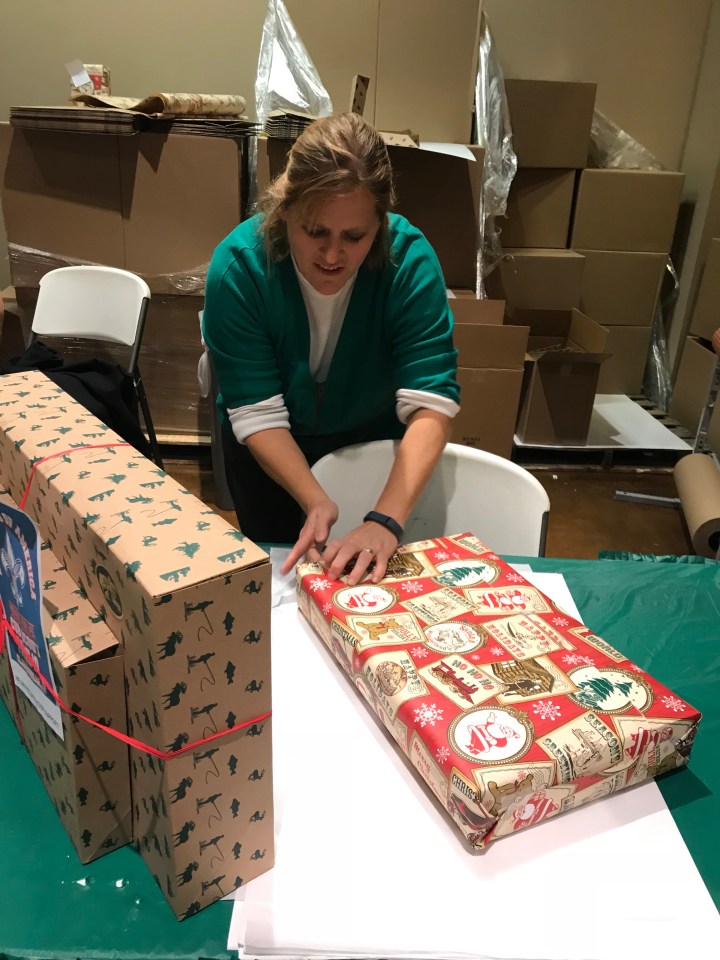 They organized all the gifts by the initials of the students I was buying for and even wrapped each child’s gifts in different paper. They obviously could tell that being organized is something I need help with. I had so much fun visiting and working with them as the wrapping was being done. I even had the opportunity to discuss our project for helping families in need and the fact that there are children that do not have all the advantages that these young men have. The young men were very attentive and we had a great conversation about helping others.
As the job was being completed I asked J.P., the Scout who seemed to be leading the charge, “We have wrapped 11 boxes; what do you think that is worth for a donation?” He talked to the other boys and then thought for a minute and said, “$6.00 per box.” J.P.’s mom exclaimed, “Oh J.P.! That is way to much!” Well, I started them down this road so I said, “J.P., if that is where you value it at, that’s what I’ll do.” I Then gave him the $66.00. J.P. and the other Scouts proceeded to tell me all the projects they were doing and how the money would be used.
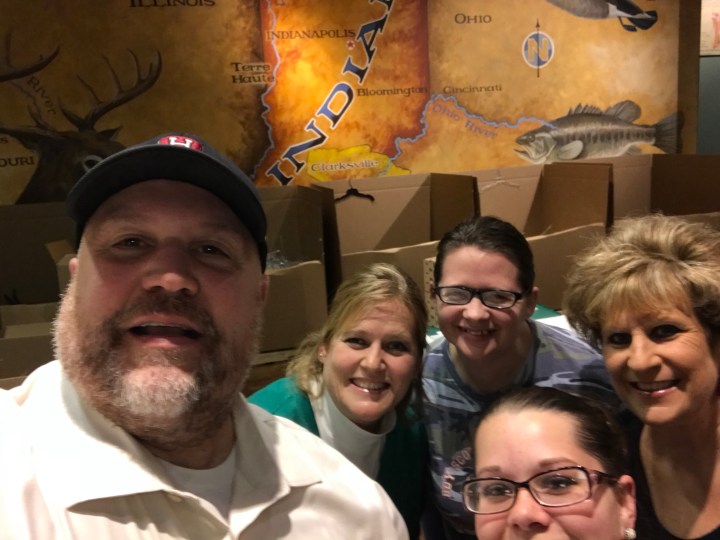 I have to tell you I was impressed with these young men. Here’s the deal. While completing community service projects, students develop real world 🌎 skills that will help them succeed in elementary school, middle school, high school and beyond. This gives our young scholars relevant practice in:
• Leadership
• Problem-solving
• Collaboration with others
• Time management
• Communication
Most importantly, students develop a richer perspective of the world they live in. Additionally, this experience helps young people develop a richer perspective of the world they live in. This is why I am so proud that the Graduation Pathways our Indiana State Board Of Education just passed has a community service component for students. We cannot just leave this to chance. All young scholars need the opportunity to learn the lessons these Cub Scouts were learning tonight.
Racing Toward Success!
 This weekend we went on what I am sure to be the first of many college visits with our son, Heath. We went to Murray State University in Murray, Kentucky home of the Racers 🏇. Picking a postsecondary path is not an easy thing to do. While chairing our state’s Graduation Pathways Panel over the past several months this has become glaringly obvious. Everyone, as you can imagine has their own idea of what success is. I still ascribe to the definition of Dr. Felice Kaufmann. She defines success as:
“SUCCESS: Knowing what one wants in the world and knowing how to get it.” ~ Dr. Felice Kaufmann
Dr. Kaufmann was a teacher and counselor of gifted children, grades K-12, a professor at Auburn University and the Universities of New Orleans and Kentucky and served on the Boards of the National Association for Gifted Children and The Association for the Gifted. I believe that while her work was with gifted children, the principles apply to all. Furthermore, I believe all children are gifted in some way. This is why it is just as important for us to make education relevant and form relationships with our scholars as it is to make education rigorous. Success looks different for all of us and it is not something we can graph with a straight line.
“The best piece of wisdom I have learned from studying gifted adults for 30 years is that achievement for achievement’s sake does not necessarily provide a lasting and meaningful structure for living one’s life. While achievement is important, in the long run success means being able to identify and understand one’s real needs and finding ways to meet those needs in a constructive and personally meaningful way -whether it’s finding a cure for cancer or influencing and being deeply loved by family and friends. E.M. Forster said it best and most succinctly: Only connect.” ~ Dr. Felice Kaufmann
 As we were visiting Murray State University this past weekend I really began thinking about this. It is our job, as Heath’s parents, and his school’s job to help him identify and understand his real needs and support him in finding ways to meet those needs in a constructive and personally meaningful way. Not an easy task. In thinking about this I was reminded of thoughts from Howard Gardner at a recent Project Zero gathering at Harvard Iniversity: we need to move away from thinking “How smart are you?” To “How are you smart?” To me this means we need to take into account how our students learn and what he or she really wants to be learning about and doing.

Heath With Racer 1
The mascot of Murray State University is the “Racers” – a thoroughbred race horse. Actually we had the chance to meet Racer 1, the current mascot this past weekend up close and personal. It is such an awesome mascot. Thoroughbreds are known for their agility, speed, and spirit. In fact Murray State’s motto refers to the thoroughbred:
 Having raised and raced thoroughbreds for a time in the past I can so relate to this. Every racer had a mind of it’s own and every one had different talents – distance, sprinter, likes mud, likes to be challenged, wants to come from behind, needs to take the lead, high spirited, easily distracted (needs blinders), et cetera. Sound familiar? Heath still likes playing in the mud! Our challenge as educators and parents is to, like the role of a jockey, rein and channel a constant flow of ideas. The art is to know how much rein to give and when to give it.
I was so impressed with Murray State’s student centered focus. And, you guessed it, even ended up tweeting about it with Murray State University President, Dr. Bob Davies. We had a great Agriculture School Ambassador, MacKenzie Jones, from the Hutson School Of Agriculture who spent time with Heath and have him a personal tour of the university and university farms. He was so impressed with how personal the education was tailored and the close relationships between professors and students. MacKenzie drove home the fact that it is not just about getting a degree; it is about getting a true education through hands-on experiences and the faculty understanding the students’ needs and what makes him smart. She explained that a tudents in the Hutson School of Agriculture receive a “large university” education in a small school setting.

 It was great to visit a university that is truly student focused, giving students the personal attention they need, but also providing them with current and breaking agricultural technology to take their education to a level that will make them highly competitive in the job market.
And…by the way, we spent time with the football team. The racers defeated Tennessee Tech 31-21. Go racers! 🏇

Why Aren’t You Perfect Already?
 Originally published on the Flynn Heath Holt Blog by Diana Faison, Mary Davis Holt, Kathryn Heath, and Jill Flynn
What’s on your to-do list this season? We’re guessing there’s a “make this,” a “go here,” a “buy that.” We’re also guessing is there isn’t a “do this for myself” on it anywhere either. Besides wrestling other shoppers for the last turkey at the grocery store, you may be lifting your feet for the office janitor to vacuum the floor, trying to get year end projects finished. But why not keep your sanity this year? We have a few ideas of how you can.
One of the rules we ask women to break is the “it’s all or nothing” point of view. The holidays are particularly tricky in trying to get it right both at work and at home, but it’s not all or nothing, it’s both-and. We’ve seen women in our coaching set themselves up for failure by trying to do it all and make it look easy. You can have your fruit cake and eat it too- you just may have to tweak the way you do it.
 Delegate. Have a teenage son who’s at home from school on break? Give him the grocery list. Maybe the intern who’s been waiting for a project should write that memo so you can finish your expense report. Don’t do every little thing yourself- only the important things.
Prioritize. Focus on that which makes you the happiest, and have realistic goals you can build on. If decorating your home is your thing, do it; but go buy the pie you’re in charge of bringing to your parents’. Blend your work-life and consider compromise. Sometimes we’d be a lot happier if we simply decided to let go of the little things that don’t amount to much.Give yourself a break! Take some time during your day to leave the office and read a magazine, call a friend, or take a walk. Make some time for you this holiday season- even if it’s just 20 minutes. You’ll feel recharged and more positive both in the office and at home.
Whatever your holiday plans this year, try not to get burnt out; it does nothing for your career or your personal life. Stay positive. Move forward. And Happy Holidays from your friends at Flynn Heath Holt!
*****************************************
About Kathryn Heath:
Kathryn Heath is a founding partner at FHHL who develops leadership programs, coaches executives, and designs training. She co-authored Break Your Own Rules, which landed on the best-seller lists of The New York Times, The Wall Street Journal, USA Today and The Washington Post. She also co-authored The Influence Effect: A New Path to Power for Women Leaders Previous to FHHL, Kathryn was Senior Vice President and Director of First University at the nation’s fourth-largest bank, First Union (now Wells Fargo), where her inventive and results-focused approach won her numerous awards in the field of learning and development.
About Diana Faison:
Diana Faison is a partner at FHHL and worked with the firm as a consultant for over 10 years prior to her partnership. She began her career as a teacher of Leadership Development studies and a Dean in Student Affairs at Queens University and the University of North Carolina—Charlotte. Diana is a sought-after keynote speaker on business leadership topics such as political savvy, brand, personal power, authentic leadership, and well-being. She is also the co-author of The Influence Effect: A New Path to Power for Women Leaders.
About Mary Davis Holt:
Mary Davis Holt is a partner and co-author of Break Your Own Rules, and The Influence Effect: A New Path to Power for Women Leaders. She is an in-demand speaker who shares her hard-won insights and promotes the firm’s new rules for success to a wide range of audiences. Mary is also a sought-after facilitator, executive coach, and she works with companies to plan strategies that change the culture to support women leaders. Prior to joining FHHL, Mary held executive positions at Time Warner with oversight that ranged from finance to information technology, marketing, human resources, manufacturing and distribution.
About Jill Flynn:
Jill Flynn is a founding partner at FHHL and a co-author of Break Your Own Rules and her latest co-authored book, The Influence Effect: A New Path to Power for Women Leaders. Jill previously served as Senior Vice President at the nation’s fourth largest bank, First Union (now Wells Fargo), where she established their leadership development, diversity, organizational consulting and employee satisfaction initiatives. As the corporation grew exponentially during her tenure, Jill and her team prepared a cadre of high-potential leaders to assume senior positions. Within a three-year timeframe, the number of women in these roles increased from 9% to 26%.
 Byron's Babbles
leave a comment