A Culture Of Uncertainty

Randy Conley told us that “Control is the opposite of trust” in Simple Truth #45, “The Opposite Of Trust Is Not Distrust – It’s Control” in Simple Truths of Leadership: 52 Ways To Be A Servant Leader and Build Trust, Making Common Sense Common Practice, Ken Blanchard and Randy Conley. This simple truth really resonated with me. I have experienced leaders who are control freaks and keep those they serve in the dark. I always have considered this a lack of self-esteem thing and desire to make sure all credit was able to be attributed to them. All this really serves to do is cause distrust and cause team members to shut down. This then brings about great uncertainty for everyone involved.
The control freak leader I described above is the most frustrating, smothering and energy sapping leader to work for. But, leading is not about controlling; it is about guiding, coaching and empowering others to reach a destination. Great leaders know how to manage systems, not control people. This goes back to making sure we have developed the technical skills necessary for those we serve to successfully carry out the mission of the organization. Trust is a verb, not a noun.
If Everything Repeats

The phrase “It’s easy to be right when everything repeats” in the great band Trivium’s song The Heart From Your Hate has caused me to do some deep thinking. If you get to reflecting on it, that line alone in the song is really deep. We can look at this two ways:
- If we keep everything the same it is easy to repeat success every time – status quo.
- The same things will just keep happening, and usually get more difficult, until you recognize and eliminate the behavior that needs to change.
Why do people resist change? One reason is the fact that it may mean having to make some changes to processes that are already in place that have become easy to just keep doing. This is why it is so hard to change the status quo. The problem with this is that while the status quo might be creating so called “success,” or being “right,” that might not be the right success any more. I remember when I was leading the process in Indiana to go away from students passing a single exam to graduate to students having multiple pathways to graduate, there was tremendous resistance from those who had figured out the “system” to get kids to pass the exam. Some after multiple tries and being put through what I called the remediation factory. Those resisters could be right because everything was just repeating, but that was not the right thing to do for our scholars.
We can also view the easiness of being right when everything repeats itself from our own lens of recognition. Why do our experiences keep repeating? Think about this formula Event + Reaction =Outcome. You may be saying, “Everyone knows that, Byron. That’s really easy!” Is it, though? It sounds basic and very simple and yes it is basic and very simple but it has a lot of meaning. Think about this; what if the ‘R’ (reaction) is kept constant in the formula? Won’t your experiences keep repeating themselves? We need to change the ‘R’ (reaction) in our personal lives and organizations into a variable. Only then can we change the ‘O’ (outcome).
Yes, it is easy to be right when everything repeats or stays status quo, but that sometimes limits us from great relationships or doing great things. Thanks, Trivium, for making me reflect on this!
What Happens When You Are Gone?
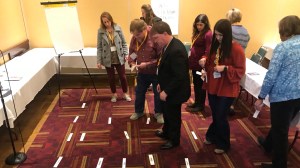
Intent-based leadership relies on all team members being able to recognize what needs to be done and having the technical expertise to be able to do it. In my work with leadership development I have found that one of the toughest things for many up and coming leaders is stepping back and letting others take the lead or complete a task on their own. The best leaders do not focus on ensuring compliance with outside decisions. Instead, great leaders facilitate the team’s decisions about how they will carry out their shared purpose–mission, vision, values, and goals. In the case of education, when teachers are both responsible and accountable for making the decisions influencing school success, they also own the outcomes. Teacher teams do not have a problem with being accountable for results when they have the autonomy and authority to determine how best to achieve them. They take pride in what works well and refine what doesn’t.
In Simple Truth #44, “The Most Important Part Of Leadership Is What Happens When You’re Not There” in Simple Truths of Leadership: 52 Ways To Be A Servant Leader and Build Trust, Making Common Sense Common Practice, Ken Blanchard and Randy Conley, we were reminded that, “Servant leaders develop and empower their people so that they will perform just as well, if not better, on their own as they do when the leader is present” (p. 115). The key here is to have those we serve developed in the technical and leadership skills necessary to make decisions from wherever they are. If we position everyone to lead from where they presently are, we have decisions being made where the data is created.
Listen More
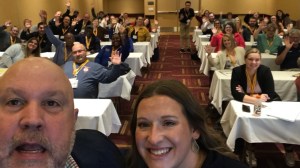
This past week at the National FFA Convention here in Indianapolis, Indiana I had the opportunity to do teacher workshops with our National FFA Teacher Ambassadors. One of my roles is to help our ambassadors be the best presenters possible. After each workshop I did a reflection so that during next year’s ambassador trainings I can point out positive practices that really work during workshops. One such practice was done by Lindsey Lasater of Silex, Missouri. She is incredible at leading workshops. When leading discussions with workshop participants, Lindsey would write down each participants’ comments word for word on tear sheets. I used to do this in my classroom when teaching and now also use it when facilitating. I love this strategy. One, it helps the teacher/facilitator listen better, and two, it shows the student/participant that what they have to say is valued. And, a third plus is that it helps the other participants know what was added to the conversation.
In Simple Truth #43, “Since We Were Given Two Ears And One Mouth, We Should Listen More Than We Speak” in Simple Truths of Leadership: 52 Ways To Be A Servant Leader and Build Trust, Making Common Sense Common Practice, Ken Blanchard and Randy Conley we are reminded that good listeners are interested in what you are thinking and feeling. Some great ideas were being shared last week during Lindsey’s workshop and she honored and captured those thoughts by actively listening and writing them down. We are a good listener if we are focusing on the other person. Bad listeners focus on themselves. If we get the listening right, those we serve will share their best thoughts and ideas with us.
No One Bothered To Explain

“No one bothered to explain anything to her so she was not comfortable asking any questions.” Y.T. said this while working a job in the great novel (where the term “metaverse” was coined), Snow Crash, by Neal Stephenson. For some reason this statement really jumped out at me. I think it hit me so hard because it is true – if we’ve not been given any explanation, the “why,” or made to feel like we need to be in the “know,” we probably won’t be comfortable asking questions. This is true in work and organizational settings as well as in educational settings. Explanation forms a bridge between telling and revealing knowledge involving narration and description.
Using explanation, we make meaning of content, processes, and procedures. In other words, complex things should be simplified. Explanations also give us clarity. When there’s clarity, it’s easier to communicate and move forward as a team. Y.T.’s comment in Snow Crash reminded me that the short amount of time it takes to explain and shed some light on the “why,”especially when introducing a new initiative, provides the clarity, unity, and motivation necessary for a productive and fully-engaged culture.
Then, yesterday while facilitating a leadership development gathering, I was reminded that the comfort that Y.T. was looking for to ask questions was also dependent on the relationships built with others in the organization and team. We know that students whose teachers have built relationships with have higher levels of engagement and achievement. Why? The students are more comfortable asking questions.
Do you have, or have you ever had, a boss you weren’t comfortable asking questions of? Awful, right? This could show a lack of relationship. I had a teacher tell me a couple of weeks ago that she wished her principal knew her better. I reminded her that this was a two way street and she needed to help build that relationship. As a former principal I pointed out that her principal had an entire building of people to build relationships with. But, the bottom-line is that it is a leaders responsibility to build relationships and open the lines of communication.
As leaders we need to make sure we are comfortable asking questions like: How’s life?; Are you clear about your role and responsibilities?; What would you like to learn about?; or, What do you think would improve…? Think about how liberating being asked these questions could be. Only liberating, however, if you really mean them and want to truly act on them.
How Do We DeBottleneck?

I am now to the next-to-last topic I put on a list that I wanted to blog about following the SMART Factory League 2022 Summit in Hamburg, Germany. During one of the sessions a speaker posed the question, “How do we debottleneck?” I have actually blogged about bottlenecks before in The Leadership Bottleneck! At first I was going to say that the post I did back in 2015 was done in a different context, but as I went back through it I realized it was still very evergreen today.
I love metaphors and the idea of a bottleneck is a metaphor referring to how the speed of pouring a liquid changes when it enters the narrow neck of a bottle. Bottlenecks usually determine the capacity of a process. Bottlenecks develop simply because in any process – be it a manufacturing line or business process – different activities take different amounts of time, or various stages have an uneven capacity, to unequal numbers of resources.
Bottlenecks also occur because of batch processing. Machines and workers are sometimes only available at limited times during the day or week. Therefore, to increase efficiency, the raw materials are organized in batches so that the time windows are utilized fully. It’s pretty obvious how this batching causes bottlenecks in manufacturing, but then I got to thinking about how we batch in education and how that causes bottlenecks. Last week I had the chance to facilitate a session rolling out Aspen Institute’s latest framework for education, Opportunity to Learn, Responsibility to Lead, and we go into a discussion of what the future of school should look like. Now, looking back on that discussion we were really talking about debottlenecking in many instances.
In education, the term bottleneck is used in both describing the pedagogical issue of barriers to the students’ understanding of content in the process of learning. Bottleneck is also used to describe times when a student enters a phase of progression where academic performance and competition come into play. Both of these bottlenecks are compounded because of how we presently “batch” our students into grades and groupings. This inherently causes bottlenecks. This is why we need to consider looking to a more competency based model. The more we can personalize and become student centric we can eliminate batching bottlenecks.
Bottlenecks can cause both the student and the institution to incur increased educational costs, waste time, and delay completion of dual credits, certifications, and work based learning opportunities. So, just like the manufacturing industry must debottleneck, we need to consider the ways to debottleneck education.
Stakeholder Alignment
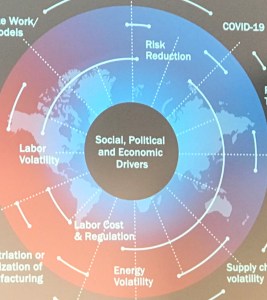
We are seeing a dramatic amplification that an individual voice can have within a business, organization, educational entity, or local, state, or federal government – bringing with it perspectives on not only what is right for those individuals and the organization or community, but increasingly, what is right for society at large. Thus we need stakeholders to be well informed and stakeholder alignment. In other words, all sections of stakeholders must optimize together.
Last week when I was in Germany with business and education leaders I discussed that modern organizations will need to transform to be ever more in tune to and responsive to the needs of both internal and external constituencies. I even got more specific and talked about this in terms of talent recruitment, acquisition, development, and retention. There needs to be internal talent community as well as an external one. We have reached a time when personalization must occur for those both being served by the organization and those carrying out the work of the organization. In the case of stakeholder alignment for talent (not ‘human resources’ to be exploited) we need to find ways to remain agile in gaining and teaching new skills necessary, create a cycle of learning, improvement and engagement for people, create culture in a world of remote working, and many other individual and societal issues.
Stakeholder alignment means every role has the opportunity to be transformed into a more strategic function. One company shared last week that through artificial intelligence (AI) the production data generated areas of development needed for development. Brilliant! Alignment of our internal and external ecosystems are crucial for success today. We must continue to use the tools available to create an interconnected awareness of our situation as it relates to all stakeholders.
Generation Metaverse
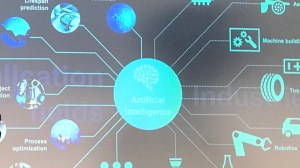
I love learning and I have to say that last week almost put me in overload. It was so great to be back in person, chair, and speak for the SMART Factory League 2022 Summit. Hanging out with really smart and innovative industry leaders from around the world is, well, intoxicating! It is incredible to learn about both new things I’ve never heard of or things I’ve been exposed to, but don’t know much about. One such, related to the latter is the metaverse and generation metaverse. We learned that dollars are going to be shared between live and digital. It is gong to be a blending. the metaverse is virtual-reality space in which users can interact with a computer-generated environment and other users.
The metaverse is virtual-reality space in which users can interact with a computer-generated environment and other users. Gen Z, millennials, and Gen X consumers expect to spend between four and five hours a day in the metaverse in the next five years. The metaverse mainly involves gaming right now, but will include immersive shopping, followed by telehealth appointments, education, travel, and socializing in virtual reality (VR) or using augmented reality (AR) will be the most interesting metaverse activities for consumers in the next five years
Moving away from two-dimensional laptops and smartphones to the three-dimensional immersive world of glasses and goggles is one that I hadn’t spent a lot of time thinking about, but has tremendous possibility. We can move from screens to landscapes, layers, and objects.
Flirting With Technology
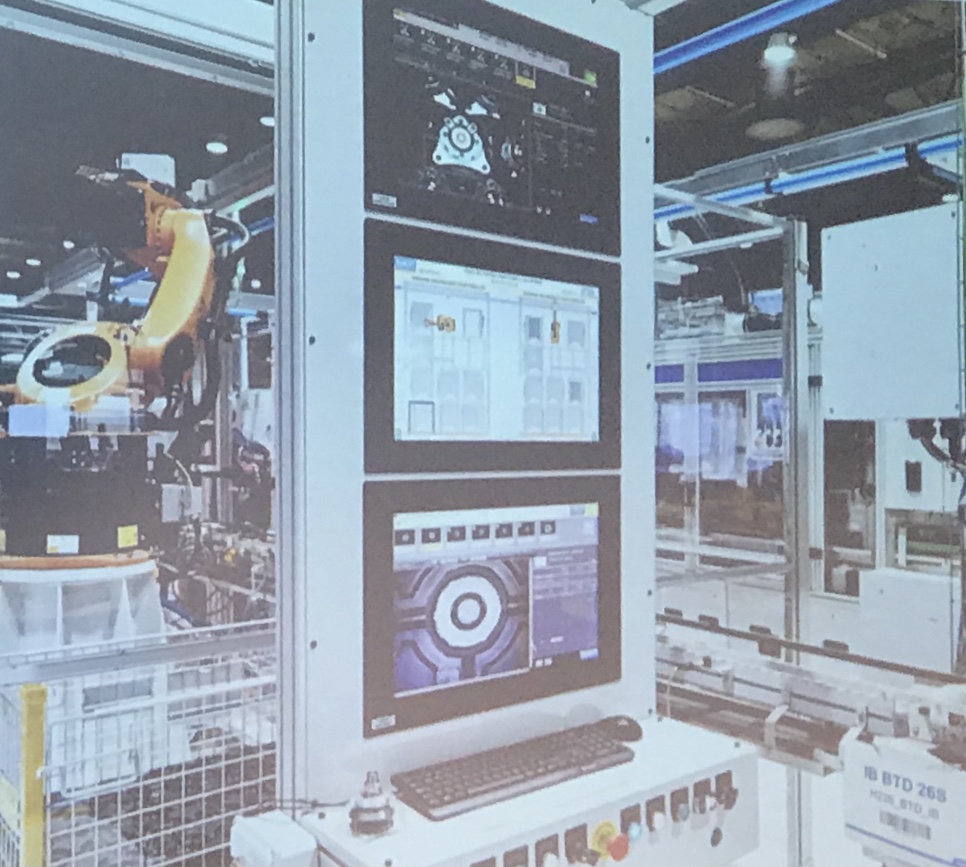
I’ve already done several posts reflecting on my learning from the SMART Factory League 2022 Summit, but I just spent a couple of hours during my flight home studying my notes. That study yielded another seven topics for reflection, further study, and a blog post being written. Something that we discuss this week while in Hamburg, Germany was the fact that we are always flirting with technology. There is always some new device, application, updated application, or increase capability for us to “flirt” with. I loved that way of putting it – “flirting.” Because flirting is not committing. Interestingly, the manufacturing industry and education have the same issue here: we flirt too much without making sure what we are flirting with meets our needs, is usable by our stakeholders, or even adds more burden than value. Therefore, we discussed that when flirting with technology there must be a great deal of experimentation.
This flirtation cannot be a speed date! I see this so many times, where someone in a school likes a particular technology, so that becomes the next thing. Probably the biggest areas I hear this in education are with learning management systems. I hear things like “I’m not sure who picked this, but it really isn’t that useful.” We talked a lot about the stakeholder gaps while discussing change management this week. Clearly there are stakeholder gaps in my example here. I get the fact that there needed to be some quick decisions made during the heat of the global pandemic, but we mustn’t forget the experimentation component to flirting with technology.

This experimentation must include using a model like the Vantage Point Model©. The experimentation must include stakeholder representation from the organization related to philosophy, culture, policy, strategy, tactics, logistics, and tasks. I teach this model in all leadership development work I do. I truly believe and have witnessed it to be true that if all seven stakeholder groups are represented, change has a great chance of success. Additionally, I have seen failure, particularly in the area of technology, when the stakeholders involved with tactics, logistics, or tasks are not included in the experimentation.
The list of seemingly necessary IT capabilities continues to grow, and IT spending continues to consume an increasing percentage of their budgets. No one person, committee, or department should be left to make, often by default, the choices that determine the impact of IT on your organization’s business strategy. Beware of chasing elusive benefits (eg. Information to anyone, anytime, anywhere). Choose goals for technology/digitization that match the strategy of your organization. You cannot do it all at once – do it in sprints. We need to consider how our technology can help give us a centralized global perspective, but also maintain individualization on a regional and local level. Involving all stakeholders is again important to the experimentation here.
Bottom-line: Flirting With Technology = Great Deal of Experimentation.
SMART Global Reflections

I love traveling internationally and connecting with people from all over the world. As I fly the last leg of my trip home this evening I am reflecting on how blessed I was to be in Hamburg, Germany 🇩🇪 for the SMART Factory League 2022 Summit. Industry and manufacturing leaders from around the world came together to discuss current issues and promising practices. It was so great to be with Anna Beklemisheva, from Greece 🇬🇷, who is the GIA event manager. The last time I saw Anna in person was in Berlin back in 2018, pre global pandemic. I love working with Anna and will always make myself available to chair and speak at events for her. Every time I am with Anna I learn so much.
It was great to see individuals in person that I had connected with back in 2018. One big difference that we all noted in the discussions from 2018 to 2022 were how people centric the discussions have become. It seems to be a global issue with no industry exempt from having a talent shortage. They were kidding me that in 2018 I kept wanting to talk education and talent with only limited interest. Now in 2022, every speaker and every panel discussion ended up discussing the workforce. And, I loved it when they all agreed that we must be thinking about talent development down into the younger ages/grades of education. This is a passion of mine. We need to be thinking exposure, exploration, and experience much earlier.
It is so critical to have these global interactions and learn from each other. One leader from Poland 🇵🇱 discussed that we are setting ourselves up for failure if we believe that schools and teachers can keep up with changes in technology and other industrial advances to be able to teach effectively. He believes industry needs to step up and provide teachers. I have been advocating for years now that we need to be thinking about do we best put people who have actually done the things they are teaching in front of our scholars. We already do this in many of our career and technical education programs and I believe this is a way to increase our teaching in a relevant context and putting great teachers in front of students every minute of the day. Keep in mind that if we are creative about this a person might only teach one hour a day and be in their industry career the other part of the day. Or it could be someone who has retired from business or industry. This would take some logistical work and partnering between industries and schools, but I believe it could be done.
I am coming home excited that the world is thinking about how we become more people centric. We need to do a better job of talent mapping and development for our young scholars as well as our current employees.
 Byron's Babbles
leave a comment