Freedom, Wandering, & Finding A Path

In the The Storyteller: Expanded…Because There’s More To The Story, Dave Grohl said of his mother, “I like to say now that she disciplined me with freedom by allowing me to wander, to find my path, and ultimately find myself.” I believe he meant that his mother, who was a public school teacher, gave him the freedom to explore and make his own choices. Rather than imposing strict rules and limitations, she allowed him to venture and discover his own passions and interests. This approach helped him develop his own identity and find his true purpose in life.

This wandering and freedom had to be tough for his mom as it led to Grohl dropping out of school. But, as his mom said, “It’s not always the kid that fails at school sometimes it’s the school that fails the kid.” Grohl really didn’t explain the statement except in his own context of wanting to become an artist as a rock musician. I believe as a school teacher his mom was rightly referring to the idea that sometimes it’s not the child’s fault for struggling in school, but rather the educational system or environment that is not able to meet their needs or support their learning style. I believe, as Grohl does too, that it is important to recognize that each child is unique and may require different approaches to learning. Instead of blaming the child for not succeeding, it is necessary to evaluate and address the shortcomings of the school system to ensure that every student has an equal opportunity to thrive academically. This is why I am so excited to be a part of policymaking for Indiana’ school redesign. We need a system where every child’s uniqueness can be celebrated and developed. We cannot continue as we are right now, where the best choice some is to drop out of school, because the school cannot meet the student’s needs – as was the case for Grohl.
Discover Life Firsthand

Dave Grohl’s statement “I was discovering life firsthand” in The Storyteller: Expanded…Because There’s More To The Story, emphasized the importance of personal lived experiences and living in the present moment. It implied that he believes in actively engaging with life, seeking new experiences, and learning from them. His mother had provided and made possible many of those experiences. Grohl’s mother was a school teacher and clearly understood the value of lived experiences. This can also serve as a reminder for us to embrace opportunities, take risks, and be open to new perspectives. It encourages us to step out of our comfort zones, seek personal growth, and approach life with curiosity and a sense of adventure.

We need to make sure we are providing these opportunities for adventure and curiosity for all students. There are several ways to ensure that students have opportunities to discover life firsthand. Here are a few suggestions:
- Experiential Learning: Providing hands-on experiences and real-world applications of knowledge. This can include field trips, internships, apprenticeships, or project-based learning.
- Outdoor Education: Encouraging students to spend time outside, connecting with nature and participating in activities such as camping, hiking, or community service in environmental projects.
- Volunteering and Community Service: Encouraging students to engage with their community through volunteering. This provides them with the opportunity to make a positive impact, develop empathy, and gain firsthand experiences.
- Cultural Immersion: Organizing cultural exchange programs or activities that expose students to different cultures, beliefs, and perspectives. This can be done through partnerships with organizations, hosting international students, or arranging cultural events.
- Personal Projects: Allow students to choose and pursue personal projects that align with their interests and passions. This gives them autonomy and allows for self-directed learning, enabling them to engage with life on their own terms.
- Reflection and Discussion: Creating spaces for reflection and discussion where students can share their experiences, learn from each other, and develop critical thinking skills.
These are just a few of many examples, but by providing these opportunities, we can help students develop a deeper understanding of the world around them and foster a sense of curiosity, independence, and personal growth. And, by the way, research tells us that these lived experiences provides prior knowledge which improves students’ ability to learn to read.
People Inspire People

This is another post inspired by the great book, The Storyteller: Expanded…Because There’s More To The Story, by Dave Grohl. Several times in the book he said, “People inspire people.” Many of his stories in the book are how others inspired him to be who he is today. I love how he connects almost everyone he talked about to somehow being a key to his success. This was a reminder of how important every single person is to us and our continual development. Funny, we talk about the formative years being from birth to age eight, but I would argue, and I suspect Grohl would too, that every year of our life is formative as other people continue to inspire us.

As we close out 2023, I can think of many others who have inspired me and that I have learned from in the past year. I am way past the age of eight, but this was still a formative year for me. This is why I believe we should always view everyone as humans and not superheroes. Ordinary people are who inspire us. Grohl has inspired me to continue to be diligent in trying to create educational environments where every child can find and develop their passion. Grohl talked about being different and how tough that was. It shouldn’t be tough! We are all exquisitely unique and we need to be encouraging that uniqueness in others and cultivating our own uniqueness.
When Grohl said, “People inspire people,” he meant that individuals have the power to inspire and motivate each other. He believed that through our actions, words, and creativity, we can have a positive impact on others and encourage them to pursue their dreams and goals. Grohl emphasized the importance of human connection and how we can learn from and be inspired by one another’s experiences and achievements.
The Power Of The Invitation
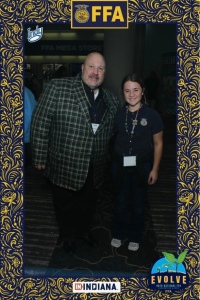
There is so much power in an invitation. An invitation holds power because it is a gesture of inclusion and connection. I was reminded of this a couple of weeks ago during the National FFA Convention. Ambra Tennery, Associate Director, Educational Development & Evaluation Programs, had her seventh grade middle school FFA member daughter, Brinley, at convention. Up until convention, I had not spent a lot of time with Brinley. Then, on the first day of convention when I got back to the convention headquarters from doing an administrator’s workshop Brinley had just sat down for lunch and called over to me and said, “Byron, will you come sit by me and have lunch with me?” “Of course,” I said. I was blown away. The power of the invitation! We had an incredible conversation and I was reminded how good it feels to be invited. When someone extends an invitation to us, it signifies that they value our presence and want us to be a part of something. It can make us feel wanted, appreciated, and included.

Additionally, an invitation can also have the power to open up new possibilities and experiences for us. It can give us the opportunity to step outside of our comfort zones, try new things, and meet new people. An invitation can also create a sense of anticipation and excitement, as we look forward to what the event or gathering might bring. Yesterday, at an Utah FFA leadership conference I told the story of Brinley’s lunch invitation and asked if anyone had been invited by another member to attend the conference. One young lady was quick to respond, “Yes!” I asked her how it made her feel. She said, “Very special and I am getting a lot out of today because I feel privileged to be here.” Let me tell you, that is how I felt when asked to sit and have lunch with Brinley – special!
Furthermore, this proves how important it is to make sure our students are having real world conversations and interactions with adults. As I mentioned, Brinley is a seventh grader but can carry on a conversation better than many adults I know. Having had the honor to hang out with Brinley quite a bit during convention it was like I was conversing with a college student. Her parents and agriculture teacher/FFA advisor have done a great job of making sure she is having the important opportunities to observe and learn from adults. Clearly these experiences offer valuable insights and help students develop important life skills. Interacting with adults can broaden students’ perspectives and expose them to different ideas and viewpoints. This can help them develop critical thinking skills and enhance their ability to understand and empathize with others.
Let’s never forget the power of an invitation lies in its ability to foster connection, create new opportunities, and evoke positive emotions. Also, we don’t want to forget how important conversations and interactions with adults can contribute to the holistic development of young students, fostering personal growth, learning, and positive relationships. Who do you need to invite?
The Limits of Language

I had the opportunity recently to read Ludwig Wittgenstein’s seminal work in philosophy, Tractatus Logico-Philosophicus. I love philosophy and this book did not disappoint. Yesterday, because of work I am doing in Southwest Utah for the Utah FFA, I had the opportunity to do some exploring in Zion National Park. I have to say that Zion National Park might just be one of the most beautiful places I have ever seen. And not to mention there is a 1.1 mile tunnel with galleries, or windows, cut into so we get glimpses of the unsurpassed beauty while driving through. I was there in the afternoon and as the shadows highlighted the beautiful formations, I had a realization of what Wittgenstein meant when he said, “The limits of my language are the limits of my world.” In other words, whatever can be expressed in words constructs the boundaries of our knowable reality.

As I took pictures and was texting them to friends and family I thought to myself, “These pictures don’t even catch a fraction of the real beauty and scale. Wittgenstein argued that we can’t meaningfully discuss anything beyond language’s pictorial nature. Language can only portray hard facts and logical interconnections. It can’t capture subtle metaphysical truths, ethical imperatives, or subjective aesthetics. This philosophy seems sound to me. There are truly unsayable truths in the underlying existence that reveal the frontier between language and lived reality. As person who embraces all the advantages that augmented reality and the metaverse bring to us in education and all industries, I don’t want us to forget the power in actually being present. As Wittgenstein said, “What can be shown cannot be said.” It is certainly hard for me to put into words what I saw yesterday, but it can be shown and experienced.

Ludwig Wittgenstein believed that the limits of language prevented us from adequately describing a beautiful landscape. He argued that language is limited in its ability to capture and convey our subjective experiences and emotions accurately. Wittgenstein believed that there are aspects of beauty that are ineffable, or beyond the reach of language, and therefore cannot be fully articulated or described. According to him, language is not sufficient to capture the full richness and complexity of aesthetic experiences. Now, I know great writers that can transform us to a location with their words. This is a talent I am envious of, but still there are those things which words or even a picture cannot do justice.
Value Added Education

Yesterday during a workshop I was doing at the National FFA Convention the superintendent, John Niehues of a Kansas school district made the comment that what he was trying to create at USD 200 Greeley County Schools and what we were doing in agriculture education and FFA was “value-added education.” This is so true! It was so great to have him in this session where I was working with teachers to help them develop relationships and learn how to best work with their administrators. His insights were invaluable to all, including myself, in attendance. I love that we have so many administrators attending convention. Value-added education refers to an approach in which the education system focuses not only on providing knowledge and skills but also on adding value to students’ overall growth and development.
Value-added education goes beyond traditional academic subjects and aims to cultivate a range of qualities in students, such as critical thinking, problem-solving skills, creativity, empathy, communication skills, and a sense of responsibility. It emphasizes holistic learning and aims to prepare students for real-world challenges and success in various aspects of life.
In value-added education, the focus is on developing well-rounded individuals who are not only academically competent but also possess essential life skills and values. This approach recognizes that education is not just about acquiring information but also about fostering personal, social, and emotional development. It’s about applying what is learned. That is why work-based learning and apprenticeships are so important. In our agriculture programs we use Supervised Agricultural Experience (SAE) For All to give students the opportunity to explore passions and career interests. SAE For All is broken into two components:
1. Foundational SAE: career exploration and planning, employability skills, personal finance management, workplace safety, and agricultural literacy.
2. Immersion SAE: this is where students gain real-world, hands-on experience within their chosen career path. Students will enhance their agriculture industry knowledge, gain financial independence and management skills, and determine whether the career choice aligns with their interests and abilities. They do this in either placement/internship, entrepreneurship, research, school-based enterprise, or service learning.
Value-added education encourages active learning, student engagement, and the application of knowledge in practical settings. It promotes lifelong learning, self-reflection, and continuous improvement. By providing opportunities for students to explore their interests, develop their talents, and engage in real-world experiences, value-added education aims to prepare individuals for future success and contribute positively to society.
Targeted Universal

I’m contemplating the concept of “targeted universal approach” today. This concept refers to an approach that aims to provide services or benefits to a specific group of people while still being accessible to a broader population. It combines the targeted approach, which focuses on addressing the needs of specific individuals or groups, with the universal approach, which aims to provide benefits to everyone. A targeted universal approach in education can be favorable for several reasons. First, it allows for a highly personalized learning experience for students. By understanding the specific needs and preferences of each student, educators can provide tailored instruction and support that caters to their individual learning styles and abilities.
A targeted universal approach additionally helps address educational inequalities and bridge achievement gaps. It ensures that all students have access to high-quality education and resources, regardless of their background or circumstances. This can ultimately lead to improved academic outcomes and opportunities for all students, promoting equity in education. In practical terms, using a targeted universal approach means designing programs or initiatives that target a specific group based on certain criteria, such as income level or geographic location, while ensuring that the benefits are available to a wider range of people who may also benefit from them.
To apply the concept of “targeted universal,” we must identify the specific group or audience being addressed. This could be based on factors like demographics, needs, or location. In education, a targeted universal approach can promote inclusivity and diversity in the classroom. By valuing and accommodating the unique strengths and challenges of each student, it fosters an environment where every individual feels valued, respected, and supported. Then we can design programs or interventions that specifically target their needs while also ensuring that others who may benefit from the initiatives can also access them.
It’s important to keep in mind that the success of a targeted universal approach relies on careful planning, research, and implementation to ensure that the intended outcomes are achieved. A targeted universal approach in education recognizes the importance of individual differences and seeks to address them through personalized support and inclusive practices. It can contribute to enhanced learning experiences, improved educational outcomes, and a more equitable and inclusive education system. Additionally, ongoing evaluation and feedback from the targeted group and other stakeholders can help refine and improve the approach over time.
Teaching Learning Ability
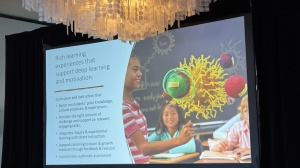
Yesterday in our National Association of State Boards of Education Annual Conference opening session, my friend, Dr. Linda Darling-Hammond made the comment that we need to teach our students learning ability. This enablement of learning is important to Linda and I and we even coauthored an article on opportunity to learn. Click here to read it. I spent some time this morning thinking on teaching learning ability. Teaching our kids learning ability means providing them with the skills and tools to become effective learners. This includes teaching them how to think critically, problem solve, and communicate effectively. It also involves fostering a growth mindset, where they understand that intelligence and abilities can be developed through hard work and effort. Additionally, teaching learning ability involves promoting curiosity, creativity, and a love for learning.
I definitely believe we can teach love for learning. Encouraging a love for learning starts from an early age by creating a positive and engaging learning environment. Providing interesting and relevant content, incorporating hands-on activities, and giving students the opportunity to explore their own interests can help foster a love for learning. Additionally, praising effort and celebrating achievements can also help motivate learners and make the learning experience enjoyable. It’s important to create a supportive and encouraging atmosphere where students feel empowered and excited about learning.
The Restless Learner

Yesterday, I had a person describe me as a “restless learner.“ Of course, this prompted me to think about the question, “Just what is a restless learner?” It turns out there is a definition. Warren Berger in A More Beautiful Question (2014) defined the restless learner as, “a person who can never be comfortable with her/his own expertise in the face of rapid knowledge advancements, research revisions, and obsolescence of facts.” This sums me up pretty well. I want to be a critical thinker who is constantly evaluating what I know and what I need to learn. I am always curious, seeking out knowledge and experiences that expand my understanding of the world.
It’s that constant desire to learn and explore new things. As a restless learners Ian are not satisfied with staying in my comfort zones or sticking to what I already know. Instead, I try to actively seek out opportunities to grow and challenge myself intellectually. I am open-minded, adaptable, and willing to embrace change in order to continue their journey of learning. I’m a proud restless learner, how about you?
Polyphonic Leadership
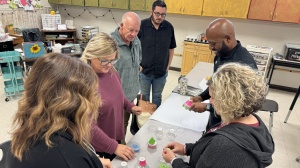
In my University of Oxford class I’m in right now we have been using an orchestra metaphor through line to discuss orchestral leadership. While reviewing some literature I came across the musical term “polyphonic”, which means a musical texture comprised of two or more independent melodies or voices which combine to form one piece of music. The term “polyphonic” can also be used to describe a leadership style that encourages the inclusion and involvement of multiple perspectives, voices, and ideas.
A polyphonic leader values collaboration and diversity of thought, allowing different individuals and teams to contribute their unique insights and expertise. This approach recognizes that no one person has all the answers and that collective intelligence and the synergy created by multiple voices can lead to more innovative solutions and better decision-making. Polyphonic leadership fosters an inclusive and empowering environment where everyone’s contributions are valued and respected, leading to higher employee engagement and overall organizational success.
In contrast to the polyphonic style of leadership would be the monophonic leader. This is a very hierarchical style with an autocratic leader and relies solely on the perspective and opinions of one individual. This can lead to a lack of diverse ideas and a narrow focus on one person’s strengths and weaknesses. It may also create an environment where employees feel their contributions are not valued or heard. Monophonic leadership can hinder innovation, hinder collaboration, and ultimately hinder overall organizational success.
Polyphonic leadership is in sync with constructivist theory, which I subscribe to in education, because it promotes the idea that knowledge and meaning are constructed through collaborative and inclusive processes. Constructivist theory emphasizes the active participation of individuals in creating their own understanding of the world, and polyphonic leadership aligns with this by valuing diverse perspectives and encouraging open dialogue and collaboration among team members. We need to help all those we serve tap into the collective intelligence and creativity of their team members.
 Byron's Babbles
leave a comment