Learning From Action Not Abstraction
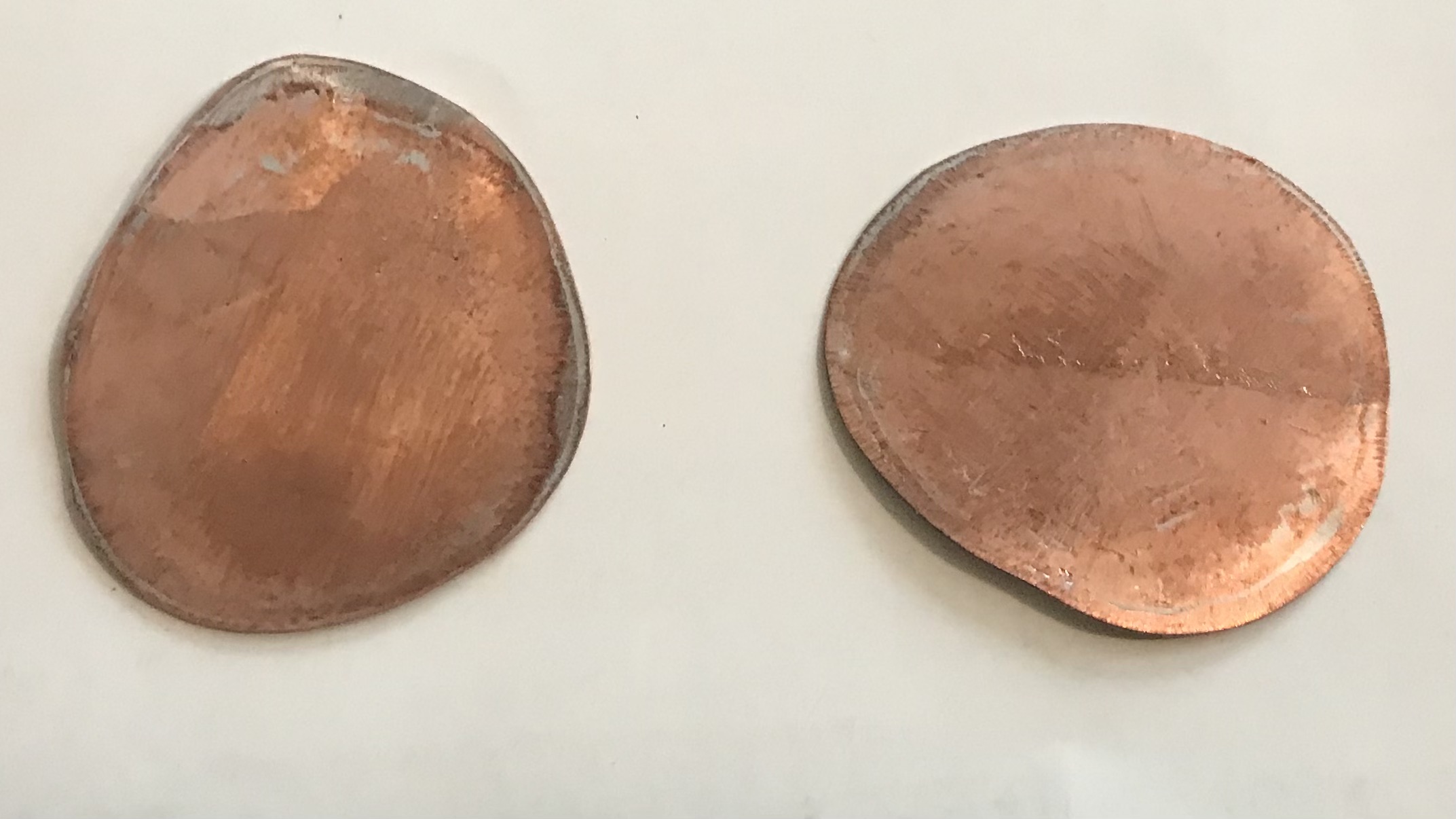
As a person who has lived six decades now, the world feels like a more perilous place. I don’t really think the modern world is any more dangerous than it was fifty or sixty years ago. I do, however, believe we are in a much more risk averse world today. I think a lot about whether this risk aversion is inhibiting children’s development of autonomy, competence, confidence, and resilience. Growing up on a farm I had many opportunities to test observations, to experiment and tinker, to fail and bounce back. Nothing was treated like a major risk, and I was not prevented from learning how to judge the truly dangerous, from the simply unfamiliar. Please know I am not in any way suggesting putting our children in harms way. I just worry we we are ensconcing children in a life of abstraction rather than action. I guess the old agriculture teacher in me will always believe in “learning by doing.” “Doing” always comes with some inherent risk. Riding a bike carries the inherent risk of falling off. Thank goodness we have not made it illegal to ride a bike.
Case in point; yesterday my son was telling about things he had done as a kid growing up on our farm and his girlfriend was amazed. She asked if I knew he was doing all that. Well, yes and no. Was he doing anything bad? No! Case in point: having been in North Carolina during the recent gas shortage, I saw firsthand all the stupid ways some people were hoarding gas. I can guarantee you my son understands why you don’t put gas in a trash bag lined trash can with no lid. Enough said! And, yes I did see that done. Somehow, last evening, the subject of putting pennies on a railroad track came up. My son’s girlfriend had never heard of doing that. What? She then went on to talk about having some of those pennies you get flattened in a machine at vacation destinations. What? That’s no souvenir. I’m not going to say whether we did or did not smash pennies on a railroad track last night, but those would be a souvenir she would never forget making. Besides just plain being fun, we need to let children grapple with a little bit of healthy risk. Doing so can help teach motor skills, develop confidence, and get our young scholars acquainted with the use of tools and some of the basic principles of science. Let’s add some action to all the abstraction.
The Second Generation

Everyone should feel satisfied and proud of the career they want to pursue. Our goal has always been for our son to make peace with his post-secondary education and career goals and, first and foremost, make himself proud. There has been quite a lot of research done studying the impact parents have on their children’s educational and career goals. I am really glad and proud of the work I have done in the policy arena to have career exploration be something that happens much earlier than the end of high school. Our young scholars need to be preparing for the next chapter of life—whether that’s higher education, industry training, directly into the workforce or another path much earlier. I also believe that parents have an influence, either positive or negative, on this. I began reflecting on this yesterday when standing outside my son’s summer internship at Cal-Maine Foods. I could not go in for bio-security reasons, but I was so proud that there stood two generations of Animal Science majors at two different universities – Purdue University and Murray State University. Check out our picture and here is the tweet I did in the moment:
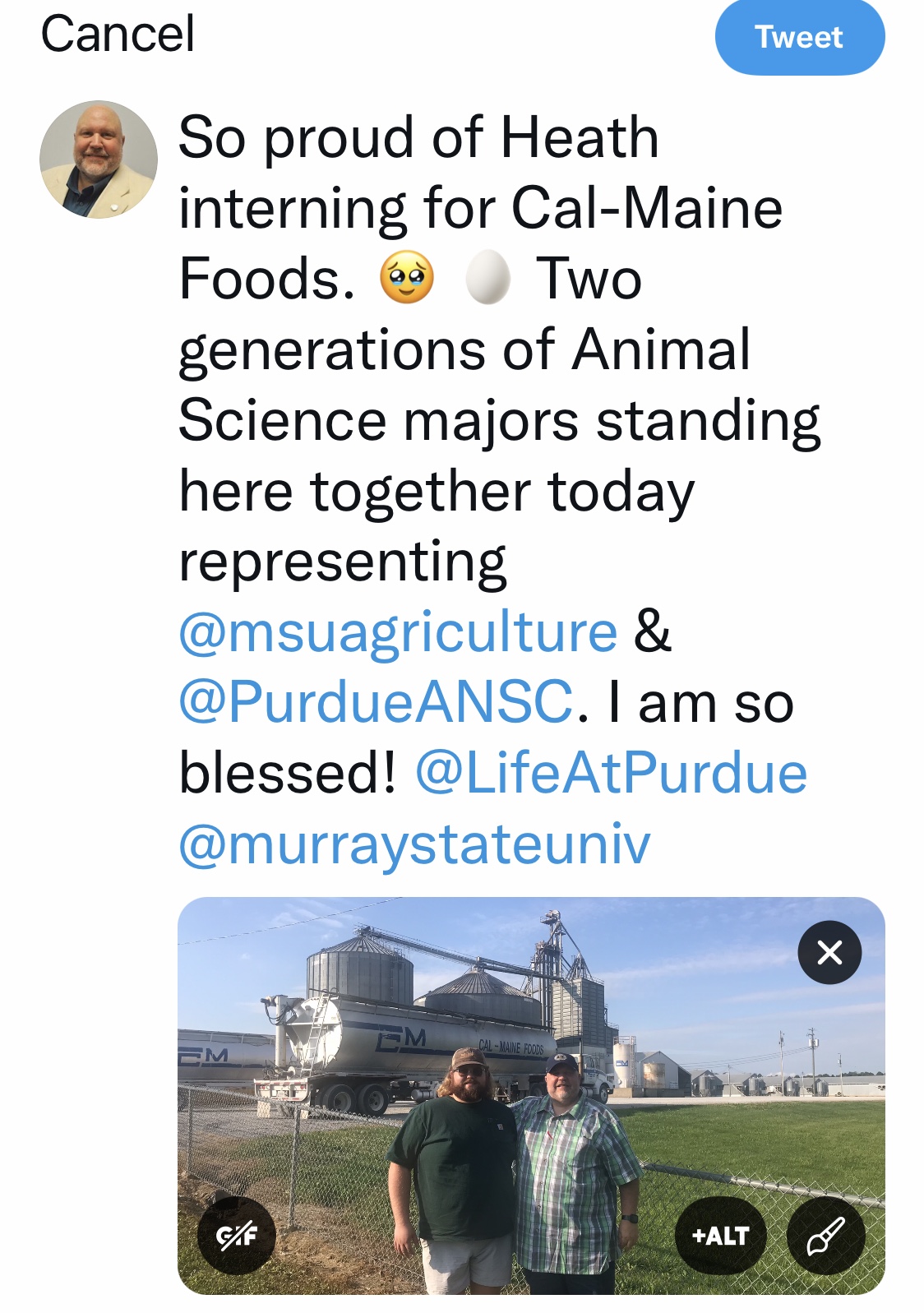
I asked Heath if he ever felt any pressure from me to be an animal science major. He answered an emphatic “no.” He did say that I had set an example because of how proud I was of having gone to Purdue and received degrees in both Animal Science and Agricultural Education. He also knows the story well of how I ended up being an agriculture science teacher and working in education my entire career. If you don’t know that story, click here. Heath also talked about all the experiences growing up on a working farm gave him. Home is where thinking ahead, dreaming big and setting goals can become normalized activities and allow all those skills to be available to our children when they come to the forks in the road. The earlier the conversations start, the better prepared they’ll be to make the best choice when that moment arrives. It’s not about applying pressure, but about being a model of making life choices that match passions and purpose.
Hatching Change
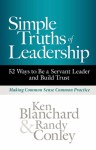
One of the things I am always saying is that I do not like the words, “buy-in.” It has been my experience that if you have to go get buy-in for some new initiative or change, you have already failed. Done correctly, the buy-in should happen organically as the change or initiative is being planned. As Ken Blanchard said in Simple Truth #22, “People Who Plan The Battle Rarely Battle The Plan” of Simple Truths of Leadership: 52 Ways To Be A Servant Leader and Build Trust, Making Common Sense Common Practice by Ken Blanchard and Randy Conley, “…people have a hard time getting behind an organizational change effort they have had no part in creating” (p. 61). That’s why I am such a believer in the Vantage Points Model (MG Taylor Corporation). The Vantage Point Model reminds us that we should gather as many stakeholders from different points of view as possible (philosophy, culture, policy, strategy, tactics, logistics, and tasks). Blanchard went on to tell us that, “When they [people] can play a part in implementing the plan and are allowed to express their concerns and contribute their ideas and feedback, they are more likely to align behind the plan and help accomplish it” (p. 61). Thus my point about “buy-in.”
If we have been inclusive during incubation phase of the change process or initiative building, then there should already be buy-in because it was the group’s initiative to start with. If all those with a stake in the change or new initiative have been represented this will get us to a better product in the end. I have witnessed initiatives in schools fail, that were good ideas, because teachers and/or students were left out of the incubation phase. After the hatching the change or initiative I heard, “That was a good idea, but failed because no-one asked the ones (teachers) that would be implementing it. We could have told them to do x, y, and z and it would have worked.” There were so many times when I was a teacher or principal that we had some school process we needed to correct or create and almost every time that we got stuck trying to figure it out, it was the students who would come up with the solution that actually worked.
So next time you need to hatch change, don’t forget to gather representatives from all groups that will be affected by the change.
It All Comes Back To Relationships
I’ve had the honor of spending the past two days in Florida facilitating professional development for teachers. It was so inspiring to work with teachers who were so positive and clear in their purpose for serving scholars. Interestingly, as we come back even better after the pandemic years one theme came out in every one of my sessions: relationships are the key to everything. No matter how tough things are, we have to remember that building the meaningful relationships with students is number one. We have known for a long time that the relationship with a teacher can be critically important to how well students learn. We also know these meaningful relationships are much deeper than social interactions. Great teachers engage with students around their curiosity, their interests, their habits of mind through understanding and approaching material to really be an effective teacher. Research also tells us that the teachers that form these relationships are happier and experience the true joy of teaching.
When I was teaching I actually had the personal mission statement of, “I strive to use rigor, relevance and relationships to be a steward of high student achievement.” I blogged about that in Drumming Up Relationships. We must learn our students and connect with them on a real level, showing respect for their culture and affirming their worthiness to receive the best education possible. Our relationships with students matter more than we might ever know. Our abilities to show empathy and compassion are crucial. We must also continually hone our skills at practicing perspective-taking: actively imagining how a student might perceive or be affected by a situation. This can help us reduce bias and deepen our relationships with students. With deeper relationships comes trust, and with trust comes more engagement in learning.
Inviting Instead Of Commanding

Ken Blanchard said, “Servant leaders know people want to be part of the team. They invite their people to follow them in a side-by-side working relationship that the people have had a part in creating” (p. 59) in Simple Truth #21, “Servant Leaders Don’t Command People To Obey; They Invite People To Follow” of Simple Truths of Leadership: 52 Ways To Be A Servant Leader and Build Trust, Making Common Sense Common Practiceby Ken Blanchard and Randy Conley. We know that leading by title does not work. We also know that command and control does not work.
Relationships, walking the talk, skills, and results make you a leader. Titles should confirm leadership but they can never bestow it. The weight of many leaders I have encountered titles has made them forget that those titles do not account for the wisdom to evolve. It’s like the principal who forgets what it was like to be a teacher. Or, the person leading principals who was never a principal. Leadership should be about inspiring people to believe in themselves, to believe in their gifts, to believe in their potential, and to believe in something much greater than their own self-preservation.
The essence of the great servant leaders I’ve witnessed has been a positive team environment, honest/transparent communication, helps, engages, and appreciates. Remember, leadership is earned through behavior.
Having A Sharp Eye For Capacity

Mark Twain said, “Always do right. This will gratify some people and astonish the rest.” Unfortunately, Twain was taken advantage of more than once during his life. But he always tried to “do right.” I am reading Mark Twain’s autobiography right now and it is amazing. He dictated much of his autobiography and purposely wrote it as memories came to mind, not in chronology order. For some of my more linear friends this might drive you crazy. Those that know me, know I am loving this non-conventional approach. I love it because in his “twittering” (yes that is a word used by Twain a great deal and I now know where the name for Twitter came from) he talks about friends, how he met them, and his interactions.

One such friend was Henry Huttleston Rogers, the Standard-Oil magnate who became one of the most powerful tycoons of his day. Twain first met Rogers in New York in 1893 at a time when Twain’s unfortunate financial ventures had led him to the verge of bankruptcy. Rogers helped sort out Twain’s commercial enterprises and saved the author’s copyrights. In the autobiography, Twain expressed his gratitude saying, “His wisdom and steadfastness saved my copyrights from being swallowed up in the wreck…and his commercial wisdom has protected my pocketbook ever since.” These two became great and very close friends.
One of the things that Twain recognized in Rogers was “he [Rogers] has a sharp eye for capacity.” I love that Twain picked up on Roger’s ability to see the talent and ability in others and then develop those individuals. Twain discussed this being one of the key ingredients of Rogers’ success. This just shows how important it is for leaders to hone this skill, or find ways to sharpen the eye for capacity. I was working with a group of school principals yesterday and we were discussing this very subject.
We can distill the notion of capacity to the skills, knowledge and abilities of an individual. We must sharpen our ability to recognize capacity and then build that capacity in people. Consequently, our teams and organizations will become more resilient and stronger. The greatest leaders recognize and build on the strengths of others and what they have to say. They are a voice among many in conversations, and not just a voice that tells others what to do. As Twain said in his autobiography, “If everybody was satisfied with himself there would be no heroes.” Let’s not be satisfied. Let’s work hard to recognize and build capacity in those we serve.
Wanna Into Gonna

As I was flying home from facilitating a leadership professional development gathering yesterday I noticed what was written on the Southwest Airlines napkin. The Southwest business model has always been intriguing to me and I was struck by what was on the napkin, “In 1971, a triangle scribbled on a napkin transformed a dream into an airline and a wanna into a gonna.” I love the thought of a wanna becoming a gonna. This is also a reminder that it takes action to make dreams realities. We also, can’t do it all ourselves.
Whether it is making the plan visible and real on a napkin or just getting to work, the point is we have to start somewhere. There is a whole lot to what Herb Kelleher had to do to get Southwest Airlines off the ground (pun intended). I’ll let you do all the reading on that, but the point is we need to plan out turning our wanna into gonna. Also, remember, in this age of crediting everything to rugged individualism, no-one accomplishes things by themselves. We all need someone that provides us with the assist. It is very disingenuous to tell our kids that if they just work hard they will succeed. That is simply not true. It is an important part, for sure, but not the end-all-be-all. We all need those that provide us with privilege for accomplishing our dreams. Yes, Kelleher had tenacity and stuck with it, but he had people all around him, including his employees who he cared for deeply helping him get it done.
What dream triangle do you need to scribble on a napkin, and who can help you turn your wanna into a gonna?
What Does Success Look Like?
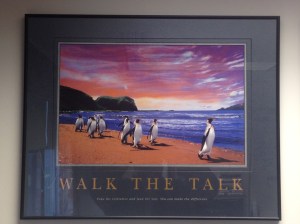
“They’re not sure how to please their boss, how to behave around their teammates, or what a good job looks like” (Blanchard & Conley, 2022, p. 39). Ever been there? I’ll bet many of you reading this have experienced this. Or, after listening to a leader pontificate about all her great values have someone lean over to you and say, “All talk! She doesn’t actually do or live out any of that.” I have experienced this all first hand and it’s not a good place to be. We all need and deserve to know what the expectations are and what success looks like. In fact, that is one of my favorite questions to ask: “What does success look like?” And, as we work shoulder to shoulder with those we serve, we need to model the expectations. As a teacher, principal, and superintendent I always said, and still do, that our students will live up to our expectations – so, let’s set them high and model them.
Then in Simple Truth #13, “You Get From People What You Expect”, in Simple Truths of Leadership: 52 Ways To Be A Servant Leader and Build Trust, Making Common Sense Common Practice by Ken Blanchard and Randy Conley reminded us that expectations are so much more than words. We were also reminded that “You must walk your talk, or your words are meaningless” (p. 39). This really resonated with me as I have always been such a believer in modeling by walking the talk and walking the walk. In fact I have a picture in my office of penguins walking the talk. I used it as the feature photo of the blog post Walking The Talk! and am using it again for this post because it means so much to me and is such an important reminder. We need to paint a very clear picture for all those we serve, by walking the talk, of what success looks like.
Where Do We Put The First Brick?
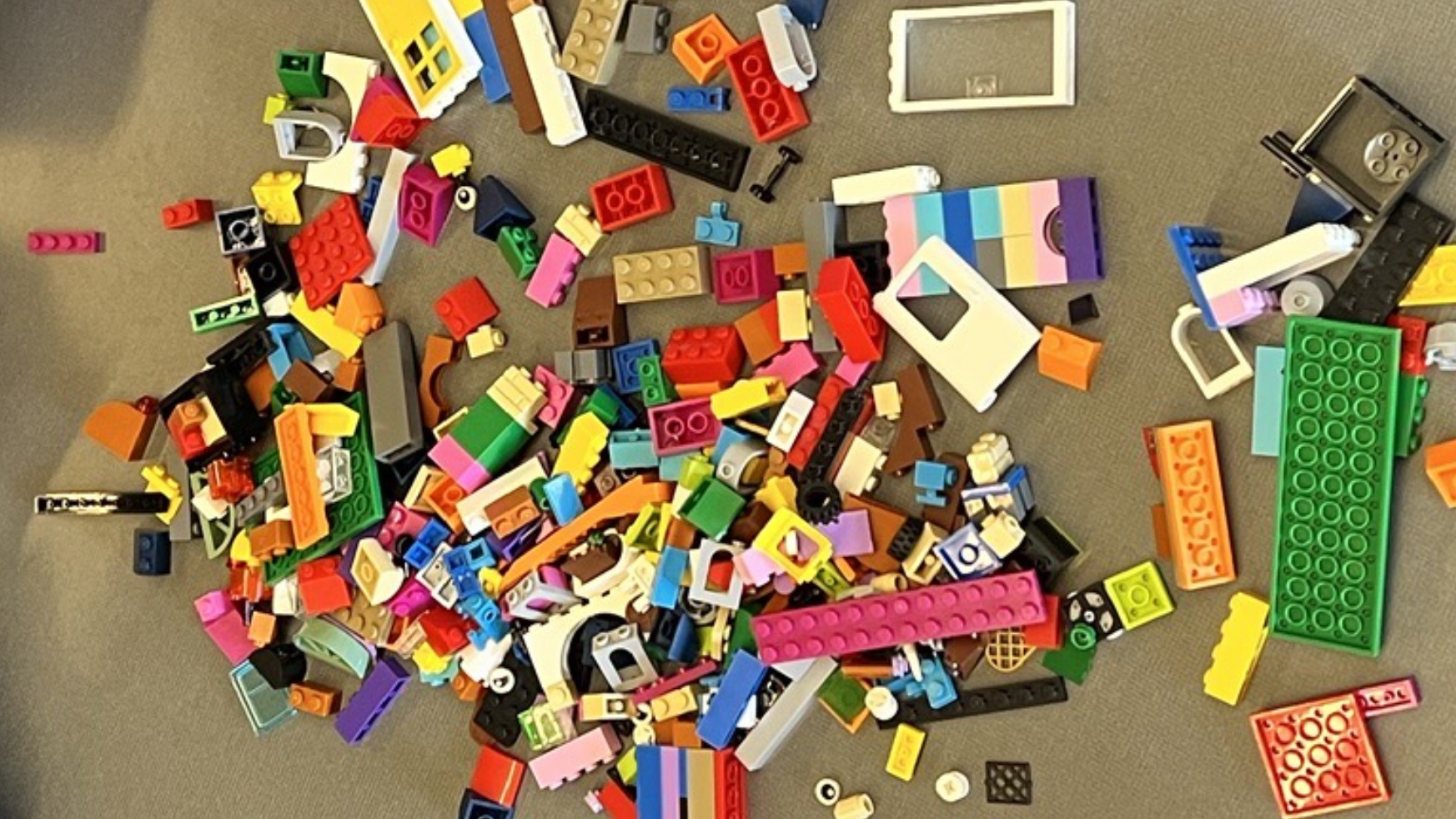
During our final session of the National Association of State Boards of Education (NASBE) 2022 Legislative Conference, Scott Palmer of the Education Counsel, told the story that his grandfather said he could build a bridge if someone told him where to place the first brick. Then, he asked the panel he was moderating to tell where they would place the first brick as we continue recovery from COVID and redesign education. For me, this is about stopping the throwing of bricks at each other. Let’s have the difficult conversations and get it figured out for our scholars.
We all need to be rethinking what the opportunity to learn means. My first metaphorical brick, however, is that we need to find every child. Now, in our 514th day of the Global Pandemic, we have many students that have become anonymous. We need to find every child and make sure we are giving them the opportunity to learn. Then we need to take an integrated systems approach to:
- integrate all outside experiences the scholars have.
- we need to rethink the time and place of learning.
- we need to consider the time and place of learning.
- we need to consider the different paradigms for opportunities to learn.
- we need to provide critical experiences for all our students.
- we need to take into account the ecology of a young person’s experiences;
- all the adults that students experience and interact with.
- the other students in their lives.
- the extracurricular and other activities outside the traditional school day.
I continue to say that school is no longer just a place. We need to shift the system to meet the needs of every kid, not have the kids shift to meet the needs of the system.
I’ll leave you with this thought: Whatever we want to be true for our students has to be true for their teachers, including experiencing safety, belonging, and purpose in the community of school.
What Is The Point Of A Theory?
Recently, I heard someone say, “What is the point of a theory if no one is going to test it.” It was a great point because that is the point of a theory. A theory is a special language that explains and helps us understand some phenomenon, for example, learning, motivation, or administration (Tosi, 2009). The major function of a theory is to describe and explain – in fact, theory is a general explanation, which often leads to basic principles. This has really got me to thinking that so many times we leave the important part of creating a theory when trying to solve some issue. It is why developing a theory of action is so important.
I love the idea of heuristic learning and strive to create environments in my work facilitating professional development for that kind of learning to occur. Heuristic learning is the ability to discover for oneself while doing something. Therefore, a theory is heuristic because it stimulates and guides the further development of knowledge. We all use theories to guide our actions. Some are implicit, and others are explicit; in fact, many of our personal implicit theories are formal ones that have been internalized Hoy & Adams 2016). I believe that if we want coherence and accountability we must start with a theory of action and then test it. We can start by asking, “What is the challenge you are trying to solve?”
REFERENCES
Tosi, H.L. (2009). Theories of organization. Thousand Oaks, CA: Sage.
Hoy W. K. & Adams C. M. (2016). Quantitative Research in Education – A Primer. Thousand Oaks, CA: Sage.


leave a comment