Gaining True Understanding


In a recent blog post, Our Internal State Shapes Our Future Experiences, inspired by George MacDonald‘s Lilith, I discussed how our beliefs, character, and moral strength serve to be the primary shapers of our future experiences. And how external events are secondary; what truly affects us is how we respond internally. In that post I quoted Mr. Vane, the protagonist in Lilith, as having said, “That which is within a man, not that which lies beyond his vision, is the main factor in what is about to befall him: the operation upon him is the event.” In that same paragraph, Mr. Vane went on to say, “Foreseeing is not understanding, else surely the prophecy latent in man would come oftener to the surface,” which relates to my earlier post highlighting internal influence and personal responsibility by emphasizing that merely predicting or foreseeing events doesn’t equate to true comprehension or mastery over them.
In other words, just knowing or anticipating what might happen isn’t enough; true understanding—an internal, moral, and intellectual clarity—is necessary for actual insight and meaningful action. If we truly understood ourselves and our inner capabilities, our innate prophetic potential—an intuition or deeper awareness—would manifest more frequently.
This aligns with the notion that inner growth and moral character are vital: by cultivating understanding within ourselves, we can better influence our experiences and perhaps even realize our own prophetic insights more often. It’s a call to go beyond superficial anticipation toward genuine understanding and inner development.
Our Internal State Shapes Our Future Experiences

In George MacDonald‘s Lilith, he emphasized the importance of inner qualities and personal development over external circumstances. In the book, the character Mr. Vane says, “That which is within a man, not that which lies beyond his vision, is the main factor in what is about to befall him: the operation upon him is the event.” At that moment in the book, MacDonald wants to highlight for us that our internal state—our beliefs, character, and moral strength—primarily shapes our future experiences. The phrase at the end of the sentence, “the operation upon him is the event,” suggested that external events are secondary; what truly affects us is how we respond internally.
Mr. Vane’s takeaway from this in the context of the story was the understanding that, regardless of external circumstances, our true power lies in how we manage our own internal state. Mr. Vane was recognizing that cultivating a positive mindset, virtues, and inner resilience can help us navigate challenges more effectively. Essentially, Mr Vane learned that by focusing on his internal operation—his thoughts and moral character—he could influence his experience of life’s events rather than being solely at the mercy of external factors. This realization models for us personal responsibility and the importance of inner growth as key to overcoming difficulties and achieving a sense of fulfillment.
Love And Understanding

Through my work at the Marion E. Wade Center I have become a huge fan of George MacDonald. His work had a big influence on C. S. Lewis. I am finding his work to influence me both professionally and spiritually. Right now I and reading and studying George MacDonald’s Lilith: A Romance.
MacDonald’s quote in the book, “to understand is not more wonderful than to love,” reflected a deep philosophical and spiritual insight. Essentially, MacDonald suggested that love has a higher, more profound value than mere understanding. At first I struggle with this, because I am such a believer in seeking to understand others, particularly from a leadership standpoint. Then, however, as I dug deeper into the context and really reflected I came to appreciate that while understanding involves intellect and knowledge—comprehending concepts, facts, or situations—love goes beyond the intellectual. It embodies compassion, connection, and a kind of wisdom that recognizes the intrinsic worth of others.
In the context of Lilith, this statement emphasized that true greatness or wonder lies not just in grasping ideas or truths, but in the capacity to love genuinely and unconditionally. Love can transform and elevate our experience of life, opening us up to deeper meaning and connection that understanding alone may not fully achieve. Therefore, MacDonald elevated love to a more divine or extraordinary realm, suggesting it holds a greater potential for fulfillment and wonder than simply understanding.
Needing To Know Versus Wanting To Know Something Else

Loved this line from George MacDonald in his great book, Lilith, a Romance: “We are often unable to tell people what they NEED to know, because they WANT to know something else, and would therefore only misunderstand what we said.” Right before saying that, the raven said, “…you and I use the same words with different meanings.” These statements really hit home because they are so true. I know I have been on both sides of this equation.
First, we are reminded how much our words we use matter. It is also important that we establish a common meaning for the words we use. Our words matter. They matter a lot. I always say that language matters. Another comment from the raven was, “…it involves a constant struggle to say what cannot be said with even an approach to precision…” Sometimes it is just hard to find the right words. When we can find common meanings for our words, we can begin to truly understand each other. To get the point here, think back to a meeting when someone was speaking in the lingo of an industry you were not familiar with. Super frustrating, isn’t it?
Now back to the comment of “…unable to tell people what they NEED to know, because they WANT to know something else…” This is one of those places where we need to be open-minded and malleable. So many times we aren’t hearing what we need to hear because we are listening for something else. Additionally, we get so focused on something that we do not hear what we need to know. One way I combat this is to ask the question, “What do I need to know?” If I am really listening to understand when I ask that question, I put myself in a much better place to learn what I need to know.
Casting A Shadow Despite The Sun Not Shining
In my studies of George MacDonald I have always been intrigued by his use of shadows as metaphors. Last year I wrote Our True Essence about MacDonald’s use of the metaphor of Anodos’ shadow to represent his inner and negative emotions in Phantastes. MacDonald may have been using this imagery to evoke a sense of the unseen forces at play, emphasizing themes of temptation, inner darkness, or the duality of human nature. The shadow serves as a visual cue to remind us that not everything is as straightforward as it appears, and that beneath beauty or allure, there may be complexity or peril.
In MacDonald’s Lilith, which I am reading right now, MacDonald says, “The sun was not shining, yet the bird seemed to cast a shadow, and the shadow seemed part of himself.” Quite the thought provoking metaphor, don’t you think? The image of a bird casting a shadow despite the sun not shining suggested to me that even in moments of darkness or absence of clarity, there are underlying influences or truths at play. The shadow being part of the bird itself can symbolize the idea that our inner darkness, subconscious thoughts, or hidden aspects of ourselves are inseparable from who we are, even when outward appearances seem unaffected.
MacDonald’s incredible metaphor emphasized the themes of duality within human nature—the coexistence of light and darkness—and hints that what is unseen or unacknowledged may still be an integral part of our identity. This reminded me that sometimes our unseen or unacknowledged qualities need to be seen by others. Or, possibly more important, we need to always be on the lookout for those shadows in others that will help us better understand those we serve.
Embracing Fate and Personal Responsibility in Life’s Journey

I just started reading the newest release from one of my favorite authors, Patti Callahan Henry yesterday. The book is The Story She Left Behind. Patti is one of those authors that transports her readers into the story and writes in such a way that makes me reflect deeply on different topics. She has been an incredible inspiration to me both personally and professionally.

I’ve already been inspired to blog about fate. The protagonist in The Story She Left Behind, Clara, is an award-winning artist and during an interview is asked, “Clara, do you think there are things we are meant to do? That there’s such a thing as fate?” “Fate. It’s such a big word, isn’t it?” “Yes.” She met my gaze. “Fate. Destiny,” I (Clara) said. “They’re ours to make.” Clara went on to say, “I believe there are many things we’re put here to do. Don’t ask me by whom, because I don’t have that answer. But I think we come with many fates built into us and we can’t fulfill all of them. We choose.” “Many fates,” she said. “We choose. I like that.” “And yes, maybe my art is one of mine.” I’ve always been curious about about the idea that human lives are part of a larger divine purpose, which can be interpreted as a form of fate. Like Clara, I believe there are many things we are put her to do.
This made we think of George MacDonald who emphasized the importance of free will and personal responsibility within that divine framework, suggesting that while God’s overarching plan guides our lives, humans still have significant agency. His works encourage readers to trust in divine goodness and to understand that what may seem like fate often has deeper meaning in the context of spiritual growth. I don’t believe in a life where we just coast through with all decisions already made.

In George MacDonald’s novel, Lilith, he presented a worldview where divine providence and free will coexist, suggesting that what might appear to be fate is actually part of a larger divine plan guiding souls towards growth and enlightenment. I love the parallel between Cara’s belief that we choose between many fates and MacDonald’s Lilith where fate is depicted less as random or predetermined destiny and more as a divine orchestration that aligns with individual purpose and moral development. I believe we must recognize personal responsibility within a divinely ordered universe.
The Gift of Imagination

On Saturday, I wrote about Our Gifts & Force Multipliers. Today, as I think about all of us being gifts I consider George MacDonald’s view on imagination. He believed that everything of us humans must have been of God first. MacDonald said, “We discover at once, for instance, that where a man would make a machine, or a picture, or a book, God makes the man that makes the book, or the picture, or the machine. Would God give us a drama? He makes a Shakespeare.” I love this from from MacDonald’s essay, “The Imagination: Its Function and its Culture,” because it suggests that God created us all as gifts. MacDonald believed God created us in his own image to imagine all the things we do.
“We discover at once, for instance, that where a man would make a machine, or a picture, or a book, God makes the man that makes the book, or the picture, or the machine. Would God give us a drama? He makes a Shakespeare. Or would he construct a drama more immediately his own? He begins with the building of the stage itself, and that stage is a world–a universe of worlds. He makes the actors, and they do not act,–they are their part. He utters them into the visible to work out their life–his drama. When he would have an epic, he sends a thinking hero into his drama, and the epic is the soliloquy of his Hamlet. Instead of writing his lyrics, he sets his birds and his maidens a-singing. All the processes of the ages are God’s science; all the flow of history is his poetry.” “The Imagination: Its Function and its Culture” by George MacDonald first published 1867 in A Dish of Orts
MacDonald asserted “The imagination of man is made in the image of the imagination of God.” He suggested that human creativity and imagination reflect a divine quality. MacDonald believed that just as God is the ultimate creator, humans, being made in His image, possess the capacity for creativity and imaginative thought. We are gifts – every one of us! This idea emphasizes the notion that our ability to envision and create—whether through art, literature, or innovation—is a gift from the divine. MacDonald believed that the act of imagining something new is not merely a human endeavor but also a way to connect with the divine nature of creation.
MacDonald described imagination as the faculty that allows humans to give form to their thoughts, creating images and ideas that can be expressed in various ways. MacDonald suggested that our creative power highlights the significance of imagination in our capacity to create and understand the world around us.
Finding Balance: Embracing Playfulness While Grounded in Reality

While being light-hearted and free-spirited can be positive traits, there is also value in grounding oneself and embracing the weight of responsibility and emotion. I was reminded of this while reading George MacDonald’s The Light Princess yesterday. This short fairy tale explores the balance between being playful and maintaining a connection to deeper truths and meaningful experiences in life. I loved this conversation between the queen and king: “It is a good thing to be light-hearted, I am sure, whether she be ours or not.” “It is a bad thing to be light-headed,” answered the queen, looking with prophetic soul far into the future.” The conversation continued after a bit more back and forth with, “But it is a bad thing altogether to be light-minded,” retorted the queen, who was beginning to lose her temper.” Because Princess Adela, in the fairy tale, was cursed by her aunt, Makemnoit, to have no gravity, this really got me thinking of both the metaphorical and literal meaning MacDonald had put into the story.
“It is a bad thing to be light-headed” refers to the idea that being carefree or overly whimsical can lead to a lack of seriousness or depth. In the story, the princess was incapable of taking life seriously. The princess cursed with a lack of gravity—both literally and metaphorically—experiences life in a way that makes her seem detached from reality. As I stated in the beginning, we must strike a balance between being light hearted and light headed and being grounded. Fortunately, unlike Princess Adela, we do not have to be in water to find our gravity – both physical and emotional weight.
Do Better, and Grow Better, and Be Better
I continue to be impressed with the depth of the themes in George MacDonald’s writing. After becoming so enthralled with The Princess and the Goblin I just had to start The Princess and Curdie. Another grandmother conversation serves as inspiration for today’s post. Grandmother told Curdie, “Remember, then, that whoever does not mean good is always in danger of harm” (p. 23). Curdie was encouraged to remain steadfast in his good intentions and to navigate the complexities of his adventures with a focus on what is right and just.
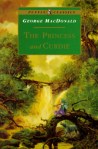
I really had to ponder the meaning of the interaction above. The statement emphasized the idea that intentions matter deeply was a very important concept being used as a through line throughout the entire story. The grandmother’s wisdom reinforces the notion that while one might face dangers in the pursuit of good, the real threat comes from those who choose evil, ultimately leading to their own downfall.
After this lengthy conversation, Curdie got the point the grandmother was trying to make. He said, voice was gentler even than before. “I was doing the wrong of never wanting or trying to be better” (p. 24). Later, the great grandmother replied, “When people don’t care to be better they must be doing everything wrong” (p. 25). Wow, read that again: “When people don’t care to be better they must be doing everything wrong.” We all need to care about getting better.
The grandmother left Curdie with one other great point during this interaction. She said, “Do better, and grow better, and be better” (p. 25). Macdonald created a drop the mic moment with this. We need to do, grow, and be better.
Being Open To Learning and Evolving

Yesterday I started reading George MacDonald’s sequel to The Princess and the Goblin, The Princess and Curdie. As I stated in an earlier post I have really been inspired to dig in on a study of MacDonald. His writing is so genius and he wrote in that way that creates the characters in such a way that we can relate to them. It’s one of the reasons that I have fallen in love with fiction and fairy tales. I continue to say that in fiction we can get to know everything about the characters and take an introspective look at ourselves through the characters in a way not afforded by nonfiction. I’m so glad I have learned that so deeply from my scholarly study of C. S. Lewis.
One the first such introspective looks came early in The Princess and Curdie with an interaction of Curdie and the grandmother when it was said, “There is this difference between the growth of some human beings and that of others: in the one case it is a continuous dying, in the other a continuous resurrection” (p. 13). This interaction highlighted a profound difference in the human experience regarding personal growth and transformation. When he referred to “continuous dying,” he suggested that some individuals may become stagnant, stuck in negative patterns, or lose our sense of purpose and joy over time. In contrast, “continuous resurrection” signified a dynamic process of renewal, where individuals embrace change, learn from our experiences, and strive for personal improvement.
“There is this difference between the growth of some human beings and that of others: in the one case it is a continuous dying, in the other a continuous resurrection. One of the latter sort comes at length to know at once whether a thing is true the moment it comes before him; one of the former class grows more and more afraid of being taken in, so afraid of it that he takes himself in altogether, and comes at length to believe in nothing but his dinner: to be sure of a thing with him is to have it between his teeth.” ~ The Princess and Curdie
MacDonald encouraged readers to seek a life characterized by resilience, growth, and empathy, suggesting that true fulfillment comes from being open to learning and evolving. This perspective invites us to reflect on our own journeys and choose paths that lead to a richer, more compassionate existence rather than allowing ourselves to wither away. Ultimately, it teaches us the importance of nurturing our inner selves and uplifting each other through shared understanding and kindness.


leave a comment