Fantasy Experienced As Reality

Fear is one of the most basic emotions and can be healthy when warranted. Different people have different fears – because they think different thoughts. Fear can hold us back and prevent us from moving forward. We must learn how to control our fear instead of letting our fear control us. Fear was the topic again this week in Chapter 40, “The Other Side Of Fear” in Mindset Mondays with DTK by David Taylor-Klaus (DTK). DTK starts out by asking, “What is the cost of letting fear stand in your way?” He also taught us that outside of something that would cause us mortal danger, being afraid just tells us what we are afraid of is something we care about.
“Fear doesn’t exist anywhere except in your mind.”
Dale Carnegie
I loved the FEAR acronym DTK used in this chapter – Fantasy Experienced As Reality. He told us that our brains don’t know the difference between perceived reality and what is happening in real time in the real world. In fact he wrote of brain research where, when monitored, many of the same brain areas were used when a pianist actually played a song or imagined she was playing. So, literally, fear is just in our heads. But, to me this is about visualizing success. Isn’t this why we do dress rehearsals? Isn’t this why we do walkthroughs or scrimmages prior to the actual game? Isn’t this why we visualize what success looks like, or feels like? I believe it was William Arthur Ward who told us, “If you can imagine it, you can achieve it. If you can dream it, you can become it.” Our aspirations are our invitations to set new goals, attempt new tasks, dare to travel uncharted courses. Let’s face our fears and visualize the success that is ours.
Developing Leadership
Yesterday, on Day 443 of the Global Pandemic, I had the opportunity of a lifetime to do a live-stream discussion with Joseph Michelli, Ph.D. of The Michelli Experience. You can watch the video here in this post. I have literally read every one of Joseph’s books. His work has had a huge impact on me as a leader and an educator. I think back to how much The Zappos Experience, Leading The Starbucks Experience, The Starbucks Experience, and When Fish Fly impacted how I led while principal of a state takeover academy. The experience that we provided for our students, families, and teachers was directly impacted by that learning. This is actually what I call intersectional learning. The learning that takes place between different contexts, industries, cultures, or experiences. Neither Zappos, Starbucks, nor the Pikes Place Fish Market are in the business of K-12 education, but there is much to be learned from how they do business and the customer experience they provide. After the books I had be be in Seattle, Washington and I made sure I spent a day of the trip experiencing the original Starbucks and the Pikes Place Fish Market. My son, Heath, even had the experience of catching one of the flying fish (on the second try – and I have the video to prove it).

It was great to reflect on this today during my conversation with Joseph. He is truly living out his Legacy Statement: “I want to be remembered as someone who captured what was right in the world and shared it for the betterment of others.” All that he has so eloquently shared in well researched and documented ways over the years has made me a better person and enabled me to serve others in a much more effective and authentic way. Joseph has suggested that we should all create legacy statements. Here is mine: “Hopefully I’ll be remembered as a thoughtful leader who showed love for those I served by providing growth and development.” If you want to know more about this, read Where Were You Era.
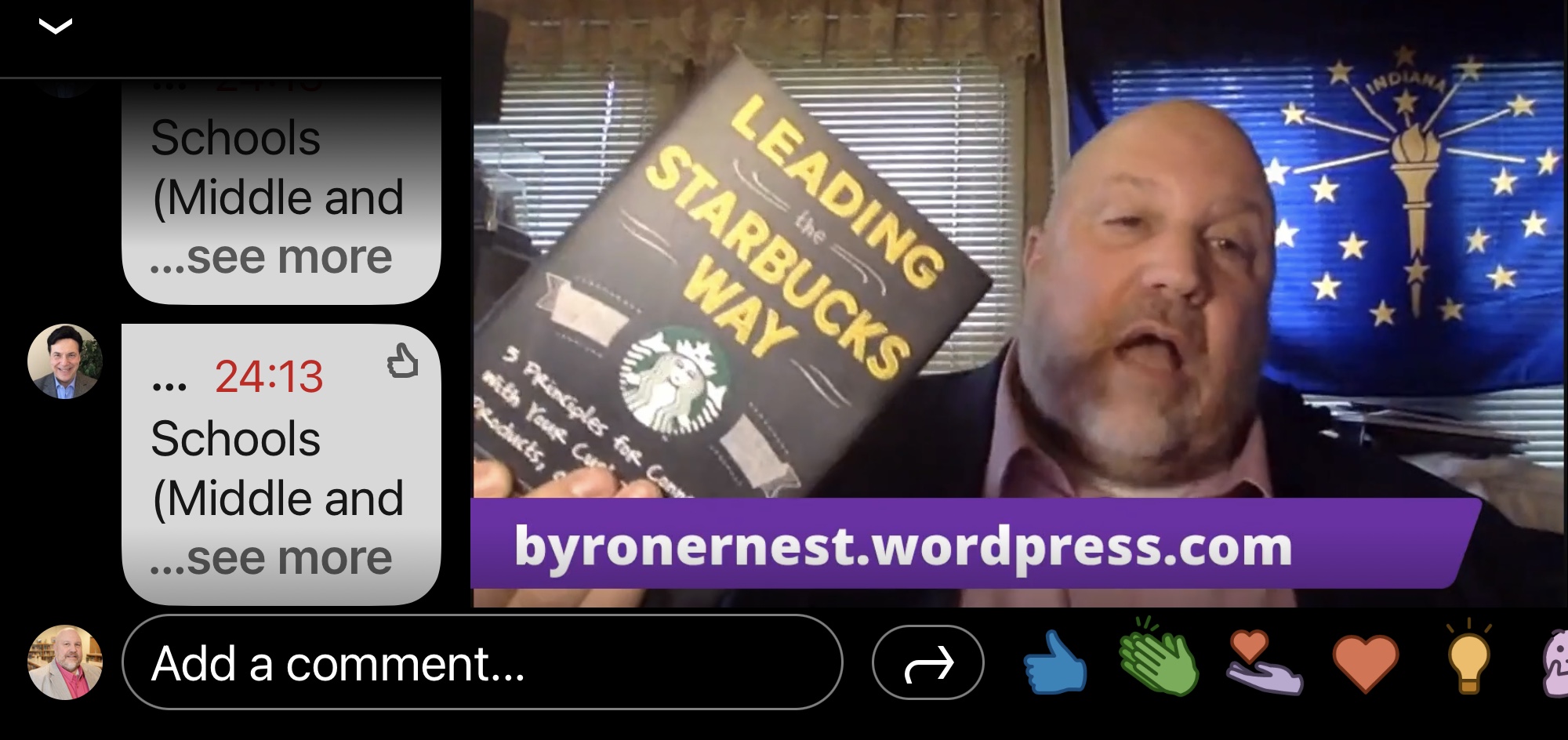
In the couple of days leading up to this live-stream discussion I pulled blogs that I had done about Joseph and his work (there were many) and took some notes of things I wanted to have brought out in the discussion. Amazingly, many of these were things he asked about or wanted to discuss as well. That was pretty cool and felt very organic and authentic given that we had not talked or prepped anything together prior to the event. I loved what he pulled from my book, The Hand In The Back Of The Room: Connecting School Work To Real Life, “Education exists in the larger context of society. When society changes – so too must education if it is to remain viable.” This was from Part I: Why A Relevant and Real World Context Matters. In one of Joseph’s “Resilience ReCaps” in his latest book Stronger Through Adversity, he says, “Leadership action, in and out of a crisis, can be viewed as operating on three levels – generalized, customized, or personalized.” I believe you could switch out “education” for “leadership” and this statement remains very true. To be effective for our students we must be spending a great deal of time in customized and personalized. That’s where the learning becomes exciting and engaging for both the student and the teacher.
Joseph also taught us in Stronger Through Adversity that, “Love is a passionate approach to work and heartfelt care for the growth and development of those you serve” (p. 265). He said this after quoting Joe Duran, CEO and Founder of Personal Financial Management at Goldman Sachs, who said, “I hope people will say love was the driving force for everything we did. Ideally, they would feel we loved our people and our clients. They would sense that we loved waking up each morning to serve them” (p. 265) Love is something very powerful that we should be exercising with those we serve. Love makes it personal, and when something becomes personal it becomes important.
Fear Is A Villain

Fear is such an interesting thing. We all experience it. It is one of our most basic emotions. The job of fear is to keep us safe and out of danger. But, fear can get in our way. Sometimes fear tells us that it is not safe to proceed when in fact, it might be wise to proceed. Therefore, fear can become an obstacle to living the life we want to live. Fear as an obstacle was the main focus of Chapter 39, “Now Hear This” in Mindset Mondays with DTK by David Taylor-Klaus (DTK). As I read the chapter I reflected on how, culturally, we hate fear. We have made fear into the enemy. Because fear is such a villain in our minds, we then have to slay the villain to get past the fear to do what scares us.
“Listen to what you know instead of what you fear.”
Richard Bach
DTK reminded us, in the face of fear, to make sure and consider what we know – what are the facts. By doing so we are able to truly listen to our inner self and create change. DTK also taught us we can find a great deal of energy and momentum available when we stick with what we know. Paying attention to fear only sucks that energy and momentum away. So, here’s my takeaway. We need to stop empowering fear to change or occupy our minds. We must control the writing of the narrative that is our story.
Go! Learn Things!

Dwayne Cassius “King” Pride (Scott Bakula) knows how to keep the town safe on NCIS:_New_Orleans. Last night I watched the series finale of the great show and it ended with Pride telling his team “Go! Learn Things!” after they got the call to a new case while all at his wedding. This was such a great character tag line that he always told the team throughout the series. I always loved it when he said it, and loved the way he said it – with such conviction. And, the team always reacted with, “You got it!” What a great leadership mantra. Pursuing new knowledge always generates excitement and new possibilities. When solving a case, Pride encouraged team members to provide their insights. When the team feels like they can openly bring new ideas to the table, true innovation, engagement and success can prevail.
Most leaders spend a great deal of time “telling“ others what they know or think. It’s refreshing to imagine a leader who wants the team learning things – and tells them so. The trick to good leadership is making time for the hard work that continual learning requires. By telling the team to go and learn things, he was encouraging freedom and creativity. Great leaders are open to new ideas and alternative ways of thinking. Everyone brings a unique perspective to the table, and that is something to take advantage of, not discourage. How about you? Are you creating an environment for learning things?
Collaborate Instead of Coercing
During my morning study time today I finished reading the great book Into The Raging Sea: Thirty Three Mariners, One Megastorm, And The Sinking of El Faro by Rachel Slade. Because of my belief that everyone is a leader, everyone needs to read this book. Slade did an amazing job of chronicling the October 1, 2015 loss of the 790 ft U.S. Flagged container ship El Faro in Hurricane Joaquin. The 33 on board all lost their lives and the loss sent shock-waves through the marine industry. I don’t want to spoil the inspiration of reading the book, but Slade explains in detail what happened plus a great many other details and history of the merchant marine industry. Her research included the many conversations on the bridge from the last 26 hours prior to the sinking of the El Faro from the NTSB Voice Data Recorder (VDR) transcripts. Those conversations on the bridge illuminate what went on in the last hours. Slade described in detail how the recovery of the VDR from the 15,000′ ocean floor of water was a major accomplishment.
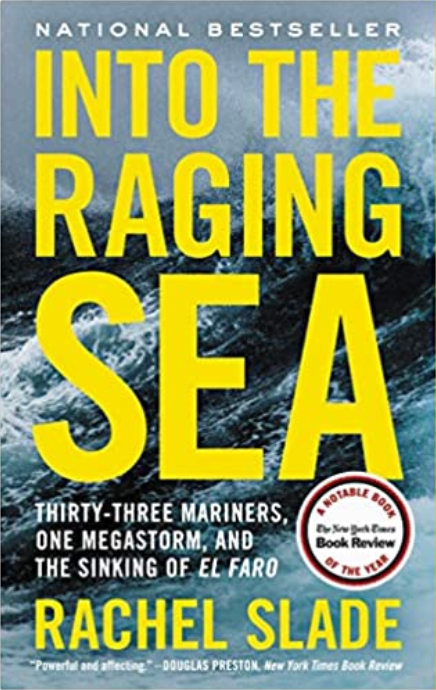
So why should every leader read this book? The ship’s master, Captain Davidson, had a lot of experience but was known for not listening to the officers and crew. Never forget, it is important for leaders to listen more than they talk. In the transcripts of conversations on the ship’s bridge the officers seemed afraid or, at the very least, reluctant to challenge the route of the captain and a glaring lack of a culture for obtaining important feedback from the officers and crew. The captain had clearly not cultivated a culture that the officers felt safe to give feedback on any items they were concerned about. The transcripts showed that the officers had opinions on safer routes to take, but were never able or comfortable enough to communicate these in a way to make them so. Thus, the ship sailed right into the eye of the hurricane and its ultimate fate. Please note that I have way over simplified this story, but you need to read the book.
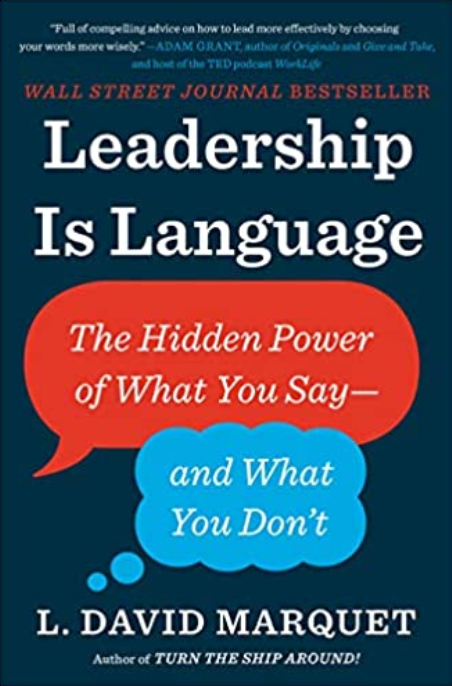
As I read Slade’s great book I was reminded of my friend and mentor David Marquet’s great leadership acumen and his incredible book, Leadership Is Language. In his book, Marquet uses the sinking of the El Faro as an example of leadership gone bad. David taught us that outdated top-down language from the Industrial Age playbook of leadership probably played into the terrible tragedy of the El Faro. This is another book every leader must read. Without spoiling all the content let me just say that Marquet argued that once we commit to a small step, we humans can’t help ourselves but to continue to commit in that decision. It’s just the way our brain works. We become stubborn and stick to it, even in the face of evidence that the course of action is failing. He taught us to build in pause and reflect stops. Think about it. If the crew had felt safe in a culture designed as a safe place to speak up, the alternative safer routes would have probably been chosen. Leaders must collaborate instead of coercing.
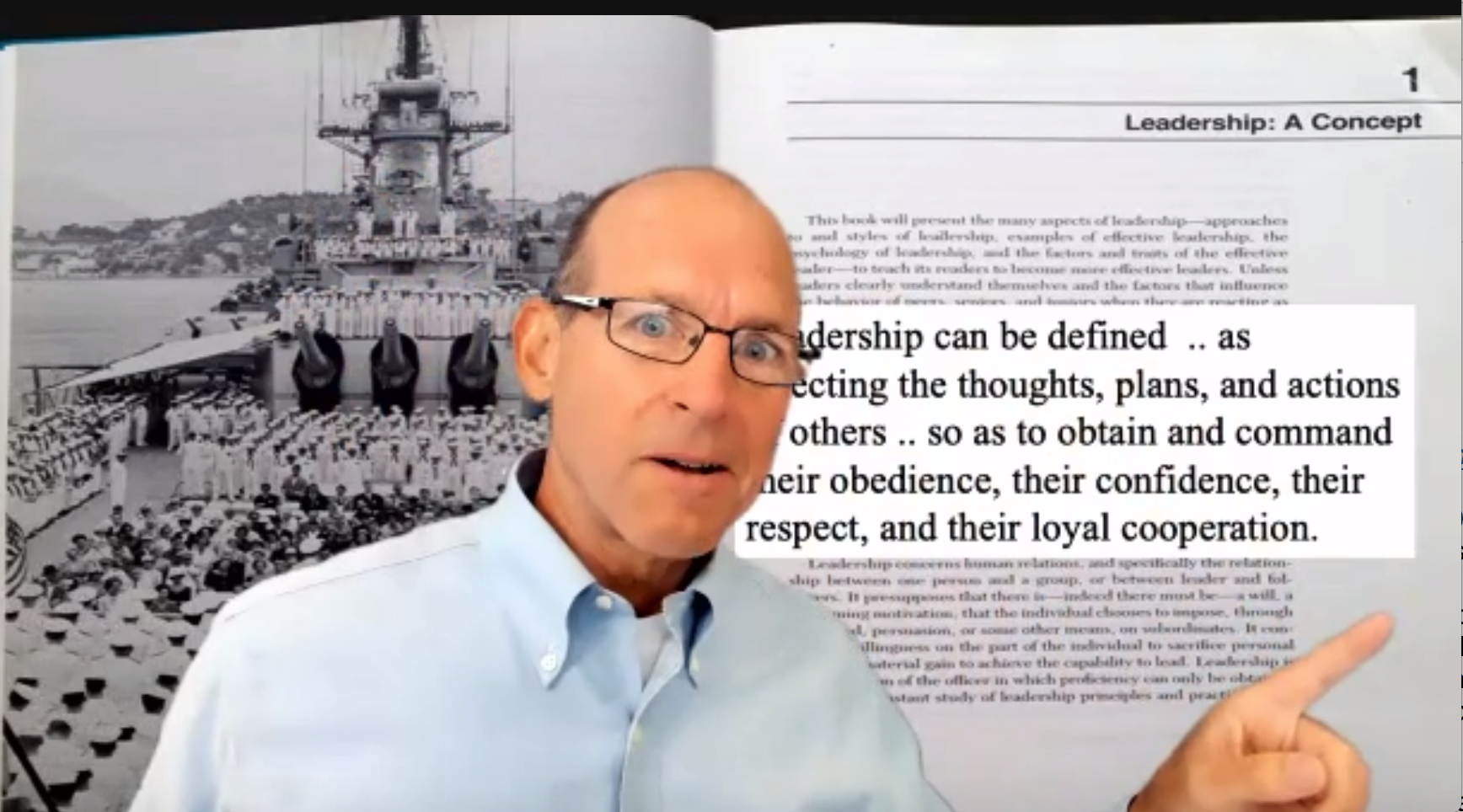
Finally, when we, as leaders, can admit we don’t know, we allow the team to admit that they don’t know. It also allows a team member to admit they DO know. Leaders must be looking for and encouraging divergent thinking. Remember, trust must be a verb before it can be a noun. I just blogged about this in Trust Is A Verb. Are you trusting your team and encouraging curiosity from everyone? To use one of David’s questions, “How can we make it better?” I had the opportunity this past week to be with David on a webinar with teachers from Canada and was reminded how important it is to move from the old definition of leadership that involves directing the thoughts, plans, and actions of others (see featured picture) to what he describes as “embedding the capacity for greatness in the people and practices of an organization, and decoupling it from the personality of the leader.” Lets get to decoupling.
Recipes For Success

Obviously, no matter what you do, there is never a guarantee for success. We just use recipes and practices to increase our chances of success. Basically, we follow “recipes for success.” In other words, a number of good practices that we have either discovered for ourselves through trial and error, or others. All this popped into my mind as I read Chapter 38, “Own Your Mistakes,” in Mindset Mondays with DTK by David Taylor-Klaus (DTK). DTK taught us in the book the we need to own up to our mistakes or our credibility is undermined. By owning up to and hopefully learning from our mistakes, we become trustworthy and human.
As a believer in having a growth mindset, I began to think about the difference between a mistake and failure. In doing some research I found that the difference is in the learning, which to me is a big part of the “owning up to it” advice of DTK. Then I turned to Seth Godin who said, “A mistake is either a failure repeated, doing something for the second time when you should have known better, or a misguided attempt (because of carelessness, selfishness or hubris) that hindsight reminds you is worth avoiding” in The Difference Between A Failure and A Mistake. He went on to say, “A failure is a project that doesn’t work, an initiative that teaches you something at the same time the outcome doesn’t move you directly closer to your goal.” Guilty as charged. Using Godin’s definition, I’ve made lots of mistakes and failures.
We all make mistakes. Do not forget that mistakes are behaviors, just like experiments. We must clean up after them and own them. Failures are outcomes and all about the learning. Don’t make the mistake (pun intended) of not learning from our actions.
It Is All About Influence
Yesterday, at a leadership gathering I facilitated in North Carolina, a participant asked a very astute question following an activity using examples of great leaders who had greatly impacted/influenced them. She asked, “Does having influence automatically make someone a leader?” She went on to ask, “Is having an influence on someone automatically make you a leader?” I loved these questions and literally stepped back and let the group take over. The discussion made me so proud, because they were using language we have been discussing together for five months now.
Since everyone is a leader, leadership is everybody’s business and you don’t need a title to be a leader. Everyone has the potential to lead and influence. Influence is the most important part of leadership. If someone has influence it means they can get things done. Organizations that value everyone as leaders and believe every person plays a vital role in moving processes forward, have individuals who influence the behavior of others at every level of the organization due to their leadership behaviors. It may be that someone who volunteers to lead projects or that everyone goes to when they have questions. In many cases these were the people some had brought forward as the great leaders who had influenced them. But, the group did conclude that just because you have influence doesn’t mean you’re a good leader.
“Leadership is influence, nothing more, nothing less.”
~ John C. Maxwell
Great leaders move themselves and others from a language of prove and perform to improve and learn. To influence others is what being a leaders is all about, but a leader also has to let herself be influenced by others if she is to become a great one. This can be done, for instance, by listening and becoming a student of organizational design and everyone in an organization. The best leaders I know are very good at knowing how to shut up so others can speak up.
Because I shut up and literally sat down and let the group discuss, they discussed things like influence being a person’s ability to shape people and mold outcomes. They also pointed out that influence is morally neutral (can be used for good or evil), but it always involves both relationships and results. So is influence just a fancy term for leadership? I believe the group decided, no. We often put the two together, but they are two separate entities.
Because everyone is a leader, you can lead without influencing. This does not put us at odds with John Maxwell, who said, “Leadership is influence, nothing more, nothing less,” however, because the group affirmed you can’t be a great leader without influencing.
You Be You & I’ll Be Me
“The best thing you can be is you and the best thing I can be is me.” I loved this statement by Hank Voight (Jason Beghe) in an episode of Chicago PD. to Antonio Dawson (Jon Seda). A great reminder. We live in a constantly developing society so it’s important for us to always be ourselves from the inside out. Let’s face it, there can be a lot of pressure from the outside world to try and influence who we are.
Therefore, we must be who we are. That allows us to live in alignment with our values and beliefs. When we know our values and why we do what we do, we will live according to our own values and beliefs. It takes a lot of courage, strength, and awareness to become the person you were meant to be.
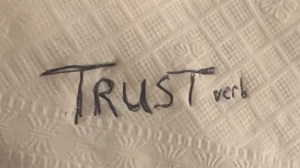
Trust Is A Verb
I just finished rereading the great book Nuance: Why Some Leaders Succeed and Others Fail by Michael Fullan. I blogged about what prompted me to do this reread in “Nuance: Subtle Differences.” We are, and have been, experiencing times when complexity challenges our ability to adapt. This is particularly true in educational systems where we must meet individual student needs. Fullan offered help for thinking about systems change around three habits of nuance: joint determination, adaptability, and culture-based accountability.

Fullan argued that “trust is a verb before it becomes a state.” Someone can’t earn your trust without you first trusting them on something. In other words you can’t talk your way into trust. Trust becomes part of the community culture in real time. It is an action. When a leader is an active participant and becomes part of the group, accountability becomes a shared norm instead of something imposed from above. This resonates with me so much because I so desire the establishment and maintaining of a culture and community of innovation and commitment. This requires deep levels of trust.
Baby KISS Leadership
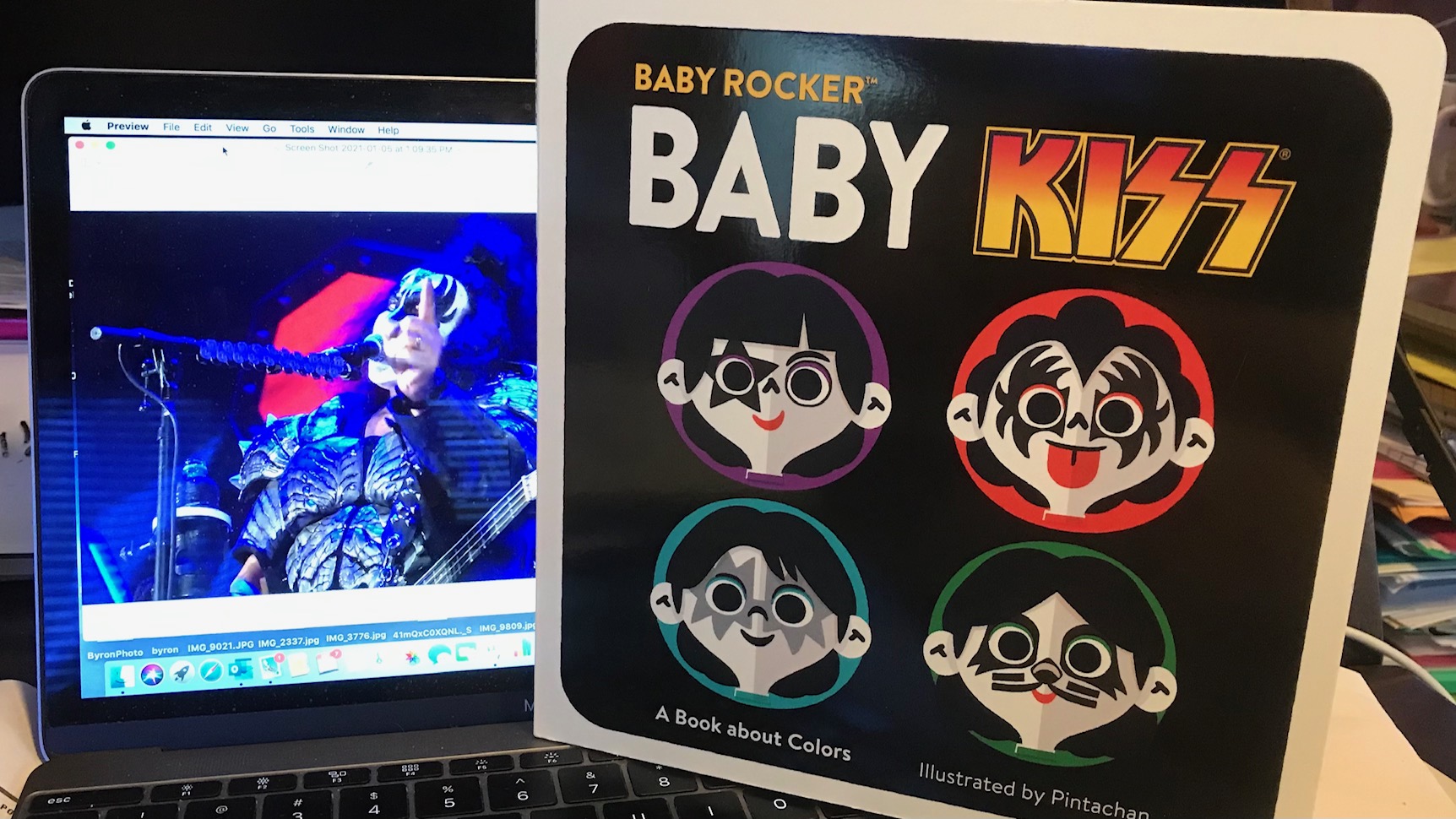
I recently had an aspiring leader in a development gathering I was facilitating describe herself as a “baby leader.” I loved that and so did the rest of the group. As a lover of metaphors I immediately started relating all the things we do and learn as a baby to leadership. Then, yesterday I was given a book titled Baby KISS. Awesome! It’s a children’s book for learning colors – using the KISS band members and rock and roll items for learning. As it says on the back cover of the book, “Let’s rock and roll all night! Black-and-white face paint. Pink tongue. Gold cymbals. White Lights. Introduce little ones to legendary KISS in this bright, bold, and rockin’ board book.” This made me think back to our “baby leader” where we began this post. We need to help our aspiring leaders in the same way that the Baby KISS book and KISS themselves help us learn: with big, bold, vivid colors, well-illustrated examples, and recognizable images that are easily remembered.

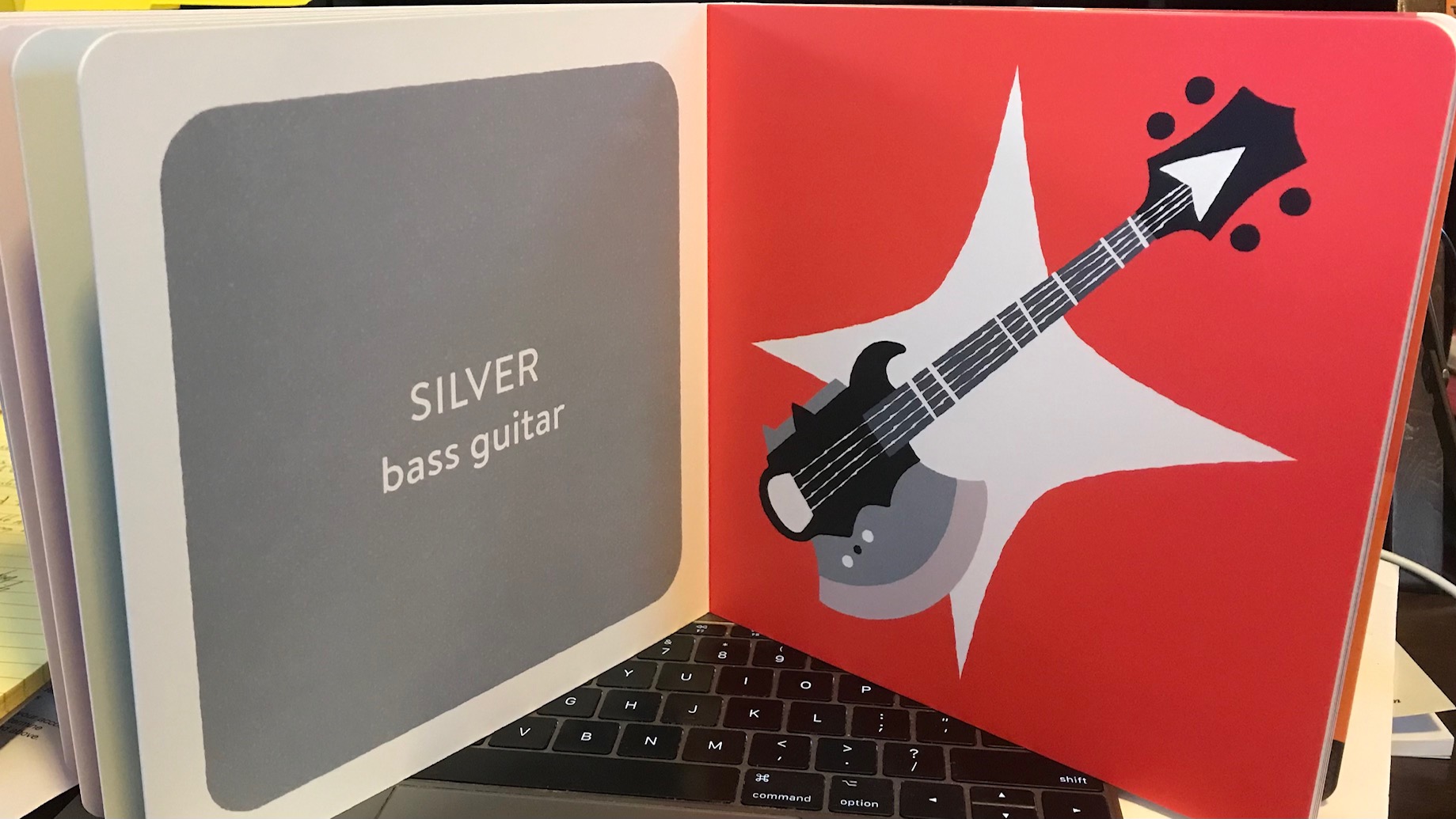
As a person who grew up with KISS and is still a proud member of the KISS Army, here is what I have learned:
- Overcommunicate – Anthems build enthusiasm – Become infectious by using different ways of telling your story.
- Bring it with shock and awe, and be astonishing – KISS provided fans the band they always wanted to go see. In other words, go a little farther than others are willing to go!
- Don’t be vanilla – Be audacious and authentic. Be crystal clear about who you are and why you are unapologetically proud of it.
Now, I am pretty confident that I have some reading this post who are KISS fans and in the KISS army too. What have you learned you developed from “baby leader” to who you are today?
 Byron's Babbles
leave a comment