Respecting And Watching With Reverence

I finished reading Ulysses S. Grant’s memoirs a couple of week’s ago and proceeded to immediately start re-reading Ron Chernow’s great autobiography Grant. This exercise is taking my learning deeper as Chernow uses Grant’s memoirs in the book, plus adding a great deal of research and personal accounts of people of the time. Chernow quoted a person who said that Grant “…inspired more respect than affection. They don’t salute him, they watch him with reverence.” When I reflected on that I thought about the great leaders I have encountered and respect for them is what brings them to the top of my list. They walked the walk. Chernow also stated that Grant interacted with his men as peers. With those leaders that are on my personal Mount Rushmore we did have a peer relationship, not a superior/subordinate relationship.
When a leader sees others as peers, gives of themselves, applies empathy and emotional intelligence they know they can help others. Grant was known to get off his horse and join in working right along side his men. When we take action in the face of fear, grief, or pain we are displaying courage. Actions built on courage create confidence. The great leaders I respect see others as humans and not as objects. They have empathy and compassion. The most respected leaders know that nothing great can ever be accomplished alone. The greats inspire and earn others respect by serving them first.
What Is Your Leadership Point Of View?

How do you answer the question: what is your leadership point of view? Randy Conley told us in Simple Truth #29 “Self-Trust Is The First Secret To Success” we should clearly identify our leadership point of view. To do this we need to answer these questions:
- What motivates you as a leader?
- What are your values?
- What are your beliefs about leading others?
Randy said, “If you don’t know the answers to these questions, your leadership could be drawn off course” (p. 79). Randy also asked us to contemplate what leadership legacy we want to leave. I learned from my friend and mentor, Dr. Joseph Michelli, CEO of The Michelli Experience, how important is was have a Legacy Statement. Here is mine: “Hopefully I’ll be remembered as a thoughtful leader who showed love for those I served by providing growth and development.” It is amazing how often I go to this to make sure I am serving people in a way that will carry out my legacy. Along with my core values, this serves as a compass to keep me pointed true north. Finally, as Randy reminded us, make sure and share all this with those you serve.
It’s Effectiveness Over Efficiency

If you’ve never thought about the difference between efficiency and effectiveness, you’re not alone. The fact is that most use these terms interchangeably. Yesterday, I heard it said that, “It’s effectiveness over efficiency.” Understanding the difference between these two strategies can help initiatives succeed. Peter Drucker said, “efficiency is doing things right, effectiveness is doing the right thing.” Ideally we want to be both efficient and effective—after all, everyone wants to do the right things right. Efficiency is the ability to produce an intended result in the way that results in the least waste of time, effort, and resources. Effectiveness is the ability to produce a better result, one that delivers more value or achieves a better outcome.
Effectiveness is actually more sustainable than efficiency. That might sound counterintuitive but effectiveness emphasizes getting something done well as opposed to getting a lot done. While efficiency might get more done using less resources, an organization is only sustainable if we effectively fulfill a need make an improvement, or solve a problem. It really comes down to focus. We must decide what to focus our energy and resources on.
Finding Someone A Level Better Than You

I made a new friend last evening who was telling me stories of his pool (billiards) playing days. He said, “Son, you have to play people who are a level better than you to improve in the game.” He went on to tell me that, “Watching and thinking through what the better opponent is doing gives you the model for improvement.” This was a wise man reminding me of an important lesson – there is always room for improvement. We’ll never get to the point where we’re not able to learn from someone. Everybody you meet has something to teach you if you’re willing to listen and learn. Those better than us can serve as our teachers and mentors.
This week I have been doing facilitation work in Washington D.C. for the National FFA Organization as part of the State Officer Summit. I have taken many notes and learned new facilitation strategies from watching and getting to know others. They are challenging me to get better. I love it! The biggest apology I could ever owe anyone is to myself for the times I chose not to push myself and be the best me I could be. We all need to strive to not need to make that apology. So, no matter what your doing, let’s all go find that person that is a level better.
My Experiences
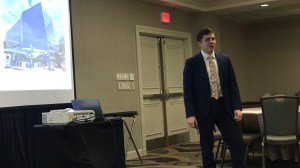
Yesterday I had the opportunity to facilitate a session during the National FFA Organization’s State Officer Summit on preparing national officer candidates by 2016-2017 National FFA President, David Townsend. He was incredible. One of his beginning slides had this disclaimer: “These perspectives are based on my experiences.” I loved this on so many levels. I believe it is an awesome way introduce space where our own opinions are being used based on our own experiences. And each of our experiences matter. Telling stories of our own experiences are important. These stories of our experiences have a way of transporting us away from our realities, and our mind opens up to new experiences and perceptions of other people and how they think, feel, and act.
“To argue with someone else’s experience of reality is futile…To add their experience to yours is possibly useful.”
Unknown
I believe we can use David’s model to understand the fact that others’ stories help us to learn to empathize with other people as we come to understand their point of view. When we hear another person’s experiences, we step out of our own reality and place ourself in someone else’s shoes, and get to experience their perspective and engage in their emotions, actions, and decisions. These experiences being shared allow us to learn from other people’s experiences.
Egalitarian Leadership

Yesterday during the first gathering of a new leadership development group I am working with, one participant said she was intimidated because of only having three years experience. I quickly told her that her experience was important to the group. Either the three years experience or only having three years experience will matter. Relative inexperience and experience do matter. The point here is that valuable insight and great ideas can come from anywhere, and the status of the person proposing it isn’t a reliable indicator of its worth.
In the case of education, first year teachers can have great ideas and principals can have terrible ideas. It can go the other way too, of course. This because ideas are egalitarian. We need to look to the team for ideas and direction when faced with a decision, plan or project that needs a consensus. In the case of our group yesterday, we had 329 years experience in the room. With that much experience a simple “What do you think?” what do you think is a great place to start for insight and ideas. Never forget that your organization’s community will be even more invested in seeing positive results if they have taken part in the creation and development of whatever happens to be going on.
It’s As Easy As ABCD
As I dive into the second half of Simple Truths of Leadership: 52 Ways To Be A Servant Leader and Build Trust, Making Common Sense Common Practice, Ken Blanchard and Randy Conley, I’m thinking about how trust is a word we use a lot without always thinking about how trust works and why it’s so important in our lives. It really is a bridge or social glue that allows us to be vulnerable and become comfortable with doing something differently, trying something new, or dealing with uncertainty. In Simple Truth #28, “Building Trust Is A Skill That Can Be Learned And Developed,”Randy told us that trust is about learning and using the right behaviors, and then becoming better at building trust with practice.
I’ve heard Brené Brown say that trust isn’t built in grand gestures, but in the small moments that people treat what is important to you with care. This goes right along with the ABCD Model introduced in Simple Truths of Leadership to foster and grow relationships and communities built on trust. Here is the model (p. 77):
- Able: demonstrate competence
- Believable: act with integrity
- Connected: show care and concern for others
- Dependable: honor commitments
All these skills/qualities contribute to the degree of trust people have for each other. All can be developed and honed. Trust is an ongoing and symbiotic relationship. We need to keep working to get better at our close bonds of trust.
Trust Is An Outcome

As a person who is driven by outcomes, I loved this statement: “Trust is an outcome, a result of the behaviors we use in our interactions with others” (Randy Conley, p. 72). I started the second half of the great book Simple Truths of Leadership: 52 Ways To Be A Servant Leader and Build Trust, Making Common Sense Common Practice, Ken Blanchard and Randy Conley. In this half, Randy takes the lead discussing trust in leadership. In Simple Truth #27 entitled “Leadership Begins With Trust” Randy told us that when trust is established, “Creativity, innovation, productivity, efficiency, and morale flourish” (p. 75). That’s why I love that Randy calls trust an outcome, because it is so tangible. When trust is there we feel it and when it is not we really feel it.
While some organizations and leaders still use the so called, golden handcuff (showing up with cupcakes, pizza in the break room, or the kitschy trinkets) approach for attempting to get employee satisfaction and engagement, I believe that building a culture of trust is what makes a meaningful difference. It is an outcome. One of the challenges with the random perks approach is that these perks are being given by someone who is not taking the time to build relationships and trust. It comes down to walking our talk, keeping our promises and aligning our values with our behaviors. If we do this we should be constantly growing the trust of others. The old adage “actions speak louder than words” applies here.
Subtracting Shows Competence
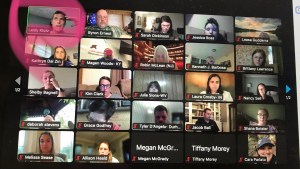
Last year I read the great book Subtract: The Untapped Science Of Less by Leidy Klotz and described the book as changing my life. Learning from the book also ends up in many of my blog posts, like Don’t Always Saticfice. Last evening I had the honor of facilitating a discussion between Leidy Klotz and National Teacher Ambassadors of the National FFA Organization. As part of their training, the teacher ambassadors received a copy of the book and Leidy was gracious enough to spend time with the group. Leidy spent some time discussing what led to the research and ultimately the book, which was fascinating, and then had a very open discussion with our teachers.
One of the points Leidy made last night, that I have heard him make before is that, “Subtracting shows competence.” We all need to reflect on this. Whether as a school principal, we show competence to remove the things teachers have to do that don’t really have anything to do with student learning, or myself as a policymaker continuing to advocate for reducing the number of standards having to be taught/tested. Or, just the competence it takes to reduce that email from four paragraphs, which by the way no one reads, to a couple of sentences. I’m sure you can think of thousands of other examples.

Leidy taught us not to focus on what we can’t get done and want/need to subtract, but focus on what we will be able to do better because of eliminating those mundane tasks that create marginal value at best. Those of us in education can really relate to this. It’s not easy. As Leidy pointed out, adding more is highly visible and easy to promote and subtracting either goes unnoticed or becomes controversial. I loved this advice from Leidy: “Give yourself a definition for what you are setting out to accomplish. This will help narrow down the necessary from the unnecessary.” Dr. Klotz’s job is to create and share knowledge and he did a great job of schooling us on subtracting.
Formula For Success

Ulysses S. Grant’s first in person meeting of Abraham Lincoln was when he was raised to Lieutenant General and given command of the entire National military operation of the Civil War. According to General Ulysses S. Grant in his autobiography, Personal Memoirs of U. S. Grant, President Lincoln told him all he (Lincoln) wanted was someone to take responsibility and act. In return, Lincoln would give all the support afforded to him by his position in government. Grant said that Lincoln, as a self taught military strategist would give him his ideas, but left the use of the ideas up to Grant. This was the perfect ethos for Grant. No one wants a leader who sits back and watches as their team does all the hard work. A responsible leader rolls up their sleeves and is involved in projects. No matter the size of the project or how long it’ll take to complete, a leader should want to be a part of it to help in any way they can.
It was a liberating concept for Grant. The responsibility was his, and it started with developing a belief or habit of mind that he, as an individual, was accountable for the quality and timeliness of the outcomes of the rebellion battle campaigns. Grant owned the obligation to take action and deliver results. But he also knew that President Lincoln would support him in every way he could. This was a formula for success. Grant had a results-based view of his own leadership role. No matter how great a military strategist he was, his effectiveness was ultimately defined by the results of all military entities. The responsible leader ensures the group successfully drives for results.
In a world where everything continues to become more and more complex, determined and innovative problem-solving will need to come from those who are ready to take responsibility and act. Living with responsibility can make us stronger and more action-oriented individuals. It’s up to all of us, because everyone is a leader, to make change and take responsibility for outcomes in our personal, professional, and global lives. Are you ready to get started?
 Byron's Babbles
1 comment