ESSA Opportunity #2: Innovative Assessement Pilot
 ESSA allows for up to seven states initially to apply to collaborate to design, build, and implement innovative, competency based systems of assessments. This is a state pilot, not individual school pilot. I have had schools say they would like to pilot their own summative assessments. This is not an option under ESSA, if not a part of the pilot.
The seven states approved may use these assessments to meet federal accountability requirements. A state may pilot its new assessment system statewide by the end of the demonstration period. The assessment must meet all the high technical quality factors.
Every state must have annual assessments in reading or language arts and math for grades 3-8 and once in high school, as well as science assessments given at least once in each grade span from grades 3-5, 6-9, and 10-12. Assessments may, at the state’s discretion, measure individual student growth. State systems can measure achievement via an annual summative assessment or multiple statewide assessments, the results of which would be required to be combined to produce a summative score.
States may use computer-adaptive assessments. States may measure a student’s academic proficiency above or below grade level and use such scores in the state accountability system.
Leading & Giving In The Community
 In his final and 52nd lesson in The Disciplined Leader, John Manning (2015) talked about giving back. I am a big believer in this as an educational leader. We must take care of our students, families, and communities. Many of our families have needs that must be met for learning to happen and I believe we, as a school, have an obligation to do what we can. Can we take care of everything? No. But we must do our part. We have two wonderful staff members, Carol Sepaniak and Lacy Spears that have started a program to aid Hoosier Academies Network of Schools families.This is in keeping with our Core Value of
 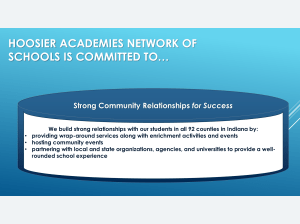 building strong community relationships for success.
“Your responsibility as a leader is to personally demonstrate your commitment through your actions inside and outside your organization.” ~ John Manning
Hoosier Helpings Food Pantry began through a collaboration to sponsor a canned food drive. A contest was created for K-6 and 7-12 Hybrid students to incentivize them to participate. The class that brought in the most cans won a pizza party and the second place winner won a donut party. The canned food drive was promoted to benefit Hoosier Academies’ families through the FAST Outreach Program. The canned food drive was such a success, that steps were taken for Hoosier Academies to open its own food pantry called Hoosier Helpings.
 We decided to visit the Center Grove Care Pantry to observe how another school corporation runs a food pantry. The visit helped us to develop pantry guidelines, check-in procedures, and a food box distribution list. An application was submitted to Hope Pascoe with Gleaners in order to become a school-based pantry. Our application is currently under review. To become a community partner with Gleaners, Lacy Spears and Carol Sepaniak obtained their food handler license through ServSafe. Another requirement is to have cold storage units. A freezer has been donated and we are currently looking to secure a refrigerator. As we are waiting to hear from Gleaners, several events have been held to benefit the Hoosier Helpings Food Pantry.
Events are listed below:
- $25 Starbucks gift card given to the teacher to bring in the most canned food during on site professional development.
- Canned food donation at Bowl to Enroll where staff and families could bring donations to the event.
- Personal Hygiene drive for both students and staff.
- Partnership with Aldi for Summer Reading Program “Read to Feed.” One can of food will be donated to the Hoosier Helpings Food Pantry for every book that is read.
- NJHS and NHS students worked in the pantry organizing shelves, painting freezer and creating signs.
Moral Compass
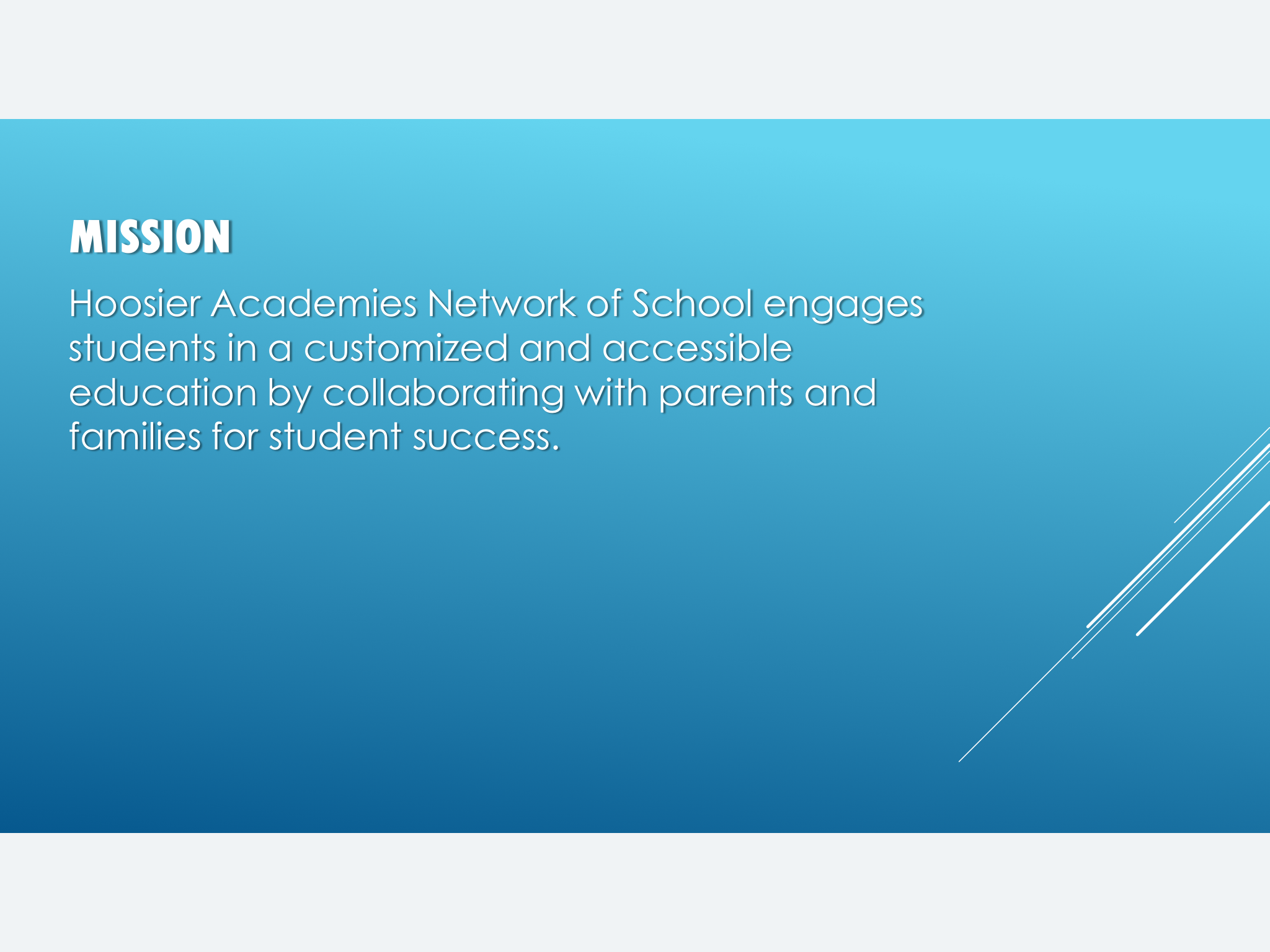
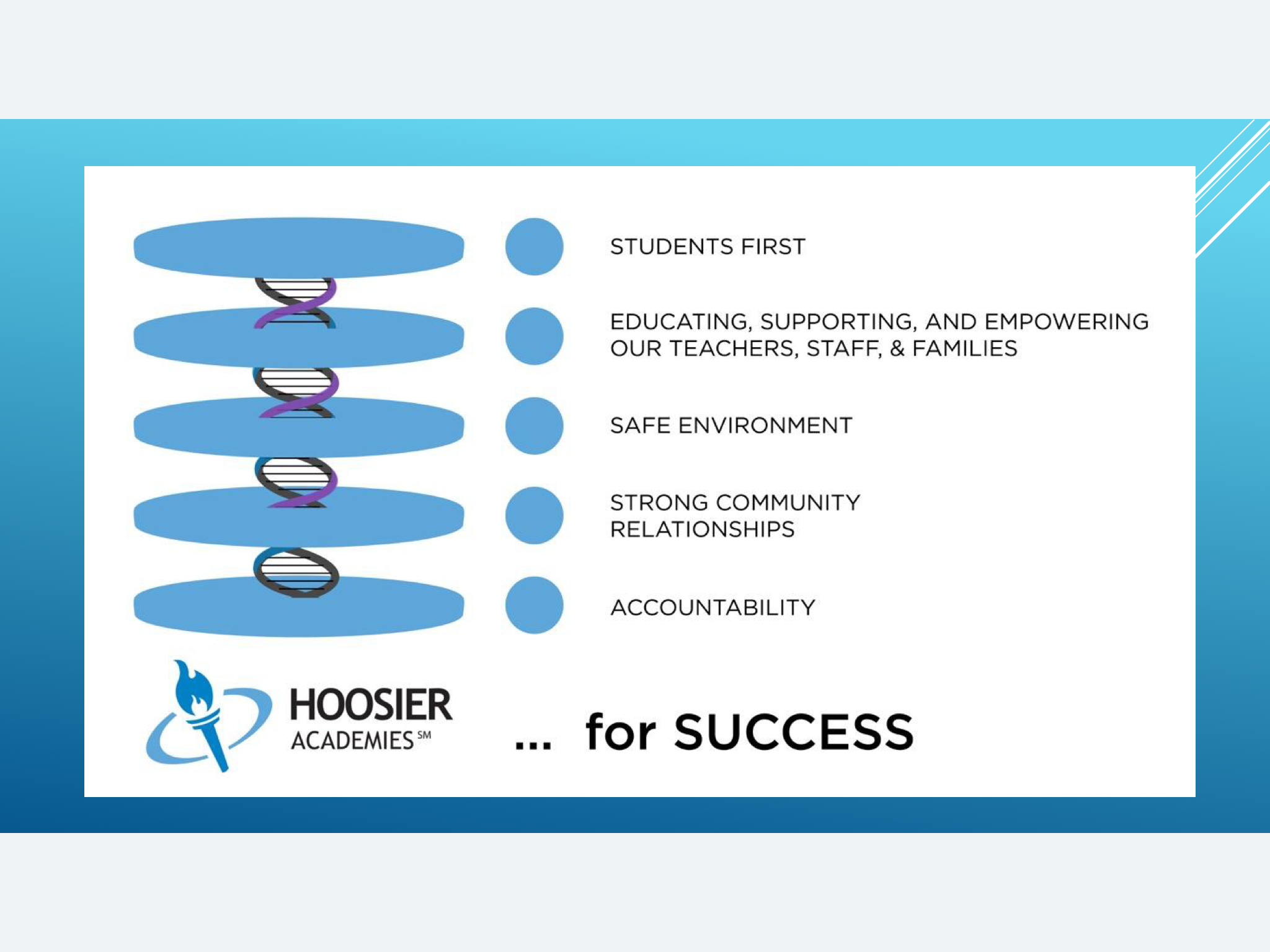 Lesson #51 in The Disciplined Leader by John Manning (2015) really affirmed our decision to spend the past year with our Focused Leader Academy and, ultimately, all of our stakeholders completely redoing our vision and mission for the Hoosier Academies Network of Schools. We also went on to explicitly develop a set of core values. I was amazed these had not ever been developed for our schools. Those in our organization now understand the importance of these and why the organic development of vision, mission, and core values is crucial for organizational success.
“It is leadership’s responsibility to make sure good ethics are part of the foundation of the company. A good starting point is to use your clearly defined vision, mission, and values to provide direction to the organization.” ~ John Manning
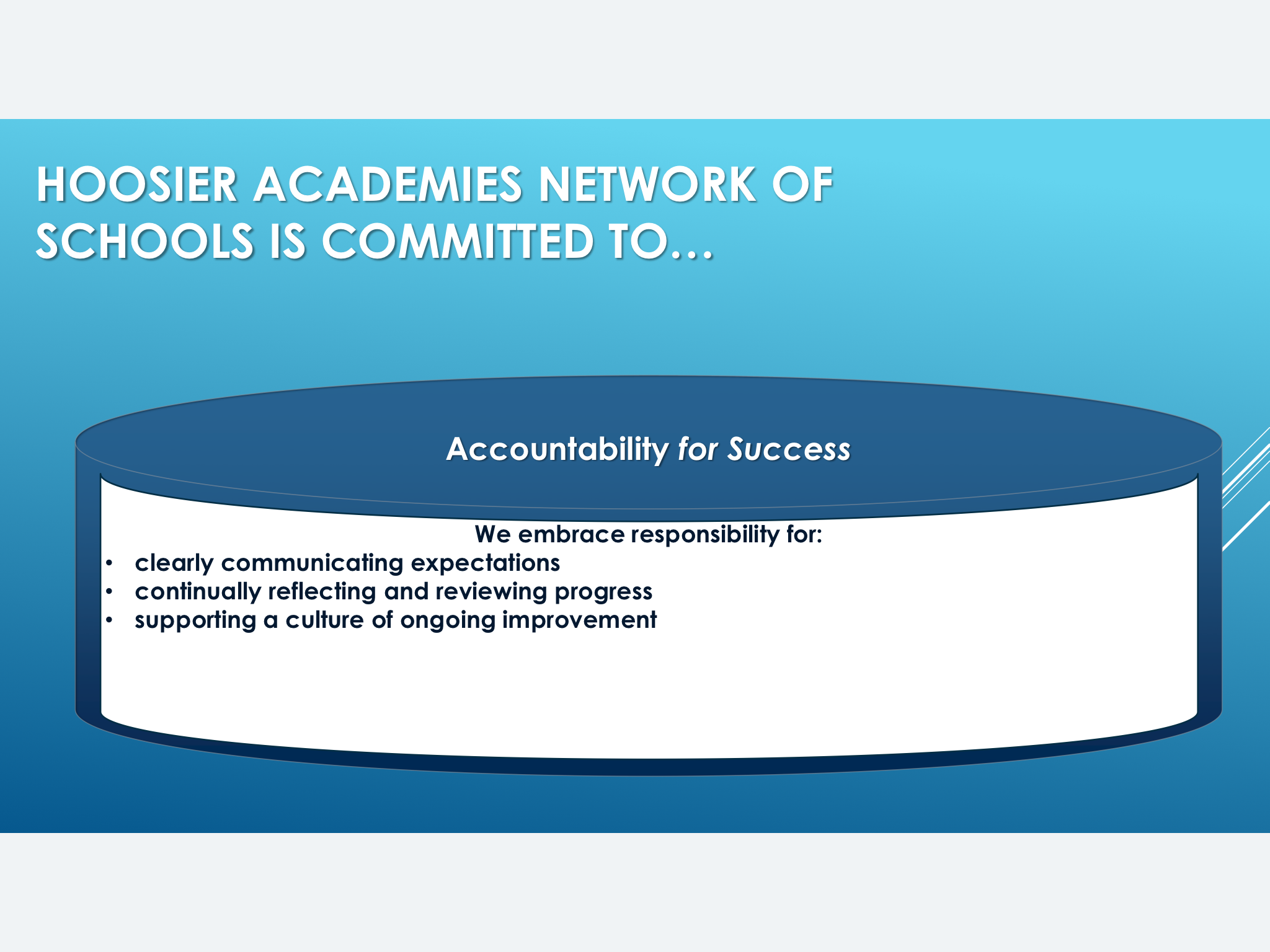
Here is the vision and mission we created:

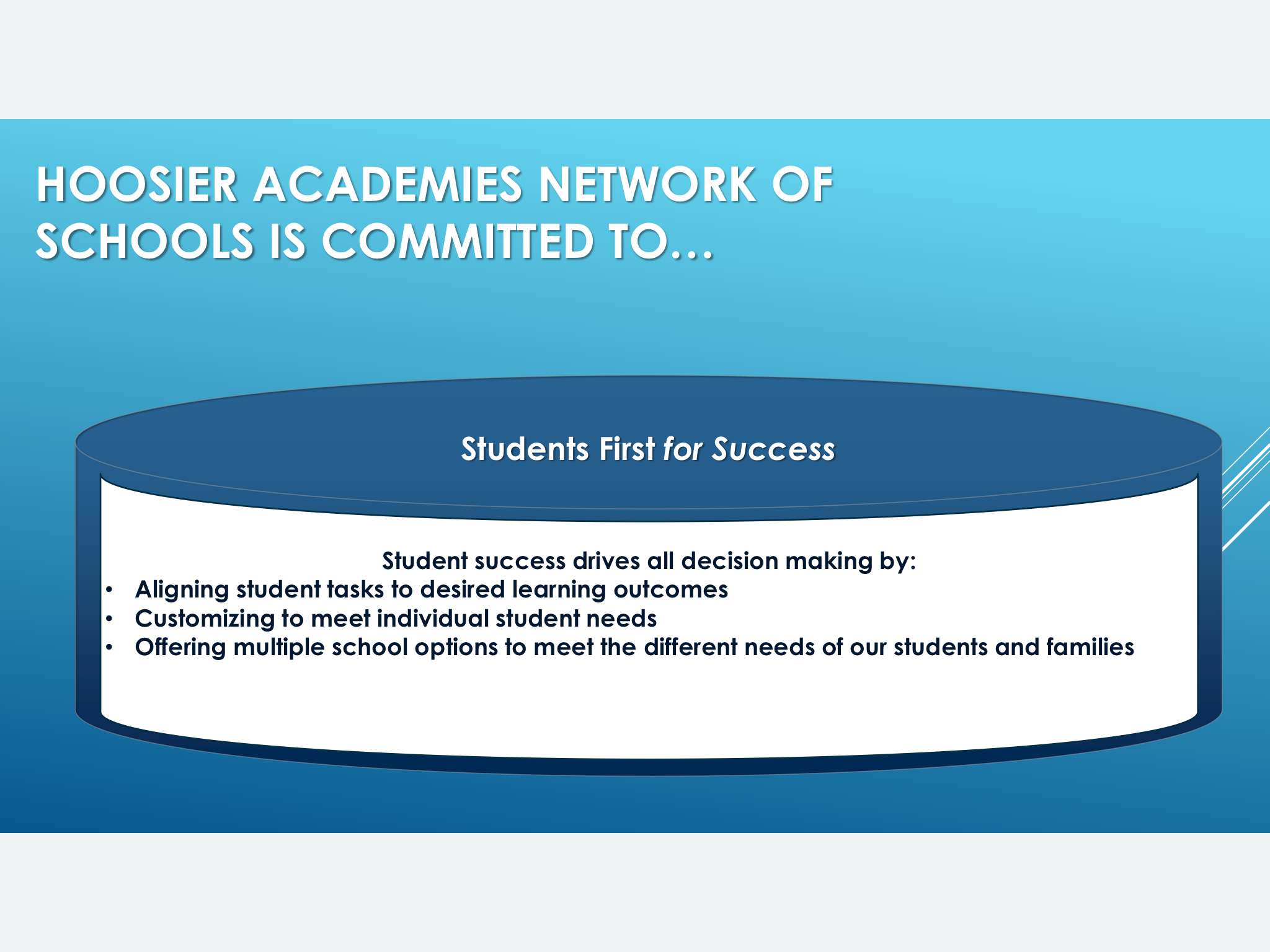
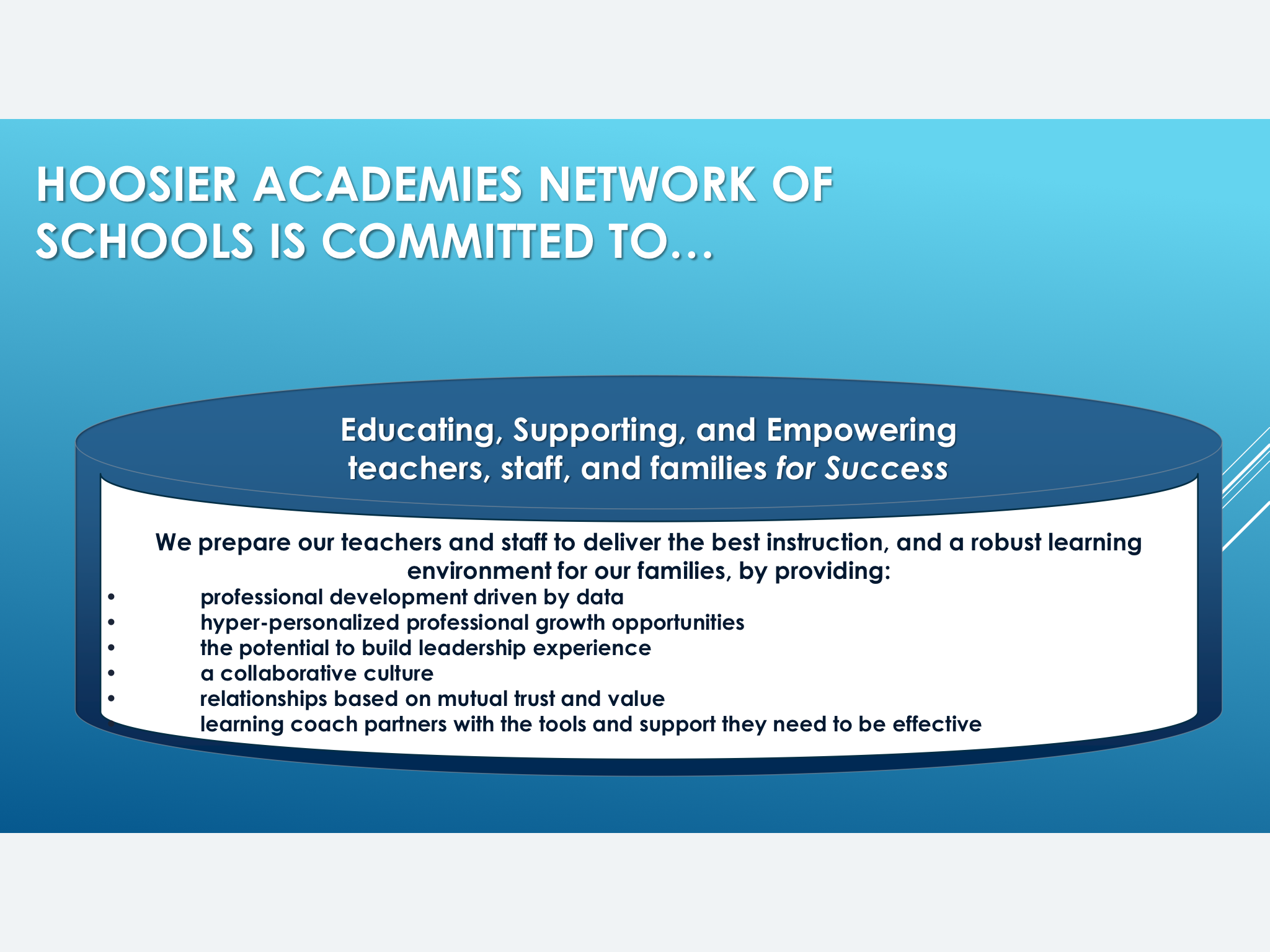
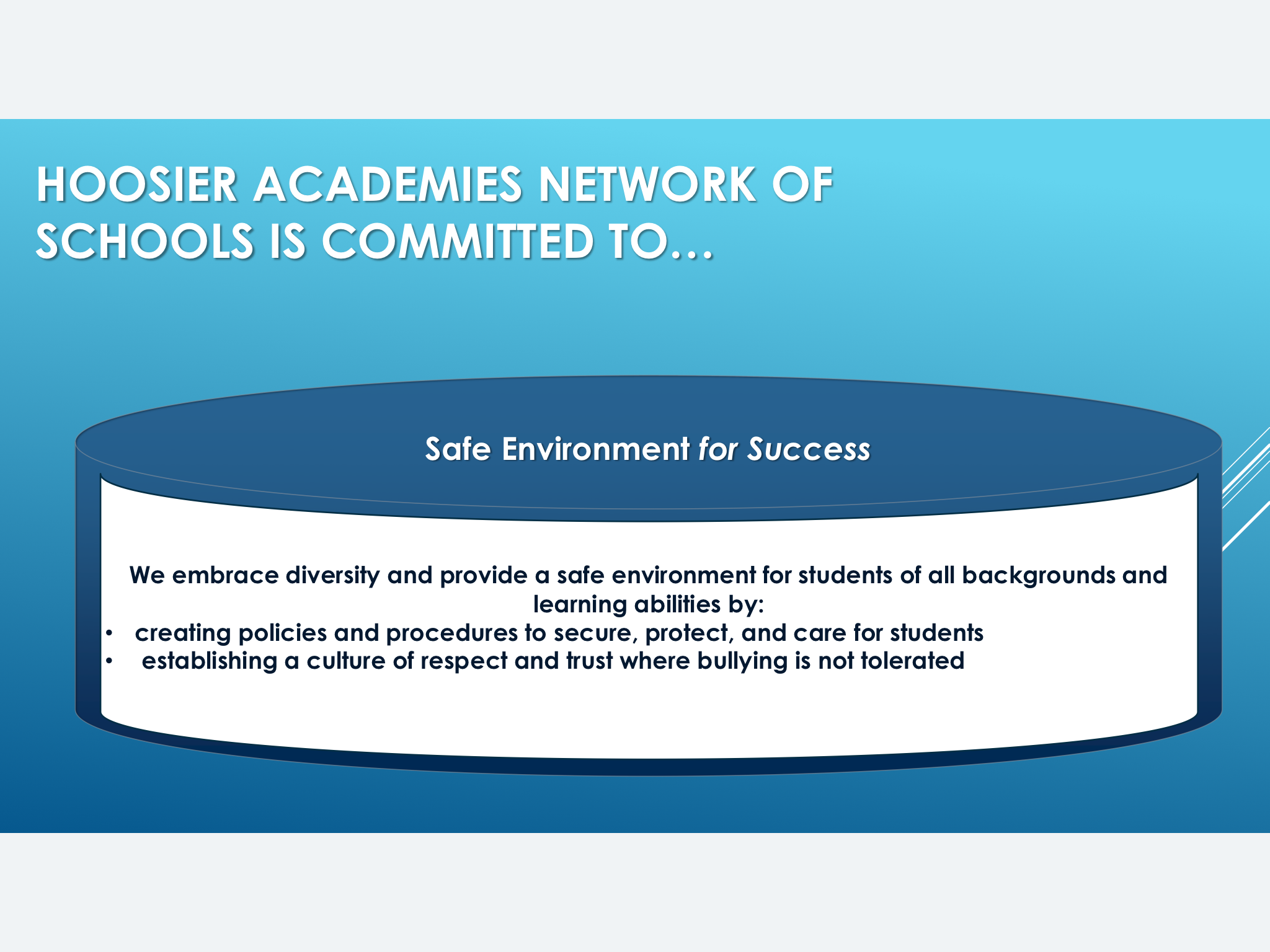
Here are our core values that serve as our moral compass:

Competitive Advantage
 It is no secret that I do not believe in neighborhood assigned schools for all children, especially low-income families. Children deserve and need their parents to have educational choice—not just what others think is good for them. School choice is all about empowering informed parents to make the best choice for the education of their children. With school choice, however, comes responsibility for leaders to not just start schools that look like all the others. As a charter school leader it is important for us to differentiate our school to meet the needs of our families and students.
I was reminded of this last Friday night when we honored our outstanding parents who serve as outstanding learning coaches. I blogged about this in Driving Decision Making. Every student has a story and needs some type of differentiation to make the school experience right for him or her. We must do all we can to make school information widely available so parents can make informed choices. Education is a complex, highly personal endeavor, which means that what happens at the individual level—the level of the teacher and the student—is the most crucial factor in realizing success. In education, I always say we need to work very hard to make policy meet reality. The Every Student Succeeds Act (ESSA), which sends key decisions back to the states, allows us an opportunity to collaboratively bring the state legislature, state boards of education, departments of education, schools, teachers, and families together to do what is best for our children.
In Lesson #50 of The Disciplined Leader John Manning (2015) posited, “Don’t limit competitive information to what’s obvious. Dig deep to understand your competitors’ people, their products, their services, what they do well, and what they don’t. Plug this competitive analysis into your business plan and see how it fits against the backdrop of what’s happening in your industry.” (Manning, 2015, Kindle Locations 2566-2568) This same philosophy holds true for school choice. We must study what other schools are doing and make sure that our own schools are not just doing the same things the same old way, but truly doing things that are making a positive impact on student achievement and performance.
“Leadership needs to drive activities and invest resources to study their competition and use this information to develop a competitive advantage.” ~ John Manning
We need to create transformational disruptions that create innovative opportunities for our teachers, students, and families. Instead of being customers, let’s consider our students and families as end users of what we offer in our schools. What promising approaches could we be bringing into our schools to give us a competitive advantage?
Driving Decision Making
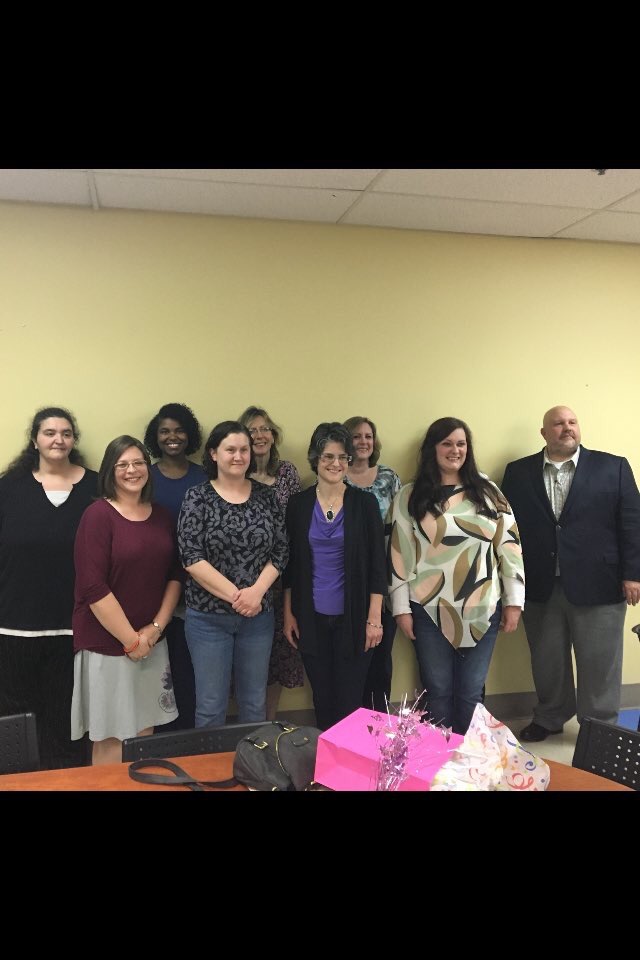 Last night we honored our Outstanding Learning Coaches (parents and family members who work with our students in an online environment) of the Year as nominated by our teachers. It was an honor for me to be there and speak with these great parents and give them a COW (Creator of Wow) Award in addition to the Outstanding Learning Coach Award. I told these parents that with our new vision of “Success for Every Student in Indiana” that we must continue to improve our family engagement. Learning Coaches are a crucial component to the family engagement at Hoosier Academies Network of Schools. I am so proud of the work that our Community Engagement Coordinator, Rachael Borrelli does to engage our families and support our Learning Coaches. She and the teachers are to be commended for implementing this Outstanding Learning Coach awards program.
As I listened to the tear jerking, literally, stories of why these families want their children in our school, I realized we must continue to improve living out our vision, mission, and core values. Every student has a story and a context. These stories are why school choice is so important and parents must have the ability and right to send their children to the school that is the best fit for the context in which they live. This all fit with Lesson #49 of The Disciplined Leader by John Manning (2015). In this lesson Manning (2015) taught us that we must keep customers in the cross hairs of decision making. I blogged about whether we should consider students and parents as customers or whether society is the customer of schools in Leaders Listen, but regardless we need to listen to our families and engage their needs.
If we keep the interest of our families in mind and engage them in the process of educating their sons and daughters it is powerful in improving the achievement and performance of children. As Manning stated, “It is leadership’s responsibility to be an advocate for customers, so focus on them whenever you conduct any business planning.” (Manning, 2015, Kindle Location 2535) As leaders we must always make sure that those we serve are being considered in the decision making process. We will obviously never be able to please everyone, but we must be able to connected the dots between our customer’s needs and our core values for carrying out the vision and mission of the organization.

“You should also engage and align your employees to follow your lead when they’re making decisions, too. When those two strategies come together, you’ve got a winning formula for building customer loyalty.” ~ John Manning
It was so great to connect with a group of parents and students last night and it was even greater to witness our teachers interacting with those parents, families, and students. With our newly created vision, mission and core values I am confident we are continuing to improve our family engagement and decision making prowess. What does your organization need to do to improvement using customers in the decision making process?
Leaders Listen
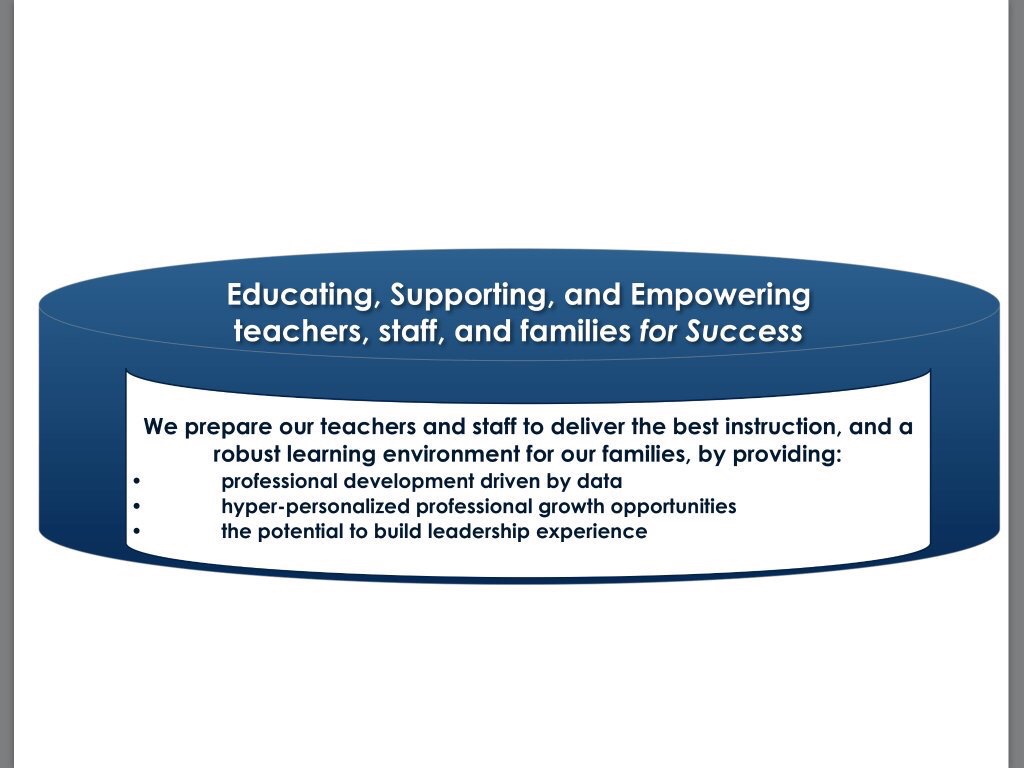
 In Lesson #48 of The Disciplined Leader, John Manning (2015) taught us to “Listen To Your Customers.” As an educational leader, I have been in more than my share of discussions about whether the students and parents are customers of our schools and the educational system. This post is not about answering that question – it’s just too complex. I’ll tackle that topic in a future post. Although, I have to give a shout out to Dr. David Burkus, author of Under New Management: How Leading Organizations Are Upending Business As Usual and Associate Professor at Oral Roberts Universty. He and I recently had an in depth conversation about about this during the launch of his book – which, by the way, every leader should read.
Dr. Burkus and I discussed how students are much too precious and complex to just be considered as customers. He suggested that society is the customer of education. The success of our society relies on the quality of individuals, we in education produce. I tend to agree with that, but also know that we must listen to our students and families as if they were customers in the context that Manning (2015) spoke of. I also understand the complexity of educating a child and all the factors involved – parents, family, health, socio-economic factors, emotional, learning style. Thus, all the more reason to listen as if our families and students are customers, because regardless, as Dr. Burkus pointed out, society will ultimately be a customer. Failure to establish a home-school-community collaboration aimed at increasing student success puts our children’s and nation’s futures at stake.
“This loyalty comes from genuine relationships—those that are carefully cultivated between the customers and your organization. This comes from interactions in which the customer feels that he or she matters personally, not financially, to a business.” ~ John Manning
As Manning (2015) pointed out. It is all about relationships. Effective communication, which includes listening, is essential for building school-family partnerships. It constitutes the foundation for all other forms of family involvement in education. Good two-way communication between families and schools is necessary for our students’ success. Not surprisingly, research shows that the more parents and teachers share relevant information with each other about a student, the better equipped both will be to help that student achieve academically. The good news is that many are beginning to realize the value of connecting parents and community members to what is happening in the classroom. Still, there are too many families and community members who do not feel equipped to partner with schools to create the best teaching and learning environments for children. It is not surprising that these people tend to avoid substantive involvement in critical issues such as daily attendance, teacher quality, student retention, and other areas that impact student success.
Bottom-line: we need to listen and get feedback from our teachers, students and families; we must talk to our students and families and build meaningful relationships; and, we must find out why students come to our schools and why they leave our schools. Just as we ask our students to do their homework, we must do our homework, as leaders, to understand what he or she needs to be successful. We must design environments for families to access key information to make their engagement with their children’s school more productive, enjoyable and beneficial. We must invite, engage, enable, and empower our families to become more engaged in their child’s educational experience.
As leaders we must listen to the needs of our students and families.
ESSA Opportunity #1: Assessments
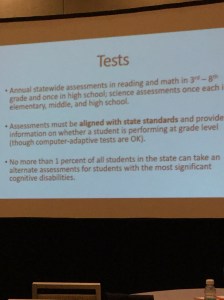 I am beginning a series of ten posts detailing opportunities I see us having with the Every Student Succeeds Act (ESSA). This post deals with new opportunities afforded by ESSA for Assessments. ESSA continues the No Child Left Behind (NCLB) schedule of federally required statewide assessments. ESSA still requires annual statewide assessments in reading and math in 3rd–8thgrade and once in high school; science assessments once each in elementary, middle, and high school. Those assessments must be aligned with state standards and provide information on whether a student is performing at grade level. ESSA allows computer-adaptive tests as well. These computer-adaptive models could be used to measure a student’s academic proficiency above or below grade level to determine a student’s actual performance level.
It is also important to keep in mind that no more than 1 percent of all students in the state can take an alternate assessments for students with the most significant cognitive disabilities. There is still the requirement of 95% participation in state testing. States or localities may create their own laws on assessment participation, and districts are required to notify parents about those, but the 95% participation requirement must be met.
There are some options already being used in some states for the high school level. An option for states or districts to use a nationally-recognized assessment (e.g. SAT or ACT) at the high school level in place of the state test. These assessments may measure individual student growth. Any assessment that is used must be aligned to the state standards, provide results that can be used for accountability, and meet all the technical requirements that apply to statewide tests. They also have to be peer reviewed. Under ESSA, any district-selected assessments must be approved by the state.
In addition, summative assessments can be administered through multiple statewide interim assessments that , when combined, produce an annual summative score are allowed under ESSA. Also allowable under ESSA are assessments that are partially delivered through portfolios, projects, or extended performance tasks.
Finally, ESSA encourages and gives states the opportunity to audit their assessments to look at over-testing. As you can see, ESSA gives new flexibility in assessment design. The new law allows for use of nationally recognized high school assessments and innovative assessment flexibility. Now it is up to the states to collaborate and come up with solutions that are best for the students.
How Many Flavors Do You Need?
 In Lesson #47 of The Disciplined Leader John Manning (2015)taught us to Avoid The “Flavor of the Month” Syndrome. I actually blogged about this back in Flavor Of The Month Or Research And Development? I put a little different twist on it, but this is an important topic when it comes to putting strategy in action. Founded in 1945 by Burt Baskin and Irv Robbins in Glendale, California, Baskin-Robbins is known for its “31 flavors” slogan, with the idea that a customer could have a different flavor every day of any month. Now, if we look at using this theory for strategy, we will surely fail.
Because of being focused so heavily on culture building and leadership development this year I have thought a great deal about alignment of the team to our strategies while still making sure we, what I call, hyper personalize the professional growth and development. Training and development programs almost universally focus factory-like on inputs and outputs: absorb curriculum, check a box; learn a skill, advance a rung; submit an assessment, fix a problem. Flavor-of-the-month remedies, off-the-shelf programs, immersions, and excursions stuff people full of competencies and skills but produce astonishingly few great leaders. This is why I believe these programs must be developed and personalized by the leader of the organization to fit the context of the individuals being developed. The program must also be customized for the context of the organization at the time. We are taking applications right now for our next cohort of our Focused Leader Academy. I already know the curriculum will need to be adjusted as I look at those who are applying and where we are as a school.
Just like Baskin-Robbins has 31 flavors to satisfy every individual taste, every day of the month. We must not resort to cookie cutter development for those we serve by jumping at anything that comes along as the next “silver-bullet” of leadership development. I would propose using Manning’s (2015) three ways of avoiding the flavor of the month syndrome when developing your leaders and putting all strategies in action:
- Create consensus during planning.
- Stay committed to identified strategies.
- Formalize decision making for new ideas.
My challenge to you is to unleash the most initiative, imagination, and passion and the job of leaders is to expand the scope of human accomplishment in your organization.
Chief Execution Officer
 One of most frustrating challenges leaders are faced with today is closing what is commonly known as the execution gap (or sometimes the strategy gap). The execution gap is a perceived gap between a company’s strategies and expectations and its ability to meet those goals and put ideas into action. In Lesson #46 entitled “Avoid the Dangerous Gap between Good Ideas and Execution” in The Disciplined Leader, John Manning (2015) explained, “As a Disciplined Leader, it’s your job to become curious but also cautious about good ideas. That starts with discerning the ideas and solutions introduced by your people, making those hard decisions about whether to say yes or no to them. Good ideas don’t mean anything unless your organization is capable of executing them.” (Kindle Locations 2382-2384). Due to the complexity of people, businesses, and the societal constructs in which we operate, it is more difficult than it might seem at first glance to close this gap.
“So whenever any new concept or strategy is put on the table, assess the gap between its good intent and your team’s core ability to implement and execute it.” ~ John Manning
Leaders must become Chief Execution Officers. Great leaders do not relegate and that is the idea behind becoming a Chief Execution Officer instead of a Chief Executive Officer. Relegation is very different than delegation. Relegation is just pushing work to others. By not relegating the execution of strategy, the Chief Execution Officer can achieve consensus and commitment across the task force responsible for the implementation, establish and preserve the integrity of the strategy, and engage the work force. If done correctly, this approach and these achievements can greatly improve performance of the strategy. Unlike a traditional CEO, the Chief Execution Officer gets involved in the details of strategy execution by: translating the strategy into measurable objectives, sharing the story of the strategy with internal and external audiences, establishing a feedback system, and by aligning the reward and recognition system with strategy. Since leaders need the effort of others, they must be able to effectively communicate to them what they want done and, more importantly, why they want to do it. A big problem with going from idea to implementation is simply a lack of clearly defined vision and goals. Leaders who cannot define what they want accomplished can hardly expect others to understand their strategy and participate in their projects with any level of meaningful contribution.
I am a big believer in forming task forces to take on implementation and execution of initiatives and to study needed changes. I am also a believer their are times I need to own doing a major part of the heavy lifting in some of those task forces. A big mistake many leaders make is relegating to others and this can be problematic from a couple of different angles. First, many times the leader relegating is seen as someone who passes everything to those he sees as being under him. This is not being a servant leader and leaders who do this quickly lose the trust and respect of those he serves. Secondly, many times others just don’t have the knowledge and skill that you do as the Chief Execution Officer. The task force provides a team that can develop consensus and communicate to others about the strategy and is an important prerequisite for successful execution of initiatives and change. Careful selection of task force members is important to achieve effective cross-functional integration. Leaders who resist this type of consensus can undermine successful execution and implementation.
Implementation and execution really become part of an organization and become part of the leader’s mantra. Think about it; you know leaders who get things done and those who never seem to be able to finish. Implementation is not just something that does or doesn’t get done; it is not just a tactic, and it is not something to be relegated. Execution should be a central part of a organization’s strategy and goals and the most important part of what any leader does. What are you preparing to implement in the near future?
ESSA: What Stays The Same?
 I will continue my series of blog posts concerning the Every Student Succeeds Act (ESSA) here with a post about what stays the same under ESSA. I previously blogged about our fascination with ESSA in Why Is ESSA So Fascinating? Because of the many years of state’s frustrations over what were considered by many to be a heavy and prescriptive federal role in education policy, I believe we are all looking for innovative and effective ways that could have lasting impact on schools’ priorities and ultimately a positive impact on our children’s lives. All of the talk of new flexibiity promised under the ESSA, I believe we are all excited to get started on getting everyone in our states together to collaborate and innovate. The United States Department of Education, however, is still in the initial phases of rule-making and figuring out what the USDE’s role will be to regulate under ESSA, a process which is looking like will take several months. The law doesn’t go into full effect until the 2017-18 school year, but certainly it is time to get started.
Therefore, I would like to take the opportunity a few of the things, as I see ESSA, that stay the same. These things are worth studying because we now have the opportunity to tweak and continue to innovate. Indiana is in a great position under ESSA because many of the things called for under the new act we are already doing. We now can take the opportunity for continuous improvement. We have the opportunity to further hone our vision for education in Indiana and engage our communities in the conversation. Before we get into what remains the same under ESSA let’s take a look at what the wishes of the law are (adapted from an International Association for k-12 Online Learning [iNACOL] webinar):
- High expectations and tranparency
- Required action for underperformance
- State autonomy
- Local control
- Program consolidation
- Room for innovation
Here is what remains the same. We, the states, are still responsible to:
- adopt challenging state academic standards. Remember, these do not need to be common core and the Secretary of Education has no authority to tell the states what those standards will be.
- test students annually in math and reading in grades 3-8 and once in high school; and science in grade span. There many who keep talking about how the requirement to test is gone and this is simply not true. By forming our ESSA/ISTEP+ Task Force, however, the Indiana Legislature provided great leadership in having us take this opportunity to study and improve our state testing.
- publicly report scores based on race, income, ethnicity, disability, and English learners.
- identify schools for improvement including the bottom performing 5%.
- distribute Title I, Title II, and Title III formula grants.
In future posts I will be outlining the new opportunities we under ESSA. Every one of those opportunities is fascinating on its own, but we will all need to find ways to collaborate so that all components of ESSA can be knitted together for doing what’s best for the students we serve.
 Byron's Babbles
leave a comment