Employers Need To Know What To Expect
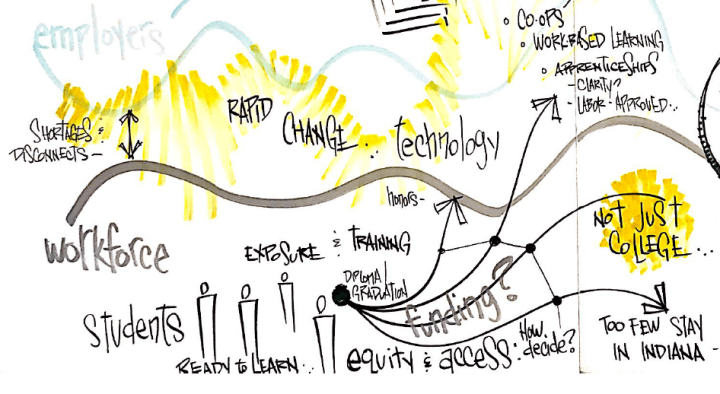 In meetings this past week a theme developed: Employers need to know what to expect. This was referring to the fact that employers need to know what to expect that students coming to work for them will know. As I have continued my work, as an Indiana State Board of Education member and Chair of the Indiana Graduation Pathways, I am spending a great deal of time with employers, learning the employee skill needs. It is abundantly clear there is a skills gap, but I do not believe it is insurmountable. I believe the answer is to identify those transferable skills and competencies that every student needs. Additionally, the transferable skills and competencies needed for specific trades need to be identified.
Even though the study dealt with college students, The Chronicle For Higher Education reported on a study that dealt with the question of “The Thing Employers Look For When Hiring Recent Graduates.” What the study found was that employers really value experiences outside of academics: Internships, jobs, volunteering, and extracurriculars. I have to believe this would also apply to high school graduates. From the many employers I have visited with, I would have to say that these things do apply to high school students. Maybe even more!
Below is the graph of the results from what employers want:

One of the pieces of our Indiana Graduation Pathways we were very explicit about was the need for Work Based Learning and Project Based Learning. Just so we are on the same page, Work Based Learning is an educational strategy that provides students with real-life and real-world work experiences where they can apply academic and technical skills and develop their employability skills in a relevant context. Work-based learning encompasses a wide array of learning experiences, from exposing high school students to careers through activities like job shadowing, to providing incumbent workers with specialized training. Work-based learning extends into the workplace through on-the-job training, mentoring, and other supports in a continuum of lifelong learning and skill development. I really want to highlight the point of lifelong learning. We really need to get out of the fixed mindset that the pathway everyone should take is to graduate high school and go straight to a four year college/university. This is not for everyone and Work Based Learning can help provide an avenue for our students.
Work Based Learning is at its most powerful when experiences advance along a sequential, purposeful continuum. Experiences along the continuum are increasingly personalized and aligned with specific industries and occupations, providing participants with opportunities to contextualize what they learn and build their skills and knowledge. This also can provide the employer with a pipeline of employees that have been trained in their own environment and on their own equipment. In this setting employers know exactly what they are getting.
Even beyond the Work Based Learning, however, employers need to know what to expect from the students that will become their future employees. We need to partner with employers to develop transferable skills and competencies that all students need to know. We really need to take a step back and fully develop what every high school needs to know when he/she graduates. Make no mistake, I am not saying students do not need math, English, and the other cores we always discuss, but that there is more. Employers need to know what to expect from the future employees, that are our students. We need to listen and make sure what employers expect is what employers get. Furthermore we must also make sure our students know what to expect they will be expected to know when entering the workplace.
The Great & Humble Leadership Of Calvin Coolidge
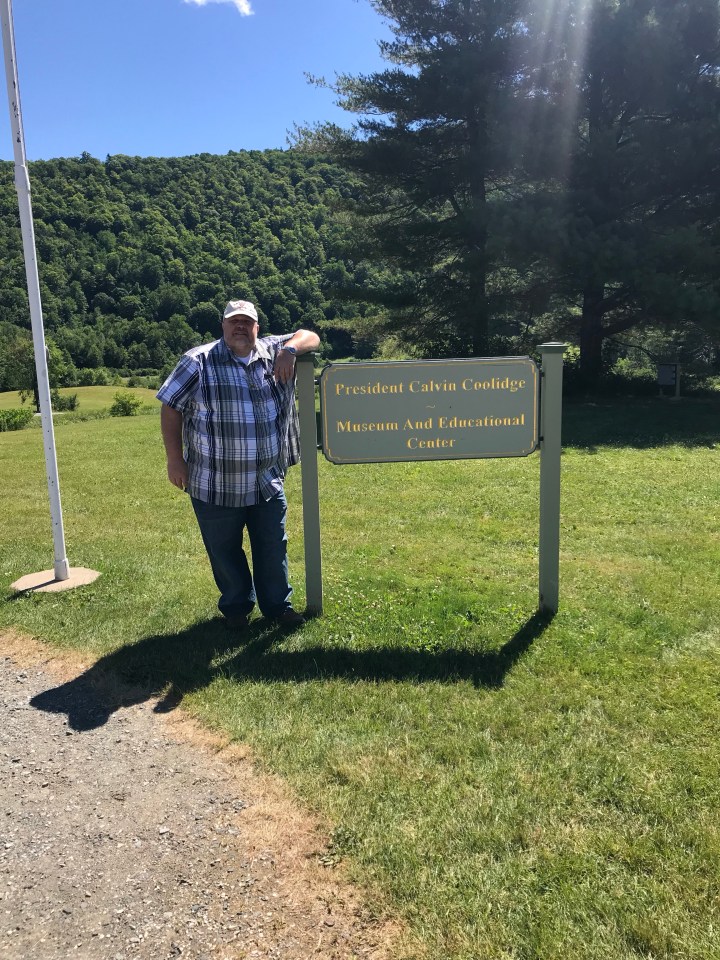 This past July my family and I spent the day in the beautiful Green Mountains of Vermont in Plymouth Notch. We went there to learn more about one of my favorite Presidents, Calvin Coolidge. I have read many books about our 30th President and studied many of the papers he wrote. I am fascinated with his leadership style, path to the Whitehouse, and his upbringing. In our quest to get my son to all 50 states before he graduates high school, we thought it fitting to spend time at the birthplace and childhood home of President Coolidge as our way of seeing Vermont.
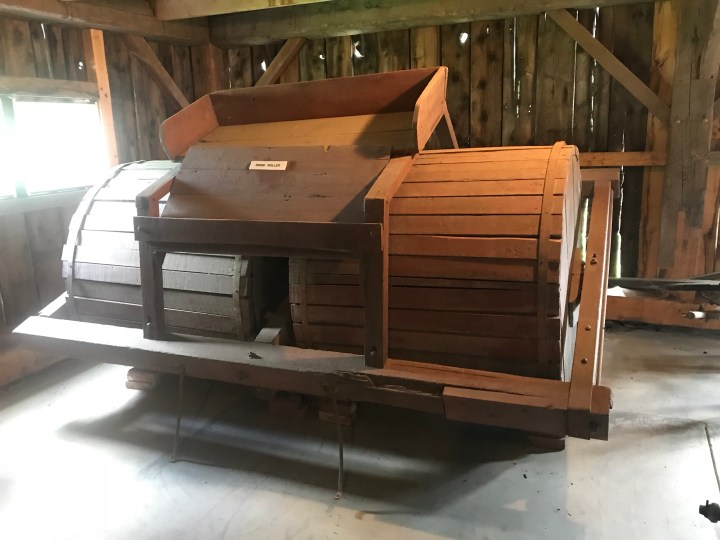
Snow Roller
As soon as we walked up to the visitors center, we understood the draw of this place known as Plymouth Notch. It was beautiful! Then as we learned about President Coolidge’s grandparents and parents, it became very evident how he could grow up to be President of the United States. His father was born in Plymouth, Vermont. John C. Coolidge was truly a servant leader. As I see it, he was the guy who held the town together. He was a farmer, store owner, and worked at a variety of other occupations. He served as the postman, snow roller (there was no way to plow snow at that time so they rolled it – see picture), town police, cheese maker, and he even made carriages. In addition, he was a veteran of the Vermont militia, and was in charge of the area militia. As you can see, he was a prominent local leader, he served in numerous Plymouth town offices, and was elected and served in both the Vermont House of Representatives and Vermont State Senate. What a role model for our 30th President.
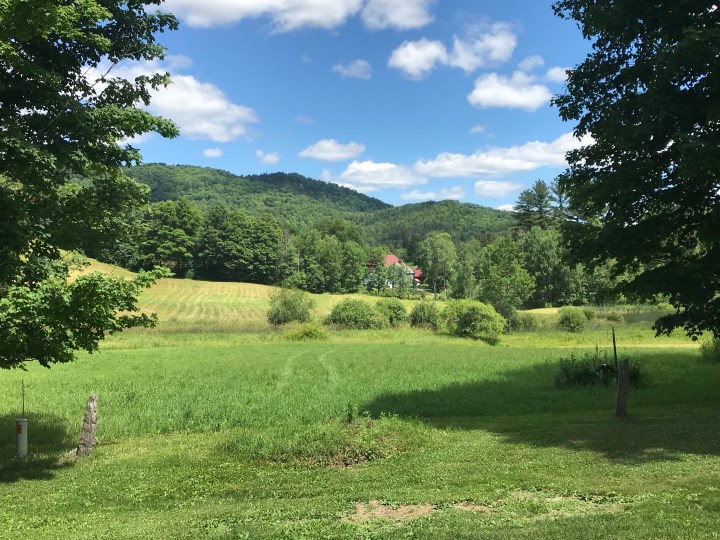 This was quite the example for the young Calvin Coolidge growing up. President Coolidge learned hard work on the farm and developed a love of agriculture and farming that never went away. I wonder if there will ever be another President of the United States who grew up on a farm or who was a farmer like Calvin Coolidge or Harry Truman? It was amazing to stand in the sitting room, known as the “Oath of Office Room.” Coolidge was back home when President Harding died, so was sworn in by his father, there in that room, to be President of the United States. The room displays the table, Bible, and kerosene lamp used in the swearing in and then his inauguration. President and Mrs. Coolidge occupied a second floor bedroom during their many visits. Here we were, standing where all this happened.
“…to walk humbly and discharge my obligations.” ~ Governor Calvin Coolidge when asked his goal as Governor Of Massachusetts
Calvin lived in Plymouth Notch until 1887, when he left for school. In 1895, he graduated from Amherst College in Massachusetts and moved to nearby Northampton to study law. Northampton, Massachusetts would be home for him for the rest of his life. After admittance to the bar in 1897, he established his law practice and soon became involved in local politics. Here are some key milestones in Coolidge’s rise to the presidency:
• Began a steady rise in the State Republican Party in 1899
• City Councilman of Northampton, Massachusetts
• Mayor of Northampton, Massachusetts
• Served in both houses of the Massachusetts State Legislator
• Served as Massachusetts’ Lieutenant Governor and Governor
• Gained national attention during the Boston police strike of 1919
• Elected as Vice President to Warren G. Harding in 1920
• Became President in 1923 upon the death of Harding
• Elected President in 1924 after gaining the faith of the American people in only 15 months
 President Coolidge was an outstanding example of a President who regarded his office, the most powerful in the world, as a stewardship–rather than as an opportunity to remake civilization. He proceeded from practical considerations of government, politics and popularity, applying his life-long experience as an elected office-holder. His decisions were usually compromises, made after long consideration of the conflicting interests involved. He announced them in as few words as possible and committed himself only so far ahead as might be necessary. During his administration the advance of the United States into the future was distinctly experimental–always in search of the sound course.
“They criticize me,” Coolidge said, “for harping on the obvious. Perhaps someday I’ll write On the Importance of the Obvious. If all the folks in the United States would do the few simple things they know they ought to do, most of our big problems would take care of themselves.” ~ President Calvin Coolidge
I am so glad we had the opportunity to walk among the houses of President Coolidge’s family and neighbors, the community church, taste cheese in the family’s cheese factory still in operation today, one-room schoolhouse, and general store which have all been carefully preserved. We also were able to pay our respects as the President is buried in the town cemetery. From walking where he walked we can understand why all during his life he would never waiver in his character or methods. He listened, he assimilated, and he waited until there appeared what seemed to be the soundest course. He did not try to make circumstances; but, when they appeared in the right configuration, he acted. By spending time there I learned where he had learned to be the principled and outstanding humble leader. I have been a student of Calvin Coolidge leadership for many years, and have now had the experience of seeing and understanding where his principled and conservative beliefs came from and were developed.
Refreshingly Organic Leadership
 Humble Leadership: The Power of Relationships, Openness, and Trust by Edgar H Schein
My rating: 5 of 5 stars
This is a refreshing change to other leadership books and theories that have multiple steps that really only work in an ideal culture or environment, or when everything is going perfect. Humble Leadership is not about doing this and then that; it is about building authentic relationships and trust, and then letting the group growth and development happen organically. This book starts out by posing the question as to whether the leader makes the culture, or the culture makes the leader. The authors also posit that leadership exists at all levels and everywhere in the organization. This helps the reader view leadership as multidimensional as opposed to a two-dimensional, top-down hierarchy. Humble Leadership is about relationship building and trust. Humble Leadership teaches the reader how to be adaptive and practice adaptive leadership while letting the individual team members and organization grow in an organic way. There were great examples of how Humble Leadership works with the Air Force Thunderbirds and David Marquet’s turning around of the Navy submarine, USS Sante Fe. This book is a must read for all leaders who want a culture where every person is empowered to be a leader and is working to make the organization great.
The Implications of What We Call “Level 2” Relationships at Work
 The following is an excerpt from Humble Leadership
The Implications of What We Call “Level 2” Relationships at Work
By Ed and Peter Schein
Organizations today are doing all kinds of experiments in how work is defined and are showing great flexibility in how roles and authority are allocated. What we see in these experiments is that they encourage relationships that are more personal. Bosses, direct reports, team members, and resources from other teams are making it a point to get to know each other at a more personal level, fostering more openness and, in time, more trust and the psychological safety to speak up and be heard.
In a Level 2 relationship, I convey that “I see you.” This is not necessarily “I like you” or “I want to be your friend,” or “Let’s get our families together,” but I let you know through my words, demeanor, and body language that I am aware of your total presence, that in this relationship we are working together and are dependent on each other, are trying to trust each other, and should each try to see the other as more than a fellow employee, or associate, or team member, but as a whole person. By conveying that “I see you”, we are also conveying that we will not allow “professional distance” to separate us; we are forming a personal-working bond that will not tolerate obfuscation or deception. Seeing each other as whole persons is primarily a choice that we can make. We already know how to be personal in our social and private lives. Humble Leadership involves making that conscious choice in our work lives.

Six Principles of Humble Leadership
- Humble Leadership builds on Level 2 personal relationships that depend on and foster openness and trust.
- If Level 2 relationships do not already exist in the workgroup, the emergent humble leader’s first job is to develop trust and openness in the workgroup.
- In a Level 2 workgroup Humble Leadership emerges by enabling whoever has pertinent information or expertise to speak up and improve whatever the group is seeking to accomplish.
- The process of creating and maintaining Level 2 relationships requires a learning mindset, cooperative attitudes, and skills in interpersonal and group dynamics.
- An effective group dealing with complex tasks in a volatile environment will need to evolve such mindsets, attitudes, and skills in all of its members.
- Therefore, Humble Leadership is as much a group phenomenon as an individual behavior.
***********************************************
About Authors
Edgar H. Schein is Professor Emeritus from the M.I.T. Sloan School of Management. He’s a pioneer in organizational studies, organizational culture and leadership, process consulting, career development. Ed’s contributions to the practice of O.D. date back to the early 1960s and continue with the recent publication of Organizational Culture and Leadership 5th edition and now Humble Leadership, co-authored with Peter A. Schein, co-founder of OCLI.org who brings 30 years of hands-on experience in large and small companies leading growth initiatives in Silicon Valley.
A New Approach to Leadership
 The following is an excerpt from Humble Leadership
A New Approach to Leadership
By Ed and Peter Schein
This book introduces a new approach to leadership based more on personal relationships than transactional role relationships.
The good news: employee engagement, empowerment, organizational agility, ambidexterity, innovation . . . all of this can flourish in the rapidly changing world when the fundamental relationship between leaders and followers, helpers and clients, and providers and customers becomes more personalized and cooperative.
The bad news: continued deception, scandals, high turnover of disengaged talent, safety and quality problems in industry and health care, all the way to corruption and abuse of power at the highest levels of industry and politics, driven by financial expediency and the obsession with retaining power as primary success criteria . . . all of this will continue to happen as long as leader-follower relationships remain impersonal, transactional, and based on the roles and rules that have evolved in the current culture of management that still predominates in our hierarchical bureaucratic organizations.
The Leader-Follower Relationship
“Leadership” is wanting to do something new and better, and getting others to go along. This definition applies as much to senior executives developing new strategies, new purposes, and new values as it does to a group member down in the organization suggesting a new way of running a meeting or improving a process to drive better results. Both the word new and the word better remind us that leadership always refers to some task that can be improved and to some group whose values and culture will ultimately determine what is better.
What is new and what is better will always depend on context, the nature of the task, and the cultural values that are operating in the group or organization that is doing the work. What we later may label as “good or effective leadership” thus always begins with someone perceiving a new and better way to do something, an emergent leader. Our focus will be not on the individual and the desired characteristics of that emergent leader, but on the relationships that develop between that person and the potential followers who will have influenced what is finally considered to be new and better and who will implement the new way if they agree to try it. Those potential followers will always be some kind of workgroup or team, so our focus will also be on the relationships between them. They may be co-located or widely spread in a network, and their membership may change, but there will always be some kind of grouping involved, hence group dynamics and group processes will always be intimately involved with leadership.
*************************************
 About Authors
Edgar H. Schein is Professor Emeritus from the M.I.T. Sloan School of Management. He’s a pioneer in organizational studies, organizational culture and leadership, process consulting, career development. Ed’s contributions to the practice of O.D. date back to the early 1960s and continue with the recent publication of Organizational Culture and Leadership 5th edition and now Humble Leadership, co-authored with Peter A. Schein, co-founder of OCLI.org who brings 30 years of hands-on experience in large and small companies leading growth initiatives in Silicon Valley.
Community: Aggregating For Innovation
 Last week I had the opportunity to be part of a webinar with Peter Block, author of Community: The Structure of Belonging, 2nd Edition. I already blogged once about this webinar hosted by Becky Robinson at Weaving Influence in honor of the release of the second edition of this book last week. Click here to read, Why Does Community Matter?
During the webinar I had the opportunity to ask a question of Peter Block. My question was, as a public policy maker, how can we scale the use of community and convening of people to really solve the issues at hand; in my case in education? You can listen to Peter’s response to my question here:
This was such a deep and thoughtful answer from Peter, don’t you agree? I had to do some follow-up study to really get my mind wrapped around all of the thoughts he presented here. First of all, this idea of aggregation. There are so many ways you can use and think about the idea of an aggregate. Many times the aggregate is thought of as the whole, like a country, and then the community as part of that whole. Peter challenged me to think about aggregating as opposed to bringing something to scale. He said, “When I aggregate I bring big things and people together that do not need to be alike.” This was powerful and made me think about aggregates like components of a composite material that resist compressive stress. In other words, we need to aggregate people who are co-creating what education, in my case, needs to look like.
Peter was also very clear that legislation follows the innovation phases; you can’t legislate innovation. You innovate through experience. As I was putting this thought process together I realized the aggregation theory was so powerful because by aggregating we are developing by the merging of the differences of the people we are bringing together. Therefore, when we aggregate people together, we get a great deal of experiences to draw from. Peter also pointed out we need to make visible the people who are doing great and important things with the idea of replication. I believe an aggregate can also be made up of many different communities with diverse experiences. Across the country, we find a wide array of communities. However, when you put all of them together, we get an aggregate or the whole.
 Then we need to begin aggregating for co-creating for education (in my case), and we then get people talking to each other. I love the question that Peter suggested we should be posing when convening, “Who wants to participate with us by making it real for you?” Two other things I have learned from Peter Block are to always ask, “What can we create together?” and elected officials and policy makers need to be conveners and not problem solvers. I have always tried to take this very seriously and convene communities with no preconceived solution. This idea of aggregating really drove home the value in convening groups with a wide array of experiences and then valuing those differences – not being afraid of them.
As you can see, this was a very thought provoking webinar that caused a lot of reflection. Here is the entire webinar for you to watch:
Why Does Community Matter?
 This past week I had the honor to be involved in a webinar put on by my friend Becky Robinson at Weaving Influence. The webinar featured a hero of mine, Peter Block. I consider him to be the father of Community. In fact, he literally wrote the book on it – Community: The Structure of Belonging, 2nd Edition. The webinar was held to launch the 2nd Edition of the book that was released last week. Peter Block was introduced to me by my good friend Mike Fleisch. Mike has literally shown me all the great community work that Peter Block has done in Cincinnati. I have read Peter’s books and was excited to be on the webinar with him. Peter is truly helping to change the world.
“The best way to connect is with groups of three people with their knees 9 inches apart.” ~ Peter Block
Let me tell you, there was a great deal of content in a one hour webinar. Peter is very philosophical, but is also able to bring his philosophies and core values to a practical level as well. I want to provide you a bulleted list of some of the more salient points that I believe Peter made during the interview. I will provide you with the link to the webinar and you can make your own list later in this post. Here is my list:
- We’ve reached a limit as to what professionals can do.
- Schools cannot raise our children.
- PowerPoint pretends our conversations are predictable.
- How can you have learning, if all you have is content?
- We need to ask the question, “why did you show up?”
- All cultures value depth of relationship!
- We are afraid of the stranger.
- Working of deficiencies just makes the deficiencies stronger.
- Using community strategies creates real and concrete outcomes.
- You can’t innovate through legislation.
Wow, I just realized I created a top ten list from the webinar. I am not going to go back and number them because there is no real order to this list, but all important points that Peter covered in the webinar. I need to go back and blog about each one (we’ll see if I get that accomplished or not). So, I promised you the opportunity to make your own list. I want to provide you with the link to the YouTube video of the entire webinar, including the chance I had to visit with and ask a question of Peter Block. My next post after this one to my blog will specifically deal with my question and the conversation that followed. But for now, click here to watch the whole webinar (again my thanks to Becky Robinson and Weaving Influence for making this possible):
https://www.youtube.com/watch?v=cUPAFSbcEHY&feature=youtu.be
As you can see, this was a very powerful webinar. I would love for you to reply to this post with your top ten (or however many) takeaways you have from the webinar. By replying you will be creating the strong aggregate Peter talked about. Notice I am trying to practice the teachings of Peter by not offering my own thoughts on each of the bulleted points, but asking you to give your thoughts. I really do want to hear from you. Peter Block really is the father of using Community to change the world.
Good Leader Traits
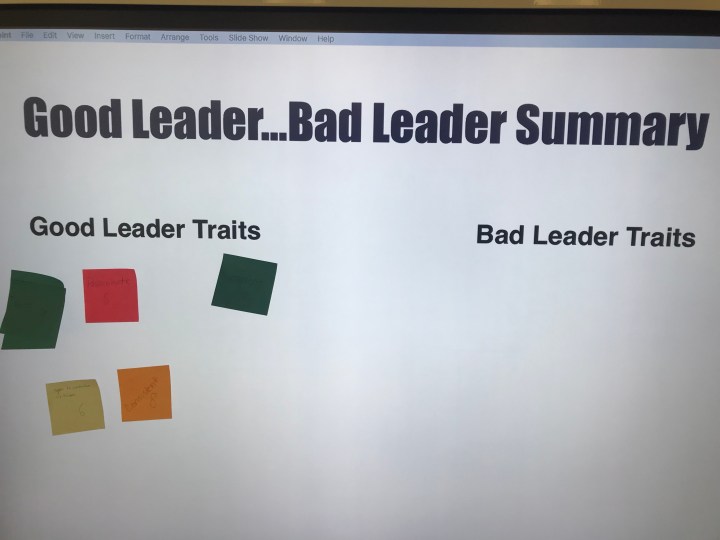
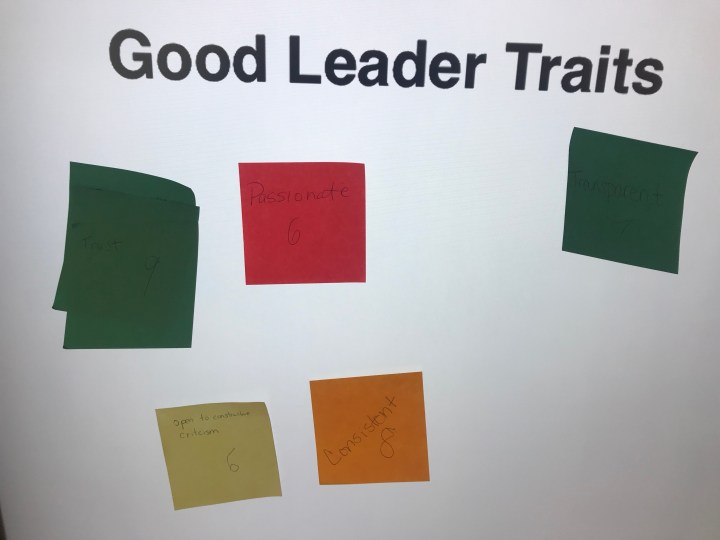 This past Friday in a session I did for our Noble Education Initiative Impact Indy Program we developed a top five list of great leadership traits. To get to that end, we developed a bad leadership trait list and then moved into the good list. Then we voted our way to the top five, great list. I would like to provide you with our top five in this post with some of the commentary about each one discussed during the session.
 Here they are:
- Trust – No big surprise here. Trust tops most lists characterizing great leaders. It’s at the root of every good relationship, including that of leader and employee. When your team trusts you, and they perceive that what you’re doing is honestly in their and the organization’s best interest, you are more likely to have an engaged team.
- Consistent – Consistency was a multifaceted item on this list. First, as a leader, you want to communicate a consistent focus on just a few critical issues (at most three to five) for each employee or team. And then you want to relentlessly follow up and focus only on those few issues. Less is more. Second, the great leader will have consistent moods, behavior, and decision-making so that her team knows where she is coming from. Finally, there must consistency in the message and actions delivered. The simple adage of “do what you say” goes a long way as most customers, families, students, or other stakeholders are accustomed to broken promises and poor service. With consistent delivery and consistent service, we can put all our focus on promoting a positive and consistent brand image with those we serve, including our customers.
- Transparent – Employees learn more about one another and can grow to work toward solving problems faster when their leaders are transparent. Transparency also allows relationships to mature faster, as openness can potentially avoid misunderstandings that can fuel unnecessary tension. If we are transparent, we can actually strengthen our role as a leader because those we serve begin to trust (see, there is our #1, trust, showing up again) us as person and thus will respect us more as a leader.
- Open To Constructive Criticism – If you are not being criticized, you are not leading and guiding the organization to grow, innovate and explore endless possibilities. We all have areas we need to improve in. Additionally, we must use criticism as an avenue to learning. Criticism can provide valuable insight for making course corrections. Don’t be offended by criticism, use it to your advantage.
- Passionate – Passion inspires others to join and identify with the organization’s vision. When we are passionate about something, it shows all over us. We can’t help but think about it, work at it, and be excited about it. Most importantly, passion is as contagious as a cold. Ever notice how your own enthusiasm escalates when you are around passionate people?
Pretty awesome list wouldn’t you say? What’s on your top five? Would you change any of these, or re-order the list? I would love to have you add your comments to this post.
What Do You Really Want?
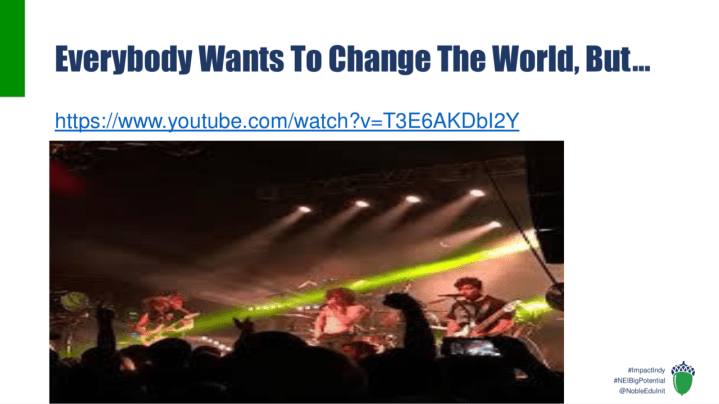
 Yesterday at our Impact Indy program to kick off our Noble Education Initiative supported schools in Indianapolis, Indiana I did a program titled: Leading Like a Rock Star: Chaos and Earthquakes. To kick off the program I played the video of the song “Do You Really Want It” by one of my favorite bands, Nothing More. Click here to watch the video:
Even if you are not a fan of the same genre′ of music as me, you’ll have to admit that the words make you think and reflect. The chorus really gets to me: “Everybody wants to change the world, but one things clear; nobody wants to change themselves.” So true! This is one of those Walk the Walk or Walk the Talk things. Do we really want to make the changes or develop ourselves in the ways necessary to make the revolutionary and transformational changes we need?
 Our discussion was very rich around this topic. I had the participants write down two things they had recently changed about themselves and two things they had resisted changing. It was a very open and candid discussion. Amazingly, in all cases when someone had gone ahead and made a change in themselves they were resisting, it led to great results.
“Kites rise highest against the wind, not with it.” ~ Winston Churchill
Fortunately and unfortunately, we are creatures of habit. Our brain creates neural pathways from repetitive thoughts and behaviors in an attempt to be efficient and make those things easier. And after some time, they become our default way of functioning. For things we want to change this is default is unfortunate, but we can you is to advantage by making the new changes the new habits or default. We live on “auto-pilot” in some cases. Even with an intention to change, we find ourselves repeating the same behaviors and experiencing the same thoughts. When these thoughts are based in doubt and fear, they are even harder to change. On some level, they are serving a protective function for us.
 Some changes we resist because biologically we seek to stay status quo or be in a state of homeostasis. But, some changes we resist because of being hypocritical. I believe the chorus in Nothing More’s song, “Everybody wants to change the world, but one things clear; nobody wants to change themselves,” really describes this hypocrisy. It’s the old “do as I say, not as I do” syndrome. This hypocrisy doesn’t just undermine a leader’s authority, it can also directly threaten how the group functions. A leader’s perceived personal integrity, in other words, is a cue for how everyone who follows to interact.
If we want to make positive change, we must be willing to change ourselves and make our actions match our words. When the talk of the leader makes about what she values is consistent with her actions and the things she rewards, her followers will be more willing to engage and treat one another like neighbors. This alignment creates the feeling that when people put in effort on each other’s behalf, those efforts will be recognized and they’ll be supported when they need it. And it leads to trust that the organization or community has its members’ long-term interests at heart.
Unfortunately, this trust is lost by the hypocritical leadership we are discussing here. Hypocritical leadership is when a leader says one thing, but does another. It is when someone exhorts behaving one way, but then continues to behave in another. On the other hand, however, demonstrative leadership is when leaders not only talk the talk, but walk the walk as well. Are you ready to demonstrate changing yourself? Do you really want it?
Pathways to Success after High School
 A high school diploma no longer is the finish line—it’s now the starting line. Job growth and trends over the past 10 years have shown about 95 percent of jobs require some education after high school.
Recognizing that Indiana must offer more than a one-size-fits-all standardized test, the Indiana General Assembly took action to provide meaningful pathways for Hoosiers’ success. In the 2017 legislative session, lawmakers directed the Indiana State Board of Education to modify Indiana’s graduation requirements, ensuring students are better prepared to enter a new economy. The goal was simple: offer pathways that provide relevancy for students and better prepare them for life after high school.
Later that year, the State Board approved what is now known as Indiana’s Graduation Pathways. During this process, the State Board collaborated with national and state experts while engaging students, parents and educators on how to effectively deliver lasting value to all students through their education journey.
To complete a pathway, a student must take several actions, including fulfilling Indiana’s course requirements and completing an employability experience by applying classwork to real-world situations. This could include completion of an independent research project, participating in meaningful civic engagement or having a part-time job, apprenticeship or internship. Students must also choose a benchmark that best suits their career goals, such as taking the SAT or ACT to attend college, completing the ASVAB to join the military or earning a state-and-industry recognized credential or certification to join the workforce. Selecting and completing a pathway ensures students are better prepared to transition from high school to college, the workforce or the military.
While Graduation Pathways won’t be a requirement until the class of 2023 – this year’s eighth graders – some Indiana schools are implementing Graduation Pathways right now. In these school districts, parents and educators can have conversations with their students about an individualized graduation plan that provides students a relevant education, prepares them for the global economy fuels a desire for lifelong learning. Parents should have conversations with their local school officials to determine the implementation timeline at their child’s school.
Using Graduation Pathways allows Hoosier students to transition from high school into life’s next steps. Together, we’ll raise the bar for our state’s future workforce, so that today’s students will graduate with the relevant skills needed to compete in a global economy.
 Byron's Babbles
leave a comment