Being Lacuna Coil
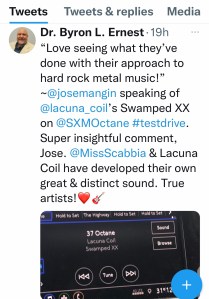
One reason I love rock music so much is how the great artists/bands develop such distinct sounds that become their own. The best are very layered, complex, and very unique. One of the best examples of what I am describing is the great Italian metal band Lacuna Coil. Interestingly, yesterday Jose Mangin, on SeriusXM Octane, played Lacuna Coil’s new song, Swamped XX, as part of the Octane #TestDrive and I new immediately that this was their song because of that incredibly distinct sound that is theirs and theirs alone. I love it! When the song ended Mangin made a great comment. He said, “I Love seeing what they’ve [Lacuna Coil] done with their approach to hard rock metal music!” I really liked his choice of the word “approach.” This is one reason I am so drawn to use rock/metal bands and songs as prompts to posts like this one or hooks for leadership lessons – those authentic approaches.
I love this thought of “authentic approaches” because no matter what we do, we all have our own approaches. Those things that make us who we are. Just like the greatest bands are those who recognize, embrace, and develop their own unique approaches, the most significant of us must all do that same thing in our chosen fields. We all have influences and then we must decide how to use those influences to make ourselves the best we can be. In an interview when asked about the album Dark Adrenaline, Lacuna Coil’s Cristina Scabbia, who is an incredible artist, said, “…because it’s an album that contains a lot of new influences, but a lot of reminiscences and a lot of vibe from the old school albums of Lacuna Coil. There are some songs that could be in the first EP, or even in a reverie, you know, the very first works we did. But at the same time, there is this new vibe coming out, and a big production, and a heavier sound with more guitar solos. It’s the most obscure album of our careers, so I really really like it.” Did you catch that? A lot of new influences, a lot of reminiscences, a lot of vibe from their old school albums, but with a new vibe coming out. Such superb artists! On a side note, you should check out interviews of Cristina – there is a lot to learn, is a great human being, and really good at her job.
But, the part that I want to drive home in this post is that even as new approaches are found and developed we still must be true to who we are, what we stand for, and what our unique competitive advantages (vibes) are. Our organizations and us personally will always be evolving, but we must remember to stay true to our core values and that special sound that is only ours. Even as I heard Lacuna Coil’s Swamped XX off their new album, Comalies XX, for the first time, I didn’t need anyone to tell me it was them. There is only one Cristina Scabbia and Lacuna Coil. They are being the best Lacuna Coil they can be.
Come Ride With Me

When I was a principal, I had a teacher who told that she liked the fact that it felt like we were on a journey together to turn around the school we were both serving. I loved this because we were really trailblazers on this journey. There were times when I certainly felt like the journey was taking us, not us taking the journey. Having successfully turned that school around, I look back and we were all survivors. We journeyed together because everyone wants to hang with survivors. The most inspirational leaders are survivors.
This all is wrapped up wonderfully in the Pop Evil song Survivor. If you haven’t heard this great song by this awesome band you need to check it out. In the song it says: “I’m a survivor, come ride with me; Been through hell and back, don’t need your sympathy; Everything I wanted is right in front of me, yeah; I’m a survivor, come ride with me.” If that is not a leadership anthem, I don’t know what is. I love, love, love the invite to “come ride with me.” We all want leaders that are survivors – those who understand the need for urgency.
As the song says, “It’s getting harder to walk, I guess I’ll just have to run.” Isn’t that what great leaders do? Those are the people I want to hang with, or as the song says, ride with. In an interview Pop Evil’s Leigh Kakaty said of Survivor, “There such an element of team and family to it that I love to come ride with me like ‘dude we don’t have to do this alone man just come come walk with me’ you know, it’s just about rock and it just reiterates the rock and roll/metal community and the family atmosphere that surrounds it.” That was exactly how it felt in the school I spoke of earlier in this post. We had become a team, family, and community. Everyone wanted to come take a ride with us. Kakaty said it all, to be survivors we must become teams, families, and communities. Are you a survivor? Will others answer your call to “Come ride with me?”
A Culture Of Uncertainty

Randy Conley told us that “Control is the opposite of trust” in Simple Truth #45, “The Opposite Of Trust Is Not Distrust – It’s Control” in Simple Truths of Leadership: 52 Ways To Be A Servant Leader and Build Trust, Making Common Sense Common Practice, Ken Blanchard and Randy Conley. This simple truth really resonated with me. I have experienced leaders who are control freaks and keep those they serve in the dark. I always have considered this a lack of self-esteem thing and desire to make sure all credit was able to be attributed to them. All this really serves to do is cause distrust and cause team members to shut down. This then brings about great uncertainty for everyone involved.
The control freak leader I described above is the most frustrating, smothering and energy sapping leader to work for. But, leading is not about controlling; it is about guiding, coaching and empowering others to reach a destination. Great leaders know how to manage systems, not control people. This goes back to making sure we have developed the technical skills necessary for those we serve to successfully carry out the mission of the organization. Trust is a verb, not a noun.
I Just Liked The Idea Of Having One
I am a huge believer in the wisdom of crowds, but I was reminded this weekend that we can also lose our conscious personality when we become members of a large group. This has been called “group think” or “group mind.” Gustave Le Bon argued that we become part of a group mind whose behavior is erratic, emotional, and irrational. This was discussed in one of the books I am reading right now, Propaganda: The Art of Public Communication and Relations by Edward Bernays.
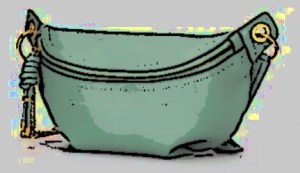
In the last couple of weeks I have realized that the fanny pack is back. This post is not about the fanny pack per say, but about how we become what Bernays called “irrational herd animals.” In other words we are highly influenced by what others are doing and in this case, what fashion experts tell us we should be buying. Please don’t take this as me saying fanny packs are bad or not practical. It’s just interesting that as more and more are wearing them either in the traditional way, or across their shoulder as a fanny pack sling, the more everyone just has to have one. In fact there are now designer fanny packs.
My son’s girlfriend was getting caught up in all the fanny pack hype and decided she just had to have one. She and my son went shopping and the place she wanted one from was all sold out. When we were discussing this, she told me she didn’t think she still wanted or needed one. Then she said something I thought was pretty profound: “I just liked the idea of having one.” How often do we get caught up in the idea of something that we don’t really need or we think needs to be done? If we’re honest, I believe this happens a lot. So, to keep from falling into the group mind that Le Bon described, we can use Jill’s thought and ask: “Do we really need it/need to do that or do we just like the idea of it?” There really is a difference.
If Everything Repeats

The phrase “It’s easy to be right when everything repeats” in the great band Trivium’s song The Heart From Your Hate has caused me to do some deep thinking. If you get to reflecting on it, that line alone in the song is really deep. We can look at this two ways:
- If we keep everything the same it is easy to repeat success every time – status quo.
- The same things will just keep happening, and usually get more difficult, until you recognize and eliminate the behavior that needs to change.
Why do people resist change? One reason is the fact that it may mean having to make some changes to processes that are already in place that have become easy to just keep doing. This is why it is so hard to change the status quo. The problem with this is that while the status quo might be creating so called “success,” or being “right,” that might not be the right success any more. I remember when I was leading the process in Indiana to go away from students passing a single exam to graduate to students having multiple pathways to graduate, there was tremendous resistance from those who had figured out the “system” to get kids to pass the exam. Some after multiple tries and being put through what I called the remediation factory. Those resisters could be right because everything was just repeating, but that was not the right thing to do for our scholars.
We can also view the easiness of being right when everything repeats itself from our own lens of recognition. Why do our experiences keep repeating? Think about this formula Event + Reaction =Outcome. You may be saying, “Everyone knows that, Byron. That’s really easy!” Is it, though? It sounds basic and very simple and yes it is basic and very simple but it has a lot of meaning. Think about this; what if the ‘R’ (reaction) is kept constant in the formula? Won’t your experiences keep repeating themselves? We need to change the ‘R’ (reaction) in our personal lives and organizations into a variable. Only then can we change the ‘O’ (outcome).
Yes, it is easy to be right when everything repeats or stays status quo, but that sometimes limits us from great relationships or doing great things. Thanks, Trivium, for making me reflect on this!
What Happens When You Are Gone?

Intent-based leadership relies on all team members being able to recognize what needs to be done and having the technical expertise to be able to do it. In my work with leadership development I have found that one of the toughest things for many up and coming leaders is stepping back and letting others take the lead or complete a task on their own. The best leaders do not focus on ensuring compliance with outside decisions. Instead, great leaders facilitate the team’s decisions about how they will carry out their shared purpose–mission, vision, values, and goals. In the case of education, when teachers are both responsible and accountable for making the decisions influencing school success, they also own the outcomes. Teacher teams do not have a problem with being accountable for results when they have the autonomy and authority to determine how best to achieve them. They take pride in what works well and refine what doesn’t.
In Simple Truth #44, “The Most Important Part Of Leadership Is What Happens When You’re Not There” in Simple Truths of Leadership: 52 Ways To Be A Servant Leader and Build Trust, Making Common Sense Common Practice, Ken Blanchard and Randy Conley, we were reminded that, “Servant leaders develop and empower their people so that they will perform just as well, if not better, on their own as they do when the leader is present” (p. 115). The key here is to have those we serve developed in the technical and leadership skills necessary to make decisions from wherever they are. If we position everyone to lead from where they presently are, we have decisions being made where the data is created.
Listen More
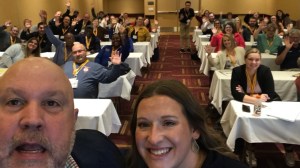
This past week at the National FFA Convention here in Indianapolis, Indiana I had the opportunity to do teacher workshops with our National FFA Teacher Ambassadors. One of my roles is to help our ambassadors be the best presenters possible. After each workshop I did a reflection so that during next year’s ambassador trainings I can point out positive practices that really work during workshops. One such practice was done by Lindsey Lasater of Silex, Missouri. She is incredible at leading workshops. When leading discussions with workshop participants, Lindsey would write down each participants’ comments word for word on tear sheets. I used to do this in my classroom when teaching and now also use it when facilitating. I love this strategy. One, it helps the teacher/facilitator listen better, and two, it shows the student/participant that what they have to say is valued. And, a third plus is that it helps the other participants know what was added to the conversation.
In Simple Truth #43, “Since We Were Given Two Ears And One Mouth, We Should Listen More Than We Speak” in Simple Truths of Leadership: 52 Ways To Be A Servant Leader and Build Trust, Making Common Sense Common Practice, Ken Blanchard and Randy Conley we are reminded that good listeners are interested in what you are thinking and feeling. Some great ideas were being shared last week during Lindsey’s workshop and she honored and captured those thoughts by actively listening and writing them down. We are a good listener if we are focusing on the other person. Bad listeners focus on themselves. If we get the listening right, those we serve will share their best thoughts and ideas with us.
 Byron's Babbles
leave a comment