Tuning in to Your Life
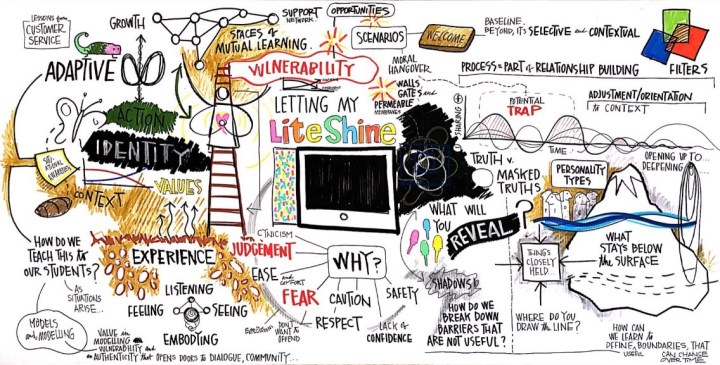 Super excited to have this guest post from Mark Nation. I just read his new book, Made for Amazing: An Instrumental Journey of Authentic Leadership Transformation. It is amazing!
 I met a woman who didn’t sing until she was forty because her kindergarten teacher told her before a performance, “Just move your mouth, dear.” How horribly tragic. The truth is, this woman had a wonderful voice, and it was clear she loved to sing. Who would have known she was silenced for decades, refusing to believe she possessed an incredible gift that was literally dying to be released?
Maybe you are one of those who say, “I have no musical ear,” or, “I can’t carry a tune,” because, like my friend, somewhere along the line you’ve come to mistrust the lyrical, melodic expression of yourself. To you, I would say, Stop! Listen to me! There is something critically important I need you to understand.
Not to believe in the music you came to play is not to believe in yourself.
You are not only musical, you are a musician, a melody-maker. Like all of us, you have a special song to sing; it’s the way you “do yourself,” the way you come across to others, the way you live your existence. Perhaps you have not realized it nor thought about it this way, but you are a vital part of a grand symphony, the harmonious expression of life.
Music is the beat of your life, the unique vibratory algorithm embedded in all you do and all you are. There is music in your voice, music in your face, music in your soul, in your thoughts, and in every throb of your heart. It can be a boisterous dance, a march, a sonata or even a lullaby. It’s not only okay for your music to change over time—it’s necessary, and beautiful. It’s you.
Everything you do expresses the one-of-a-kind melody that you bring to life.
Decide now to believe that you not only love music, but love making it. Explore this song of yourself. Take more pleasure in its expression, and follow the melody to see where it takes you. This is your journey, and your music. Therefore, you owe it yourself to develop your craft and take good care of the sounds you release into the world. We are all waiting for the song you bring, for we are your fans. Please don’t deprive us of those notes which only you can add to the harmony of life. Join in now.
**************************************************************************************
Mark Nation is a globally-recognized management expert, leadership consultant, executive coach, author, and speaker. He is personally driven to discover what makes individuals, teams, and organizations amazing—those elements which power the heart and soul of individuals and businesses worldwide. His new book, Made for Amazing: An Instrumental Journey of Authentic Leadership Transformation, helps people to identify and optimize their unique talents.
No Expiration Date On Success
 We hear or say the phrase, “It’s never too late” all the time, but do we really mean it? Or, do we just say it? Additionally, we talk about being life-long learners, but would we really still mean it at age 65? In Lesson #50 entitled “65 Years Young” in 52 Leadership Lessons: Timeless Stories For The Modern Leader by John Parker Stewart tells the story of Harland Sanders. We know him best as Colonel Sanders of Kentucky Fried Chicken.
“I’m still learning.” ~ Michelangelo at age 87
Let’s get to know the man behind the phrase “Finger Lickin’ Good” a little better. Colonel Harland Sanders was born on a farm outside the town of Henryville right here in my own great state of Indiana on September 9, 1890. The Colonel first prepared meals for truck drivers at an old family dining room table wheeled into the front of his Corbin, Kentucky, service station in 1930, fried chicken was not on the menu. After Duncan Hines put his restaurant that Sanders later open across the street from the service station, in his 1935 road-food guide, the colonel began to perfect his fried chicken secret recipe of 11 herbs and spices. This was in 1939 – he was age 49.
Then, in 1952 Pete Harman, who was a friend of Colonel Sanders who operated one of the largest restaurants in Salt Lake City, Utah, became the colonel’s first franchisee. Harman came up with the “Kentucky Fried Chicken” moniker and pioneered the restaurant’s famous bucket container. It wasn’t until Sanders was age 65 that he incorporated Kentucky Fried Chicken and began signing up new franchisees. He used is $105-a-month Social Security check to begin his franchise businesses. In 1964 at the age of 74 he sold Kentucky Fried Chicken and in 1968 at the age of 78 started another restaurant in Shelbyville, Kentucky. Wow, it really isn’t ever too late.
“There is no expiration date on our ability to succeed.” ~John Parker Stewart
Remember this: however old you are, there is an abundance of wonderful things waiting to happen for you. If you have the right attitude, you will not let them pass. Go out there and keep learning and succeeding!
Leading Like Mission Command
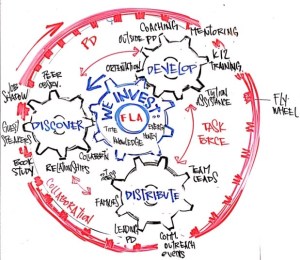 The ability to influence a group of people to accomplish a common goal takes
great leadership. At our first Harvard LILA virtual meeting of the year, last month we discussed many principles and one that stuck out to me was the idea of the US Army’s Mission Command. The principles of mission command are a guide to build and influence an organization to achieve common goals over time. The principles of mission command are: build cohesive teams through mutual trust; create shared understanding; provide a clear commander’s intent; exercise disciplined initiative; use mission orders; and accept prudent risk. Leaders cannot just execute these principles at that crucial time when the need is greatest, they need to already have a solid foundation built within the organization.
The core of a credible leader is competence, which in turn builds confidence in and from the team. People do not follow incompetent leaders, at least not knowingly. Needless to say that trust is the most important thing a leader can have, along with the team trusting each other but, without competence all of the trust is for not. Competence begins with personal and professional development. This includes the honing of skills for the profession or mission. Great leaders also develop the competence of those they serve. This in turn should result in a competent organization which is creating results.
Another important component of Mission Command is the presence of the leader on the ground next to the troops. In order to set the example, we must be shoulder to shoulder with those we serve. This will give us the first hand knowledge of the welfare of our team. Additionally, it enables us to share in the hardships and dangers of the team members we serve. It would be very tough to be competent without having a first hand view of what is going on. This first hand knowledge is also crucial for trust to exist. Many times it is the unremarkable actions of a leader that can build trust. These events might be things like a leader’s unexpected visit, an unspoken gesture of appreciation or concern, or the leader filling in for a missing team member.
“Some commanders used a helicopter as their personal mount. I never believed in that. You had to get on the ground with your troops to see and hear what was happening. You have to soak up first-hand information for your instincts to operate accurately. Besides, it’s too easy to be crisp, cool and detached at 1,500 feet; too easy to demand the impossible of your troops; too easy to make mistakes that are fatal only to those souls far below in the mud, the blood, and the confusion.” ~ Retired Lieutenant General Hal Moore in his book We Were Soldiers Once…and Young
Leaders must strive to collect the necessary knowledge from many different sources in order to make the right decision. This is why shared understanding is so important. This shared understanding can be as basic as leadership cultivating effective teamwork, which requires that team members share key understandings of their roles, of what a team is, and how to work together. Leaders must strive to collect the necessary knowledge from many different sources in order to make the right decision. This means that we must have our teams is a state of shared understanding.
This really becomes a centralized to decentralized system of leadership. Centralized leadership concentrates the power to one place. Decentralization, as a type of organizational structure, allows daily operations and decision-making responsibilities to be handled by middle and lower-level team members out and within the organization, allowing top management to focus more on major decisions. In other words, allow those closest to where the data is being produced, or what I call street level, make the decisions. Team members can be empowered by having more autonomy to make their own decisions, giving them a sense of importance and making them feel as if they have more input in the direction of the organization. It also allows them to make better use of the knowledge and experience they have gained and implement some of their own ideas. This distributed leadership is very important and should be intentionally used in organizations share the responsibility and not have everything fall on one leader. As was stated in our LILA session, “This allows leaders to solve the way they see fit.”
Flaw-Tolerant Leadership
 This morning while feeding in one of our pastures I came across the most beautiful spider web. There was a dew on, which accentuated the detail and geometry of the web. It was so cool I took a picture and have included it in this post. I tweeted that the spider web either had a geometry or leadership lesson in it. Here is the leadership lesson.
 In researching spider webs just now I came across the research of Markus Buehler, an associate professor of civil and environmental engineering (CEE) at MIT. Buehler has analyzed the complex, hierarchical structure of spider silk and its amazing strength. His research shows that on a pound-for-pound basis, it’s stronger than steel.
Working with CEE graduate students Steven Cranford and Anna Tarakanova, and Nicola Pugno of the Politecnico di Torino in Italy Buehler found that a key component of spider silk that helps make webs robust is something previously considered a weakness: the way it can stretch and soften at first when pulled, and then stiffen again as the force of the pulling increases.
Additionally, these researchers found that spider webs typically only fail or get damaged in small areas. This makes it easy for the spiders to make repairs. If you’ve ever looked closely at a spider web, it still functions even with damage. This what Buehler described in this way: “It’s a very flaw-tolerant system.”
This made me think about leading in a flaw-tolerant way and creating a flaw-tolerant organization. We talk about encouraging taking risks and encouraging failing quickly, but have we made our organizations flaw-tolerant? We need to make sure we are set up like the spider web to have localized failure/damage without it being catastrophic.
We are beginning to accept the value of failure in the abstract. In other words we have learned, at least that corporate policies, processes, and practices. Conversely, it’s an entirely different matter at the personal level. Everyone hates to fail.
In order to create a flaw-tolerant system, more effective and interdependent upon the decisions made by each departmental leader. We need to be like the spider web and weave our teams together so we can sustain failure or small damage and be able to quickly make local repairs without missing a beat.
Is your organization flaw-tolerant?
Leadership Like A Sequoia
 Today when I read Lesson #48 entitled “The Roots of a Giant” in 52 Leadership Lessons: Timeless Stories For The Modern Leader by John Parker Stewart. In this story Stewart tells about the root system of a giant Sequoia tree. He explained that the roots of sequoias only go 6 to 20 feet into the ground, but the roots will spread out over 200-300 feet. This allows the tree survive floods and conserve soil nutrients.
“Take care of your ‘roots’ . No one can do it all alone, not even a Giant.” ~ John Parker Stewart
I have been blessed to walk among the giant Sequoias in King’s Canyon National Park in California. In fact I have been blessed to take many groups of Agriculture Science/FFA members to see these wonders of nature. I’m disappointed that I didn’t think then to discuss this amazing root system with my students. What an amazing metaphor for developing the right foundation.We and our organizations are stronger when we are rooted in a strong foundation.
 In my research on this topic I found that Sequoias help each other. Giant Sequoias do not compete with each other for resources, rather their huge root systems fuse together and they share resources. So, what is the key to a strong foundation? The root system. We are intertwined and interconnected, supportive, dependent, yet interdependent as team mates. Interlocking with each other and holding each other up. In other words we must create powerful interlocking systems to make a powerful difference.
As leaders our roots are hidden out of sight but the condition of those roots is clearly evident in our lives as a leader. Weak roots make a weak leader, just like weak roots make a weak organization. Just like the root system of the Sequoia, our roots extend in different directions. Our roots anchor us against life’s storms. They feed us and sustain us. We must also not forget to grow our leadership root system and that of our organizations.
Take a look below the surface at your organizations foundational root system. What do you see? Then take a look down deep at your own root system. Is it worthy of being compared to a Sequoia?
3 Self Leadership Strategies to Reduce Stress at Work
 Guest post from Susan Fowler. Originally Published 5/25/17: https://leaderchat.org/2017/05/25/3-self-leadership-strategies-to-reduce-stress-at-work/
The fast-paced nature of today’s work environment can create stress and anxiety for workers at all levels in an organization—but especially those responsible for getting things out the door on a daily basis. Even the most organized and efficient among us can feel the strain.
Looking for some relief? Recent research confirms that a little proactive self leadership results in significantly less strain (and more energy) at the end of your workday.
See for yourself by giving one—or all three—of these strategies a try.
 Ask for FeedbackTomorrow morning, try a bold start to your day. Ask for feedback from your manager, colleagues, or staff members: “Would you be willing to share one piece of feedback, based on your experience or observation, that you think would help me do my job better today?”
Neuroscience provides evidence that asking for feedback sets up a more responsive brain condition. Requesting feedback delivers the information you need when you need it, but also results in less defensiveness—meaning you are more likely to hear what you need to hear and act on it.
So, when you learn something of value, act on it! Put what you’ve learned to use. Asking for feedback and then acting on it will demonstrate the willingness to learn and grow and the courage to be honest. What’s more, others will see it as a valuable example of proactive behavior.
Identify Solutions to Problems
Ask people what is getting in the way of their being more productive and many will half-jokingly point to their manager, an irritating coworker, or an unreasonable client. Instead of bemoaning your manager who “doesn’t get it,” why not be proactive and sell your solution? Follow these four steps:
1. State the problem or issue in one clear sentence, including the implications for you and others if the situation isn’t improved.
2. Generate three solutions with the pros and cons of each solution. One of the solutions should be the one that you believe will solve the problem based on your experience and insight. But as good as your idea may be, you need to generate two more. Three is the magic number.
3. Identify the decision makers and present to them your three solutions and the pros and cons for each—not revealing which one you think is best.
4. After presenting all three solutions, provide your recommendation for the solution you think is best, along with the rationale for why. Then, seek agreement.
This technique has been proven to create either the change you desire or a valuable learning moment. Either way, you experience less stress and more energy.
Be Proactive
Stop waiting to be given authority. Be proactive.
It’s been said authority is 20 percent given and 80 percent taken. If you have a solution to a nagging problem or an idea for improving efficiency on a particular task or project, don’t let yourself get frustrated by the permission process or the hoops you need to jump through to get things done. Instead, take action. Build a business case for giving you the authority to act.
In taking action you will experience a sense of competence and autonomy—two psychological needs required to thrive at work. And those who give you the authority will also benefit by empowering you to do more so that they can focus on other things that need their attention.
Practice a little self leadership each day to reduce your stress and fatigue. Ask for feedback, identify solutions, and be proactive starting tomorrow morning. You might find yourself able to devote more time to your health, family and friends, and all those dreams you’d pursue if you only had the energy!
*****************************************
ABOUT THE AUTHOR: Susan Fowler implores leaders to stop trying to motivate people. In her latest bestselling book, she explains Why Motivating People Doesn’t Work … And What Does: The New Science of Leading, Engaging, and Energizing. She is the author of by-lined articles, peer-reviewed research, and six books, including the newly revised bestselling Self Leadership and the One Minute Manager with Ken Blanchard. Tens of thousands of people worldwide have learned from her ideas through training programs, such as the Situational Self Leadership and Optimal Motivation product lines. For more information, visit SusanFowler.com.
Neuroscience Savvy Leadership Practices
 This guest post is an excerpt from The New Leadership Literacies (Johansen, 2017).
Neuroscience Savvy Leadership PracticesBy Bob Johansen
David Rock is the founder the Neuroleaderhip Institute in New York, the first research group that is integrating neuroscience and leadership principles. They are studying things like job performance.
They argue that many of the classic performance review systems trigger fight or flight mechanism in our brain and have exactly opposite effect from what we like to have. They draw upon neuroscience research and bridge to what they research means in a work environment.
David Rock’s book Your Brain at Work is a practical handbook for applying neuroscience lessons to specific daily work activities. Using detailed scenarios from days in the life of a young working couple, he makes the research practical. For example:
“I noticed a surprising pattern while putting this book together. I saw that there are five domains of social experience that your brain treats the same as survival issues. These domains form a model, which I call the SCARF model, which stands for Status, Certainty, Autonomy, Relatedness, and Fairness. The model describes the interpersonal primary rewards or threats that are important to the brain.”
The SCARF model suggests that, in order to be balanced and productive, our brains need to feel a sense of status, some certainty that provides grounding, autonomy to for self strength, balanced with a sense of relatedness to others, and finally a sense of fairness in the system. Without these brain balance basics, we feel sapped of energy.
*****************************************
About Bob Johansen:
Bob Johansen is a distinguished fellow with the Institute for the Future in Silicon Valley. For more than 30 years, Bob has helped organizations around the world prepare for and shape the future, including corporations such as P&G, Walmart, McKinsey, United Rentals, and Syngenta, as well as major universities and nonprofits.
The author or co-author of ten books, Bob is a frequent keynote speaker. His best-selling book Get There Early: Sensing the Future to Compete in the Present was selected as one of the top business books of 2007. His latest book is The New Leadership Literacies: Thriving in a Future of Extreme Disruption and Distributed Everything discusses five new leadership literacies—combinations of disciplines, practices, and worldviews—that will be needed to thrive in a VUCA world of increasing volatility, uncertainty, complexity, and ambiguity.
Wildly Adaptive
 Today, during our first Harvard University Learning Innovation Lab (LILA) session of the year we discussed many of the commonalities of what is going on in the worlds of all the members of our consortium of leading researchers and practitioners in the field of organizational learning and change. Our theme for the year is “Emergence in Organizations.” During our discussion the phrase “wildly adaptive” really resonated with me. I have always been a person who believes in and strives to practice adaptive leadership, but the thought of being wildly adaptive struck a chord.
We need to remember that we do not have to be, or need to hold ourselves, or those organizations or individuals we lead to a certain niche or existing reality. As humans, we are designed with the ability to think through situations and conclude that the current reality is not sufficient. It is easy to be complacent and stay in a state if status quo for a long period of time. We need, however, to pay attention to the contexts and environments in which we lead for changes that should be triggering us to adapt or lead a wildly adaptive change. 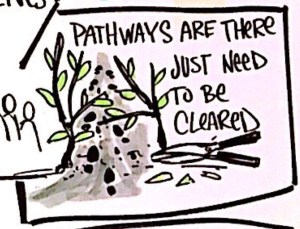
To master adaptive change we must help people to learn new ways, change behavior, achieve new understandings, and see the world through new filters. We and those we lead must do all of these things in a collective and collaborative way. This topic has caused me to reflect on a meeting on Graduation Pathways I chaired this week where the comment was made, “The pathways already exist we just need to find a way to make them work in a new graduation pathways structure.” This reminded me that we must not always look to make wholesale or technical changes but must also be adaptive.
Let’s remember to practice adaptive leadership with our initiatives as they are happening to understand how today’s turns in the road will affect tomorrow’s plans.
8 Tips for Riding the Mood Elevator
 This is a guest post from Larry Senn:
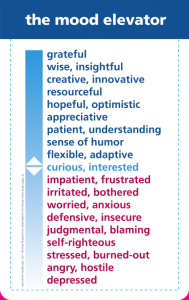
The Mood Elevator is an illustration of the human condition; it is our moment-to-moment experience of life. We all ride the Mood Elevator every day, take a moment and identify what floor you are on right now.
The Mood Elevator map is based on my own experience, as well as input from hundreds of groups and tens of thousands of people who have attended seminars that Senn Delaney, the culture shaping firm has put on over the past few decades.
Look at the top of the Mood Elevator and think of the times you’re more likely to be at those levels. It could be when you hug your children at the end of the day, it could be spending quality time with your significant other, or it could be when you accomplish something at work. We all, of course, would love to live on the higher levels but that’s just not realistic. As part of the human condition we will experience loss, stress, financial insecurity and other events that will cause us to drop down to depression, anger, and stress.
In my new book The Mood Elevator, I provide a variety of tips and tools that will help you better understand your human dashboard as well as help you navigate the daily up and down ride of the Mood Elevator.
Here are 8 tips to help you better ride The Mood Elevator:
- Know that to be human means you will ride the Mood Elevator and visit each and every floor. Don’t expect to live at the top of the Mood Elevator all of the time, cut yourself some slack when you drop down.
- Learn to recognize the feelings that accompany any unhealthy normal thinking or thought patterns, and make them a loud bell. When you start experiencing feelings like: impatience, anger, anxiety, excessive intensity, neediness, disconnection, and self-righteousness it’s a good indication that you’re sliding down the Mood Elevator. When you recognize this, you can take some corrective action to avoid an unhealthy normal.
- Use pattern interrupts to change your thinking and your feelings. Pattern interrupts are anything healthy tactics that can help you escape your spiraling negative thoughts. They can include exercise, calling a good friend, watching a funny YouTube video, or getting a good night sleep.
- Feed the thoughts you favor, not those that drop you to the lower floors on the Mood Elevator. If you find yourself reminiscing on a negative event in the past, or fixating on a mistake you made at work or might make at work in the future- recognize that your thoughts are going negative. You can identify your thoughts based on your feelings, if you’re feeling worried- it’s probably because you’re having worried thoughts. Use a pattern interrupt or think about something you are grateful for to break that train of thought.
- Take better care of yourself and remember to stretch and recover with exercise, sleep, and time off. We are more likely to catch colds if we are run down physically, and we are also more likely to catch bad moods when we are run down physically. Exercise has many mood boosting benefits and eating the right foods can help keep our energy levels up which improves our moods. Have you ever noticed how life can look so much better after a good night sleep? Getting at least 7 hours of sleep per night can drastically help us stay up the Mood Elevator.
- Maintain a gratitude perspective, count your blessings daily and be grateful for life itself. Even when life doesn’t look as good as we would like it to, there are always things to be grateful for. Those who choose to look at life with gratitude are happier than those who don’t. Try starting a gratitude practice by making a daily list of what you are grateful for.
- Remember that your thinking is unreliable in the lower mood states; delay important conversations and decisions; don’t act on your unreliable thinking, and don’t take your lower mood state out on other people.
- Have faith that when you are down the Mood Elevator; this too shall pass-just like the weather. The sun is always up there; the clouds can obscure it, but they will pass as will your low mood.
**************************************************************************************
About Dr. Larry Senn
Dr. Larry Senn pioneered the field of corporate culture and founded in 1978, Senn Delaney, the culture shaping unit of Heidrick & Struggles. A sought-after speaker, Senn has authored or co-authored several books, including two best-sellers. His newest is The Mood Elevator (August 2017), the follow up to his 2012 book, Up the Mood Elevator. You can learn more about Larry and his work at his website, www.themoodelevator.com.
Growth Vs. A Fixed Mindset
 The following is a guest post by Dr. Larry Senn:
The Mood Elevator is an illustration of the human condition; it is our moment-to-moment experience of life. We all ride the Mood Elevator every day, take a moment and identify what floor you are on right now.
Of course, the goal is to stay at the top of the Mood Elevator more often and there are some techniques that can help you do that. Most of those tricks involve a switch in thinking and changing your perspective.
One of those perspective shifts is focusing on having a growth mindset versus having a fixed mindset. This was researched by Carol Dweck and written about extensively in her book called Mindset. In her writing she explains that if someone has a fixed mindset they believe that their intelligence and talents are fixed traits and they won’t get any better. Compare that to someone with a growth mindset who believes that they can always improve through hard work and dedication. They believe they can always be learning something new and where they are right now doesn’t need to be where they are forever.
This growth mindset can help tremendously in getting you out of the basement of the Mood Elevator. Let’s take a look at the bottom floors and see how you might apply this:
Impatient/frustrated: Let’s say you’re stuck in traffic or waiting for your turn at the DMV. Most people will sit there frustrated at the time wasted waiting, but if you take on a growth mindset you could be catching up on reading that article or listening to that podcast that you claim you never have time for.
Irritated/bothered: When you’re working from home or doing chores around the house and your child keeps bugging you to listen to a story they want to tell you or to go play with them outside- instead of going to irritation or bother, take 5 minutes and listen to them or play with them, you never know what you might learn about them (or yourself) in that short time.
Worried/anxious: Imagine your boss just asked you to take on a new project you’ve never done before and you’re worried you’ll mess it up. Instead think about all that you’ll learn by doing this and how you can translate that to your next project and you might even be able to add a new skill to your resume.
Defensive/insecure: Many of us tend to shut down or get defensive when we’re offered constructive criticism. Instead, take a deep breath, set your ego aside, and look at it through the growth mindset lens. Focus on what you can learn from it and how you can improve.
Judgmental/blaming: Your spouse is driving and is taking (in your eyes) the “wrong way” to the restaurant you’re having dinner. Instead of immediately telling them how wrong they are, don’t give unsolicited advice and just relax. You might learn a new and faster way to your favorite restaurant.
Self-righteous: When you’re talking with a friend and they say something wrong about a current event happening (at least in your head it’s wrong). Instead of pointing that out to them, you might ask why they see it that way. Part of growing it hearing new perspectives on things, and again you’ll probably learn something new.
Stressed/burned out: Stressed with an upcoming deadline at work? Chances are this isn’t the first deadline you’ve been stressed about. Think back to a time this happened before and remember how you grew from it and what you learned.
Angry/hostile: Is someone you know being rude or mean towards you? Instead of getting angry back at them, try asking them how they’re doing. You might learn something they’re going through and you’ll grow more as an empathetic person.
Depressed: If you’re going through something that is tough and seems unfair, ask yourself “why is this happening for me?” instead of “why is this happening to me?” You probably have a great growth opportunity or a blessing in disguise coming out of this tough situation. Focus on how you can grow from it instead of sitting in the discomfort.
Changing floors on our Mood Elevator is a matter of simply changing the way we think or having a change in perspective. It is simple, but by no means easy. It will take time to start automatically thinking like this but with enough time it will come!
*************************************************************************************
About Dr. Larry Senn
Dr. Larry Senn pioneered the field of corporate culture and founded in 1978, Senn Delaney, the culture shaping unit of Heidrick & Struggles. A sought-after speaker, Senn has authored or co-authored several books, including two best-sellers. His newest is The Mood Elevator (August 2017), the follow up to his 2012 book, Up the Mood Elevator. You can learn more about Larry and his work at his website, www.themoodelevator.com.
 Byron's Babbles
leave a comment