The Gift of Reading!
 The inspiration for today’s post came from the text conversation which I have posted a picture of for you. What a great way to start your day, as a leader, to have someone who you consider to be a great friend and colleague text this to you. I had the tremendous honor to give Ambra Tennery her first job as an Agricultural Science teacher. Let me tell you, she was one of the greatest, if not the greatest. She now is providing awesome leadership with the National FFA Organization, but we stay in touch. Ambra obviously took my recommendation of the book How The World Sees You and is turning it into personal professional growth. As leaders it is so important that we post, tweet, and have individual conversations about those things that are influencing our leadership growth and serving as catalysts for leadership development. Here’s a picture of the very last text in the series:
 I am showing the image of that text not to brag, but to show the importance and power of what we do as leaders and mentors every day. I heard my favorite basketball coach, Albert Hendrix, make a comment (actually he yelled it to his players!) last night in a Lebanon High School game that really stuck with me. He said (yelled), “Value every possession!” In that context he meant to make sure that every time we had the ball that we needed to play as a team to score. By the way, Lebanon won the game. But, as I thought about it we need to do the same as leaders, teachers, mentors, and coaches. Every time we have the opportunity to influence others we need to value that possession. Never forget, leadership is influence.
Let’s dig deeper into this idea of recommending books.
Do book recommendations from peers really make that much difference in our book-buying habits? What about posting a review or reflection on your blog? Another great way to review is on Barnes & Noble or Amazon reviews. Twitter has also become a great way to recommend books. Or, the power of giving someone a book you have just finished? I would argue all of these are very powerful today, and are all things we as leaders should be doing. If we truly believe the statement that ‘Leaders are Readers’ then we need to be doing all of the above. It’s a leadership obligation!
In talking to an individual on our team this past week, she said she doesn’t pay attention to general advertisements about books. Instead she only looks at the reviews of people who’ve already read the book and bases her decision solely upon what readers are saying. Her comment really got me thinking about the power of recommendations. I know when I going to put an app on my phone or iPad, for example, if the ratings are not good I won’t do it. Therefore, we have a leadership obligation to take the time to rate books and make comments on the books we read. It does not matter if it is on GoodReads, Amazon, or Audible; we need to be doing it. I have to do a better job of taking time to do this to. I am including a picture here in the post of a recent recommendation I did for Sally Hogshead’s book How The World Sees You.
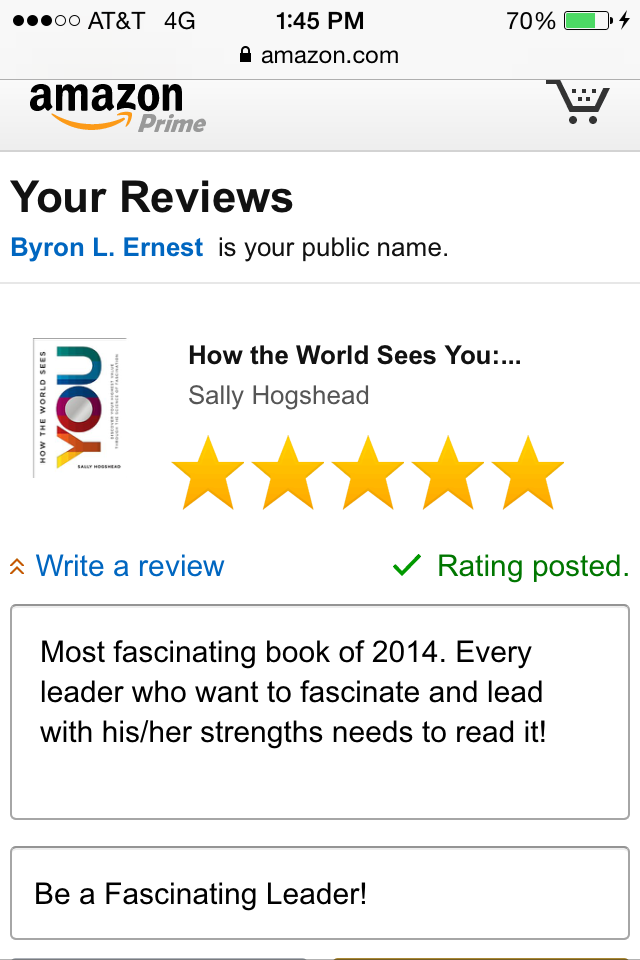
Additionally, I have also posted blogs about this book as well. ‘Rudolph and Elf Fascinating Leadership’ and ‘Just a Kiss of Leadership.’ Click Byron’s Babbles to read those two posts.
Reviews and recommendations are not new, but certainly a powerful marketing tool in the online world. Most of us trust the word of mouth from other ordinary people like us. I recently saw this statistic: 78% of consumers trust peer recommendations. Only 14% trust advertisements. Think about it, we really did not need the data to affirm this. Did we? We look at the comments of other consumers, and then we make our purchases accordingly. It’s true for everything from furniture to TV’s, from comforters to curtains. And, yes, it’s VERY true for books too.
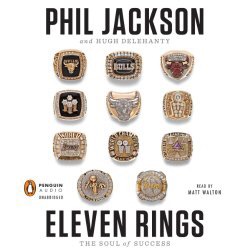
As I said, I believe we have an obligation to promote books that have enabled professional growth in us. One of the most powerful ways to do this is to make a personal and individual recommendation to friends, family members, and those we coach, mentor, and lead. As you know from previous posts I always give a copy of every book that I read to someone who I believe will get value from it. So, for example, last year I read 66 books and gave 66 books to others to read. Now, do I know whether they read them? No, but it is important to do so and I know that many did because I get feedback from them. If you want to read more about what I’ve done to get books that have influenced me into the hands of others, click iRead Because iLead. Interestingly, in his book Eleven Rings, Phil Jackson talks about picking a book each year and giving it to his players to read based on their needs. I was motivated to continue my practice after reading this! Would you read a book someone personally gave you?
So what do you think? Have you ever been swayed into buying a book after reading a blog review or Amazon review? Do you watch what others are reading and saying about books on Twitter? Would you make sure you read a book that someone personally gave you and report back to them? Which influences you more—peer recommendations or advertisements? And why? Don’t forget it is a leadership obligation to give others the gift of reading!
Reading Reminds You
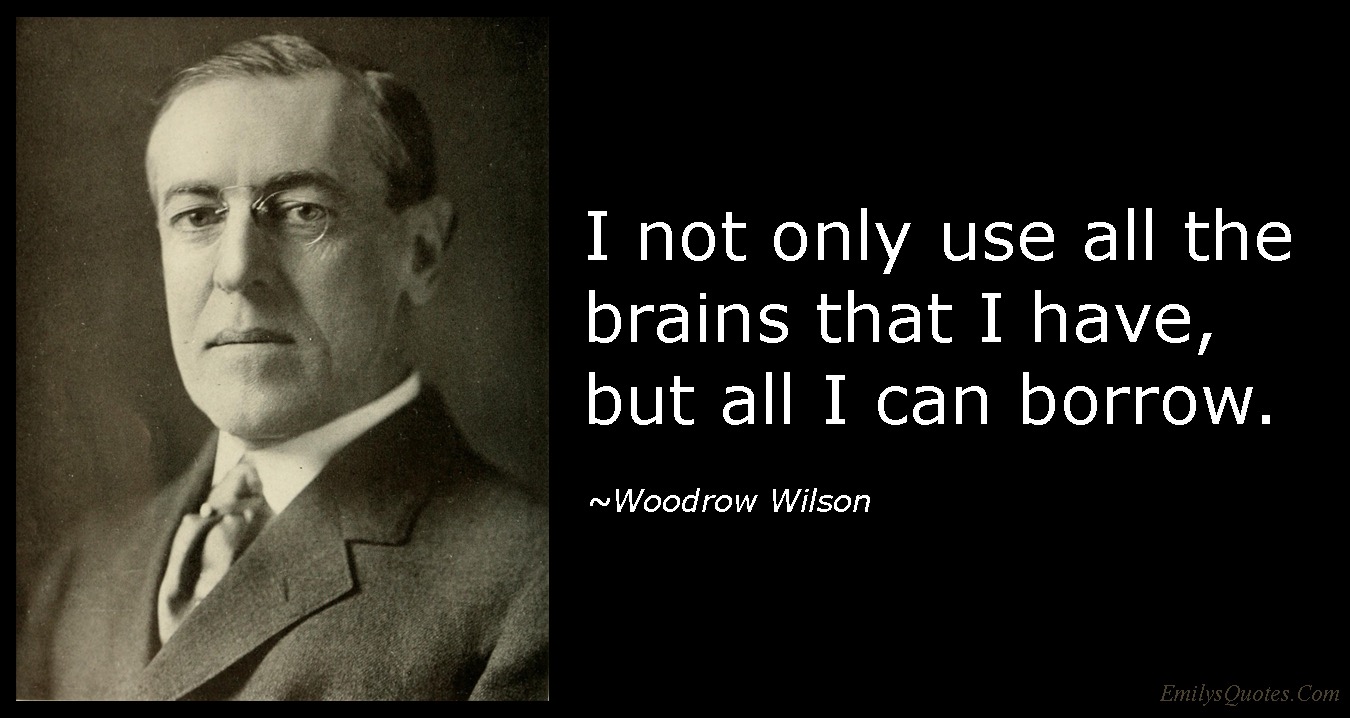
 True professionals want to learn, and the most common way they search for new knowledge is by reading articles and books by successful leaders, educators, educational leaders, athletic team coaches, politicians, military leaders, business owners, marketers, and entrepreneurs. Leaders must be readers. Reading and learning from peers within, and outside of, your organization or industry enables you to grow as an employee, business owner, and leader in very distinct ways. Reading challenges us to new ways of thinking. It introduces us to research and tried and true ways of doing things. As Woodrow Wilson said: “I not only use all the brains that I have, but all I can borrow.” Books give us an open window into the minds and history of others. Finally, it reinforces some of our own thinking and beliefs and helps us to galvanize our own leadership values.
Furthermore, reading something you disagree with can have a big impact on your ability to think, both creatively and logically. As a leader it is so important to understand others’ views. This can, as stated earlier, help us to solidify our own values and also help us to empathize, build relationships with, and work with or lead others more effectively. Don’t forget, as Woodrow Wilson also taught us, great leaders can also change their minds when it is the right thing to do. Sometimes hubris causes us to think we know all the answers. Reading enables us to learn new ways of thinking and doing things.
Reading also give us the opportunity to interact with others.I have referenced articles and books I’ve read in countless conversations, not to sound intelligent or cool (some of what I read would accomplish the opposite), but to relate to those with whom I’m speaking. Many times I take notes and share them with my team. Reading can also spark debates with your team and can give you the knowledge to back up an idea you have or a decision you want to make.
I make it a habit to re-read specific books every year because I need constant reminders of the good things they’ve taught me. Whether you re-read the same book or article to remind you of concepts, or read content on time management and organization as a constant reminder to work on these things, reading is valuable because it keeps important concepts top of mind. This year I have set a goal and commitment to reread 12 of the most influential books in my library. I am going to reread one each month this year. I am also committed to write a post to this blog as a reflection of each of these books this month. Now, I guess I better get started selecting the 12 books for my 2015 reminders.
What are you committing to do for your 2015 reading professional growth?
Transformative Family Engagement
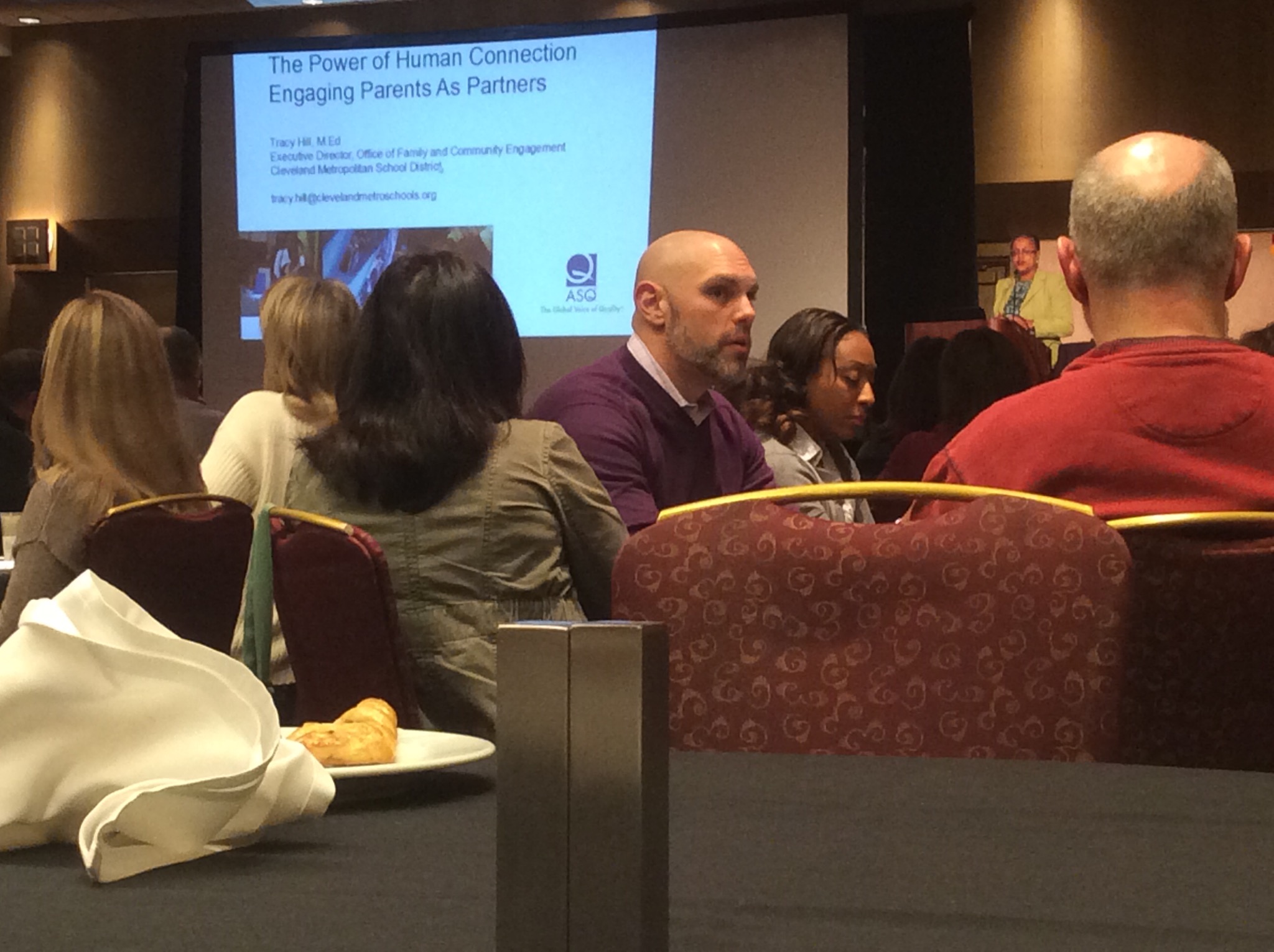 On day two of the 2014 National Quality Education Conference I had the pleasure of hearing Tracy Hill speak on the Power of Family Engagement. I was excited about this because I got to be with her this past August at Harvard for the Family Engagement Program. Ms. Hill is the Executive Director of Family and Community Involvement for the Cleveland Metropolitan School District. You can check out all of my tweets I made during the session using the hashtag #ASQEd.
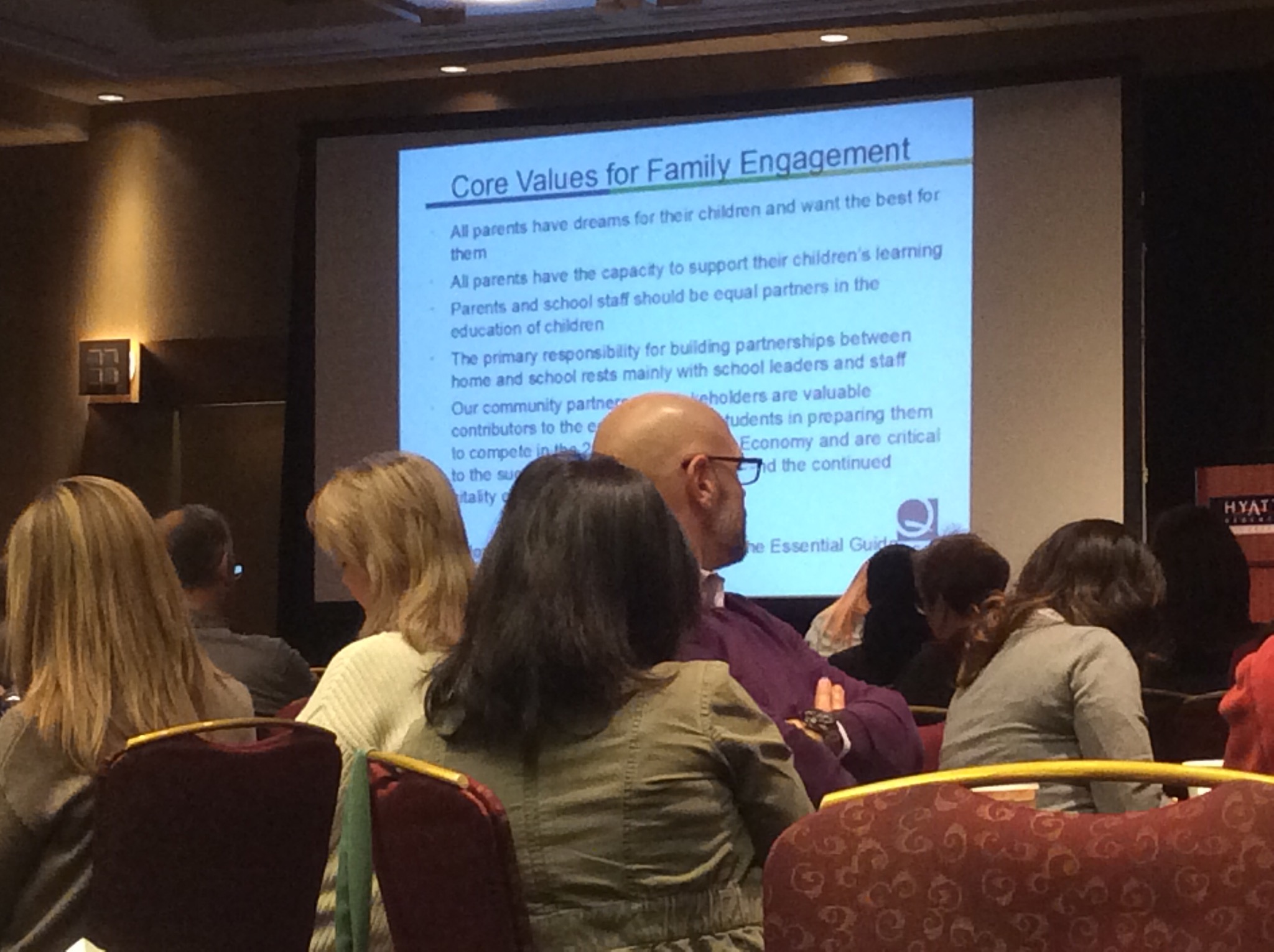
Here are some major points from her presentation:
– School is the only safe place that students have
– The same issues that plague students of poverty in urban districts are the same problems that plague suburban and rural students.
-Many of the issues we deal with in public education have nothing to do with the students. The issues are about the adults. This is wrong.
-Every staff member in a school needs to serve as a family liaison
-When you become a leader in a new school district you must become culturally aware of those families you serve
-Never use the term “Those people” when referring to your families
-We must change the culture from one where parents are seen as problems to one where families are seen as partners
-Create a culture where parents are welcome
-No parents sets out to be a bad parent. We must find ways to support them
-All parents have the capacity to support student learning
-Parents and school staff should be equal partners in the education of children
-The primary responsibility for building partnerships between home and school rests mainly with school leaders and staff
-Parents top reason for leaving the district is that they or their students were treated poorly
– Parents are important partners in the education of their students
-Building strong relationships with parents is key to having them engage with schools to advance student achievement and reform failing schools
-Family engagement must involve partnering with community partners and agencies to strengthen schools
-We must engage families and neighborhoods in school reform
-We must invest in children and provide more wrap around resources to our schools and families.
-Family engagement must be woven into the very fabric of our schools

Much of Tracy’s work is based on the book Beyond the Bakesale
Setting The Dominos For School Success
 I had the opportunity to spend more time with Lee Jenkins during the second half of the first day of the 2014 National Quality Education Conference in Milwaukee, Wisconsin. During this time we looked at Guiding Systemic Action for System-Wide Improvement. It was an exciting time and I was able to get him to sign a couple of his books for me.

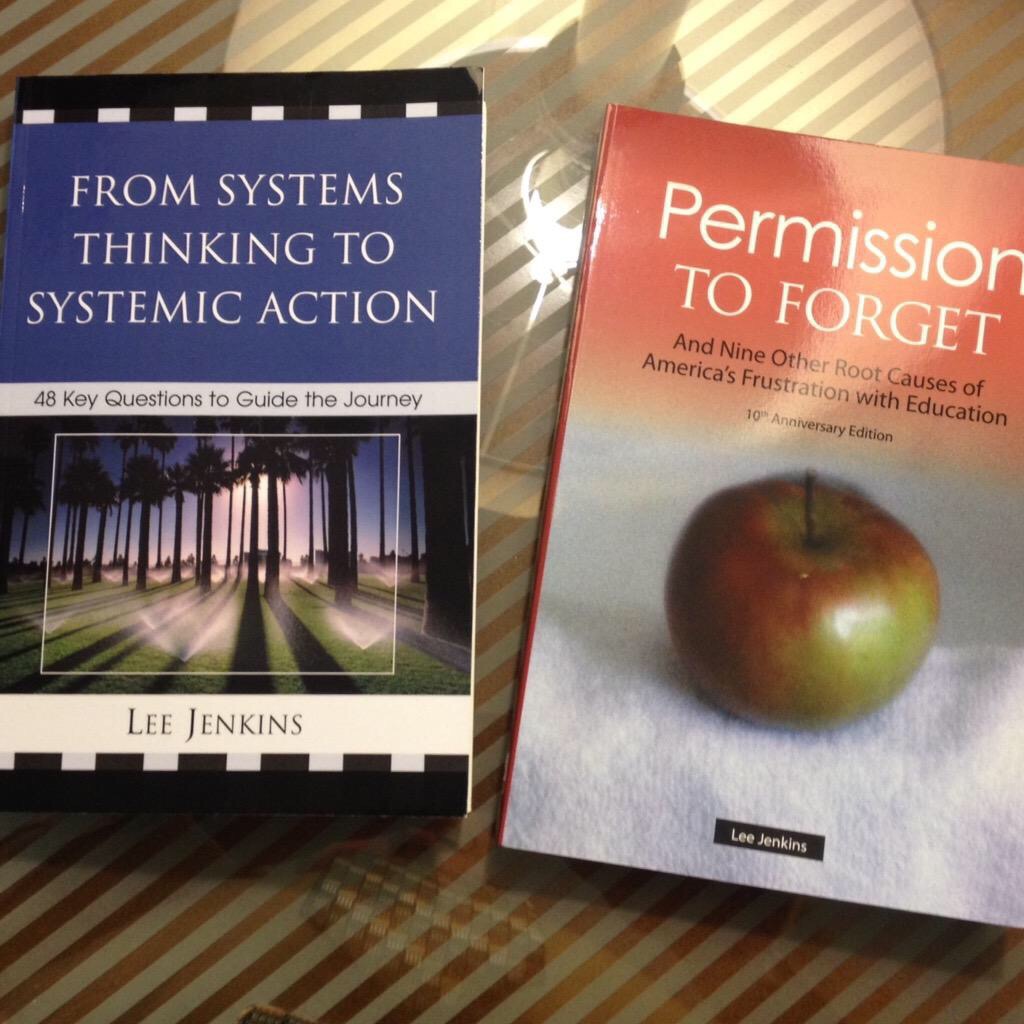 The theme was optimizing the systems of the school in three areas: 1. students; 2. curriculum; and, 3. employees. In other words optimizing the people and curriculum for student success. A great point he made is that we must collect the best ideas from teachers, and then systemize them.
Optimizing Process:
1. Define what perfect is?
2. Where are now?
3. What is our track record (what’s are data say)?
4. What are we testing/tracking?
What Areas Must Be Perfect be Defined for in Education
1. What does perfect instruction look like?
2. What is the perfect school finance situation look like?
3. What does perfect school operations look like?
4. What does the perfect personnel situation look like?
Every employee of the school must contribute to this process and the strategic planning process outlined below. If a person has responsibility, they should be writing countermeasures for improvement. A question I should be asking, as the school leader, of every employee is: “What hypothesis are you testing right now?” In other words, what are you tracking and how do you know if it is working and are you able to self correct the errors?
Outline For Strategic Planning
1. Identify the problem(s)
2. Identify the root cause(s)
3. Develop the counter measure(s)
Every person involved in the school must be a part of the strategic planning process. Also, everyone must understand what their role is in accomplishing the goals and key performance indicators (kpi) of the school.
Another key area for improvement is the way we write our performance standards. An example is how we look at attendance (I am guilty of this and am going to change). We report percent of daily attendance. You can’t come up with a root cause for that! We need to develop what the standard is. So, let’s say the performance standard is: “All students will have a 95% attendance rate.” Now, we can measure what percent of the students met the standard. We can ask the question five times, as W. Edwards Deming asserted, of what was the root cause for students who did not meet the standard. Again, we need to do a better job of writing acceptable performance standards so we can then get to the root cause and develop intervention hypotheses.
Just A KISS of Leadership!
 There was a lot of reflection that went into preparing for this blog post. I am writing this at 7:32pm and I have to admit I started thinking about this at around 6:00am this morning during my personal growth time. In fact I have to admit that the inspiration for this post was disappointment. Disappointment in myself! As I was reading Sally Hogshead’s book, How The World Sees You, I was disappointed on two fronts. Let me be clear, though, none of my disappointment was with Sally or the book – both are AWESOME! I was reading the part of the book that describes the different archetypes and after the description of each she gives famous examples. As a part of the How The World Sees You experience you take a personality test to reveal how you can immediately command attention by putting your personality’s top advantage to work for you. After reading about the “Rock Star” I was disappointed I did not have this designation instead of “The Change Agent.” Now, I know there are no right or wrong archetypes and the whole purpose of the book is to learn to be all the you you can be. But, when thinking about the anthem (something you create while reading the book) for a Rock Star, I really thought that described me! The anthem example created for this archetype was: “Unorthodox Bold and Brave!” Now, if that does not describe me, I do not know what does! I’ll come back to that thought in a minute.

My other disappointment was that Sally did not use Gene Simmons, KISS frontman and CEO, as the celebrity example. Great job Sally, because if you had, I would not have done all this quality reflecting (I know you were thinking of me). If Gene Simmons and Paul Stanley (also a KISS frontman and chief songwriter), are not the ideal of this archetype I do not know who is. With over 100 million albums sold worldwide, KISS is arguably one of the biggest and most successful bands on the planet. Led by the marketing genius that is Gene Simmons, they continue to reach new audiences while engaging lifelong fans. Gene Simmons may be best known as the fire-breathing, bass playing demon in one of the most influential rock bands in history, but he can also teach us a thing or two about leadership.
Really my disappointment was more from the fact that these guys were (and still are) my idols growing up. Even though I chose a different career (and lifestyle) path, I want to be the Gene Simmons and KISS of the education world. That means everything from being polarizing to delivering the education that I wanted as a kid and that every child in the world deserves. I remember watching Gene Simmons in interviews and he would say,”We wanted to be the band we never saw and wanted to go see.” Let me tell you, if you have never been to a KISS show you are missing a great thing. Their anthem says it all: “You wanted the best, you got the best: KISS!” If that is not inspiring I don’t know what is!
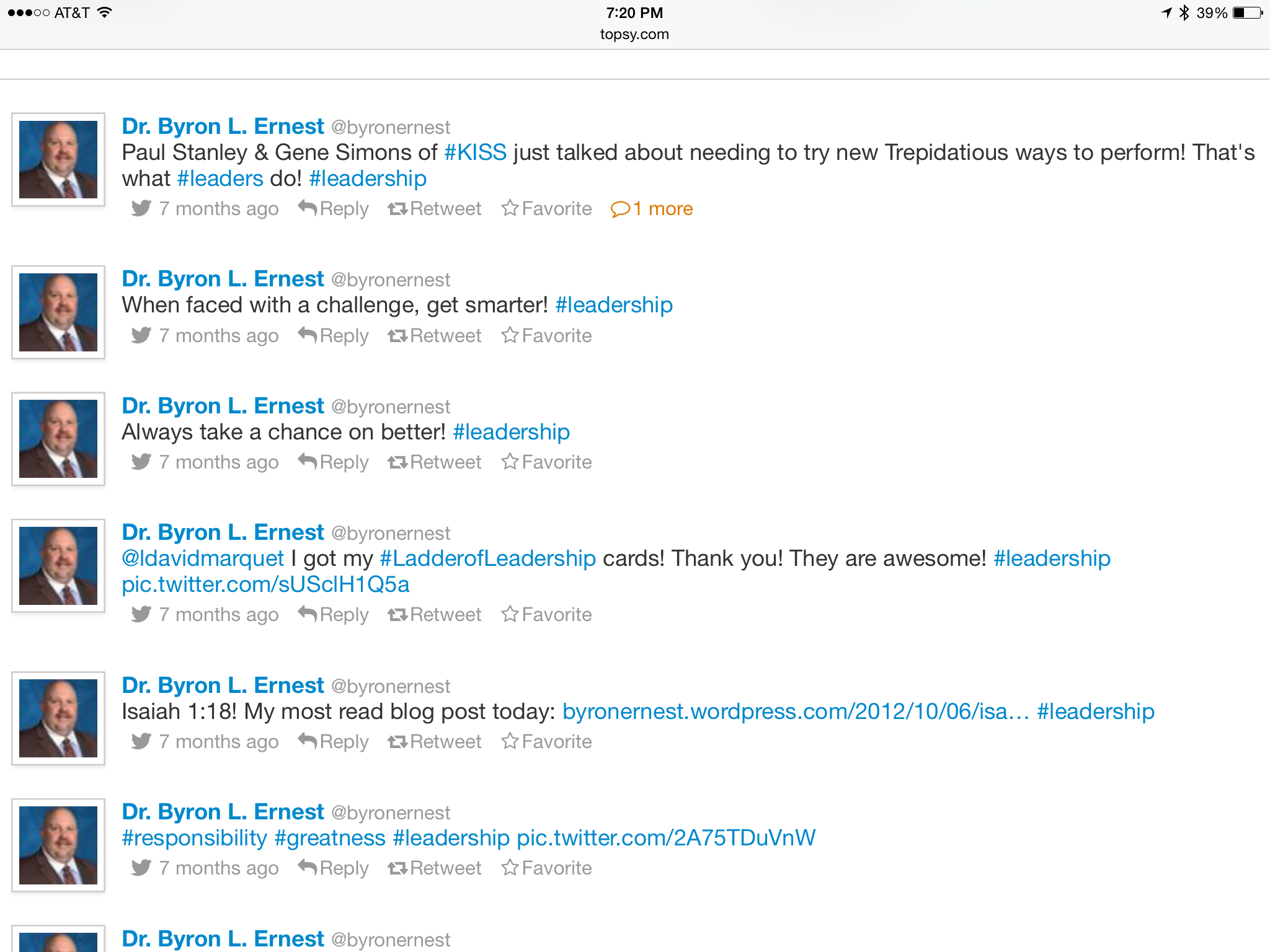
Gene Simmons truly is a “Rock Star” and great example of a leader. He is a key member of my personal Mount Rushmore, which also includes, Thomas Edison, Woodrow Wilson, and Patrick Henry. To give an example of the KISS leadership example I go back to an interview in April, 2014 during a great town hall interview on XM RADIO 39 HairNation following their induction in the Rock and Roll Hall of Fame where Gene said that he and Paul were always needing to try new “trepidatious” ways to perform! That’s what great leaders do! I promptly tweeted this (I’ve included an image of the tweet in this post). If you look up trepidatious you find the words: anxiety, anxious fear, and apprehension. So, that means they were being unorthodox, bold, and brave. Do you see the connection? Honestly, if you have not been to a KISS concert it will be hard for you to understand. Just suffice it to say, they were cutting edge. Heck, they redefined the edge…heck, there was no edge!
In fact that reminds me of another interview that KISS had with Jay Leno. Leno asked Gene Simmons where KISS got their edge. Without hesitation, Gene answered, “Edge starts with self.” Wow, that was several years ago, but is a perfect anthem for the great work that Sally Hogshead is doing and the great personal growth provided by the How The World Sees You learning experience. Let’s say that again: “Edge starts with self!” That gives me goose bumps!
I was in attendance at every KISS concert in Indiana. Yes I am a member of the KISS Army! I did not know it at the time growing up, but they were providing me with the greatest leadership lessons one could probably receive. The personal mission statement I have used for years has been: “I deliver wowful educational leadership!” I believe there is a little resemblance to “You wanted the best, you got the best!” don’t you? I have never had the honor of meeting Gene Simmons or Paul Stanley in person, but it is certainly on my bucket list! I would thank them for the leadership lessons I learned from them. Another inspiring quote from Gene Simmons is: “You have to understand that nothing appeals to everybody.” In other words you cannot be everything to everybody, but you must be the best you can be – another reason why Sally’s work is so important. KISS has always maintained a steady fan base by giving their fans what they wanted, and knew that they would never be able to please everyone. You are inevitably going to have critics; the important thing is to not let them derail your strategy. KISS has truly modeled for us how to be the greatest you, that you can be. There are none better at building a brand and trying bold and new ways to satisfy their customers. Think about if every child was as big a fan of their education as those of us in the KISS Army are of KISS. Watch out China and Finland!
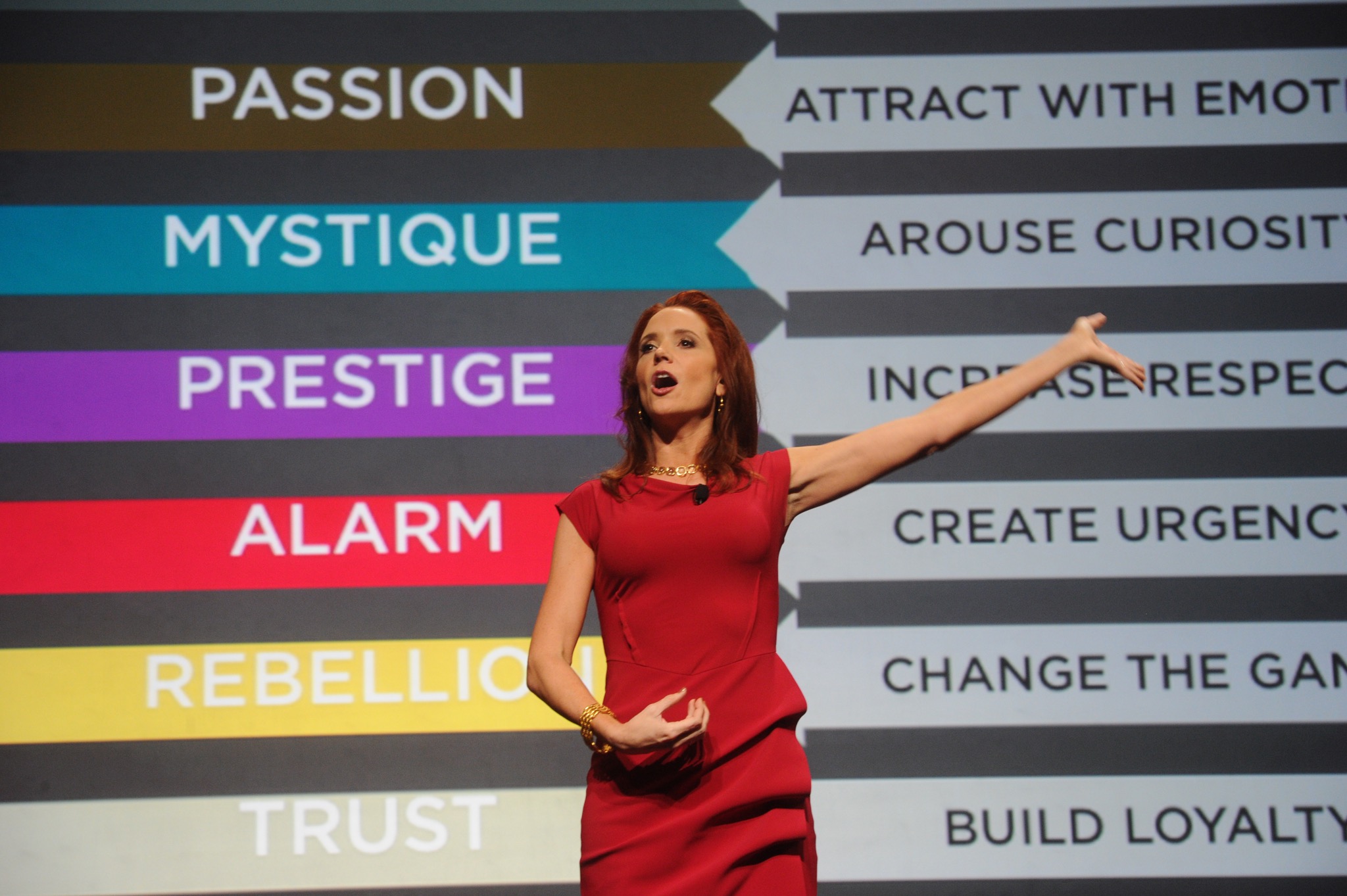
Now, back to my archetype – The Change Agent. I was a little hard on Sally Hogshead at the beginning of this post, but really it was in respect for the way she made me reflect on my own archetype. I was falling in the trap she talks about in her book. I was trying to fit in another archetype and not my own. Again, I need to be all the me I can be. The Change Agent really perfectly describes me. Anyone who knows me, knows the adjectives that describe how the world sees me of Untraditional, Inventive, and Self-Propelled really fit me to a tee! My personal report (you all can get your own personal report when you get the book and do the assessment too) says that I am a creative thinker who thrives on reinventing, I am independent, witty, and sharp, I have a strong drive to come up with a different approach, and I bring alternative opinions to dull meetings, and fresh ideas to stale companies. I would say these are all the advantages that have enabled me to be a successful school, particularly turnaround schools, leader.
Then I went back and thought about wanting to be a “Rock Star.” In reflection I need to follow Sally’s advice and be all the me I can be. In my world as a public servant I cannot be as unorthodox as I would maybe like to be because I do have to worry about what the public thinks and desires. Context has to matter to me. Different contexts may require different strategies and maybe even different skill sets. Without context there is no meaning and then everything becomes unorthodox. In education I deal with volatility, uncertainty, complexity, and ambiguity on a daily basis. As a “Change Agent” I have to use hindsight, insight, and foresight on a daily basis to find creative, untraditional, and inventive ways to improve education for the staff and students I serve.
I am so excited to be a “Change Agent.” The anthem I created during the exercises of the book is: “Energetic Change Agent!” Pretty appropriate for a guy who believes that leaders make the future, don’t you think?
In closing, I want to give you all a personal challenge: Read Sally Hogshead’s book, How The World Sees You; and go to a KISS concert (or at least watch a video of one). It’s time for you to be all the you you can be, too!
Behavior is…
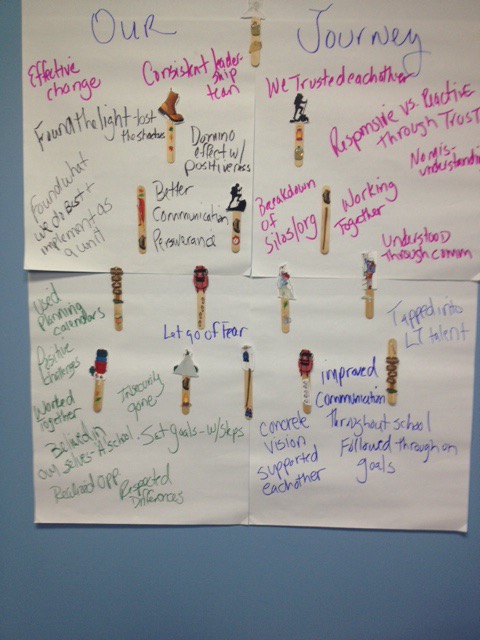 We had a leadership retreat yesterday and today for Hoosier Academies Leadership Team. To start off with we had done some pre-work by doing a personal DISC evaluation. It is important to note that this evaluation is really about one’s communication style. It is no secret that I am a very high “I.” This means I am an influencer. I want a sociable, talkative, and open environment. To this end, I will bring enthusiasm and energy to the team. As an “I” can also be persuasive and spontaneous. In my test results have me labeled as a “Stimulator.” As a leader, I am totally comfortable with this label!
All of that being said I would like to share seven bullet point themes that I wrote down during our retreat as important leadership and team thoughts. I really think they are self explanatory and will cause you to do self reflection.
Here they are:
+Behavior is…observable, flexible, dynamic, and based on thoughts and beliefs.
+When you focus on the light; there are no shadows!
+There is a domino effect to positiveness.
+Don’t be so sensitive! Take feedback as constructive.
+There is no “They” in the Hoosier Way!
+Consider the impact of your lane on others’ lanes – what you do affects what everyone else does.
+Make decisions based on the goals and strategic plan of the organization
+Make sure that every member of the organization understands their role in the mission, vision, goals, and action plan of the organization.
Also, as a part of this post I have a picture of an activity we did where we put all of the descriptors that would be used to describe our team and organization success in 2016. The idea was to visualize what success will look like. Take a minute to check out the picture.
I hope these bullets and visual give you some things to reflect on in your own organization.
#KDPLeads
 Here are the handouts for my presentation at the Learning, Leadership, and Practice: Educating Global Citizens Kappa Delta Pi International Conference. I am so excited to be presenting on Saturday, October 4, 2014 from 12:30 – 1:30 p.m. in Room 2035 of Mount Royal University – Roderick Mah Centre. I will be presenting on my research entitled: The Impact of Agricultural Science Education on Performance in a Biology Course. To view the entire conference schedule click here. I will update and add to this blog post as the conference begins and upon completion of my presentation.
Also, you can follow my conference tweets by following me on twitter @ByronErnest and using the hashtag: #KDPLeads.
Hope to see and connect with you in Calgary, Alberta, Canada.
Here are the handouts:
Are You the Smartest Person in the Room?

If you are like me, when you are in a meeting you make judgements on the knowledge of the others in the room. Sometimes this is based on someone who just has no clue as to what is going on. Sometimes this is based on me realizing I am the one that has no clue! You know if you are honest, you’ve been in both situations! Also, if you are honest, you’ve tried to make sure you are seen as the smartest person in the room. I’ll admit – its true for me.
I also always remember my dad saying, “The amount of talking someone is doing is not necessarily a direct correlation to how smart they are.” Gosh, he was a smart man!
So what does this really mean? Do we need to be the smartest person in the room? For me, I believe the most important thing is making sure we have done the preparation to be the most uniformed person in the room. In fact, those who know me know I often lead off with, “I may be stupid on this..” or “please tell me why I am wrong…” In a true collaborative and learning organization it is so important that everyone is learning from each other. The old adage that all of us are smarter than one of us is so true.
In my studies of Patrick Henry and reading Lion of Liberty I found that he was very self deprecating and never looked at himself as having all the answers. In other words he did not see himself as the smartest person in the room. In reality, however, he probably was always the smartest person in the room, but it was because he was making sure he was learning from everyone else that he became the smartest person in the room.
I also had to reflect about the statement made by Daniel Kahneman in Thinking Fast and Slow “People who have the most knowledge are often the most unreliable.” Now this unreliability is not referring to getting things done. It relates to being unreliable in terms of having the right answers. Sometimes those who are very knowledgeable become immune to realizing that they may be wrong or their answers might not be the best. We can look at this from a personal standpoint and from a listening to the experts standpoint. How many times have we done what the “experts” say and in reality there was a better answer.
It is also very important to remember that sometimes you will be the most knowledgable person in the room. But always remember that what might be obvious to you, may not be obvious to those you lead or those you are on a team with. You have often thought and studied far more about subjects than they have, so you must work to bring them up to the same knowledge level as you are. Think about the perspective of others because they are not at the same knowledge level as you. Recognize that you can ask your teams to share thoughts from their knowledge level. You may just find that you might be the most knowledgable person in the room, but you may not be the smartest in the room.
I would love for you to respond to this post with your thoughts.
Luckiest Leaders On Earth!

Lou Gehrig
I have become caught up in the whole 75th Anniversary of Lou Gehrig’s famous speech. He was so softspoken, humble, and interviews were so few in his era that most did not even know what Gehrig’s voice sounded like. Unlike his teammate, Babe Ruth, he just went about his business without a lot of hype and noise. Gehrig, a first baseman, did some things Ruth couldn’t match: a four-homer game, a Triple Crown and stand-alone records of 500 RBI over a three-year span and 23 career grand slams. His performance on the field spoke for itself. His speech was a baseball moment that had nothing to do with playing. The speech spoke a lot to Gehrig’s character and the respect he got as a player. He was faced with such tough knowledge but realized his blessings and focused on that.
Lou Gehrig to me is the symbol of a team leader who possessed tremendous class, determination, and work ethic. He ended his career after playing 2,130 consecutive games. That would be 11.83 straight school years (180 days) without missing. How many educators can say they’ve done that? I have come close, but isn’t that the ultimate statement of loving what you do? Lou Gehrig and Cal Ripken Jr. believed it was their duty to be their for their teammates and fans. Additionally, it was a personal motivation to be great. Shouldn’t we as leaders have that same motivation for our students and teams?
Cal Ripken Jr. eventually broke Gehrig’s streak with 2,632 consecutive games. After breaking the record in 1995 Ripken was quoted saying, “Tonight I stand here, overwhelmed, as my name is linked with the great and courageous Lou Gehrig, I’m truly humbled to have our names spoken in the same breath.” It speaks a lot to his character and the respect he got as a player. He was faced with such tough knowledge but realized his blessings and focused on that.
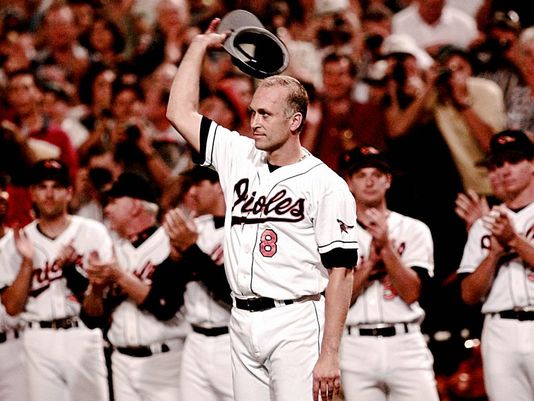
Cal Ripken, Jr.
Lou Gehrig and Cal Ripken, Jr. gave us examples of how to be team leaders who walk the talk. We need to realize how lucky we are as leaders and take time to appreciate the opportunities we have been given. When Gehrig said he was the luckiest man on the face of the earth he was saying he realized how fortunate he was be be given the opportunity to do something he loved and had given everything he had for. Shouldn’t we be striving for the same thing in our own situations? I know I consider myself lucky every day for having decided to go into the field of education!
As I sit here in our Nation’s Capitol today with my family celebrating our country’s founding and independence, which I reflected on in yesterday’s post Leading Audaciously, I continue to reflect on what this holiday means to us as the luckiest of leaders. We too should declare our freedom from mediocrity, our freedom to choose, and our freedom to be great!
Lead With Clarity Not Certainty
 In my daily study time yesterday I read Job 38:2-3. In that passage it says: “Then the Lord answered Job out of a whirlwind, and said: ‘Who is this who darkens counsel by words without knowledge? Now prepare yourself like a man; I will question you and you shall answer Me.” You ever been around that person who wants to make sure you know that they know it all – or at least think they do? I am always amazed at how leaders will begin giving details about subjects, events, happenings, initiatives without really knowing all the details. I guess it is that innate feeling we have that we need to be in the know and in authority. As an educational leader I have always found it to be far more effective to be very clear about what I know and what I don’t know – and then go out and find the resources to get clarity.
I believe those I lead do not need me to always be certain, but they do need me to be clear. Individuals can live without certainty from a leader, but not without clarity. “Your people do not need certainty on every issue, but they do need clarity on every issue” (Maxwell, 2003). Leaders must be genuine with their people.
Reference
Maxwell, J. C. (2003). Leadership promises for every day. Nashville, TN: Maxwell Motivation, Inc.
 Byron's Babbles
3 comments