Overcoming Obstacles
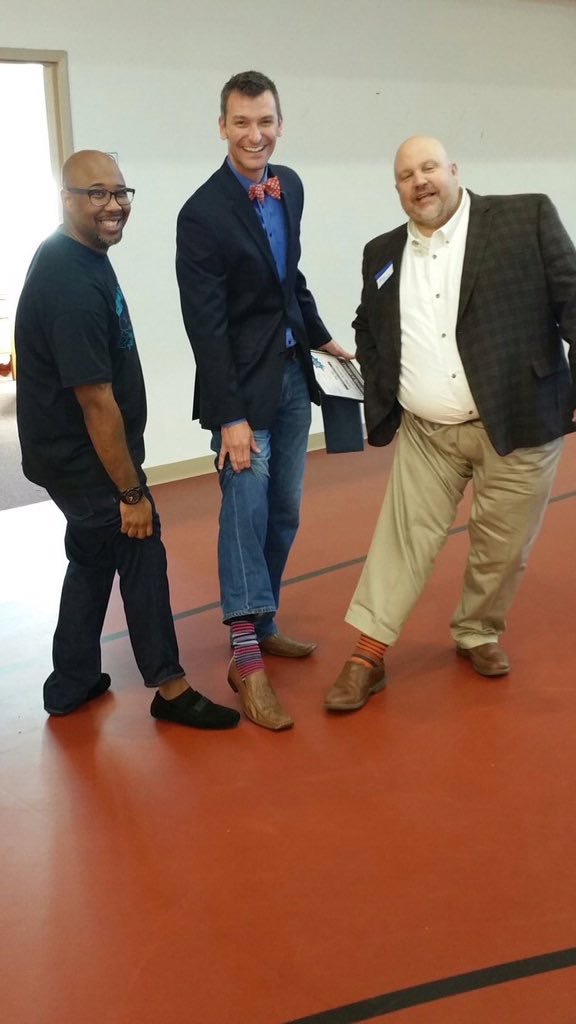
Showing off our stylish socks!
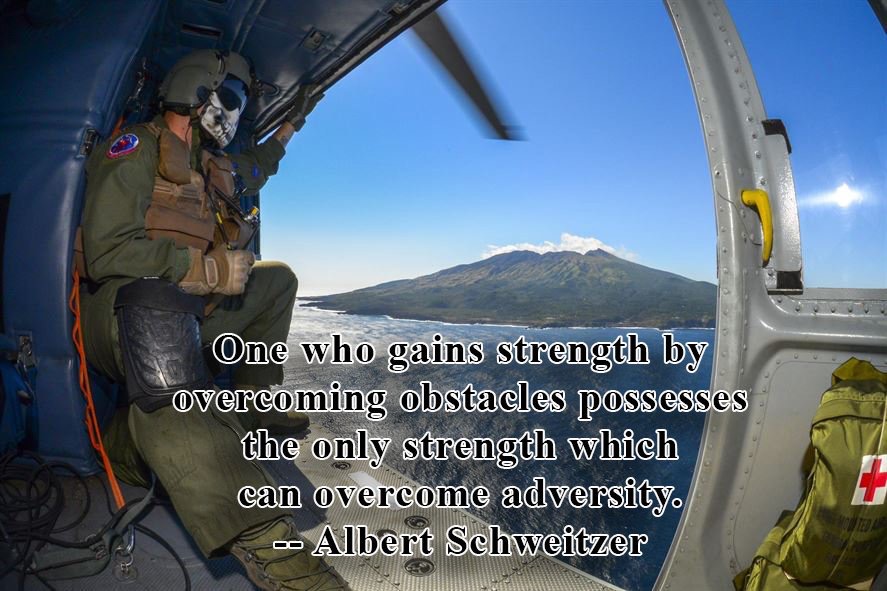 I had the tremendous honor this past Saturday to be part of the Uplift Indy Youth Expo 2015. The theme of the Expo was Overcoming Obstacles. You can take a look at the program by clicking here. I am so thankful that Reverend Antwan Houser, CEO and founder of UPLIFT Indy, invited me to be a part of this incredible event. Teaching kids to overcome obstacles is part of the organizations mission and I am positive this event will help them become more successful in life.Tim Doty from WTTV CBS 4 Indy was the Emcee and did a tremendous job and it was great to get to meet him. He made a point that is so true: “Bringing about change for our youth is a marathon, not a sprint!” We even had a little fun showing off our fancy socks!
I knew I was in for a treat when the first two speakers were youth, MaKayla Ivory and Jalen McGraw. Here are the points the two of them made that really moved me:
- Don’t let others tell you who you are, what you believe, or what you want to do.
- Start and finish everything with God.
- Many obstacles our youth face exist because they are invisible.
- When working with Indianapolis youth, remember: the blessings are bigger than the burden.
Then, DeAndra Yates, mother of DeAndre Knox who was shot spoke. Knox was shot in the back of head at a party on the city’s northwest side February 1, 2014. Knox is alive today and took his first steps after the shooting on September 30. He still can’t talk, but is starting to respond to questions by nodding his head. Her points were very moving as well. Here are some notes I took during her inspiring message:
- God did not allow this to happen without a reason.
- Grieve, but recognize that the God is using this tragedy to open doors. Yates said she is making it her personal mission to reduce crime in the city and avoid another tragedy like her sons.
- Expect the unexpected. None of us know what the future will bring.
- This happened to me, yet I am still here.
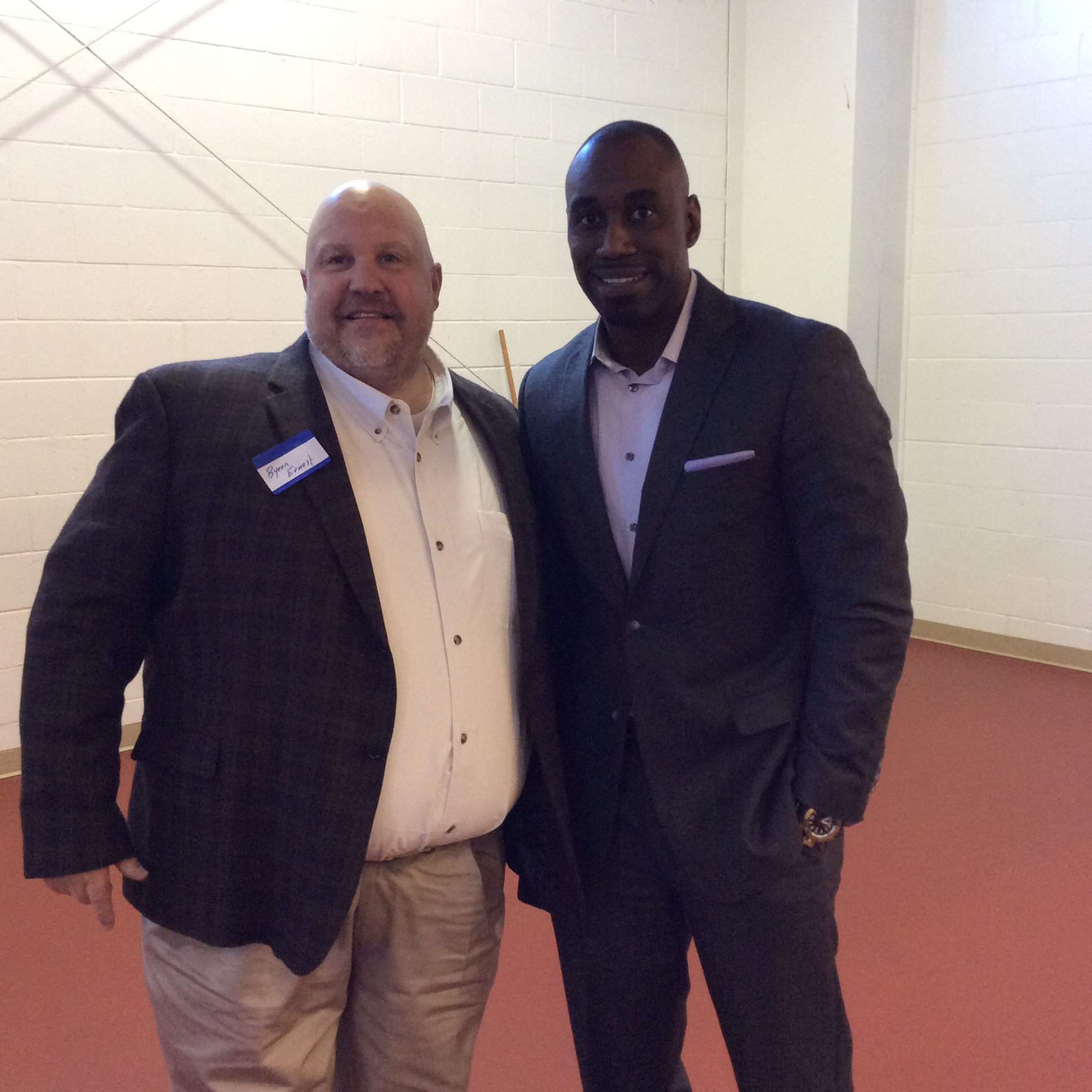
Corey Parchman & I
Other great speakers included State Trooper, Aaron Allen; Pastor Terry Webster, Jr; and, Sgt. Kendale Adams. Here are some points I tweeted from their remarks:
- Don’t let obstacles get you sidetracked.
- Any mentorship program based on forming meaningful relationships will be successful!
- You must define your own destiny.
Then it was time for my keynote. I titled it “Being Prepared for What You Don’t Know You Need to be Prepared For.” I started with the story of the Little Frog in the Well.
My good friends, imagine if you were to live at the bottom of a deep, dark well. What kind of world would you see?
There was a Little Frog who lived at the bottom of a deep, dark well. Now let us go down there and see what kind of world he had.
It was a very old well filled with shallow water at the bottom. The walls of the well were all covered with wet moss. When the Little Frog was thirsty, he drank a little bit of the well water, and when he was hungry, he ate some insects. When he was tired, he lay on a little rock at the bottom of the well and looked up at the sky above him. Sometimes he saw passing clouds. He was very happy and satisfied.
Now, the Little Frog had been living at the bottom of this old well since he was born. He had never been to the outside world. Whenever a bird or birds flew by and stopped at the edge of the well, the Little Frog always looked up and bragged, “Hello! why don’t you come down here and play with me. It’s so pleasant down here. Look, I have cool water to drink and countless insects to eat. Come down! At night I can watch the twinkling stars, and sometimes I can see the beautiful moon, too.”
Sometimes the birds would tell the Little Frog, “Hi, Little Frog! You see, the outside world is much bigger and nicer. It’s many times more beautiful than your little well at the bottom. ” But the Little Frog would not believe them. “Don’t lie to me, I don’t believe there is any place that could be better than here. ”
Gradually, all the birds began to dislike him They thought he was too stubborn and stopped talking to him.
The Little Frog could not understand why nobody would like to come down to his nice place.
One day, a yellow sparrow stopped by at the edge of the well. The Little Frog was so excited he greeted the sparrow and invited the sparrow eagerly. “Hello, Mr. Yellow Sparrow, how are you? Please come down to my most beautiful house.” The yellow sparrow did not say a word and flew away. The next day the yellow sparrow came again and the same thing happened again. It went on for six days. On the seventh day, the yellow sparrow finally said, “Little Frog, may I show you the outside world?” But the Little Frog refused the offer.
Finally the yellow sparrow became angry. He flew down to the bottom of the well, picked up the Little Frog on his back, and flew out of the well.
“Oh!” the Little Frog exclaimed. “How is it that the outside world is so big!” He had been in the bottom of his dark well for so long that the bright sunshine made his eyes blink shut, and he could hardly open his eyes to see.
When he finally opened his eyes, he saw so many things around him. “Hey! Be careful! Don’t hit this strange thing. What are all these green high and low things?” The yellow sparrow laughed happily: “Ha! ha! These are mountains and valleys. There are countless mountains in this world. The Himalayas, the Swiss Alps, the Rockies and… ”
The Little Frog could not believe there were so many big mountains in the world. When they flew over the high mountains, the next view made the Little Frog even more surprised.
“What is this long, silvery, shiny view?”
“It is a river,” the yellow sparrow replied.
“Then what is that huge, blue thing over there?”
“That is a sea,” the yellow sparrow replied.
“That river and sea, how much water do they have? How much bigger are they than my well? They must hold a billion times more water than my well.” The Little Frog began to realize how tiny his well was. “Let’s go down, O.K. ?” The yellow sparrow put the Little Frog down on the ground and flew away.
The Little Frog jumped into the grass and saw many beautiful flowers of different colors. He had never seen such beautiful flowers and had never smelled such nice scents. He kept on going and went into a forest. In it he looked up and saw many tall trees. He looked down and found many different kinds of fruits that had fallen to the ground. He picked up an apple and tasted it. “Wow, so sweet !” Then he listened to the beautiful singing of the birds. The cute squirrels were jumping, the monkeys were swinging from branch to branch, and the antelopes were scampering speedily.
In the pond, the lotus flowers were dancing in the air, and the lotus leaves were floating on the water like umbrellas. There were many fish in the water.
“The outside world is so big, so wonderful, and beautiful!” The Little Frog finally cried out happily and jumped into the pond. He climbed up on a huge lotus leaf and enjoyed his new life there. The yellow sparrow came back and asked, “Little Frog! How’s this outside world? Big? Beautiful?”
“Thank you very much. If you had not brought me out to see this world, I would never had known that there are such beautiful things that exist outside my well .” The Little Frog never tried to go back to his old well again.

I then talked about my past and how I had ended up in teaching. My teaching career did not begin with the same story that many teachers share. I did not have an epiphany when I said to myself, “I want to be a teacher.” My journey as an educator began during my sophomore year at Purdue University when Professor Dr. Hobart Jones pulled me into his office and asked if I had ever considered teaching. When I said, “no,” he explained that he saw a talent in me for educating and wanted me to double major in Animal Science and Agricultural Education. It is amazing how someone like Dr. Jones can make a huge impact on someone’s life. His inspiration and personal interest helped me to deal with the challenges of a double major, making my 31 year educational career possible. Without Dr. Jones’ personal interest in my abilities, I probably would have missed this opportunity. It is his example of true caring that I strive to emulate every day of my teaching career.
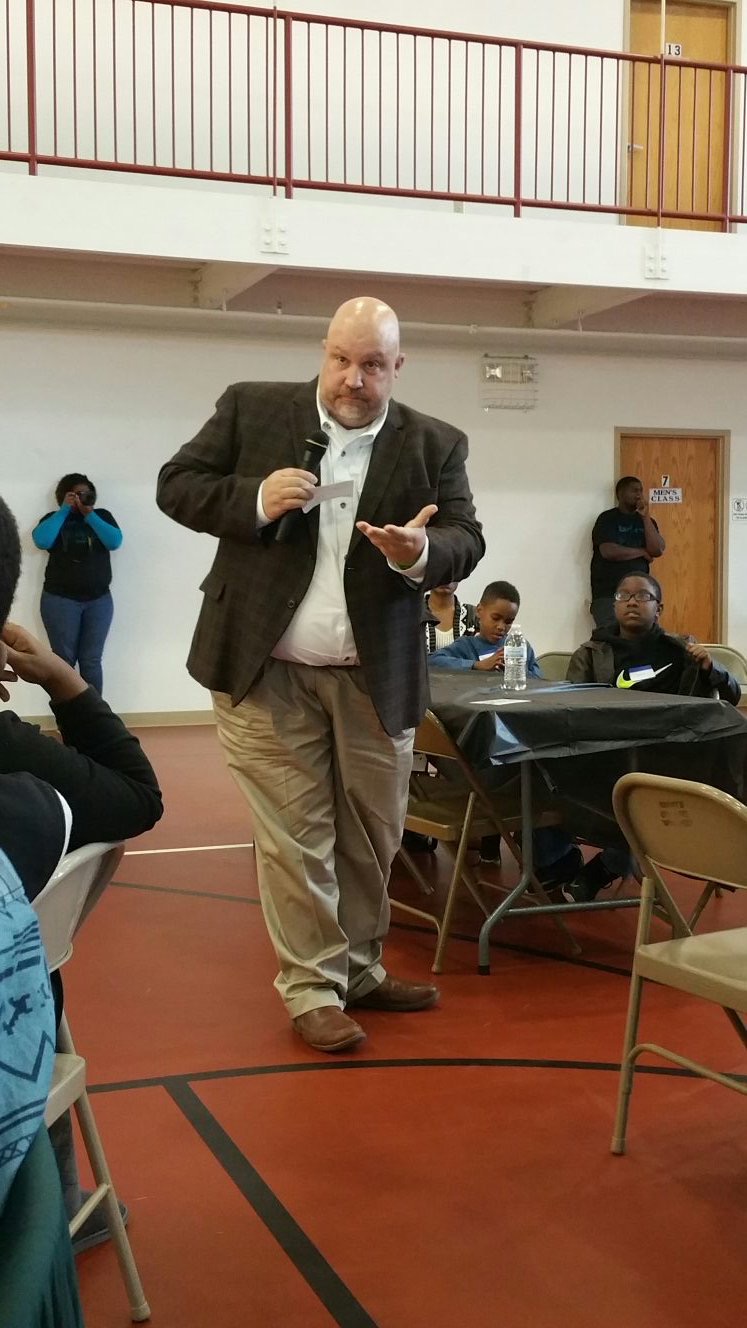
We Must Be Prepared For What We Don’t Know We Need To Be Prepared For!
“Age wrinkles the body. Quitting wrinkles the soul.” ~ General Douglas MacArthur
I then closed with two Bible verses from the book of James that give us comfort when coming up against obstacles in our life and prepare us for what we don’t know we need to prepare for:
“Perseverance must finish its work so that you may be mature and complete, not lacking anything.” ~ James 1:4
In other words many of the obstacles we come up against are placed there by God to help prepare us for our future missions and roads in life. We may not know what we need to be prepared for, but God does.
“Come near to God and He will come near to you.” ~ James 3:8

Panel Discussion
I would like to close out this post by repeating the question of this young lady for you to ponder and maybe leave a response to this post about. “How do we ever get to a time when we can recognize and appreciate all of the uniqueness that each of us possess?”
Living A Courageous Life Full of Contribution
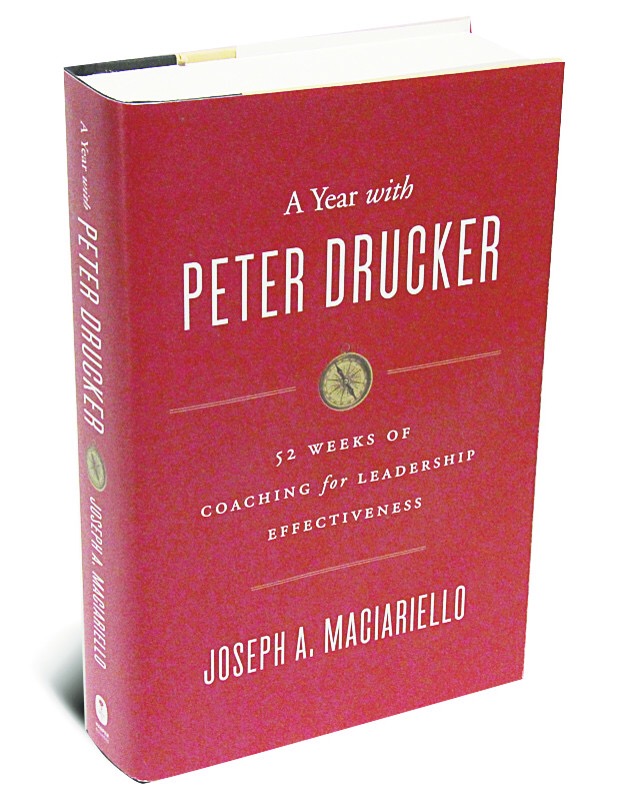
 Peter and Doris Drucker gave tangible form to their values and concerns for America. When they arrived in America in 1937 they were faced with the severe economic challenges all Americans and the country itself was facing at the time. The Druckers did find and treasure the hospitality and warmness of Americans that they called “sweetness” (Maciariello, 2014). Peter Drucker believed, however, that it would take the social sector, particularly nonprofits, not government, to solve our social problems. He believed the social sector must create communities for citizens.
Drucker believed that only nonprofit organizations could provide the diversity of communities we need. These organizations include churches, professional associations, homeless care, health clubs and many others (Maciariello, 2014). Drucker argued the nonprofit social sector organizations were the only ones capable to satisfy the need for effective citizenship needed by an effective community. Drucker posited, “Only the social sector can create what we now need, communities for citizens” (Maciariello, 2014, p. 345). By doing this and becoming involved in the social sector we can give tangible form to our values and concerns.
“What bothers me in this country is that our society today has lost its sweetness. It’s sour, terribly sour, and I think that this isn’t anything government can do much about, or is likely to do very much about. In fact the way we are going, government is making the sourness worse. It’s only this kind of activity in the nonprofits, this kind of self-respect shown to people, this kind of initiative in solving our most difficult social problems that I think we can make this a society again.” ~ Peter Drucker
 Drucker taught us we should strive to elect local public officials who understand the limits of government and the need for public, private, and nonprofit cooperation to further strengthen the work of our social sector and public sector institutions. I’ll close this post with the charge that we all need to become involved in civic organizations that are active in strengthening the social bonds that help create more healthy communities in the United States.
Reference
Maciariello, J. A. (2014). A year with Peter Drucker: 52 weeks of coaching for leadership effectiveness. New York, NY: HarperCollins Publishers.
Do They Really Want To Know What They Need?
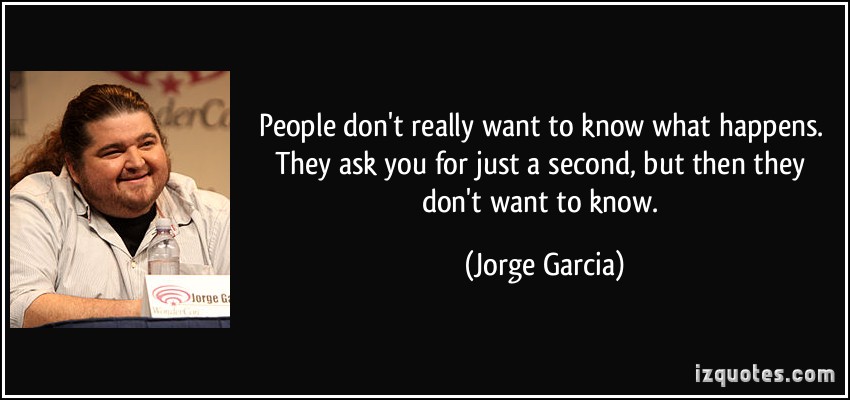 I made a statement the other day that I didn’t necessarily make intending to be profound, but just how I felt at the time about something going on in my world. The statement was: “I really don’t think they really want to know what they need.” It was an authentic belief that that I had in the context I was in at the time, needed to be said. Turns out, it was heard loud and clear by those I was talking with. Peter Drucker said, “You need to use your energy where you can get results.” If you lead and organization you must know what you need, but are there times you don’t want to know what you need?
The thought of an organization, board, or leader not wanting to know what they need seems paradoxical, but is it? How many times are decisions made based on a knee jerk reaction or the self interest of someone. This really is a much bigger issue, as I found out from the discussion that ensued from the quick point of criticism I had made.
As John Kotter has told us; substance is more important than leadership style. This substance, in my view, includes making sure all those in the organization know what they need. This is so very important for those who are members of boards. A board member who just wants to make decisions based on personal wants or self serving desires will lose sight of what is needed for the great good of the organization. In other words, not caring or really wanting to know what is needed. This can happen very easily to school board members who have children enrolled in the school they are a board member of. It is very hard to what I call “leave the parent hat at the door,” and make decisions based on what is best for all students served by the school.
Sometimes hubris can cause us to not want to really know what we need. We, as leaders, get so locked into what we “know” is the right way to do something and we do not take the time to find out what we really need, or need to know. This is dangerous. I am reminded here of the story of Icarus and the power of hubris. Icarus and his father attempted to escape from Crete by flying. Icarus’s father constructed the wings from feathers and wax. Icarus is then warned by his father about the power of complacency and the danger of hubris. Icarus was instructed not to fly too low nor too high. The sea’s dampness would clog his wings and the sun’s heat would melt them. Icarus ignored his father’s instructions not to fly too close to the sun, whereupon the wax in his wings melted and he fell into the sea.
It really is about not being in touch with the core values of the organization we serve. If we don’t want to know what we need we float through periods of time without direction or purpose. Challenges are difficult to solve and opportunities are hard to seize if we are not aware of what our organization’s real, underlying needs are. Great leaders need to ask the tough questions and want to know what they and the organization needs. There are those who say that the consequences of poor leadership are minimal because so many factors affect the performance of an organization. I would argue, however, that most of those factors can be influenced by leadership, both good and bad. Not knowing what an organization really needs can cause the leader to point in the wrong direction, give no direction, or not move fast enough. According to John Kotter, without sufficient leadership, the probability of mistakes increases greatly and the probability of mistakes increases greatly and the probability of success decreases accordingly.
Journey of Significance: What’s Your Unique Contribution?
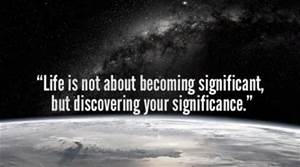 As was discussed in last week’s lesson from Drucker (Maciariello, 2014), knowledge workers have two lives lives. Some only use and develop one, but others strive to develop both. I am certainly doing my best to begin to plan for and develop the second – the journey of significance. In the first we make a living and perhaps achieve success, and in the second we seek significance after fulfilling the obligations and responsibilities to our families. It is at this point where we hope to be in a position to make the future happen. Our unique contributions will be found at the point where our strengths and our values meet. We will know it by the enthusiasm we feel for our work and for our life (Maciariello, 2014). It may take us a while before we identify what our unique contribution may be and it becomes a reality.
“Then there is the reality of the game itself: The clock is running. What once looked like an eternity ahead of you is now within reach. And while you do not fear the end of the game, you do want to make sure that you finish well, that you leave something behind that no one can take away from you. If the first half was a quest for success, the second half is a journey to significance.” ~ Bob Buford
Significance is really a diffusion of innovation and best practices to others. The imposing on the yet unborn future a new idea that will give direction and shape the future yet to come. For me that significance involves preparing others for that future. A very important project for me right now is our Focused Leader Academy.  I really believe that one of the keys to the future of great schools is having great leaders ready to both lead from where they are, but also be pushed into areas where they are uncomfortable for growth and development. This is not an area that a lot of schools spend a lot of time, effort, or resources on and I hope we can develop a model that is both replicable and scalable.
“This is the true joy of life, the being used up for a purpose recognized by yourself as a mighty one; being a force of nature instead of a feverish, selfish little clod of ailments and grievances, complaining that the world will not devote itself to making you happy. I am of the opinion that my life belongs to the community, and as long as I live, it is my privilege to do for it whatever I can. I want to be thoroughly used up when I die, for the harder I work, the more I live. Life is no “brief candle” to me. It is sort of a splendid torch which I have got hold of for a moment, and I want to make it burn as brightly as possible before handing it on to future generations.” ~ George Bernard Shaw
Wow, it is breathtaking to imagine my life belonging to the community and as a torch I need to burn as brightly as possible before handing off to future generations. The clock is running! We all need to think about what we want to be remembered for. Are you making progress?
Reference
Maciariello, J. A. (2014). A year with Peter Drucker: 52 weeks of coaching for leadership effectiveness. New York, NY: HarperCollins Publishers.
People Decisions
 People decisions – hiring, promotion, and dismissal – are the most important decisions an organization makes. According to Maciariello (2014) the right procedure for making these decisions involves:
- Thinking through the job assignment.
- Interviewing a number of people for the job.
- Looking at what each candidate has done well in the past.
- Discussing a candidate’s performance with those with whom he or she has previously worked.
- Being very clear about the specific assignment to the candidate selected, to the point of having the candidate repeat the description of the assignment to the executive.
A Year With Peter Drucker (Maciariello, 2014, p. 225)
 This fits very well with the three questions that I keep posted on the white board in my office at all times:
- What are these people doing?
- Are they doing the right things?
- …Then, making what they are doing more visible to everyone.
Drucker believed that when people do poorly in their first assignment, that they do have a chance of doing well in their second. He learned to measure the success rate of people on their second assignment in the form of a casualty rate of those placed in retraining. The success rate of individuals in their second assignment, after not having success in his or her first assignment, is the best measure of the way we prepare people (Maciariello, 2014). The second chance job success rate, therefore is a good indication of the soundness of your organization’s training.
 After reading this week’s entry I do believe that, at least in my own case, we need to do a better job of giving individuals who have been moved within the organization a second chance, with training, in another position. Or, maybe even give them the opportunity to go back to his or her old position. As was discussed earlier in the post, we also need to do a better job of selecting people for promotions and moves. Furthermore, organizations that offer people a second chance along with appropriate training for the new position achieve good success rates for people in second assignments. The right job for people who fail repeatedly may be in another organization.
“People given a second chance usually come through. If people try, give them a second chance.” ~ Peter Drucker
Reference
Maciariello, J. A. (2014). A year with Peter Drucker: 52 weeks of coaching for leadership effectiveness. New York, NY: HarperCollins Publishers.
The Reward of Service

“…the reward of service is more service.”
~ Chester I. Barnard
We can learn a lot about how to motivate our team members by thinking about what motivates volunteers to do the work they do for organizations for no pay. They provide services for the reward of the service itself. Satisfaction comes from successfully applying one’s expertise to a worthwhile purpose (Maciariello, 2014).
“The management of people is a marketing job.” ~ Peter Drucker
We need to think about those working in our organization and consider how we would need to serve them if they were volunteers. Volunteers have to get more satisfaction from their work that paid employees, precisely because they don’t get a paycheck (Maciariello, 2014). Volunteers need, above all, challenges. As we know, one of the most important factors in workforce engagement is the employee believing he or she is truly making a difference. Additionally, engaged employees are ones that believe they are being challenged.
Therefore, don’t forget the reward of service. Consider what is truly motivating to the people in your organization. Appeal to the full range of their motivations, not merely to financial remuneration. It has been my experience that the financial compensation is not usually the top factor determining high employee engagement. This is why I always strive to have a “Make it so!” environment for our staff. In this environment staff comes to me with ideas and solutions well thought out and it is my goal to always say, “Make it so!”
Reference
Maciariello, J. A. (2014). A year with Peter Drucker: 52 weeks of coaching for leadership effectiveness. New York, NY: HarperCollins Publishers.
Love Thy Neighbor!

Choose Your Friends By Their Character & Your Socks By Their Color
I want to begin this post by posing an essential question for you to reflect on: How can you make yourself useful and effective in helping to solve a social problem of our society?
In this week’s study of Peter Drucker in Maciariello’s (2014) A Year with Peter Drucker: 52 Weeks of Coaching for Leadership Effectiveness, I learned that Drucker believed that social issues and problems were of greater danger to the United States than economic issues. During the 1992 presidential campaign, former President Bill Clinton’s strategist, James Carville, coined the slogan: “Its the economy, stupid!” Obviously, the public seemed to believe this because Clinton won the election. Drucker disagreed, however, and thought our growing social problems were more significant than our economic problems (Maciariello, 2014). Drucker pointed to the fact that none of the U.S. government’s programs of the last 40 years really produced any significant results. We can however point to programs put in place by religious organizations, churches, and other independent non-profit agencies that have had impressive results and done a great deal of good for Americans, as well as individuals in other countries. In my opinion one of the best legacies that President George W. Bush will be remembered for were his faith-based initiatives to have private organizations taking on the overwhelming societal needs.
Social needs, according to Drucker, grow in two areas. First, in charity: helping the poor, disabled, helpless, and victims. Secondly, and probably a faster growing need is in respect to the services that aim at changing the community and at changing people (Maciariello, 2014). Every developed country needs an autonomous, self governing social sector of community organizations to provide the requisite community services, but above all to restore the bonds of community and a sense of active citizenship. Historically, community just happened by fate. We must now make a commitment to the development of the community. In 1939, Winston Churchill even commented prior to becoming Prime Minister of England in 1940 about Drucker’s forward thinking on the needs of society. Churchill said, “…he [Drucker] not only has a mind of his own, but has the gift of starting other minds along the stimulating line of thought.” Drucker knew that taking care of the social needs of our country was going to be important.
Right now there is a great deal of animus in America dealing with race, religion, gender, sexual orientation, socioeconomic differences, education, and even partisan politics. Some of these differences are constrained by social norms, but certainly not to the extent necessary. In education, as school curriculum continues to be aligned with standards and goals, pressure will grow for these goals to be aligned with the students’ strengths and societal needs. We must teach our students how to make changes in society peacefully and democratically. Thinking, reasoning, problem-solving, entrepreneurship, and creativity and the arts must align with the revolutionary changes in all cultures around the world. We live in a country and world of multiple cultures, made even smaller by instant communication and rapid transportation. If we manage our diversity well, it will enrich us. If we don’t, it will divide us. Meeting that challenge is up to each and all of us.
We must listen to the students we serve and give them a voice. Getting them engaged. Students will expect their voices to be her in decisions. As stated earlier, thinking, reasoning, problem solving, creativity, and communication skills coupled with ethical  behavior, will be essential if we hope to have a future. We must take extra care to provide our young people with experiences that enable them to develop core values of ethical behavior and civic duty. I have witnessed and been involved with non-governmental organizations that do this quite well. One is the National Honor Society. My son is a member right now and certainly besides the promotion of high academic performance and achievement, he is also getting a taste of the importance of community service and why it is important to be involved in finding solutions for the needs of the community. I am also proud to have been a part of bringing the National Honor Society to Hoosier Academies. As a school leader, I understand the importance of these civic-minded experiences to our students. Drucker
  called this developing “creaturehood” for the ordinary individual. Another incredible organization that gives students real world, in context, leadership experience in a societal setting is the Kiwanis Key Club. From their many enrichment and civic projects, Key Club members dedicate their energy to serving their communities in order to ensure the world will be a better place for future generations.
As adults and leaders we also have a responsibility to society and modeling our social service to our young people. We all have time, talents, treasures, and connections we can bring to the table in order to do our civic duty for society. I realize time is a precious commodity, but we must make  time to do those things in our communities, state and nation that are necessary to make the radical changes necessary to not be left behind. I have made a conscience effort to model this or “walk the talk,” so to speak. I have been involved at the local, state, and national levels for civic service whether in service organizations or politically. In 2010 I had the honor of being commissioned as a Kentucky Colonel because of my contributions in the realm of education in Kentucky. The commission of Kentucky colonel is the highest title of honor bestowed by the Commonwealth of Kentucky. Commissions for Kentucky Colonels are given by the Governor and the Secretary of State to individuals in recognition of noteworthy accomplishments and outstanding service to a community, state or the nation. Because I really believe in the mission of the Honorable Order of Kentucky Colonels I have made a real commitment to provide time, talent, treasures, and connections. In fact, on May 16, 2015 I am going to be on an Honor Flight, sponsored by the Honorable Order of Kentucky Colonels, serving as a Guardian while taking Veterans from Indiana and Kentucky to honor them. We will be flying out of Louisville, Kentucky to Washington, D.C. for them to be honored as Veterans and tour the Monuments of our foreign wars.
  Check out this inspirational video promotion of our Honor Flight. Click here to watch the video. I am very excited to have been selected to serve as a Guardian for this very important service to our Veterans. This is just one of the social services that the Honorable Order of Kentucky Colonels provides through our Good Works Program. If you are so moved and want to donate feel free to click here.
Our second president, John Adams, stated: “We have no government armed with power capable of contending with human passions unbridled by morality and religion. Avarice, ambition, revenge, or gallantry, would break the strongest cords of our Constitution as a whale goes through a net. Our Constitution was made only for a moral and religious people. It is wholly inadequate to the government of any other.” I am a believer in the rights given to us of freedom of religion and the freedom of speech (in other words the right to hit “publish” when I complete this blog post). I also completely believe in our moral responsibility to give in service to the civic and social needs of our communities, state, and nation. The title of this post is “Love Thy Neighbor!” The inspiration comes from the the Bible in the book of Mark. It first comes up in the 31st verse, but then the most important lesson is given in the 41st through 44th verses: “Sitting across from the offering box, he [Jesus] was observing how the crowd tossed money in for the collection. Many of the rich were making large contributions. One poor widow came up and put in two small coins – a measly two cents. Jesus called his disciples over and said, ‘The truth is that this poor widow gave more to the collection than all the others put together. All the other gave what they’ll never miss; she gave extravagantly what she couldn’t afford – she gave her all’ (The Message Bible).” Are you giving your all to make the world we live a better place now and for future generations?
I hope you have reflected on the essential question I started with: How can you make yourself useful and effective in helping to solve a social problem of our society? Now, I leave you with this question for a post-reflection: How can you leverage your social and religious involvements to increase your involvement in civic life?
Reference
Maciariello, J. A. (2014). A year with Peter Drucker: 52 weeks of coaching for leadership effectiveness. New York, NY: HarperCollins Publishers.
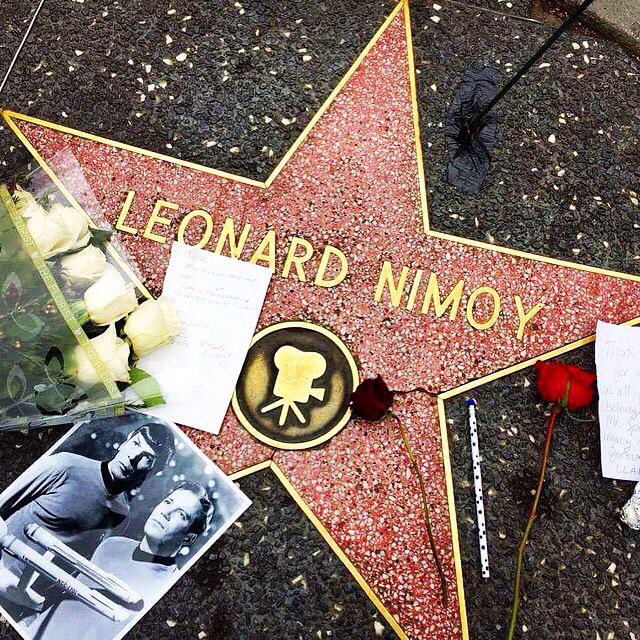
Am I Mr. Spock Or Not?

“I think it’s my adventure, my trip, my journey, and I guess my attitude is, let the chips fall where they may.” ~Leonard Nimoy
I love this quote from Leonard Nimoy, who we all know better as Mr. Spock from Star Trek. It was not always easy being more Mr. Spock than Leonard Nimoy. In fact he wrote two great books about it: the first book was titled “I Am Not Spock.” Then about twenty years later he wrote a second memoir, titled “I Am Spock.” The first book was published in 1977 and the second in 1995. I have to admit I loved watching Star Trek. I wouldn’t say I was a member of “Trekdom,” but I did love the idea of going where no one has gone before. So, on the day after the death of Leonard Nimoy, I would like to celebrate his life and honor him by reflecting on the idea of: does our career define us? Was Nimoy defined by the character of Mr. Spock?


Nimoy was very proud to be connected with Star Trek. He believed the show dealt with morality and philosophical questions in a way many of us aspire to in our everyday lives. Remember, the solutions were always logical and morally the right thing to do! Oh, to be able to do that every time as a leader. In his first book, he wrote, “In Spock, I finally found the best of both worlds: to be widely accepted in public approval and yet be able to continue to play the insulated alien through the Vulcan character.” Nimoy believed the show gave him a constant guideline for a dignified approach as a human being.
Nimoy had always enjoyed playing the character but was also using the book to talk about other aspects of his life. The book features dialogue between the thesp and Spock and touched on a self-proclaimed identity crisis because he became so associated with his character. In his second autobiography, “I Am Spock” (1995), he embraced that association. So, I guess, it is ok for our career to define us. I guess I would ask, How can it not?
“I’ve learned that making a ‘living’ is not the same thing as making a ‘life.’” ~Maya Angelou
I agree with this great quote, but that also means it is important for us to develop our life’s work in a way that is meaningful. “I realized that what I did as a job wasn’t what mattered. What mattered was the fact that I was happy, that my purpose went a lot deeper than sitting behind a desk, with my head in my hands wondering what the hell I was doing and why.” This is a great quote from Paula Lawes and to me speaks to the opposite of what she was really saying. We all have days when we put our face in our hands and wonder what we are doing. When I do that, however, I have the solace that I am making a difference of trying to lead a school to greatness to serve all students in the state of Indiana. And, as a believer that all students can learn and deserve a great school, my career does define me.

Just so, we can learn from Nimoy there is power in your career. It defines you, whether you want it to or not. But for every one of me, it seems like there are dozens of others who are quick to brand people as failures if they aren’t rich or work at a prestigious company. This is not the type of defining I am referring to. I’m talking about doing something that reinforces your personal values, mission, and vision. In other words, are you using whatever your life’s work is to make a difference? Sadly or gladly, people will always judge you based on your career. Your career does define you.
Don’t forget, however, there are many parts to our live’s definition. We play so many roles in our lives- teacher, school leader, CEO, parent, partner, child- and it is the incorporation of each of them that strikes that balance. Putting too much weight into any one of those roles causes a crisis of identity that will not help us in our career or our lives. Don’t forget you are more than your career and so much more than just one job title will allow. I believe this is what tug between Leonard Nimoy and Mr. Spock can teach us. As we remember a great life today, we say thank you, Mr. Nimoy.
Encouraging Yourself
 Today I had one of our team members make the comment to me that she was discouraged and that she just needed to talk herself out of being discouraged. I, of course, had a conversation with her and gave her the encouragement I thought was appropriate.
Then I got to thinking – How do we go about encouraging ourselves. Actually, this made me think of 1 Samuel 30:6 where it says, “King David Encouraged himself.” He did this by how it is put in the Message Bible, “David strengthened himself with trust in his God.” As a man of faith I was reminded that this trust in God is crucial to our self encouragement and knowing that there is a plan for us.
In addition, I believe David teaches us that we need to be proud of ourselves. We must also believe in ourselves. To do this we need to be our own best friend. In other words, we need to talk to ourselves like we would to a friend who needs motivation. In the book What To Say When You Talk To Yourself Shad Helmstetter talks about using patterns – to “erase and replace” our negative thoughts with ones which will build our success.
To do this we can reach out to others who can encourage you. Also, make sure you do not dwell on the negative. Next time someone or a situation deflates you and you are discouraged, remember King David’s example of “encouraging himself.”
Are You An Inukshuk?
 Last October I was in Calgary, Alberta Canada to speak at a conference. While there I did some studying of the history of the area. In my studies I found that the original people of the region were called Inuit. The Inuit live throughout most of the Canadian Arctic and subarctic. The Inuit are a culturally similar indigenous peoples. Because of the vast openness and size of the arctic and subarctic regions of Canada I learned that the Inuit people would build what are called Inukshuks. I had the chance to get a Inuit hand carved Inukshuk while in Calgary. My carving is proudly displayed in my office and pictured at the beginning of this post. When I learned the story behind the Inukshuk I put it in a prominent place in my office as a reminder of how important coming together as a team is. The Inukshuk are a symbol of the human spirit. They recognize our ability to succeed with others, where we would fail alone. They remind us of our need to belong to something greater than ourselves. They reinforce our ability to commit to common goals.
Inukshuk, pronounced in-ook-shook, are stone monuments erected in the image of humans. One of their purposes was to communicate direction in the harsh and desolate Arctic. They would also mark places of good hunting, food supply, shelter, or safety. As such they were a tool for survival, and symbolic of the the unselfish acts of a nomadic people – the Inuit – who built them as signposts to make the way easier and safer for those who followed. The hands of many and the efforts of an entire group were required to build these massive stone sculptures. They are the result of a consensus of purpose, of focused action by a group united in its goal and labour. The Inukshuk are the product of cooperation, teaching us that as good as our individual efforts may be, together we can do even greater things.
 As a person who considers himself a trailblazer the Inukshuks have a special meaning. To me these structures stand for: Someone was here. you are on the right path. As leaders it is important for us to be able to put our teams at ease by letting them know,’hey I’ve been there, we’ve got this, and it will be o.k.’ This is why I believe that leaders that have had specific experiences have an obligation to take on responsibilities where they are helping and influencing others through tough situations. I actually blogged about this in a post entitled “Deer In The Highlights.” Click here to read that post.
Each stone is a separate entity. Each supports, and is supported by, the one above and the one below it. No one piece is any more or less important than another. Its strength lies in its unity. Its significance comes from its meaning as a whole. What is true about the Inukshuk is true about people. Each individual entity alone has significance. As part of a team each of us supports, and is supported by, another. We are united by our common goals, and together we are part of a greater whole. The stones which make up the Inukshuk are secured through balance. Just as it is important for us to carefully choose and develop our team members’ complimentary skills The stones of the Inukshuk are chosen for how well they fit together. The symbolism is so amazing here. We, as leaders, need our teams to mesh and fit together in order to stand strong and complete the vision and mission intended. Looking at the structure it can be easily seen that the removal of even one stone will destroy the integrity of the whole. So, too, with a team. Each individual in a team is necessary for the realization of the team’s purpose. The removal of even one person will result in the weakening of the structure. What holds the team together is the balance – the complementary nature of the individual skills
 Byron's Babbles
1 comment