Driving Decision Making
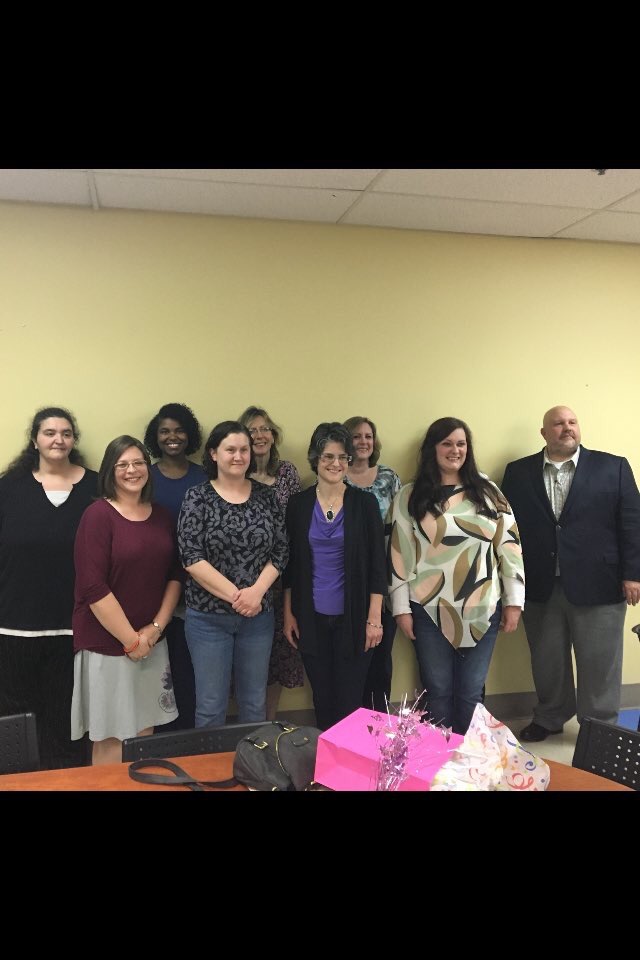 Last night we honored our Outstanding Learning Coaches (parents and family members who work with our students in an online environment) of the Year as nominated by our teachers. It was an honor for me to be there and speak with these great parents and give them a COW (Creator of Wow) Award in addition to the Outstanding Learning Coach Award. I told these parents that with our new vision of “Success for Every Student in Indiana” that we must continue to improve our family engagement. Learning Coaches are a crucial component to the family engagement at Hoosier Academies Network of Schools. I am so proud of the work that our Community Engagement Coordinator, Rachael Borrelli does to engage our families and support our Learning Coaches. She and the teachers are to be commended for implementing this Outstanding Learning Coach awards program.
As I listened to the tear jerking, literally, stories of why these families want their children in our school, I realized we must continue to improve living out our vision, mission, and core values. Every student has a story and a context. These stories are why school choice is so important and parents must have the ability and right to send their children to the school that is the best fit for the context in which they live. This all fit with Lesson #49 of The Disciplined Leader by John Manning (2015). In this lesson Manning (2015) taught us that we must keep customers in the cross hairs of decision making. I blogged about whether we should consider students and parents as customers or whether society is the customer of schools in Leaders Listen, but regardless we need to listen to our families and engage their needs.
If we keep the interest of our families in mind and engage them in the process of educating their sons and daughters it is powerful in improving the achievement and performance of children. As Manning stated, “It is leadership’s responsibility to be an advocate for customers, so focus on them whenever you conduct any business planning.” (Manning, 2015, Kindle Location 2535) As leaders we must always make sure that those we serve are being considered in the decision making process. We will obviously never be able to please everyone, but we must be able to connected the dots between our customer’s needs and our core values for carrying out the vision and mission of the organization.

“You should also engage and align your employees to follow your lead when they’re making decisions, too. When those two strategies come together, you’ve got a winning formula for building customer loyalty.” ~ John Manning
It was so great to connect with a group of parents and students last night and it was even greater to witness our teachers interacting with those parents, families, and students. With our newly created vision, mission and core values I am confident we are continuing to improve our family engagement and decision making prowess. What does your organization need to do to improvement using customers in the decision making process?
Leaders Listen
 In Lesson #48 of The Disciplined Leader, John Manning (2015) taught us to “Listen To Your Customers.” As an educational leader, I have been in more than my share of discussions about whether the students and parents are customers of our schools and the educational system. This post is not about answering that question – it’s just too complex. I’ll tackle that topic in a future post. Although, I have to give a shout out to Dr. David Burkus, author of Under New Management: How Leading Organizations Are Upending Business As Usual and Associate Professor at Oral Roberts Universty. He and I recently had an in depth conversation about about this during the launch of his book – which, by the way, every leader should read.
Dr. Burkus and I discussed how students are much too precious and complex to just be considered as customers. He suggested that society is the customer of education. The success of our society relies on the quality of individuals, we in education produce. I tend to agree with that, but also know that we must listen to our students and families as if they were customers in the context that Manning (2015) spoke of. I also understand the complexity of educating a child and all the factors involved – parents, family, health, socio-economic factors, emotional, learning style. Thus, all the more reason to listen as if our families and students are customers, because regardless, as Dr. Burkus pointed out, society will ultimately be a customer. Failure to establish a home-school-community collaboration aimed at increasing student success puts our children’s and nation’s futures at stake.
“This loyalty comes from genuine relationships—those that are carefully cultivated between the customers and your organization. This comes from interactions in which the customer feels that he or she matters personally, not financially, to a business.” ~ John Manning
As Manning (2015) pointed out. It is all about relationships. Effective communication, which includes listening, is essential for building school-family partnerships. It constitutes the foundation for all other forms of family involvement in education. Good two-way communication between families and schools is necessary for our students’ success. Not surprisingly, research shows that the more parents and teachers share relevant information with each other about a student, the better equipped both will be to help that student achieve academically. The good news is that many are beginning to realize the value of connecting parents and community members to what is happening in the classroom. Still, there are too many families and community members who do not feel equipped to partner with schools to create the best teaching and learning environments for children. It is not surprising that these people tend to avoid substantive involvement in critical issues such as daily attendance, teacher quality, student retention, and other areas that impact student success.
Bottom-line: we need to listen and get feedback from our teachers, students and families; we must talk to our students and families and build meaningful relationships; and, we must find out why students come to our schools and why they leave our schools. Just as we ask our students to do their homework, we must do our homework, as leaders, to understand what he or she needs to be successful. We must design environments for families to access key information to make their engagement with their children’s school more productive, enjoyable and beneficial. We must invite, engage, enable, and empower our families to become more engaged in their child’s educational experience.
As leaders we must listen to the needs of our students and families.
How Many Flavors Do You Need?
 In Lesson #47 of The Disciplined Leader John Manning (2015)taught us to Avoid The “Flavor of the Month” Syndrome. I actually blogged about this back in Flavor Of The Month Or Research And Development? I put a little different twist on it, but this is an important topic when it comes to putting strategy in action. Founded in 1945 by Burt Baskin and Irv Robbins in Glendale, California, Baskin-Robbins is known for its “31 flavors” slogan, with the idea that a customer could have a different flavor every day of any month. Now, if we look at using this theory for strategy, we will surely fail.
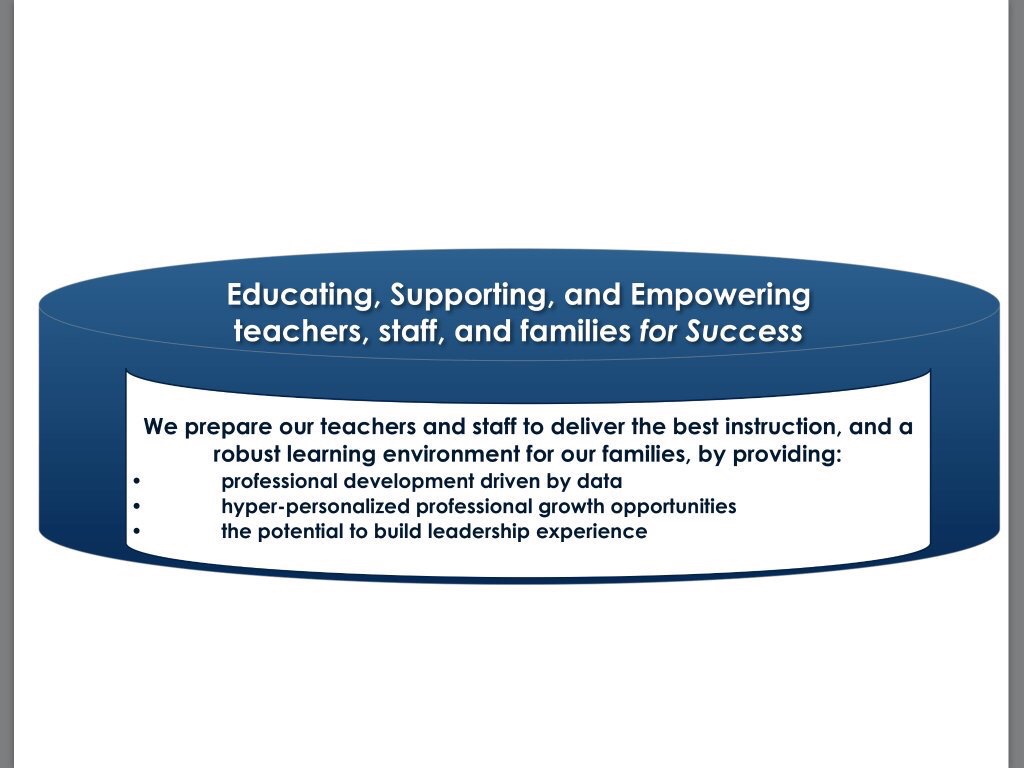
Because of being focused so heavily on culture building and leadership development this year I have thought a great deal about alignment of the team to our strategies while still making sure we, what I call, hyper personalize the professional growth and development. Training and development programs almost universally focus factory-like on inputs and outputs: absorb curriculum, check a box; learn a skill, advance a rung; submit an assessment, fix a problem. Flavor-of-the-month remedies, off-the-shelf programs, immersions, and excursions stuff people full of competencies and skills but produce astonishingly few great leaders. This is why I believe these programs must be developed and personalized by the leader of the organization to fit the context of the individuals being developed. The program must also be customized for the context of the organization at the time. We are taking applications right now for our next cohort of our Focused Leader Academy. I already know the curriculum will need to be adjusted as I look at those who are applying and where we are as a school.
Just like Baskin-Robbins has 31 flavors to satisfy every individual taste, every day of the month. We must not resort to cookie cutter development for those we serve by jumping at anything that comes along as the next “silver-bullet” of leadership development. I would propose using Manning’s (2015) three ways of avoiding the flavor of the month syndrome when developing your leaders and putting all strategies in action:
- Create consensus during planning.
- Stay committed to identified strategies.
- Formalize decision making for new ideas.
My challenge to you is to unleash the most initiative, imagination, and passion and the job of leaders is to expand the scope of human accomplishment in your organization.
Chief Execution Officer
 One of most frustrating challenges leaders are faced with today is closing what is commonly known as the execution gap (or sometimes the strategy gap). The execution gap is a perceived gap between a company’s strategies and expectations and its ability to meet those goals and put ideas into action. In Lesson #46 entitled “Avoid the Dangerous Gap between Good Ideas and Execution” in The Disciplined Leader, John Manning (2015) explained, “As a Disciplined Leader, it’s your job to become curious but also cautious about good ideas. That starts with discerning the ideas and solutions introduced by your people, making those hard decisions about whether to say yes or no to them. Good ideas don’t mean anything unless your organization is capable of executing them.” (Kindle Locations 2382-2384). Due to the complexity of people, businesses, and the societal constructs in which we operate, it is more difficult than it might seem at first glance to close this gap.
“So whenever any new concept or strategy is put on the table, assess the gap between its good intent and your team’s core ability to implement and execute it.” ~ John Manning
Leaders must become Chief Execution Officers. Great leaders do not relegate and that is the idea behind becoming a Chief Execution Officer instead of a Chief Executive Officer. Relegation is very different than delegation. Relegation is just pushing work to others. By not relegating the execution of strategy, the Chief Execution Officer can achieve consensus and commitment across the task force responsible for the implementation, establish and preserve the integrity of the strategy, and engage the work force. If done correctly, this approach and these achievements can greatly improve performance of the strategy. Unlike a traditional CEO, the Chief Execution Officer gets involved in the details of strategy execution by: translating the strategy into measurable objectives, sharing the story of the strategy with internal and external audiences, establishing a feedback system, and by aligning the reward and recognition system with strategy. Since leaders need the effort of others, they must be able to effectively communicate to them what they want done and, more importantly, why they want to do it. A big problem with going from idea to implementation is simply a lack of clearly defined vision and goals. Leaders who cannot define what they want accomplished can hardly expect others to understand their strategy and participate in their projects with any level of meaningful contribution.
I am a big believer in forming task forces to take on implementation and execution of initiatives and to study needed changes. I am also a believer their are times I need to own doing a major part of the heavy lifting in some of those task forces. A big mistake many leaders make is relegating to others and this can be problematic from a couple of different angles. First, many times the leader relegating is seen as someone who passes everything to those he sees as being under him. This is not being a servant leader and leaders who do this quickly lose the trust and respect of those he serves. Secondly, many times others just don’t have the knowledge and skill that you do as the Chief Execution Officer. The task force provides a team that can develop consensus and communicate to others about the strategy and is an important prerequisite for successful execution of initiatives and change. Careful selection of task force members is important to achieve effective cross-functional integration. Leaders who resist this type of consensus can undermine successful execution and implementation.
Implementation and execution really become part of an organization and become part of the leader’s mantra. Think about it; you know leaders who get things done and those who never seem to be able to finish. Implementation is not just something that does or doesn’t get done; it is not just a tactic, and it is not something to be relegated. Execution should be a central part of a organization’s strategy and goals and the most important part of what any leader does. What are you preparing to implement in the near future?
Putting On The Boxing Gloves
 What John Manning (2015) called “Pick Your Battles” in Lesson #45 of The Disciplined Leader, I call deciding whether or not to put the boxing gloves on. One thing is certain — you can’t take on every problem at work. Each person has a finite amount of political capital. If you make a big deal over something silly, you may not be able to get your way when it’s something really important. Or, as I always say, “I am (or am not) willing to put my boxing gloves on for this.” This is not to say I literally want to fight, but I use the metaphor to think about how far, or how passionate I am about the issue – would I break out the boxing gloves?
 As Manning (2015) said, “Your leadership needs to reflect your ability to discern which battles aren’t worth fighting as well as your fearlessness in the face of the battles that are.” Even if you’re certain that the issues you want to tackle are critical, your reputation may suffer if you take them all on at once. I believe another important consideration is before taking on a battle, you’ll need to assess whether you have the reputation and authority to succeed. Additionally, you do not want to be seen as an inflexible leader or someone who is more concerned with be right than connecting with others. This type of leader doesn’t value other opinions and ideas.
To decide when to put on the boxing gloves, tackle only problems that are truly important. It’s important to examine your motives. Does the issue really matter to your employer, your colleagues or your ability to do your job? Never put on the boxing gloves without offering a solution or suggested route to one. Engage but do so when it makes real good sense. Win the battles – the big and important ones – and let the others go. That is leadership.
Leading Curiously
 I consider myself a pioneer in the era of the curious leader, where success may be less about having all the answers and more about wondering and questioning. A curious, inquisitive leader can set an example that inspires creative thinking throughout the entire organization. Leading-by-curiosity can help generate more ideas from all areas of an organization, while also helping to raise employee engagement levels. One of my heroes is Curious George – that little monkey who is not afraid to explore new and exciting things. I strive to be like Curious George. In fact I have have blogged about this in Living and Leading Like Curious George.
Walt Disney, another one of my heroes, said his company was great at innovating  “because we’re curious, and curiosity keeps leading us down new paths.” But having that desire to keep exploring “new paths” becomes even more important in today’s fast-changing, innovation-driven marketplace. In The Disciplined Leader, John Manning (2015) reminded us in Lesson #44 to, “Be curious about how things can be done better or differently. Identify one organizational norm that could be improved. Remember: just because you have always done something ‘that way’ does not mean it is ‘the way’ today” (Kindle Locations 2320-2321). I believe curiosity leads to valuable insights and understanding. Curious leaders would rather pose the right questions that give them a deeper understanding than compete to deliver answers in hopes of acknowledgment. Curiosity allows leaders to adopt an exploratory mindset in everything he/she does.
 Curiosity is all about asking questions and wondering why things are a certain way. Great leaders search for new paths – new products, new and innovative solutions, new talent, new efficient ways of building, creating, and getting things done. Being curious is an important part of a leader’s role in serving those he/she leads. Are you embracing your role as a leader and being curious like Curious George?
Reference
Manning (2015). The disciplined leader: keeping the focus on what really matters. Berrett-Koehler Publishers. Kindle Edition.
Leaders Ask Why
 Back in 2010 I blogged about “why” in Why Baby Why? I was reminded about the importance of the “why” in John Manning’s (2015) Lesson #43 in The Disciplined Leader. Ever notice how great leaders ask the best questions and the question “why?” A masterful leader will sit quietly in a meeting, listening intently to the discussion, and then, ask a question that will change the tenor and the performance of the entire team. My dad used to tell me, “There is not necessarily a correlation between the amount of talking someone is doing and their intelligence.” Very true!
“Judge a man by his questions rather than his answers.” ~ Voltaire
Watching a great leader ask astute questions is like watching an artist in action. I aspire to always be this kind of leader and hope I can model the wisdom and timing to use less oxygen and get the great results of collaboration and discussion. One question that I love to ask is, “Why am I wrong on this?” Pressing the team to consider what I might be missing demonstrates humility, awareness, and openness to possibility. Wherever you find an innovative culture, you find leaders asking this question. Great things happen when we start with “why.”
Success Breeds Success!
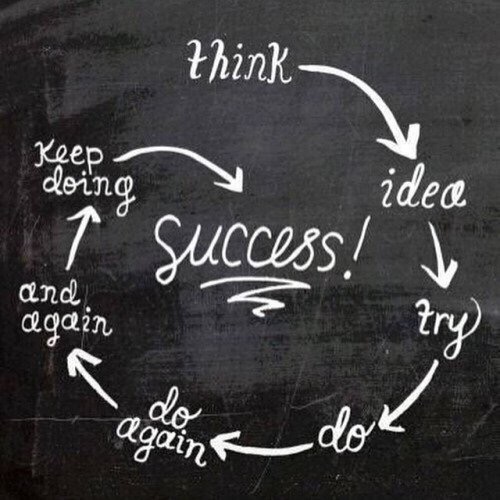 We say it all the time, but do we really understand what we are saying when we say, “Success Breeds Success?” As a livestock and dairy guy, I understand the importance of genetics in breeding. My son and I spend a great deal of time studying and selecting which bulls to breed his Jersey’s to in order to make improvements; and hopefully produce the next great one. In Lesson #42 of The Disciplined Leader, John Manning (2015) taught us we must also study success as a leader in order to duplicate that success.
“One of the ways to learn from prior success is to shift your organization’s attention away from trying to avoid mistakes and a bit more toward replicating success. That starts with identifying wins and taking inventory of what was done right to contribute to the outcome. Employees have their own talents, gifts, and hard-earned skills. Considering these attributes and other factors influencing your ability to succeed, the onus is on you to apply this learning to future challenges and generate even more wins.” ~ John Manning
Some of the ways Manning (2015) pointed out to do this are:
- Embrace a positive outlook.
- Analyze successes.
- Success happens for good reasons, and when you start to explore the who, what, where, when, and why of an achievement, you’ll most likely see it wasn’t just some matter of pure luck.
- Pay more attention to what works.
- Find ways to note what’s working well in work and life, leveraging whatever you learn to maximize your chances for more wins.
As you can see it is important to not only celebrate our wins, but analyze and study them. How can you help your organization to ensure “Success Breeds Success?
Trailblazing Leadership
 Lesson #41 in John Manning’s (2015) The Disciplined Leader is titled “Lead From The Front.” To me this is contrast to the idea of being a travel agent. Travel agents send us to places that, in most cases, they have never been. Leaders take us to places they have been or serve as a trailblazer to places we are going together. It’s more than just being a workhorse or riding the white horse out in front of the army. It’s really about influence; doing the kinds of things that cause people to feel better about the work when you’re on the team, and to choose to follow you when you offer suggestions or direction. I like to look at this as leading from where you are. Leadership must happen where and when it is needed; by anyone.
Great leaders who are out front lead by offering solutions and have skin in the game. Out front leaders think strategically and keep learning. The type of leader I am describing here shares resources and information. She is a giver, not a taker. This leader chooses to be extremely generous with her time, expertise, and helping others succeed. It’s about taking an interest in people. Great leaders look for value in every person. Great leaders are a friend and listen to people and what’s going on in their lives, professionally and personally. Great leaders complete others.
Don’t forget that sometimes leaders must also go alone. Sometimes we must boldly go where no one else wants to go. Many times leading out front means going against conventional wisdom or the consensus of others. Those who lead change transformation know that there will be times when they will truly be trailblazers – going where no one has gone before. As the great leader, Robert Gates, says, “The change agent must be an oak, not a daisy.”
Big Opportunity Leadership
 On my flight home from Washington DC last night I had many things on my mind. One of which was the newly signed into law Every Student Succeeds Act, or ESSA as most people refer to it. ESSA was the reason I was in our Nation’s Capitol for the National Association of State Boards of Education (NASBE)Legislative Conference. We had the opportunity to work through what state boards’ role will be in the implementation of ESSA. I was reflecting on how much work there was to be done implementing this new and great bipartisan law that gives a great deal of power back to the states – Patrick Henry would be proud. Consensus has been reached to pass ESSA into law and now it is time for implementation. John Manning (2015) referred to this as execution in Lesson #40 of The Disciplined Leader. As I was reflecting, the pilot came on and said we had 327 miles left to Indianapolis. Because the Wright Brothers are my idols, I could not help but say a quick thank you to them for executing their plan for first flight. They took advantage of what John Kotter calls the “Big Opportunity.” Because of them, I am able to be home from Washington DC in a little over an hour. That is one big opportunity!
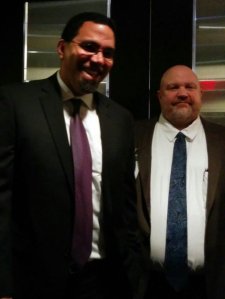
Secretary of Education John King & I
Manning (2015) discussed creating ownership in solutions. ESSA empowers many to take advantage of the big opportunities. I had the opportunity to be with our recently confirmed Secretary of Education John King, yesterday morning and we discussed the opportunities for state legislatures, state boards of education, schools, and many other stakeholders to work together for implementation of ESSA. This implementation really plays into John Kotter’s Dual Operating System approach to change. As we implement ESSA in Indiana I hope we will use the five premises from Kotter as our guide for taking advantage of the “Big Opportunity” – equity in education for all students. Secretary of Education King also left us with this very important thought, “Schools save lives!” Again, that is one big opportunity. These five guiding principles are:
- Having many change agents – by having state legislatures, state boards of education, state departments of education, and many other stakeholders involved in the collaborative implementation we should have innovation and creativity for coming up with the best practices for our students.
- Creating a “want to” not “have to” mindset – Now that the power has been placed in the state’s hands for implementation of ESSA, we must be excited and have a “get to” approach.
- Head and heart, not just head – This is easy when we are implementing law to serve our children.
- Leadership, not management – This is important for me as an Indiana State Board of Education member. I must do my part to provide the leadership to keep the strategy of ESSA implementation in tact.
- Many systems, one organization, lose the hierarchy – everyone must be a part of the “big opportunity.” Again, there must be collaboration from many different stakeholders.
Manning (2015) taught us to “stay the course” and execute. What “big opportunities” do you have on the horizon for implementation?
 Byron's Babbles
1 comment