When Leaders Go Bad
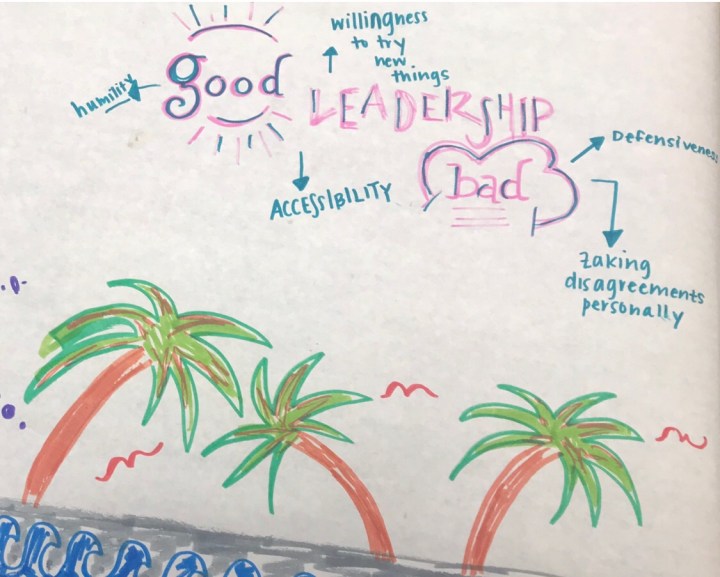 This guest post originally appeared on the Giant Leap Consulting Blog.
When Leaders Go Bad
By Bill Treasurer
When you think of the word “leadership,” what comes up?
Most people view leadership as connoting the best of the best, the demonstration of high ideals, and living and acting with high integrity.
But as long as there have been leaders, there have been leaders who compromised their integrity.
In fact, the very first story ever put to the written word, The Epic of Gilgamesh, centers on immoral leadership. Gilgamesh, the king of Uruk, brings us the idea of droit de seigneur, or “lord’s right”, which is the right of the leader to exercise jus primae noctis – the king gets to deflower the community’s virgins on their wedding nights. Why? Because he could, that’s why.
It’s the behavioral latitude, the “because I can” freedom, that necessitates the joining of morality to leadership. Just because you can do things that non-leader’s can’t, doesn’t mean you should. But it is also the “because I can” freedom that cause some leaders to lead in a compromised and self-serving way. The unwritten understanding that leaders and followers share is that when you’re the one who set the rules, judge others’ performance, and doles out the rewards, you have more power and freedom than those who don’t get to do these things. Others serve at your pleasure and are accountable to you, not the other way around.
Leadership is massively important, particularly during times of intense challenge and change. But leadership is also massively seductive. Leaders are constantly being told how special they are. Think, for example, of the privileges that leaders are afforded that non-leaders don’t get. Leaders get bigger office spaces, more agenda airtime, better perks, more deference, and fatter salaries. They also get less flak when they show up late for meetings, interrupt people, or skirt around policies or processes that everyone else has to follow. Even the simple fact that there are far fewer leaders than followers illustrates their comparative specialness. The fact that not everyone gets to be a leader suggests that they are born of a different cloth, a cut above the rest of us mere mortals.
Followers, too, as the hands who build the pedestals that leaders sit on, contribute to, and often enable, the embellishment of the specialness of leadership. Every time followers bite their tongues, say “yes” when thinking “no”, mimic their leaders’ style, or capitulate to unethical directives, the specialness of leadership is reinforced. Very often, the more special followers treat leaders, the more leaders start to believe in their own specialness. It feels good to have one’s ego stroked by eager-to-please followers, and, before long, some leaders start surrounding themselves with suck-ups and sycophants just to keep the pampering going.
Given how special leaders are told they are, is it really surprising that some would be seduced into thinking that they are “better” than everyone else, that they deserve more of the spoils, or that they should be free to act with impunity?
Should it really catch our attention that some leaders are more concerned with the privileges that they can get by being a leader, instead of being grateful for the deep privilege it is to make a positive and lasting impact on people’s lives when you’re entrusted with leading them? Is it really shocking that some would succumb to thinking that they are the focal point of leadership and not the people that they’re charged with leading? There really isn’t anything surprising or shocking about it. Hubris is what you get when a leader becomes spoiled.
While all of the real-time costs of hubris are high, perhaps none is as costly as the sheer loss of potential for all the good that could have been done–and all the lives the leader could have positively impacted–had he not become so enamored with his own power. The most damaging impact these “leadership killers” have is on a leader’s potential legacy.
The primary job of a leader is to develop other leaders.
Above all, leadership is a tradition that is carried and passed from generation to generation. A leader’s legacy is built by nurturing and developing the talent and skills of the people who are doing the work on the leader’s behalf during his tenure.
At the core, a leader’s most important job is not to acquire more power, but to help empower others so they, too, can find their leadership and do some good in this world, thus extending the tradition of leadership. The potential to inspire new generations of leaders gets snuffed out when the “leadership killers,” including hubris, are calling all the shots.
THINK ABOUT: How are your actions today going to affect your legacy tomorrow? What will those whom you’ve led in the past will say about you long after you are gone?
About Bill Treasurer:
Bill Treasurer is the founder of Giant Leap Consulting and author of five books on courage and leadership, including the international bestseller, Courage Goes to Work. His latest book The Leadership Killer is co-authored with CAPT John “Coach” Havlik, U.S. Navy SEAL (Retired).
Giant Leap has led over 1,000 leadership programs across the world for clients that include NASA, Saks Fifth Avenue, UBS Bank, and eBay. More at: CourageBuilding.com.
Dream Of Things That Never Were…
 Not too long ago, I was in a meeting and one of the participants said, “we need to think in terms of aspirational goals, not what is already being done.” The individual went on to say, “you know, the way Byron is always coming up with wild ideas that nobody thinks could ever happen.” This really got me thinking about the value of aspirational thinking, planning, and goal making. I am guilty as charged for thinking this way. I guess my mind works in the way Robert Kennedy described it when paraphrasing George Bernard Shaw’s play Back To Methuselah (1921):
“Some men see things as they are, and ask why. I dream of things that never were, and ask why not.” ~ Robert Kennedy
Dreaming is aspirational, and fundamentally changes the way we think. This aspirational thinking liberates leaders to achieve the unachievable. Instead of being locked into what is theoretically achievable, we need to be asking the question “why can’t we do this?” We need to find ways to become unburdened by “the way things are done around here?” I love to ask the question “why is this still being done this way?” Almost three years ago I started asking the question “why are we one of only 14 states that still uses/has a graduation qualifying exam (GQE)?” Now, Indiana has Graduation Pathways with multiple ways to graduate based on the student desires, goals, and needs. We no longer have a GQE, or single path to graduation. Don’t think we didn’t here “This is the way it’s been done.” Or, “We’ll never get this changed.” But, guess what? We did, and it was the right thing to do for Indiana students. It started with an aspirational dream (and getting laughed out of a few meetings).
 One advantage I have when it comes to aspirational dreaming is that I am comfortable being uncomfortable. Individuals, organizations, and groups need to remember it is important to set a goal or go after a dream without necessarily providing or having full certainty about exactly how it will be achieved. Clarity is achieved, however, from understanding why the aspirational goal is necessary.
Aspirational dreaming allows us to operate in an environment where “we are open to doing things differently.” There is something almost magical about having goals that are aspirational in nature. An aspirational goal defies logic in many ways in that you can’t see a specific path to achieving the goal when you set it. You just know that it is something that is very important and you want to find a way to bring it into your life or the lives of others over time.
Go ahead, dream a little and pull the levers that have never been pulled before, and ask “why not?”
Leading With Natural Self-Expression

Apple 🍎 Instead Of Potato 🥔
Mr. & Mrs. Potato Head are great examples to use as models for leadership development activities. The idea for the original Mr. Potato Head came from a Brooklyn-born toy inventor by the name of George Lerner. He developed the idea of pronged like body parts that could be pinned into fruits, and vegetables. He sold the idea to Hasbro toys in 1952 and they developed his idea into Mr. Potato Head which sold for 98 cents. We love using Mr. & Mrs. Potato Heads as a model to use during our first gathering of each cohort of our Noble Education Initiative 3D Leadership Program. I am also proud we are one of the largest distributors for Hasbro of Mr. & Mrs. Potato Heads. Pretty cool to get pallets of these great toys delivered.
Our sixth President, John Quincy Adams, said, “if your actions inspire others to dream more, learn more, do more and become more, you’re a leader.” I would like to change this and say, “If you have been inspired to dream more, learn more, and become more, you’ve been engaged in a 3D Leadership gathering.” This is how I always feel, and I believe the attendees do too, after one of our 3D Leadership gatherings.
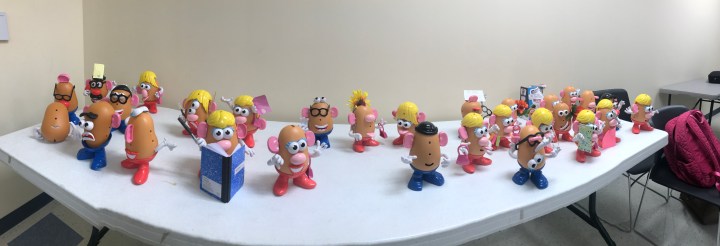 This past week was no exception. I was in Florida and at the last gathering I facilitated in Apollo Beach, Florida one of our teachers redid the configuration of his Mr. Potato Head and really inspired the group and myself. He took an apple from the table (we always have fruit available for eating) and used it as the body instead of the provided plastic potato.
His explanation is what blew us away. He told us he not want to be constrained as a leader by using only the standard, provided pieces. He did not want to be constrained by the pre-made holes for the then pieces to be placed – with the apple, he could put them anywhere. The key to what he was saying was “constraint.” I love that he realized he needed to break the shackles of what has always been done. He did not want to be constrained by the “standard” Mr. Potato Head design. He had not let himself be constrained and took chances to run with an idea that allowed for maximum success.
When we do not let ourselves become constrained by the standard ways that things have always been done, or the way things have always been thought about then our personal way of being and acting will result naturally in our being our best. This is really an ontological approach to leadership. Personally, I want to be a part of developing leaders that leaves the individuals actually being leaders by exercising leadership effectively as their natural self-expression.
By thinking about natural self-expression, I want participants to understand we all have a way of being and acting in any leadership situation that is a spontaneous and intuitive effective response to what we are dealing with. We also want leaders whose world view is not constrained by what already exists and uses symbols and ideas to foster meaningful change. I believe our young teacher leader was exhibiting these leadership dispositions.
Leadership development should always be future oriented. We need to continue to think outside the normal pieces provided in the standard package and look for ways to develop our own effective natural self-expression leadership skills.
Collaboration
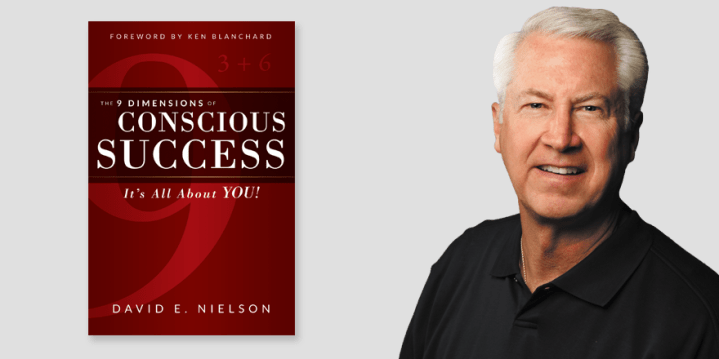
 The following is an excerpt from The 9 Dimensions of Conscious Success.
Collaboration
By David Nielson
There is a notion that Edison was a master inventor who wore a lab coat and sat in his lab all day working alone and coming up with amazing inventions. This is far from the truth; in addition to being a great inventor, he was also a master collaborator.
Edison brought in hundreds of collaborators to help create prototypes and commercialize his inventions—people such as investors, engineers, and others to help him develop and promote the products. This led to creating more than 200 companies. In 1890, Edition established the Edison Electric Company, bringing together his various businesses.
When Edison heard that Alexander Graham Bell was going to commercialize his phonograph and cylinders, Edison knew it would make his technology yesterday’s news. He did not tackle this problem alone; he gathered a team, and for three days they worked on a technology that would jump over Bell’s—and they succeeded.
The thing about entrepreneurs is they are fantastic at creating ideas, but they sometimes fall short by not following through and implementing the ideas. That is one of the reasons why they have to learn to collaborate with others.
“Many ideas grow better when transplanted into another mind than in the one where they sprang up.” ~ Oliver Wendell Holmes Sr.,
The Poet at the Breakfast Table
There are many other examples in history. Consider the teams that worked on putting a man on the moon. It took hundreds of a variety of people and talents to build the craft. They needed all sorts of engineers to figure out the trajectory, communications, and more to take a team into space, fly them to the moon, land and then walk on the moon, return to the craft, fly back to Earth, and finally safely land. It required tremendous collaboration to make that happen.
A great movie, Hidden Figures, emphasizes the critical role of three women doing very important math and technical work to support astronaut John Glenn’s flight, without which the flight would not have been possible. Again, great collaboration to accomplish
a common goal—a common purpose.

About David Nielson
David Nielson brings over four decades of corporate, Fortune 500, and private consulting experience in organizational change management, leadership development, and training. David has helped guide large-scale change initiatives and business strategy driven by ERP, mergers, restructuring, and the need for cultural change. He’s been a featured and frequent speaker at PMI, Project World, Chief Executive Network, Management Resources Association, TEC, IABC, Training Director’s Forum, and the Alliance of Organizational Systems Designers.
David has worked around the world delivering training and consulting Services. In all those years, those countries, those clients; David has observed, learned and collected great experiences and teaching points. David decided to work on a way to “give back.” His latest book, The 9 Dimensions of Conscious Success helps readers identify their definition of purpose professionally and personally to achieve conscious success.
Get Some Sleep
 The following is an excerpt from The 9 Dimensions of Conscious Success.
Get Some Sleep
By David Nielson
One time I was working with a company with change-management issues. I thought I was doing a solid job for the company until one of the senior executives approached me in the hall and said, “Listen, David, I only have a minute, but I needed to ask you a favor. I need your help convincing the senior leaders about the value of the work you are doing, the value of change management for the company, and why we are investing in it. I’m sorry I don’t have more time to discuss it, but I’m rushing off to a meeting right now. We can talk about it more later.”
She rushed off to her meeting before I could really respond, and I didn’t see her the rest of the day. A deadly seed of doubt had been planted within me. I went back to my hotel room that night deflated. I thought, They don’t think I’m doing a good job…that what I’m offering the company doesn’t have value. I knew better, but I took it personally. I was afraid my time with them was coming to an abrupt end.
The doubt triggered my insecurities, and because I had low self-awareness, I was not in touch with what was happening and what the potential impact was going to be. I tossed and turned all night, extremely stressed about what was going to happen— and what I could do about it.
The next morning, I had a presentation to give to a group. I knew the material backward and forward, and all of my materials were prepared. I was tired, stressed, and insecure and did not have the awareness to predict what would happen next.
I gave the presentation and received a lukewarm response. I was asked questions that I did not answer very well. I was totally off my game. In fact, one of my colleagues noticed and asked me what was wrong after the meeting. My low self-awareness had a negative impact, not only on my presentation but also on my purpose of delivering excellent material, content, and support to the company.
I had to clear the air, so I found the senior executive who had approached me.
“Listen, I need more clarification on what you need from me to help you relay the value of what I’m doing.”
“David, we all think you’re doing a fantastic job. We all can see the changes within the organization. The trouble I’m having is clearly articulating those changes to the rest of the team. I just need your help in the proper language and examples of your work.”
Oh! I had gone straight to the dark side. As my wife puts it, I had a “disaster fantasy.” Sometimes parents have these dark thoughts if they don’t see their child for a period of time and immediately go to thinking something terrible has happened to the child.
Having a strong self-awareness will filter out these disaster fantasies because we are more aware of our feelings, thoughts, and triggers. When we begin to feel something is amiss, with self-awareness we can begin to ask questions, seek clarification, and assume the best based on our skill sets and abilities.
**********************************
 About David Nielson
David Nielson brings over four decades of corporate, Fortune 500, and private consulting experience in organizational change management, leadership development, and training. David has helped guide large-scale change initiatives and business strategy driven by ERP, mergers, restructuring, and the need for cultural change. He’s been a featured and frequent speaker at PMI, Project World, Chief Executive Network, Management Resources Association, TEC, IABC, Training Director’s Forum, and the Alliance of Organizational Systems Designers.
David has worked around the world delivering training and consulting Services. In all those years, those countries, those clients; David has observed, learned and collected great experiences and teaching points. David decided to work on a way to “give back.” His latest book, The 9 Dimensions of Conscious Success helps readers identify their definition of purpose professionally and personally to achieve conscious success.
Unintended Consequences: Minimizing the ‘Oops Factor’ in Decision Making
 This guest post originally appeared on Forbes.
Unintended Consequences: Minimizing
the ‘Oops Factor’ in Decision Making
By Rodger Dean Duncan
“Unintended consequences” is the term for outcomes that are not the ones foreseen by a purposeful act.
When a manager consistently gives tough assignments to a worker who’s proven himself to be reliable, the go-to employee may begin to feel “penalized” by the additional load while the less reliable workers get a free ride. What was intended as a compliment and vote of confidence turns out to be an unwelcome burden.
In medicine, unintended consequences are called “side effects.” Have you listened carefully to television commercials for drugs? The list of side effects is often longer than the narrative promoting the medicine. Why would we be warned that a product purported to relieve a simple ailment may also produce paralysis, high blood pressure, thinning hair, skin rash, weight gain, blurred vision or even thoughts of suicide? Because the lawyers said so.
The old caution of “don’t operate heavy equipment while taking this medicine” seems to have morphed into “this pill will help your headache, but it also might kill you.” Caveat emptor indeed.
 The fine print on an over-the-counter pain remedy I bought said it caused “irritability” in one in 10,000 users. It turns out that the first day I took one of those pills I was “irritable.” (I’m relying here on the assessment of an independent observer: my wife.) Irritable or not, I felt special. At that ratio there are fewer than 32,000 of us in the entire United States. We could rent Madison Square Garden and throw a party. The capacity of Madison Square Garden is only 18,200. But I’m confident a lot of us (at least those still taking the pain remedy) would be too grouchy to attend anyway.
I should be embarrassed to admit it, but sometimes I don’t bother reading the list of possible side effects. This behavior is risky, much the same as failing to read the terms and conditions on a contract before checking the box claiming to have read the terms and conditions.
As Isaac Newton observed, “for every action there is an equal and opposite reaction.” In business, as in the rest of life, most every action we take has the potential for consequences we didn’t anticipate. Some of those consequences may be serendipitous, like the “accidental” invention of the Post-It® Note by the guy at 3M Company who brewed up a batch of sticky-but-not-too-sticky adhesive. And some consequences are unpleasant, like a profit-based bonus system that inadvertently motivates people to trim spending on maintenance and safety issues.
Is there an absolutely foolproof way to make decisions? No. But there are some common sense guidelines that can help:
Again, most decisions come with no guarantees. But remember this uncomfortable reality: failing to make a decision is, in itself, a decision. With consequences.
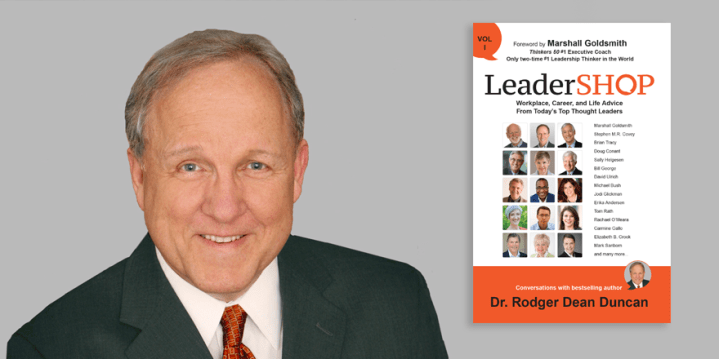 ***********************************
Rodger Dean Duncan is bestselling author of LeaderSHOP: Workplace, Career, and Life Advice From Today’s Top Thought Leaders. Early in his career he served as advisor to cabinet officers in two White House administrations and headed global communications at Campbell Soup Company. He has coached senior leaders in dozens of Fortune 500 companies.
Doing More With Less: Avoid Fake Work

Doing More With Less: Avoid Fake Work
By Rodger Dean Duncan
In a question-and-answer session following a recent speech, I was asked the following question: “How should we respond when we’re constantly asked to do more with less?”
My answer might not have been particularly comforting, but it was honest: “The challenge to do more with less is industry agnostic,” I said. “Virtually everyone everywhere is being given that challenge. And I expect that will be an ongoing mantra far into the future.”
Judging by the expression on the questioner’s face, I suspect that wasn’t what he wanted to hear.
But I wasn’t finished. The good news, I told him, is that the “do more with less” challenge presents a golden opportunity for smart, proactive people.
 Most anyone can do less with more. That’s a no-brainer. Doing more with less requires strategic sorting of priorities. It’s fairly common for business people to tell me that in their organizations “everything is a priority so, therefore, nothing is a real priority.” That’s the equivalent of saying you’re too busy driving to stop and get gas.
One of the most useful ways to sort priorities is to launch a relentless search for fake work.
Fake work is work that’s not explicitly aligned with the strategies and goals of the organization.
Now let’s be clear. Most fake work is not deliberate. Most fake work is perfectly well intended. People who engage in fake work—and that’s most of us at least some of the time, and some of us most of the time—just don’t notice that what they’re doing is not producing intended outcomes.
It’s not that people doing fake work aren’t busy. They’re often very busy. But they mistake activity for results. And working hard is not a barometer, because you can work very hard and still be building a road to nowhere.
You might be doing fake work because you were told to do it. You might be doing fake work because you’re rewarded for doing it.
Fake work thrives when needed results are not clearly and thoughtfully articulated. Fake work thrives when people don’t honestly challenge the value of their activity.
Companies often set expectations, write job descriptions, and review performance in ways that actually promote fake work. This means you can follow directions, complete your assignments, and even get promotions—while spending most of your time on fake work.
Here are some warning signs that people in your organization may be building a road to nowhere:
Of course there are lots of other signs on the road to nowhere. You could make a list of your own.
Most people don’t want to do fake work. Most people want to feel that they’re making positive contributions to meaningful accomplishments.
Remember: Fake work can be invisible because it often masquerades as real work. (Real work is critical activity that explicitly aligns with key goals and strategies.) In this age of everyone trying to do more with less, it’s more important than ever to identify fake work, eliminate as much of it as we can, and replace it with real work.
Here are five quick tips for focusing on real work:
When you’re asked to do more with less, regard the challenge as an opportunity. Your strategic approach to priorities will set you apart from the complainers and establish a positive example.
That should come in really handy at promotion time.
 ***********************************
Rodger Dean Duncan is bestselling author of LeaderSHOP: Workplace, Career, and Life Advice FromToday’s Top Thought Leaders. Early in his career he served as advisor to cabinet officers in two White House administrations and headed global communications at Campbell Soup Company. He has coached senior leaders in dozens of Fortune 500 companies.
A Focus on What Is Working
 The following is an excerpt from Building Resilience with Appreciative Inquiry by Dr. Jeanie Cockell and Dr. Joan McArthur-Blair
A Focus on What Is Working
By Dr. Jeanie Cockell and Dr. Joan McArthur-Blair
In a problem-based world, it is very challenging to keep a leadership focus on what is working. We believe that focusing on what is working matters as a practice that builds appreciative resilience. Leaders are bombarded by problems every day. A focus on what is working pulls them out of that mindset of problem- and deficit-based thinking to begin to see what is right and what is good inside a team or an organization. Joan worked for a president who made this a practiced part of her leadership. She started every meeting with the question “What do we have to celebrate?” As Joan and other leaders in the room shifted their mind-set to uplift the stories worth celebrating, the entire feeling in the room shifted. The thinking shifted from “We have problems” to “Yes, we have problems needing to be solved, but we also are doing some things right.”
 This particular leader had several catastrophic events occur within the organization in a short period of time. Joan always noted that she started every conversation during those very difficult times with some version of celebrating the skills of the people handling those events.
Focusing on what is working inside a team or organization builds resilience for the individuals and the group by constantly reinforcing a drive to be excellent, not because of fear, but because their successes are celebrated. Celebrating what is working is like depositing resilience into an emotional bank account for later use. This bank account helps leaders deal with uncertainty, fear, and stress. In a crisis, a leader can tell others, verbally or through action, that their jobs, livelihood, and reputation are on the line, or they can share what is working well and uplift the drive of people to repair and rebuild.
It takes a conscious and mindful effort to focus on what is working. It takes the practice of pausing and thinking through the situation from multiple perspectives and asking powerful questions. This practice is easier in hopeful times, and we suggest that these are the times to begin the practice. If leaders practice a focus on what is working in hopeful times, they will find it much easier to do when a crisis arises. It is difficult to focus on what is working in times of despair, yet it is possible if one has practiced in times of hope. As leaders move through the element or state of despair, it is very difficult not to assign blame, seek justice, dole out retribution, or withdraw. In forgiveness, one must hold what is working close to one’s leadership heart, because a focus on what is working and forgiveness are linked together. Without leaders focusing on what is working or on what is possible, forgiveness cannot happen.
Focusing on what is working well is a practice that trains leaders to seek out the appreciative stance and, in doing so, discover what can be built on and taken into the future.
***********************************
About the authors
Dr. Jeanie Cockell and Dr. Joan McArthur-Blair, co-presidents of leadership consulting firm Cockell McArthur-Blair Consulting, are the co-authors of Building Resilience with Appreciative Inquiry. The veteran consultants’ latest book explores how leaders can use the practice of Appreciative Inquiry to weather the storms they’ll inevitably encounter and be resilient.
Forgiveness: Rising Again
 The following is an excerpt from Building Resilience with Appreciative Inquiry by Dr. Jeanie Cockell and Dr. Joan McArthur-Blair
Forgiveness: Rising Again
By Dr. Jeanie Cockell and Dr. Joan McArthur-Blair
How do we put down the burden of nonforgiveness when carrying it seems so justified? There are so many experiences in organizations that seem unforgivable. People who are otherwise good betray others, become in one’s eyes untrustworthy or incompetent. In the larger world, there are acts that are perpetrated in hate and anger that seem undeserving of forgiveness.
When we first began the journey of exploring building resilience with appreciative inquiry, we wondered about what it is that opens the door to the possibility of returning to a state of hope, however transient that might be. We deeply understood that the practice of hope and a hopeful view offered the ability to find hope in the tiniest of places. In finding that hope and a hopeful view greater resilience could be created. We also recognized that tapping into strengths and capabilities in times of despair was a powerful sustaining force.

As we read, thought, and worked with leaders, we began to recognize another element at play in resilience: forgiveness. It wasn’t something that just happened along the way. Leaders decided to enter into the state of forgiveness with grace and power so that they could move themselves and their organizations forward. In the appreciative resilience model, forgiveness is the most difficult element to practice, because in organizations, the thinking often is that people should be punished, removed, or banished. In forgiving self and others, a leader chooses to be in a state of acceptance of what is and begins to move forward from that place.
Forgiveness offers a place where dialogue can begin and change can take place. Practicing forgiveness is very challenging because of the sheer will it takes to enact. Forgiveness is a conscious act that requires one to examine one’s leadership and deeply forgive failures—others’ and one’s own. As one interviewee stated:
Forgiveness is one of the fundamental necessary things we need to have happen in our lives. I wish I had more. I wish forgiveness came easier to me. Forgiveness is very important. In any human system, you are going to have a problem with someone else. Somebody’s going to do something that offends you, or you misperceive and it is offensive to you; whatever it is, you see it as a slight or an attack, and if you hold on to that, you really can’t move forward in a human system together.
It is only through forgiveness that we literally have our minds changed and can see the possibilities before us. Forgiveness is a means of moving toward hope and sometimes of just living with what is unchangeable in our leadership lives. Forgiveness creates a space for leaders to let go of anger and hurt and look forward with realistic expectations.
**************************************
About the authors
Dr. Jeanie Cockell and Dr. Joan McArthur-Blair, co-presidents of leadership consulting firm Cockell McArthur-Blair Consulting, are the co-authors of Building Resilience with Appreciative Inquiry. The veteran consultants’ latest book explores how leaders can use the practice of Appreciative Inquiry to weather the storms they’ll inevitably encounter and be resilient.
That’s A Little Too Far Out There!
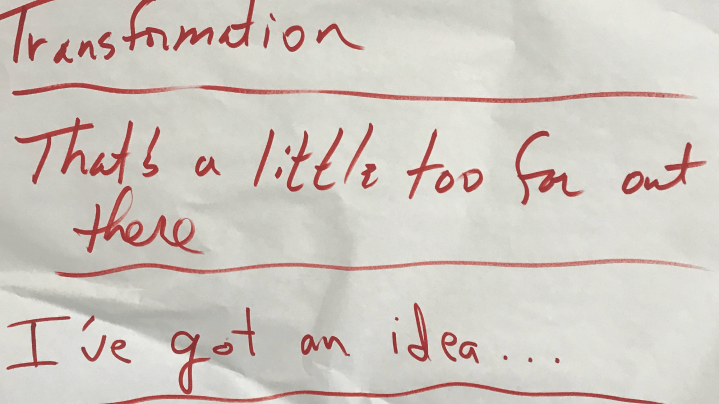 This past weekend, at our Carolinas 3D Leadership gathering, I was recording comments during a planning discussion for a project they were working one. It struck me that at one point they went from talking transformation to the comment, “That’s a little too far out there.” I’m thinking to myself, “Uhm…if it’s going to be transformational, it probably needs to be out there.” I’ve always believed, and I we often see this; the idea that seems crazy at first turns out to be the idea that propels the organization forward or enables the desired transformation.
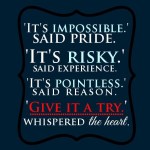 As I see it, passion, purpose, and capacity are the only requirements for coming up with and participation in “way out there” ideas. And, once the freedom to try out new ideas becomes ingrained in employees’ behavior, it can spread and transform the entire culture of your organization to be nimbler and more creative.
We need to create environments where we can challenge the status quo as if no one’s judging you. If being open and willing to try out new ways of working isn’t practiced and encouraged in the culture at the top of the organization, how anyone ever have the courage to voice their ideas?
The secret to truly agile and innovative organizations is this: they encourage and invite new ideas from all levels and see leaders at every level. So, next time you have that idea that might just go too far, voice that “crazy” idea regardless of your title or level; lead from where you are!
 Byron's Babbles
1 comment