Telling Your Leadership Story

Dr. McCormick (10th from left) With Our Focused Leader Academy Participants
 After breakfast and the sharing session on the learning from our meal at Ulen Country Club it was time to explain why in addition to the normal fresh flowers, crayons, markers, fresh fruit, and butcher paper there was a $100 bill taped to the tables. I explained it was now their, FLA participants, turn to plan a meal in order to tell a story. My instructions were to prepare a meal that had an appetizer, main course, and dessert that told the story of their journey as a teacher leader and of our school. I gave these instructions at 9:30 am and told them the meal would be at 12 noon. I also told them to plan as if they would have some type of government official present to tell the story to. A few questions ensued, but for the most part they got started.
It was amazing to watch the process unfold. Different leadership styles emerged. Some went straight to doing, others to planning. Others began developing the story. Then about 30 minutes in they all began to check on each other. The appetizer and main course groups realized they were developing along the same story lines of “selling the steak and not the sizzle” and “under fire.” Quickly, they all all came to the conclusion to use a Mexican food theme and serve fajitas.
 In normal form for me, I then added two last pieces to the design sprint. I told them they could get another $100 through a non competitive automatic grant (I called it the LWFS Grant – Leading With Food Stories Grant) if they wanted it. One group applied and received the grant, but in the end did not use it. This caused a great discussion about budgeting, having too much money, and being able to move the money where it was needed. My philosophy is to have as few buckets in a budget as possible. This way money can be used where it is needed the most to make strategy reality. Also, we talked about that with less buckets we eliminate the trap of people/departments spending money just because they have it. This was a great philosophical discussion and real world budget lesson for our teacher leaders and future school leaders.
The other new wrinkle I added was that there really would be a government official in attendance. I had arranged for our Indiana State Superintendent of Public Instruction, Dr. Jennifer McCormick, to be in attendance to have lunch with our teacher leaders and hear there journey told through food and a meal. My only regret was not having a camera ready or a video going when I told them, because it was truly an “Oh Shit!” moment. The look on their faces said, “Oh Shit, this is really happening. We have an hour and a half!” I laughed because their theme of “under fire” was coming true and very appropriate. We all know that leaders grow leaders. This why I have taken it as my personal charge to develop, grow, and improve our Focused Leader Academy. Remember my rules for learning: For accelerated leadership growth we must create an environment where our developing leaders experience fear, excitement, anxiety, and experimentation. This design sprint of preparing a meal to tell a story really did this. For rapid growth we must create real time, real work experiences of:
- Fear
- Excitement
- Worry
- Anticipation
- Terror
- Thrill
- Anxiety
- Experimentation
- Risk
- Possibility
Additionally, I watched in amazement as one group proceeded to clean and make sure the convening space was just right. They went and got table clothes, bulletin board materials, and everything else needed to make our commons area perfect for the event. I was so impressed because I really hadn’t thought anything about that.
When asked why I was so calm, I told them I had total faith in them and the only piece I had to worry about was whether Dr. McCormick would show up on time, call in sick, or forget. I was not expecting any of those, but you never know. As I expected, Dr. McCormick showed up about 10 minutes prior to the start time for lunch. My part was done!
 As for lunch…It was perfect! I am so proud of our FLA members. They planned the perfect lunch menu in buffet style. They had set up and decorated three tables for eating and visiting. The appetizer group went with Dr. McCormick first through the buffet line for appetizers and then had her sit with them and they explained the story they were telling with the appetizers. They then ate the appetizers and visited. Then it was the main course team’s turn to go through the buffet line with her for fajitas, tell their food story, and visit while eating at their table. Then, last but certainly not least, since they were serving Gigi’s Cupcakes and ice cream, the dessert team used the same format as the other teams. Again, and I know I am biased and sort of like the proud papa here, it was PERFECT!
For more details, a picture really is worth a thousand words. I am going to let the graphic recordings that Mike Fleisch did during the three courses of the meal fill in the details of the discussion. Here they are:


 After the meal and great discussion we gave Dr. McCormick the opportunity to say a few words or reflect. She spoke of how great it was to learn about our school and our development program for teacher leaders. She spoke of how education goes both ways – in other words, is all about learning from each other. Dr. McCormick also invited our FLA members to get involved on her advisory committees. Finally, she left the group with three very important and inspiring points:
- Be nice!
- Work hard!
- Be amazing!
Here is Mike Fleisch’s graphic recording of her comments:
 As you can see, this was quite the event. In my next blog post entitled Leadership Story Reflections, I will capture the group’s thoughts and emotions after the meal.
Leadership Breakfast Story
 This is the second post in a series of four that tells the journey of our Focused Leader Academy (FLA) learning to tell a story with food. Click here to read the first post entitled Feeding Leadership.
We started the day yesterday with my good friend and Graphic Recorder, Mike Fleisch, and I telling a story of our six year journey working with teachers together by cooking breakfast. We had so much fun planning for this and wanted to model storytelling, like we had learned from … the night before. This was so much fun and really caused a lot of reflection on the part of Mike and I.
Most importantly, we noted the fact that we practiced our normal “Jazz Improvisation” when putting this breakfast together. I would say, let’s have this and Mike would say yes and I can bring this to top it off and make it really cool. Honestly, that’s how it works with us. We have become such great friends and convening partners that we can visualize what each other is doing and improvise the next part of the music, so to speak. That was an important part of this story for us to tell. What sets Mike and I apart from others who bring groups together for professional development is what sets jazz apart from other music – this cool thing called improvisation.
Jazz is certainly an art of the moment, but it is also an art in and of a particular history, and history flows out of every note played. Mike and I practice adaptive leadership, what I’ll call Jazz, of the moment and become artful in differentiating for the moment. Our form of leadership jazz is also rooted in life, it takes all that life has to offer and makes a rich amalgam with the history and context of the teacher leaders we serve in our Focused Leader Academy.
Here was our breakfast:
- Starbucks Coffee – coffee from a socially responsible company was important to Mike and I because we both want to be a part of social change and making the world a better place.
- Titus® Donuts – These are the official donut of FLA. We felt it was important to go ahead and make the staple and constant product available. An important thing for leaders to do, even when introducing new and exciting things.
- Mixed fruit cups – When Mike and I first met and started facilitating together, we both came with different talents, beliefs, and skills. Just like when you put different fruits together with different tastes, textures, and colors it makes something really amazing. And, Mike did his usually of adding the artistic touches of shaved lime and real whipped cream on top. Improve at its best!
- Then came an awesome cheese dish with toast that Mike made with Wisconsin Cheddar cheese since he is from Milwaukee, Wisconsin.
- Eggs – We wanted to serve eggs because we wanted this to represent how great leaders differentiate and meet those they serve where they are. We represented this by preparing the eggs to order – over easy, over hard, sunny side up, scrambled, or the most complex order of the morning: one whole egg and three egg whites scrambled together.
- Goetta – First let me explain what Goetta is. Pronounced “get-uh”, the sausage-type patty is pretty synonymous with Cincinnati (where Mike lives), though its roots are steeped in the “Queen City’s” German heritage. Goetta employs steel-cut or pinhead oats to extend the amount of pork and beef scraps that are then blended with spices, formed into a log, sliced, and fried. We chose Goetta because each month I go spend a day with Mike and plan out our weekend retreats. He always has some new cultural thing for me to learn and we go to his favorite places. One time he took me to a great restaurant where I had Goetta for the first time. This is one of the discoveries that has remained closest to my heart. It proves how relationships and trying new things can change our lives and cause us to grow.
- Non-alcoholic Mimosa – Bottom-line it’s elegant and can be made with so many combinations. Think about it, you can really add in any of your favorite fruits – peaches, blueberries, kiwi – the possibilities are endless. Mike and I like trying new things, putting new models into play, and iterating. It was the perfect drink to top off our breakfast storytelling.

So, let me finish by talking about the very important leadership skill of storytelling again. Everybody talks about ‘storytelling’. It’s a leadership buzzword – I hate buzzwords. That’s why we are used ‘food stories’ as our through line this weekend. Storytelling is something we’re all meant to be doing (or think we do already) as leaders. But, do we actually know how to tell a story? How are stories structured? And what makes a story impactful? It is very important to learn storytelling skills that move those you lead to action, whoever they may be.
Here are three things Mike and I expected our teacher leaders to take away from our Leadership Breakfast Story:
1. Learn how to use stories to communicate complicated messages and data without jargon and without the dreaded ‘death by PowerPoint’. If you want me to become un-engaged, just pull up the PowerPoint. Note: technology is not allowed, except for Tweeting, at any of our FLA retreats.
2. Learn how to use stories to influence others, and persuade them in a human and authentic way.
3. Learn how stories make your messages more memorable and more likely to be passed on.
Just like I said in Leading With “Food Stories”, “Subconsciously, when you eat something, your brain is always comparing it to what you’ve had previously, the place you were eating it, and the people you were eating with. Think about it – our brain tries to find connections and similarity. Just like being able to tell stories is a very important leadership trait, the more powerful story behind the food, the more it evokes the memory, which in turn enhances the flavor. There is no doubt that flavor is inextricably linked with memory and emotion. They’re all processed by the same part of the brain,’ planning the food for a meal is an excellent way to learn and model storytelling.
What foods would you use to tell the story of your leadership journey?
Feeding Leadership

Starting In The North With Chef Nick!
Really this comes down to personal influence. What is the power of personal influence? Paul Hershey and Kenneth Blanchard, in their book Management of Organizational Behavior, describe it this way: “To the extent that followers respect, feel good about, and are committed to their leader, they will see their goals satisfied through the goals of their leader.” When there is internal motivation, close supervision is not required, and the leader is effective. This is the kind of leadership that makes teachers effective in their work. It also reduces tension and stress.
Unfortunately, we leaders can tend to be more concerned about tasks than people. We have board meetings to prepare for, committees to attend, agendas to develop, phone calls to make, paperwork to do, and a gazillion other things that are, just that – things to check off mob a checklist. I would argue we communicate a lack of trust when we refuse to delegate tasks and then give people the freedom to pursue the task in their own style. By encumbering ourselves with paper shuffling, we lose contact with people. By staying in direct personal contact with the development of those we lead, we are able to develop the technical and leadership skills of those we serve.
The cure to this is spending more time with your leaders, in my case: teacher leaders. Make no mistake, this takes time and some rearrangement of your ordinary schedule. But more than that, it requires an adjustment in thinking. Here are two ways to care for and feed your leaders:
- Committing to Leadership Development
- Make it a priority to give professional growth time to developing leaders
Two avenues I have found to do this effectively are task forces and our Focused Leader Academy (FLA). The goal for both is to have teacher leaders developing while actually serving in leadership roles and working on real leadership issues. I just received a message from a teacher leader, Cassidy Thomas, that I was deeply touched by and one sentence in the note really drove home the importance of this idea of training leaders while under fire and working on real school issues: “I truly feel that I have grown so much just as a person from the opportunities that you have provided me in just a little over a year. First experience toward the end of last school year where I got the phone call, will you be a BA… I felt…anxious, nervous, flattered, several emotions.” I have always said that for real professional learning to be happening there must be both excitement and some fear.
 So, let’s talk a little about what we did this weekend at our FLA retreat (design sprint). By using the through line of telling leadership stories through food, our FLA participants first learned from Chef Nicholas Townsand and Bar Manager Patrick at Ulen Country Club Friday night on how to prepare a meal to tell a story. Nick and Patrick took us from a journey starting in the north and ending in the south. Stories were told between each course and a long discussion of the meal preparation with Nick and Patrick took place after the meal. Our participants learned so much from the experience. We did a debrief Saturday morning using the prompts from the evening before of:
- Know your team!
- Where are we going to put the money, where are we not going to put the money?
- If it was just price, I’d run an Applebee’s®
- Plan, Organize, Execute
- Other Thoughts
Here are pictures of the prompts with our FLA participants’ responses:


 Then a great discussion ensued about lessons learned from Nick and Patrick. Here are the Mike Fleisch graphic recordings from this design sprint:


 Then we started the day Saturday with my good friend and Graphic Recorder, Mike Fleisch, telling a story of our six year journey working with teachers together by cooking breakfast. I am going to do separate consecutive blog posts from the other parts of Saturday. Here are the titles and graphic (so you don’t think Mike’s skills are leaving him, you need to know I did the agenda graphic) of our agenda from Saturday:
Leading With “Food Stories”
 Stories have always been shared over a good meal, but more and more chefs and artists alike are using the food itself to tell the story. I have become so immersed with this concept that I have planned a leadership retreat for this weekend starting tonight with food telling the story as the through line. Our Focused Leader Academy (FLA) participants will be learning from Chef Nicholas Townsand at Ulen Country Club tonight on how to prepare a meal to tell a story. I am super excited about this!
Then we will start the day tomorrow with my good friend and Graphic Recorder, Mike Fleisch, telling a story of our six year journey working with teachers together by cooking breakfast. I am not going to give the story away yet. You will have to wait for tomorrow’s post. Needless to say, we have quite the plan.
The narrative side of food really intrigues me. Subconsciously, when you eat something, your brain is always comparing it to what you’ve had previously, the place you were eating it, and the people you were eating with. Think about it – our brain tries to find connections and similarity. Just like being able to tell stories is a very important leadership trait, the more powerful story behind the food, the more it evokes the memory, which in turn enhances the flavor. There is no doubt that flavor is inextricably linked with memory and emotion. They’re all processed by the same part of the brain.
As a concept, “story food” is happy to pick and choose from any of these former trends, but with the intention of offering a non-verbal narrative through taste sensations. The challenge for the chef is to create tastes that manage to convey the message, while at the same time being pleasurable to consume. The best thing about “story food” is how accommodating it can be. Just as chefs tell a story with food, we as leaders need to be able to tell stories using our experience that inspire and guide those we lead.
Delivering a Sparkly Lake Lure Experience
 Guest post by Chip R. Bell
We checked into the Lake Lure Inn. Built in 1927, the antique North Carolina hotel served as command central for the making of the movie Dirty Dancing. You now can stay in the Patrick Swayze Suite or the Jennifer Grey Suite. Furnished with exquisite period furniture and meticulous attention to detail, the surroundings make guests feel elevated, enchanted, and enriched. If the experience were an object it would be a kaleidoscope!
We had dinner in their Veranda Restaurant overlooking the lake, only a stone’s throw away from our table. The staff was all locals from the small mountain town. They reached way beyond their plain heritage in a noticeable effort to create a sense of elegance and worth. After seating us at our reserved table, the maitre d’ presented the menus and wine list, and then graciously said, “Hope ya’ll enjoy”––not a phrase you’d hear at a five-star restaurant in Boston or San Francisco. There was an earnest effort to take the experience much, much higher than you would get at Nettie’s Diner down the street where the wait staff simply performs their tasks.
The difference between the Lake Lure Inn and Nettie’s Diner came primarily from a deliberate attempt to not take the customer for granted. Someone decided that this classy hotel setting should come with an equally classy guest experience. Knowing they could not afford to import a Ritz-Carlton Hotel–trained wait staff, they entrusted their valuable reputation to young people recruited from the local Burgers and More. Then they trained them to not take the guest for granted but make their experience consistently and perpetually as elegant as the old hotel.
The next morning we were in too much of a hurry to wait for the hotel’s Sunday brunch, featuring eggs Florentine and fresh mountain trout. So, we stopped at Nettie’s for scrambled eggs, bacon, grits, and biscuits. The food was just as we expected—completely routine, plain vanilla, nothing out of the ordinary. As we looked at the Lake Lure Inn in the distance, we suddenly realized that, had we stopped at Nettie’s first when we came to town, the diner might not have seemed so plain vanilla. The Lake Lure Inn had altered our service expectations and Nettie’s would never be the same again—nor, would any other service provider for that matter.
Do all customers want every service experience be a Lake Lure Inn moment? Maybe not, but most customer definitely want something special. Give your customers a Lake Lure experience and watch them “check-in” with you again!
Chip R. Bell is a renowned keynote speaker and the author of several national best-selling books. His newest book is the just-released Kaleidoscope: Delivering Innovative Service That Sparkles. He can be reached at chipbell.com.
Blooming Leadership: Got Flowers?
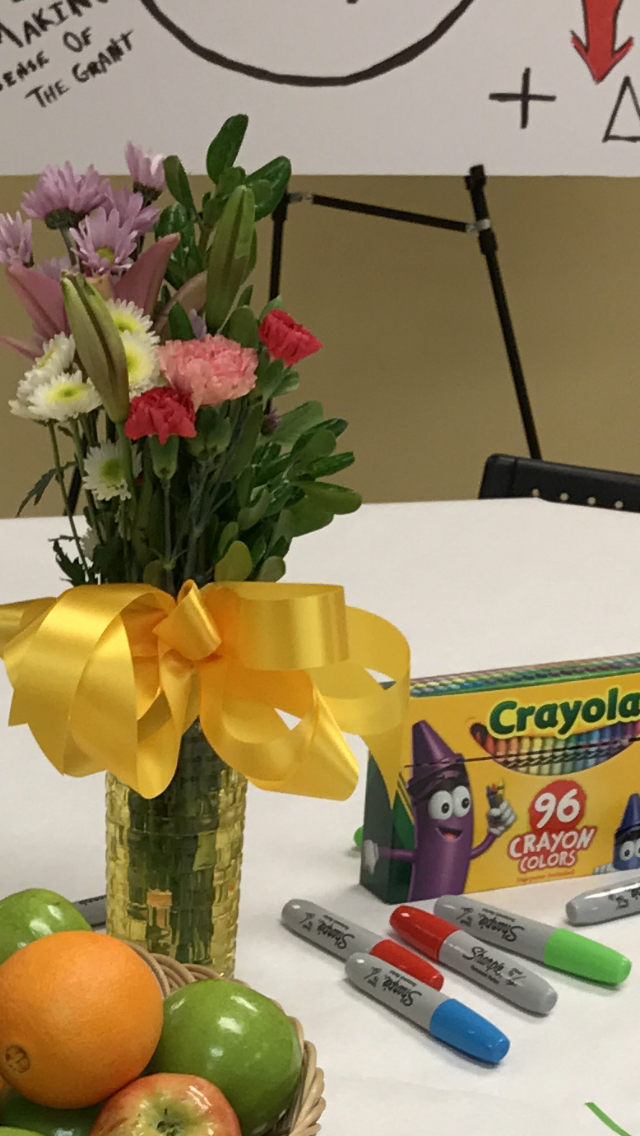 When planning big events, retreats, or task force meetings flowers should always be on the table. Flowers are every table conversation’s must-have accessory. Flowers have a place as the focal point in the middle of the table. According to a study conducted by Harvard Medical School, the right blooms may offer the perfect pick-me-up for attendees who don’t consider themselves morning people. So when you’re putting together your plans for the workshop, professional development, task force setting, be sure to include bright blooms front and center — it could have a big impact on the outcome of your meeting.
 Why Flowers?
Now when you think of putting flowers on tables you may think that it is a crazy idea and no one will really pay attention to the flowers in the meeting, but it has been proven that flowers can help the mood of the meeting and add a cheerful tone to any type of meeting. Just by adding flowers to your meeting tables can help you to make a long lasting impression on your clients and anyone else that might come to a conversation hosted by you.
For a team meeting, a floral arrangement put in the middle of the table can make the atmosphere more friendly and welcoming. Choose bright colors for the flowers and types of flowers that are cheerful, such as tulips. If the arrangement is to be placed in the middle of a meeting table, keep the height of the arrangement low enough that the participants can easily see each other around the table and conversation is not hindered by the flowers.
 Conversational leadership is an art, not a science. Use your own creativity when setting up the room. In addition to flowers, I like to put butcher paper on the tables and provide crayons and markers for doodling, taking notes, and graphic recording. Be sure to encourage people to write, draw, or doodle on the tablecloths in the midst of their conversations. Often these tablecloth drawings will contain remarkable notes, and they help visual learners link ideas.
 The flowers on the tables creates a special ambiance. They provide a focal point. Rigid positions seem to drop away as people listen together in order to discover creative connections. The flowers give everyone at the table something in common. At a task force meeting I hosted yesterday, I asked participants to comment during our +/^ session on the flowers. Everyone had actually thought about the flowers. Thoughts like, “I wonder when the Lilly’s will bloom,” to “I’m going to match my crayon color to the flowers,” to “Im glad the flowers are not blocking my view to the person on the other side.” Bottom line is they noticed and likened the flowers and they had served as a focal point. Flowers help us focus when you’re not talking and are listening together with others focused on the ideas in the middle of the table.
I believe flowers help us focus on opportunity and fuel energy. What do your tables look like?
Can You Let The Authentic You Out?
 Today, according to Adam Grant, a professor of management and psychology at the Wharton School of the University of Pennsylvania and the author of a new book, Originals: How Non-Conformists Move The World, we are in the Age of Authenticity, where “be yourself” is the defining advice in life, love, and career.
Authenticity
Authenticity means erasing the gap between what you firmly believe inside and what you reveal to the outside world. As Brene Brown, a research professor at the University of Houston, defines it, authenticity is “the choice to let our true selves be seen.”
We all have developed social filters or self-controls that prevent us from saying whatever may be on our mind at the time. If we expressed our true self and all the unfiltered thoughts that pop into our brain, we would probably be in a state of constant conflict and turmoil. Some things are just better left unsaid.
Self-Monitoring
How much you aim for authenticity depends on a personality trait called self-monitoring. If you’re a high self-monitor, you’re constantly scanning your environment for social cues and adjusting accordingly. You hate social awkwardness and desperately want to avoid offending anyone. But if you’re a low self-monitor, you’re guided more by your inner states, regardless of your circumstances.
Studies have shown that high self-monitors “advance faster and earn higher status, in part because they’re more concerned about their reputations. And while that would seem to reward self-promoting frauds, these high self-monitors spend more time finding out what others need and helping them.”
I would argue that this style reflects an insightful and empathic view of what’s happening to those we work with.
Rather than selling out, it’s a way to demonstrate how you can contribute to the good of the team and others along the way. This reflects positively on how you are viewed as a collaborator and a teammate. It does not mean that you live your work life in the selfless pursuit of the common good; it means that when what’s good for you, your team, and the organization are aligned, everyone wins.
If being authentic and a low self-monitor demands a greater level of self-disclosure about your feelings on a situation, then I can see the potential risk. I find that a candid appraisal of the impact of various decisions can be refreshing and stimulate good dialogue, but overly emotional responses get awkward and can stifle discussion.
Grant suggests that we focus on being sincere rather than just authentic.
I would also suggest we should make every effort to be sure that we are consistent and congruent in how we connect with others.
As I reflected upon this interesting perspective, it occurred to me that high self-monitors must have well-developed emotional intelligence and are probably highly empathic to those around them. Instead of focusing on how everything affects them and what they need, they first tend to focus upon the following questions regarding others:
- Why are they saying that?
- What are their needs for this effort or project?
- What would a good outcome look like for everyone involved in this discussion or project?
- How can they contribute in a manner that allows me to learn and grow?
Borrow and try to incorporate those styles as you grow and develop yours. Your ultimate transformation will always be the addition and subtraction of those behaviors and styles that work best. It does not diminish or sell out who you are, it’s just part of everyone’s life journey.
Ask yourself:
- Since you are not always the best judge of the impact you have on others, do you regularly ask for feedback in a manner that is efficient and effective for all involved?
- Do you regularly seek to understand before you worry about seeking to be understood?
- Do you exercise appropriate caution about how you present yourself to others on social media? Do you allow inappropriate social media tidbits to contradict the authentic self you are trying to project?
I look forward to your thoughts and comments.
****
Willy Steiner is the President of Executive Coaching Concepts, an executive coaching services firm dedicated to assisting senior executives in taking their individual and organizational performance “TO THE NEXT LEVEL”. He fine-tuned his skills in leading organizational change, building high performing teams and in devising innovative incentive systems with General Electric, RCA Corp. and Galileo International. Assisting executives in driving change by creating urgency, focus and alignment, with a keen eye for cultivating and sustaining necessary relationships, is an ongoing focus of his work. He is an expert in guiding organizations through complex international mergers and divestitures, blending distinct cultures and supporting growth in international markets.
For more about Willy, his new book, Discover the Joy of Leading: A practical guide to resolving your management challenges, and business, visit executivecoachingconcepts.com.
Listening as a Principle for Authentic Community Engagement
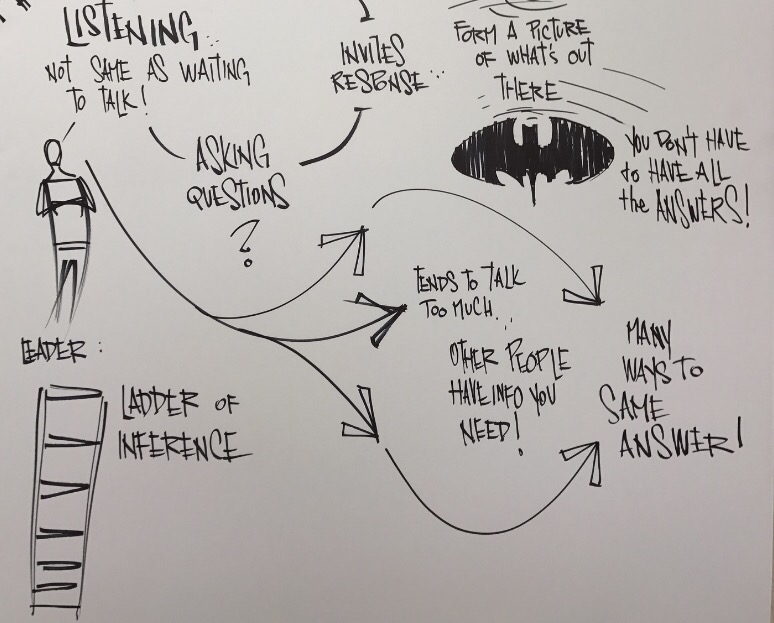 Lead with Listening Listening is a neglected skill, especially in change efforts. Often the leaders’ emphasis is on communicating a decision to stakeholders. When listening campaigns are con…
Source: Listening as a Principle for Authentic Community Engagement
Lady Gaga Walks The Walk
 I can’t wait for Lady Gaga’s half time show of the Super Bowl Fifty One tonight. Most of you know I am a huge Lady Gaga fan. This fandom started back in 2010 when I had the opportunity to see her in concert in Portland, Oregon. I was in Portland for a conference and sat down at a table for a dinner with six women who I did not know. They apologized that they would be leaving the dinner before it was over because they were going to see Lady Gaga. I probably said something super intelligent like, “Awesome, wish I was going so I didn’t have to sit through this dinner” (sounds like me doesn’t it?). Then one of the women said, “Hey we are going with a group of college sorority sister friends and one can’t go now at the last minute. Would you want to go?” Now, anyone reading this that knows me knows that I’m not turning down an adventure, no matter what it is. I was in! The rest is history, I have been a Lady Gaga fan ever since.
Now I know Lady Gaga causes controversy, her music might not be your cup of tea, but it is certain that you will be familiar with the girl from the Lower East Side of New York who in a few short years transformed herself from Stefani Joanne Angelina Germanotta into one of the world’s best-known musical performers. This post is about Lady Gaga – leader that walks the walk.
“When I wake up in the morning, I feel like any other insecure 24-year old girl. Then I say, “Bitch, your Lady Gaga, you get up and walk the walk today.” ~ Lady Gaga, Rolling Stone Interview June, 2010.
I love the fact that Lady Gaga walks the walk. There are many leadership lessons we can learn from her. When it comes to authentic leadership, Bill George identifies five dimensions and their respective characteristics that someone must develop in order to be an authentic leader (George, 2003). The five qualities authentic leaders demonstrate are:
- Understanding their purpose
- Practicing solid values
- Leading with heart
- Establishing connected relationships
- Demonstrating self-discipline
 Lady Gaga has been referred to as the queen of the outcasts because of her support of individuals who ride the boarder of social outcasts and underdogs. As everyone knows, Lady Gaga is far from what most people call “normal” and as a result suffered much bullying growing up. Propelled by her own experiences, Lady Gaga made it her purpose to help others rejoice in their individuality and not feel like outcast. In just this alone you can see the five qualities of authentic leaders being displayed.
Actually there have been many case studies done on Lady Gaga as a leader, including ones done by the Harvard Business School. Additionally, a case study done by Jamie Anderson and Jörg Reckhenrich of Antwerp Management School and Martin Kupp of ESMT European School of Management and Technology dives into the idea of leadership projection. The concept of leadership projection is an integrative approach of communication, behavior and aspiration that provide a leader with wide recognition across an industry or sphere of public life – in the case of Lady Gaga, social change. An important element of leadership projection is the ability of an individual to project herself into a future role that is much more influential than the current state – again, this describes Lady Gaga perfectly. Leadership projection is very much about followership; after all, a true leader only exists if he or she can excite loyalty in others. It involves a communication approach that typically integrates three universal story lines to excite and gain buy-in from followers:
- Who am I – how life experience has shaped my individuality and character
- Who are we – demonstrates and guides the values and behaviours of a group
- Where are we going – explains what is new, and creates a sense of excitement about direction.
Because of Lady Gaga’s display of the five dimensions of authentic leadership (George, 2003), walking the walk of the three principles of leadership projection, and the number of lives she has changed because of her efforts, it is safe to say that Lady Gaga displays the characteristics of what I consider to be a true leader. I cannot wait to watch her half-time show of the Super Bowl later this evening.
Reference
George, B. (2003). Authentic leadership: Rediscovering the secrets to creating lasting value. Jossey-Bass.
Leading Conversations
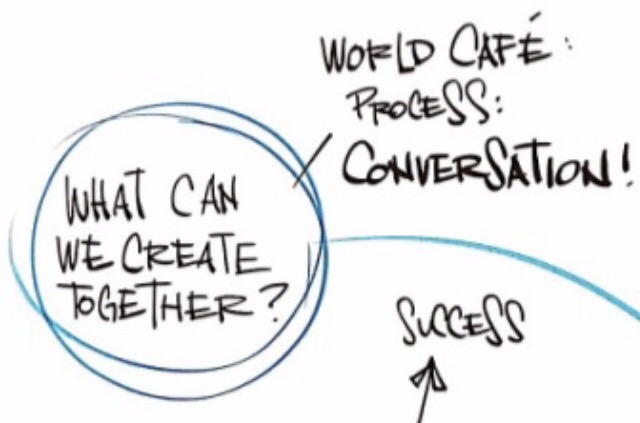 I continue to be amazed at how many people espouse to want to have great conversations and be a conversational leader, but really can’t help themselves from becoming a pontificator and problem solver. So many leaders leap right to answering the questions themselves. There are many reasons for this, but I believe for many it is just ego of hierarchy – he wants to be seen as the smartest or person who solved the problem. Authentic conversation that deepens a group’s thinking and evokes collaborative intelligence is less likely to occur in a climate of fear, mistrust, and hierarchical control.
I believe everyone is a leader. Everyone has the right, responsibility, and ability to be a leader. In fact, I believe everyone has the obligation to be a leader. We all need to lead from where we are. How we define leadership influences how people will participate. In my world with educators, teacher leaders yearn to be more fully who they are—purposeful, professional human beings. Leadership is an essential aspect of an educator’s professional life. This is why I spend a great deal of time working directly with our rising teacher leaders in our Focused Leader Academy.
We are building an organizational community for thinking more deeply together about key strategic questions. It has been my experience that results do come from the questions. The results lie in the personal relationships, the knowledge, and the mutual caring that gets strengthened in people’s conversations together about the questions, along with the discovery of their own answers.
What kind of conversations are you leading?
 Byron's Babbles
4 comments