Leading A Community of Experimentation
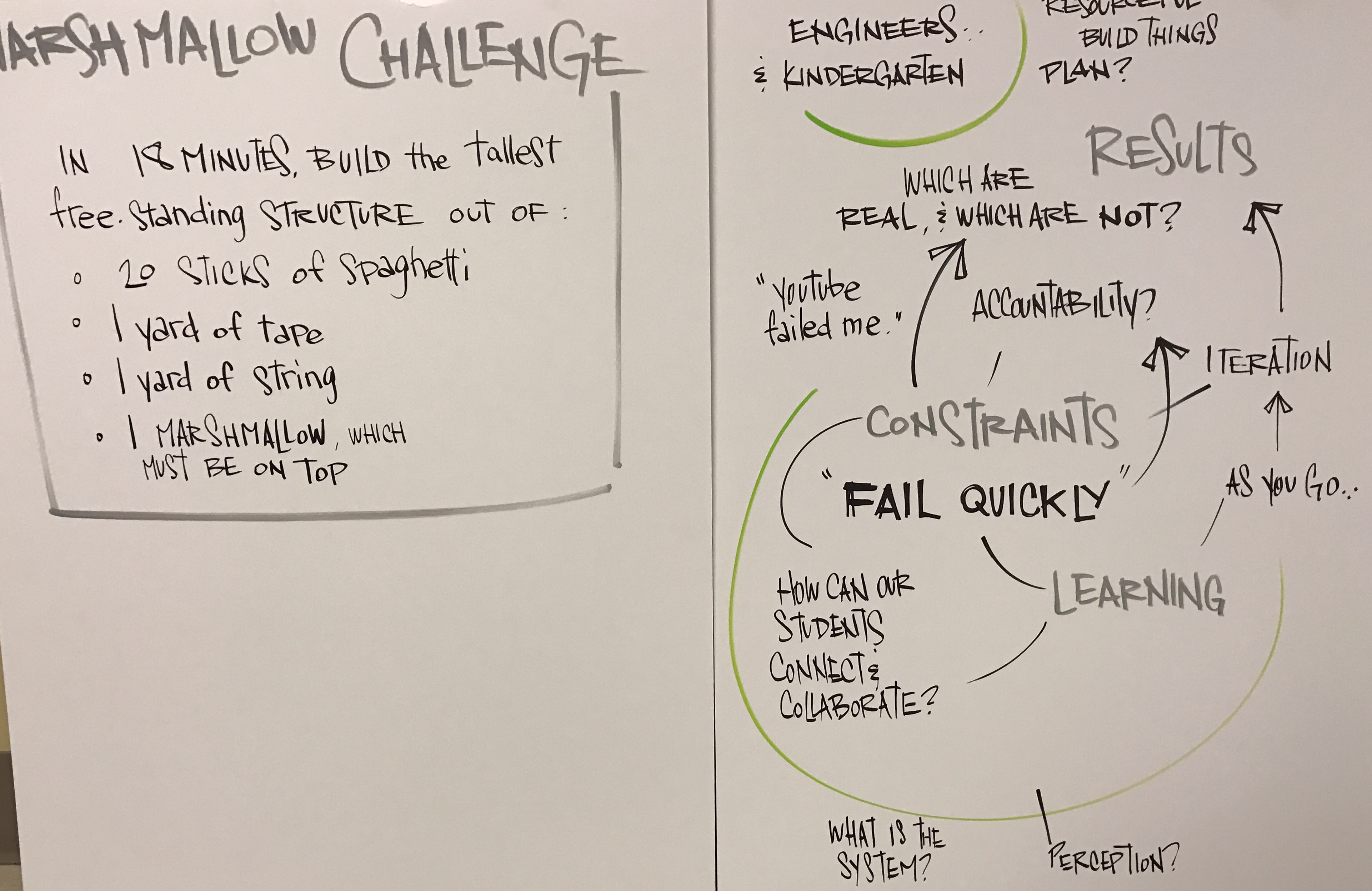
Mike Fleisch Graphic of Our Marshmallow Challenge Discussion
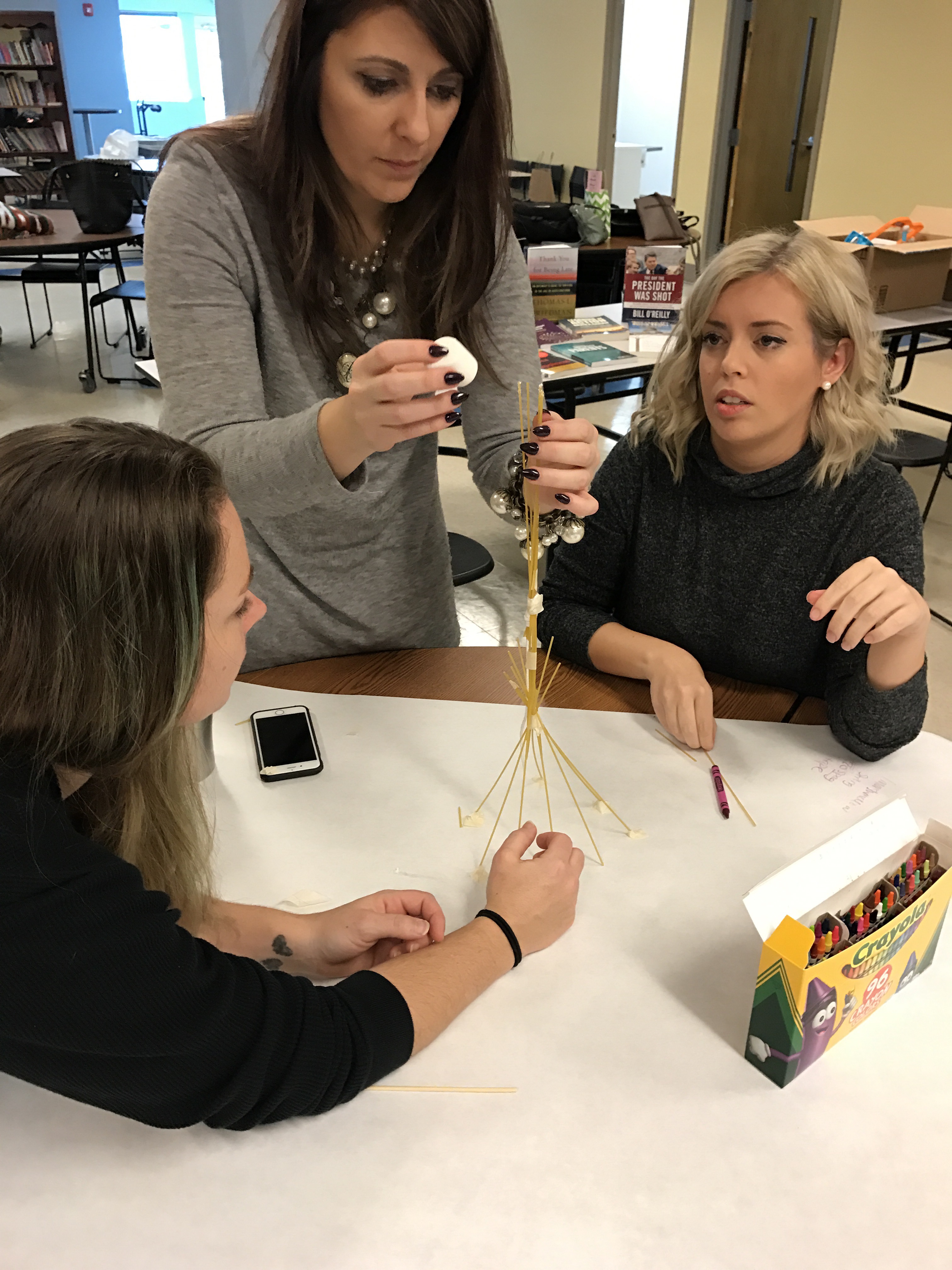 So, here is a generalization of what happened: They spent the first few minutes with someone establishing the leadership role, dominance, or trying really hard to be super collaborative. In a few teams’ cases one emergee as a leader. The next few minutes were devoted to planning. Construction began, usually with less than eight minutes left on the clock. Then, with about a minute to go, someone placed the marshmallow on top of the beautiful tower, and….it collapsed – failure.
 Kindergarteners and engineers do the best on this activity (see graph above). We decided that the kindergarteners win because kids don’t vacillate; they simply try something, and if it doesn’t work, they try again, and again, and again. Think about it… young children love to iterate. They are very curious.
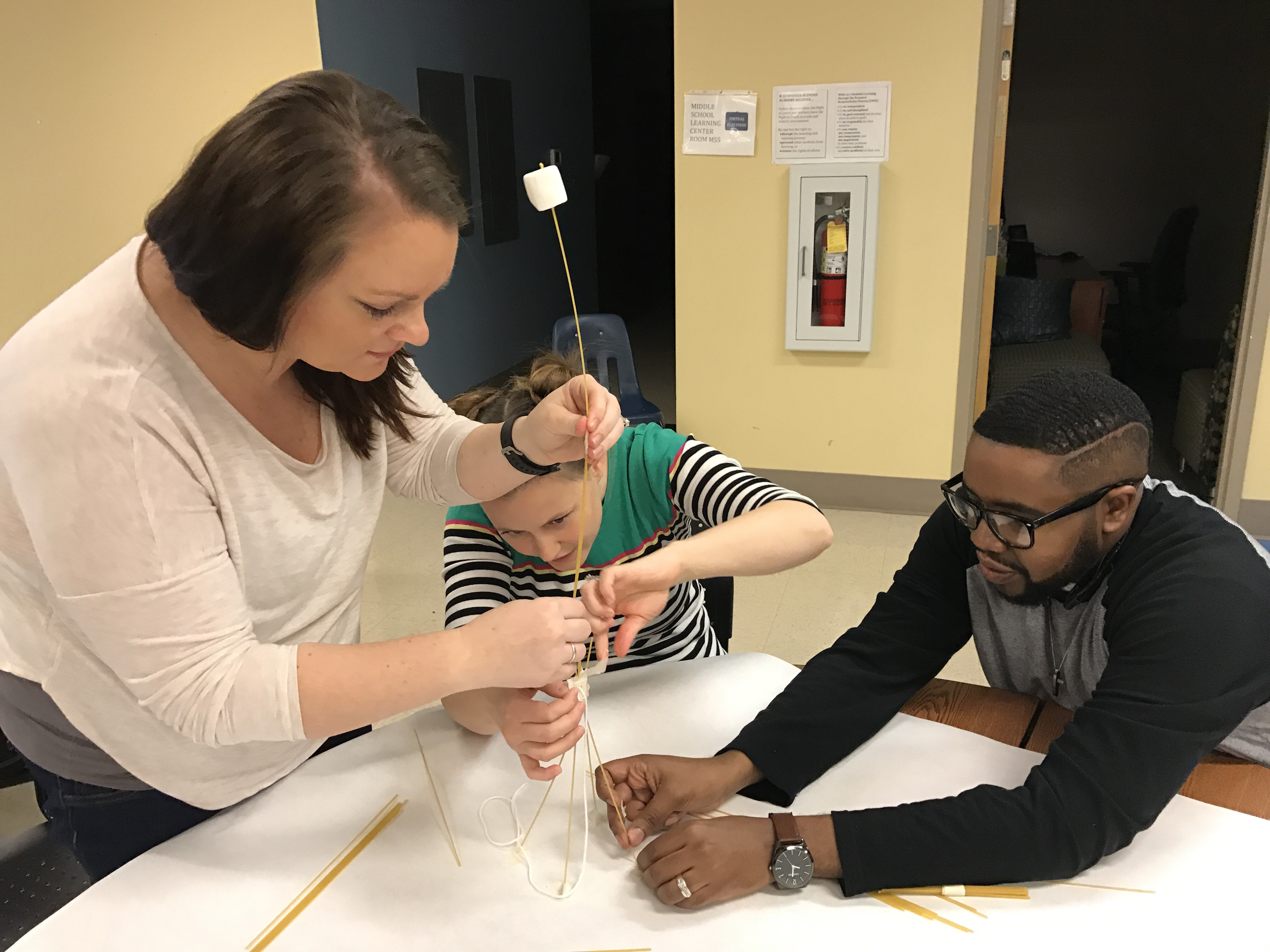 We concluded, in our post-challenge discussion (see picture for our Mike Fleisch graphic of the discussion), that engineers are good a this because they plan, build things, and are resourceful every day. In other words, engineers are quicker to understand how the spaghetti, tape, string, and marshmallow become a system together.
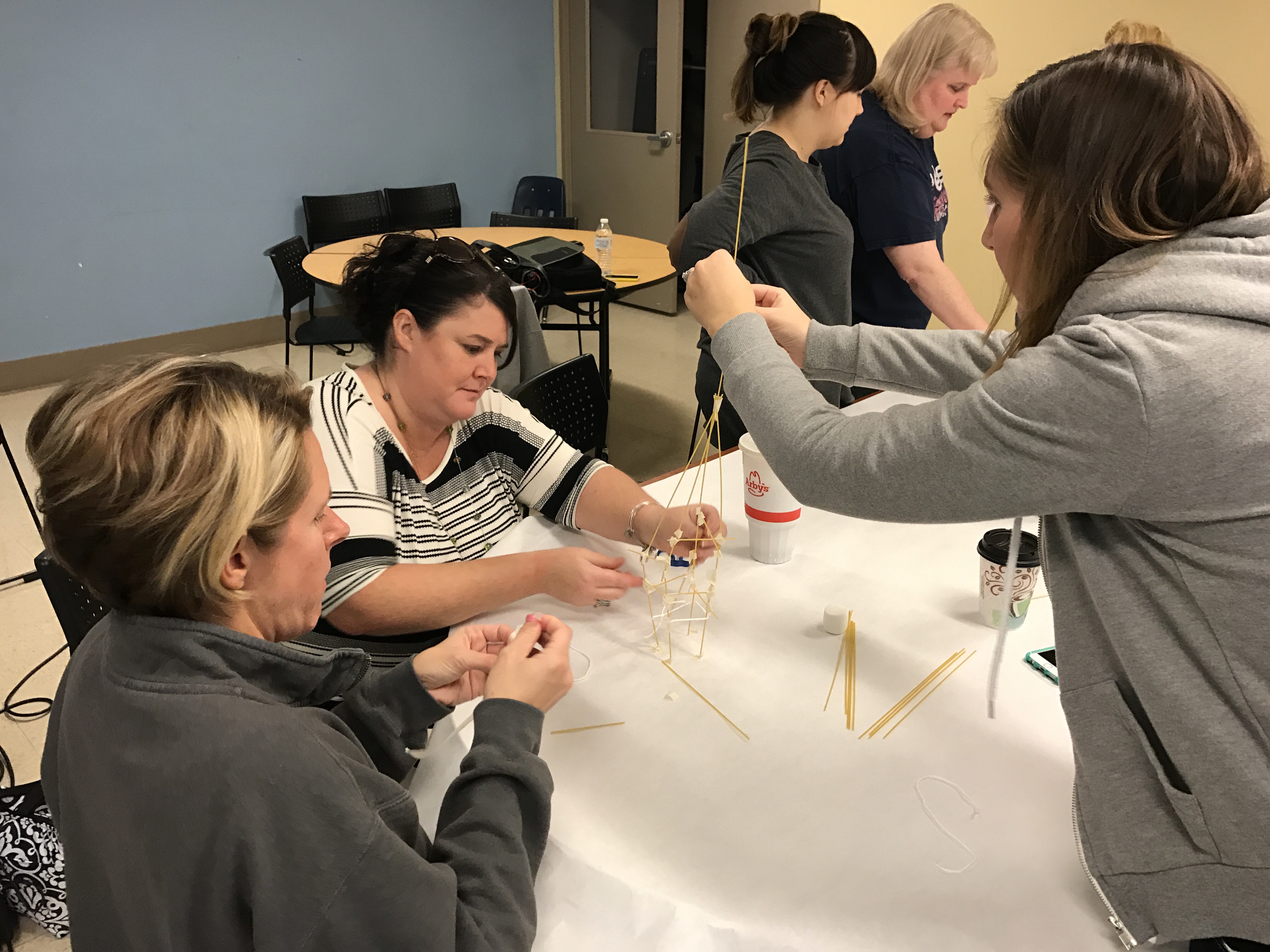 The big takeaway from our teams yesterday, however, was the idea of “failing quickly.” We are all familiar with the phrase “fail fast”, but what does that really mean? And how do you put it into practice? Failing fast isn’t about the big issues, it’s about the little ones. It’s an approach development and creation that embraces lots of little experiments and iterations with the mindset that some will work and grow and others will fail and die. And, that’s okay.
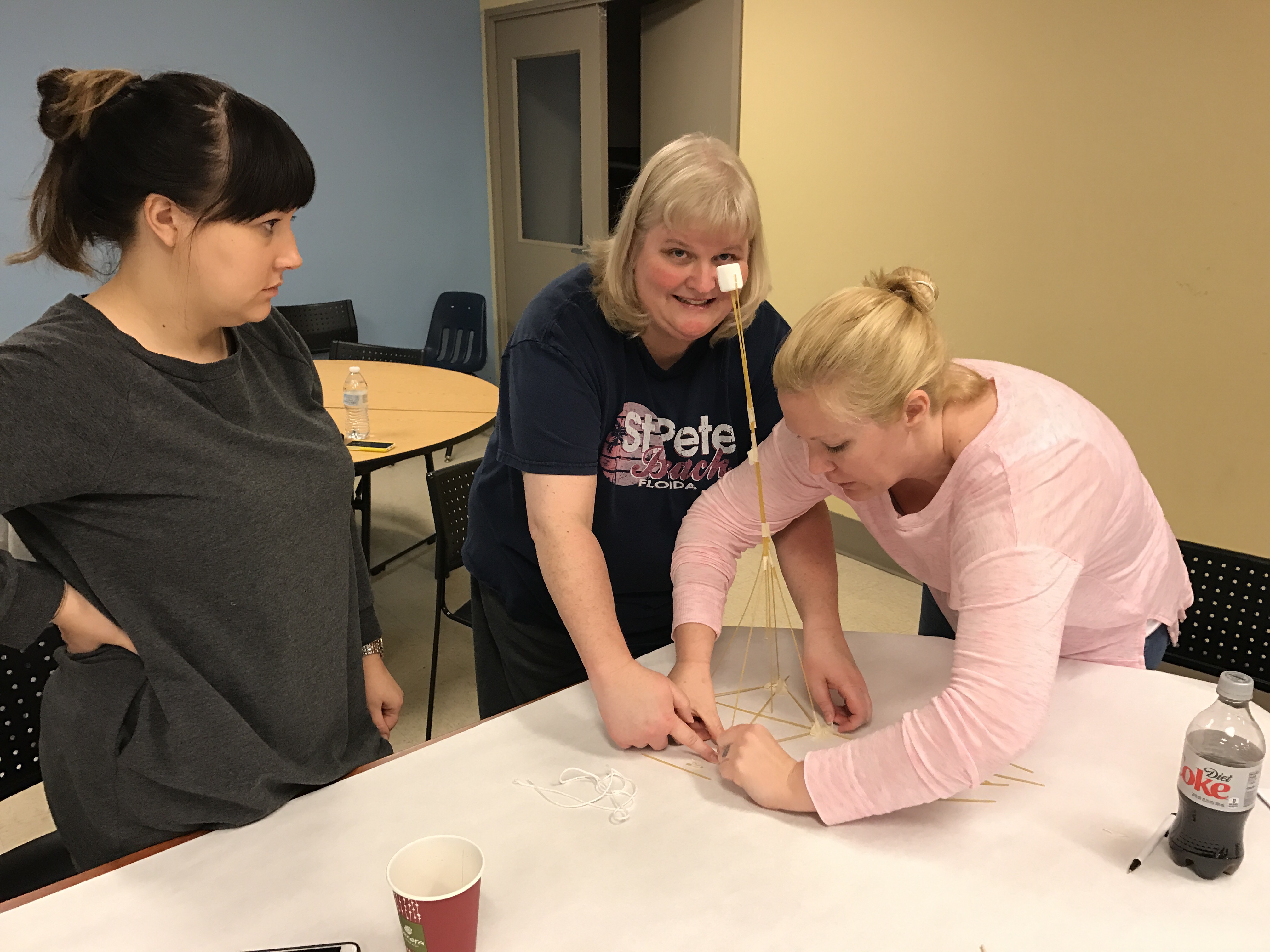 Develop a community of experimentation, be willing to try stuff, do it quickly. But if it’s not working, be willing to fail fast and pivot.
I Promise
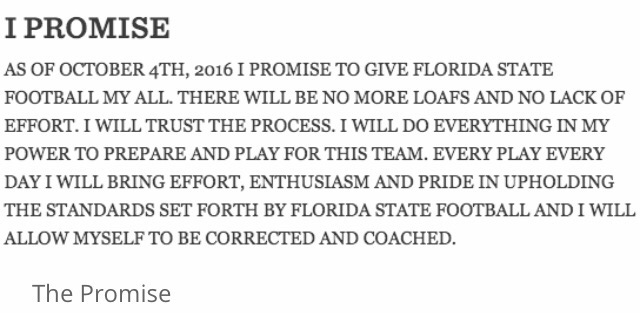 A signed copy of the promise pictured here sits in the locker of each Florida State player. After an awful start to Florida State’s season this past year, head coach Jimbo Fisher took an unprecedented step and presented his team with a promise and challenged them to sign it and live up to it.
As I read it I was struck by the simplistic way coach Fisher presented powerful points. It is really a well written combination of a mission and core values to follow. Here are the main points I take away:
- The commitment of “I promise to”
- No loafing
- Effort
- Trust the process
- Preparation
- Effort and enthusiasm in every play, every day
- Pride
- Allow myself to be corrected and coached
Just eight powerful points, but what a change in the season this battle cry brought about. The next game after the players signed the promise was a win against in-state rival Miami Hurricanes. Florida State won 20-19. “You cannot say that they did not play hard, that they did not play with fight, that they did not play with guts,” Jimbo Fisher said after the win. “We’re a work in progress but at least that heart and soul is there.” I am particularly struck by the point of “Allowing myself to be corrected and coached.” This is so important to all of us. We must continue to grow and develop each and every day.
On a day when everyone make New Year’a resolutions, I wander what would happen if we all just adjusted the promise to our own lives and then actually kept it; just like the Florida State Seminoles. Would you be willing to sign and hang in your locker?
Happy New Year!
What Can We Create Together?
 Whether you are the president of a company or the janitor, the moment you step from independence into interdependence in any capacity, you step into a leadership role. You are in a position of influencing other people. And the habit of effective interpersonal leadership is to develop a win-win mindset. Creating a community where win-win attitudes and behaviors is important work of leaders. So we need to focus on producing personal and organizational excellence by developing information and reward systems which reinforce the value of cooperation. We can develop this community by asking the question “What can we create together?” Remember, I now call the organizations, schools, or businesses we lead, the places we live, or even our families communities.
Unfortunately, most of us have been deeply scripted in the win-lose mentality since birth. Certainly there is a place for win-lose thinking in truly competitive and low-trust situations. But most of life is not a competition. We don’t have to live each day competing with our spouse, our children, our co-workers, our neighbors, and our friends. In Lesson #38, “Only One Winner,” in 52 Leadership Lessons: Timeless Stories For The Modern Leader, author John Parker Stewart points out we should “Replace internal competition with mutually beneficial and encouraging cooperation.” Most of life is an interdependent, not an independent, reality. Most results you want depend on cooperation between you and others. And the win-lose mentality is dysfunctional and detrimental to that cooperation and development of community. Community offers the promise of belonging and calls for us to acknowledge our interdependence.
The challenge for building a win-win community is this: While visions, plans, and committed top leadership are important, even essential, no clear vision, nor detailed plan, nor committed group leaders have the power to bring this image of the future into existence without the continued engagement and involvement of citizens. To do this I challenge you to as a leader help your community answer the question “What do we want to create together?”
Community Is The Culture
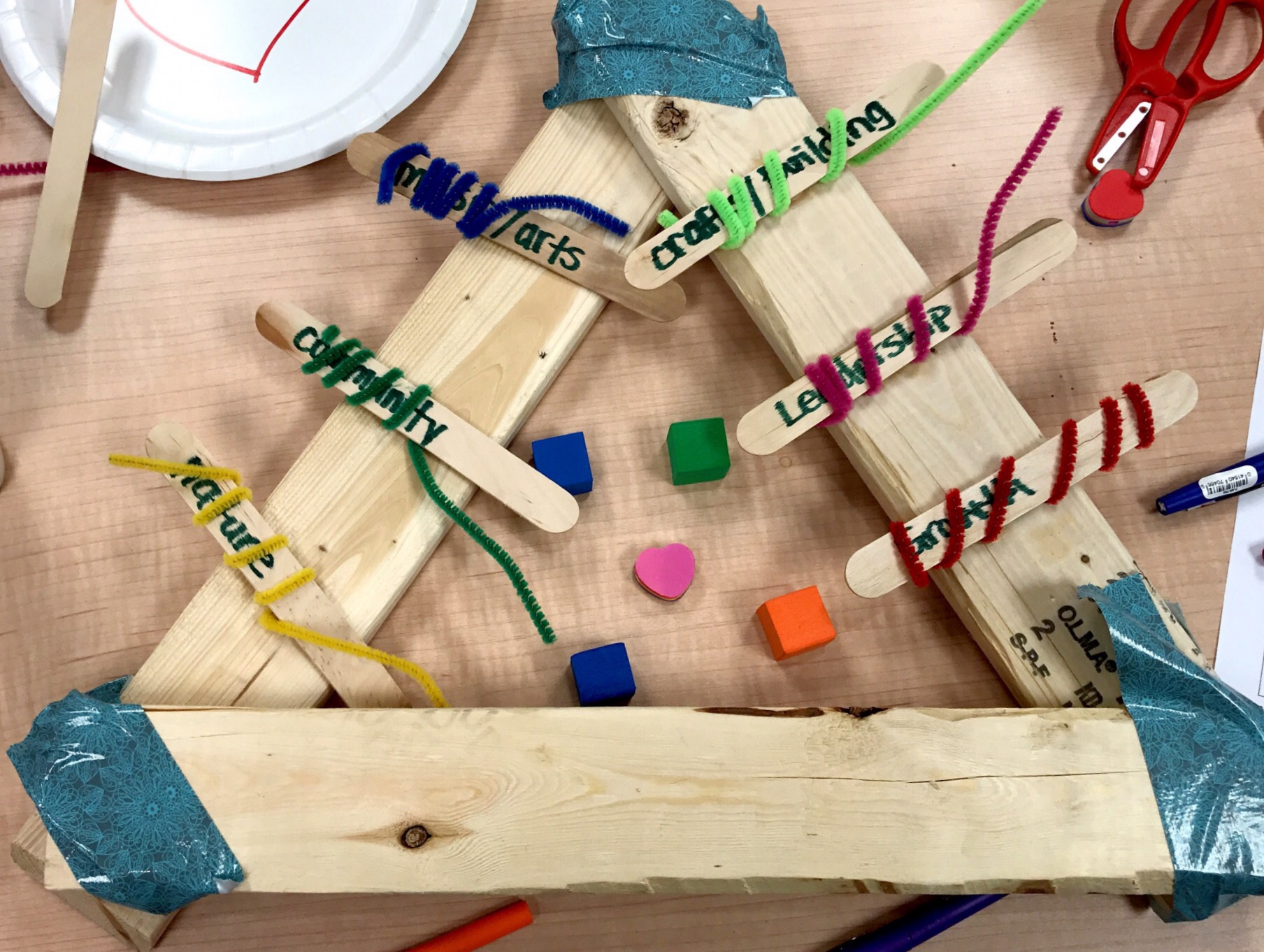
 This past week I had the opportunity with Mike Fleisch to do a design sprint (what others would call a workshop) on our school’s Focused Leader Academy. During our design sprint we built models together of what a community would look like where there is a serious commitment to developing leaders. I told the design sprint participants that I now described what we were doing as community building, not culture building. Culture emerges from the past values we develop together. I would rather us live in the context of the world we live in now and, more importantly, how do we want the world to be. With this worldview in mind, we wanted the group think about what a community of people in a school could create together.
Daniel Goleman said “Executives who can effectively focus on others emerge as natural leaders regardless of organizational or social rank.” These leaders are the ones who find common ground, whose opinions carry the most weight, and with whom other people want to work.They emerge as natural leaders regardless of organizational or social rank. As leaders we need focus on others, which is the foundation of empathy and of an ability to build social relationships.
As a leader I believe it is important for me to be available to stakeholders so that I have the opportunity to meet others, engage in conversation, and share thoughts, ideas and concerns, and to build community and a sense of belonging. It has been my experience that those I serve have lots of wisdom, the ability to make connections, and to help come up with solutions. 
Peter Block said “We will never eliminate our need for great leaders and people on the stage; we just cannot afford to put all our experience and future in their hands.” To be a transformative leader we must create communities (a community can be our organization, school, or business too) that produce deeper relatedness across boundaries. Additionally we need to create new conversations that focus on the gifts and capacities of others.
“Leaders are held to three tasks: to shift the context within which people gather, name the debate through powerful questions, and listen rather than advocate, defend, or provide answers.” ~ Peter Block
I have now begun to talk in terms of community instead of culture. We need to begin to think of all the contexts we operate within are communities. Community then grows out of the possibilities of those in our communities. It is those citizens that build our communities. I have learned that the culture is the set of shared values that emerges from the history of experience and the story that is produced out of that. It is the past that gives us our identity and corrals our behavior in order to preserve that identity. Context is the way we see the world. Peter Block taught us to see the world, not remember the world. 
So, as we continue to improve the communities in which we live, work, and lead we need to continually ask the question “What can we create together?” This emerges from the social space we create when we are together.
There Can Be No Compromise!
 Great leaders know that leading change sometimes means they will have to fight for their vision and values. They can sometimes face strong resistance and criticism. At these moments they are fully aware that it is about being able to connect, and to convince others why this change is important. This means they invest energy and time in communication, in increasing mutual understanding, and in strengthening alignment. But they will not compromise their values and vision.
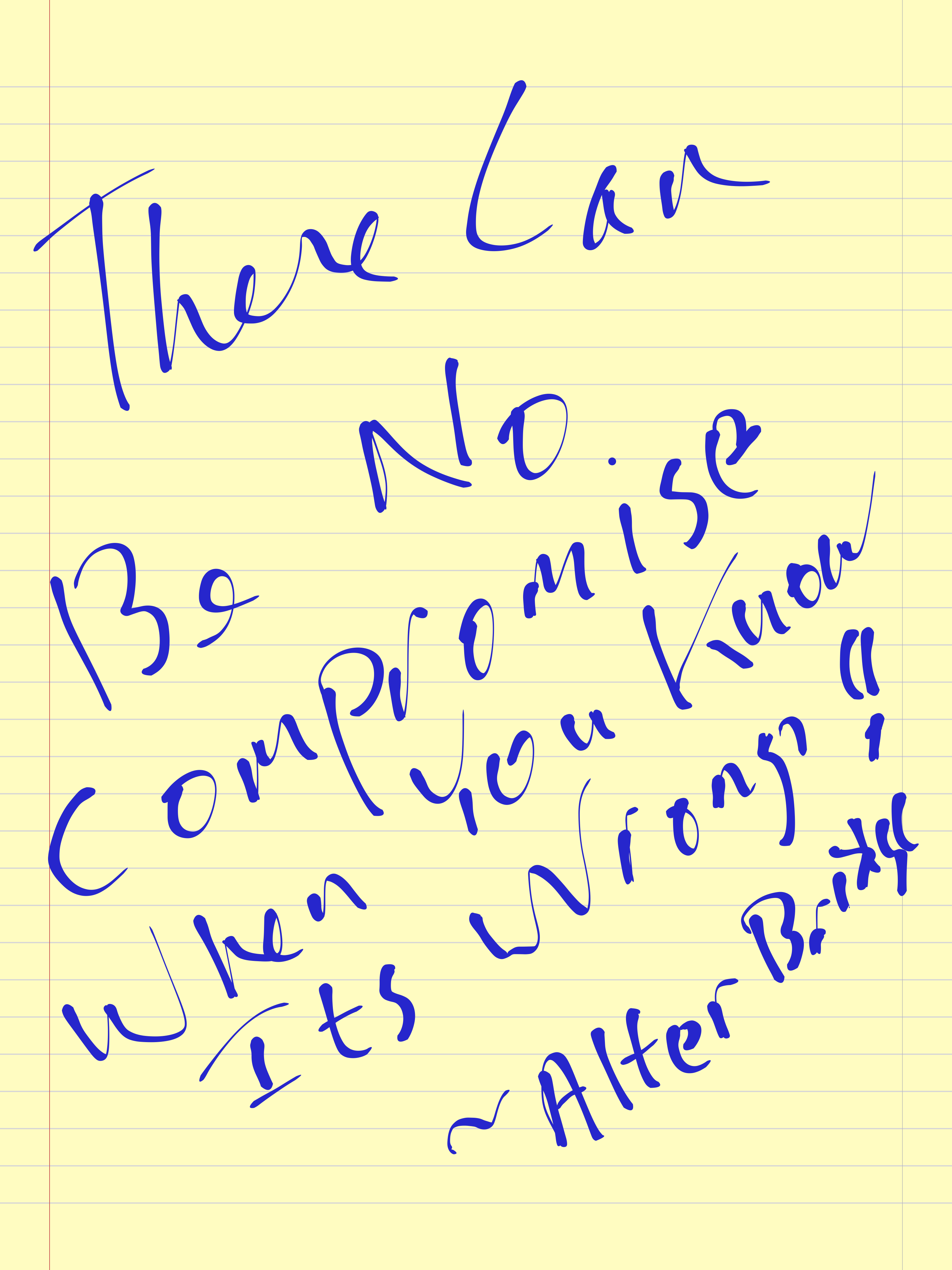 Two songs by Alter Bridge constantly cause me to think about compromise. In “Show Me A Leader” songwriters: Myles Kennedy, Brian Marshall, Mark Tremonti, Scott Phillips want a leader that won’t compromise. Additionally, in the song “Last of Our Kind” we hear the words: “There can be no compromise when you know it’s wrong ’cause in the end the sacrifice was worthless all along.” When compromising you give something up on both sides, you don’t create something together! A compromise is by definition leading to a suboptimal solution. Great leaders understand this, and are therefore reluctant to compromise.
I believe that compromise can easily blur our vision and core values, can create confusion, and therefore undermines the motivation of people. I realize, however, as leaders there are times when compromise is necessary. It is important to understand that no one knows everything. Great leaders listen to all sides, think about their own experience and then make decisions. Those decisions must based on a balance of knowledge and not compromise the leader’s core values. Sometimes the decisions don’t sound or look exactly like what the leader wanted. but they are the best for the organization as long as no core values have been compromised. So, when I hear, “Show me a leader that won’t compromise” I am reminded to never compromise my values.
Errors In Leadership Coordinates
 Lesson #21 entitled “It’s Only Two Degrees” in 52 Leadership Lessons: Timeless Stories For The Modern Leader by John Parker Stewart really drove home the fact that small errors can have big consequences. On the 28th of November 1979, Air New Zealand flight 901, crashed into Mt Erebus on Ross Island, Antarctica, instantly killing all 257 people on board. Antarctic overflights were a new and exciting breakthrough in airborne tourism. Interest in the Antarctic had been particularly strong in the scientific community since the late 1950s, but only a small number of privileged people had experienced the wonders of the icy south. At the heart of much of the eventual controversy surrounding the causes of the accident were changes made to the flight plan of TE901. The plan loaded into the aircraft’s flight management computer was not that on which the flight crew had been briefed 19 days earlier, but no one had told them. The flight plan was only two degrees different, but this two degrees made all the difference between crashing and not crashing. Because of the white snow covering all of the area, the 12,000 foot rise of the volcano was not noticed because of what is now called “sector whiteout.”
As leaders, we should foster environments adopting a strategy that is able to take on the challenge of avoiding negative error consequences and learning by fostering positive error consequences simultaneously or in alignment. Error prevention aims at avoiding negative error consequences by avoiding the error altogether, the error management approach focuses on error consequences directly. It aims at avoidance of negative error consequences and the promotion of positive error consequences by means of early error detection, quick and effective correction, error analysis, and long term learning from errors.
Edmondson (1996) posited that the open climate characterized by a willingness to report and discuss errors, allows learning from errors, and thereby can affect team performance positively. Edmondson (1996) further asserted that these teams had a better error climate, which allowed them to talk about errors, which in turn increased detection and correction. Generally, errors are discussed only when the consequences are high or even disastrous, I believe that errors with small consequences should also be taken as chances to learn. We must create an environment where our teams are encouraged to take responsibility for their errors. What kind of culture for dealing with errors are you developing in your organization?
Iterate, Don’t Change!
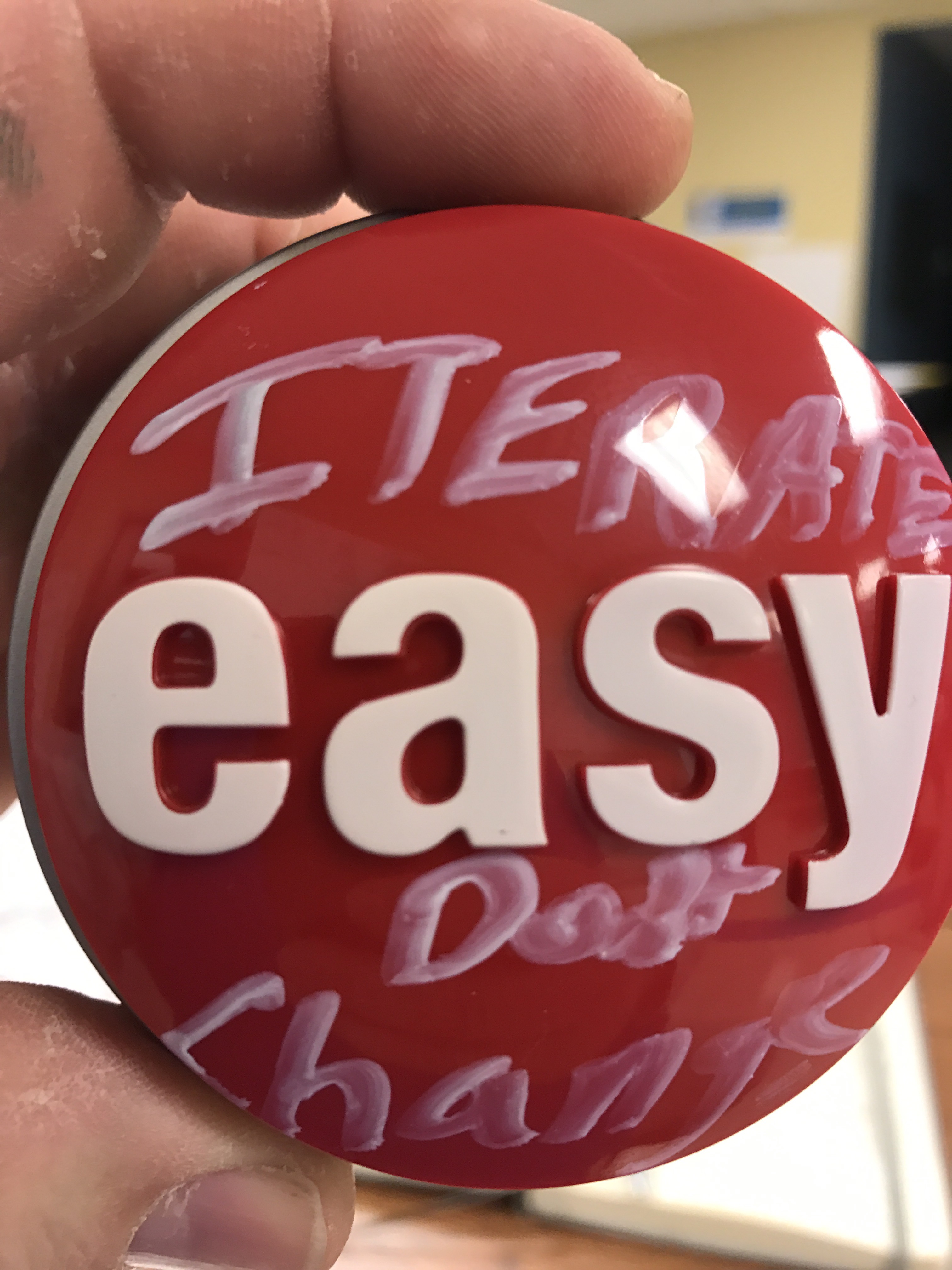 Mark Twain once said that the secret of getting ahead is getting started. But it’s often hard to get started. Why? Because we know we could fail, and many times that fear hinders us from even starting. We don’t have to get things right the first time, however. We can allow ourself multiple iterations to succeed. It could take many iterations to succeed, so the sooner we start the better. Don’t wait until everything is perfect before you start. Iteration works because it gives you the permission to fail. You don’t have to succeed right away, so you won’t be afraid to start.
Iteration is also different than change. To me, change means a reset and starting over. Iteration means you are changing and creating in real-time as we go. Iteration gives an organization agility. This agility is valuable and an agile organization will not only suffer less when hit by unpredictable external shocks, but will also be able to exploit unforeseen opportunities. True iteration should also include teams working together to channel their creative genius.
In education we are immersed in a world that is constantly trying to create and recreate. I am such a believer in the power of iteration. It adds layers of meaning to what it really means to be an educational leader. It is becoming clear to me that the power of iteration transcends the concrete and physical: The power of iteration is a driving force of creating a culture of excellence.
Iteration is really somewhat of a repetition with tweeks as we create and recreate. Computers are often used to automate repetitive tasks. Repeating identical or similar tasks without making errors is something that computers do well and people do poorly. Repeated execution of a set of statements is called iteration. iteration, useful in slightly different circumstances. After an iteration, we should always ask: how can we make improvements next time? Find the lessons and apply them to your next iteration.
I strive to create an environment where innovation is welcome, mistakes are appreciated, and all are accepted and actively included. The power of iteration allows us to make something out of nothing, it allows us to make greatness out of challenge, and it allows us to build something we never thought we could build.
It means that instead of trying to be perfect the first time you do something, you simply aim to get better over time. You want your second try to be better than your first one, your third try to be better than your second one, and so on. We need to iterate quickly. The faster you iterate, the better. If it takes too much time between iterations, your progress will be too slow. So, do your next iteration as soon as possible.
The power of iteration can help you and your organization achieve your goals. Keep learning. Keep improving through iteration. You will eventually succeed.
Break The Boulder Up To Move It!
 I use the term, “Break the boulder up to move it” all the time when referring to big opportunities (what I also call challenges). We look at opportunities as one big boulder that just can’t be moved. Therefore I always remind everyone that if we can break it down into manageable sized rocks we can overcome the challenge or make the opportunity a success. As a farm kid I have moved my share of rocks and still do on our farm today. I know that if you do not get the rocks out of the way they can tear up farm machinery in seconds. Therefore it is always better to move rocks when they become obstacles than to go around them.
Continuing with the original metaphor, when we come across a rock blocking our path, there are two possible solutions to the problem. You can try to move the rock, which if small enough is the best solution. But, if the rock is massive (boulder sized), you can be clever and start breaking the rock into smaller, easier to move pieces. Our challenges as leaders are similar to this metaphor. It is smart to break these opportunities down into smaller pieces. This is done by using a varied set of view angles. The ideal process would be to break the challenge into six to twelve different questions or parts. These parts will help to tickle the imagination and trigger thoughts and ideas of those on your team for solving the larger issue. These smaller fragments are not meant to solve the whole issues that will in turn lead to a “boulder sized” solution.
“The best way out of a problem is through it.” ~ John Parker Stewart
My thoughts above were inspired while reading Lesson #20, “The Farmer and the Rock” in 52 Leadership Lessons: Timeless Stories For The Modern Leader by John Parker Stewart. This was the story of a farm family that for generations had been farming around a rock they thought was to big to move. Finally, one day the younger farmer got mad and hook the tractor and chain to the rock and it broke up and was easily moved. Do you as a leader plow around obstacles, or do you confront it and get it out of the way for good?
The American Commonwealth
 The American Commonwealth, part 1 by James Bryce
My rating: 5 of 5 stars
This book is for anyone who wants to better understand the experiment in democracy that has become our great United States. Every aspect of our local, state, and federal government is covered in great detail from the Declaration of Independence to the turn of the 20th Century (I read the 1914 edition). It was interesting to learn Bryce’s views on Lincoln, the Civil War, and how our Constitution served as the navigational guide. I particularly valued the Part V Chapters on Public Opinion, Colleges & Universities, and voter suffrage.
This is a very academic read that causes reflection and further study. It took me almost a year to read (keep in mind I was reading other books at the same time), but it is well worth the investment. Every leader who wants to serve their community, state, and nation positively and significantly should read this book.
Blue Heron Leadership
 The Blue Heron is one of my favorite birds. Because of some ponds on our farm we see them flying over and walking in the water often. We also see them gleaning through our fields. They are beautiful and majestic birds. After reading Lesson #19 in in 52 Leadership Lessons: Timeless Stories For The Modern Leader by John Parker Stewart I realized just how beautiful and awesome the Blue Heron really is. In fact they follow a very participatory and holacratic organization structure like I believe in. Most generally we only see Blue Herons one at a time. This is because, as Stewart pointed out, they like to stay in small groups or by themselves until nesting. At nesting time Heronies are formed to cooperatively get the work of raising young accomplished.
“When there is commitment and a willingness to do whatever is needed, success is far more likely. As the Blue Herons were true to each other in following through with their part, so can we as we follow their example and remain ‘true blue’.” ~ John Parker Stewart
Both male and female work together to get the nest built. After the eggs hatch both parents take care of feeding, teaching them to fly, and teaching them to catch fish. Notice there is no hierarchy here – this is about as flat a structure as you can get. There is only an eagerness to complete the task. The Blue Herons are not concerned about status or position. Furthermore, there is no complaints about fairness, equity, or doing undesirable tasks. This is the huge advantage of an intent-based environment where everyone is considered a leader. If we want our team members to work cooperatively together like Blue Herons then we must create an environment where they are able to move up the rungs of the Ladder of Leadership (created by David Marquet). The rungs are as follows (also check out the graphic pictured here):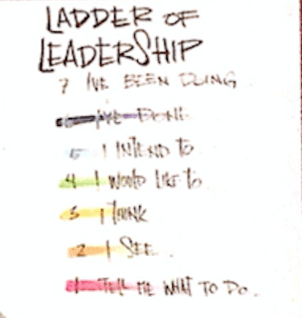
- Tell me what to do
- I see
- I think
- I would like to
- I intend to
- I’ve done
- I’ve been doing
Are you modeling an intent-based environment where everyone works cooperatively and is concerned with getting the work done, not in titles and hype?
 Byron's Babbles
leave a comment