From Best Practice To Next Practice
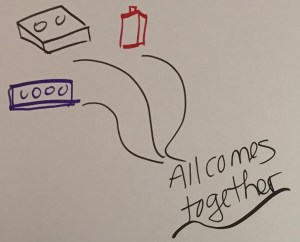 Today was the final day of the 2nd Annual Global Smart Manufacturing Summit in Berlin, Germany. I really valued the time to get to know business and industry leaders from around the world. I was reminded of what my good friend Kevin Eikenberry and I used to talk about a lot – when we look at the differences between different industries (eg. manufacturing vs. education), we see about 90-95% of our issues being the same and about 5-10% different. What I mean here is that many of the challenges and roads to improvement are the same. Think about it, we all have responsibility in finance, HR, facilities, and customers. If we break that down further, we all have one of the same groups within the customer category – employees. Now, I get it; our employees are our competitive advantage, but employees are still a customer to be taken care of at the highest level.
Organizational Commitment
The first session this morning was about initiatives and organizational commitment. As a believer in learning organizations, I was really enamored by the discussion of organizational commitment. This thinking really fits with a lot of the Gallup® research I have been studying around employee engagement. When we discuss organizational commitment, we are talking about the bond employees experience with their organization. Broadly speaking, we know employees who are committed to their organization generally feel a connection with their organization, feel that they fit in, and believe they understand the goals of their organization.
 Next Practice
One of the session titles this morning was “From Best Practice To Next Practice.” I really appreciated this session because we talk a lot in education about “best practices,” but really it is about making the right choice and implementing the next practice. Good or bad, I tend to be the one looking for the next practices. Really, that is what this entire discussion was about for the global leaders here: what are the next practices.
Convergence
Then, it comes down to convergence. How do we take several sources of independent data and bring them together to develop strong conclusions? In education we call this using “multiple data points.” I don’t think we do the best job of bringing all the data points together. For example, this week I was reading and article about teacher pay and how it was decreasing. I question if we have been properly converging HR, financial planning, and student data in a way that would inform what we have been paying our teachers in Indiana. I’ll let you grapple with my comment here, but you get the point.
Problems
One of the comments that I loved most today was, “We shouldn’t be talking about the problems of today, but the problems of tomorrow.” This is so true! This means in education we need to be looking several years out as to what business and industry needs. We also need to think about what our execution model will be for making sure our students have the skills necessary to meet the needs of the workforce. A few phrases/questions coming from the global manufacturing leaders that jumped out at me were:
- What data is coming from where?
- How do you use your data?
- Appropriate levels of (you fill in the blank here)
- Move from reactive to predictive and preventative
Outcomes
All of this discussion has made me an hinkeven bigger believer in us (both Indiana and the United States) needing to move to a strictly outcomes based school accountability system. We could then, truly in partnership with business/industry and higher education, determine what transferable skills students need and have coming out of high school. Then we can match those transferable skills to outcomes that the students needs to accomplish. Here are some examples and outcomes:
- industry certifications
- 4 year degrees
- Associate degrees
- Trade school
- Joining the military
- Meaningful employment
At a time when our state has 75,000 jobs per year going unfilled because there are not skilled workers to take those jobs, we need to be thinking about the outcomes for our students. Thus the skills gap of only 42% having any kind of post-secondary preparedness versus the 75% needed.
If we are going to have our students ready for the workforce we will need to:
- Teach students in a real world and relevant context
- Enable, encourage, and stimulate students to be curious
- Teach students how to fail and that it is o.k. to fail
- Engage students in career exploration activities at a young age
- Determine the transferable skills needed to have students ready for today’s jobs
- Teach students to be disruptors
- Provide pre-apprenticeship, apprenticeship, and work based learning internships
Business and Industry engagement in education programs not only prepares students with the skills they need for careers, but it also contributes to the development of clearly developed career pathways that lead students to careers after graduation.
What Does Industry 4.0 Mean?
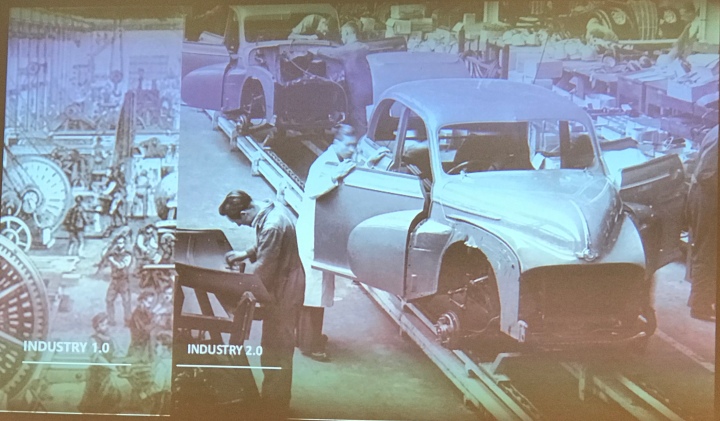 Today, I had the honor of being in attendance at the 2nd Annual Global Smart Manufacturing Summit in Berlin, Germany. One of the topics we grappled with was of what does Industry 4.0 mean? Ron Zahavi, Chief Strategist for IoT Standards and Consortia, Microsoft Corporation did a great job of walking us through some history.
Industry 1.0
This is the first industrial revolution:
- Technology such as wheels and engines replaced artisans
- Child labor laws had to be introduced to prevent abuse
Industry 2.0
- Assembly lines allowed workers to be turned into consumers
Industry 3.0
- Lean Processes improved the quality of products
- Advent of computer use
- Robots reduced mistakes and improved productivity and safety, but began replacing people
Industry 4.0
- Big data and analytics
- Autonomous robots
- Simulation
- Horizontal and vertical system integration
- The industrial Internet of Things (IoT)
- Cybersecurity
- Additive Manufacturing/Advanced Manufacturing
- Augmented Reality
Interestingly, in all these cases technology and mechanization are involved, but in the revolutions of Industry 1.0, 2.0, and 3.0, I wonder if we forgot how important people are. We must remember as we navigate Industry 4.0 that people are more important that the devices and technology.
In my world of educating young scholars and creating education policy, we have a responsibility to make sure as we move to Industry 4.0 to put people at the forefront. We do not want to make the same human mistakes with 4.0 that we made with the first three revolutions.
I really believe more than ever that we must make sure that we create space for industry to do as much of the training of our students as possible. Industry is in a good position to do this. What we have to do, though, is identify the transferable skills students need and institutionalize those skills in the framework of the internship learning being done in partnership with industry. This is crucial because of the mobility of our students.
We must be educating our students on the new things being done with Industry 4.0, but must also be educating them on the benefits. In other words, answering the question: How does this make life easier? Not just always pointing to financial improvement and the bottom line. We must begin to develop a workforce made up of the right quantity and right quality of workers. The skills we are preparing students with must match the needs of the workplace.
Industry 4.0 will require new skill sets, and manufacturers will need to attract the right talent. This may involve partnering with k-12 schools to train students. Existing training programs may need to be expanded to include new technologies that are introduced to the marketplace. Manufacturers also need to recruit for Industry 4.0, which may differ from how they have done it in the past. Both business and industry and education will need to stop all focus being on qualifications determined by degrees and certificates, companies should recruit for capabilities to succeed. These capabilities will include specialized skills.
For us to compete during Industry 4.0, it will require us to conduct constant iteration and be flexible. It’s not about buying software or purchasing a curriculum and then watching it all play out. To compete in Industry 4.0, the education sector and manufacturers must be flexible and agile in the face of change, and, most importantly, partner together.
Focus On The Wider World
 Last week I did a 3D Leadership Program™ session on focusing as a leader. It was about focusing on three things:
- Self
- Others
- Wider World
Clearly if we want to be effective leaders we must focus on ourselves. This focus does not mean being self-centered, but self-caring. We must take care of ourselves physically, emotionally, and spiritually. Additionally, we must take ownership of our own professional growth. If we are taking care of ourselves then we can begin to focus on others using our empathy, caring, and relationships.
Another important focus area and focus of this post is to focus on the wider world. To do this I believe it is important for us to not only take a worldview look at our own part of the world, but also look literally at the rest of the world. I will be doing this for the next 12 days in Germany and Switzerland. I am on the plane flying to Berlin, Germany as I write this post. I am very honored to have been asked to go on this trip that was organized by Horizon Education Alliance. There are representatives from schools and business/industry in Elkhart County, Indiana as well as State Representatives, Governor’s Office officials, colleges and universities, and me as a member of the Indiana State Board of Education taking part in this experience and serving as ambassadors of our state and country. Again, what an honor!
I am hoping to add a post to my blog each day as our journey progresses. So, stay tuned to Byron’s Babbles each day to see where we have been and what we have learned. It is going to be fast and action packed learning. Tomorrow we will be attending the 2nd Annual Global SMART Summit in Berlin, Germany. This will be a chance to learn more about Manufacturing 4.0 and I am excited to learn how we can better prepare Indiana’s students to work in this environment upon completion of high school. I am super pumped about all the businesses and industries that will be represented. See the photo here to see who the players are who will be in Berlin:
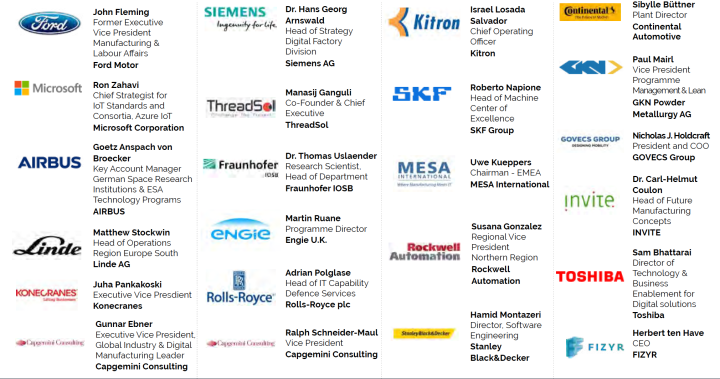
Surely you recognize a few on the list. This will be the who’s who of business and industry. SMART, or 4.0 Advanced Manufacturing applies information and manufacturing intelligence to integrate the voice, demands and intelligence of the ‘customer’ throughout the entire manufacturing supply chain. It marries information, technology and human ingenuity to bring about a rapid revolution in the development and application of manufacturing intelligence to every aspect of business. It changes how products are invented, manufactured, shipped and sold. We will be gaining insights on what it takes to thrive in this new paradigm shift in manufacturing through the use of advanced technology. Our Indiana delegation will be part of the 200+ delegates from the top leading companies from around the world sharing their management strategies on the opportunities and challenges that lie ahead in the Digital Economy.
Back to the point of this post – focusing on the wider world. This is so important because we must practice exploratory strategic thinking and creative thinking. Leaders with a strong outward focus are able to exercise these two skills. These leaders tend to be visionaries who sense the far-flung consequences of local decisions and imagine how the choices they make today will play out in the future.Take Bill Gates: On 60 Minutes, Melinda Gates remarked that Bill was the type of person who would read an entire book on fertilizer. “Why fertilizer?” Charlie Rose wanted to know. The connection was obvious to Bill Gates, who is constantly looking for technological advances that can save lives on a massive scale: “A few billion people would have to die if we hadn’t come up with fertilizer.”
Any business school course on strategy will give you the two main elements: exploiting your current advantage and exploring for new ones. It’s not surprising to find that exploitation requires concentration on the job at hand, whereas exploration demands open awareness to recognize new possibilities. But exploitation is connected to the brain’s reward circuitry—in other words, it feels good to coast along in a familiar routine. So when you switch to exploration to roam widely and pursue fresh paths, you have to make a deliberate cognitive effort to disengage from that routine and maintain open awareness. We must always be looking to spot new opportunities.
Thinking creatively involves three forms of focus:
- Vigilance—remaining alert for relevant information while immersing yourself in all kinds of input
- Selective attention—focusing on one thing while filtering out everything else
- Open awareness, which we’ve discussed earlier
The classic model of creative thinking shows how you use each of these:
• First you use vigilance to gather a wide variety of pertinent information.
• Then you alternate between intense concentration on the problem at hand (selective attention) and letting your mind wander freely, as you might in the shower or going out for a run (open awareness).
Being a focused leader doesn’t merely mean concentrating on the biggest priorities of the year or being in tune with corporate culture. It means commanding the full range of your own attention. With diligence, you can cultivate focus on yourself, on others, and on the wider world. As a result, you’ll be able to direct your attention—and others’ attention—where you need it.
For the next few days I am going to focus on a wider world view. I want to know how the best of the best are leading our industries. I want to learn how the best of the best in Germany and Switzerland are educating young scholars to be ready for post-secondary success. Let me be clear; I do not want the United States to become Germany or Switzerland. What I want is for us to learn the best of what others are doing find ways for us to get better at educating our students. In saying that it does not mean that I do not think we are doing a good job. It means that if better is possible than good is not enough. We need to be pursuing fresh paths by spotting new opportunities with open awareness. I hope you will tune into my blog over the next several days and check out the wider world global learning taking place with a group of us from Indiana, USA.
 Byron's Babbles
2 comments