Leading With Our Ears

Last night in a leadership development gathering for administrators in my Focused Leader Academy one of our great leaders, Jerry Smith, Technology Director/CETL for Silver Creek School Corporation, reminded us of a great leadership lesson from the Bible in the book of James. Specifically, he was referencing James 1:19. He has a sign on his desk with this verse reminding him to always lead in this way. I am one of those people who then needs to go read the verse in different versions and study a little further. Here are my two favorites:
Good News Translation
James 1:19 Remember this, my dear friends! Everyone must be quick to listen, but slow to speak and slow to become angry.
The Message Bible
James 1:19 Post this at all the intersections, dear friends: Lead with your ears, follow up with your tongue, and let anger straggle along in the rear
As a Christian I was disappointed in myself for having forgotten about that verse. I really like the book of James. I’m so glad that Jerry pointed out and reminded us of this tremendous leadership lesson. James was writing this book to encourage Christians to encourage living consistently and letting our actions speak louder than our words and intellectual acumen. That is what leadership is all about isn’t it?
I really like the idea of us “leading with our ears.“ Probably, I really like it because it is a metaphor. I can’t resist a good metaphor. It reminds us to prioritize listening and understanding over speaking or asserting one’s own views.
The phraseology in the other version of “everyone must be quick to listen” also resonates with me. This allows us as leaders to gather insights and perspectives from others before making judgments or conclusions. Listening always allows us to foster deeper connections, enhance communication, and promote empathy, as it encourages us to truly hear and acknowledge the experiences and thoughts of those around us.
Regardless of your faith, this verse has so much to unpack. I would love to hear your thoughts. Please leave a comment.
To Say Or Not To Say

In Season 10, Episode 233 of M*A*S*H, Hawkeye (Alan Alda) gave Colonel Potter (Harry Morgan) an incredible compliment saying, “He not only knew what to say, he knew what not to say.” This compliment referred to Colonel Potter’s great communication skills. It meant that Potter had the skill and wisdom to choose his words carefully, knowing when to speak and when to keep silent. A person with this skill understands the impact of their words on others, and has the ability to communicate effectively without causing offense or misunderstanding. The character of Colonel Potter in this great show had incredible emotional intelligence as a leader. This emotional intelligence helped him to be articulate and tactful. His leadership was a valuable asset in the chaotic situations of war and leading an army hospital, where communication is important.
Have you ever noticed that it is much more difficult to know what not to say? In fact, sometimes those we serve just need for us to listen and not say anything. To say or not to say, really is the question.
Listen More

This past week at the National FFA Convention here in Indianapolis, Indiana I had the opportunity to do teacher workshops with our National FFA Teacher Ambassadors. One of my roles is to help our ambassadors be the best presenters possible. After each workshop I did a reflection so that during next year’s ambassador trainings I can point out positive practices that really work during workshops. One such practice was done by Lindsey Lasater of Silex, Missouri. She is incredible at leading workshops. When leading discussions with workshop participants, Lindsey would write down each participants’ comments word for word on tear sheets. I used to do this in my classroom when teaching and now also use it when facilitating. I love this strategy. One, it helps the teacher/facilitator listen better, and two, it shows the student/participant that what they have to say is valued. And, a third plus is that it helps the other participants know what was added to the conversation.
In Simple Truth #43, “Since We Were Given Two Ears And One Mouth, We Should Listen More Than We Speak” in Simple Truths of Leadership: 52 Ways To Be A Servant Leader and Build Trust, Making Common Sense Common Practice, Ken Blanchard and Randy Conley we are reminded that good listeners are interested in what you are thinking and feeling. Some great ideas were being shared last week during Lindsey’s workshop and she honored and captured those thoughts by actively listening and writing them down. We are a good listener if we are focusing on the other person. Bad listeners focus on themselves. If we get the listening right, those we serve will share their best thoughts and ideas with us.
Every Voice

I must say I am pretty impressed with the newest FBI show “FBI International.” The characters and character profiles did it for me. I was particularly drawn to the team leader, Scott Forrester played by Luke Kleintank. It was explicit in the shows script that he had picked an elite team with every person being selected for a reason and their specific strengths and skills. That got my attention – the writers want us to see him as an outstanding leader. Then, two lines in the episode I watched last night really jumped out at me and were reminders of great leader traits.
The first was early in the show after a team member had given a dissenting viewpoint to Forrester, which led to some discourse, and Forrester giving his reason for disagreeing. The dissenting team member was new and wasn’t sure how to feel about the interaction. Another member of the team pulled her aside and told her that Forrester was the type of leader that valued the team and wanted “every voice in his ear.” He wanted and needed to hear from everyone. Every voice on the team mattered. Every dissenting view mattered. Forrester was not worried about being right, he was worried about getting to right. So many poor leaders want to look smart and don’t want to hear views contrary to their own. Forrester reminded us we need every voice in our ear. BTW: it turned out the team member was right and he was wrong – so glad they wrote it that way!
In another scene, another team member brought Forrester an idea that might be a long shot to pursue. Forrester said, and I love this, “Take that wherever it goes.” Is that not just the coolest response ever? He had just given the team member full empowerment. It no longer mattered if it was a wild idea or not. The team member could fully invest. Giving team members this kind of freedom, without risking ridicule or reprisal, frees them to consider ideas and approaches that might otherwise go unexplored.
Great leaders encourage and development the ability to scrounge, forage, and rummage for ideas. We must learn to search everywhere for available ideas. Are you letting your team members follow their ideas? Or, are you letting their voices in your ear?
Listen and Look, Look and Listen

After the New Orleans Saints overtime win over the Chicago Bears tonight I was flipping through the channels (I know that term ages me) and came across an old episode of Columbo. I love that old show. Lt. Columbo, played by the late Peter Falk, is a police detective who is a little quirky, always has a cigar, makes you think he’s not too smart, but is super attentive. In the episode I turned to, he said “we don’t usually have much to go on except to listen and look and look and listen.” This struck me as the essence of what we all need to be doing. Columbo makes the guilty parties believe he is inept, but then teases out all the clues to solve the crime and prove guilt. Lt. Columbo makes an observation about some inconsistency. The seemingly trivial, it turns out to be the detail will tie together the entire investigation and establish the culpability.
Columbo brought a sense of curiosity and was sensitive to inconsistencies and incongruities. So, if we think about the term “look” we find that it means to direct your eyes in a certain direction. Then, “listen” means to pay attention to someone or something in order to hear what is being said, or sometimes what is not being said. “Listen” and “look” are actions usually thought of when we are paying attention.
We need to be more like Lt. Columbo and pay attention by listening and looking to focus our minds on someone or something that is happening.
Serendipity Baby!
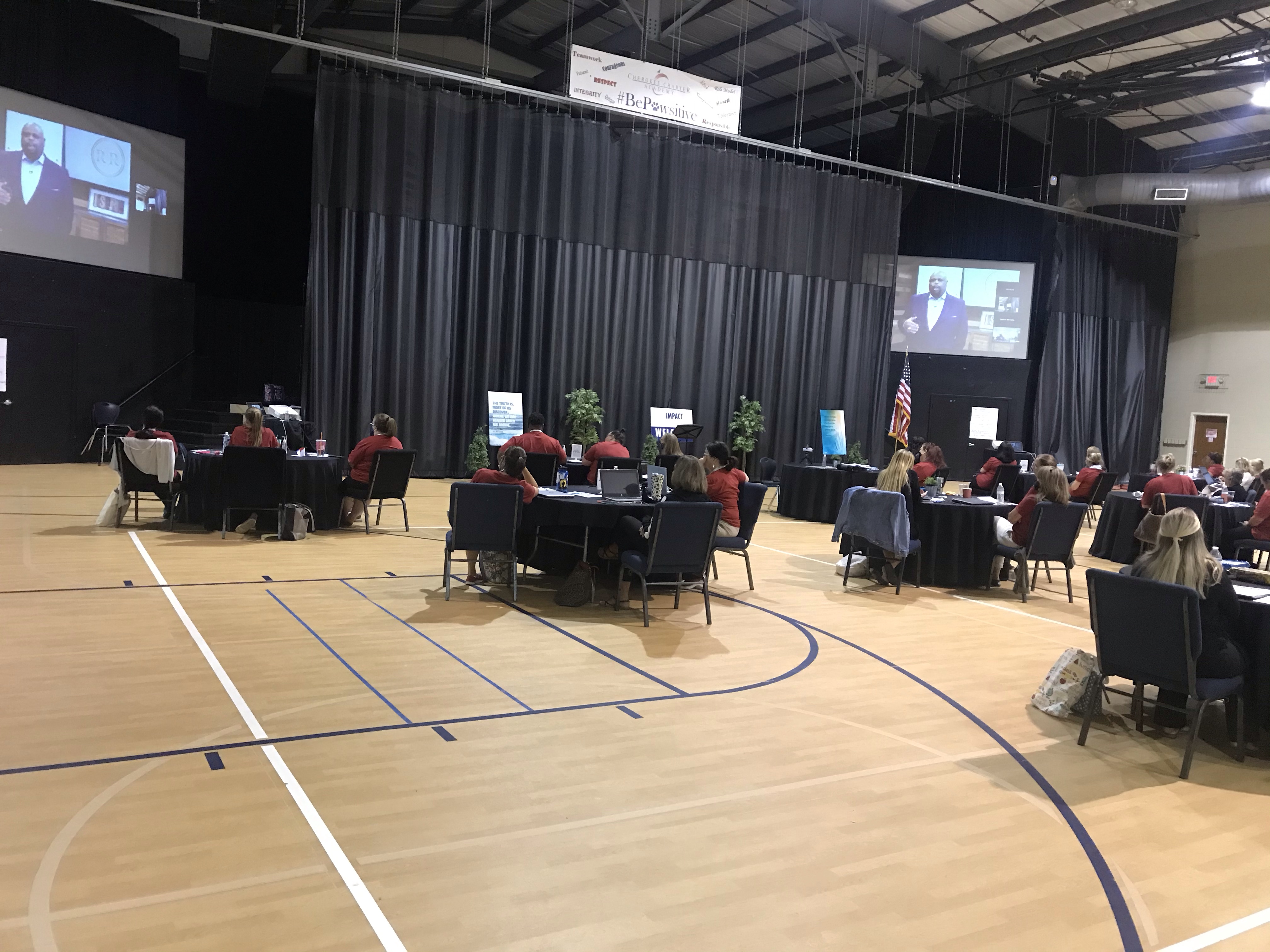 When conditions are right for it, great things happen. Serendipity is said to happen by chance, but I believe we must create the opportunities for these occurrences to happen.
Yesterday, the perfect opportunity for serendipity occurred as we were setting up for our Impact Georgia teacher professional development. We had two big screens on either side of the stage and a screen on the stage in the middle that was not going to work, but could not be taken down. There was a group of four of us looking at the stage. I said, “Do we have any good looking banners we could drape over it?” Everyone thought and we couldn’t think of any. Then a couple of other ideas were thrown out. Both good options. But, a fourth option then came in the form of a question: “could one of the stage curtains be positioned to just cover the middle part of the stage leaving the side screens visible?” We went to work and found the answer to be “yes!” Serendipity!
The solution was awesome. The front of the room looked great. A picture is attached to this post of the stage. Why did we get to a great solution, though? First of all our group was fully engaged with each other. Secondly, we were listening to all ideas. If we want everyone to voice more of their ideas, show that you care about all all their ideas; listen carefully, patiently, and respectfully to every idea. This creates a comfortable environment that has trust, rewards open discussion, and has everyone sharing their true thoughts.
Are you creating the opportunities that allow for serendipity?
Tending Our Friendships
 I was touched last night to have my son ask if I wanted to watch a couple more episodes of Boston Legal with him. Hey, it was 10:30pm; what else could be better? Plus, love spending time with the boy. We laughed and discussed the political issues of the time of the show. Then there was a cool seen during Season 4, Episode 20 when my son said, “That was a great metaphor.” As you know, I live by metaphor. Having my son recognize a quality metaphor – PRICELESS!
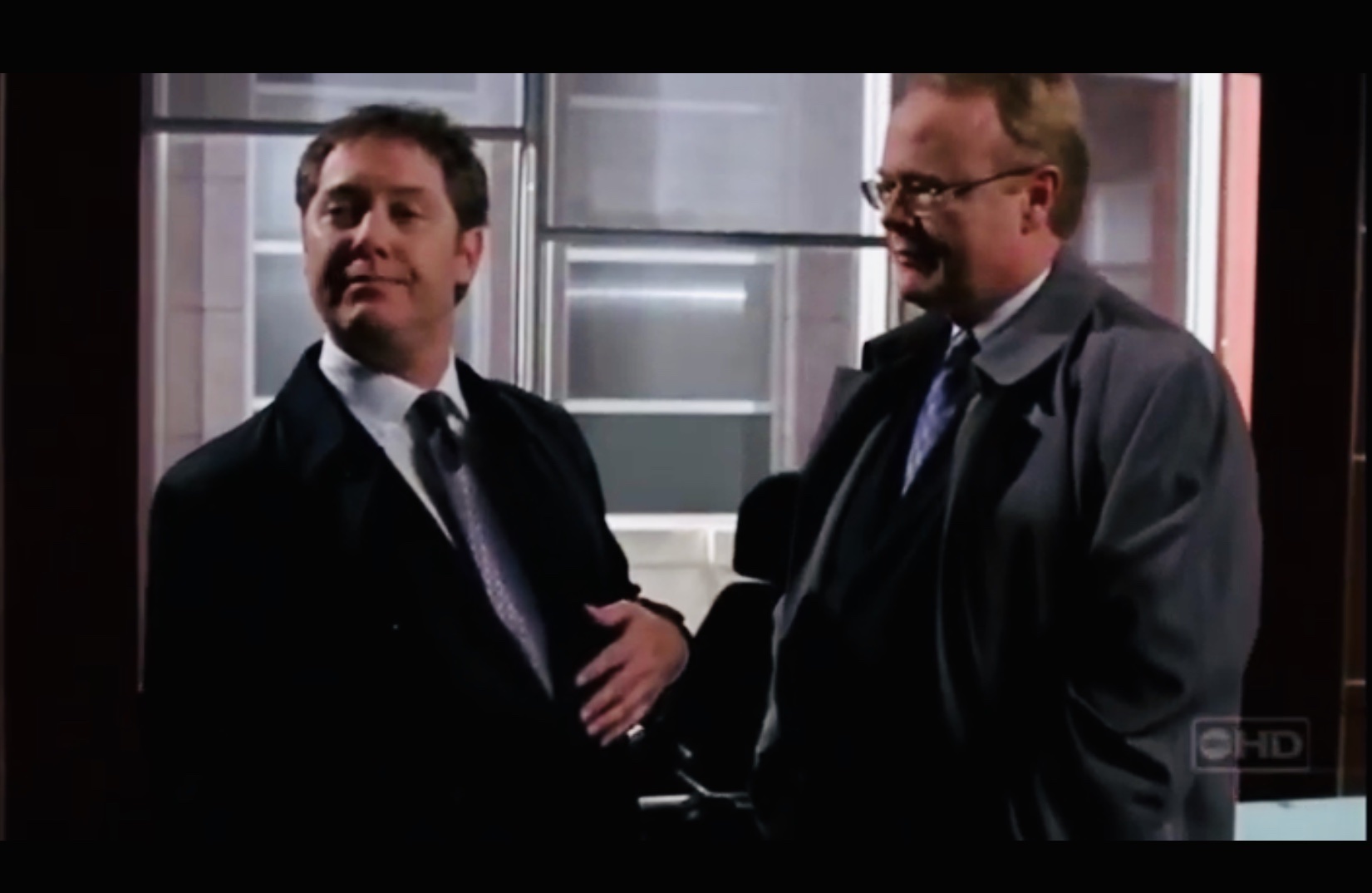 Here’s the scene: Alan Shore said to Jerry Espenson, “I feel as if I haven’t seen much of you over the past year.” Jerry replied, “Well, you’ve been really busy, Alan. So have I. With work. Work has…Hey! That’s the beauty of being friends, isn’t it? Relationships with long shelf lives. You can just stick them on the shelf. I tell you! Alan rebutted, “What?” Then Alan continued, “I have never ever considered myself someone who puts work before friendships. Seems I do.” Jerry then gave us the metaphor saying, “We all do, Alan. Friendships are a little like back yard gardens. We plan to tend to them. We just always seem to put it off till next week.” Friendships are the cornerstones of our lives. Our garden of friends requires careful tending.
We also need to recognize that people change and grow at very different speeds and different ways. Metaphorically, we need to plant, cultivate, prune, water, and fertilize our friendships. To have a relationship, you must plan, cultivate, and tend to it. Relationships left unattended eventually die.
We need to be grateful for our friends and the people who make us happy. For all the faults in the character of Alan Shore in the show, we do see him always trying to be a good friend. He offers advice, checks in on them, maybe shows up in court just to watch and show support, always seeks to reconcile a squabble with a friend quickly, and always goes and apologizes when he says something to a friend that offended him or her. One of the ongoing plots of the show is about friendships and romances of the characters. I blogged about this in Are We Best Friends?
Let’s not forget to tend to our gardens of friendship as we move into a new decade. In fact, I think I’ll make my New Year’s Resolution be: to appreciate my friends every day and catch more fish.
Are We Best Friends?
 Do any of you remember the show Boston Legal? It was one of my favorites. The comedy-drama ran for five seasons from 2004-2008. The show focuses on the personal lives of the upscale lawyers and their cases of the law firm Crane, Poole, and Schmidt. Recently, when our cable was out and we could get no channels, my son and I were on the phone and he said, “Dad you know we have a SMART TV so you can watch episodes of some of your old time shows.” I have to admit that I didn’t know that. Then he explained how to get to the shows and that this is what leads to people doing what is called “bingeing.” I also have to admit, I did it – binge watched Boston Legal. It was great and there were so many things said in the show that made me think. So, of course I had to blog about it!
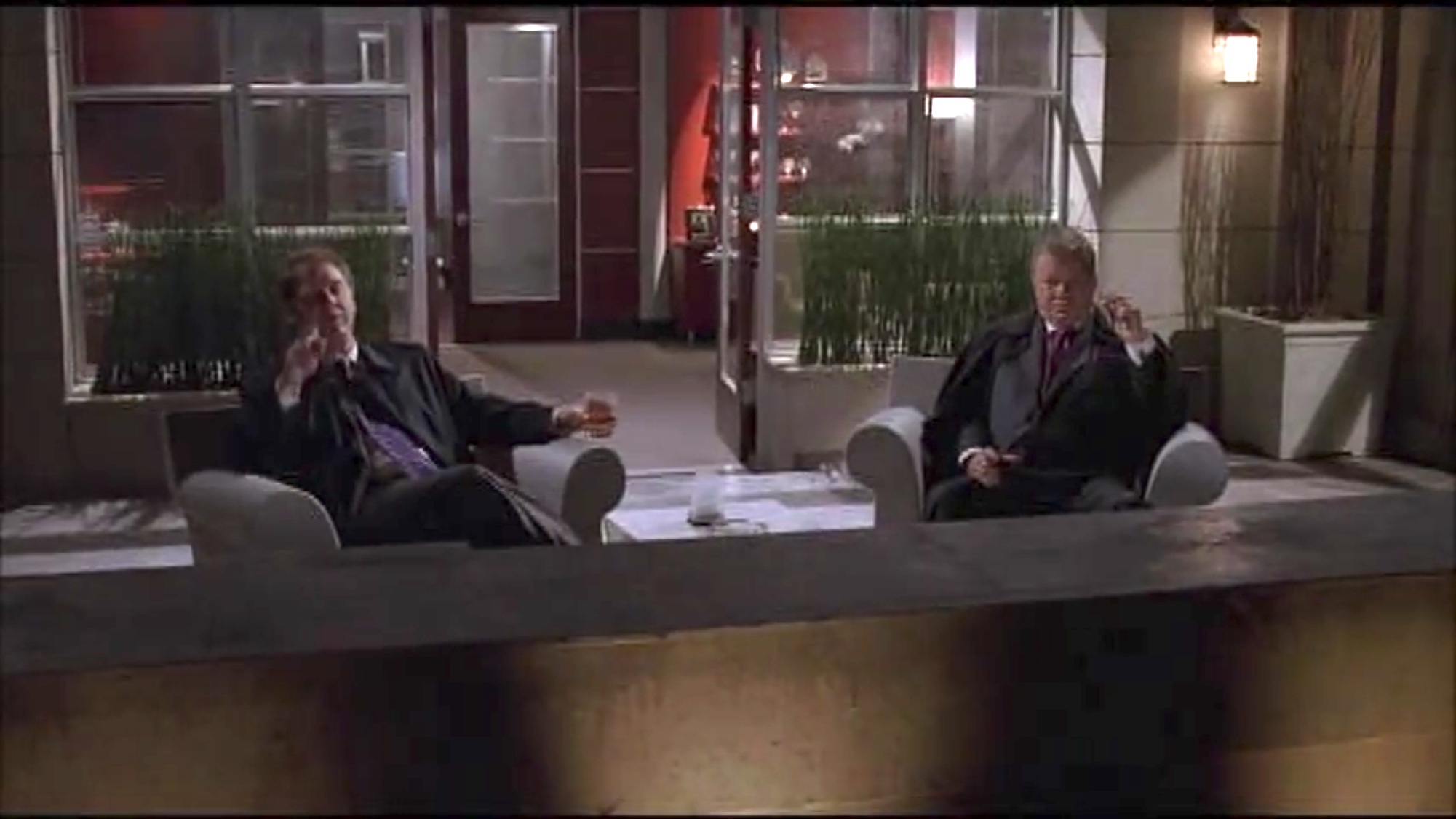
At the end of each episode there is always Denny Crane (William Shatner) and Alan Shore (James Spader) sitting on the balcony in cool white chairs, which are called Bubble Club Chairs – that you can buy, by the way, drinking bourbon and smoking cigars. The talk is funny, but very deep and meaningful. In Season 2, Episode 8 Denny says to Alan, “What I give to you, I do with no one else (speaking of their time on the balcony each night and ultimately about their friendship). I like to think that what you give to me you do with nobody else. Now that may sound silly to you. But, here’s what I think is silly, the idea that jealousy or fidelity is reserved for romance.” Alan replied, “…But gosh what I get from you Denny. People walk around today calling everyone their best friend. The term doesn’t have any real meaning anymore. Mere acquaintances are lavished with hugs and kisses upon a second or at most third meeting, birthday cards get passed around offices so everybody can scribble a snippet of sentimentality for a colleague they barely met, and everyone just loves everyone. As a result when you tell somebody you love them today, it isn’t much heard. I love you Denny, you are my best friend. I can’t imagine going through life without you as my best friend. I’m not going to kiss you however.” Like I said, some funniness to it, but also very deep.
What does it mean to be a friend, a best friend, or to love, I mean really love, someone today? Do those terms, as Alan Shore lamented, really have any meaning any more? I’m not sure they do. In fact the balcony seen at the end of this episode has caused me to really reflect on my own definitions of love and friends. I’ll bet you were recently passed a card and asked to sign it and you may have thought to yourself, “I really don’t know this person.” I’m not saying that giving birthday cards is bad, but have we become a society of trivializing friendship and love?
So, I ask the question that Alan asked; does the term “best friend” have any real meaning any more? I believe to be a best friend is a privilege not to be bestowed on everyone. Showing another human being that you care about them and that their happiness and presence in your life is important to you on a regular basis is, though it may seem obvious, is a fairly big commitment in practice.
Remember how much easier it was to have a best friend in high school or college? You were with them every day. I find it difficult to be a good friend. Life seems to have a way of inserting itself and does a pretty good job of prying us apart. I think of all the times I’ve said, “We’re going to get together.” But, then never do. I’m a little, actually a lot, envious of Denny and Alan being able to sit on the balcony every evening at the end of the work day and philosophize. The lesson that can be learned from studying the characters of Denny and Alan is that being a best friend involves compromise, trust, and a mutual growth that allows certain friends to last through the good, the bad, and the ugly.
Really, friendship is a peculiar type of love. There is no real binding commitment to the opposite person other than what you are willing to put into the relationship. I really do think the term “friend” doesn’t have as much real meaning anymore. How many times have you had someone start a conversation with, “As a friend, you need to know…”? Many times there is not the friendship to be making the observation. That’s why, as the person on the receiving end, it upsets us. Again, we learn from Denny and Alan that a true “best friendship” allows us to:
- Love you for you
- Listen to understand
- Be accepting
- Be genuine
- Appreciate the humor
Do you know and appreciate the value of your best friend?
Known Knowns, Known Unknowns, & Unknown Unknowns
 Today during the last day of our Teacher Academy I realized that our first year teachers and those teachers who were with us for the first time still had a few gaps of things they needed and wanted to know for the first day of school. It is very tough to give beginning teachers everything they need to know, and many times in doing so it is like making them drink from the proverbial water hose. So, I pulled an audible and planned a “lunch and learn” and framed it as giving them a chance to learn about what they knew they didn’t know. It was awesome and a huge success. We had pizza and salad and had four of our great teacher leaders and school leaders sit and have a conversation just answering their questions (they did a great job, by the way). This group of new teachers had great questions and were much more at ease going into the weekend before the start of school. They were so appreciative of having the opportunity to have a discussion in a non-threatening environment and be able to ask anything. I was quickly reminded of how many times we awesome people know things that in reality they would have no way of knowing.
Many times we don’t know what we don’t know; we know more than we quite know we know; or know what we don’t know. Sometimes we need to pose the question: “What don’t you know and how will you learn it?” What I learned today was that we need to take time to listen to those we serve and find out what they know they don’t know. This seems like such a novel idea, but I’m not sure we do a very good job of this at times.
“As we know, there are known knowns. There are things we know we know. We also know there are known unknowns. That is to say we know there are some things we do not know. But there are also unknown unknowns, the ones we don’t know we don’t know.” ~ Donald Rumsfeld – February 12, 2002, Department Of Defense news briefing
Maybe another great question we should ask as leaders is, “What do you feel unknowledgeable about?” You can’t know what you don’t know. You can’t know about things you have yet to discover. You can’t know what the future holds, though you might conjecture on it. But, many times we do know what we don’t know. This is simple ignorance: just not knowing and knowing you don’t know.
Contrast simple ignorance with compound ignorance: thinking you know but knowing so little you can’t recognize your own ignorance. Today really made me think about the fact that we need to embrace simple ignorance and allow those we serve to express what they know they don’t know. Simple ignorance is the most honest and least harmful. It can be beneficial in avoiding stupid mistakes as well as prompting one to learn more.
Are you encouraging others to explore the things they know they don’t know? Are you helping them learn the things they know they don’t know?
As Leaders, We Create The Weather
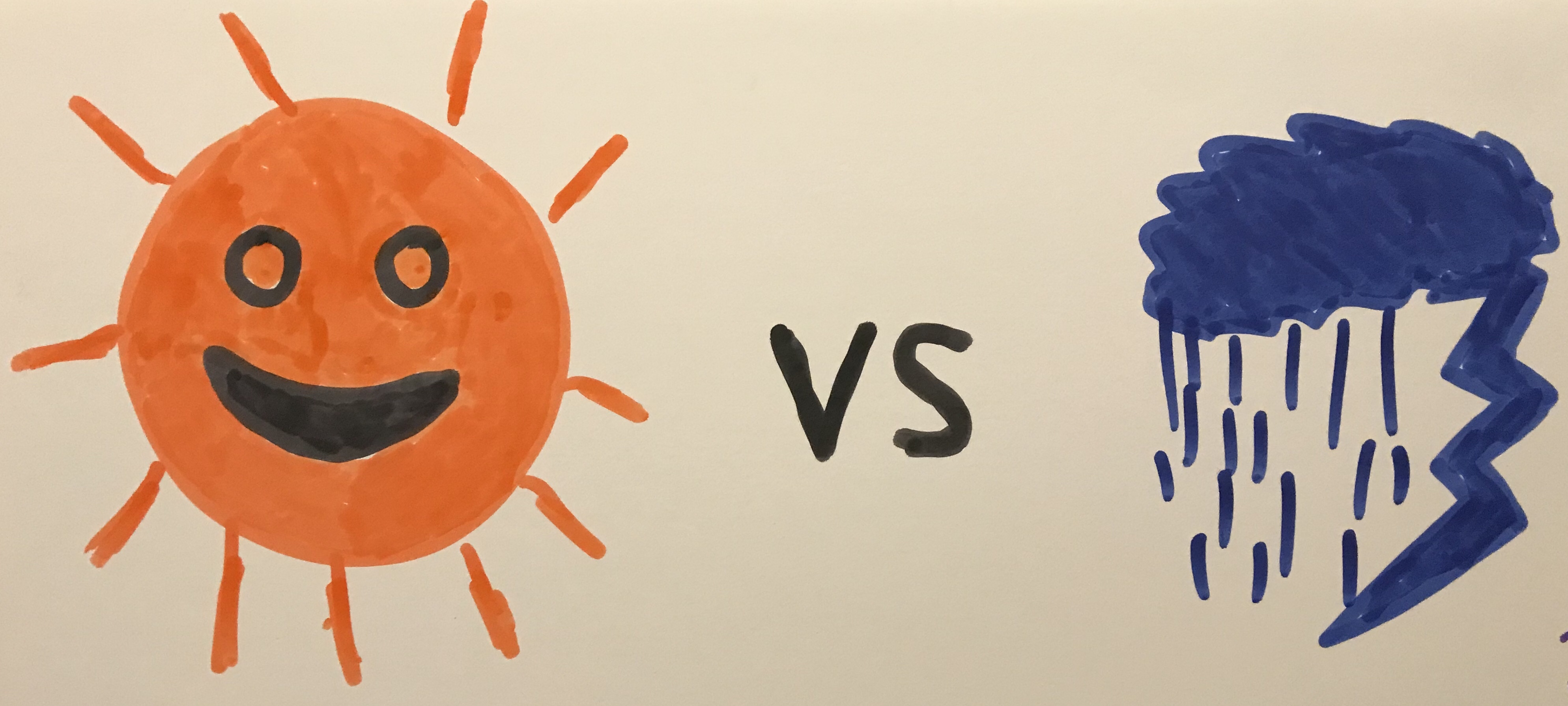 How do you show up? Think about this: do you show up sunny and bright or stormy and cloudy? Bottom line: if you show up as sunshine it will be a shiny happy day for the team. If you show up as a thunderstorm, however, it will be a rough ride. Either way, unlike the weather outside, you have the ability to influence the weather of your organization.
If you don’t believe this think about if you have ever worked with someone who you need to ask others what kind of mood he or she is in before talking to him or her. If you’ve experienced this then you have experienced leaders controlling the weather.
Therefore, we need to be intentional about the weather systems we create. Think about about the extremes: blizzards, hurricanes, extreme heat, or tornadoes. Then think about that sunny day with a calm breeze and moderate temperatures. Which of these weather patterns would you want to be creating?
Your teams and organizations will take their cues from you and whatever weather pattern you are projecting. If your outlook is sunny and bright, the organization is sunny and bright. If your outlook is full of storm clouds, the weather in the organization will be pretty much the same.
Next time you are with your team or people, imagine you are the weather map behind the meteorologist on television and she is about to give the weather report. If you take this moment of being mindful, it will help you to calm any storm fronts and bring sunshine and calm breezes to your organization.
Don’t forget, you are your organization’s meteorologist. As leaders, we create the weather. What kind of impacts do your weather systems have on your organization?
 Byron's Babbles
leave a comment