Network Society
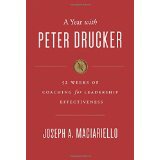
 This week’s lesson from Peter Drucker (Maciariello, 2014) dealt with how many organizations in our society are becoming network organizations. A networked organization is one that operates within a system of interdependent organizations for the purpose of achieving objectives that are agreeable to partner organizations. Many schools, including my own, have a number of partner organizations, whether outsourced services or community partners. This lesson really gave me an opportunity to think about the behaviors necessary to make a network successful:
- Trust
- Shared Values
- Integrity
- Commitment
- Goal Alignment
- Continuous Communication
- Conflict Resolution Processes
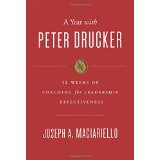
In the partnership of a network there can be no command and control (Maciariello, 2014). The questions must be, “What are the objectives?; “What are our values?”; and, “What are our ways of doing things?” Networked organizations are demanding to lead, and rely on developing and maintaining strong personal relationships among the partnering organizations. A network is somewhat like a team, except the network builds the team out of a wide variety of organizations.
Reference
Maciariello, J. A. (2014). A year with Peter Drucker: 52 weeks of coaching for leadership effectiveness. New York, NY: HarperCollins Publishers.
Information Not Power
 Just a few days away from the Fourth of July and hit the half way point of A Year With Peter Drucker (2014) by Joseph A. Maciariello. It is fitting that the week 26 lesson from Peter Drucker had to do with centralization, confederation, and decentralization. The British set up the colonies as a centralized or unified government where the autonomy and authority rested mainly at the top with the king or king appointed governors. Then in 1774 the colonies established the Continental Congress (Maciariello, 2014). This same Continental Congress endorsed the Declaration of Independence on July 4, 1776. During the period of time from the Declaration through the end of the Revolutionary War our government was in the form of a confederation. In other words, maximum autonomy was granted to the colonies.
Then in 1787 when the Constitutional Convention met a federal system of government was formed with an executive, a congress, and a judiciary. This was put into play with the ratifying of the Constitution of the United States in 1789. All powers not specifically given to the federal government were given to the states with the passing of the Tenth Amendment. The system of government established by the U.S. Constitution is often designated as federal decentralization (Maciariello, 2014). 
So, what can we learn from this? Drucker believed that a global society where the trend was moving toward knowledge-based organizations would see organizations and governments being held together by information, not power. Drucker believed that top leadership would have to take charge of two key resources: key people and money. Interestingly, this is consistent with another book I am reviewing right now as part of a book launch with Becky Robinson and Weaving Influence. The book is The Disciplined Leader: Keeping the Focus on What Really Matters by John Manning. In the book, which is set up in 52 lessons, he posits that what all great disciplined leaders do is focus on what really matters. What the research showed is the focus must be on people. Great leaders understand that people are the most vital asset in a successful organization. As Manning states: “The Disciplined Leader knows how to Focus on the Vital Few and ignore or delegate The Trivial Many (Manning, 2015, p. 5).” Think about it, the people is where the information is.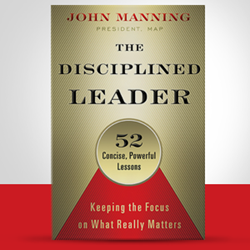
Drucker pointed to Toyota as an example of what many would call operating under decentralization, where the individuals units have rules, but operated independently. Drucker argued this is really a confederation. In a confederation the independent units operate independently, but carry out the overall spirit of the organization as a whole. A unit of confederation is independent, but it operates under loose direction of the parent organization (Maciariello, 2014). The organization that operates with people and information as its most important parts, a confederation, is held together by values, strategy, and information.
If your organization is held together by power and not information, your ability for continuous improvement may be hindered.
References
Maciariello, J. A. (2014). A year with Peter Drucker: 52 weeks of coaching for leadership effectiveness. New York, NY: HarperCollins Publishers.
Manning J. (2015). The disciplined leader: Keeping the focus on what really matters. Oakland, CA: Berrett-Koehler Publishers, Inc.
Nervous As Kittens
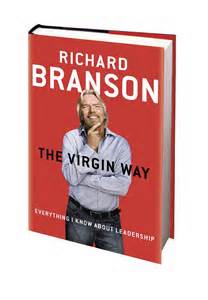
 As I was reading during my personal professional growth time this morning, I read a comment by Richard Branson in his great book The Virgin Way: Everything I Know About Leadership where he said he was nervous as kittens. After reading this I thought about our six newborn kittens we have in the barn right now. What a fitting phrase “Nervous As Kittens” is, because they are just that – nervous. It must be noted that I love cats. I believe what is attractive to me is the fact that they are not pack animals, like dogs. Cats are perfectly content to play by themselves or with other cats.
One thing I learned growing up on a farm that valued having an abundance of cats is the mother cats role. Mothers are key to having happy, secure kittens. Well socialized cats are more likely to have well socialized kittens. We always work very hard at spending time with our cats so they are socialized to people. Kittens often mirror their mothers’ calm or fearful attitude toward people or other animals; this is a normal part of their socialization. In other words, we play a vital role in the development of kittens. By petting, talking to and playing with our new kittens, we can help them develop good people skills. Then I read some startling research: kittens who are gently handled 15-40 minutes per day during their first seven weeks are more likely to develop larger brains. That really got me thinking about the connection to leadership, which was what I was reading about in the first place.
So, I compared what I learned and reflected on with kittens to that of leading people in an organization. What I thought about was modeling and exemplars.
Modeling and Exemplars
Kittens learn many important lessons from their mothers. They learn from their mothers by observing. Research shows that kittens taken from their mothers at weaning are much slower to develop. As leaders, we need to learn from this and model for those in our organization the proper behaviors. Make no mistake, I am not saying I do this well. If being honest we would probably all say we need to be much better at this. I certainly do!
I am a big believer in using exemplars in education and learning. Sometimes people want to argue with me and say that the student will just do the assignment exactly like the exemplar. Well, duh, that is exactly what I want them to do. It amazes me how people will resist this with students, but in real world, real work we are given templates and exemplars all the time. In fact we would not think of beginning many projects without them. That is why I believe they are even more important for our students.
How many times have you said, “Let’s not reinvent the wheel.” What you were really saying is we need a model or exemplar. Certainly nothing wrong with that! Next time we reflect on those we lead and the students some of us educate, let’s not forget the lessons of the nervous kittens and make sure we are providing the modeling and exemplars we have learned to be so very important from the mother cat.
From Delegation to Leadership
 “[Henry] Ford’s failure [1927-1944] was not the result of personality or temperament. It was first and foremost the result of his refusal to accept managers and management as necessary, as a necessity based on task and function rather than in “delegation” from the “boss.” ~ Peter Drucker, 2008
This week’s entry in Maciariello (2014) A Year with Peter Drucker offers us examples from three great innovators in our history. These innovators are Wilson Greatbatch, Andy Grove, and Henry Ford. First of all that’s a pretty powerful trio of innovators to learn from. Greatbatch is known for developing the heart pacemaker, and then later developing the lithium iodide battery that allowed the pacemaker to go decades without battery replacement. Thus eliminating many operations for patients needing pacemakers. Of course, we know Andy Grove as one of the founders of Intel Corporation in 1968. Finally, I don’t really think I need to give an introduction to the third side of the triangle, Henry Ford.
In this week’s entry, Andy Grove discussed how in the beginning he was just one step away from everything, and now is many steps away from everything (Maciariello, 2014). He discussed how everything in the beginning was in his head. People in their initial group, while innovating, gravitated to the roles that fit them. The team built itself up and roles that were needed gravitated to appropriate team members (Maciariello, 2014). Then as the organization grew, however, tribes began to form and power struggles began to occur. This is when Grove realized he needed to shift from innovator to executive (Maciariello, 2014).
 It was interesting for me as I read this story of Andy Grove how much similarity there is to the situations I have experienced in working as a part of a team to turnaround two different schools. In both situations it has been necessary to let the talent gravitate to roles that fit. But now, after a year (that was the same time frame at both schools), it was necessary to take a step back and analyze what everyone was doing. In fact, we had a mini-summit this spring using the essential questions of: What are these people doing?; Are they doing the right things?; and, How do we all support our teachers in doing the right things for our students? That might seem like an easy task, but there are so many parts to making sure a school is operating efficiently and effectively. As an organization grows and develops, there is a tendency to look inward. The organization must recognize, however, that as it changes in size, load, and complexity there is a need for the roles of the people, particularly the leader, in the organization.
Additionally, we all know the story of Henry Ford as the greatest industrial innovator of all time. As the story goes, though, by 1927 the Ford Motor Company was a shambles. Really from 1927-1944, until Henry Ford II took the reigns, the company struggled mightily. In fact, Peter Drucker called it a “controlled experiment in mismanagement” (Maciariello, 2014, p. 198). Henry Ford, according to Maciariello (2014), provides us with a case study in executive mismanagement. Ford tested the hypothesis that as an organization grows it does not need professional leadership. Ford believed an organization should be run by a boss with helpers (Maciariello, 2014), not leaders. In other words, he believed in pushing tasks down to underlings to perform. In today’s lingo I call these the folks that are “email pushers.” Whatever is asked of them, they push the email to someone else to carry out. Really not leadership, or, at least I don’t think so. Ford’s experiment failed and we can all learn from his mistakes. I did a little further studying and Henry Ford II made sure those in the organization had the skills necessary to carry out leading the parts of the organization they were responsible and then Ford II gave them the latitude to lead. 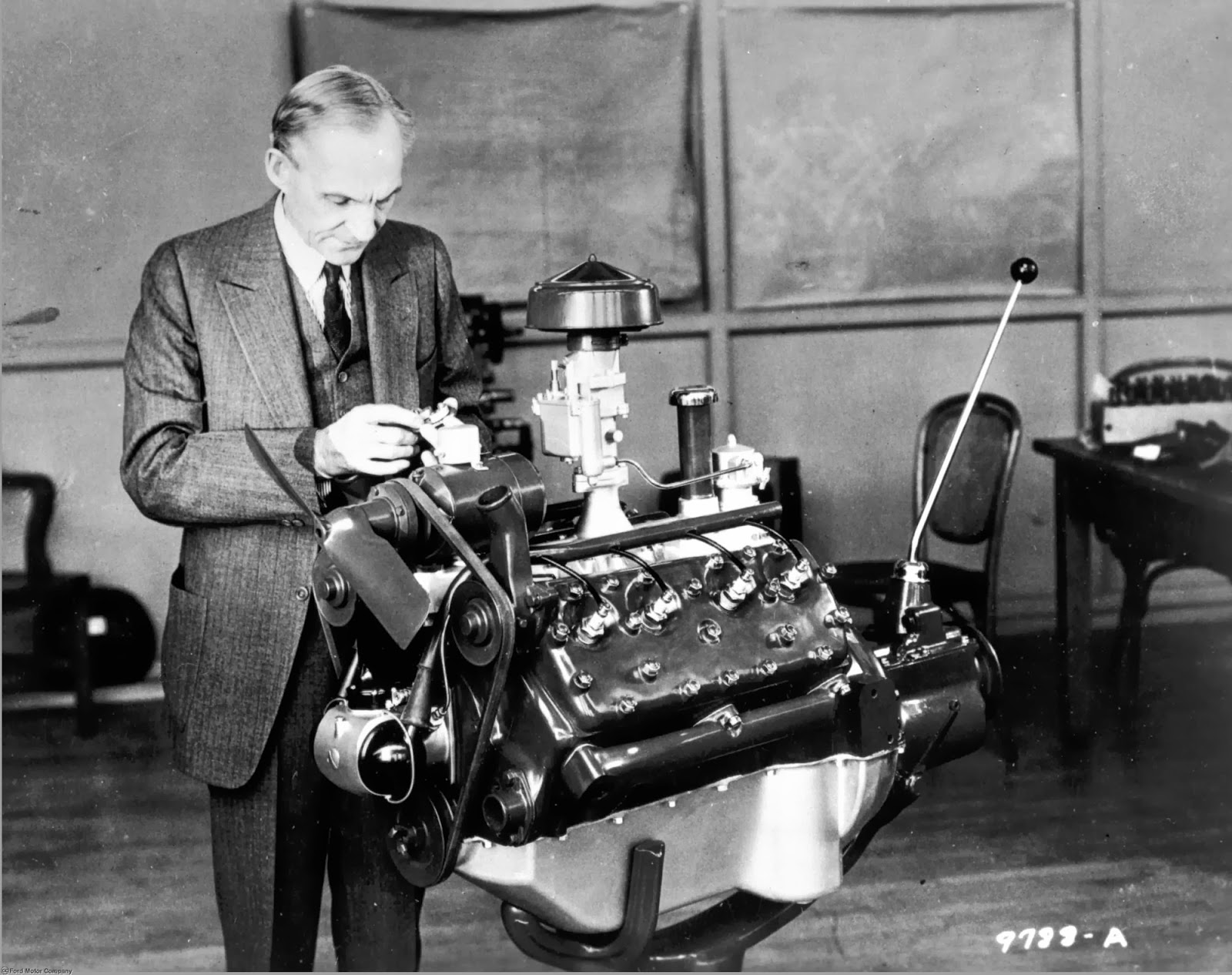
It would do us all good to learn from the lessons of all three of these great innovators turned executives.
Reference
Maciariello, J. A. (2014). A year with Peter Drucker: 52 weeks of coaching for leadership effectiveness. New York, NY: HarperCollins Publishers.
Authenticity 101
“Authentic leadership is the full expression of “me” for the benefit of “we.” ~ Henna Inman
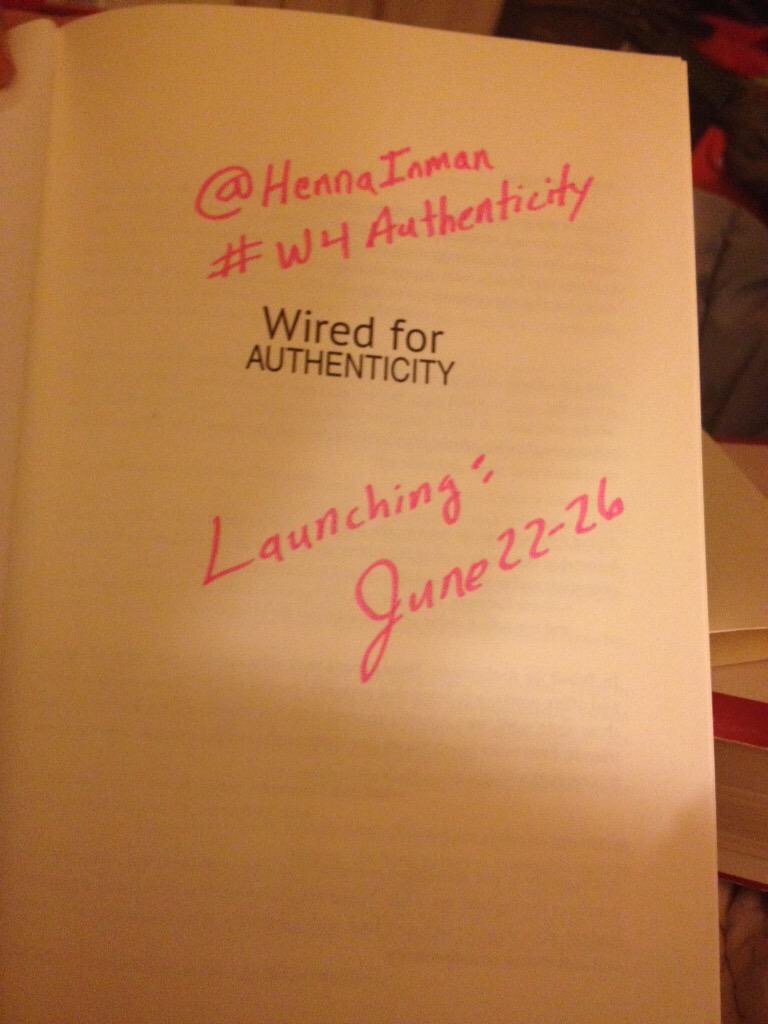
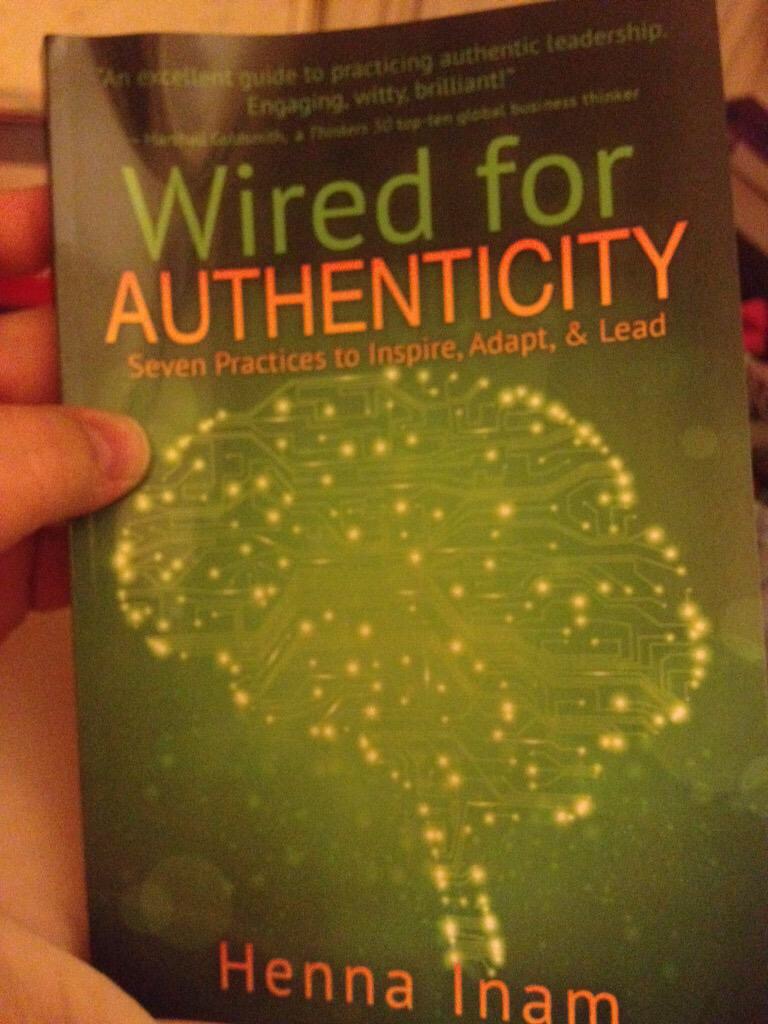
I had the great honor of receiving an advance copy of Henna Inman’s great book, Wired for Authenticity: Seven Practices to Inspire, Adapt, & Lead. What an awesome read. I gave the book five stars on both GoodReads and Amazon. Here is what I wrote as a review: “This is the only book out there that actually gives leaders best practices for being authentic. If I had to retitle the book, it would be: ‘Authenticity 101.’ This is a must read for all who want to be authentic in dreaming big and leading change and innovation.”
Inman’s Step 1 is to “Find Your ‘why.'” We learn best when we set a goal. Inman suggested writing a goal in the margin of the book that I, as the reader, wanted to be authentic in. I wrote, policy consensus and implementation. In order for us to truly be authentic, we need to lose who we think others believe we ought to be, or what is “good” and become who we really are. Being authentic means we will have our own ideas, core values, and beliefs. Guess what? That’s an incredible thing! Can you imagine how bad our constitution would have been if all the founding fathers would have had group think and all agreed on everything? I, for one, am glad they had disagreements and heated arguments, but in the end reached consensus and implemented a constitution that has stood the test of time. They were truly Leading Audaciously!
“We can choose to create within a high-change, high-uncertainty environment only by being in our authentic selves – not the saboteurs. ~ Henna Inman

“The trouble is when our identity starts to limit us and how we perceive our self-worth.” ~ Henna Inman
We must dare to dream big and lead with audacity. I have blogged about this before using my heroes the Wright Brothers as the example. Click here to read that post. Inman explains that when we dream big, we invite all of our saboteurs in for a feeding frenzy. When we get out of our comfort zones and do the audacious and pursue our big dreams we wake up our saboteurs to show up and try to make us fail. That’s ok. We have to continue our climb for what we believe in and not be intimidated. We must also strive to not be the saboteur and work to build consensus by turning the full expression of all the “me’s” into the good of the “we!”
“Our becoming who we are comes from our intentions and actions, not from concepts or theory.”
~ Henna Inman
Opportunities, Competence, & Commitment
 “Now, what does this mean for you?” ~ Julius Rosenberg of Sears in 1917
Rosenberg asked each of his store managers this question in order to integrate their efforts into the overall mission of Sears. The mission statement for Sears at the time was: “Your job is not selling, it is buying.” Rosenberg believed that his sales managers needed to be making sure that Sears was putting the right products on the shelves, not just being good salesmen (Maciariello, 2014). This mission statement helped those at Sears to “do the right thing.” In other words all of the employees at Sears were able to see the whole of the organization’s mission as one’s personal mission. This also helps all of those in the organization to “do things right” (Maciariello, 2014). This is a very important part of the whole mission statement, vision, and strategic planning process – all in the organization must fully understand his or her role in carrying our the plans and doing the right things. It is also important all parts of the mission statement fit reality.
A well written mission statement, according to Peter Drucker (Maciariello, 2014), can be used to effectively allocate the time, talents, and resources of all the people in an organization. One of the things I picked up from this week’s lesson from Drucker is: “It [mission statement] can be used as a recruiting, appraisal, and retention tool to ensure that those in an organization are focused on doing the right thing (Maciariello, 2014, p. 177)”. We need to spend more time talking and asking questions like Rosenberg’s. In fact, I am going to start asking that question after presenting our mission statement: “Now, what does that mean for you.” I am very excited to have learned this today!
When there is a well-produced mission statement, decisions can be guided toward doing the right thing and consensus. In order for this to work constructive dissent must be encouraged to prevent organizational obsolescence (Maciariello, 2014). Drucker said, “If you can bring dissent and disagreement to a common understanding of what the decision is all about, you create unity in action, and in all things trust. And trust requires that dissent come out in the open, and that it be seen as disagreement (Maciariello, 2014, p. 181)”. We must focus on what is right, not who is right.
Does your mission statement accurately your organization’s competence and commitment?
Reference
Maciariello, J. A. (2014). A year with Peter Drucker: 52 weeks of coaching for leadership effectiveness. New York, NY: HarperCollins Publishers.
Creating A New Future: Practice Before Theory
 “The important thing is to identify the ‘future that has already happened.'” ~ Peter Drucker
As an “Energetic Change Agent,” I was really into the week 19 lesson in Maciariello’s (2014) A Year with Peter Drucker: 52 Weeks of Coaching for Leadership and Effectiveness. If you have not begun the journey of reading this book, let me recommend it again. This week’s lesson dealt with identifying emerging trends and how that is different from trying to forecast the future. Identifying trends concentrates on directions and patterns. We must, as leaders, discern patterns from emerging trends, and separate fads from real changes (Maciariello, 2014). I have blogged about change before in other posts, but really dug into this topic in a post entitled: Change Creation is Proactive. You can read that post by clicking here.
Leaders who are effective at facilitating change capitalize on emerging trends and use them to create a new future for their organizations, thus providing a competitive advantage in times of rapid change, This is proactive, not reactive! Again, as was stated in the Drucker quote, this is an exercise in “seeing the future that has already happened.” To create the future any other way is reacting rather than acting, which is what one does if one grows quickly. We need to make sure to study the trends and look for the ‘certainties’ of the future. One place to look for this is in the demographics. One important part of change that I believe was left out of this lesson, and may be discussed in future weeks, is how some organizations ability to create the new future will be impaired by legislation and other government misunderstanding or slowness to adjust. An example is my own: education. As I look back to this year’s legislative session here in Indiana there was a lot of work around education. It is interesting to me that our House of Representatives is very pro “school choice” and innovative practices such as online education, but our Senate is not. Some of our legislation passed is helpful toward the ‘new future,’ but part of it still does not necessarily hinder practices for facilitating futuristic change, but certainly does not serve as a catalyst either.
Therefore, it will be important for us, as leaders of these affected organizations, to help all involved in decision/policy-making to understand the methodology that Drucker outlines to identify “the future that has already happened.” As I describe what Drucker calls the “seven windows of opportunity,” (Maciariello, 2014) think about online education as an example. Online education is already here and I believe everyone would agree it is not going away – nor should it go away. Amazingly, however, there are those that continue to try to block any legislation or policies that help to improve or make online education more effective. So we (and leaders of other such change) will need to help all of those involved understand the seven sources that Drucker outlines as: (1) unexpected success or failure, (2) incongruities, (3) process need, (4) a change in industry or market structure, (5) demographics, (6) changes in perception, (7) new knowledge (Maciariello, 2014). I believe you can extrapolate the implications of the seven windows to your organization. I believe in my own case we have done a pretty good job beginning to work on windows 5, 6, and 7, but we need to continue to put the whole package together to continue to move our cause for the students we serve forward.
“Theory organizes the new realities, it rarely creates them.” ~ Peter Drucker
As a rule, theory does not precede practice (Maciariello, 2014). Decision and policy-makers in government and organizations need to remember this. They need to understand, and few do, that events that have already occurred do not fit their present-day assumptions, and thereby create new realities. We must make sure our policies and structures support “the future that has already happened.”
What steps are you taking to turn future trends and needs into your advantage?
Look for “the future that has already happened” and turn it into an opportunity for innovation. If you do this, you can become an effective change leader. If you are a policy or decision-maker, please make sure you are thinking about how you can support “the future that has already happened.”
Reference
Maciariello, J. A. (2014). A year with Peter Drucker: 52 weeks of coaching for leadership effectiveness. New York, NY: HarperCollins Publishers.
Talkin’ Turkey About Sunk Cost Bias
 I am always amazed at how much I learn on my son and I’s annual turkey hunt. First let me answer the big question on everyone’s mind. Did you get one? I am happy to report that my son did! I did not. For the second year in a row Heath got a turkey and I didn’t. This was his fifth turkey in the seven years we have been hunting together. Not bad for a fourteen year old. In my defense, I did not even take a shot. I saw a bunch of turkeys and witnessed some great wildlife shows, but never a gobbler close enough to harvest.
When turkey hunting there is a great deal of time in solitude for thinking. My favorite time is the first thing in the morning. We get to the woods at 5:00 a.m. and then watch and listen as the woods comes alive. First there are the birds, then the occasional deer, and then the gobble of a roosted turkey. Our two days of turkey hunting each year remind us of all the wonderful creations that God has made. Though my seat attached to my turkey vest is not as comfortable as a yoga mat, I am not any less mindful when in this state of thought and meditation. There are so many things that run through your mind when sitting in total silence and not being able to move. It is exhilerating and I am already looking forward to next year.
On our first morning of the hunt, Saturday, we went to the river bottom along the levee. My son, Heath, set up along the field’s edge that separated the levee from a woods (the turkeys typically come off the levee and graze the field while heading to the woods for the day). I set up about a mile south of him. We both had a great show of turkeys that first morning. I even had a hen come right past me close enough that I could of reached out and touched her. Those that know me are probably amazed that I am able to sit that still in my full camo glory! Anyway, neither of us got a long beard (tom turkey) close enough for harvesting.
Later that afternoon, my wife took Heath to a baseball game (he pitched a save, by the way), and I went back near where we had hunted in the morning. There was a tremendous showing of birds. There was a group of 11 that appeared – four long beards, three jakes (young male), and four hens. They worked the field in front of us for two hours, but we could never call them in close enough for a shot. Then there was a single Tom who strutted around the field like he owned it, but again, not close enough. It was a tremendous show that Walt Disney would have been proud to have filmed for his nature films. But, still, they stayed along the levee side.
The next morning, you guessed it, I went back to the levee. Heath, on the other hand, went to another location. You guessed it, at 8:30 he harvested a bird. I was texted a picture (seen at the top of this post) and was thrilled – the goal is always for Heath to get a bird – I am secondary. Once again, however, I had the greatest show ever. Turkeys were coming off the levee right and left – lots of them. You guessed it, though, they were not interested in coming to me. The Toms were with hens and not interested in what I had to offer. Anyway, it was another great morning of solitude and thought. At least I kept telling myself that!
Toward the end of the morning, as the turkeys were moving out of site I got to thinking about “sunk cost bias.” Was I falling into the trap that leaders fall into. As I thought about this I realized that turkey hunting might be one of the greatest case studies to teach this because I kept getting drawn back to this same area. I knew there were lots of turkeys here. In fact three of Heath’s turkeys he harvested in past years had been taken very near where I was sitting. Also, I had already spent a lot of time there this year. This year, however, the turkeys were just not moving across the fields in the same way – this is what really makes turkey hunting so exciting and facinating. The turkeys never act the same from year to year. Does this sound like any of the organizations you lead? Yet, for some reason I was drawn to this place. Part of it was the fact that it is one of the most beautiful places in the world. Hemlocks were blooming, Blue Jays were playing in the trees above me, a squirrel was hopping from tree to tree, and a Bald Eagle was soaring above. It is just a glorious place to be.
Still, there were all these turkeys. When we regrouped for the afternoon and Heath’s turkey had been processed it was decided to go to another location for the afternoon. “Sunk Cost Bias” had been resisted; at least for now. At 4:30 p.m., after not seeing or hearing any turkeys, it was decided, you guessed it, to go back to the levee. I know what you are thinking: this guy is an idiot because he knows the turkeys won’t come close enough. You are right, I was giving into sunk cost bias. I knew we would see birds, but I would never get a shot. Yet, I was drawn by the fact I had invested so much time there and knew there were turkeys. I had become the poster child of what sunk cost bias is: The sunk cost bias is manifested when we have a greater tendency to continue an endeavour once an investment in money, effort or time has been made.
I was first introduced to this thinking at Harvard University by Dr. Monica Higgins when studying a case study of the 1996 Mount Everest tragedies. Reasoning that further investment is warranted on the fact that the resources already invested will be lost otherwise, not taking into consideration the overall losses involved in the further investment. During the Mount Everest tragedy the sunk cost bias was carried out on two fronts: 1. At the time of starting for the summit, some thought the conditions were not right, but they had come all this way and were not going to wait; and, 2. Many that died did not summit by the 2:00 p.m. cutoff time (the time set to turn around if a summit had not been made yet) but went ahead and summited as much as two hours late. Again, the thought of “I’ve invested all this time, money, effort, et cetera and by golly I am going to summit Mount Everest” was at play there.
Obviously, my life was not on the line, but by going back to the levee for one last ditch effort at the end of our last day of hunting was giving into sunk cost bias. You guessed it, too, we saw a lot of turkeys but none came close enough. What I was failing to realize is that moving back to the levee would most likely result in the loss of much more time and not getting a turkey. I was thinking short-term, not long-term, and simply trying to avoid not getting a turkey, which was fallacious thinking. It was really thinking from a defensive posture and not an offensive one. This experience has really caused me to think about the strategic and academic plans we are carrying out in the schools I lead. Do we have areas of sunk cost bias? It begs taking an introspective look.
When we make a hopeless inventment of time, treasures, or talents we sometimes reason: We can’t stop now, otherwise what we have invested so far will be lost. This is true, of course, but irrelevant to whether we should continue on with the plan. If the plan will not work that everything invested will be lost regardless. Therefore, it really is irrational to continue, but yet we (at least me) continue on anyway. The rational thing for me to do on our turkey hunt would have been to try a new spot. Why didn’t I make the rationale choice: Our decisions are tainted by the emotional investments we accumulate, and the more we invest in something the harder it becomes to abandon it. As an emotional human, my aversion to loss often leads me right into the sunk cost bias. We need to instead look at the loss from a growth mindset and consider it learning and knowledge gained.
Luckily, we all have the ability to reflect, study, and regret past actions. So, in my case, I need to remember what I did on this turkey hunt and apply it to my professional life as a leader. Do you have areas in your personal or professional life where sunk cost bias is hurting your ability to move forward? If you’re not sure, might I suggest an early morning meditation time in a woods as it comes to life at the start of the day?
Spirit of Performance
 Drucker believed that the spirit of performance in an organization is led by leaders who are committed to getting the right things done (effectiveness) and doing the right things (efficiency) (Maciariello, 2014). These leaders must posses integrity of character, a vision for the organization, and focus. They must also be able to lead change. Drucker called those who could lead change agents “disturbing elements” (Maciariello, 2014). A disturbing element in an organization is a leader who seeks to change its culture and practices to prevent bureaucratic behavior from settling in. These leaders bring energy and spirit to the organization.
Drucker also believed that the purpose of an organization is to “make common men do uncommon things” (Maciariello, 2014). We all hire from the same pool of common people. Face it, we are all just common people. Why do some achieve greatness in the companies, organizations, and schools they work for? Because there has been at least one leader in that institution who prodded people to develop, improve, innovate, and sustain the spirit of performance. Organizations must see being entrepreneurial and innovative as a duty. As such, organizations must develop their people to be entrepreneurial and innovative. This ca be accomplished with “conscience” activities. Those activities that remind the organization what it should be doing and what it isn’t doing.
Those leaders who provide the sustaining spirit for an organization are forever watchful for bureaucratic tendencies allowing people to drift into repetitive routines and lose focus on primary results. I was really reminded in this week’s lesson, how much all of this really deals with people. It deals with hiring the right people and then providing the right opportunities and a culture of performance. Furthermore, it is important to remember that decisions that affect people, their placement and pay, promotion, demotion, and severance, must represent the values and core beliefs of the organization. As businesses, organizations, and schools, innovate and evolve there will be people who are just not the right fit. This poor fit may be because of skill level, personality or any number of things. Drucker teaches us this is natural. We must work to make conscience decisions about how to get them the professional development they need, help them understand the gap in fit, or come to an understanding together that it is just not in the best interest of either party to continue. I liked the suggestion by Maciariello (2014) that we should always ask the question, “What can they do?” Many times there are adjustments that can be made.
Are you providing the spirit of performance in your organization?
Reference
Maciariello, J. A. (2014). A year with Peter Drucker: 52 weeks of coaching for leadership effectiveness. New York, NY: HarperCollins Publishers.
Leading Together By Working Together

We are increasingly moving towards multinational, transnational organizations that are held together by two factors: control of mission and strategy, and enough people who know and trust each other. Distributed leadership and a flattened hierarchies are key to accomplishing this. In this week’s lesson on Peter Drucker, and example of how the Coca Cola Argentina division had to make a decision that was right for helping the people of Argentina, but not good for the bottom line of the company based in Atlanta Georgia (Maciariello, 2014). Coca Cola understood that performance measures for foreign subsidiaries should be adapted to local political and economic realities.
As leaders we must learn to balance having a bold vision with what to do next. We must also learn to lead together by working together. Everyone in the organization must understand the values, objectives, and expectations of the organization. This is why it is important to build a team that is competent. Empowerment without competence is chaos. Wherever you sit in the organization, there is many times a tendency to wait for others to lead. We need to create an environment where everyone in our organizations can lead from where they sit.
Trust-based relationships must replace command and control mechanisms as coordinating mechanisms. This will allow effective leaders time to perform important duties. We must create enough autonomy for our teams to meet the local realities they face. Maciariello (2014) closed this week’s lesson by posing a great question that we all, as leaders, need to answer. Does your organization have resilient trust networks, that allow individuals to transfer information to and from one another?
Reference
Maciariello, J. A. (2014). A year with Peter Drucker: 52 weeks of coaching for leadership effectiveness. New York, NY: HarperCollins Publishers.
 Byron's Babbles
leave a comment