Turning Scattered Ways Into Saner Days
 It seems that any time leadership is discussed the topic of planning and time management comes up, and rightly so. If you think about it, it really makes sense as to why so many of us do a poor job of planning our day – we are “doers.” We want to get our day started and do something, not plan it. But, John Manning (2015) reminded us in this week’s lesson in The Disciplined Leader that, “Planning helps you plot out the best strategies and actions for achieving your vital goals and how to overcome foreseeable obstacles (Kindle Locations 1011-1012).” It is important to remember that planning is an important part of being a disciplined leader.
We must make time to plan our day if we want to get the most out of our time and be focused on the things that matter. Carving out time, any amount of time, in the day to focus on true strategy or long term planning is also critical. Another very important thing leaders should spend their time on is carving out some time every day for themselves. Time spent improving yourself, your skills and even learning new skills, is never time wasted. It is one more critical action you can take as you model the behavior of great leaders!
For me this really becomes more about doing the right things each day. Manning (2015) pointed out that we must attack our day by having a plan ready the night before for the next day. Great advice! I also read a few years ago, and follow the advice of spending 15 minutes of my morning personal professional development time each morning planning out the day. This has worked well for me. Also, keeping a running list of things I need to do and then looking at this list each day to see what needs to be added to that days priorities also works. Now, I don’t want you to get the idea that I am good at this – I’m not. Some days, in fact, I am terrible at it. If we are all honest, we probably all struggle to be good at this all the time.
The bottom-line is we must take time to plan and review our day, every day. As I stated above, I set aside the first 15 minutes in the morning to note the tasks I need to accomplish each day. Some leaders I know do this as they commute to work. Because I prefer to listen to books when I commute, I don’t use my commute as planning time. We also need to remember to finish the day by reflecting on what went particularly well and where we could improve our performance. We need to take time to reflect on what went well and how conversations or meetings could have gone better.
A little planning can help us to us to turn our scattered ways into saner days. How can you improve your daily plan?
Reference
Manning, John (2015). The disciplined leader: Keeping the focus on what really matters. Berrett-Koehler Publishers. Kindle Edition.
Deadline: Yesterday!
 Do you ever avoid meeting with a direct report who isn’t performing well, telling yourself you’ll get to it later? Or do you tend to postpone intimidating projects that will test your self-confidence, abilities, comfort zone, or patience? These are all questions John Manning posed in this week’s entry in The Disciplined Leader (2015). Manning (2015) told us, “If so, those are a few of the classic red flags of procrastination.” This week’s lesson reminded me how important it is to get the tough stuff tackled first and move on. This keeps us from worrying about something that probably will not be as bad or tough as we think it will be.
This week’s entry also reminded me of another great book that has really brought inspiration to me as a leader. The book is Eat That Frog! by Brian Tracy (2007). His book offers real help on how to overcome procrastination and increase your productivity. It’s known as Eat that Frog! And those that follow this tip recommend eating it for breakfast. The inspiration for the book actually came from a Mark Twain quote:
“If you eat a frog first thing in the morning that will probably be the worst thing you do all day.” – Mark Twain
Really, what Tracy (2007) was telling us is that if you just do the tough task that you have been procrastinating about, all the tasks after that won’t seem as bad. It is a strong idea to help you stop procrastinating. Let me tell you, it works, too. Think about that tough phone call you had to make recently. You put it off and put it off and then finally make the call. Was it as bad as you thought? Probably not. Were you relieved when it was done? Yes! Did you feel better when it was done? Yes! If you can relate to this than you certainly get the idea of “Eat that Frog.” Eat that fog! Get it done and over-with and move on. This is the radical idea. Take the lesson from John Manning (2015):
“Take on difficult challenges earlier in the day when your mind is more focused and you have more energy.” ~ John Manning
Eating the frog may taste nasty or be an annoying or frustrating task. But accomplishing it will lighten up your mood and give you a surge of energy and enthusiasm for the day. It’s an empowering feeling and it will spread into your other activities. Another important point to remember related to Tracy’s (2007) analogy is the longer you keep looking at your frog and procrastinating, the harder and harder it will be to actually eat that frog (get the task completed). Not to mention the fact that having the task on your mind is keeping you from being as effective or sharp on your other tasks. Finally, Tracy (2007) also taught us that when you have two frogs, eat the ugliest one first. That way the second one won’t seem quite as bad. Manning (2015) translated this for us by teaching us to “Schedule these activities first.”
So, get out there and eat that frog and get on to the important activities of the day!
References
Manning, John (2015-06-15). The disciplined leader: keeping the focus on what really matters. Berrett-Koehler Publishers. Kindle Edition.
Tracy, B. (2007). Eat that frog! San Francisco, CA: Berrett-Koehler Publishers.
Expertise Vs. Listening
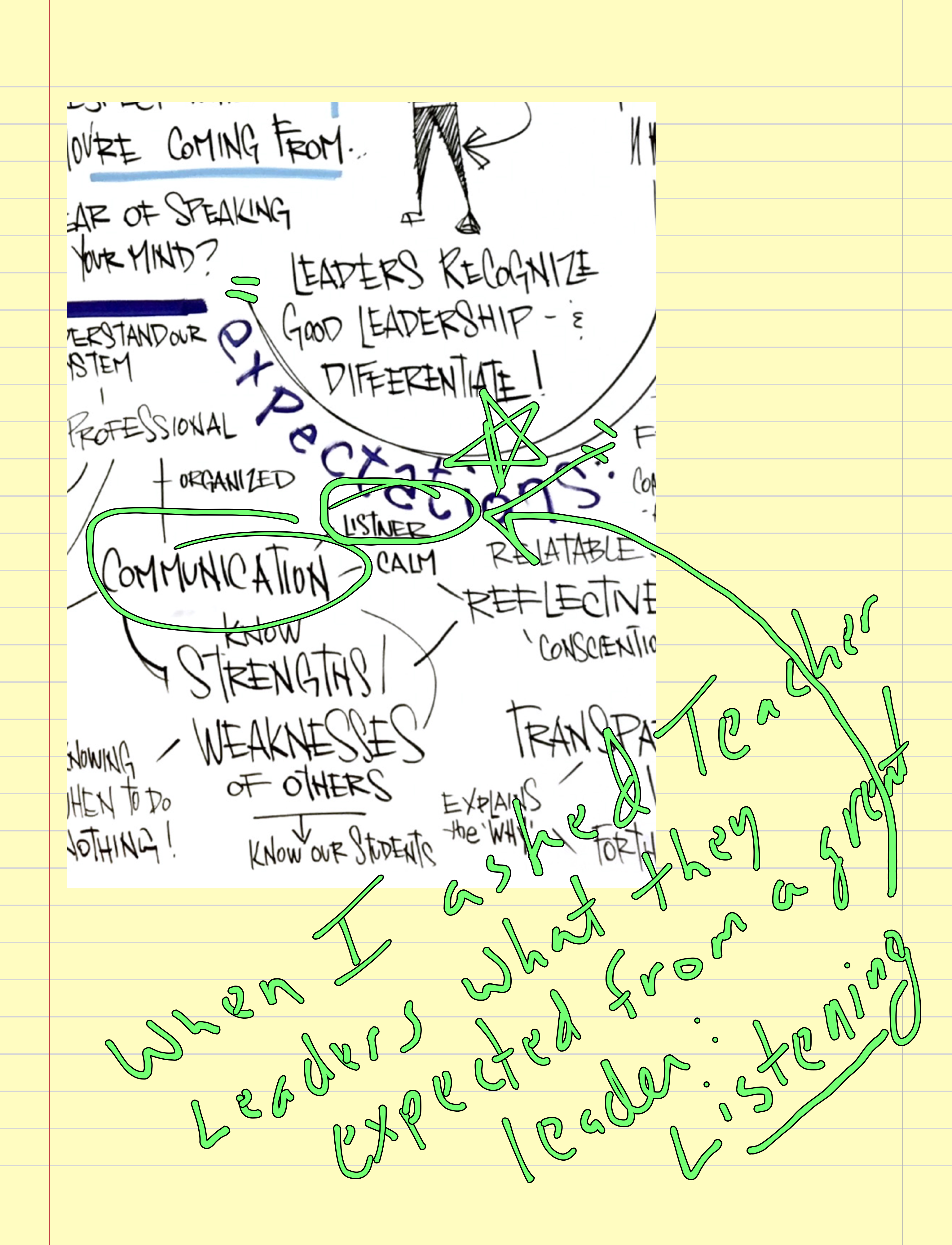
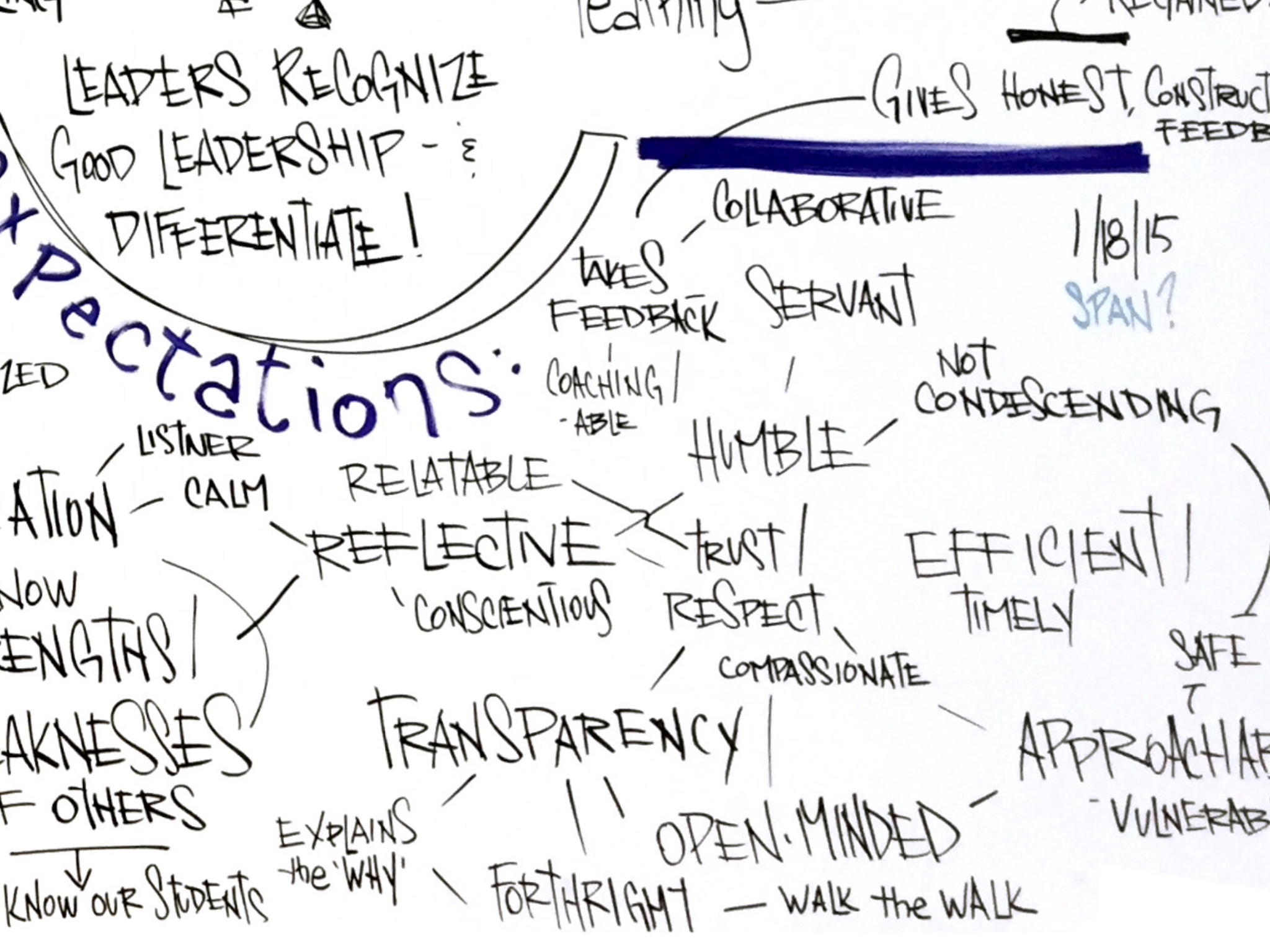
It seems that every leadership book has a part dedicated to listening. The Disciplined Leader (Manning, 2015) is no exception. It is an appropriate subject to keep at the forefront as we hone our leadership skills. In fact, when I asked our Focused Leader Academy participants to develop a list of expectations of great leaders, “listening” hit the graphic early in the discussion. It really comes down to the fact that we all want to be heard. So, it’s pretty simple: as leaders we need to listen.
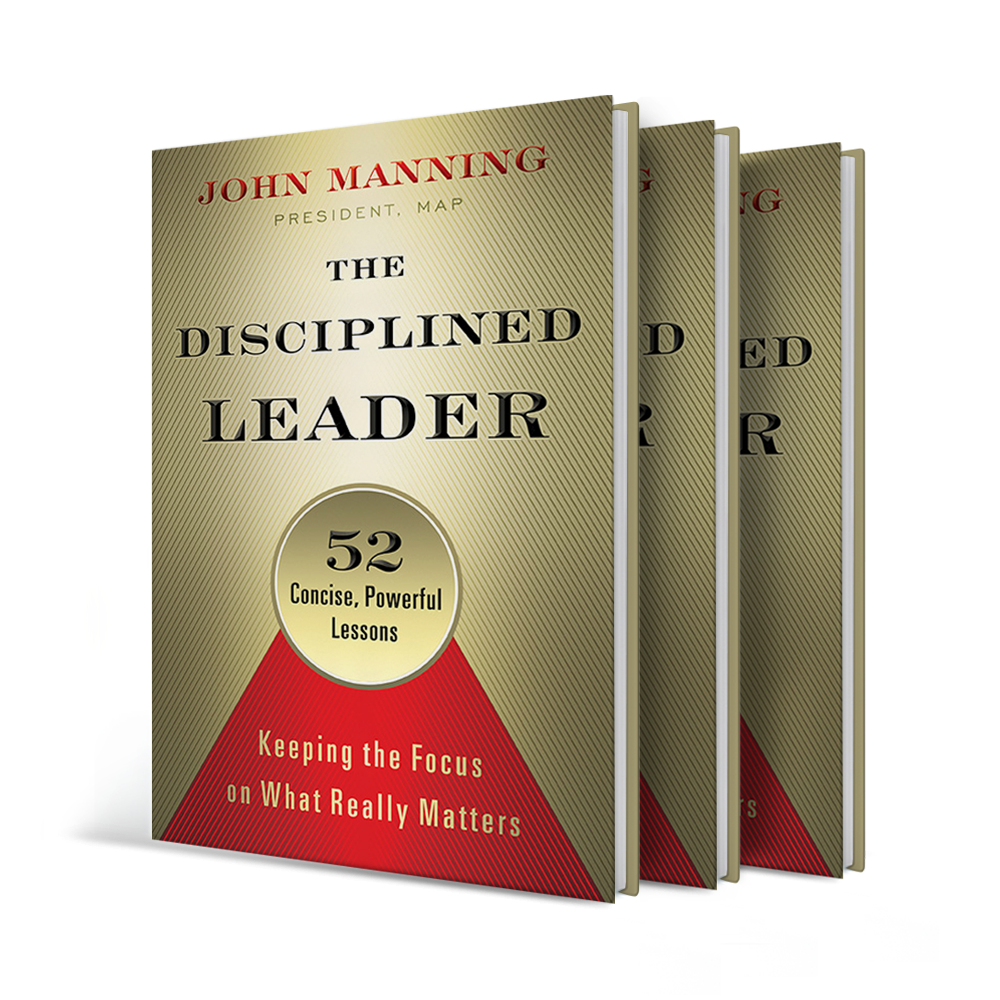
“There’s no doubt leaders like to talk. But great leaders know one of the keys to effective leadership is suppressing the innate desire to hear oneself speak to create that golden opportunity to listen more and talk less.” ~ John M. Manning
One of the points Manning (2015) made this week in lesson #14 was that, “I needed to listen more to others and talk less about myself. As soon as I started making this shift, I became much more aware of what was really going on around me—as if I were seeing work and life in a totally new light. I also learned many new things about people and the organization as a whole.” The key here is just not to listen instead of talking, but when talking making sure it’s saying the right words – not talking about ourselves or how to one-up what was just said. As Manning (2015) puts it, “Rather than give advice, they [disciplined leaders] ask smart questions, knowing that this coaching style is much more powerful for learning, developing, and generating sustainable change.” I so agree with this. In fact, one of my favorite questions after proposing an idea is to say: “Tell me why I am dumb for thinking this?” If you really mean it, and I always do, it will get a discussion flowing and great ideas/solutions fleshed out.
I just finished reading a great book by Kevin Cashman entitled Leadership from the Inside Out: Becoming a Leader for Life. In this book Cashman walks the reader/leader through seven mastery shifts he believes are necessary to become a leader for life. The sixth one applies to this post. Here it is:
“Change Mastery Shift 6: From Expertise Focus to Listening Focus. Effective leaders stay open and practice authentic listening to stay connected with others and to consider multiple, innovative solutions.” ~ Kevin Cashman
This makes so much sense. Have you ever been in a meeting and thought, “Boy, this person likes to hear themselves talk?” Really, all they are doing is trying to display expertise. But, as my dad used to say, “There is no statistical correlation between the amount of taking someone does and knowledge.” Pretty good thought! The key here is “authentic” listening. Really connecting and using what we are hearing and learning from others. I always try to approach listening like reading – I think about what I would be highlighting. This has helped me to be very reflective when listening to others. Others have always found it interesting that for as boisterous as I normally am, in meetings I am pretty quiet – it’s because I need to listen and take time to process.
 What will you do in 2016 to become a more authentic listener?
Reference
Cashman, K. (2008) Leadership from the inside out: Becoming a leader for life. San Francisco, CA: Berrett-Koehler Publishers, Inc.
Manning, J. (2015). The disciplined leader: 52 concise, powerful lessons. Oakland, CA: Barrett – Koehler Publishers, Inc.
“Chance Favors The Prepared Mind”
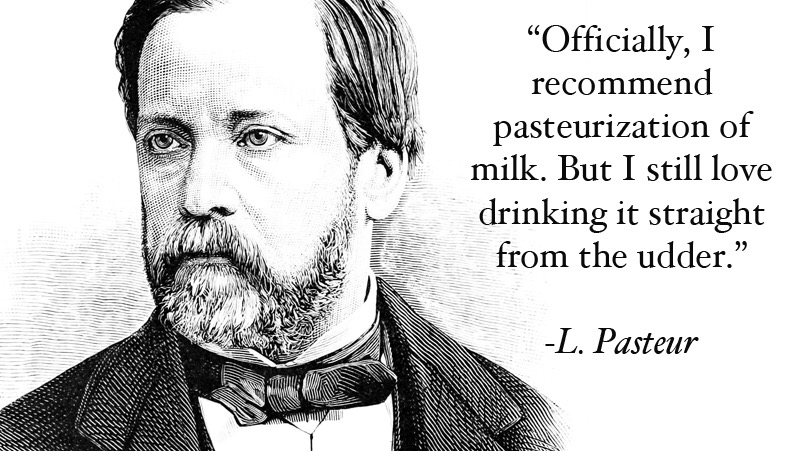 “Chance favors the prepared mind” was the statement Louis Pasteur, the 19 century scientist, used to describe his remarkable ability to invent and innovate across a complex set of problems.
 Peter Drucker believed we needed to notice the little things that other people miss (Maciariello, 2014). If we study Louis Pasteur’s research accomplishments – from his studies of crystallization and fermentation that aided industries ranging from dairying to silk-making to his work with germs and microorganisms that opened up whole new fields of scientific inquiry; we find that he was truly ready for chance to “happen” to him. Some people believe Pasteur was just lucky. Pasteur’s greatest gift may have been his ability to notice the little things that other people missed. Some of those little things proved to be the source of his lucky breaks (Maciariello, 2014).
As leaders and innovators we must immerse ourselves in our work at a level such that we can identify a breakthrough event when we spot it. In order to find significance in life, we need to prepare and dream. This preparation will enable us to spot unexpected opportunities. In 1888, the famous Pasteur Institute was named after him, and upon his death in 1895, he was hailed as a national hero. His last words were, ”One must work; one must work. I have done what I could.” In the last and 52nd entry in “A Year With Peter Drucker,” Maciariello (2014) poses a great question for us as a guide: “What would it take for me to take advantage of this opportunity right now?”
Reference
Maciariello, J. A. (2014). A year with Peter Drucker: 52 weeks of coaching for leadership effectiveness. New York, NY: HarperCollins Publishers.
Failing Forward
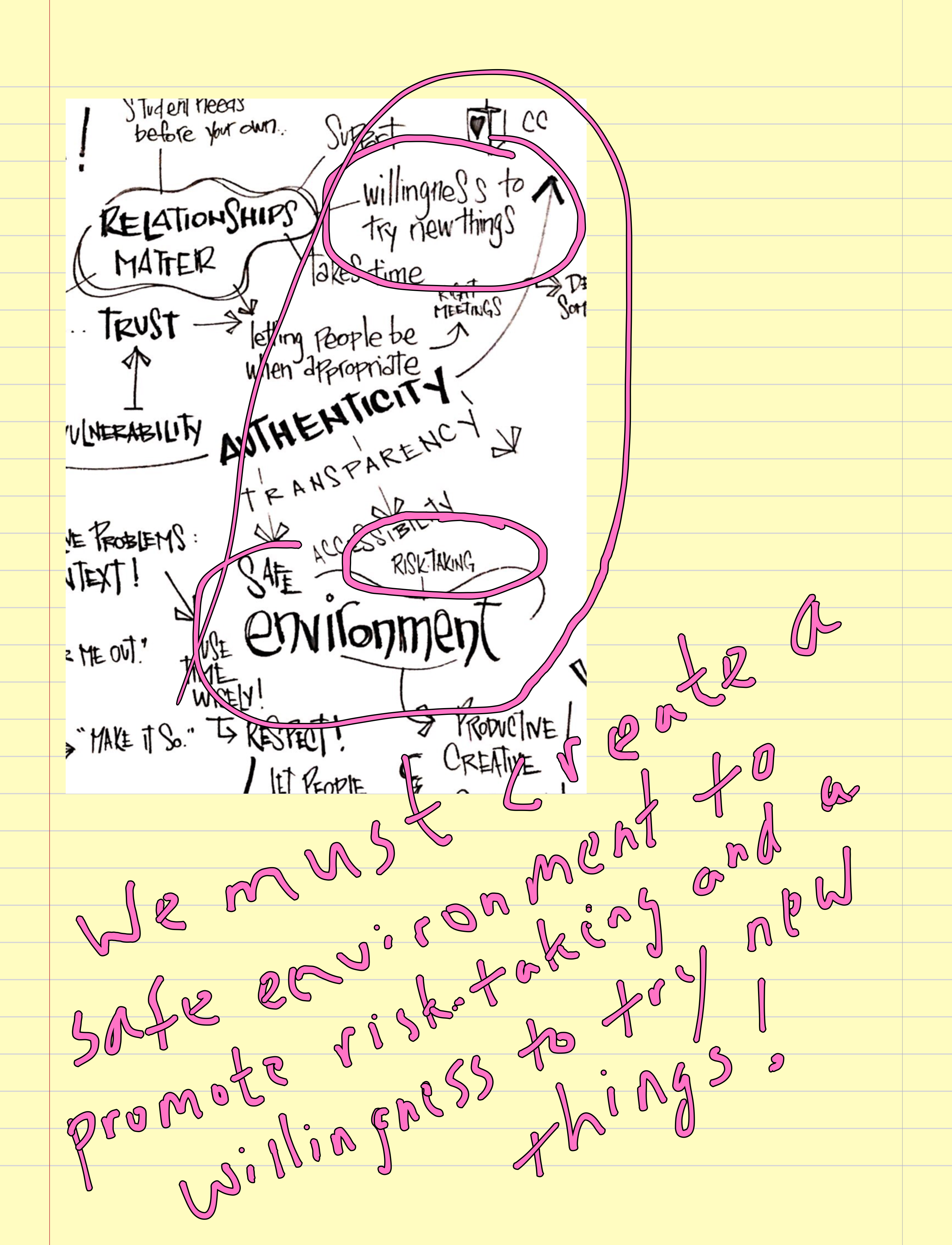 The whole idea of failing, making mistakes, and losing is an interesting topic. I believe the reason so many talk about it and write about it is that we all fail, make mistakes, and lose. Well, almost everyone. There are those that are so risk averse that they never try anything, do anything, or compete in anything. How sad for them. I’m not sure you can ever fully appreciate the incredible feeling of the win, without first feeling the emptiness of the mistake or loss.
“It takes a leader who’s got guts to own [the mistake].” ~ Jack Welch
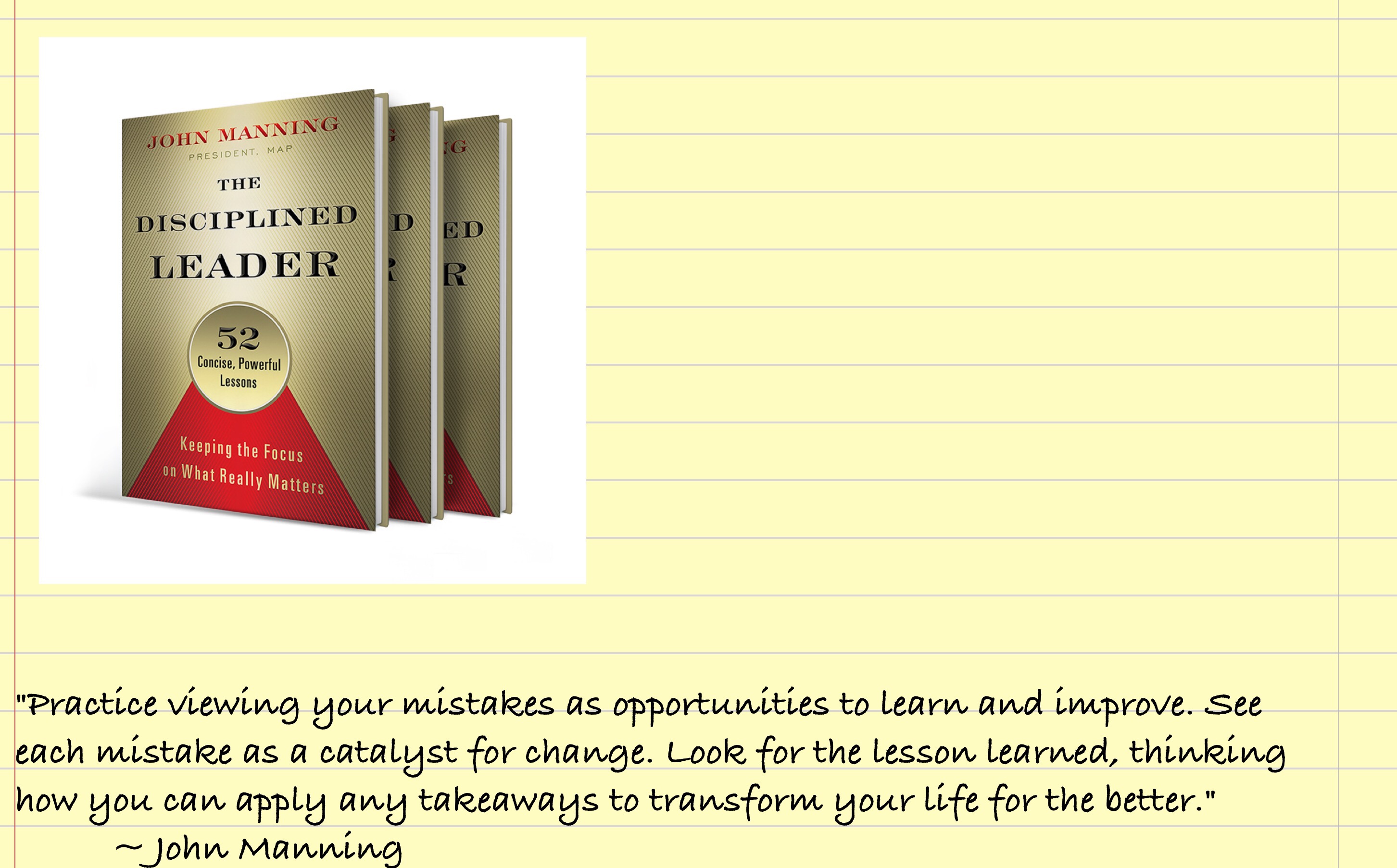
This week’s entry in The Disciplined Leader (Manning, 2015) addressed the issue of viewing mistakes as opportunities. When I was much younger I had a tremendous mentor who never used the words problem, challenge, mistake, or any or like-such word. He always used the word, “opportunity.” He truly believed every wrinkle that came along was an opportunity waiting to be developed. His example has stuck with me and resonated throughout my life. It continues to amaze me how true this is.
I still believe our 26th President of the United States and reformer, Theodore Roosevelt, summed in up best in “The Man In The Arena.” Here it is, if you’ve not read it:
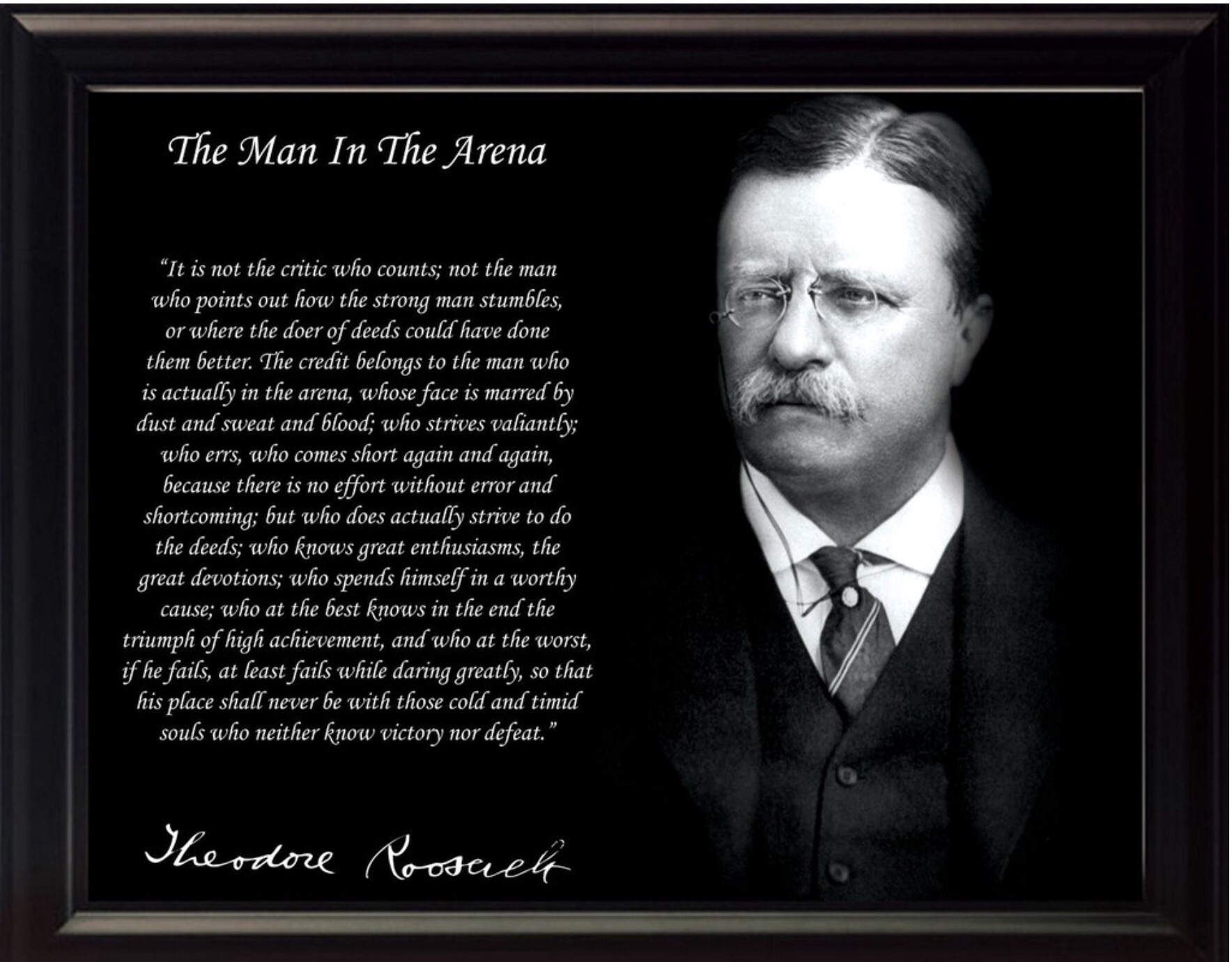
Are you in the arena? Are you creating a safe place for those you serve to get in the arena?
Reference
Manning, J. (2015). The disciplined leader: 52 concise, powerful lessons. Oakland, CA: Barrett – Koehler Publishers, Inc.
Leaving Fingerprints on Others
 In the next to last lesson in A Year With Peter Drucker (Maciariello, 2014) we learn what a great mentor Peter Drucker was to Rick Warren and Bob Buford. Rick Warren said that when you visit Saddleback Church you see “his [Peter Drucker’s] fingerprints all over it (p. 389).” Warren also reflected on what he called “essential Druckers.”
- Leaders don’t ask, “What do I want?” but “What needs to be done and where does it need to be done?”
- “The mission comes first.”
“Here lies a man who knew how to put into service more able men than he was himself.” ~ Andrew Carnegie wanted to put this on his gravestone
Then Drucker mentored us to ask, “What is in my life that needs to be  done, and where do I need to be doing it?” Drucker believed it was important for us to also know what to stop doing (Maciariello, 2014). If we are to become all we can be, it is simply impossible to keep adding activities to our work and to our lives without dropping other activities. During a mentoring session with Rick Warren, Drucker once asked, “Don’t tell me what your doing, Rick. Tell me what you stopped doing (p. 391).” Drucker was clearly a great mentor. We need to learn from his modeling of how to leave our fingerprints on others.
Reference
Maciariello, J. A. (2014). A year with Peter Drucker: 52 weeks of coaching for leadership effectiveness. New York, NY: HarperCollins Publishers.
Bah Humbug! Leadership
 Last year I wrote a post about the classic Christmas movies Rudolph the Red Nosed Reindeer and Elf (click here to read the post). That post started an annual tradition, right? Well I guess so, because I’m doing it again this year. I missed church this morning because of a cow having a calf and when I came in I got caught up watching Disney’s A Christmas Carol – An animated retelling of Charles Dickens’ classic novel about a Victorian-era miser taken on a journey of self-redemption, courtesy of several mysterious Christmas apparitions. As I watched I was struck by the many leadership lessons.
 I was first struck by the fact that Scrooge would be considered successful by today’s standards – money, drive, and disciplined. But, remember there is a difference between success and significance. I have reflected on wanting to be more significant than successful a lot now that I have entered the second half of life. I am reminded of what the scripture says in Luke 12:48: “For unto whomsoever much is given, of him shall much be required; and to whom men have committed much, of him they will ask the more.” (King James Version) I like The Message version even better: “Great gifts mean great responsibilities; greater gifts, greater responsibilities!” Fortunately, Scrooge learned that he must use his success for significance in his second half. My favorite lines from Dickens sum up Scrooge’s transformation from success to significance quite well:
“A merry Christmas, Bob,” said Scrooge, with an earnestness that could not be mistaken, as he clapped him on the back. “A merrier Christmas, Bob, my good fellow, than I have given you for many a year. I’ll raise your salary, and endeavour to assist your struggling family, and we will discuss your affairs this very afternoon, over a Christmas bowl of smoking bishop, Bob. Make up the fires, and buy another coal-scuttle before you dot another i, Bob Cratchit!”
Scrooge was better than his word. He did it all, and infinitely more; and to Tiny Tim, who did not die, he was a second father. He became as good a friend, as good a master, and as good a man, as the good old city knew, or any other good old city, town, or borough, in the good old world. Some people laughed to see the alteration in him, but he let them laugh, and little heeded them; for he was wise enough to know that nothing ever happened on this globe, for good, at which some people did not have their fill of laughter in the outset; and knowing that such as these would be blind anyway, he thought it quite as well that they should wrinkle up their eyes in grins, as have the malady in less attractive forms. His own heart laughed: and that was quite enough for him. ~ Charles Dickens, A Christmas Carol
Furthermore, Scrooge taught us to be passionate about what we do. Whether Scrooge was busy piling up his riches or becoming a new man after the ghosts visited him, he went after everything to the full extent of his being. As a miser, however, he let the love of his own life supersede his ability to have an impact on others. Remember, what we do for others is the best measure of how we have used our time, treasures, and talent.
 In the end Scrooge comes through for us and teaches us a very important leadership lesson. He teaches us to learn from history and experience. Additionally he teaches us, as leaders, to put into practice what we have learned. It took four ghosts to break Scrooge of his idolization of money, and they showed him his own historical journey through life, the experiences of many others, and what could be his future journey of significance. Once Scrooge learned the necessary personal growth lessons, he changed his entire life, literally overnight. What a transformational leader. He gave to the poor; he reconnected with the only family he had, his nephew, Bob Cratchett. He grew especially close to Tiny Tim, who was shown dying by the Ghosts of Christmas Present and Christmas Future. As we know, Tiny Tim lives.
Charles Dickens’ best-loved story is one of personal transformation. Changing leadership behaviors and achieving significance in life requires experience, not just consideration of intellectual concepts. Each of Scrooge’s experiences brings him closer to the major transformation which ultimately determined his future. Nonetheless, all of these experiences were important to his transformation. Scrooge had the opportunity to relive the past, truly experience the present, and anticipate the future.
During this holiday season take some time to reflect on the past, enjoy today’s blessings, and anticipate and plan for living a life of significance.
“God bless us! Every one!” ~ Tiny Tim
Leaders Framing Themselves As Victims
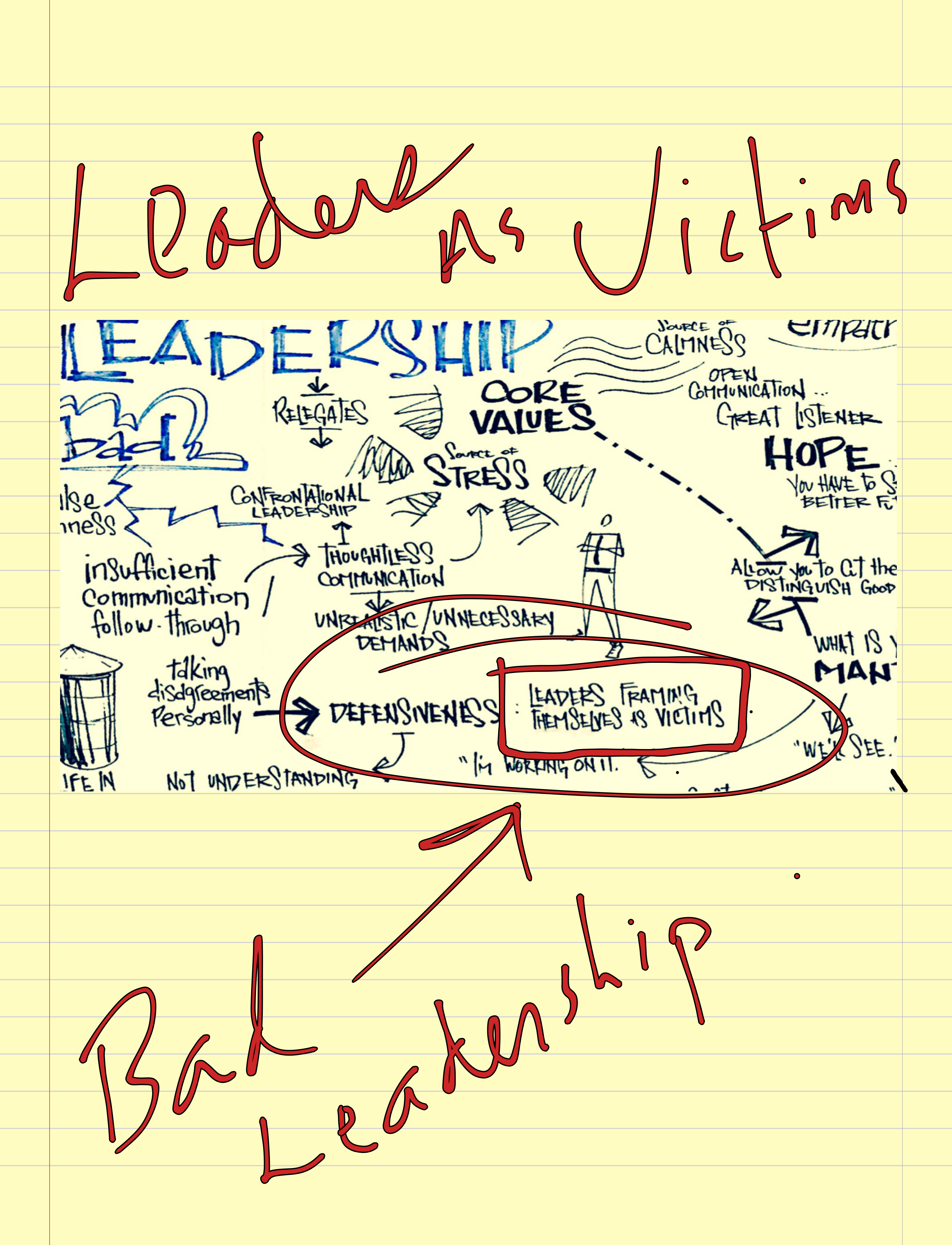
Graphic of GoodLeader/Bad Leader Discusion Drawn by Mike Fleisch
This week’s entry (#12) in John Manning’s (2105) The Disciplined Leader was entitled “Eliminate the Victim Mentality.” Our Focused Leader Academy participants had a huge discussion about this back in November during a Good Leader/Bad Leader discussion. The context of our discussion was how leaders blame their decisions, or lack there of on others or circumstances allegedly out of their control. Instead of being a victim, I call this “excuse-making.” This excuse-making, or blaming and justification are all contained within the excuse-making thought process. In our society today, some leaders have become adept at using all of these strategies to rationalize their actions. Here is where the danger lies in leaders taking a victim approach. The core of victim thinking is the belief that if you’re a victim of something, then the results of your decisions and actions don’t apply to you. Consequently, if you’re not responsible, then you don’t have to change anything: it’s somebody else’s fault. Remember, great leaders take responsibility for things that don’t work and give the credit to others for what goes right.
“Because the workplace culture often has a way of taking on the personality of its strongest leader, be aware that through consistent strength and optimistic, powerful messaging, you won’t just better yourself but will effectively impact others for the better, too. When people around you feel your optimism, they will also be encouraged to ward off thinking or behaving as victims.” ~ John M. Manning
If you want to be a well-respected leader, you can’t afford to act or think like a victim. Leaders are those who see a complex problem and figure out a way either individually or collectively to solve it. Let’s face it, you don’t have to be or feel like a victim. We all have the ability to become the leader we want to be in any area we choose. It is is important to remember we all have the responsibility to lead from where we are; no matter what our position. You are the very person who dictates whether to assume a leader or a victim’s role. The one person with the most influence over you is YOU!
“If your actions inspire others to dream more, learn more, do more and become more, you are a leader.” – John Quincy Adams
Today, everyone can be a leader. The position of leader is not just for those leading top corporations as CEOs. Today’s leaders are everywhere, including teacher leaders choosing to bring out the best in our children, artists creating social change in our cities, youth bringing about social change, and YOU! Great leaders own and are in control of their own leadership actions. They embrace change and welcome the challenges of their context to learn and own their own personal and professional growth. As leaders, we must embrace our circumstances and understand that today we are stronger and wiser because of the context we find ourselves leading in. As aspiring leaders we must take control of our thoughts and create the inspiring stories of creating the change we want to see in the world.
Are you a leader or a victim?
Reference
Manning, J. (2015). The disciplined leader: 52 concise, powerful lessons. Oakland, CA: Barrett – Koehler Publishers, Inc.
“What On Earth Am I Here For?”

Thomas Jefferson’s tombstone mentions several of his accomplishments but not that he was president.
It is important, especially as one ages, to think about the purpose of one’s life. The title of this post was a quote from Rick Warren during a keynote address at the Drucker School Alumni Alumni and Friends (Maciariello, 2014). Drucker (2014) believed it was important to ask yourself, “What do you want to be remembered for?” Honestly, in my view the thing that has the most worth of being remembered for is the difference one makes in the lives of people. Drucker believed that organizations should develop people and that the most durable ones do (Maciariello, 2014). Thus, why I am such a believer, as a leader, that we must strategically spend resources and time on developing our staff. I have personally committed a portion of my time to this with our new Focused Leader Academy.
 As we age and mature we focus away from ourselves toward the contribution we would like to make in the lives of others. I have heard others ask it this way: “What would you want your tombstone to read?” When I think of this I am always struck by Thomas Jefferson’s tombstone. You would think he would have had President of the United States on it. But he did not want that because it was a personal accomplishment. Authoring the Declaration of Independence and founding the University of Virginia were accomplishments that contributed to countless lives at the times and now millions of lives since, including my own as a proud U.S. citizen.
So, I thought a little about my own tombstone. As of today, I would like for it to read: “14,030.” Leave it to me to have something off the wall like that. Let me explain. In 1963, the year I was born the average milk production per cow in the U.S. was 8,670 pounds per year. Now, 52 years later, the average per cow production is 22,700 pounds. This is a 14,030 pound increase in average per cow milk production in the last 52 years. As an guy who taught agriculture science for 26 years and marvel at the advances in genetics, management, and nutrition, I am in awe of a 14,030 pound increase in average milk production. Therefore, it is my hope that when my life here is over that it can be that I improved, lifted up, and made a difference in the number of lives (former students, staff, teachers, family, and acquaintances) that would be comparable to a 14,030 pound increase in milk production. I would say if others can say that, then my life will have been worth something.
What on earth am I here for? To improve and develop the lives of others.
Reference
Maciariello, J. A. (2014). A year with Peter Drucker: 52 weeks of coaching for leadership effectiveness. New York, NY: HarperCollins Publishers.
Bumping A Disciplined Leader
I’m going to admit that I was not planning to write a post to my blog this morning. Then I got an email from Becky Robinson of Weaving Influence. Here is a sentence from the email:
“It was six months ago that we had the honor of helping promote John Manning’s new book, The Disciplined Leader: Keeping the Focus on What Really Matters. It was a successful launch, and it’s time to revisit this book and give it a quick “bump.” Will you help me?” ~ Becky Robinson
As you know Becky has allowed me to be a part of her extended team to review books and help be a part of book launches. This has been an incredible experience and I appreciate being a part very much. When I saw she wanted to do a “Bump” for John Manning’s book The Disciplined Leader, I immediately jumped into action. Reading The Disciplined Leader and having the chance to get to know John through Twitter – yes, it is a great way to build relationships, I felt compelled to blog immediately.
 “Bump” is such an appropriate term when talking about leadership. Just as Becky wants to bump the exposure for John’s book, we all need a bump every so often to keep us on the right track and hone our leadership skills. Working with John Manning I was able to use The Disciplined Leader to do just that. I put author signed copies of the book in the hands of all the participants of our newly formed Focused Leader Academy. This is an employee development and engagement program. The idea is that great minds and great motives still matter. Teachers with school leadership aspirations have the opportunity to become part of a cohort which will take part in monthly leadership training and be part of supervised leadership projects of the school. Cohort size is at least 10% of teaching leaders per year. The Vision is: Leadership will be born out of those who are affected by it. The Mission is: Leadership will appear anywhere and anytime it is needed. Our Theory of Action is: If we empower our teachers through leadership skill development…Then we will have teacher leaders ready to contribute to the success of Hoosier Academies and be an important part of our talent pipeline.
In my opinion, what we are trying to do matches perfectly with the book. The book is organized into 52 lessons. So what we are doing with our year-long program is reading a lesson per week. As you know, I am a believer in the power of blogging as a personal professional growth tool, so all Focused Leader Academy participants are expected to write (most had to create a blog site for the first time) a blog post each week on the lesson. You can follow all our learning, including blog posts, on Twitter using the hashtag #HoosierFLA. I am doing the same thing right along with them. Click here to read my latest post. Some were a little uncomfortable at first, but we just had our monthly session this past Saturday and the overwhelming opinion is that this is an incredible experience. The participants were commenting on how applicable the book is to what is happening in their lives as teacher leaders. I must say that is true for me as well.
This is an incredible book! Therefore, if you are needing a “bump” to help you to be the best leader you can be I recommend getting a copy of The Disciplined Leader today. Better yet; buy copies for everyone in your organization today and blog together.
 Byron's Babbles
1 comment