Fortune Favors The Brave

A couple of weeks ago I had the opportunity to go aboard and explore the museum ship, Pinta. It is an replica of the ship on which Columbus sailed across the Atlantic on his three voyages of discovery to the new world beginning in 1492. In fact, Rodrigo de Triana was the first to see land aboard the caravel, Pinta. My visit to this floating museum inspired me to do a more in-depth study of Christopher Columbus. I asked the crew members of the Pinta if they had any book recommendations. They did and recommended Columbus’ own journals and Admiral of the Ocean Sea: A Life of Christopher Columbus by Samuel Eliot Morison. I am reading the latter now and it is incredible. In my reading this morning, Morison wrote, “Fortune always favors the brave,” meaning that those who are willing to take risks and be courageous in their actions are more likely to be successful and receive good fortune.

Furthermore, fortune favoring the brave suggests that being bold and decisive can lead to positive outcomes and opportunities. Fortune, here, encompasses so much more than just a financial trope. Sure, this phrase “Fortune always favors the brave” can refer monetary gain, which did happen for those involved in Columbus’ voyages of discovery, but it can also apply to personal growth, relationships, and other aspects of life where taking risks and being courageous is important for achieving success and fulfillment. Ultimately, it emphasizes the importance of being proactive, confident, and willing to take on challenges in order to be significant in our lives of leadership.
Vulnerability
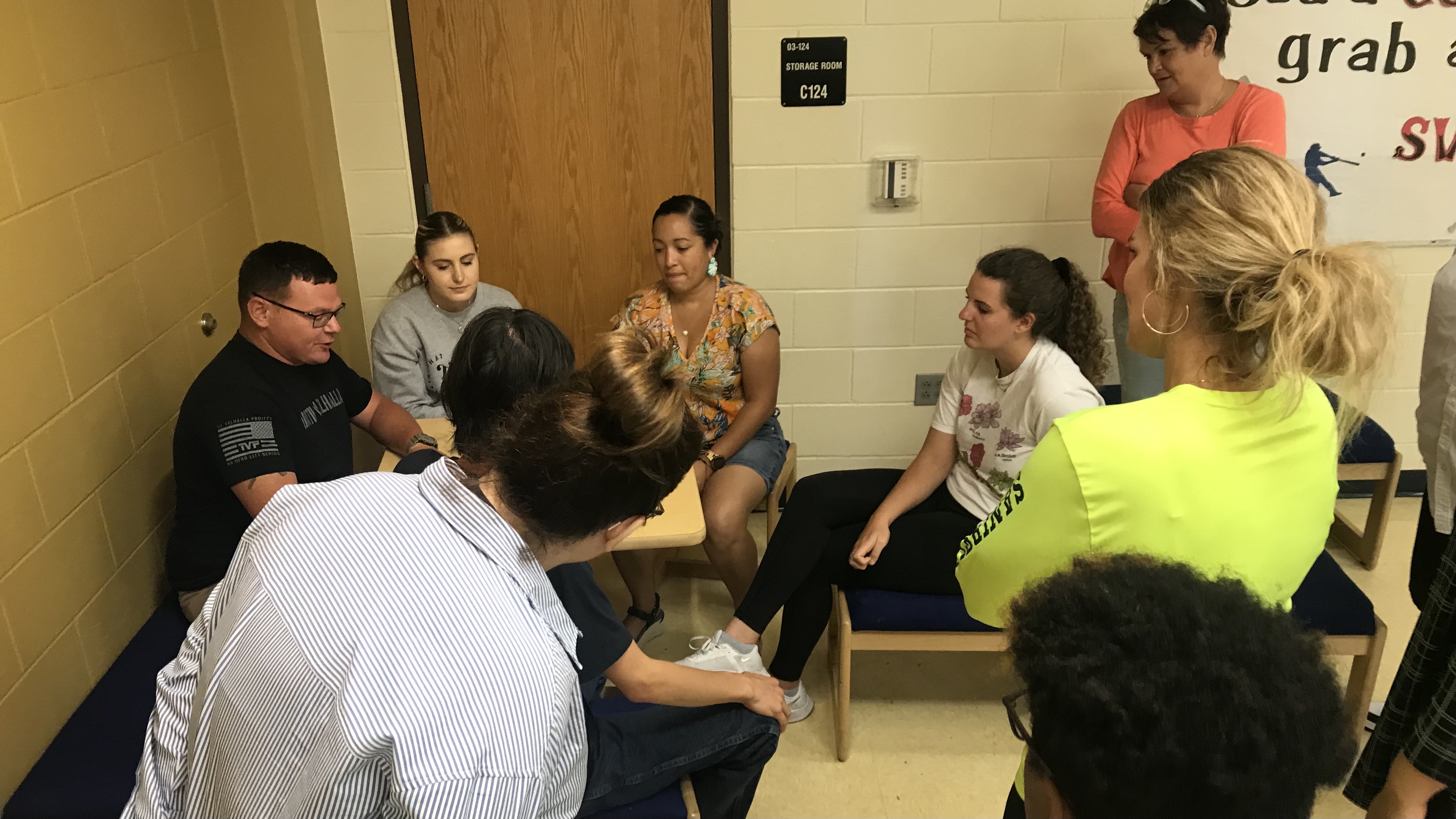
I have been discussion vulnerability a lot lately. In other words not faking it. I have written in these posts before just how much I hate the phrase, “Fake it till you make it.” Sorry to break it to those so called leaders who I hear saying this – it cannot be done. This is where vulnerability comes in. Great leaders are vulnerable and don’t mind modeling when they don’t know how to do something or don’t know the answer. I have added “being vulnerable” to my core values. Just what does it mean to be vulnerable? For me it is about letting others see the real me. It is being and showing who I am, what I know, and what I don’t know. Way back in the early days of my teaching career I had professors and others that would say, “Don’t ever let your students know you don’t know an answer.” Stupid advice! Once again, you can’t fake it…your students will know. And, let me tell you, some of the greatest lessons and days in class were when something happened in a lab and the students would ask why and I would have to say, “I have no clue.” Then we would proceed to discovering the answer together. It was incredible.
So, don’t underestimate vulnerability as an important leadership trait. Being vulnerable helps us develop trust and true connections with those we serve. We become more approachable when we are willing to share our own struggles and challenges. What steps are you taking to cultivate vulnerability within yourself and your organizations?
Being Reflective
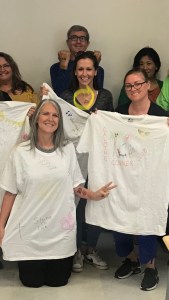
Self-awareness requires reflection. I am a very reflective person and believe in providing space for those I serve to do that reflection. Today I was doing professional development for Charlotte County Public Schools at the 2023 Summer Education Summit in Punta Gorda, Florida. In this morning’s session entitled “Self Care for Educators” I did an activity with temporary tattoos. One of the participants made a profound statement about where she placed her tattoo – at the base of her neck (see photo). She said, “I placed it there because the only way I can see it is in a reflection and this reminds me that to be self aware I need to be reflective.” Drop the microphone! 🎤 We then discussed that reflection involves taking a step back and examining one’s thoughts, feelings, and actions in order to gain a deeper understanding of oneself.
Furthermore, reflection can help us identify patterns and habits that may be holding us back or causing us problems. It can also help us recognize our strengths and values, which can guide us in making important decisions and pursuing our goals. Reflection is all about learning. We must curate the actions in our past to move into the future. Are you taking time to reflect?
Making Everything Into An Adventure
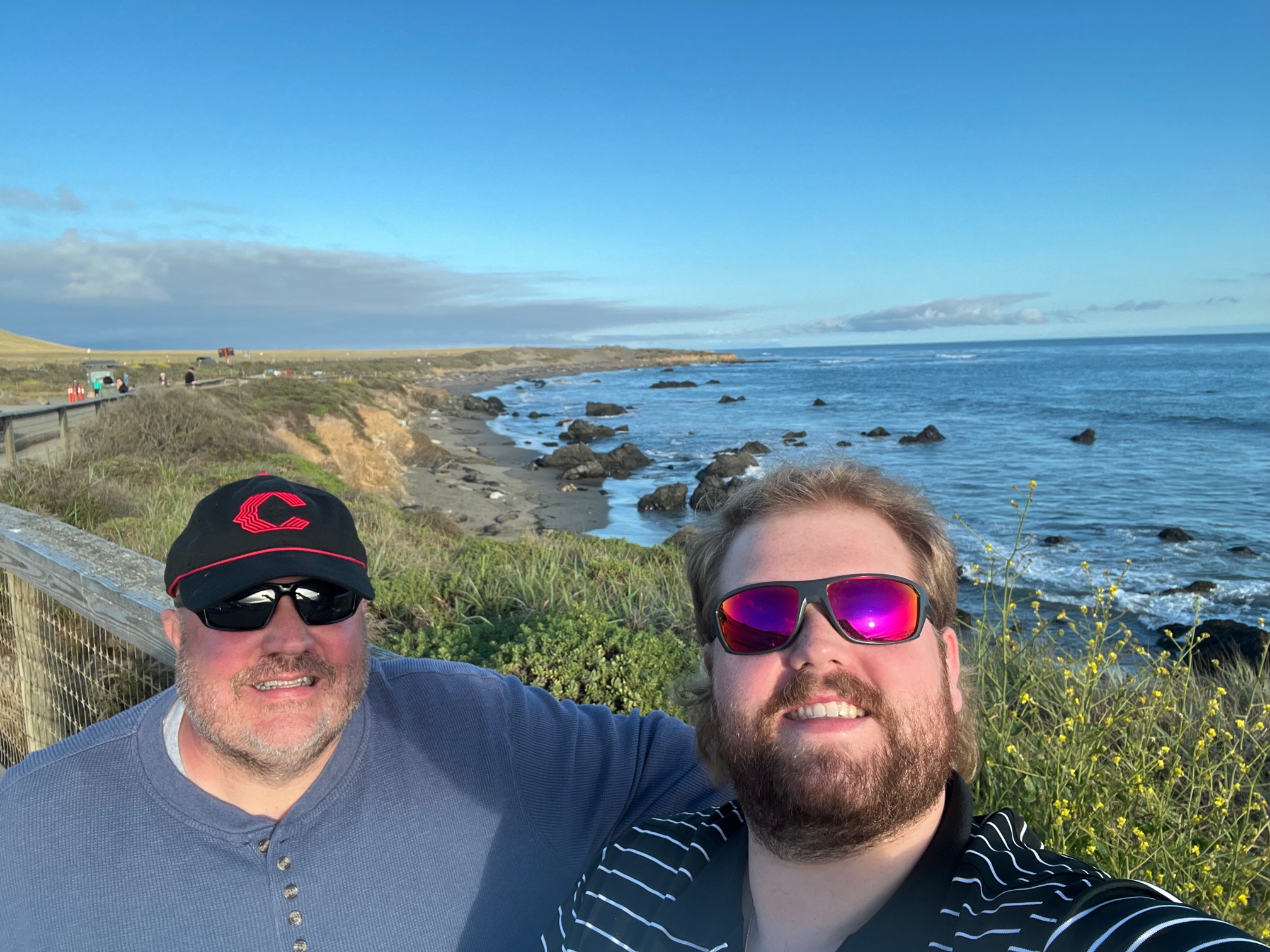
“That was the thing with Bridie, everything that was a market run or errand was not; it was an adventure.” I loved this line in The Secret Book of Flora Lea by Patti Callahan Henry Don’t you just love that person that makes everything into an adventure? Bridie Aberdeen was that person to Hazel and Flora. I really try to be that person. Even when driving my son home from school when he was younger we tried to make it into an adventure – like who could find the most John Deere tractors working in the field. It has often been said of me, “With Byron, everything is an event.” Guilty! And I am proud of it. This past week I had the opportunity to have my son travel with me to California to visit a very close friend and mentor with dementia. Everything we did on this trip was an adventure, from picking fresh avocados to fishing in the Pacific Ocean to doing wine tastings, and everything in between. The thing is that every single thing we did was an adventure. And, amazingly, with every adventure my friend remembered things from the past – places we had been together, things we had done, adventures we had taken 15-20 years ago. Also, my son had not been to Atascadero, California in several years and this trip brought back memories for him of things he had forgotten from being so young at the time. So many times we get so caught up in the day to day grind that we forget to enjoy the journey. If you think about it, it does not take any extra time to make all the things we do into adventures. Those adventures also build family and friendship bonds and memories that even dementia, in the case of my friend and mentor, could fully extinguish.
So, can everything be made into an adventure? I believe so. It’s really a mindset thing. The key is to find ways to infuse creativity, curiosity, and a willingness to take calculated risks into your daily life.
Surface Level Career Versus Deep Level Career

You all know I am the farm kid that loves rock music. You also know I love studying rock musicians, their art, and their leadership. This past week I had the chance to hear the awesome Shannon Gunz, of Sirius XM Octane, interview Josh Katz from the band, Badflower. The interview took place at Welcome To Rockville held May 18-21, 2023 in Daytona, Florida at Daytona International Speedway. He made an interesting distinction about coming out of the pandemic and wanting to make sure he was still cultivating an environment where people thrive, innovation flourishes and progress is achieved. He talked about his message feeling different. Another profound statement he made was about the distinction between a surface level career versus something really deep. Josh wanted to make sure the art that the band was turning out and the message was impactful (deep). This caused me to spend time pondering this shallow versus deep career.
As a person who has spent my entire life in the education arena, I’ve been blessed to be in a deep career. I believe having a deep career means that we are passionate about our work and deeply invested in it. We have a sense of purpose and fulfillment in our job beyond just earning a paycheck. Really, the deepness takes it beyond a job. On the other hand, a surface-level career is one that may provide financial stability but lacks personal fulfillment or passion. It’s important to find a balance that allows us to feel both satisfied in your career and financially stable. I appreciated Josh discussing wanting to make sure that their work took them into the deep career realm. How about you? Are you doing something really deep?
Don’t Be A Copycat

Yesterday, my son and I had the opportunity to fish in the Pacific Ocean out of Morro Bay, California. The views along the coastline going north out of Morro Bay were amazing. It was very cool to see Hearst Castle from the ocean. And the value added part was that I got to see my very first whale up close, live, and in person in the ocean. It was amazing to watch it blow when surfacing and it’s massive tail coming up out of the water. Oh, by the way we caught some beautiful fish, too (see picture).

While fishing, several boats would pull up close to us and our great guide, Shawn Stamback, made the comment that many of these were new captains that just crave being in charge and having power, but didn’t want to put in the time, hard work, and obtain and learn the technology to be a great leader in their craft. They were just copying where he went. Well, as a person who does leadership development for a living, you know I was all over that. Shawn even called the “copycats”.

We talk a lot about this idea of copying in developing leaders. We need those that are examples, mentors, and coaches in our lives. In fact that is why I am in California. I am visiting my long-time friend and mentor, Al DeRose. In fact I am sitting on his back porch while writing this post. He was one of the all time greatest Agriculture Educators and FFA Advisors and I have been learning from him.
I wouldn’t be where I am am today without this great man, Al, in my life! What we don’t want to do is copy them, though. We all have our own styles and need to development those unique styles. After six decades I am still growing and developing every day. While it is absolutely necessary to learn from other leaders and their successes, simply copying what they do may not, and probably won’t work for your unique situation.

Every organization and individual has different strengths, weaknesses, and challenges. It’s important to consider your own context and goals before making decisions or taking actions. Additionally, being innovative and trying new approaches can lead to breakthroughs and competitive advantages. So, don’t “copycat” but emulate and learn from the exceptional mentors in your life.
Our Hearts Always Have Room For More

During my son’s graduation from Murray State University this past weekend it was stated, “May your hearts be full, but always have room for more.” This is one of those phrases that can have several different meanings depending on who is saying it. I believe we need to love all and keep looking for those people or issues that need our love. I talked about what I call my “passion bubbles” or what Mark Twain described as being what takes up the extra space we have in our hearts for things we care about in Leading The Crusade. I have a lot of things I care about and it always seems there is room for more. How about you? Does your heart have room for more?
Making Things Work

At my son’s graduation from Murray State University yesterday, President Dr. Robert Jackson made the comment, “Many things work to make things work.” Very true! He was referring to the graduation ceremony as well as the process of a student coming to Murray State as a freshman and graduating four years later ready to take on the world. There are often multiple factors or elements that contribute to making something successful or effective. This also suggests that there is not just one single solution, but rather a combination of different components that work together to achieve the desired outcome. Great leaders focus on the key inputs of organizations and make sure they are delivered at the right quality and at the right time.
Effective organizations rely on a combination of different processes/components rather than a single solution to achieve success. Those organizations, like Murray State University, understand that complex problems require a holistic approach and they are able to leverage the strengths of their team and resources to achieve their goals.
.
Do Not Live In Your History

Yesterday I heard someone say, “Don’t live in your history.” Meaning we should not dwell too much on our past experiences, mistakes, or even achievements. There comes a point point where these personal historical archives can negatively impact our present and future. It’s important to acknowledge and learn from our past, but not let it define or limit us. Instead, we need to focus on being present in the moment and creating a better future for ourselves. We can let our past histories have the spotlight they deserve, but then we must move on.
Endings don’t always make perfect sense. Nor does there ever seem to be perfect timing. Life, unfortunately, is not governed by poetic justice. To stop living in the past we need to focus on what is in store for us today. One thing that keeps me from living in my history is being hyper-focused on continuous learning and professional growth. I truly do want to learn something new every day. This is the most effective way to stay present and not looking in the rear view mirror. What do you want to learn today?
Leading With Stories
C.S. Lewis was a well-known author and scholar who believed that storytelling was a powerful tool for exploring ideas and conveying truth to readers. It was said in Once Upon A Wardrobe, by Patti Callahan Henry, “I believe the world is held together by stories.” In many ways the world is held together by stories. Stories help us make sense of our experiences, connect with others, and create meaning in our lives. It is brought out in Once Upon A Wardrobe, which Lewis was a character in, and in having read a great deal of Lewis’ work we can find he firmly believed in the power of imagination and creativity in storytelling, and believed that stories could be used to convey important spiritual and moral lessons to readers. He was the master of using allegory and symbolism to explore complex ideas in a way that was accessible to a wide audience. It was genius of Patti Callahan Henry to have George ask the question, “Where did Narnia come from?”. He was to referring to Lewis’ book, The Lion, The Witch, and The Wardrobe. Stories have the power to shape our understanding of the world around us.

The ability to tell stories that inform enable us for understand ourselves better and convey to others what we value. These narratives shape entire societies as well as the cultures of our companies, organizations, and communities. Stories help us understand and interact with the world around us. One reason I love reading and hearing stories so much is that those stories can challenge my beliefs, broaden my perspectives, navigate difficult situations, find common ground with others, and build empathy and understanding.
Stories can take the form of conversations, literature, speeches, presentations, film, music, or oral traditions. As leaders, we have an obligation to sharpen our storytelling skills. As a teacher, I understood that effective lessons are couched in good stories. This is true in leadership as well. Stories really are how we process our lives and the world around us.


leave a comment