People Inspire People

This is another post inspired by the great book, The Storyteller: Expanded…Because There’s More To The Story, by Dave Grohl. Several times in the book he said, “People inspire people.” Many of his stories in the book are how others inspired him to be who he is today. I love how he connects almost everyone he talked about to somehow being a key to his success. This was a reminder of how important every single person is to us and our continual development. Funny, we talk about the formative years being from birth to age eight, but I would argue, and I suspect Grohl would too, that every year of our life is formative as other people continue to inspire us.

As we close out 2023, I can think of many others who have inspired me and that I have learned from in the past year. I am way past the age of eight, but this was still a formative year for me. This is why I believe we should always view everyone as humans and not superheroes. Ordinary people are who inspire us. Grohl has inspired me to continue to be diligent in trying to create educational environments where every child can find and develop their passion. Grohl talked about being different and how tough that was. It shouldn’t be tough! We are all exquisitely unique and we need to be encouraging that uniqueness in others and cultivating our own uniqueness.
When Grohl said, “People inspire people,” he meant that individuals have the power to inspire and motivate each other. He believed that through our actions, words, and creativity, we can have a positive impact on others and encourage them to pursue their dreams and goals. Grohl emphasized the importance of human connection and how we can learn from and be inspired by one another’s experiences and achievements.
Make Time

In the great book, Be Useful: Seven Tools For Life, Arnold Schwarzenegger said, “The key is not to try and find time, but to make time.” He meant that rather than waiting for time become available (which we know never happens), it is necessary to prioritize and allocate time for important tasks or activities.

Schwarzenegger emphasizes the importance of being proactive and taking control of one’s schedule in order to accomplish goals and objectives. Instead of passively searching for free time, it encourages individuals to actively create and dedicate time for things that matter to them.
Question Storming

I’ve got another post inspired by the great book, Change Your Questions, Change Your Life: 12 Powerful Tools For Leadership, Coaching, and Life by Marilee G. Adams. The term “Q-storming” is introduced. Instead of formulating answers, the idea is to generate as many questions as possible. This is really about collaboration, innovation, and deeper understanding. As a person who loves to ask questions I love this concept. This is all about understanding the other person or issue at hand.
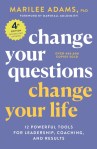
Through question storming, we involve brainstorming through the use of questions rather than statements. This approach allows individuals to explore problems, challenges, or opportunities from different angles. This further promotes curiosity and creativity.
Curiosity To Exercise Judgement

In the great book, Change Your Questions, Change Your Life: 12 Powerful Tools For Leadership, Coaching, and Life by Marilee G. Adams the concept of judger mindset is explored. We can either be judgmental or exercise judgment. And the two are very different. Being judgmental refers to forming negative opinions or making harsh criticisms about someone or something without considering all the facts or being open-minded. It usually involves a biased and narrow-minded perspective.
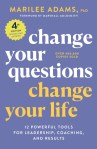
This really comes down to a leadership trait I talk about a lot: being curious. The book reminds us that “our questions shape our world. They can confine us in judgment or liberate us with curiosity.” Exercising judgment means making informed decisions or evaluations based on careful consideration of all relevant factors. It involves using critical thinking skills, gathering information, and analyzing different perspectives before coming to a conclusion. It comes down to, as Adams explained, being a “learner.” Asking, “How can I assist them to thrive?” instead of, “Why can’t they do anything right?” Exercising judgment, as leaders, allows us to be fair, objective, and rational.
While being judgmental can be harmful and create negativity, exercising judgment is an essential skill that helps us navigate through life and make wise choices.
Manifested Twist of Faith

I am a huge believer in vision boards or other visual representations as a reminder of goals, things we want to accomplish, or a future vision we have for our lives. In his great book, The Storyteller: Expanded…Because There’s More To The Story, Dave Grohl explains his experience with the manifestation of his incredible career in music. I wish all young people, and old too, could hear this story. So, read the book! Grohl reminded us in the book that:
- If you can perceive it, you can achieve it.
- What you imagine you create.
- What you think you become.
- What you feel you attract.
Good stuff! Right? As Grohl told us, it’s the Law of Attraction. The Law of Attraction is a belief or theory that states that thoughts and intentions have the power to attract similar experiences and outcomes into our lives. According to the Law of Attraction, what we focus on and believe in will manifest in our reality. suggests that by visualizing and aligning our thoughts and emotions with our desires, we can attract positive experiences and achieve our goals. The Law of Attraction teaches that our thoughts and energy are like magnets, drawing in whatever we focus on, whether it be positive or negative. It is often associated with the idea of manifesting one’s dreams and creating a life filled with abundance and happiness.

A manifested twist of faith is when something unexpected or unplanned occurs in a person’s life that ultimately leads to a positive outcome or change. It is often seen as a result of fate or divine intervention, where circumstances align in a way that brings about a different and favorable outcome than what was originally expected or intended. It is a belief that everything happens for a reason and that even seemingly negative events can lead to something better in the long run.
Back to my original comment on vision boards. Vision boards are an important tool for achieving our dreams and goals because they help to visualize and manifest what we want to achieve. By creating a visual representation of our aspirations, we are able to focus our energy and attention on them, which can increase our motivation and drive to take action towards achieving them. Vision boards also serve as a constant reminder of our goals and can help to keep us on track when faced with challenges or distractions. Additionally, vision boards can help to clarify our desires and provide clarity on what steps we need to take in order to achieve them. Overall, vision boards are a powerful tool for manifesting our dreams and making them a reality.
As a big time Dave Grohl and Foo Fighters fan I highly recommend putting this book at the top of your to read list. You might just have a manifested twist of faith.
Being Compassionate and Competent At The Same Time

This week as I was doing some follow up work for a leader I am coaching and mentoring I had a person describe her as being both compassionate and competent at the same time. Describing this up and coming leader in this way affirmed what I am seeing and was a spot on observation. Then I got to thinking what a perfect combination of leadership traits these are for serving those we lead. A leader who is compassionate and competent at the same time has several advantages. Firstly, their compassion allows them to understand and empathize with the needs and feelings of their team members. This helps build strong relationships based on trust and loyalty, which in turn fosters a positive work environment.
Secondly, their competence ensures that they have the skills and knowledge necessary to effectively lead and make informed decisions. This allows them to inspire confidence in their team members and gain their respect. In my leadership development program we have dubbed this “Not being a moron.” This is not to be funny, but remind us the importance of recognizing what we don’t know, being authentic about those things, and where possible continue to grow and develop.
Additionally, a compassionate and competent leader can also effectively motivate and inspire their team. They understand the importance of recognizing and appreciating their team members’ contributions, and they provide support, guidance, and development opportunities to help their team members succeed.
Overall, a leader who is both compassionate and competent can create a harmonious and productive work environment, leading to higher employee satisfaction, increased productivity, and better overall performance for the organization.
Discovering New Horizons

C. S. Lewis made a statement in Mere Christianity, bk 3, ch. 6, where he was referring to the idea that it’s often more enjoyable and fulfilling to learn and grow in new experiences rather than continuously chasing after the nostalgia and longing for past experiences. I was reminded of this comment when it was restated in A Mind Awake: An Anthology of C. S. Lewis. Here is what he said: “It is because so few people understand this that you find many middle-aged men and women maundering about their lost youth, at the very age when new horizons ought to be appearing and new doors opening all round them. It is much better fun to learn to swim than to go on endlessly (and hopelessly) trying to get back the feeling you had when you first went paddling as a small boy.” He was suggesting that instead of trying to recreate the same feelings and emotions we had in our initial experiences, we should embrace the process of learning and adapting to new situations, which can bring new and different joys in life.

We need to work at keeping new horizons appearing and diligently watch for new doors opening throughout our entire life:
- Embrace change: Change is inevitable, and embracing it can open up new opportunities and experiences. Be open-minded and willing to step out of our comfort zones.
- Continuously learn and grow: Always seek new knowledge and skills. This could be through reading, attending courses or workshops, or even pursuing new hobbies or interests. One of those opportunities for me most recently has been the opportunity to be a Scholar in Residence at The Kilns for the C.S. Lewis Foundation and take classes at the University of Oxford.
- Cultivate a growth mindset: I believe in our ability to learn and adapt. See challenges as opportunities for growth and see failures as learning experiences.
- Network and connect with others: When we surround ourselves with diverse individuals who can offer different perspectives new doors to exciting and new opportunities are opened.
- Set goals and challenges: Having clear goals and regularly setting new challenges for ourself can help keep us motivated and open to new possibilities.
- Practice gratitude and mindfulness: Appreciate the present moment and what we already have. This can help us stay grounded and open to new experiences without constantly longing for the past.
Remember, life is a journey, and there’s always something new to discover and learn. Embrace the unknown and enjoy the process of exploration and growth.
Finding Our Own Place To Apply Our Vision

“Unfortunately, he had a strong aversion to the status quo whenever the status quo wasn’t as good as he thought it should be.” This was said of Dee Hock, founder of the Visa Credit Card, in VISA: The Power of An Idea by Paul Chutkow. This young leader didn’t have the resume’ yet and was searching for his place in the financial industry. Long story short, to solve a number of issues with credit cards, at the time, in 1979 he brought together a global group of friends called the visa family and rebranded a credit card called Visa. This enabled this young leader and entrepreneur to find a place to apply his vision.
Finding our place to apply our vision involves self-reflection, exploration, and a willingness to take risks. Here are a few steps that can help:
- Self-reflection: We must take the time to understand our passions, values, and strengths. What drives us? What are our core beliefs? This self-awareness will guide us in finding a cause or field that aligns with our vision.
- Explore different areas: Trying out different experiences, internships, or volunteer opportunities in fields of interest will give us a taste of different environments. This helps us understand what resonates the most.
- Seek mentorship: Find mentors or individuals who are already working in areas aligned with our vision. In Hock’s case, he put together his Visa family. They can provide guidance, share their own experiences, and help navigate the path toward goals.
- Embrace a growth mindset: Be open to learning and adapting along the way. Our visions will involve learning and evolve as we gain more knowledge and experience. We must stay curious and embrace new opportunities that come our way.
- Take calculated risks: Applying our personal vision may require us stepping outside of our comfort zone. We must not be afraid to take calculated risks and pursue opportunities that align with our goals. Remember, setbacks and failures are part of any journey, so don’t get discouraged.
- Connections and collaboration: Build connections with like-minded individuals or organizations. Again, think back to Hock’s Visa family. Collaborating with others who share a similar vision can help amplify our impact and open doors to new opportunities.
- Stay committed: Finding our place to apply our vision(s)can take time and persistence. We need to stay committed to our goals and keep taking steps towards them, even if the path is not always clear. If we trust in our abilities and believe in the impact we can make, we will make a difference.
Remember, finding our own place to apply our vision is a personal journey. It may take time and experimentation, but with determination and perseverance, we can find the right path to fulfill our vision.
Being Influenced By What You Said

C. S. Lewis said, “The very man who has argued you down will sometimes be found, years later, to have been influenced by what you said” in A Mind Awake: An Anthology of C. S. Lewis (p. 150). I have found this to be so true. In fact, I’ve been on both sides of this, as the arguer and the argued. It just really reminds us how everything we do has a role in our evolution. We evolve with every conversation and action we take. I can actually think of some things that I have successfully argued for in my policymaking life that I have now come to disagree with myself on and argue against using the arguments and reason of those who argued against me in the first place.
Lewis believed in the power of persuasive arguments and the potential to change people’s minds over time. He suggested that even if someone initially disagrees with our viewpoint, they may still be influenced by our argument and come to see things differently in the future. His thoughts emphasize the importance of presenting compelling and thought-provoking arguments, as they can have a lasting impact on others.
The Power Of The Invitation
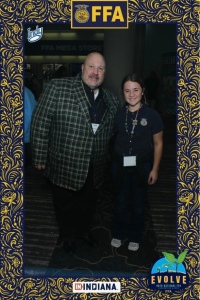
There is so much power in an invitation. An invitation holds power because it is a gesture of inclusion and connection. I was reminded of this a couple of weeks ago during the National FFA Convention. Ambra Tennery, Associate Director, Educational Development & Evaluation Programs, had her seventh grade middle school FFA member daughter, Brinley, at convention. Up until convention, I had not spent a lot of time with Brinley. Then, on the first day of convention when I got back to the convention headquarters from doing an administrator’s workshop Brinley had just sat down for lunch and called over to me and said, “Byron, will you come sit by me and have lunch with me?” “Of course,” I said. I was blown away. The power of the invitation! We had an incredible conversation and I was reminded how good it feels to be invited. When someone extends an invitation to us, it signifies that they value our presence and want us to be a part of something. It can make us feel wanted, appreciated, and included.

Additionally, an invitation can also have the power to open up new possibilities and experiences for us. It can give us the opportunity to step outside of our comfort zones, try new things, and meet new people. An invitation can also create a sense of anticipation and excitement, as we look forward to what the event or gathering might bring. Yesterday, at an Utah FFA leadership conference I told the story of Brinley’s lunch invitation and asked if anyone had been invited by another member to attend the conference. One young lady was quick to respond, “Yes!” I asked her how it made her feel. She said, “Very special and I am getting a lot out of today because I feel privileged to be here.” Let me tell you, that is how I felt when asked to sit and have lunch with Brinley – special!
Furthermore, this proves how important it is to make sure our students are having real world conversations and interactions with adults. As I mentioned, Brinley is a seventh grader but can carry on a conversation better than many adults I know. Having had the honor to hang out with Brinley quite a bit during convention it was like I was conversing with a college student. Her parents and agriculture teacher/FFA advisor have done a great job of making sure she is having the important opportunities to observe and learn from adults. Clearly these experiences offer valuable insights and help students develop important life skills. Interacting with adults can broaden students’ perspectives and expose them to different ideas and viewpoints. This can help them develop critical thinking skills and enhance their ability to understand and empathize with others.
Let’s never forget the power of an invitation lies in its ability to foster connection, create new opportunities, and evoke positive emotions. Also, we don’t want to forget how important conversations and interactions with adults can contribute to the holistic development of young students, fostering personal growth, learning, and positive relationships. Who do you need to invite?


leave a comment