Leading Extraordinary and Memorable Customer Experiences

I am reading my good friend, Dr. Joseph Michelli’s latest book, Customer Magic – The Macquarie Way: How to Reimagine Customer Experience to Transform Your Business right now. It is awesome! This book is truly where leadership meets the customer experience. Leadership really is about the customer experience. I became a better leader and educator when I started reading Michelli’s books and got to know him. By the way: I’ve read all his books. This book has one thing in common with all the others – it is taking me to another level.
I just wrote a blog post this past weekend about having favorite places to go in Finding New Favorites. What makes favorites? The customer experience! What makes the customer experience? The people!
As Dr. Michelli asks:
- Do you consistently deliver extraordinary customer experiences?
- Do you consistently deliver memorable customer experiences?

No matter what we do, we need to be able to answer “Yes” to these questions. Once I figured that out, I became a better leader. Tonight I am on the road working with schools in southern Indiana. While staying in Jeffersonville, Indiana I have a favorite place that I like to get dinner that is right next to my hotel, Rapid Fired Pizza. Why do I go there? Addison! All day I was hoping Addison would be there to make my garden salad. She is super friendly, remembers what I like and adds extra cucumber and green onions, because they are my favorite. No matter how busy they are, she always takes her time to get it right. Yes, Rapid Fired Pizza has great products, but the customer experience that Addison provides has made this a favorite. Addison has, what is called in the book, the “service gene.”
THE WORD SPREAD
“Pizza lovers told their friends about us. Growing by popular demand, you’ll now find us serving amazing pizza in 25 towns and cities across the US.” ~ Rapid Fired Pizza
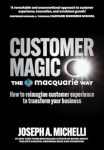
I recommend Rapid Fired to everyone. Here’s how I answer The Ultimate Question: I am “extremely likely” to recommend Rapid Fired Pizza to a friend or colleague. It is recommended in Michelli’s book that this is the only Net Promoter Score (NPS) question we need to ask. If you want to know more, and I hope you do – read Customer Magic – The Macquarie Way: How to Reimagine Customer Experience to Transform Your Business. Michelli told us, “Some 34 years and 12 books later, leaders clearly understand that customer experiences create brand differentiation, repeat business and positive word-of-mouth” (p. 89). Addison certainly understands this and is certainly differentiating Rapid Fire Pizza, gained me as a repeat customer, and has me for a recommendation.
Social Courtesy Part 2

Yesterday, inspired by Dr. Joseph Michelli’s great video “What If More People Returned Their Grocery Carts?”, I wrote Social Courtesy. In that post I promised a part two today, so here it is. As I watched two ships passing this morning I was reminded not to be like those characterized by Henry Wadsworth Longfellow. We need enhanced relationships that are more than just speaking in passing. We need deep conversations and actions, like returning our carts, that lead to us caring for one another. Everything we do affects everyone else in some way.
“Ships that pass in the night, and speak each other in passing, only a signal shown, and a distant voice in the darkness; So on the ocean of life, we pass and speak one another, only a look and a voice, then darkness again and a silence.” ~ Henry Wadsworth Longfellow
Practicing social courtesy can greatly improve our interactions and the overall well-being of society. When we treat others with respect, kindness, and consideration, it creates a positive and harmonious environment. Here are some reasons why the world would be a better place if we all practiced social courtesy:
- Enhanced Relationships: Social courtesy promotes better communication and understanding between individuals. It fosters empathy, patience, and active listening, which are essential for building strong and meaningful relationships.
- Reduced Conflict: By practicing social courtesy, we can minimize misunderstandings, conflicts, and unnecessary arguments. It helps us navigate differences and disagreements with grace and understanding, leading to more peaceful resolutions.
- Improved Mental Health: Social courtesy contributes to improved mental well-being for both ourselves and others. Treating others with kindness and empathy creates a supportive and positive atmosphere, reducing stress and promoting a sense of belonging.
- Increased Cooperation: When people practice social courtesy, it encourages cooperation and teamwork. By valuing the opinions and ideas of others, we foster an inclusive environment where collaboration and innovation can flourish.
- Positive Impact on Society: Social courtesy sets a positive example for others to follow. It creates a ripple effect, inspiring kindness, compassion, and good manners in others. Small acts of courtesy can have a big impact on creating a more inclusive and caring society.
- Respectful Diversity: Practicing social courtesy allows us to appreciate and celebrate the diversity of cultures, backgrounds, and perspectives. By fostering an inclusive environment, we can learn from each other, grow together, and create a more harmonious global community.
In summary, embracing social courtesy promotes healthy and positive interactions, reduces conflict, improves mental well-being, encourages cooperation, creates a positive impact on society, and cultivates respect for diversity. Together, these factors contribute to making the world a better and more empathetic place to live.
Social Courtesy

My friend and great customer experience expert (and you all know I do not use the term “expert” lightly), Dr. Joseph Michelli, recently did a video “What If More People Returned Their Grocery Carts?” You need to watch it – it is great and will make you think. By the way, I do that and the businesses always seem pleasantly surprised when I bring the cart back in. My wife always grabs a cart in the parking lot when she is going into the store. I am spending my morning study time contemplating about “social courtesy”. The term “social courtesy” has been used for a long time to refer to the practice of showing politeness, respect, and consideration towards others in social situations. In my most recent course work with The University of Oxford Saïd Business School on leading Professional Service Firms we spent quite a bit of time contemplating the customer experience, so this was top of mind to me. I am working very hard to keep that customer experience top of mind, always. I’ve gathered some reflections here this morning and will have a part two tomorrow.
Practicing social courtesy improves the customer experience in several ways. Firstly, it creates a positive and welcoming atmosphere, making customers feel valued and appreciated. This can lead to increased customer satisfaction and loyalty.
Secondly, social courtesy helps to build trust and rapport between customers and businesses. When customers feel respected and treated well, they are more likely to trust the company and its products or services.
Additionally, practicing social courtesy can help resolve conflicts or issues in a more constructive manner. By approaching situations with empathy, understanding, and clear communication, both parties can work towards finding a mutually beneficial resolution.
Overall, social courtesy plays a crucial role in creating a pleasant and enjoyable customer experience, fostering positive relationships, and promoting a harmonious environment for all involved. In other words, if we all worked harder at it the world just might be a better place. Thanks Joseph for the reminder.
Smiles For All Your Miles

As a friend, student, and fan of Dr. Joseph Michelli and all his books, I understand the importance of the customer experience. I was reminded of this when I stopped at Buc-ee’s yesterday. For those not familiar, it is a humongous gas station/convenience store/outlet mall (with Buc-ee’s brands) all rolled into one. It is an experience! Founded in 1982, the mission is pretty simple: to provide a clean and friendly in-store experience. In fact, if you haven’t been, you need to go, just to experience the award winning bathrooms. Yes, you read that right – award winning. In 2012, Cintas, a corporate supplier to the service industry, named the New Braunfels, Texas Buc-ee’s location the winner of a nationwide restroom contest. You can read about it here.

In Exactly What We Aim For I quoted Michelli stating, “…I believe that even greater customer value comes from moving from services to experiences (rather than from products to services).” Buc-ee’s understands that the experience is everything. The co-founders Arch (“Beaver”) Aplin and Don Wasek set out to make these extravaganzas the very best in the world. They had a pretty simple strategy statement: “To have the cleanest restrooms.” Think about it, isn’t that all we really want when traveling? When exiting for a pit stop, I have heard my family more than once say, “Pick the place that looks like it will have the cleanest restrooms.” With the Buc-ee’s experience, we know it will be them.

They have even made the billboards along the interstate part of the experience. When 212 miles away you are seeing a billboard telling you that you can stop at Buc-ee’s in, well, 212 miles. Then, when you leave and get back on the interstate, the first billboard you see says, “Until We Meet Again – 165 miles” (see photo). Again, part of the experience. The other thing is, you won’t have to deal with 18 wheelers – not allowed. Every fuel pump, of which there are over 100, has both diesel and regular. The Buc-ee’s I was at even featured ethanol-free fuel and DEF. And, if you need it, they’ve got it! They have (and most of it, their own brand) souvenirs, food, snacks, clothing, hunting gear, college wear (although they were missing the Purdue stuff!), and my favorite – a jerky wall.
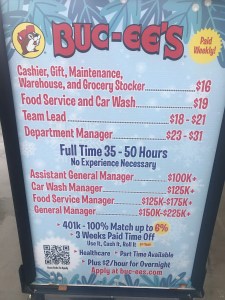
When you go on Buc-ee’s website and look under employment, they say, “We believe our store should be clean. We believe our staff should be friendly. We believe our prices should be low. If you believe what we believe, come join the Buc-ee’s team!” Then they ask, “Do you believe what we believe?” If that is not customer experience driven, I am not sure what is. As a person whose life-work is supporting education, I wish every young person could have the experience of learning from this business. Check out the photo of the careers available and salaries. Students would certainly be learning leadership and the customer experience. Maybe the Buc-ee’s folks and I should talk! Next time you are on the interstate and see the Buc-ee’s billboards, start planning your incredible travel-stop experience.
Exactly What We Aim For
As I write this post I am in a hotel room in Louisville, Kentucky sitting in the comfy chair while my son sits at the desk finishing an animal science class assignment. I’m in Heaven! I get to spend time with my boy. He drove over from Murray State University and I came from home to meet here for the weekend at the National Farm Machinery Show. He’s now a junior, but it’s still rough on me having him six hours from home. Before he left for college we did everything together. Now, when we get a weekend like this it is very special. I’m telling you all this to make the point that everything we do this weekend becomes part of the memory.
So, the experience matters! While in Louisville we are customers. And, as my friend Joseph Michelli would remind me, it is all about the customer experience. I try to find and read everything he writes because his insights help me grow personally and professionally. In a blog post entitled “It’s Not What You Value | Team Member and Customer Value” he wrote:
“…I believe that even greater customer value comes from moving from services to experiences (rather than from products to services).”
I love this idea of moving to experiences. I’ve always tried to make my gatherings (what most call workshops and professional development sessions) like a KISS concert – an experience. Tonight, my son and I had an experience! We went to Churchill Downs and ate at Matt Winn’s Steakhouse. To learn who Colonel Matt Winn was, click here.

Our experience started as soon as we parked at Churchill Downs. Actually, let’s back up. The experience started shortly after I made our reservation when I got an email explaining what gate to go in, where to park, and that someone would meet us to take us to the restaurant. Everything was exactly as outlined. We were picked up in a golf cart and driven through hallowed Churchill Downs to the red carpet. We walked through jockey statues painted in the silks of major race winners. Of course we stopped and took a selfie with the representative of the Kentucky Derby winner. Then it was up to the sixth floor. We were treated to tableside service and incredible food, all while overlooking the historic Churchill Downs Racetrack.
Then before the dessert cart we were asked if we would like to go out on the veranda and enjoy the view. So, we did! We actually stayed out there for an hour and visited with other exhibitors and attendees of the National Farm Machinery Show. After three hours and forty-six minutes we were finishing up our experience, umm, dinner. My son then made a profound comment to our server, “This is so much more than what I anticipated!” And our incredible server replied with the comment that affirms all of Joseph Michelli’s teaching, “That’s exactly what we aim for.” Giving people more than they anticipate. That’s a huge part of the customer experience.
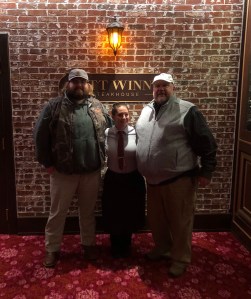
Here’s the deal, the food (product) was incredible. In fact, after the deviled egg appetizer my son said he would never eat another because no deviled egg could ever compare again. The physical atmosphere was awesome. Those to me were the easy things. It was the people that made the experience. We knew our server so well by the end of our experience that we wanted our picture taken with her. She and all the other incredible people made the experience more than what we anticipated. Matt Winn’s will become an annual tradition for us. It’s an experience my son and I will not forget and a memory we will always cherish. This was a perfect reminder of just how important the experience we give others is.
Curating The Eight

I really hope everyone enjoys my Top 8 List of Non-Fiction Books for 2021. This was really tough because in a year where I read 120 books, grew a lot from that reading, and the fact that all the really great authors deserve credit for providing me much needed growth. I also know it took me about two weeks longer to get this post done compared to past years, but even after I began to narrow it down, I was torn. I’m glad I took the time to go through the exercise because it provided some great personal development time for reviewing and reflecting on all I learned from reading this past year. Then it came down to a stack of books that really offered the right things at the right time for me – I love it when that happens! There were eight books in that stack, so thus, a Top 8. As I write this introduction I am still trying to put the list in order and still really struggling. Really, to me, the order is not important (put them in whatever order you want), but everyone always blow me crap when I don’t put them in order.
Here they are – my top 8 books from 2021 curated for you:
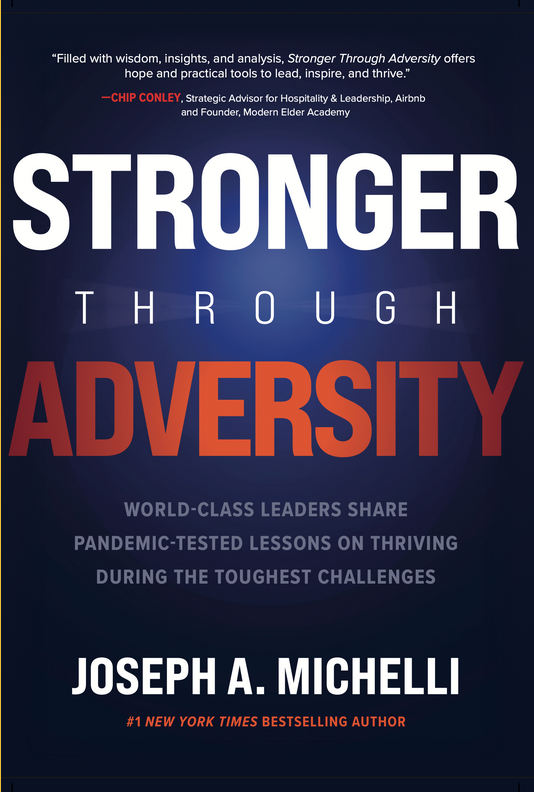
#1. Stronger Through Adversity: World-Class Leaders Share Pandemic-Tested Lessons On Thriving During The Toughest Challenges by Joseph Michelli I’ve read every one of Dr. Michelli’s books, but please don’t ask me to put all of them in ranked order. I was a fan and hooked (pun intended) forever after first reading When Fish Fly. Then in 2021 out comes Stronger Through Adversity which topped all my non-fiction reads for the year and was definitely at the right place at the right time. As many organizations were trying to figure out how to lead in a crisis, here was an incredible resource where the best had been curated for us. This book also helped me get my mind wrapped around creating sessions/programs for developing leaders for crisis management/leadership. I blogged a bunch this year from inspiration gained from this book (search Stronger Through Adversity and you’ll find them all). Dr. Michelli is the absolute best and being able to access the great leaders and then share out the learning so we all can benefit.
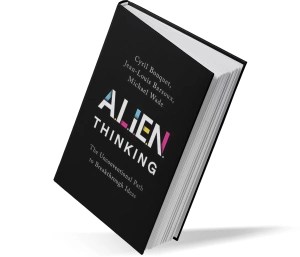
#2. Alien Thinking: The Unconventional Path To Breakthrough Ideas, by Cyril Bouquet, Jean-Louis Barsoux, and Michael Wade As the guy who always comes up with ideas that cause everyone to look at me like I am an alien, I loved this book. This book really helped me to begin to better channel the alien that is in me. Instead of trying to curb alien thinking I learned to better make use of it. I loved the framework they brought forth in the book:
- A – Attention – look with fresh eyes to observe problems that need to be solved, opportunities worth addressing, and solutions that can be dramatically improved or revised
- L – Levitation – step back from the creative process to gain perspective and enrich your understanding
- I – Imagination – recognize hard-to-see patterns and to connect seemingly disparate dots to imagine unorthodox combinations
- E – Experimentation – test ideas quickly and smartly, with the goal of improving – not just proving – your idea
- N – Navigation – deal with potentially hostile environments and adjust to the forces that can make or break your solution
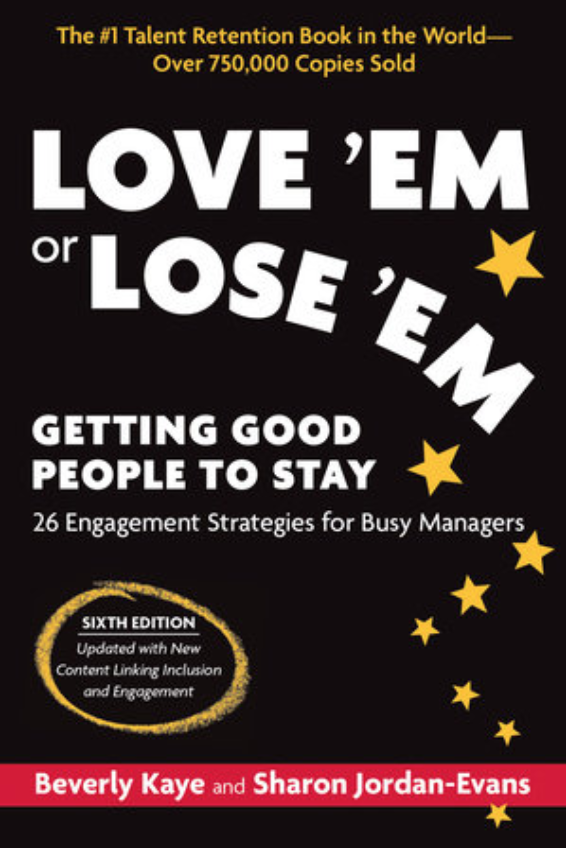
#3. Love ‘Em Or Lose ‘Em (Sixth Edition) by Beverly Kaye and Sharon Jordan-Evans This book profoundly changed me and helped get my mind wrapped around being people-centric and becoming more human. I was very fortunate to be on the launch team for this sixth edition. I am very critical of those individuals and organizations that are not as I call them “people centered.” I love (pun intended) that Kaye and Jordan-Evans taught us that loving those we work with is the correct terminology. This book taught that we need to think about how our people want to work and what inspires and motivates us to do the work. The pandemic has exposed the issue that already existed that everyone’s work situation is a little different and we need to find ways to make sure we are personalizing that experience for each and every one of our people. What really resonated with me was the notion that if we really want to love ’em (those we serve) then mass customization of how we deal with those we serve does not work. As Kaye and Jordan-Evans argued, there is no one policy for the workforce anymore. We need to allow for everyone to be a part of determining what is fair and right for them. As a leader in education, I believe this principle is true for the scholars and families we serve. This book really is about how to love.
One of my favorite quotes from the book says it all: “Approach things not as an expert, but as an explorer.” I love the metaphor of us looking at the world as an alien would see it – without preconceived notions or bias. There are so many things that can stifle even the most alien of thinkers. We are taught that both our strengths and our weaknesses can serve as deterrents to successful creativity and innovation. This book caused a great deal of introspection and reflection.
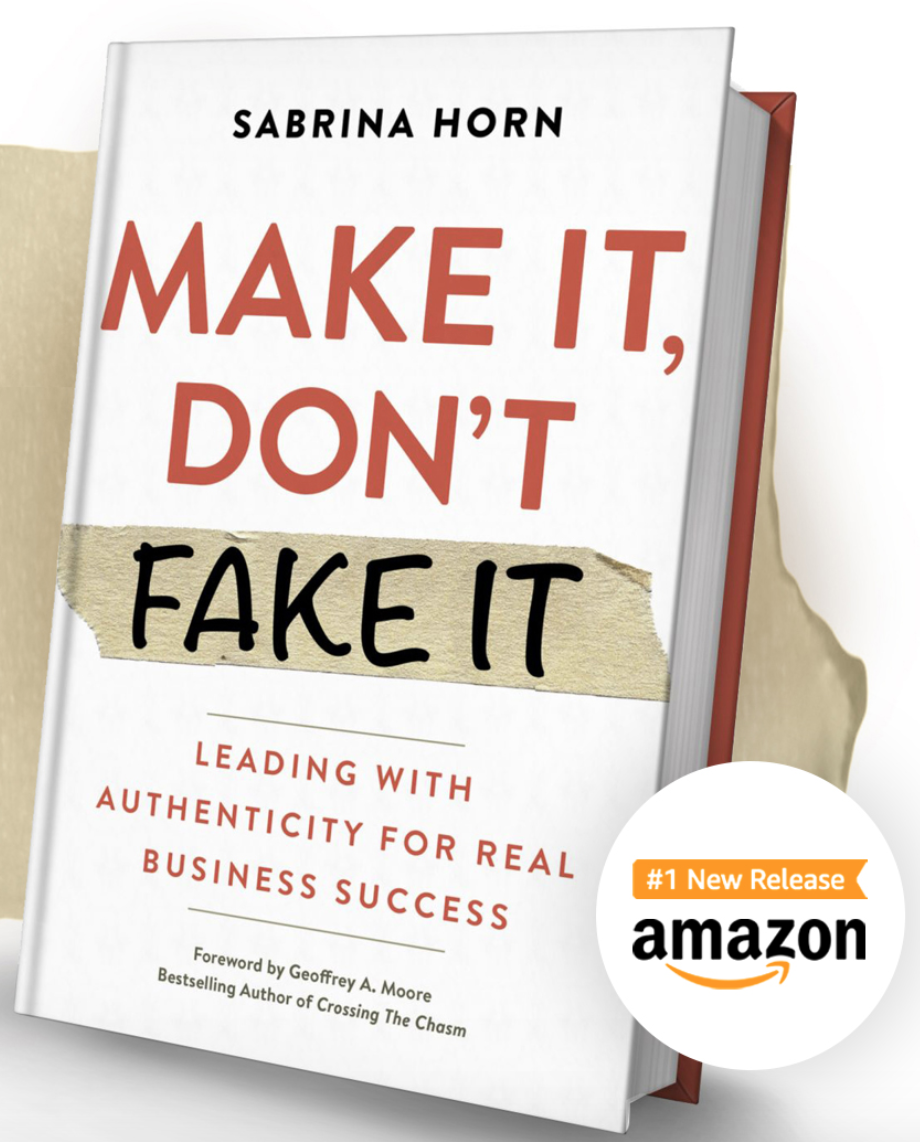
#4. Make It, Don’t Fake It: Leading With Authenticity For Real Business Success by Sabrina Horn I cringe when I hear someone say, “Fake it till you make it.” I am always said that is the stupidest thing you can do. And, I’ll even have people argue with me. Imagine my relief and delight when Sabrina came out with this book that taught us all why “faking it” really is the stupidest thing you can do. In fact in light of the latest verdicts in the Elizabeth Holmes/Theranos case we have even more proof that “faking it” does not work. Great leaders know what they don’t know and understand there are things they don’t know they don’t know. And, sometimes we even know things we don’t know we know. But, learning from and with others, asking questions, and asking for help are hallmarks of an effective and humble leader. Sabrina also taught us that “Intuition is knowledge, and knowledge is intuition.” I am so glad I had the opportunity to read this book, be on the launch team, and learn from the great leader, Sabrina Horn.

#5. Subtract: The Untapped Science Of Less by Leidy Klotz I loved this book! In education we are always talking about how things keep getting added to our plates and nothing ever gets removed. Well, it turns out this happens to everyone and it is how our brains are wired. Who knew? Leidy Klotz! If nothing else this book has caused me to have a new sniff test when wanting to improve, change, or create something – what should be/could be subtracted? Klotz told us that “In our striving to improve our lives, our work, and our society, we overwhelmingly add.” He asked a bunch of questions that I had to answer “yes” to, but he had me dead to rights with these three:
- “Do you spend more time acquiring information – whether through podcasts, websites, or conversation – than you spend distilling what you already know?
- “Do you spend more time writing new content than editing what’s there?
- “Have you started more organizations, initiatives, and activities than you have phased out?
Using research we are shown how being poor and worrying about money takes away our brainpower to devote to other areas of our lives. As an education leader this was very powerful. Also, as I promote reducing the number of standards being taught to a more manageable number of essential skills actually raises the bar for student learning, am reminded of something else Klotz said in the book, “Weeding less useful ideas allows the indispensable ones to flourish.” Bottom-line, I no longer think in terms of adding OR subtracting, I think add AND subtract.

#6. Leadership Unchained: Defy Conventional Wisdom For Breakthrough Performance by Sara Canaday This book is really special. I had the chance to meet Sara year before last. She is such a unique and gifted leader. It is immediately evident when meeting her and reading her work that she “walks the talk.” I was reminded when reading Leadership Unchained that defying conventionality requires allowing for creativity, flexibility, and risk taking. She made a comment saying, “Innovation happens at the intersection of different perspectives.” This made me reflect on one of my own core values of learning forward from different perspectives. Innovative ideas are not just about adding another feature or an
adjacent market. If we want to keep breaking new ground we must make it a priority to seek out the intersection of multiple fields, disciplines, and cultures. She argued we should create our organizations, teams, and mind by seeking out these intersections of multiple fields, disciplines, and cultures. All those different perspectives are far more potent than any incremental extension of what you are already working on using a single perspective. This kind of thinking will lead us to someplace completely different.
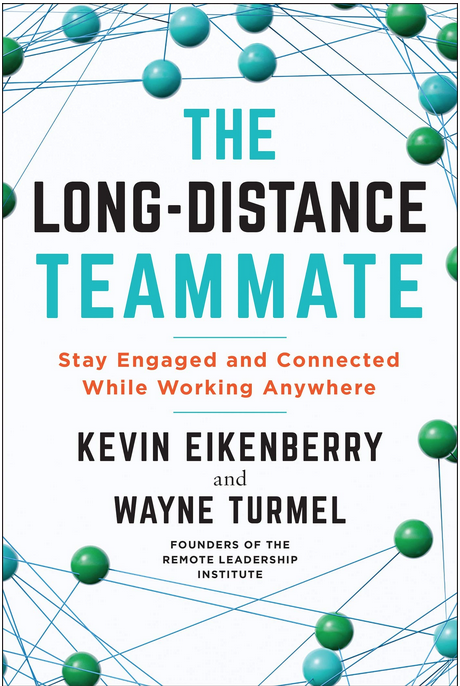
#7. The Long Distance Teammate: Stay Engaged and Connected While Working Anywhere by Kevin Eikenberry and Wayne Turmel My good friend Kevin Eikenberry has this amazing sixth sense for being in the right place at the right time to provide valuable help. This book was released a year ago while we were still in the height of pandemic and beginning to figure out how to figure out how to work and learn from anywhere. This book has so much value for all disciplines. In fact, Kevin did a webinar on the book and content for me for a group of teachers I work with. This is one of those books that I’m glad I read in electronic form because I continually go back to my highlights, search for things I remember reading. This book will be evergreen for a long time as we continue to figure out how to work effectively from anywhere.
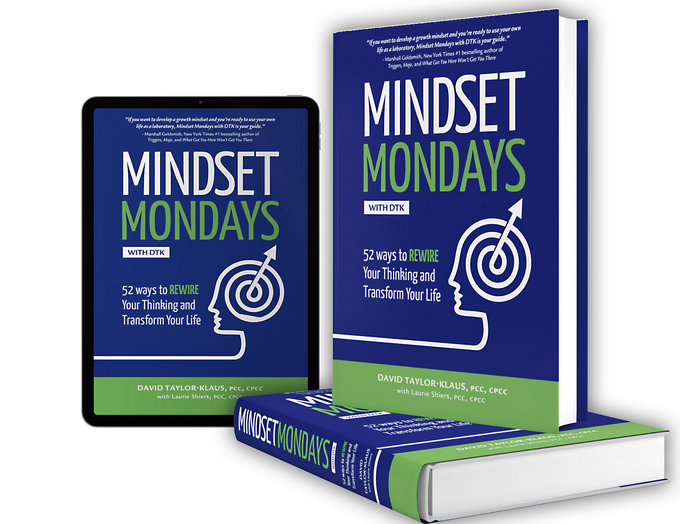
#8. Mindset Mondays with DTK: 52 Ways to REWIRE Your Thinking and Transform Your Life by David Taylor-Klaus (DTK) This was another book in this group of top eight that I was on the launch team for. Also, every year I try to find a book that is written in the 52 weekly lesson format. So, I read this book one lesson a week for a year and did a blog post each week (without fail, I might add). It was incredible, and each week I was forced to reflect, study, and expand my thinking. In this book, DTK asks you the right questions to make you take a deep and introspective look at who you want to be and who you do not want to be.
History’s Experiments

One of the great books I am reading right now is The Epigenetics Revolution by Nessa Carey. As an animal science guy, I have been fascinated with epigenetics for a long time. In fact, when I was teaching I had a grant project with Purdue University that included epigenetics. One of the lines in the book that really jumped out at me was, “History creates experiments.” This is so true. The book talked about research using birthweight, growth, and maturity patterns following a famine. Other fascinating research is also cited in the book. I just can’t get past this thought, however, of history creating experiments. That is really what history is.
This is why one of my favorite authors, Robert A. Caro told us that we should be reading biographies in order to learn from others. In many ways, what others have done before us were experiments. In fact my own country of the United States is often referred to as an experiment. It is so important to look at all aspects of our history in order to learn for the future.
Another one of my favorite authors, good friend, and just great person, Dr. Joseph Michelli used how leaders led during the onset of the global pandemic as a way to learn about leading in a crisis. His outstanding book, Stronger Through Adversity: World-Class Leaders Share Pandemic-Tested Lessons On Thriving During The Toughest Challenges is in the running for my top non fiction book of the year. Really, all of his books are about history’s experiments in entrepreneurial leadership. You should check out his work – I love it! His work always reminds me how important it is for us to come together as a global community and be learning from each other.
I wonder how many experiments history has created that we have not taken the time or even thought to do the research on. It’s really about using that outer loop in double loop learning – evaluating the learning, creating and sharing the knowledge, and building capacity. Thanks Nessa, Robert, and Joseph for reminding us that “history creates experiments” and the data set to learn from.
Developing Leadership
Yesterday, on Day 443 of the Global Pandemic, I had the opportunity of a lifetime to do a live-stream discussion with Joseph Michelli, Ph.D. of The Michelli Experience. You can watch the video here in this post. I have literally read every one of Joseph’s books. His work has had a huge impact on me as a leader and an educator. I think back to how much The Zappos Experience, Leading The Starbucks Experience, The Starbucks Experience, and When Fish Fly impacted how I led while principal of a state takeover academy. The experience that we provided for our students, families, and teachers was directly impacted by that learning. This is actually what I call intersectional learning. The learning that takes place between different contexts, industries, cultures, or experiences. Neither Zappos, Starbucks, nor the Pikes Place Fish Market are in the business of K-12 education, but there is much to be learned from how they do business and the customer experience they provide. After the books I had be be in Seattle, Washington and I made sure I spent a day of the trip experiencing the original Starbucks and the Pikes Place Fish Market. My son, Heath, even had the experience of catching one of the flying fish (on the second try – and I have the video to prove it).

It was great to reflect on this today during my conversation with Joseph. He is truly living out his Legacy Statement: “I want to be remembered as someone who captured what was right in the world and shared it for the betterment of others.” All that he has so eloquently shared in well researched and documented ways over the years has made me a better person and enabled me to serve others in a much more effective and authentic way. Joseph has suggested that we should all create legacy statements. Here is mine: “Hopefully I’ll be remembered as a thoughtful leader who showed love for those I served by providing growth and development.” If you want to know more about this, read Where Were You Era.
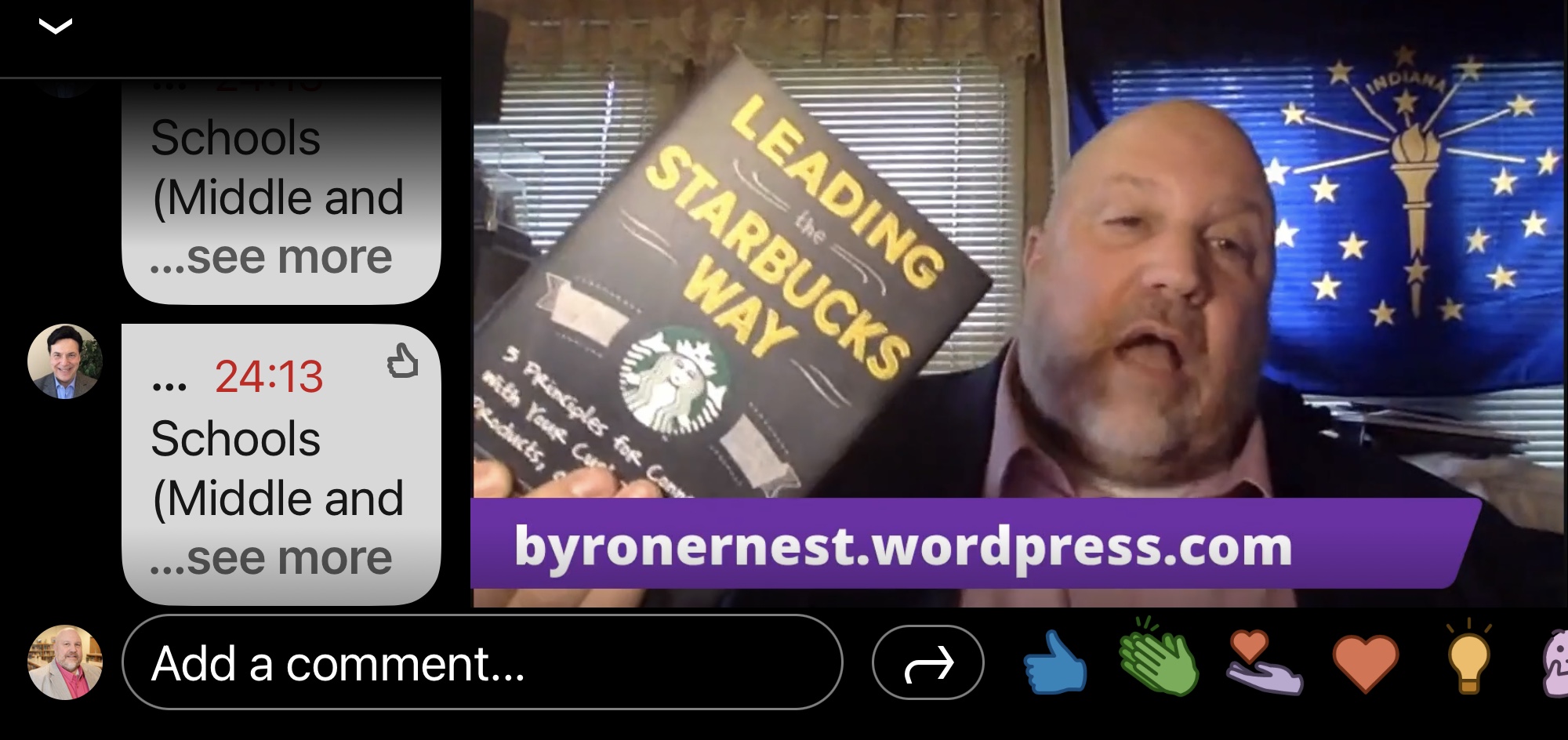
In the couple of days leading up to this live-stream discussion I pulled blogs that I had done about Joseph and his work (there were many) and took some notes of things I wanted to have brought out in the discussion. Amazingly, many of these were things he asked about or wanted to discuss as well. That was pretty cool and felt very organic and authentic given that we had not talked or prepped anything together prior to the event. I loved what he pulled from my book, The Hand In The Back Of The Room: Connecting School Work To Real Life, “Education exists in the larger context of society. When society changes – so too must education if it is to remain viable.” This was from Part I: Why A Relevant and Real World Context Matters. In one of Joseph’s “Resilience ReCaps” in his latest book Stronger Through Adversity, he says, “Leadership action, in and out of a crisis, can be viewed as operating on three levels – generalized, customized, or personalized.” I believe you could switch out “education” for “leadership” and this statement remains very true. To be effective for our students we must be spending a great deal of time in customized and personalized. That’s where the learning becomes exciting and engaging for both the student and the teacher.
Joseph also taught us in Stronger Through Adversity that, “Love is a passionate approach to work and heartfelt care for the growth and development of those you serve” (p. 265). He said this after quoting Joe Duran, CEO and Founder of Personal Financial Management at Goldman Sachs, who said, “I hope people will say love was the driving force for everything we did. Ideally, they would feel we loved our people and our clients. They would sense that we loved waking up each morning to serve them” (p. 265) Love is something very powerful that we should be exercising with those we serve. Love makes it personal, and when something becomes personal it becomes important.
Where Were You Era

Today marks the one year anniversary of the COVOD-19 Global Pandemic. We are now officially on Day 366. Yesterday I blogged about the moment when I realized we were in this for the long haul in The Good News Is. I discussed my “Where were you?” moment. Now on Day 366 I believe Joseph Michelli’s describing the events of the global pandemic as a “Where were you?” era in Stronger Through Adversity is a better descriptor. In that same chapter, Dr. Michelli posed the question, “So, what will you remember about the pandemic?”
One of my first deep reflections came in the form of a blog post on May 8, 2020 entitled The Day We Started Down The Path With No Footprints. A year ago our lives shrank and routines were turned upside down, children were sent home from school and parents became teachers for months without breaks. Offices, restaurants, theaters, sporting events and arenas emptied. My least favorite words became “unprecedented” and “pivot.” I still cringe when I hear those words.
Today we are beginning our second year of pandemic life. While things we found to be novelties last year, may not be so cool this year, we still need to find ways think of new and improved ways of doing things. We need to use this anniversary as a profound opportunity to take inventory of what we might have been missing pre-COVID, what we’ve improved, reflect on lessons learned, and acknowledge what we’ve lost or missed. These are very important conversations to have.
Because I believe we all are leaders, I believe we should take Dr. Joseph Michelli’s advice from Stronger Through Adversity and have conversations. He suggested we develop a leadership legacy statement that highlights our optimal leadership impact (competence, purpose, or character). Here is mine that I wrote:
“Hopefully I’ll be remembered as a thoughtful leader who showed love for those I served by providing growth and development.” My Legacy Statement
I would love to hear your desired legacy. Dr. Michelli taught us we need to be having conversations that “…lead to more discussions where you encourage one another, commiserate setbacks, celebrate victories, and problem-solve barriers along your path to realizing your full potential as a leader.” He went on in the book to say, “Productive dialogue can only occur when we ask, find, and share wisdom each of us collects along our journey.” I love having those conversations and learning what others are doing to improve, cope, learn, and take advantage of opportunities during this global pandemic. Let’s keep the conversation going.
Pandemic Tested Lessons
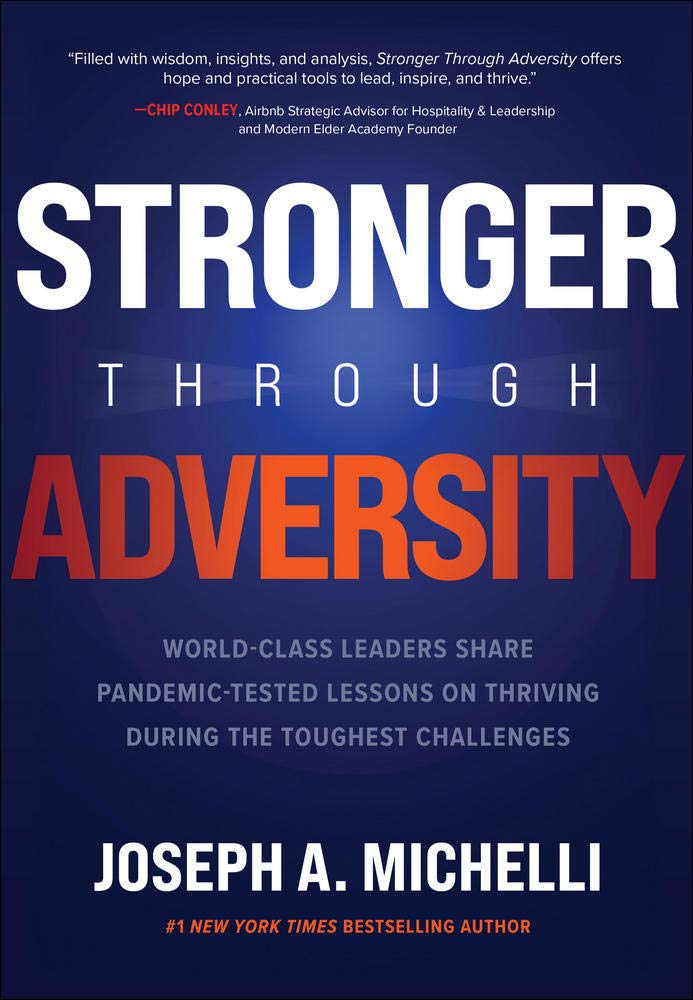
Stronger Through Adversity: World-Class Leaders Share Pandemic-Tested Lessons on Thriving During the Toughest Challenges by Joseph Michelli
My rating: 5 of 5 stars
I am a huge believer in intersectional learning. This is the learning that can be accomplished from the commonalities and complexities of different industries, businesses, and organizations. I have always been a fan of Joseph Michelli’s work and books. He has knocked it out of the park with this latest book. This book is the encyclopedia of intersectional learning. I learned and reflected on so many things while reading this book.
I finished the book on the evening before the one year anniversary of the COVID-19 Global Pandemic. We need to use this anniversary as a profound opportunity to take inventory of what we might have been missing pre-COVID, what we’ve improved, reflect on lessons learned, and acknowledge what we’ve lost or missed. These are very important conversations to have. This book gives us the context to have the deep and meaningful conversations to help our communities of organizations, families, and businesses, cope, improve, and find the silver linings.
If you are one who likes to learn from others and then apply that learning to your own context, then this book is for you. He has studied and chronicled, in-depth, the many companies he has worked with, improved, consulted, and learned from. Every leader should read this book.
View all my reviews
 Byron's Babbles
leave a comment