“What On Earth Am I Here For?”

Thomas Jefferson’s tombstone mentions several of his accomplishments but not that he was president.
It is important, especially as one ages, to think about the purpose of one’s life. The title of this post was a quote from Rick Warren during a keynote address at the Drucker School Alumni Alumni and Friends (Maciariello, 2014). Drucker (2014) believed it was important to ask yourself, “What do you want to be remembered for?” Honestly, in my view the thing that has the most worth of being remembered for is the difference one makes in the lives of people. Drucker believed that organizations should develop people and that the most durable ones do (Maciariello, 2014). Thus, why I am such a believer, as a leader, that we must strategically spend resources and time on developing our staff. I have personally committed a portion of my time to this with our new Focused Leader Academy.
 As we age and mature we focus away from ourselves toward the contribution we would like to make in the lives of others. I have heard others ask it this way: “What would you want your tombstone to read?” When I think of this I am always struck by Thomas Jefferson’s tombstone. You would think he would have had President of the United States on it. But he did not want that because it was a personal accomplishment. Authoring the Declaration of Independence and founding the University of Virginia were accomplishments that contributed to countless lives at the times and now millions of lives since, including my own as a proud U.S. citizen.
So, I thought a little about my own tombstone. As of today, I would like for it to read: “14,030.” Leave it to me to have something off the wall like that. Let me explain. In 1963, the year I was born the average milk production per cow in the U.S. was 8,670 pounds per year. Now, 52 years later, the average per cow production is 22,700 pounds. This is a 14,030 pound increase in average per cow milk production in the last 52 years. As an guy who taught agriculture science for 26 years and marvel at the advances in genetics, management, and nutrition, I am in awe of a 14,030 pound increase in average milk production. Therefore, it is my hope that when my life here is over that it can be that I improved, lifted up, and made a difference in the number of lives (former students, staff, teachers, family, and acquaintances) that would be comparable to a 14,030 pound increase in milk production. I would say if others can say that, then my life will have been worth something.
What on earth am I here for? To improve and develop the lives of others.
Reference
Maciariello, J. A. (2014). A year with Peter Drucker: 52 weeks of coaching for leadership effectiveness. New York, NY: HarperCollins Publishers.
Being Prepared For What You Don’t Know You Need To Be Prepared For
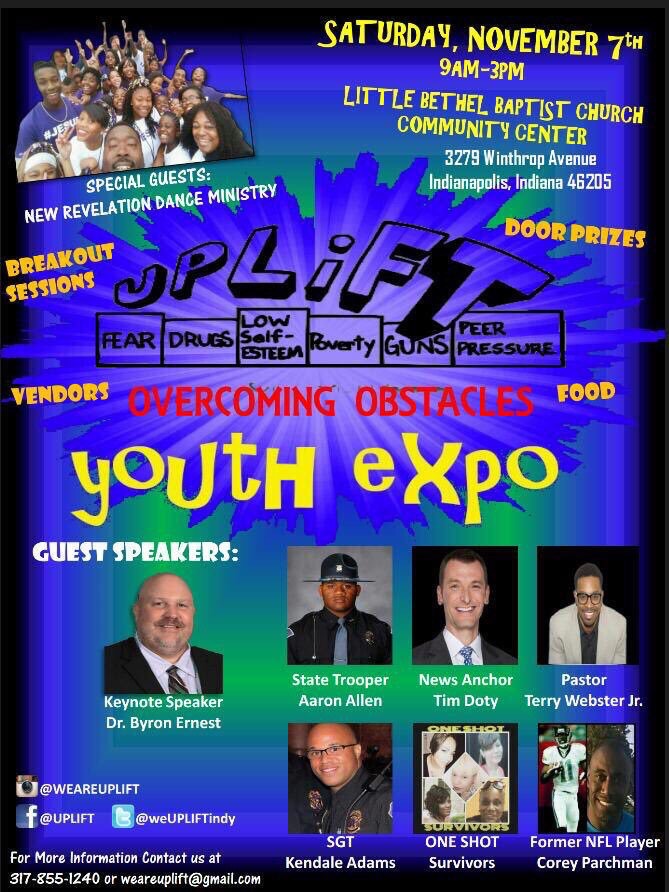
Later today I will be speaking at the Overcoming Obstacles Youth Expo. This expo is being put on by Uplift Indy. I love the title, “Overcoming Obstacles.” That’s really what it is all about. I will be closing out the day and will tie it all together by working with the youth on around the idea of “Being Prepared For What You Don’t Know You Need To Be Prepared For.” Isn’t that what obstacles are? Things we are not prepared for. But really, we have some tools already in our toolbox for being prepared and just need to think through how we get the rest. I can’t wait to spend time with these kids today!
I will post my comments and thoughts from the day when the expo ends today.
Creating A Vision of Our Greatest Desires
“Take a little control over your career…I am talking about career planning in the sense of: What do I have to learn, what are my strengths, how can I build on them, where do I belong, do I really belong in this company? One must take responsibility of asking oneself these questions from time to time, and acting on the answers…You build on your strengths so they stand you in good stead when you need them.” ~ Peter Drucker
 In this week’s entry in A Year With Peter Drucker (Maciariello, 2014) continues with the theme of going from success to significance. Drucker posited that the knowledge society we now live in creates such an opportunity (Maciariello, 2014). We need to remember, however, that sometime we are not able to fulfill our greatest desires for significance even if we are successful in our present position, job, or career. Remember, success does not necessarily equal significance. In fact, most times it does not. Many times we are so busy working on success, as measured by salary, title, employer, and awards, that we lose the vision of what would make us truly happy.
The question then becomes: “Where do I belong?” We all have cultural interests, but we are reminded that as we enter the second half of our life those interests are driven more by a sense of doing and contributing. This is a great thing, but we need to make sure we plan for this and prepare ourselves (Maciariello, 2014). That may mean studying, taking part in professional development, volunteering in a position to gain experience, or a host of other ways of learning. Drucker broke these new ways of finding significance into to categories (Maciariello, 2014):
- Parallel Career: Taking a position in a church or some other social sector organization using your top skills and talents for the betterment of others.
- Social Entrepreneurs: Using significant financial resources or contacts to make a difference by solving social issues.
 Often it is our duty to do what we are good at even though we would rather do something else. There may come a time when we are mostly free of our obligations and can do what we truly love. I would have to point to my father in-law, Fritz Behrens, as an example of someone who has found significance. In fact we just had a conversation last night about his next steps – I must point out he is in his mid-eighties! He has been on boards that have done significant great things in Anderson, Indiana. He also served the City of Anderson after selling his successful family business. Additionally, he has been of tremendous service to his church. He led the building of a new church, and in my opinion a great church business model would be for him to serve as Chief Financial Officer (CFO) of the church. With his great business sense, unwavering faith, and ability to build relationships he could run (financial and operations) a church of considerable size on a couple of days a week. Plus, he is a a point where he could do it for nothing in terms of salary. Think about that – that’s significance. It is really hard to find a senior minister who is good in all the areas of pastoring a church: oratory skills, outreach, ministering to youth, financial management, and operations management. So, why not go find the greatest pastor with the skills, that in my opinion, matter most: oratory skills and ministering. Then, let a second halfer like my father in-law manage the church with his tremendous skills. I am still amazed that more churches don’t do this.
“Develop a genuine, true, major outside interest. Not a hobby, a genuine interest, which permits you to live in a different world, with different peers whose opinions are meaningful to you.”…”{O}ne needs a true outside interest, not just water-skiing. It not only develops your strengths, it helps to protect you against the inevitable shocks.” ~ Peter Drucker

Heath’s Newest Addition To The Herd Purchased At The 2015 World Dairy Expo
Engage in career planning by clearly identifying your strengths and values. Continue to develop your strengths. Early in life, plan for a second career. Consider volunteer work that may itself provide the transition to a second career or provide enough fulfillment to achieve significance. What will it take in your career to allow you to seriously explore opportunities to move from success to significance, assuming you cannot do so from where you are right now?
Reference
Maciariello, J. A. (2014). A year with Peter Drucker: 52 weeks of coaching for leadership effectiveness. New York, NY: HarperCollins Publishers.
Specific Giftedness Energy
 Last week in A Year With Peter Drucker (Maciariello, 2014) we began to examine “halftime.” What Bob Buford described as the time when we move from desiring success to wanting to achieve significance. Activities for significance are by and large an enormous opportunity, but many people don’t have the imagination to identify possibilities. I became so interested in “halftime” that I went ahead and read Bob Buford’s book Halftime this week. Buford focuses on this important time of transition—the time when, as he says, a person moves beyond the first half of the game of life. It’s halftime, a time of revitalization and for catching a new vision for living the second half, the half where life can be lived at its most rewarding. Bob Buford provides the encouragement and insight to propel your life on a new course away from mere success to true significance—and the best years of your life. I highly recommend the book Halftime. This week’s entry in A Year With Peter Drucker continues on the idea of halftime and gives the reader a peek into the process of how to achieve significance while going through halftime. Those who follow their interests in social sector activities early in life by volunteering their services may confirm their instinct to serve in specific capacities. This is turn may provide the imagination and inspiration needed either to begin a second career or to become a social entrepreneur (Maciariello, 2014).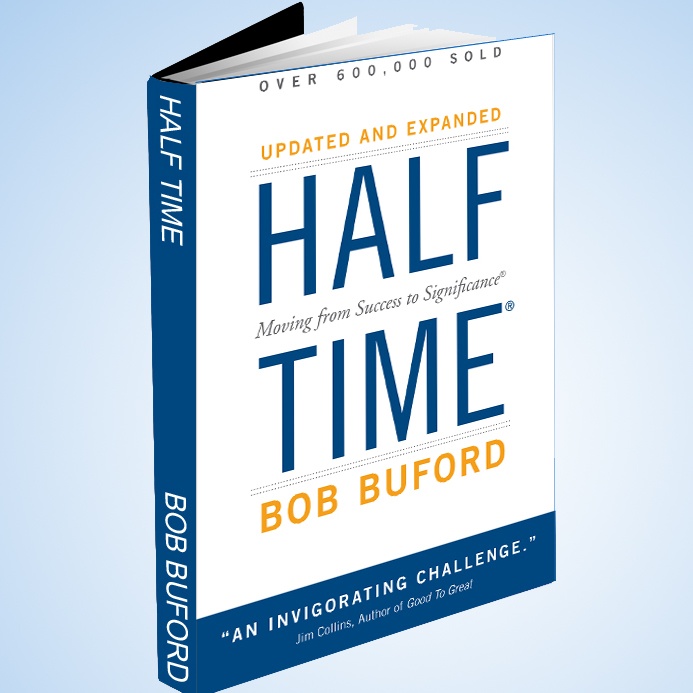
In order to find our way to creating significance we must discover our specific giftedness. In other words we need to work doing what we do best. Individuals and organizations may need help in thinking through just what they are trying to accomplish with the talent available; and in obtaining the necessary contacts and making the necessary preparations to do it. An individual must fit the organization and the organization must fit the individual (Maciariello, 2014). 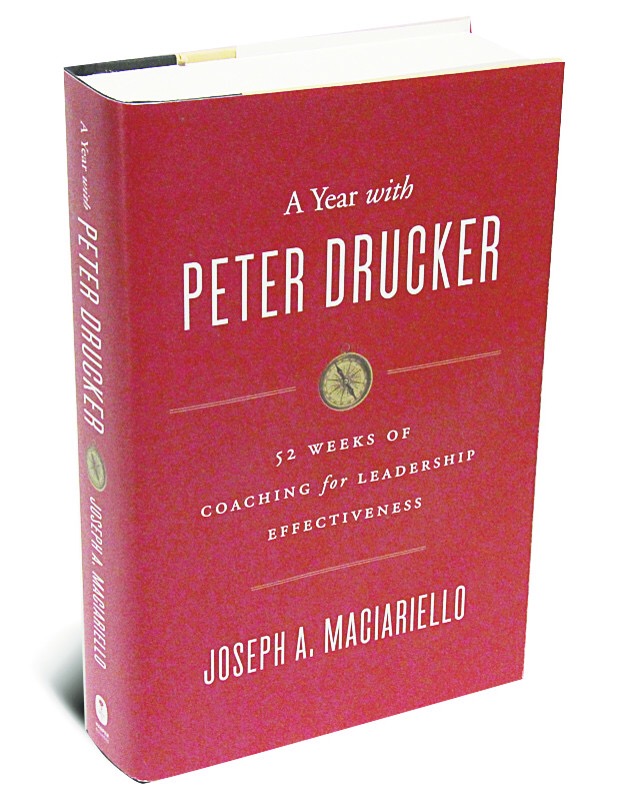 There is one requirement, as I see it, for managing the second half of one’s life: to begin creating it long before one enters it. Peter Drucker argued, “If one does not begin to volunteer before one is forty or so, one will not volunteer when past sixty. Similarly, all the social entrepreneurs I know began to work in their chosen second enterprise long before they reached their peak in their original business.” (Maciariello, 2014, p. 321) With the age expectancies rising into the seventies, we need to be thinking about halftime in our mid thirties to forty.
If you want to make a contribution in the second half of your life you must understand how to manage yourself to make the right contributions. So, “What is in your box?” In other words you must decide what is most important for you to create significance. What are your strengths and values? Where are you finding an outlet for them? Is your job a sufficient outlet for your talents and values?
Reference
Maciariello, J. A. (2014). A year with Peter Drucker: 52 weeks of coaching for leadership effectiveness. New York, NY: HarperCollins Publishers.
Lazy Leaders
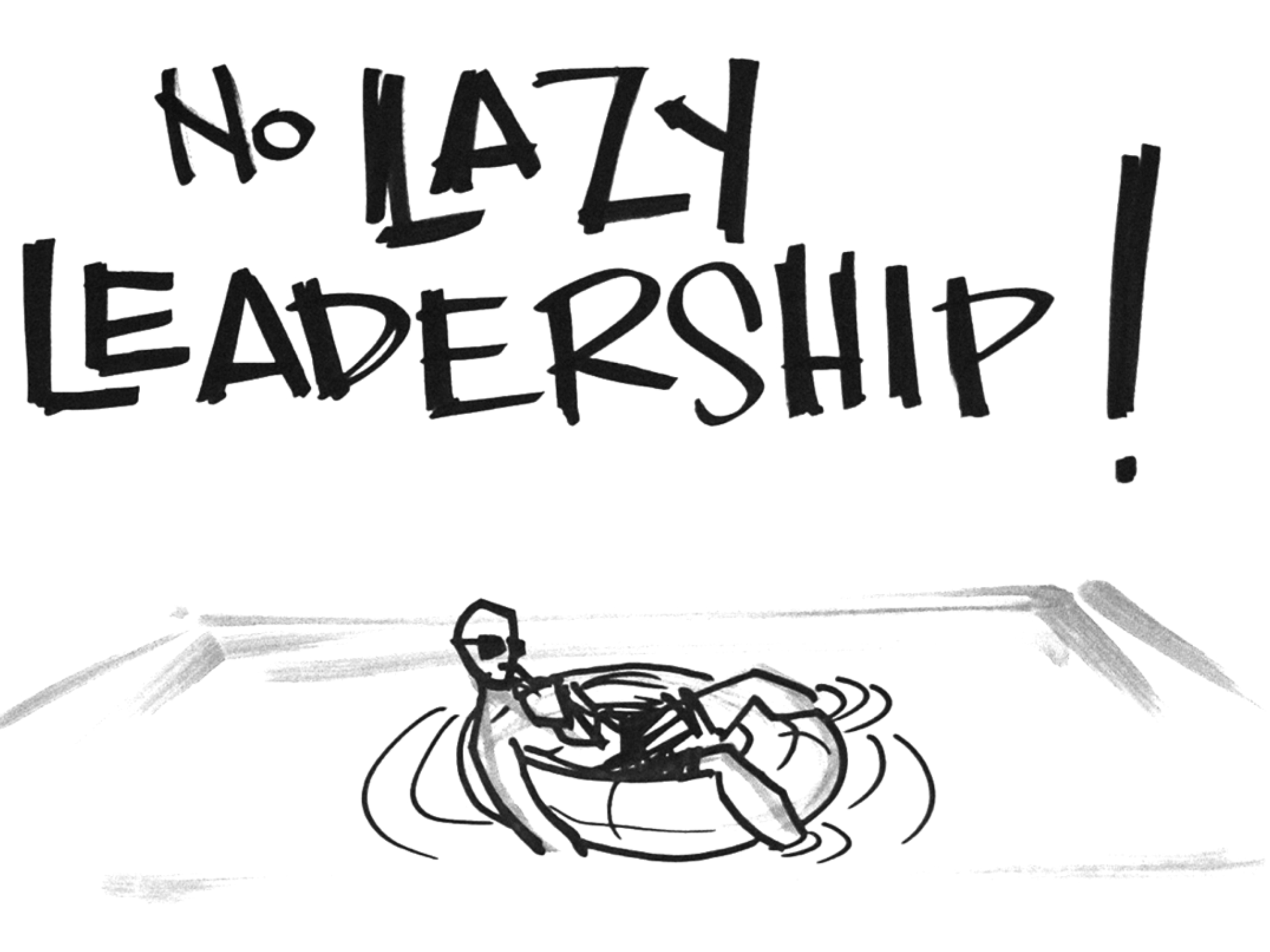
Hoosier Academies Focused Leader Academy Graphic by Mike Fleisch
I have seen this so many times in many organizations and in my own industry as a school leader. As a person who has come in to help school teams turn schools around, I have heard so many teacher leaders say, “we were always told this idea does not fit the model.” Then when I ask the question of who said that, we find that no one did except the lazy leader who did not want to go to the trouble of making the change or explaining (selling) the change throughout the organization.
Lazy leadership really goes beyond the example of the widget itself. Probably the worst effect of lazy leaders and lazy leadership is on the organization’s culture. Imagine a culture where you are always told, “no, we can’t do this or change that because…” At some point you would just decide that your knowledge was irrelevant. We know that this would then translate to the most important component of employee satisfaction – engagement. Research tells us that the happiest employees and the ones that stay with organizations the longest are the ones that truly believe they are valued and making a difference. These same employees have been empowered and have a clearly defined role in carrying out the vision and mission of the organization. Research tells us that this level of enagagement is much more important than even salaries.
 Lazy leaders may just be one of the biggest crushers of culture there is. So, how do we keep ourselves from falling into the lazy leadership trap? You are caught in the quick sand of lazy leadership if you catch yourself telling one of your team members that your superior will never agree to a change suggested by someone on your team without trying to lobby for the change. Furthermore, let’s do a Jeff Foxworthy parody.
“You might be a lazy leader if…
- You move on with a decision without finding out the real answers.
- You don’t delegate because you don’t want to have to help others hone and develop their skills.
- You delegate by “dumping and running.” What I call “relegating.” You have to help people know the vision, understand a win, and stay close enough in case they need you again. New leaders are developed, loyalty is gained, and teams are made more effective through delegation.
- You give up after the first try. No one likes to fail. Sometimes it’s easier to scrap a dream and start over rather than fight through the messiness and even embarrassment of picking up the pieces of a broken dream, but if the dream was valid the first time, it probably has some validity today.
- You don’t invest in the young and up-and-coming leaders. There’s the whole generational gap — differences in values, communication styles, expectations, etc. It would be easier to surround ourselves with all like-minded people, but who wins with that approach — especially long-term?
- You settle for mediocre performance. It’s more difficult to push for excellence. Average results come with average efforts. It’s the hard work and the final efforts that produce the best results.
- You don’t explain “why. “Just do what I say” leadership saves a lot of the leader’s time. If you don’t explain what’s in your head — just tell people what to do — You maybe get to do more of what you want to do. The problem is, however, you will have a bunch of pawns on the team and one disrespected, ineffective and unprotected king (lazy leader). (And, being “king” is not a good leadership style by the way.) Continually casting the vision and connecting the dots is often the harder work, but necessary for the best results in leadership.
- You avoid any kind of discourse. If there was only answer, solution, or innovation who needs a leader?
So, let’s get out there and excercise our leadership muscles and not be lazy!
Significance: Impacting Outside Yourself
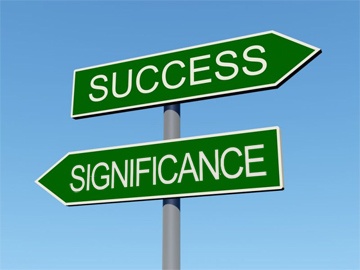
“In the course of life, there are the great majority of successful people who have to change their direction at about age sixty. There is a very small minority of purpose-driven people who have to concentrate and not change and I can’t tell you which you are going to be. The decision is going to come up. Decision is perhaps the wrong word – as you grow older, are you focusing more on doing the things that give you achievement and satisfaction and growth or more on the things that have an impact outside of yourself? Those are decisions one has to make. And nobody can help you make them. But the one thing to avoid is splintering yourself, trying to do everything.” ~ Peter Drucker – Rick Warren Dialogue, May 27, 2004
This week’s entry in A Year With Peter Drucker really resonated with me and is something that actually presents a bit of a thought challenge for me. I have always been one who takes my own professional growth very seriously and have owned that. But, at the same time I really have never worried about or tried to position myself for what is next. At least not any more than to the extent of living by what I have always preached: “We must be ready for what we don’t know we need to be ready for.” Drucker used 60 years old as the benchmark where the decisions of a successful person needs to be made. At age 52 I still have some time, but I really do want to make sure I am making a significant impact outside of myself. Drucker believed a person could continue to do what he knows how to do extremely well or attempt to make another significant and innovative contribution to society (Maciariello, 2014). The prospect of making some new and innovative contribution to society is very attractive to me.
People who use and manage the second half of their life for impacting others are seen to be the minority. I want to be a part of this minority and would encourage you to be too. We need to be the people who see the long work expectancy we now enjoy as an opportunity both for ourselves and for society. We need to be the leaders and the models. Leaders must systematically work on making the future. The purpose of the work on making the future is not to decide what should be done tomorrow, but what should be done today to have tomorrow. Drucker also posited that leaders needed to anticipate the future that has already happened and make the future that has already happened (Maciariello, 2014).
The importance of this was really driven home to me yesterday when we had the first session of our newly developed Focused Leader Academy. I was so inspired as I spent the day with 15 of our best and brightest teacher leaders. The passion that was displayed and the desire to learn and affect the future of our school was exciting. 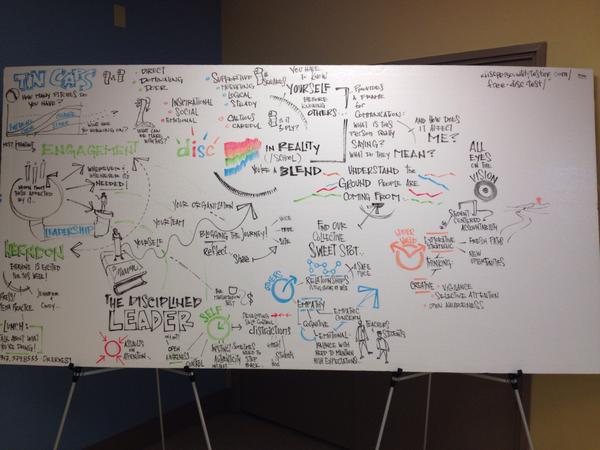 When I reflect on all the learning that went on yesterday it is exciting to think we are building our future leaders and anticipating the future that has already happened and positioning our leaders to be ready for it. We learned about a focused leader and a disciplined leader. Additionally, we discussed being focused on ourselves, our team, and our organization. The Focused Leader Academy is so exciting to me because it truly gives me a chance serve our future leaders and make an impact outside of myself. It was awesome to hear their ideas for Focused Leader Projects and I have spent a great deal of time today thinking about resources and ways I can help them to carry out the projects they have chosen. It has been exciting to put this program together and I am so thrilled to be in a position of being a servant leader to the individuals who are taking this leadership journey and will be the leaders of our school.
As I reflect on the lessons of Drucker this week I aspire to impose on the as yet unborn future, new ideas to give direction and shape to what is yet to come. I also want to be a true servant leader and help model for and mold those who will be leading those new ideas in our future. I will close with one of my favorite Peter Drucker quotes:
“The best way to predict the future is to create it.” ~ Peter Drucker
Reference
Maciariello, J. A. (2014). A year with Peter Drucker: 52 weeks of coaching for leadership effectiveness. New York, NY: HarperCollins Publishers.
Teacher of the Year Learning Continues in 2015!
 Today was one of my favorite days of the year. As an Indiana Teacher of the Year, I was part of the selection committee for the 2015 Indiana Teacher of the Year. Today we held the interviews for the top 10 finalists. As always, I was inspired! Click here to see the listing of this year’s top 10. I am so inspired each year by how great these teachers are and come away refreshed and rejuvenated as a school leader. During the interview I take copious notes to inform our decision making at the end of the day, but also take personal notes that I use for my own professional growth. Last year I wrote a post entitled Teacher of the Year Learning and this year I thought I would do the same. For this year’s post I am going to provide you a bullet point list of all the comments, phrases, and learning that I jotted down today.
Here is the list:
- We must match teacher goals to individualized professional development
- What steps should be taken to reach the goals?
- Implementation plan
- Feedback needs to be provided regarding progress toward goals
- Purposefully select books for libraries that give a window to the world
- “One of the things that makes me, me is…”
- “I’m either going to fail forward, or being totally successful!”
- “I’m just as much a learner as they [students] are.”
- “I [teacher] lead sometimes, and they [students] lead sometimes.”
- We should be blogging our thoughts instead of just journal-ling
- Use formative assessments before even approaching summative assessments – this needs to be balanced
- Diversity is not always visible
- Teacher effectiveness starts at the local school – the school must have a process that supports growing highly effective teachers and teacher leaders
- The community drives instruction
- Share the gifts that you have
- Read the book: 7 Habits of Happy Kids
- Read the book: Mindsets in the Classroom
- “Clustering” – bringing in students who aren’t quite ready for the High Ability program, but are close and need extra attention to get them there
- We need to make students feel welcome and loved
- We need to be writing from different points of view and exposing students to writing from different points of view
- Twice Exceptional Students – high ability students who also have learning disabilities
- “Teachers are effective if inspired” (my favorite quote of the day – I tweeted it)
- “Let me make a theme out of all of this”
- Blogging our journey
- If you cannot adapt to changes you will not be successful
- “Subject matter is important, but one to one contact and relationships are most important. Remember, what you are teaching today may not be the most important thing happening in a particular student’s life today”
- Ask your students: “What am I doing that is irrelevant?”
- You can’t put everyone in a box, you must individualize the instruction
- Find the students’ strengths and weaknesses
- “I evaluate myself every day”
- “Shine On”
- “Make kids first and everything else second”
- “Immediate feedback should be innate in everything we do”
- We need to love all the different experiences students bring to our classrooms
- Teacher effectiveness measures – ask the kids
- We need our students to do “authentic reading”
- We must be immersed in what matters
- We must create an environment where we have an investment in each other – this will build a true TEAM
- As a coach/mentor – the goal should be to work yourself out of a job
- We should have less required collaboration and more spontaneous/unstructured collaboration
- Poverty is the biggest issue facing education today
- Choice based classrooms –
Give students the opportunity to explore what they are interested in. Help them ask powerful questions. Give them time to explore. Students should be able to share what they have learned in a compelling way.” ~ George Couros
- We need to bookend creative lessons
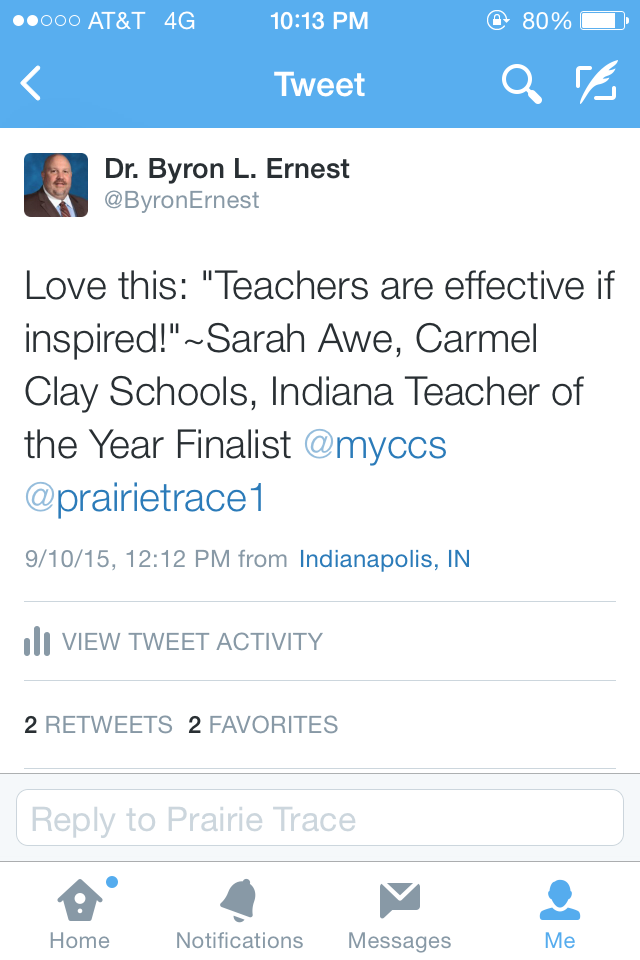
Need I say more? Again, congratulations to this year’s Indiana Teacher of the Year finalists and thanks for inspiring me today!
I think my tweet at the end of the interviews says it all:
Farm Party Strategy 9.0
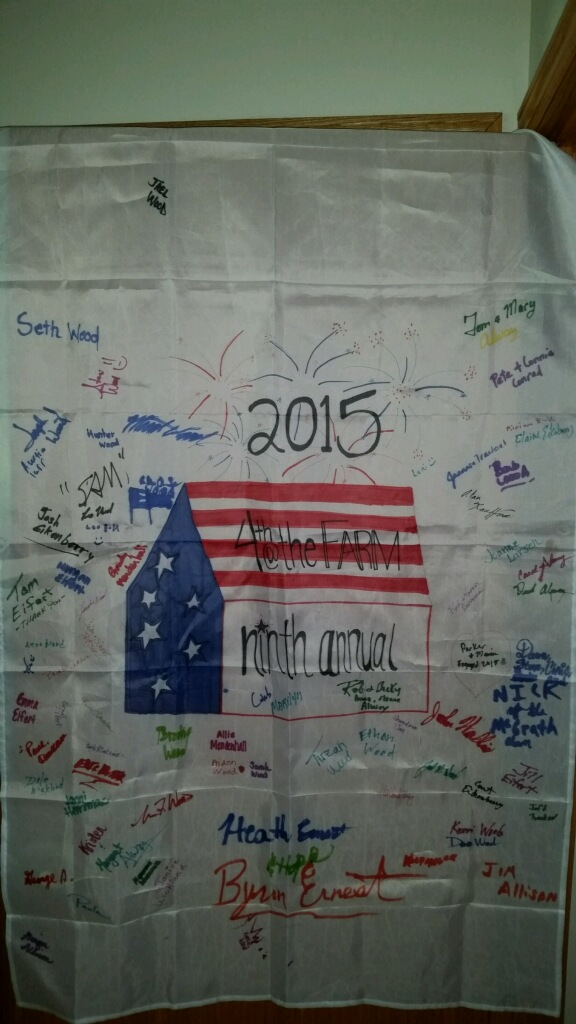
9th Annual Farm Party Banner
This past weekend my family and I had the opportunity to spend a few days up in the Ludington/Scottville, Michigan area for the Fourth of July weekend. The main objective was to attend the Ninth Annual Farm Party of our good friend, Kevin Eikenberry, and his family. He had been inviting us for the past several years and it seemed as if every year something came up preventing us from attending. This year, however, we made it happen. We had an absolutely wonderful time.
I believe the Annual Farm Party answers the three essential questions that Rachel E. Curtis and Elizabeth A. City pose in their great book Strategy in Action: How School Systems Can Support Powerful Learning and Teaching (2012). These questions are:
- What are we doing?
- Why are we doing it?
- How are we doing it?
While these seem to be simple questions; they are very complex to answer when used in the context of strategic planning for an organization.
 So, let’s take a stab at these from the perspective of the Annual Farm Party.
- What are we doing? Ninth Annual Farm Party – Food, Hay Rides, Fireworks, Bonfires, Recreation, and Socializing
- Why are we doing it? Kevin hosts this party to honor his father, family, neighbors, and friends. He is really providing a family/community reunion of sorts. Except, it is much more fun than any family reunion I have ever been to.
- How are we doing it? Kevin hosts at his family farm he grew up on. He really relies on neighbors, family, and friends to pull the party off. I was amazed to watch everyone doing their “jobs.” It was a little daunting to be a “first-timer” to the party, because I had no “job.” Kevin even went so far as to put in 30 amp electric service boxes for those of us who had brought travel travel trailers or RVs to stay in.

Annual Farm Party Banners
This principle of every person person knowing what his or her role is to accomplishing the goals, mission, and vision of the organization is one of the most important lessons I learned from Liz City and Rachel Curtis during my work at Harvard University for Strategy in Action. These two great teachers of strategy drove home the fact that each of us and our team members needs to know our role in carrying out the theory of action of our organizations. Again, it is worth repeating – Every person needs to know his or her role in carrying out the mission, vision, and goals of the organization.
So, back to the Annual Farm Party model. There were individuals who the job of cooking on the grill, cooking in the house, building the bonfire and keeping it stoked, conducting hay rides, bringing picnic tables, setting up food tables, banner making and signing, and on and on. Anyway, you get the idea – everyone knew their role. In fact the roles were so well defined that as an outsider (don’t confuse outsider with not feeling welcome, we were welcomed) I felt like I was being lazy and not helping. But…this was evidence of a well oiled machine.
The take away from me, however, is as a school leader I need to make sure to be very deliberate when a new team member comes on board to make sure he or she understands very quickly what their role is in the goals and action steps of our strategic plan. As the Harvard University research shows, individuals need clearly defined roles to operate at the highest level of engagement. Teams, on the other hand, as the same research showed, need the goals, but need to not be given a prescription of how to carry out the mission. The teams must be the innovators. In fact, to this end as a part of really studying the school we are turning around we have the following written on my office white board at all times:

- What are these people doing?
- Are they doing the right things?
- Then, making what they are doing more visible to everyone!
“It turns out that all influence geniuses focus on behaviors…. They don’t develop an influence strategy until they’ve carefully identified the specific behaviors they want to change. They start by asking: In order to improve our existing situation, what must people actually do? ~ Authors of Influencer: The Power to Change Anything
Thanks Kevin and family for the great Fourth of July, inviting our family to the Ninth Annual Farm Party, and the great exemplar of team members knowing their roles in the Annual Farm Party mission and the answering of the three important questions of strategy:
- What are we doing?
- Why are we doing it?
- How are we doing it?
Reference
Curtis, R. E. & City, E.A. (2012). Strategy in action: How school systems can support powerful learning and teaching. Cambridge, MA: Harvard Education Press.
.
Fishing for Strategy

14 Pound King Salmon Caught By Heath!
While our family was in Michigan this past weekend, my son and I went fishing in Lake Michigan. There was something really special about being on the boat and headed out to the middle of Lake Michigan at 5:00 a.m. on the morning of the Fourth of July. It was cold and foggy and I couldn’t help but think of George Washington crossing the Delaware.
I was struck by how the captain of the Dreamweaver III, our charter, used strategic planning to give us a great experience. Strategic planning is about the allocation of resources to carry out the mission, vision, and goals of the organization. Our mission, vision, and goal was very simple: Catch Fish!
To that end, our captain, Shane Ruboyianes, had pulled satellite images of water temperatures and had plotted the best fishing location based on the catches of the previous week’s excursions and the temperature bands on the satellite images. He explained that the band was wider on our day of fishing than on the previous days. The tighter the band, he explained, the tighter the fish hang to the edge of the warm temperature band. Thus, the greater the likelihood of catching our limit – five each. Our captain then informed us that he thought our best strategy (he used that term) was to go one hour out (one way) to the middle of Lake Michigan to fish. On a seven hour fishing trip we would be committing two hours of our trip (time resource) to this strategy. We committed the two hour resource of time.

Heath with the lure he caught his big King Salmon on!

A Collection of Some of Our Lures Used

The Product of our Great Morning Together!
- What are we doing? Fishing on Lake Michigan
- Why are we doing it? Catch Salmon to eat and spend quality time together as dad and lad
- How are we doing it? Hired a highly recommended charter boat. Based on water temperature maps we committed to going 30 miles (one hour) out. Based on the fish caught, we changed lures accordingly.
So, what’s the lesson? We made a commitment to where we would fish – it would have been tough to change after committing to this. Conversely, we were agile about lures – constantly changing according to what was being caught.
How can you relate this story to your organization’s strategic planning?
Is your organization agile enough to make course corrections according to what the data is telling you?
Reference
Curtis, R. E. & City, E.A. (2012). Strategy in action: How school systems can support powerful learning and teaching. Cambridge, MA: Harvard Education Press.
Civilized Disdain Vs. Political Correctness

“The difference between civilized disdain and political correctness is that the former allows one to feel disdain for a person’s or group’s views or beliefs while maintaining respect for the human beings that hold them.” ~ Carlo Strenger
Happy Fourth of July to you all! By 5:00 a.m. this morning my son and I will be on Lake Michigan fishing on the DreamWeaver III; a 35 foot Viking. We are in the Scottville/Ludington, Michigan area visiting our good friend Kevin Eikenberry and his family for their annual Fourth of July party. As I reflect on this important day in our nation’s history, our forefathers did not set us up for success by practicing political correctness. They were successful by having very heated ideological debate, reaching consensus, and then implementing. Indiana House Speaker, Brian Bosma reminded me of this when I asked him what success on the State Board of Education would look like. He said, “It’s all about working together to find consensus and then carrying out implementation.”
I have been reading the great book by Carlo Strenger, The Fear of Insignificance: Searching for Meaning in the Twenty-First Century. Strenger argued the ideology of political correctness failed because it was a “profoundly inauthentic prescription: it is humanly impossible to genuinely respect beliefs no matter how irrational, immoral, or absurd (Strenger, 2011).” The resulting culture was emotionally frozen and often did not lead to fruitful discussion between worldviews in general, and between secularism and religion in particular. The ideology of political correctness stated that the only civilized way of coexistence was to respect other peoples’ beliefs, just because they are held by someone. The hope behind this ideology was that if we would just be nice and respectful to each other, we would somehow be able to coexist in the same polity.
The resulting culture of us all wanting to be “politically correct” led to us being emotionally frozen and often did not lead to fruitful discussion between worldviews in general, and between secularism and religion in particular. Strenger advocated for “civilized disdain, an alternative to political correctness that is more authentic and more attuned to what we really feel toward worldviews that we do not approve of on moral or intellectual grounds. (Strenger, 2011).” The difference between civilized disdain and political correctness is that the former allows one to feel disdain for a person’s or group’s views or beliefs while maintaining respect for the human beings that hold them. I am so glad I read Strenger’s book. Interestingly, I do not have all of the same beliefs, but I do believe we could consensus build and problem- solve together. Also, I do appreciate his look at the world and our interactions as a global society, or homo globalis, as he calls it.
 “Civilized disdain has turned out to be surprisingly productive in creating human bonds of lasting value. The mental discipline required for civilized disdain may be crucial for the type of world citizenship that will allow fruitful cooperation across ideological divides.” ~ Carlo Strenger
As I was studying this I was thinking about the signers of the Declaration of Independence and those who ultimately became the framers and founders of this great country, I love and call home. Shortly after the American revolution our founding fathers completed the Articles of Confederation. They then realized that the documents were inadequate to the task of unifying a diverse group of newly independent colonies. A debate thus ensued, between the Federalist side, led by Alexander Hamilton and James Madison, and the AntiFederalists, led by Thomas Jefferson and Patrick Henry, over exactly how much power and authority to give Congress and the other central branches of the new government. Hamilton argued that a strong central government would be essential to the nation’s survival and prosperity, while his opponents insisted that most of the nation’s power should rest within the state and local governments. By 1787, a sort of compromise was worked out that resulted in our Constitution and its first set of amendments, the Bill of Rights. I have said this before and will say it again: I am glad there was the disagreement and debate over state’s rights. I firmly believe that had there not been the federalist and antifederalist debate, there would not have been the quality final product – our Constituion and Bill of Rights.
So, on this day of celebration of the United States Declaration of Independence, let us consider civilized disdain, where we allow each other to feel disdain for a person’s or group’s views or beliefs while maintaining respect for the human beings that hold them. Then, we need to take those difference and through compromise and consensus-building form them into a “best” solution. Finally, and most importantly, we must then implement.
Happy Fourth of July and God Bless America.
Reference
Strenger, C. (2011). The fear of insignificance: Searching for meaning in the twenty-first century. New York, NY: St. Martin’s Press, LLC.
 Byron's Babbles
leave a comment