Failure Is An Option

This past weekend, while at the World Dairy Expo, a business person made a comment to me that was intriguing. She said, “Failure is an option.” This caused me to pause because we more often use the phrase “Failure is not an option” associated with NASA Flight Director Gene Kranz and Apollo 13 – even though that is more of a movie line than real quote from Kranz. While both phrases can be useful from a mindset perspective, let’s look at the context being used this weekend when it was said that “failure is an option.”
The phrase, in the context she was using it served as a reminder that adapting to new technology, new genetic research, evolving consumer demands, new techniques, and new equipment is essential for growth, continual improvement, staying relevant, and being profitable. Embracing change, even when it involves facing challenges or setbacks, allows us to learn and innovate. Failing to learn and innovate not only makes failure an option, it makes failure inevitable. Viewing these experiences as opportunities rather than obstacles can motivate us to stay curious and engaged with the world around us. It encourages a mindset where we are open to learning new skills and exploring new possibilities, ultimately leading to greater success in both personal and professional realms. We must recognize that not exploring new possibilities will enable failure to be an option.
Building Relationships By Understanding and Appreciating
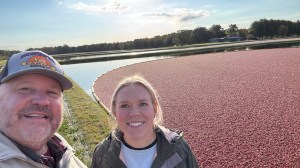
This past week I’ve had the incredible pleasure of being at the World Dairy Expo in Madison, Wisconsin. As you know we raise Jersey dairy show cows and so that is the place to be the first week of October. There will undoubtedly be posts about things I learned and my thoughts about applying what I learned to education, but for now I want to focus on something we (my wife was able to make the trip with me this year) did while in Wisconsin. One of the things I like to do is visit people I work with in the “real job” part of my life. I always say if I am within three hours of visiting someone I work with, I’m going.
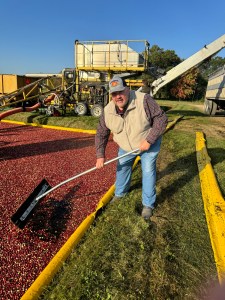
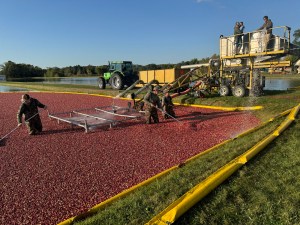
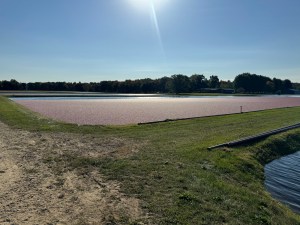
I stayed true to this yesterday. We went up to Tomah, Wisconsin to visit a National FFA Mentor Teacher Ambassador I have the honor of working with in the work I do with the National FFA Organization. We spent the day with Emma Huber who teaches agriculture at Portage Community School District. Emma’s family has a cranberry marsh (farm). Before yesterday, I knew nothing about cranberry production/harvesting. This was the weekend for harvesting the cranberries and my wife and I were able to spend the day taking part in all the operations associated with harvesting cranberries. It was actually quite the family affair, with family members coming from other states to take part. We also learned all about cranberry production. Needless to say, it was a glorious day, I learned A LOT, and we got to know Emma, her husband Josh, Emma’s mom, and the rest of the family and friends.
I love days like yesterday! As a curious learner and person who believes that relationships trump all – yesterday was truly was, as I said earlier, glorious. I have had the opportunity to visit several of the Teacher Ambassadors on their home turf or in their schools. This is important to me and one of my core values, “Listen, Hear, Learn, & strive to be better.” This is part of what I call “loving” those we serve. To be loved we must be understood and appreciated. I blogged about the line, “There is no point in being loved if you are not understood…And once loved and understood to be appreciated.” in The Life Impossible by Matt Haig in Living In Our Own Context.
Visiting those we serve in their home work or personal interest environments can offer substantial value to our relationships. In other words, getting to know them on a personal level. Here are some key benefits:
- Building Trust and Rapport: Meeting people in their own space fosters a deeper connection, showing that we care about them as individuals, not just as colleagues or clients.
- Understanding Context: Home visits provide insight into the circumstances and challenges that our teams or constituents face, enabling us to make more informed decisions and policies. We agriculture teachers understand better than anyone, as ag teachers make regular visits to students as part of their Supervised Agricultural Experience Program. It really is all about building the relationship.
- Gathering Feedback: Engaging directly with those we serve allows for open dialogue and immediate feedback, which can lead to better understanding of needs and expectations.
- Demonstrating Commitment: Our presence in our friends and colleagues’ environments signal that we are committed to supporting them and valuing their input.
- Identifying Opportunities: Being on-site allows us to observe firsthand areas for improvement, innovation, and potential collaboration that might not be visible from a distance.
- Inspiring and Motivating: Seeing how our efforts impact individuals’ lives can reignite our own passion for our work and inspire those we serve.
- Encouraging a Culture of Openness: It sets an example of transparency and approachability, encouraging others in the organization to follow suit.
As a rabid learner and relationship guy, these visits are an important strategy that deepen connections and enhance my effectiveness as a leader. Make no mistake; visiting these ambassadors is a “get to,” not a “have to.” I love it!!!
Leading with Heart: Embracing Vulnerability and Purpose in Leadership

I have been a huge fan of the rap rock band Linkin Park since the beginning. Their music has exceptional storytelling qualities. The stories in their songs deliver meaning while obfuscating just enough to keep us thinking. Linkin Park’s songs carry a secret power – they make you think deeply about a subject that suddenly you are making your own sense of. Art at its highest form.
The addition of Emily Armstrong was a a perfect fit. Their comeback single The Emptiness Machine picks up right where they left off. The first time I heard it I was like, “Wow this is what people are struggling with in their careers.” How do we find purpose? How do we sort through false promises? How do we sort through the coercion, manipulation, and leadership by fear? As the song says, “Gave up who I am for who you wanted me to be; Don’t know why I’m hopin’ for what I won’t receive; Fallin’ for the promise of the emptiness machine; The emptiness machine.” The Emptiness Machine reflects themes of internal struggle, existential questioning, and the search for meaning, which offer us valuable lessons as leaders.
The lines, “I only wanted to be part of something; I only wanted to be part of, part of; I only wanted to be part of something; I only wanted to be part of, part of; I only wanted to be part of something; I only wanted to be part” say it all. We all want to belong and be part of something – not just carrying out some so called leaders prideful ambition. After food and safety on Maslow’s Pyramid comes the need to belong. We need to actively support others by getting to know them, creating opportunities for them to make meaningful social connections and ensuring they have meaningful contact with us.
The struggle for meaning highlighted in the song underscores the necessity of having a clear purpose. Leaders should articulate a vision that resonates with their team, providing direction and motivation. Belonging takes different forms for different people: cultural, social, sensory, embodied, spatial, material, temporal. Each of these needs must be given consideration. Boundaries must be recognized and dismantled. To help others find a place to belong we must listen to, accept, appreciate, and understand how others’ purposes mesh with our organization’s purpose. It does not mean everyone must agree, for those differences are what make us great as individual humans and as organizations.
Everyone has some place or setting in which they can feel they belong. For some this is easily and readily attainable, but others will need additional support. Let’s make sure we are not creating organizations that are just empty machines.
Seeing Everything

I am a big-time Terry Bradshaw fan and love hearing his take on players following games. While watching him after the Patriots vs. 49ers game on Fox Sports yesterday, he made the comment that San Francisco’s quarterback, Brock Purdy, has “broad vision; he sees everything.” I got to thinking about this and that is a trait of all great leaders. This broad vision translates to making decisions. Leaders that can see everything are certain about the consequences. The difference between quarterbacks and other leaders is that quarterbacks only have a few seconds to read coverages, go through their progressions, and execute a decision.
Leaders with broad visions can see the bigger picture and understand how various elements within an organization or community fit together. This perspective allows these leaders to anticipate future challenges and opportunities, align team goals with the larger mission, and cultivate an inclusive environment where diverse viewpoints are valued.
Seeing everything means we are not only aware of immediate concerns but also consider long-term implications, trends, and the impact of decisions on different stakeholders. As leaders we need to be proactive rather than reactive, inspiring others to work towards a common goal while fostering innovation and adaptability.
Navigating the Landscape of Fairness: Balancing Universal Principles and Individual Experiences

I posted on social media this morning that I had an author to add to my favorite author list. It is J. B. Simmons. He is the author of The Five Towers series. I am finishing up the first in the series, The Blue Tower, right now. INCREDIBLE! I have learned that Simmons’ fantasy writing, that includes history and faith, is influenced by C. S. Lewis and J. R. R. Tolkien. I have pages of notes from reading The Blue Tower. One of the quotes from the book that I pondered on, studied, and now blog about was, “Fair…” Abram sighs. “Fair is a misused word. You can only know fairness if you know everything, which none of us do” (p. 123). Simmons uses Abram’s statement to convey a profound truth about the nature of fairness. The idea is that fairness is a complex concept that requires a comprehensive understanding of all circumstances and perspectives involved in a situation. Since no individual possesses complete knowledge of every aspect or the experiences of others, true fairness can be elusive.
“As we mingle with others, let us be diligent in labor, just in our dealings, courteous to everyone, and, above all, honest and fair in the game of life.” ~ Official Closing Ceremonies of an FFA Meeting

This statement prompts a reflection on how we often judge situations based on our limited viewpoints. It suggests that the more we acknowledge our limitations in perspective, the more compassionate and understanding we can be towards others. It encourages readers to consider the nuances of human experience and the importance of empathy in our judgments.
I have to admit, I have always taken a more objective view of fairness. C. S. Lewis addressed the concept of fairness in The Abolition of Man, where he discussed the importance of objective morality and natural law. He emphasized that fairness and justice are rooted in these universal principles rather than subjective human opinions.
Additionally, in Mere Christianity, Lewis explored the idea of fairness in the context of Christian ethics, discussing how moral behavior relates to our obligations to others and the idea of treating people with respect and dignity. Which, without spoiling the book for you, is part of what The Tower Series is about – showing individuals how they have made mistakes and mistreated others. Both J. B. Simmons and C.S. Lewis offer us valuable insights into fairness from different angles.
The view of fairness in The Blue Tower as subjective emphasized the importance of individual experiences and cultural context in determining what is fair. This approach encourages us to consider the unique circumstances of each person or community when making decisions.
On the other hand, Lewis’ perspective, which roots fairness in universal principles, suggested that there are objective standards of right and wrong that apply to all people, regardless of context. This can provide a solid foundation for ethical behavior, ensuring that we uphold certain values consistently.
Bringing these two views together can create a more nuanced approach to fairness. By acknowledging the subjective aspects of fairness—understanding that people’s perceptions and experiences shape their understanding of what is fair—we can be more empathetic and considerate in our dealings with others. At the same time, grounding our actions in universal principles ensures that we maintain a consistent moral framework.
This all highlights the need for creating spaces for open conversations about fairness, where different viewpoints can be expressed and reconciled.
Unlocking Individual Potential: The Power of Path-Dependent Learning

As a leader, accounting for the diverse experiences and perspectives of those you serve is essential for fostering an inclusive and effective team environment. In saying that “lessons are path dependent” in the great and must-read book, The Amazon Way: Amazon’s 14 Leadership Principles (updated 3rd edition), author John Rossman was emphasizing that the insights and knowledge we gain from experiences are influenced by the specific circumstances and journeys we’ve traveled. In other words, the lessons we learn are not one-size-fits-all; they are shaped by our unique backgrounds, decisions, and the paths we’ve taken in our personal or professional lives.
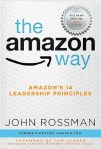
For instance, two people may face the same challenge but respond differently based on their prior experiences, leading to different lessons learned. This concept suggested that understanding our own journey is crucial for applying past lessons to new situations effectively. It also highlighted the importance of context in learning and decision-making. Understand that context matters. Decisions made in one situation may not apply directly to another, but have important lessons learned for future decisions. So we need to be mindful of the specific circumstances surrounding each challenge.
Implementing path-dependent learning in an organization involves recognizing that past experiences shape how individuals and teams approach new challenges. It also acknowledges individual team member histories. Understanding the diverse backgrounds and experiences of your team members and customizing their professional learning and development is crucial to their engagement and success. Encouraging them to share their past experiences and how these have influenced their current thinking and decision-making processes is also important.
In my leadership development work with organizations I incorporate facilitating a great deal of reflection and historical learning. Holding regular reflection sessions where team members can discuss recent projects or challenges is another promising practice. We need to continually analyze how our past experiences can inform our learning, decisions, and outcomes.
Finally, we need to integrate learning into our planning. When planning new projects or initiatives, make it a habit to reference past experiences and how they may inform current strategies and actions. This can help ensure that the team learns from both successes and failures in each unique context.
To Visit New Worlds We Need To Change Our Minds

I am just about finished with The Life Impossible by Matt Haig and with every page I continue to be inspired and transported to new ways of thinking. In my most recent reading, the lines, “You see, if you want to visit a new world you don’t need a spacecraft. All you need to do is change your mind… And my mind was absolutely changed” jumped out at me.

In those lines Haig has the character, Grace Winters, conveying the idea that profound change and exploration don’t always require physical journeys or external tools. Instead, he emphasized the power of mindset and perspective. By changing the way we think about our experiences and challenges, we can open ourselves up to new possibilities and understandings. This reflects a broader theme in his work about mental health, resilience, and the importance of looking at life through different lenses to find joy and meaning, even in difficult times. It encourages readers to realize that personal transformation can lead to a new way of experiencing the world around them.
This theme of visiting new worlds also reminded me of an analogy C. S. Lewis used in a paper entitled “De Audiendis Poetis” (1966). He compared travelling to a foreign country and reading old books. Lewis argued “There are more ways than one of reading old books… There are two ways of enjoying the past, as there are two ways of enjoying a foreign country. One man carries his Englishry abroad with him and brings it home unchanged. Wherever he goes he consorts with the other English tourists. By a good hotel he means one that is like an English hotel. He complains of the bad tea where he might have had excellent coffee… In the same way there is a man who carries his modernity with him through all his reading of past literatures and preserves it intact…” He continued, “But there is another sort of travelling and another sort of reading. You can eat the local food and drink the local wines, you can share the foreign life, you can begin to see the foreign country as it looks, not to the tourist, but to its inhabitants. You can come home modified, thinking and feeling as you did not think and feel before. So with the old literature. You can go beyond the first impression that a poem makes on your modern sensibility. By study of things outside the poem, by comparing it with other poems, by steeping yourself in the vanished period, you can then re-enter the poem with eyes more like those of the natives; now perhaps seeing that the associations you gave to the old words were false, that the real implications were different from what you supposed…” (Lewis, 1966, pp. 1-4).
As you read, Lewis discussed two types of foreign travelers: those who visit a place and absorb its culture and nuances, and those who remain detached and merely observe from the outside. This concept can be related to Matt Haig’s discussions about traveling and experiencing life.
In this way, I believe both Lewis and Haig suggested that genuine transformation, whether through travel or life experiences, comes from full engagement. Just as a meaningful journey is marked by understanding and immersion, rather than mere observation, so too can our lives be enriched by embracing change and finding meaning in moments of difficulty.
Reference
“De Audiendis Poetis” in C.S. Lewis, Studies in Medieval and Renaissance Literature (Cambridge University Press, 1966), pp. 1-4.
Taking The Straightest Route

“Sometimes, if you want to get somewhere, you have to take the straightest route.” I really liked this line in The Life Impossible by Matt Haig. It points out that many times we need to take things on directly and not look for a different, less direct route. The thing I love about this statement is that it can be a metaphor for roadblocks in relationships, or literal in that we sometimes should not take detours.

We can spend a lifetime avoiding metaphorical roadblocks rather than addressing our strains in relationships with others directly and working to clear misunderstandings, and repair injured feelings. Ever noticed that once we take the direct “straightest” route we usually feel better and the situation gets resolved? Now I realize this is not true every time, but letting those feelings fester is not healthy. This is the metaphorical equivalent of driving an hour out of the way to avoid a 10 minute traffic delay.
If we consider the quote from a life’s journey perspective then we must take into account the focus of the trip. We always say we must be present and enjoy the journey, but are there times when we should straighten out the route. There are not necessarily wrong ways to make life’s journey, but there are certainly different ways to go about it. The quote from The Life Impossible points out that sometimes we can take the longer more scenic routes but sometimes we will need to buckle down and take the straightest and most direct route. Again, I’m grateful for this quote because it has made me contemplate about those times where I avoided the straight route using life’s journey as an excuse. We at least need to consider the straight route, no matter how difficult.
So let’s make sure as we think about getting from the starting point to the destination, whether with those we serve, whether in our life’s journey, or a real physical destination we don’t leave out the option of the straightest route.
Living In Our Own Context

Clearly as I write my third post about it, I really love Matt Haig’s great novel The Life Impossible. There is so much in there to unpack. In the book there are so many things happening in Grace Winters’ life to make us reflect on our own. As it says in the book, “Every single person on this planet is a context and the circumstances of that context can never be seen fully. We are all mysteries, even to ourselves.” This is really one of the reasons I love reading fiction; we are able to see all the circumstances and contexts when we need to for full understanding. We rarely get that in real life real time. But that’s what makes it life. We need to embrace the mystery. This great novel has caused me to reflect deeply on this.

The Life Impossible does such an incredible job exploring the complexities of existence and the human experience. Another quote in my reading yesterday, “The willingness to be confused is a prerequisite to a good life” spoke to the idea that embracing uncertainty and confusion can lead to personal growth and fulfillment. Throughout this entire book, Haig dove into themes such as the nature of reality, the importance of vulnerability, and the journey of self-discovery. He emphasized that life is often messy and chaotic, and instead of seeking absolute clarity, it’s more beneficial to accept that confusion can coexist with joy and meaning. This perspective encourages readers to navigate life’s challenges with an open mind and heart, fostering resilience and deeper understanding.
Loved By Being Understood & Appreciated

A leadership topic I have spent a lot of time thinking about and researching is “love.” Love is one of the most important things leaders can give. We need to love the people we serve. C.S. Lewis described four types of love in his book The Four Loves: Affection, Friendship, Eros, and Charity. For a leader, the love that fits best is often charity (agape).
Charity is selfless, unconditional love that seeks the well-being of others. A leader demonstrating this type of love prioritizes the needs of the team, fosters inclusivity, and encourages personal and professional growth without expecting anything in return.
Additionally, elements of affection can also be important, as it builds a sense of belonging and creates a supportive environment. Ultimately, a combination of these loves can create a strong, empathetic leadership style that inspires trust and loyalty among team members.

I have also always liked Ashley Montague‘s definition of love: “Profound involvement in the well-being of others.” Today, however, I might have found an even better way to think about and practice love. In Matt Haig’s great novel The Life Impossible, Grace Winters said that, “There is no point in being loved if you are not understood…And once loved and understood to be appreciated.” This is so profound. With this statement, Haig, in my opinion, was having Grace emphasize that love alone is not enough; it must be accompanied by a deep understanding of one another’s experiences, feelings, and beliefs.
This idea suggested that true connection comes from being truly seen and heard by others. It highlighted the significance of empathy and recognition within relationships—whether they be romantic, familial, or platonic. Being loved feels hollow if there is no comprehension of one’s individuality, strengths, struggles, or joys. Furthermore, appreciation serves as a necessary affirmation of that understanding, reinforcing bonds and fostering a sense of belonging.
I had never thought about a leader’s love for those we serve in this light. Haig’s message invites readers to reflect on their own relationships and the essential components that contribute to meaningful connections and loving those we serve. Think about it; we all want to be loved by being understood and appreciated.


leave a comment