Weighing Our Motives Against Our Actions

I talk a lot about how we should study people and not heroes. What do I mean by this? Many times we put humans in the present or from the past up on pedestals and make them out to be perfect heroes. Interestingly, however, even superheroes are not perfect. These human flaws are what make them relatable. Iron Man’s ego or the Incredible Hulk’s anger and rage just to give a couple. We are all uniquely human and have superpowers and flaws. This why we need to appreciate each person as a whole. I was reminded of this when I dug into Robespierre while reading G. K. Chesterton’s Autobiography.
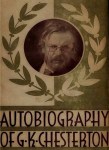
Chesterton often paraphrased or summarized ideas from other authors, such as Hilaire Belloc on Robespierre to illustrate his points. Chesterton put a quote in that said of Robespierre that, “God had given him in his mind a stone tabernacle in which certain great truths were preserved imperishable.” While the quote appears in Chesterton’s Autobiography as a reflection inspired by Belloc’s writings, I could not find as a direct quote from Belloc’s book on Robespierre or any of Belloc’s works. He was using the quote as a comparison to a girl in a debate club he had been a member of.
But the phrase does use vivid imagery—comparing the mind to a “stone tabernacle”—to suggest that Robespierre’s intellect or conscience housed enduring truths, preserved steadfastly amidst chaos. It implies that, despite external appearances or actions, Robespierre’s inner mind contained sacred or profound principles—truths that remained intact and inviolate. Please know that I recognize that Robespierre is a highly complex historical figure, and opinions about him vary widely depending on perspectives and values. Really that complexity is the point here, not the debate over whether he was good or bad. Because, guess what, he was probably both.
Robespierre’s commitment to revolutionary ideals and the pursuit of social justice may be seen as admirable by some. However, his methods, which included political purges and mass executions, raise serious ethical questions. Complex, right?
The point is that Chesterton recognized Robespierre’s adherence to his own “great truths” or what I call core values. We all need to have that “stone tabernacle” that protects our core values. We all have “certain great truths we want to preserve” and live by. What has always been interesting to me is to study others’ core values, or lack thereof, in the context of the time they were living in. Just as it is important to recognize the context of Robespierre’s actions and beliefs, we must also match our own core values and actions against the current context we live in. We need to weigh our actions against our motives.
Understanding The Arbitrary Signs

In my post, “Leadership Echolocation: How Big Are Your Ears?” I spoke about the Ladder of Inference. The idea is that we can’t help but try to make meaning of things. It’s how our human minds work. I thought it was genius how G. K. Chesterton worked this into one of the Father Brown Stories. He wrote, “The letter, however, was in cypher; and one very hard to follow, having been invented by children. Does that strike you as paradoxical? Don’t you know that the hardest signs to read are arbitrary ones? And if two children agree that ‘grunk’ means bedtime and ‘splosh’ means Uncle William, it would take an expert much longer to learn this than to expose any system of substituted letters or numbers.” In that passage, Chesterton highlighted an interesting paradox about ciphers and codes. While we often think that a complex or unfamiliar code would be harder to decipher, Chesterton, through Father Brown, argued that codes invented by children—simple, arbitrary signs—are actually more difficult for experts to decode because they lack an obvious logical pattern.

Children can create entirely arbitrary symbols for meanings like “bedtime” or “Uncle William,” these signs don’t follow any predictable rule. An expert trying to uncover the code would have to test many possibilities, which could take longer than simply recognizing that it’s a straightforward substitution system (like replacing letters systematically).
This idea underlines a key point: the perceived complexity of a cipher or language isn’t necessarily related to how many symbols it uses or how intricate it looks, but rather how predictable or patterned those symbols are. Arbitrary signs, despite their simplicity or randomness, can be the most challenging precisely because they defy the brain’s natural tendency to find meaning through patterns.
Now let’s connect this to Chris Argyris’ The Ladder of Inference model which described how individuals move from observable data and experiences to taking interpretive leaps—often jumping to conclusions without fully examining the data. When it comes to symbols or signs, humans tend to attach meaning based on their assumptions, biases, or patterns they recognize, sometimes skipping critical steps in understanding.
In the context of arbitrary or seemingly random symbols, the difficulty lies in the lack of clear data or patterns that can be reliably interpreted—making the “climb” up the ladder more challenging or even leading to false inferences. The symbols’ randomness prevents us from confidently moving through the rungs of the ladder, highlighting how our interpretive processes depend heavily on the clarity and structure of the data we observe.
So, if we’re trying to interpret arbitrary signs without sufficient context, we might prematurely jump to conclusions, which aligns with Argyris’ concept that our inference process can lead us astray if not carefully managed. Recognizing this can help us be more mindful of how we form beliefs and understand symbols that are inherently ambiguous or patternless.
Finding True Significance Through Humility and External Realities

In the chapter, “The Fairy Tale of Father Brown” in The Father Brown Stories, G. K. Chesterton highlighted the Prussian or German military and cultural attitude toward success in that time period. By saying that the character Otto “regarded success not as an incident but as a quality,” Chesterton pointed out that Otto saw success as an inherent and defining characteristic of a person or a nation, rather than something that happens by chance or circumstance.
Chesterton likely wanted us to understand that this mindset might lead to a rigid, prideful, and perhaps overly serious view of achievement—where success becomes a measure of identity and virtue itself. This can imply a sort of stubbornness or inflexibility, emphasizing internal qualities over external circumstances, which may have broader implications about the nature of pride, ambition, and how cultures or individuals perceive their own worth.
As a believer that seeking significance is much more important than success, this caused me to reflect on this story. Seeking significance over success emphasizes the importance of inner fulfillment, meaningful impact, and personal growth, rather than external achievements or recognition. This perspective aligns with valuing integrity, purpose, and authentic connections.
Chesterton’s idea about a sort of stubbornness or inflexibility—particularly when it involves internal qualities like pride or ambition—can sometimes lead to a rigid self-perception that may resist external realities or humility. It highlights how an overemphasis on internal worth might cultivate arrogance or a refusal to adapt, which can hinder genuine growth.
My focus on seeking significance encourages openness, humility, and internal alignment with purpose, fostering growth. Chesterton’s reflection warns of the pitfalls when internal qualities like pride become inflexible, potentially causing one to overlook humility or the value of external realities.
Inner Freedom: Shaping How We Perceive and Respond to the World

I wrote about freedom back in 2020 in Remember, Freedom Is Yours Until You Give It Up. Reading in G. K. Chesterton’s Autobiography this morning prompted me to reread my post and realize my words I wrote then are still relevant today. Then I read this from G. K. Chesterton this morning, “From the first vaguely, and of late more and more clearly, I have felt that the world is conceiving liberty as something that merely works outwards. And I have always conceived it as something that works inwards.” This caused me to think deeply about what Chesterton meant by this.

I believe Chesterton was highlighting a distinction between the superficial and deeper understandings of liberty. When he says that the world often sees liberty as something that “merely works outwards,” he’s referring to the common view that freedom is about external circumstances—such as political rights, legal freedoms, or outward expressions.
However, I’ve found from studying Chesterton that he believed that true liberty is more inward and spiritual. He conceived it as an internal state—a form of self-mastery or inner freedom—that influences how we think, feel, and make choices. In essence, he was emphasizing that genuine liberty begins within the individual, shaping how we perceive and respond to the world, rather than just external conditions or constraints.
It always amazes me how a couple of sentences from a great author can make a person think. Chesterton’s saying, “From the first vaguely, and of late more and more clearly, I have felt that the world is conceiving liberty as something that merely works outwards. And I have always conceived it as something that works inwards” did that for me. His perspective encourages looking inward for freedom—cultivating inner independence and moral integrity—rather than solely focusing on external rights or societal structures.
Thinking Before Acting: Embracing Multiple Perspectives for Better Decisions

In The Father Brown Stories, G. K. Chesterton created a conversation between Father Brown and Flambeau where it was said, “There’s a disadvantage in a stick pointing straight,” answered the other. “What is it? Why, the other end of the stick always points the opposite way. It depends whether you get hold of the stick by the right end. I saw the thing done once and I’ve never believed in it since” (p. 118). I loved this. It offers a valuable lesson and analogy about perception, perspective, and the importance of understanding context. The pointing of the stick highlights how our assumptions or initial perceptions can be misleading if we don’t consider the full picture.

The key takeaway for me was that things are often not what they seem at first glance. Just as grabbing a stick by one end reveals a different direction on the other, approaching problems, people, or situations without fully understanding their context can lead to misunderstandings or errors. Chesterton suggested the importance of perspective—seeing things from multiple angles before forming a conclusion.
Chesterton may have never intended those lines to serve as a leadership lesson encouraging us to:
- Avoid jumping to conclusions based solely on initial impressions.
- Recognize that different perspectives can reveal truths that are not immediately visible.
- Approach challenges with curiosity and an open mind, considering all sides before acting.
But, that thought of a stick pointing both directions sure made me ponder. How about you?
Leading With Humility

I am really loving the Father Brown Stories by G.K. Chesterton. I’m only about a quarter of the way through the book, but my favorite story so far is in Chapter 9, “The Hammer of God.” At one point in the story, Father Brown asserts, “Humility is the mother of giants. One sees great things from the valley; only small things from the peak.” I had seen that quote from Chesterton before, but now in the context of the story it was powerful metaphor.

We have to be very careful of letting our pride take us to high and mighty places where others begin to appear small to us. Chesterton went on to say in that story, “But he saw all men walking about like insects.” We need to be careful to not let ourselves get too comfortable on the peak and looking down on others. Think of how beautiful the view looking up at the mountain with others around us is.
I am reminded of Drybar’s seventh core value: “7. Nothing is sexier than honesty and humility!” I wrote about this in Becoming Humble. Learning from and with others, asking questions, and asking for help are hallmarks of an effective and humble leader.
Conveying More Than Literal Meaning

I have always stressed that language matters. It matters a lot! I love that G.K. Chesterton, through the character of Father Brown in the Father Brown Stories, explored themes of human nature, morality, and the importance of understanding others. Chesterton’s stories emphasize that sometimes the true understanding of a mystery or a person’s motives requires insight into their character and the use of common sense, rather than superficial judgments.

In Chapter 5 – The Invisible Man, Father Brown said, “Have you ever noticed this—that people never answer what you say? They answer what you mean—or what they think you mean.” He then went on to give this example: “Suppose one lady says to another in a country house, ‘Is anybody staying with you?’ the lady doesn’t answer ‘Yes; the butler, the three footmen, the parlourmaid, and so on,’ though the parlourmaid may be in the room, or the butler behind her chair. She says ‘There is nobody staying with us,’ meaning nobody of the sort you mean. But suppose a doctor inquiring into an epidemic asks, ‘Who is staying in the house?’ then the lady will remember the butler, the parlourmaid, and the rest.” This highlighted a common human tendency we have to focus more on interpreting the underlying meaning or intent behind what someone says rather than merely responding to the literal words.
Chesterton went on to tell us in the story that, “All language is used like that; you never get a question answered literally, even when you get it answered truly.” Chesterton was pointing out that people often listen for the implied message, assumptions, or emotions beneath the surface, rather than taking questions at their face value.
This observation encourages us to be more aware of the nuances in communication—recognizing that conversations are frequently about understanding intentions and context, not just the explicit words spoken. It also reminds us to be mindful of how our own words might be interpreted, intentionally or unintentionally conveying more than their literal meaning. Again, language matters!
Embracing Curiosity and Compassion: Timeless Lessons from Father Brown

Scholars have asserted that G. K. Chesterton’s character, Father Brown, has imaginative empathy. This type of empathy, as demonstrated by Father Brown in Chesterton’s stories, refers to the ability to genuinely understand and share the feelings, thoughts, and perspectives of others by using imagination and intuition. Unlike simple sympathy or rational analysis, imaginative empathy involves immersing oneself into another’s experience, often seeing the world from their point of view, even when it’s unfamiliar or complex.

From Father Brown, we learn that:
- Deep understanding fosters trust. When we, as leaders, take the time to empathize genuinely, we create stronger connections and trust with others.
- Insight leads to better decision-making. By placing ourselves in others’ shoes, we can uncover underlying motives or truths that might otherwise be missed.
- Creativity and problem-solving thrive when we embrace curiosity. Imaginative empathy encourages flexible thinking, allowing one to approach challenges from multiple perspectives.
- Emulating Father Brown’s curiosity helps us cultivate a more compassionate and open-minded attitude towards others.
By adopting imaginative empathy we enhance our ability to connect, innovate, and lead with insight and kindness—qualities essential for personal growth and effective leadership.
Leading With Questions Like Father Brown

Having just finished G. K. Chesterton’s Heretics, I began reading his Father Brown Stories. I’m only two stories in and I am already completely enthralled. Chesterton described Father Brown this way: “Father Brown had the kind of head that cannot help asking questions.”From this description we can draw valuable lessons about curiosity in leadership.

We can be a curious leader, like Father Brown. We just need to demonstrate a genuine interest in understanding different perspectives, uncovering underlying issues, and exploring new ideas. This inquisitiveness can foster a culture of continuous learning, encourage openness, and builds trust within our organizations. By asking thoughtful questions and really listening to understand the answers we receive, we invite collaboration, empower others to share their insights, and identify opportunities for growth and improvement.
Let’s face it, curiosity fuels innovation and resilience. It helps leaders stay adaptable, make informed decisions, and connect more deeply with their team members. Emulating Father Brown’s inquisitiveness can lead to a more engaged, creative, and high-performing environment in our organizations.
Living With Fiery Possibilities

I am so loving that I picked G. K. Chesterton as my next Marion E. Wade Center author to read and study. I’ve already read Orthodoxy and am about to finish Heretics. Both of these books are outstanding and I have come to appreciate Chesterton’s unique style of writing. I must admit it is not easy ready for me. I have had to go back over passages multiple times to ponder what he was wanting the reader to learn from his content. One such passage was in Chapter XIV of Heretics when he was comparing life to a novel.
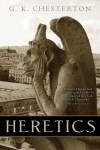
Chesterton told us, “People wonder why the novel is the most popular form of literature; people wonder why it is read more than books of science or books of metaphysics. The reason is very simple; it is merely that the novel is more true than they are” (p. 82). As a person who has come to learn a great deal from works of fiction, I believe Chesterton was arguing that novels tend to reflect human nature and real life more accurately than specialized scientific or philosophical texts.
By saying the novel is “more true,” Chesterton meant that it captures the complexities, contradictions, and subtleties of everyday human experience in a way that abstract theories or factual accounts might not fully do. Essentially, novels resonate with us because they mirror the genuine messiness and richness of life, making them highly relatable and understandable to our own messy and unpredictable lives.
Chesterton went on to say, “But in order that life should be a story or romance to us, it is necessary that a great part of it, at any rate, should be settled for us without our permission. If we wish life to be a system, this may be a nuisance; but if we wish it to be a drama, it is an essential.” He was reminding us that for life to feel meaningful and exciting, like a novel, some aspects of our lives need to be beyond our control. While having a predictable, orderly system might offer comfort, it can also make life feel dull or monotonous. We need to embrace the unpredictability and surprises, that are outside our influence. These unpredictable moments, while sometimes unwanted or inconvenient, turn our lives into a vibrant story.
While it is important and necessary to have goals and plans we need to remember some things are outside our control and impact our stationary life goals. Many look at their life and career as moving up a ladder. I have always said it really is more of a lattice. Imagine life without some surprises. While we will never know exactly what that would be like, I have to believe it would tend to feel tame and unfulfilling. Life would certainly lack the fiery possibilities that arise from facing the unknown or overcoming obstacles.
 Byron's Babbles
leave a comment