Leading With Jollity

My dear friend, Christine Benson, who is chair-elect for the National Association of State Boards of Education (NASBE) has introduced me to a new piece of culture: The Planets. This work took three years to compose (1914-1917) by Gustav Holst. Basically, the composer attributed characteristics to the seven planets of Mars, Venus, Mercury, Jupiter, Saturn, Uranus, and Neptune. Christine told me that I reminded her of Jupiter, the bringer of jollity. She told me that as the round-faced cheery uncle of all the planets, and king of the gods, Jupiter is impressive and majestic. I guess I lead with jollity. I love the fact that Holst was a student of astrology and horoscopes in the context of the planets inspiring music.

One description of the musical representation of Jupiter was that it took us on a whirlwind of emotions which was full of climatic passion, zeal and triumphant feelings. I was beginning to understand where Christine was coming from thinking this described me. With Jupiter, the air is full of life, joy, heroic and majesty. Jupiter brings jollity and is an up-lifter because it signifies happiness and abundance, expansion and brings a disposition of mirth, joyousness, hopefulness and trustworthiness, expectant and confident, and a desiring for devotion through service. Jupiter also transforms the mercurial, logical mind, bringing wisdom and understanding which promote nobility of thought and aspiration.
To immortalize my jollity, Christine had a caricature done representing me. I especially love that she had the artist do it using images she screenshot during Zoom meetings and things I have talked and mused about during meetings. This just goes to show that we really can get to know each other well in a virtual setting. That has been a silver lining of the pandemic that I do not want us to ever lose sight of. I love the substantive conversations in the virtual world that come from making a real connections with those who we are on line with. The power is always in the dialogue. It is about being human no matter whether we are in person or online; the power in interactions is to take time to truly and more deeply understand what each other is experiencing. Over the past couple of years we have created new patterns and rituals together. These new patterns and rituals bring a sense of structure, unity, and collaboration. Understanding what matters most to us and discovering who we might become, and then help as a result, is the real work of our lives. Let’s approach all this with jollity.
The Proof Of The Pudding Is In The Eating

As a person who lives by metaphor and idiom, I love that English is a language rich with imagery, meaning, and metaphor, and when we want to express ourselves we can draw upon a catalog complete with beautifully turned phrases, drawing from the language’s Latin, French, and Germanic roots. I was reminded of this last night when presented the most beautiful piece of cheesecake I had ever seen (see featured photo). When I said this, the person giving it to me said, “Well, the proof is in the pudding.” Then he immediately said, “What does that mean, anyway, the proof is in the pudding?” Umm…let’s see. I believe this might be an idiom.
So I guess this phrase originated in 1605 as a proverb that went, “The proof of the pudding is in the eating.” That actually makes much more sense, don’t you think? At least now I don’t think I have to dig in pudding looking for a proof – I was having awful flashbacks from geometry class in high school.
I believe understanding this phrase is pretty simple: It doesn’t matter how fancy the decoration and presentation, the true test of a pudding is in how it tastes. In other words, success of something can only be judged by putting it to its intended use or experiencing in its final form. It’s all about results.
Leading Like A Orchestra Conductor

A few weeks ago I got a very nice complement (in the form of a tweet) from Lauren Berry, a participant in one of my leadership development sessions that said, “Fireside chats and pumpkins galore! This crew had a blast reflecting on our time with the #NEI3DLeadership program! The biggest shoutout to @ByronErnest as our fearless leader. We have learned so much from you!” This tweet meant a great deal to me and I responded, “Words can’t express my appreciation for your tweets. Thank you! I am merely the conductor guiding the performance, not making it happen, not bringing it into being – YOU & the others in your cohort are making the beautiful music that makes these gatherings so special.” Then I got to thinking, as I always do, shouldn’t we be striving to be conductors instead of leaders?

I heard it said once of orchestra conductors that the music flows from the pages through them, they are avatars of a bigger purpose, conduits of a bigger collective goal. The idea of being conduit is also huge for me. Think about that metaphor: a conduit is something that channels or conveys something. Think about water or electricity being moved to everyone who needs it. That’s what I strive to do. Help everyone be better conductors of their orchestras (aka organizations). I hope your catching all of this play on words. But, it’s really not just words; we are on to something here.
Back to our conductor. They don’t tell the musicians how or what to play, they set the pace, cue them in, and guide. They do not bring the the beautiful music into being or make it happen. They are merely the conduit. The conductor has a premium vantage point to help bring about optimum collaboration of the entire orchestra.
Great conductors let the performers thrive in a framework that evolves as the composition progresses. The conductor is only a part of a magnificent performance. They have helped bring out the talent of every musician and cued in every resource with perfect timing. Then after taking a quick bow to the applauding audience, diverts all credit to the musicians in the orchestra (watch a conductor sometime). Are you leading like a conductor?
Being Kind

I am continuing to learn from my reading in The Lincoln Highway by Amor Towles. There has been so much talk and many articles written about kindness in the last year. Additionally, there has seemed to be a great deal of hypocrisy where organizations, companies, and leaders would be lauded one day for acts of kindness and be reported for being unsafe the next. Or, articles about kindness is more than providing for basic needs, the lowest wage possible, or most bare bones of benefits. One thing is clear: being kind is necessary and the right thing to do. It’s even a bit intriguing to me that we even need to talk about it, but here we are.

We’ve all seen the buzz word ridden definitions of kindness that people/leaders love to give. You know, the ones that have words like considering, balancing, satisfying needs, fostering group well-being, innovation, potential, and productivity. What? It’s got to be simpler than that. It is! A character, Sally, in The Lincoln Highway likes to make strawberry preserves using the recipe and technique taught to her by her mother. When asked why she goes to the hours of hard work to make the preserves when you can go to the store and buy a big jar for 19 cents (the novel takes place in the 1950s), she says because she can and precisely because it takes so much effort. She explains she does it because it does take so much labor and it is a kind thing to do.
Furthermore, Sally defined kindness as being “where necessity ends.” Let’s read that one more time: “For kindness begins where necessity ends.” Now there’s a definition we can understand. If we let that sink in it’s pretty basic – kindness kicks in after basic necessities are met. Kindness is also a part of our everyday interactions.
As it also asks in the book, “For what is kindness but the performance of an act that is both beneficial to another and unrequired?” To me that puts a whole new light on kindness. Sometimes we pat ourselves on the back for being kind when really we’ve just begun to provide for necessities. Let’s not ever forget this lesson: kindness begins where necessity ends!
Picking Your Moments

I just started reading the incredible new book The Lincoln Highway by one of my favorite authors, Amor Towles. As a believer in the importance of storytelling as a skill, reading an Amor Towles’ book is like taking a clinic. Besides becoming completely engrossed in his books, I become very reflective and end up learning a great deal about myself.

A line in the book already jumped out at me: “Sometimes the moment is picked for you.” I tell leadership development groups I work with all the time that we sometimes forget that we need to control the clock. Think about it; the best coaches control the clock from beginning to end. You might be thinking how does the moment being picked for you translate to controlling the clock. Well, it means using that moment to the fullest. This means we need to keep our attention focused on the present. One thing is for sure, whatever we are attending to in this moment will change. This change could give us the opportunity to practice accepting whatever it is that will emerge in the next moment. There is wisdom in cultivating acceptance.
I heard it said once that the reason we can fully appreciate sunsets is that we can’t control them. But, even though we can’t control when sunset happens each day (the moment is chosen for us), we can plan to be standing on the beach at the right moment to experience its glorious moment. So remember, make the most out of those moments that are chosen for you.
Leading FOR Others

I had the chance to go visit three Indiana schools this past week and see some great things happening for students in our state. I visited the International Soccer School of America, Stable Grounds, and Millersburg Elementary Middle School. I love getting out into schools and seeing programs that I have not visited before. This is an important part of my own development as a citizen leader and being part of the Indiana State Board of Education. It is impossible to understand others and build relationships without taking the time to visit and listen. At all three stops I saw communities of people who were innovating to serve our young scholars. They were meeting them where they were and preparing them for the future they choose.
When we lead as a community we foster an environment for inspiration, success, trust, and teamwork. I want to lead FOR others, to provide thought and care, develop strong relationships, support others in their own successes and consciously act with integrity. When we develop as leaders FOR others, we grow in grace, understanding, and self awareness.
Being Childlike

The other day during a Zoom meeting I said that I thought that I had matured a little over the last year. Then, one of the participants said, “Well, just don’t quit being childlike.” I thought about that and actually wrote it on my notepad. Now, as I come back to that note I guess I look at being childlike having all to do with growth, curiosity, and feeling free enough as individuals to be ourselves without unduly formed restrictions. Those things really have nothing to do with maturity and all to do the positive qualities related to children. Things like innocence, trusting, unguarded, or being vulnerable like a child. It also means taking off the many masks of propriety imposed within our society that limit our creativity and sense of exploration. I do allow myself to play, and to be silly.
I probably wouldn’t have written a blog post about this, but when reading yesterday in Mo Rocca’s awesome book, Mobituaries, yesterday he wrote that someone had described Sammy Davis Jr. as being childlike, not childish. This made me think more about the difference. Sammy certainly was fun, relaxed, spontaneous, creative, adventurous, and silly. At the same time that he was entertaining us he was doing a lot of great things in the world. Certainly not childish behavior. Childlike, yes; childish, no.
Therefore, being childlike has everything to do with growing, being curious, and being ourselves without those unduly formed restrictions that society wants to place on us. I sure hope I don’t grow out of being childlike!
Work The Problem

I love the phrase, “Work the problem.” I’ve heard some of my military trained friends use this phrase. To me it means not sticking our heads in the sand and ignoring the problem or hoping it goes away. It also means we won’t guess. As Gene Kranz would say, “Work the problem. Don’t make it worse by guessing.” What he was saying was that to work the problem we need a firm understanding of the complex puzzle and what’s going on to work the problem.
Let’s also not forget in The Martian when Mark Watney, was stranded alone on Mars. My favorite quote from the movie after him having the mantra of working the problem was, “You begin. You do the math. You solve one problem, then the next one and then the next one. If you solve enough problems, you get to come home.” It’s kind of like making a puzzle; one piece at a time.
To work the problem we need to define the problem or challenge. Then we need to determine the desired outcome. For Watney, it was coming home. Information and research gathering comes next, followed by the most important part: the game plan. Then we go from working the problem to working the plan.
Every Voice

I must say I am pretty impressed with the newest FBI show “FBI International.” The characters and character profiles did it for me. I was particularly drawn to the team leader, Scott Forrester played by Luke Kleintank. It was explicit in the shows script that he had picked an elite team with every person being selected for a reason and their specific strengths and skills. That got my attention – the writers want us to see him as an outstanding leader. Then, two lines in the episode I watched last night really jumped out at me and were reminders of great leader traits.
The first was early in the show after a team member had given a dissenting viewpoint to Forrester, which led to some discourse, and Forrester giving his reason for disagreeing. The dissenting team member was new and wasn’t sure how to feel about the interaction. Another member of the team pulled her aside and told her that Forrester was the type of leader that valued the team and wanted “every voice in his ear.” He wanted and needed to hear from everyone. Every voice on the team mattered. Every dissenting view mattered. Forrester was not worried about being right, he was worried about getting to right. So many poor leaders want to look smart and don’t want to hear views contrary to their own. Forrester reminded us we need every voice in our ear. BTW: it turned out the team member was right and he was wrong – so glad they wrote it that way!
In another scene, another team member brought Forrester an idea that might be a long shot to pursue. Forrester said, and I love this, “Take that wherever it goes.” Is that not just the coolest response ever? He had just given the team member full empowerment. It no longer mattered if it was a wild idea or not. The team member could fully invest. Giving team members this kind of freedom, without risking ridicule or reprisal, frees them to consider ideas and approaches that might otherwise go unexplored.
Great leaders encourage and development the ability to scrounge, forage, and rummage for ideas. We must learn to search everywhere for available ideas. Are you letting your team members follow their ideas? Or, are you letting their voices in your ear?
Leading Like Charlotte’s Web
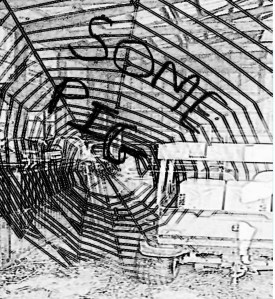
You all know I love intersectional learning, where I, or I have others, take a random object and create meaning about a seemingly unrelated topic. I never thought that a spider web would lead to the unbelievably deep conversation it did with our Florida 3D Leadership participants last night. To get things started for the evening, I asked them to look at a picture of a spider web I had come across in my barn to the journey they are on right now. When our small groups came back from their discussions I could tell from the energy it was going to be an amazing evening. When the first group started to report out, the participant said, “I loved my group.” Those of you who have facilitated before know how good that sounds and feels.
The participant went on to say that Lauren Berry, Curriculum Resource Teacher at Collier Charter Academy in Naples, Florida, had thought of all the lessons from Charlotte’s Web. You know, the 1952 classic written by E.B. White and then turned into a great movie in 2006. The genius of White’s work was that he used a deceptively mundane and ordinary setting, set of characters, and plot to explain the profundity of life in ways that people of all ages can understand. The perfect definition of intersectional learning! Without knowing it I had spurred this deep discussion with something as mundane, but incredibly complex, as a spider web – in a barn of all places.
So, what did Lauren and her group teach us? First of all, to sum up a 184 page book in a couple of sentences, Wilbur, a pig given to a little girl, Fern, yearns for companionship but is snubbed by the other animals. When he finds out he is be raised for slaughter he is befriended by a barn spider named Charlotte, whose web sits in a doorway overlooking Wilbur’s enclosure. Here are the points that Lauren and her group made to us:
- Friendship and relationships are at the core of everything. Charlotte said, “After all, what’s a life, anyway? We’re born, we live a little while, we die. A spider’s life can’t help being something of a mess, with all this trapping and eating flies. By helping you, perhaps I was trying to lift up my life a trifle. Heaven knows anyone’s life can stand a little of that.” Life is precious, wonderful and beautiful, especially when it is well-lived.
- Celebrate diversity. Wilbur and Charlotte are very different, but friendship makes it possible to transcend those differences. Even Templeton the Rat, the self-serving one even learns to be a team player (sorry, I couldn’t help but put the rat in the mix, too).
- Wilbur was humble. “Why did you do all this for me?” Wilbur asked. “I don’t deserve it. I’ve never done anything for you.” “You have been my friend,” replied Charlotte. “That in itself is a tremendous thing.” People respond well to humility because it shows that you place yourself at the same level as others, and not above them.
We were so blessed to be reminded of this story last night. My hope is that we will always keep in our hearts the lessons of friendship, life, and loss that will help us navigate through our lives to be better leaders, friends, and people in this diverse world.


1 comment