Alternative Truths
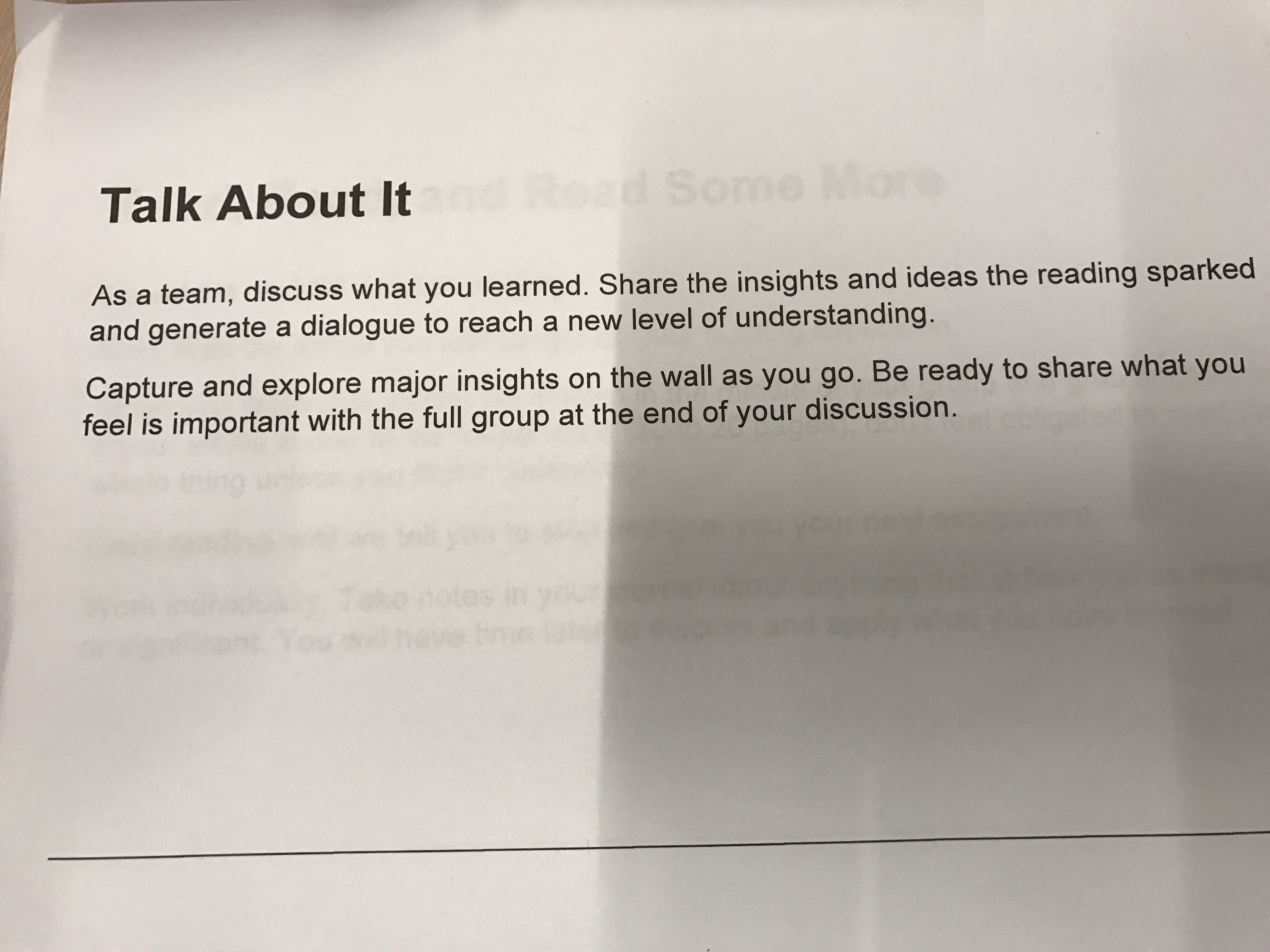
 This past week I had the opportunity to do an awesome activity with members of The Value Web at their annual gathering. We were all given the task of picking an article that we had individually read in recent months that was impactful to us. We were then instructed to send the link to the article to our facilitators the Friday before the event. Then, yesterday all the articles had been printed out and pinned to boards. Then we went on a hunting expedition to find an article (not our own) that we found intriguing and interesting. We were instructed to get into groups of six. We were then given the Read, Read, and Read Some More protocol to carry out. I have posted the protocols here: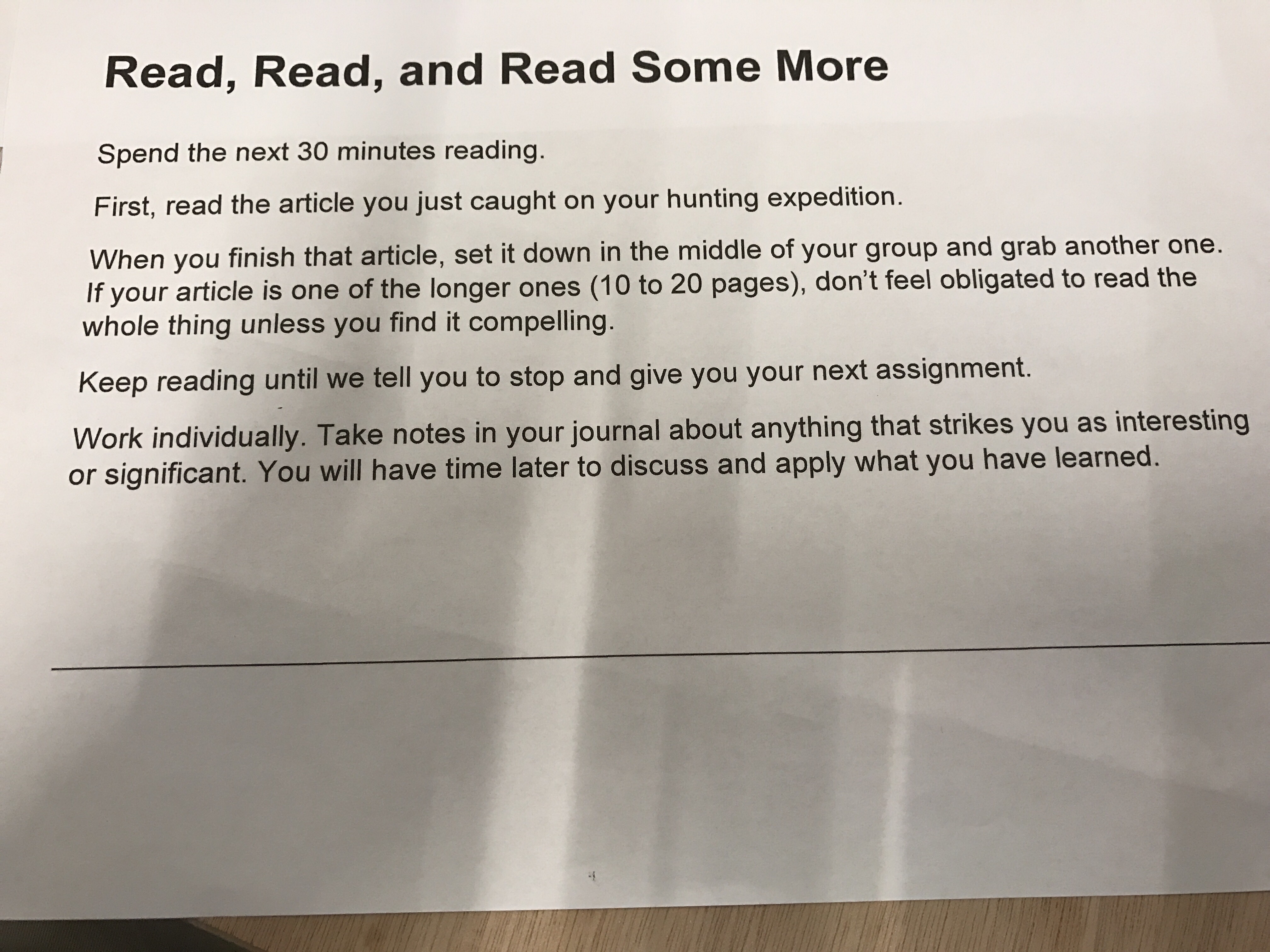
Of course, the article I sent in was by Peter Block and entitled, “You Are The Guest.” Click here for the link to that article. The article I picked for the activity was “Why bullshit is no laughing matter” by Gordon Pennycook. Click here to read that article.
Interestingly, in our group of six the discussion using the Talk About It protocol revolved around the idea of “bullshitting.” You can see a graphic recording of our discussion, here:
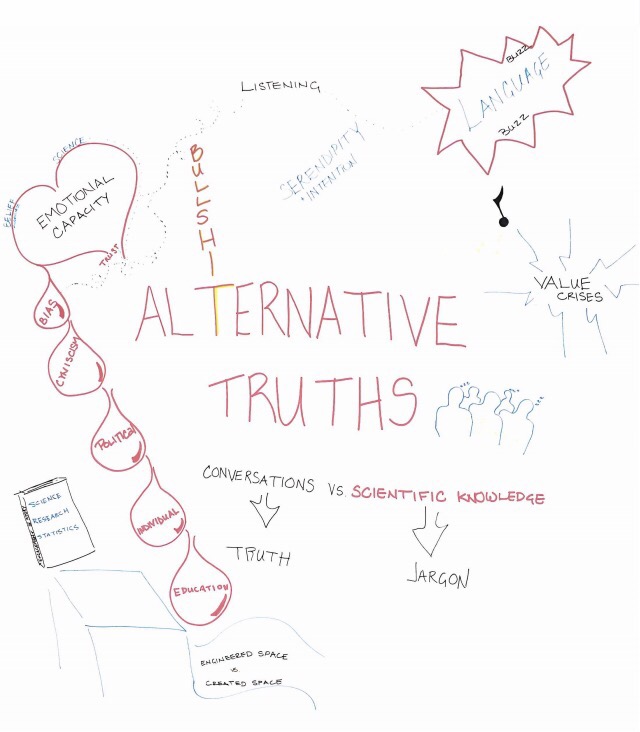
Graphic Recording By Jessica Browdy
We had a great discussion. Here are some points that really resonated with me:
- Conversations leading to trust are more valuable than scientific knowledge leading to jargon
- Letting serendipity occur and create space is more valuable than engineered space
- Be intentional to create space for serendipity to occur
- We must build our emotional capacity to balance science and our beliefs to create space for trust
- We live in the age of information, which means we live in the age of misinformation
- It’s easy to bullshit – impress rather than inform
- For the bullshitter, it doesn’t really matter if she is right or wrong. What matters is that you are paying attention
- Many will rate sentences with buzz words as more profound than sentences with clear meaning
We also discussed how opportunities arise that we don’t consider, some objectives fall short and some exceed our wildest expectations. We spent time talking and thinking about how many times we have achieved success and realized that it is a combination of a great strategy, solid execution and serendipity. Serendipity is defined as “An aptitude for making desirable discoveries by accident.” Pretty straight forward and I’m sure we can all think of many instances in our lives that came about in this very way.
Then we discussed the need to incorporate into your strategy a process to create and take advantage of serendipitous moments. Sounds like planning for accidents, right? We clearly cannot plan for all of the unexpected opportunities that may come our way, but what we need to do is analyze the unplanned opportunities that come out way and search for a pattern of some sort. We need to figure out the commonalities and devise a strategy that increases the chances of the random becoming less random, possibly even somewhat predictable – serendipity.
If we acknowledge that chance and circumstances beyond our control often do play a part in our success and allow ourselves to open our eyes to more opportunities whether we planned for them or not, we will create more serendipitous space.
Imaginal Leader Cells
Graphic Recording By Kelvy Bird
Yesterday I had the distinct honor of spending the day learning with The Value Web. One of the discussions involved the work of Imaginal Labs and the work of Carolyn Buck Luce and Rob Evans. When first seeing the word “imaginal” my thoughts were drawn to “imagining” or having an “imagination.” I quickly learned, however, “imaginal” is a biology term. The imaginal cells and the Blue Morpho Didius Butterfly 🦋 were the inspiration for Imaginal Labs.
I am way over-symplifying here but basically imaginal discs (cells) are what allow the caterpillar to metamorphosis into something completely different – the butterfly. Once a caterpillar has disintegrated all of its tissues except for the imaginal discs, those discs use the protein-rich soup all around them to fuel the rapid cell division required to form the wings, antennae, legs, eyes, genitals and all the other features of an adult butterfly or moth. The imaginal disc might begin with only 50 cells and increase to more than 50,000 cells by the end of metamorphosis.
So, when thinking in terms of “imaginal” it is about creating new ideas and concepts of things that do not yet exist. As leaders we must do this at times. We must also be able to use our “imaginal leader cells” to iterate or metamorphosis the innovations and creations of our organizations. I like the way the Imaginal Labs puts it:
“We believe that courageous leaders are the Imaginal cells within their organizations to help them transform to meet the challenges of our times.” ~ Imaginal Labs
Are you an Imaginal Leader?
Kaleidoscopic Adventure
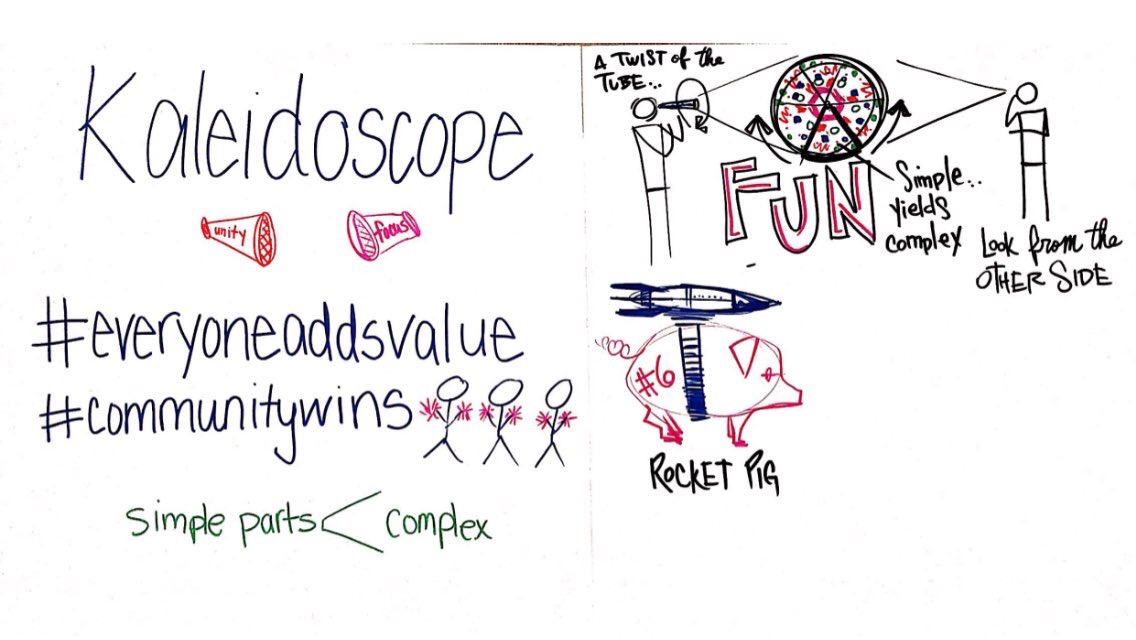 Yesterday, we had our annual Focused Leader Academy (FLA) Summit where Cohort #2 graduated. Our Focused Leader Academy (FLA) at Hoosier Academies Network of Schools provides leadership skills the ability that are flexible and relevant no matter the situation and time. We want to inspire with valuable and effective methods for assisting our teacher leaders in discovering what they need to become focused and disciplined leaders. Over one hundred were in attendance because Cohort #1 and our newly selected Cohort #3 were there too. Additionally, we have each FLA member’s significant other in attendance as well. I dubbed the theme of the day to be: “Kaleidoscopic Adventure
.” We have used toys as through-lines all year and I thought it only too appropriate to use a kaleidoscope for the finale. Of course I gave everyone their very own kaleidoscope. We started with an activity of looking through the kaleidoscope and the thinking about what words they would use to compare the view through the kaleidoscope to their personal leadership journey. Ann Semon set up a text poll for us. Here are the results: 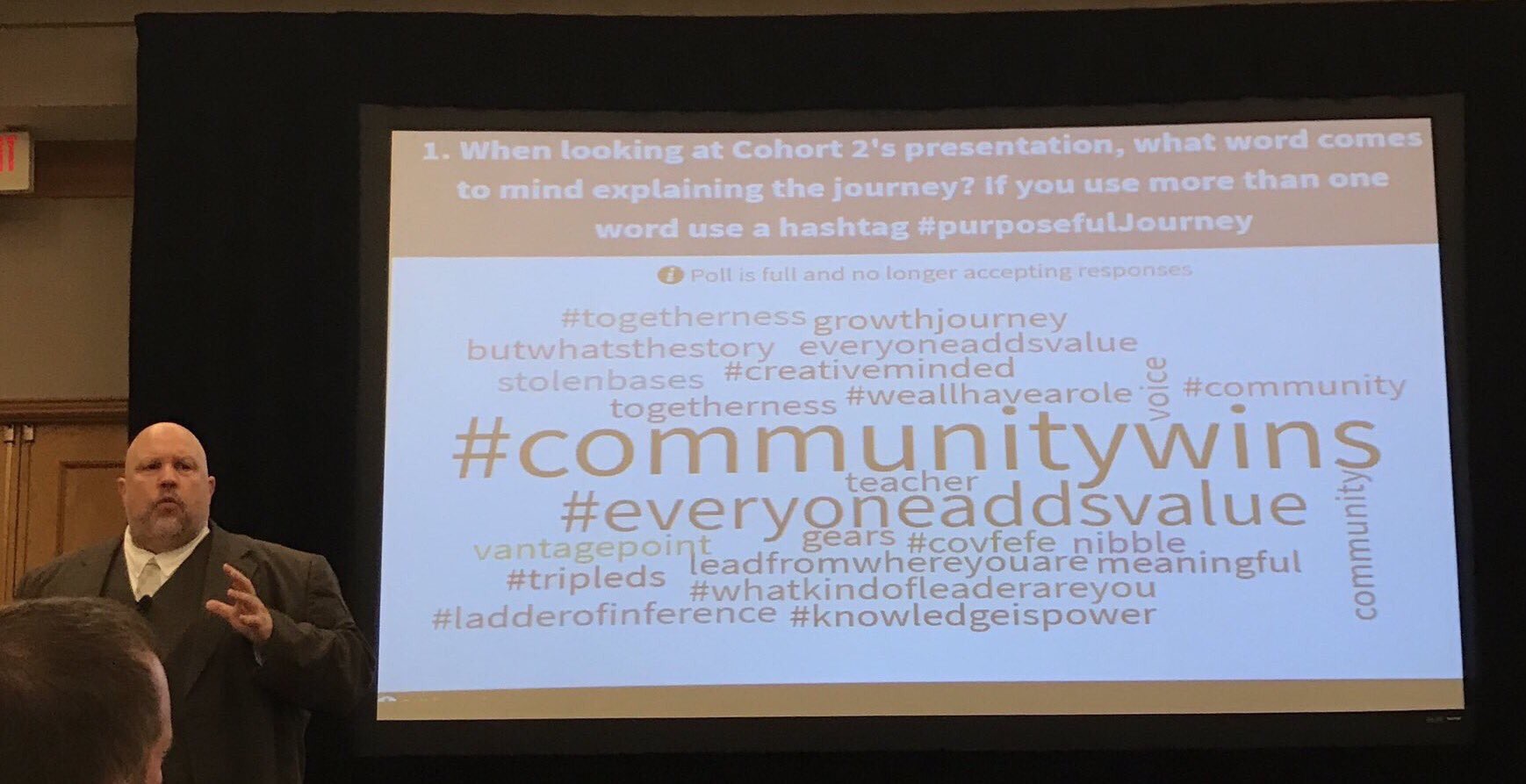
Our adventure has been like that of a Kaleidoscope – colorful glass pieces or prisms in the end of a Kaleidoscope, the core characters don’t change, but can be moved around to fit the needs and personal development of team members in order to deliver great experience.
Additionally, we can use the same Kaleidoscopic through-line to describe the complexity of a school – enchantment, mercy, grace, trust, generosity, ease, truth, alliance, learning, and passion.
Our schools are like giant kaleidoscopes:
- Schools are always moving, ever changing, and made up of simple parts that have highly complex results.
- They are beautiful because of the “dynamic complexity” that takes place every minute.
- Even with the same common elements – hallways, desks, students, schedules – no two are exactly alike and they are beautiful because of their uniqueness.
- When you look at them from the outside, they are relatively simple. When you view them on the inside, they are amazingly complicated.
- Kaleidoscopes are fun and meant to be shared!
Then sometimes I think we need an inside-out kaleidoscope—a de-fragmenter— this might be useful for looking at a fractured order through a lens of unity. 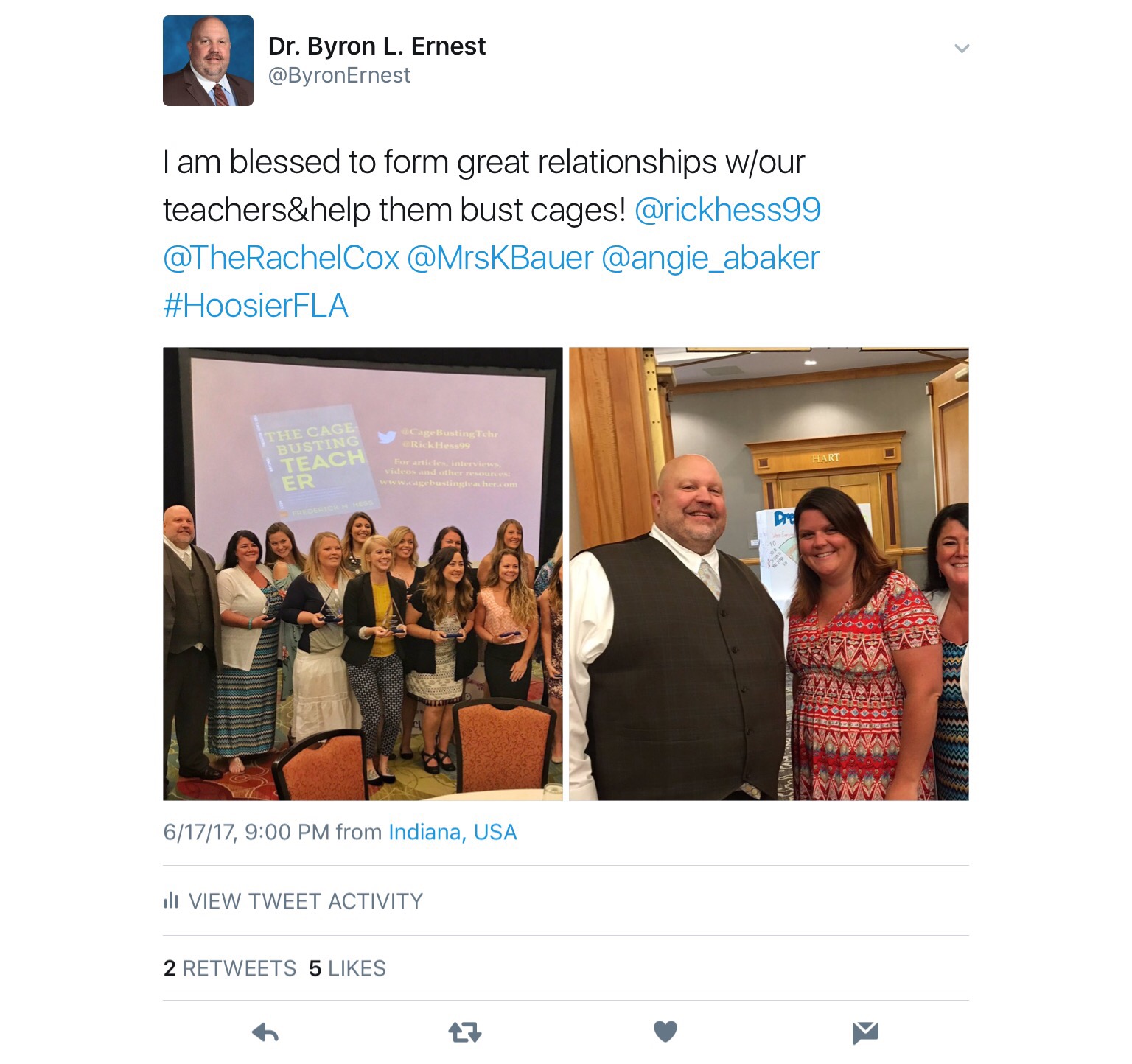
For me personally, yesterday represented a spin of the Kaleidoscope. A new Cohort of beautiful pieces come into FLA, and the view gets even more complex and beautiful. Yesterday I tweeted that I was blessed to be able to form great relationships with our teachers. I mean that, and it is very important to me.
School leaders need personalized care. Remember, I believe everyone is a leader. Therefore, everyone in the school needs personalized care. When I personalize the care, I come away knowing my leaders better, sensing their concerns about the school, education, and about their own lives. I believe in the fundamental strategy of personally training individual leaders, particularly teacher leaders, to be the key for a strong, healthy school with effective leading of learning and family engagement. Many times we rationalize that the teacher leaders are too busy with their jobs and families to spend time with us. But the truth is, we are allowing ourselves to be swamped with the immediate and losing our priorities.
Cultural Paths
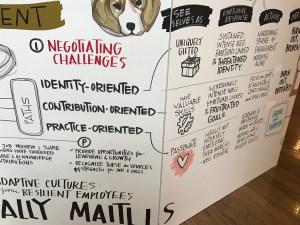 Another thought process around adaptive cultures that I pondered during this past week’s Learning Innovation Lab 2017 Summit was cultural paths of employees and team members. This was such a deep thought process for me, as a person who believes in intent-based leadership and making sure employees are fully developed. The philosophy is that there are three cultural paths:
- Identity Oriented
- Contribution Oriented
- Practice Oriented
As I began studying the Sita Magnuson graphic recording of the session, I realized that two of the identities that I had always thought led to great cultures in teams can really be detrimental over time, particularly if not complimented by a Practice Oriented culture. After reflecting, it really makes sense that in the long haul a practice oriented culture will keep team members and employees growing and flourishing. 
With Identity and Contribution Oriented cultures employees can become burnt-out, broken, and defeated. The problem is that with Identity Oriented cultures, individuals who are uniquely gifted end up working alone and having threatened identities and working alone. With a Contribution Oriented culture each individual has valuable skills and the focus becomes all about focusing on opportunities to innovate and lead change. While these things all sound good and most of us have probably been part of these types of cultures, when you begin to analyze and way these orientations against that of Practice Oriented, we realize there is a better way.
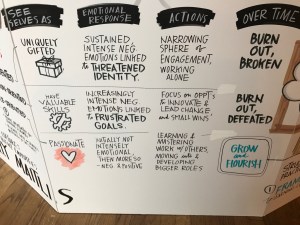 What I found when pondering a Practice Oriented culture was the theories that I really believe in in organizational leadership. A Practice Orientation really revolves around developing employees in real-time while actually doing work that matters for the organization. Developing this way enables learning and mastering work with others. It enables team members to be doing important work that really matters for the organization. In this way, employees grow and flourish while actually doing the work.
While at first the differences might only seem like semantics, at closer inspection I found that the differences have major implications to the organization. Identity and contribution are important for sure (in fact we should find way to help people on all paths), but without actually considering the real-work of the organization and intentional development of the employees while actually engaged in that work, they lack the important opportunities for learning and growth. These are the key ingredients to keeping employees engaged and from becoming disenchanted.
Adaptive Cultures
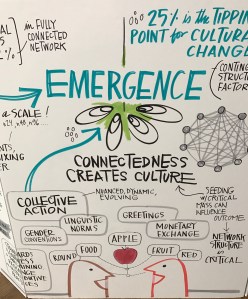 I began a new journey of learning today and let me just say it was awesome. Today I became part of the Learning Innovations Laboratory (LILA) at the Harvard Graduate School of Education. I have been watching and admiring the work of this group that is a consortium of leading researchers and practitioners in the field of organizational learning and change. To be asked to be part of such a distinguished group in very exciting. I certainly admire the mission of this project of: Bringing together the leaders of organizational learning to develop a greater understanding of the field’s current challenges. Today I attended my first session which was the 2017 LILA Summit. This event, which was held at the American Academy of Arts and Sciences, was the culmination of the work done this year around the topic of Adaptive Cultures. Next year’s topic that we will be studying was announced today and is: Emergence In Organizations: Shaping The Future As It Unfolds.
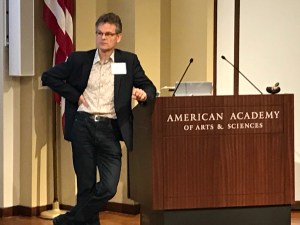
Gert Jan Hofstede
I want to reflect here on a discussion we had as a small group at the end of the day today that was on the question: How do we get from cultural practices to cultural values? This question was posed by Gert Jan Hofstede. Gert is a Dutch population biologist and social scientist in information management and social simulation, interested in the interplay of the contrasting forces of cultural evolution, societal change, and cultural stability. Bottom-line, he is a genius and I was excited to be learning from him today.
I must admit, however, when I first heard his question I thought he had it backward. Don’t we need to get our cultural values straight first, then get the practices in place? But, as the discussion ensued I realized I was wrong. In most organizations and social structures there are already cultural practices in place. So, there must be a matching, shift, or discover of values in order to get practices in line with values. We used a small group sharing best practice of each telling a story from our own experience. I told the story of my own school network and how a new culture needed to be developed where basically a free for all of everyone doing their own thing with no real direction had existed.
Furthermore, I told how we used teacher leaders in concert with stakeholders to develop a guiding set of core values. I even mentioned how I believe the statement “students first” in many ways hurts education. I cannot count the times I have heard someone answer “students first” to the question of how to do something or how to develop a process. Let’s be clear here, “students first” is a core value, not a task or tactic. Just saying “students first” without a process does nothing. In fact, it probably does more harm. Now, please understand I do believe in the core value of “students first,” but we must have the cultural practices in place to do just that. That’s why I now have grown to like Gert’s original question of how to get from cultural practice to cultural values.
In this example, we really started over by developing the cultural values and then building the processes to be in line with the cultural values. A point made by Gert that really resonated with me was that we have to watch make our cultural values banners that we fly to answer everything, like my “students first” example with know real cultural practices to support the cultural values.
Another key point that came out of this discussion was that in an organization cultural practices are more important than values. As a believer in having core values and making decisions based on these values I had to get my mind wrapped around this. In the end, however, the group was right because without practices the values are just words spoken or written on a page. We need to look at cultural values as the drivers. These should drive our actions. Our values will also show our perceptions.
We then discussed others in the group’s stories. Some were more societal than organizational. Then the question of: Why do we bother? came up. It is tough because as Gert pointed out, “You can only surf on the waves of where society is going.” We discussed reframing the cultural values by looking at what the backdrop is. We also discussed this as a tactic when dealing with adaptive cultures. We discussed that there is a big difference between the cultural value of “saving the planet” and “preserving the natural landscape.” Sometimes we can, and do, have the same values, but are looking at them through different lenses.
We must recognize the fractal nature of culture – there are cultures within cultures within cultures within cultures. Additionally, creating a culture where we can interact a lot with a lot of different people is important. If we interact a lot, we influence each other. We have leverage with those we frequently interact with and they have leverage over us. The person(s) with the most diver set of connections will always make better decisions. Who talks to whom and who interacts with whom matters. For adaptive cultures we, as leaders, have to be around the edges nudging. We must also be humble and realize we do not know everything.


To summarize our small group discussion we did a cool activity and developed a tweet representative of our learning. Here is our tweet: “Values derived should drive cultural practices and then inform leadership.” #LILAculture17 What is driving your organization’s culture and informing you as a leader?
Tell Me Why I Am Wrong!
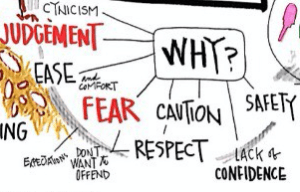 In his great book, A More Beautiful Question: The Power of Inquiry to Spark Breakthrough Ideas, Warren Berger discussed the idea that dissonance can be more valuable to leaders and organizations than resonance. We always think about jumping straight to buy-in or consensus, but the idea of having team members push back has tremendous value. I have always believed we should question the views of those with whom we disagree. We need to do this however with yet an open, curious mind. Berger suggested we ask things like: Why might they see the issue this way? Why do I see it differently? What assumptions are we each operating under?
I have always had two trade-mark questions that I like to ask when making decisions or trying to design new ways of doing things. These two questions are:
- Tell/convince me: Why am I wrong?
- Can you please talk me out of this?
These two questions have really served me well over the years. It is amazing how many great ideas I have gotten to improve the project or question I am grappling with at the time of asking these questions. The beautiful thing about these questions is that sometimes I am wrong, but many times I get just the right ideas to make something great or keep me from being wrong.
An example of this is a decision I just made official yesterday. As you know we have a program I started two years ago called the Focused Leader Academy (FLA). At its founding we decided to have 15-18 participants selected each year by an application and interview process. This would give us approximately 10% of our teaching staff going through this intensive leadership training each year. We just completed our second cohort and are ready to start Cohort #3. Well, we had 34 applicants, which is the most ever. Long story short, because of the many different complexities of our school, I had the wild and crazy thought of, “Why not accept all 34 candidates and have that many more great leaders developed in our school?” As you can imagine, there are many implications to making a decision like this. Not the least of which are: financial, keeping the experience special, logistics, group dynamics, and managing a group this size.
So, I literally started making phone calls to some of my most trusted people and former participants of the group and asked three things:
- What if we accepted 34 participants into Cohort #3 of FLA?
- Why would it be wrong to accept all 34 into Cohort #3 of FLA?
- Please talk me out of accepting all 34 into Cohort #3 of FLA?
I might add that I also randomly selected some of the applicants and asked the same three questions. I thought is was important to hear the feedback from those that would be most affected by my decision.
Here’s the deal: yesterday I sent congratulatory notes to all 34 and made Cohort #3 of FLA the largest of our history. Why? Because no-one convinced me it was the wrong idea. Most importantly, however, I got all kinds of great ideas on how to make it great with 34 participants. And… even more importantly, I got great advice on how not to let the experience flop with 34 participants. And… from my financial team we already have it figured out how to make it work from a financial standpoint.
I found it interesting that I had one group that was somewhat against at first and one individual that was adamantly against, but after long conversations with both they both came to the conclusion, and I quote, “You don’t have a choice; taking all 34 is the right decision.” Keep in mind these were just conversations sharing versions of ideas. It is about me hearing negative feedback and ideas, not me trying to convince. When entering uncharted waters, I (we all) need my assumptions challenged.
Here is one of my favorite excerpts from Berger’s awesome book that reinforces this idea of dissonance:
“In sharing early versions of an idea with the world at large, one is likely to receive negative feedback—which some people interpret as evidence of a failure. But that’s not necessarily true, says Harvard’s Paul Bottino, who points out that when it comes to feedback, “dissonance can actually be more valuable than resonance.” As people push back on your idea, it can be a good indication that you’re entering uncharted, potentially important territory—because you’re more likely to get negative feedback (“That could never work!”) on ideas that challenge common assumptions. “Dissonance is the most misunderstood kind of feedback,” Bottino says. “We really should welcome it and learn to make the most of it.” ~ Warren Berger in A More Beautiful Question
I love Merriam-Webster’s definition of dissonance: “lack of agreement – the dissonance between the truth and what people want to believe.” When I ask team members to tell me why I am wrong, I really want to know. I usually want to really believe something will work or be a great idea, but I need to know the truth about roadblocks and potential pit-falls.
Finally, I do not want you to leave this post thinking I am suggesting throwing out the important of resonance. Nothing could be farther from the truth. Resonance is the positive emotional affect of leadership. Those who are led by resonate leaders are in harmony with the leader’s emotions. Great leaders are effective because they create resonance. Resonance comes from the Latin word resonare, to resound. Effective leaders are attuned to other people’s feelings and move them in a positive emotional direction. They speak authentically about their own values, direction and priorities and resonate with the emotions of surrounding people. Under the guidance of an effective leader, people feel a mutual comfort level. Resonance comes naturally to people with a high degree of emotional intelligence (self-awareness, self-management, social awareness and relationship management) but involves also intellectual aspects.
Remember, we owe it to ourselves and our organizations, as resonant leaders, to model and allow for dissonance when incorporating Berger’s framework of asking:
- Why?
- What if?
- How?
Asking beautiful questions will enable us to lead beautiful organizations!
You Will Just Have To Accept This! Why?
 I have always believed we need to always refuse to accept the existing reality. I really believe this in our personal lives, organizations we work in, state, nation, and world. My thinking was affirmed when reading A More Beautiful Question: The Power of Inquiry to Spark Breakthrough Ideas by Warren Berger this past weekend. He told the story of Van Phillips. This amazing and inspiring story is about the person that invented the mind-blowing “blade runner” prosthetic device. When Phillips lost his leg in a boating accident, he could have asked the usual question. Why me? Instead he went further, asking “If they can put a man on the moon, why can’t they make a decent foot?” Then he took ownership of the question: How can I make a better foot? It’s easy, when we’re confronted with a challenge that seems insurmountable to ask “what are we going to do?” Or… worse yet, to just accept that is the we it has to be. What if, we ask, “why does it have to be that way. Or… better yet, what if, instead we asked “What if this change represents an opportunity for us?”
 In this great book, Berger, incorporates a wide array of examples and his three question framework of innovation: Why, What if, and How. Plenty of innovation has started with questions, many of which are downright strange. Warren Berger’s definition of a beautiful question is, “an ambitious yet actionable question that can begin to shift the way we perceive or think about something—and that might serve as a catalyst to bring about change.” We need to remember that questions trump answers, every time.
Great Leadership: Offering Up Something Better Than The Status Quo
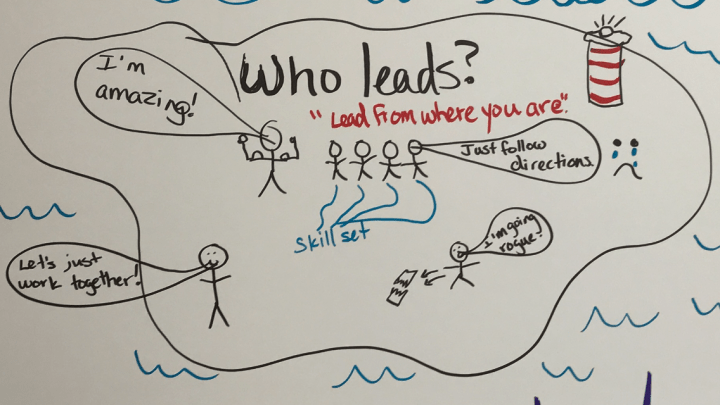 As a school leader it is my most important role to find the right solutions that are best for students. People will then buy into solutions that are developed collaboratively. I believe the staff will buy in if we offer up something that is better than the status quo.
In order to move the staff, a community of continual learning where everyone is a leader must be developed. The following are guidelines that need to be followed for effective adult learning and motivation to take place:
- Learning needs to be frequent and sustained over time
- There must be connected and coherent learning sessions
- Opportunities for teachers and staff to practice and reflect on new learning must be afforded
- Opportunities must be available to tap into expertise or prior knowledge
- Clear and reasonable objectives must be provided
- Adults need challenging tasks
- Respect of the risks involved in new learning need to be recognized; in other words, it is o.k. to fail.
- Choice and flexibility is important to adults
- Collaboration
- Regular coaching and feedback are provided
- Focus everything on academic content
- Letting staff problem solve will motivate them to learn
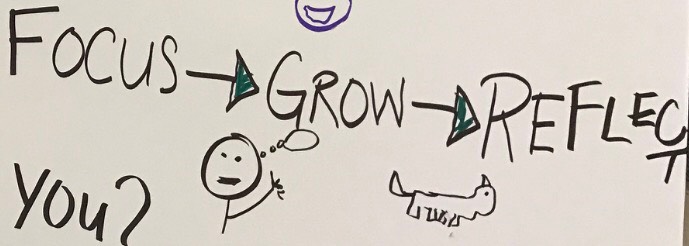
I believe two things will really help here:
- The notion of empathy – of really listening to your staff and understanding their views and what they need.
- The idea that innovation lives as much within the way you define problems as the way you generate solutions
Additionally, I believe in an intent-based leadership style where everyone is considered a leader. With this style of leadership, authority is shifted to where the information/data is generated. In other words, teachers would be empowered to act on both data and new thinking. But… for this empowerment to work there must be the professional development necessary to make sure that teachers have the skills necessary to utilize this empowerment.
These skills are two-fold:
- Technical Competency
- Organizational Clarity
We must feed our leaders by:
- Committing to leadership development
- Making it a priority to give professional growth time to developing leaders
Finally, it is crucial to treat all teachers as leaders!
This all really will produce a happier, healthier, and more engaged staff.
Loyalty: Leveraging Your Expertise
 I am a major fan and student of the late Peter Drucker. He certainly understood both management and how to lead people. One of my favorite quotes (and I have many) of his is, “Never push loyal people to the point where they do not give a damn.” Loyalty has long been valued by leaders. The problem is that many times organizations use and abuse this loyalty to stifle their best leaders into status quo or just going with what the organizations top leaders want to do, or not do.
Unfortunately, the more authoritarian and dogmatic the leader, the more they prize loyalty in their followers. Dictators, both political and organizational, love to surround themselves with “yes-men and women,” eager to prove their loyalty by saying whatever the person in power will find most acceptable. The pressure to fit into and organization led like this is particularly tough for the most talented and strongest leaders. Suppressing these unpleasant realities can be overwhelming. This, what I will call forced loyalty, stifles creativity and discourages people’s willingness to speak the truth about their leaders, themselves, their organizations, or their work. I’ve seen so many cases where too much unquestioning loyalty meant important issues were suppressed until it was too late. This is why I am such a believer in an intent-based and participatory led organization where questioning of authority (short of defiance), may be essential if we’re not to lose our way.
So, I believe Peter Drucker was warning us not to just force our team members to have blind trust and loyalty just because they work for us. I hate it when leaders say, “You are a part of this organization, school, or company so just be a team player and conform.” I believe this pushes team members to, as Drucker said, “not give a damn.” I say, “All the more reason for us to want to make improvements and challenge the status quo.” Particularly when these improvements and challenges are in line with the core values of the organizations. In an organization where divergent ideas and open dissent are encouraged, loyalty is actually increased.
Loyalty has become a very precious resource. Some organizations and leaders still excel at cultivating remarkable loyalty within their teams. Nobody likes to work for a phony. In past decades, it was more common for employees to tolerate insincere and ineffective leaders. What we really want are authentic leaders. We need to put a greater premium on authenticity. Authentic leaders can be counted on to say what they mean and do what they say. They’re the same person to their staff, their own superiors, their customers, and their partners. When you’re authentic, your words and actions align with who you claim to be. Your followers shouldn’t be compelled to spend time trying to figure out if you have ulterior motives.
How are you leading your team toward excellence? Are you authentic in your leadership? Do your words and actions align with who you claim to be?
Letting My Lite Shine
 A couple of weeks ago at one of our Focused Leader Academy (FLA) retreats I was asked by participants to do a session about how to balance the amount of personal information that should be mixed with our professional lives. This can be particularly tricky in education. Of course I said sure, but I had no idea how challenging of a topic I had taken on. As I began to study I realized that there was not much out there on the topic except for people who thought you should reveal everything and those who thought you should reveal nothing. I wasn’t sure I agreed with either of those theories.
 Therefore, me being me, I decided to develop my own program from scratch with all my own thoughts for getting the discussion started. I really like to use a through line and some type of building or creating to get the process started. After quite a bit of thinking I decided to use Lite Brite® as the through line and creation activity. I purchased one of the flat screen LED Lite Brites® for all the participants. Hopefully you can all remember the Lite Brite® toy and have had the opportunity to create a picture on one.
Mavin Glass introduced Lite Brite® in 1967. It was an electric alternative to painting. To me this was a genius toy to use for this topic. The black paper acts as a filter. Just as we have to filter out what we message/reveal at times. The filter element makes the picture worth a thousand words. The black paper which blocks a portion of the light acts as Lite Brite’s® filter. Without the black paper, the pegs poked in would blend in, leaving and indistinct message. It is not about letting all light out, but what light is limited. This is like asking the question: What is relevant and what is unimportant?
As leaders we must choose delivery design and place our pegs in a way people will understand our message. We have to design how much light to let through and design the picture in such a way it tells our leadership story. Remember, simplicity is not stupidity; instead it causes a better understanding. Lite Brite® is such a simple toy, but gives us such a great example of developing a balance of how much light to shed and how much of our true colors to reveal. The Lite Brite® bulb symbolizes our message – our thoughts, words, beliefs and ideas that we want others to know. The pegs then symbolize our points. Just as the pegs are colorful and beautiful, so are the differences that we bring into the world.
“It is simplicity that makes the uneducated more effective than the educated when addressing popular audiences.” ~ Aristotle
To begin our discussion I had the FLA participants take their Lite Brites® and make a picture by either using templates provided or a picture created by them. Here is a picture of all of their Lite Brite® creations: 
The participants then needed to describe why they did the picture they did and reveal something about themselves and their own leadership journey. This prompted an amazing discussion. I have included the graphic recording by Sita Magnuson here: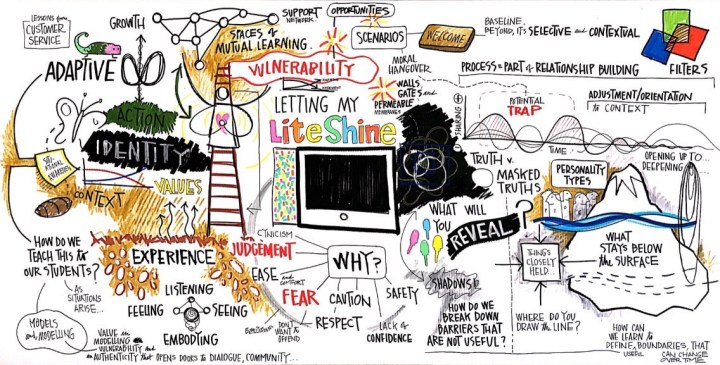
What Will You Reveal?
Your message won’t be bright if there is no light, but will chaos if all light is revealed. As a leader we need to take complex issues and deliver them in an understanding manner. We need to be adaptive leaders and make adjustments/orientations according to context. There is value in vulnerability and authenticity. This opens the door to dialogue and community. We decided in our discussion that knowing decreases judging. We need to experience feeling, listening, seeing, and embodying. We must decide what we will reveal and break down the barriers that are not useful. How will you let your Lite shine?


1 comment