Matthew 20:26 on Being A Servant Leader
 During today’s personal devotion time I came across the Bible verse of Matthew 20:26. It reads, “Whoever wishes to become great among you shall be your servant.” Pretty good Bible leadership advice to a guy who believes in and strives to Walk the Talk on servant leadership. In fact I have written many posts on this blog on that very subject. It is mind boggling for me to think about all of the people who have been a servant to me during my life, sharing unselfishly of their time, treasures, talent, and wisdom (advice) to get me where I am today. This Bible verse reminded me of how important it is for me to be a true servant leader to those around me, and most importantly, to those I lead.
If you think about all the skills you have that have enabled you to be successful, you can probably point to someone who enabled you to hone those skills. Even though I am far from being a great father, I had a great father that modeled what great parenting was. From the kisses on the forehead to the long talks about never giving up or just being average; these are all things that are on my mind when I interact with my own son. My own experience of becoming a teacher and my commitment to students can all be traced back to a servant leader at Purdue University named Dr. Hobe Jones. You can read more by clicking here to read my post entitled “You Want Me To Do What? Teach? There is not enough internet space in the cloud to hold all the anecdotes of all those who have blessed me with their servant leadership but I must include one other.
My abilities as a teacher leader and now administrator were enabled by a man named Ralph Walker. He was my supervising teacher when I student taught, then became my principal, and ultimately became my Superintendent at the school he recruited me to start an agricultural science program. The rest is history, so to speak, but none of that history, nor the present would be possible without his having been a true servant to my leadership development needs. There are so many others that I could go on and on about here in this post like Kevin Eikenberry, who has always been there as a mentor, friend, and coach and has included me in many events of his leadership business that have helped me to grow as a leader. Or, Dr. Tony Bennett, and my Mom who taught me at a very young age that “God never shuts a door without opening a window somewhere!”
Think of all the skills needed in life to succeed. All of us are in need of leadership in our roles as spouses, teachers, administrators, business people, salesmen, CEO’s, and as friends and family members. In each of these fields, someone who is knowledgeable, whether a professional or a wise friend, is of great value to you as a servant leader. The exchange of wisdom between people is an incredible event. Good advice, the fruit of experience, is a sweet deal to those of us who hunger for wisdom.
We cannot forget, however, our obligation to become a servant to others to provide that same wisdom those we lead hunger for. Always remember the leadership lesson of Matthew: “Whoever wishes to become great among you shall be your servant.” That’s pretty good advice from the ultimate leadership manual – The Bible!
Preparation!

What makes a good student? What makes a good athlete? What makes a team better than others perceive it to be?
If you ask any educator the first question, you might get four or five quality answers. The same can be said if you ask five coaches, what makes for a successful team?
However, if you are looking for a one word answer, I would offer the word preparation. Students who prepare make better grades than those who don’t. Athletes who prepare put themselves and their teammates in a better position to be successful.
The next time you are looking for that quick fix, realize there isn’t one. However, if you are looking for one way to get started, focus more time and effort on preparation!
Content from Billy Shepherd Sports Inc.
Lead Like A MacBook Pro!

I have written many posts about collaboration, flattened hierarchy, and the learning organization, but I got to thinking this week about another component of my leadership style that fits in with these concepts. The ease of use of the Mac and integrated nature of the applications. When we developed the SWELL (Smart Worldwide Effective Learning Lab) at Lebanon High School we switched to an all Mac operating platform. We were able to get the Apple folks to let us demo a set of MacBook Pros to see if they were what we needed. My idea was to combine project-based learning with modern tools like the Mac to help students develop the high-level thinking and skills they would need in today’s world.
I remember when the Apple representative was setting up the demo machines he made a couple of comments that would forever change my view on technology and leadership. He said: “With a Mac what used to take three or four steps with a pc will only take a single step with the Mac!” And he asked: “Do you want to teach how to use the computer or be project-based?” Of course I did not want to teach computers and the thought of a single step process was incredible!
Since this post is not really about technology it will suffice for me just to say that he was right and I could concentrate on teaching content, not computer applications. I wanted to measure learning chiefly by the quality of work the students create.
Because the Mac is so easy to use, even students new to computers were able to create projects that demonstrated their learning. And because using the iLife and iWork suites is so intuitive — with skills transferring easily across applications — students were able to showcase their projects in professional Keynote, Pages, and iWeb presentations that integrated text, video, and sound; in sophisticated movies edited in iMovie and Final Cut Pro; and in engaging podcasts and soundtracks created using GarageBand. The fact that steps are eliminated because of the integration of programs made it all very easy for the students to learn.
It’s just like an environment where employees are empowered to create, collaborate, and do their jobs. They are able to showcase their abilities without the barriers of hierarchy. As a leader I prefer to organize the world in a lateral fashion, seeing people on an equal plane. This enables an integration of everyone just like that of the applications of the MacBook Pro. I believe in a lateral playing field where everyone leads from where they. This enables everyone to do their jobs effectively without added steps of approval, but with the collaboration of others. Just like when I drag a picture directly from iPhoto into Pages. Both are independent programs with different roles and responsibilities, but integrate easily when needed.
The flat organization supervises employees less while promoting their increased involvement in the decision-making process; Just like the MacBook Pro needs less computer application knowledge and allows the user to be creative. It also removes excess layers of managements improves the coordination and speed of communication between employees; Just like the Mac platform involves fewer steps, fewer levels of management encourage an easier decision-making process among employees.
So, next time you sit down to the computer think about your leadership style. Do you want your computer empowered to carry out many tasks in the least amount of steps or do you want lots of hoops to jump through. Use this lens to think about how to empower those you lead to be the most effective.
The Pawn & The King

This morning during my personal growth time I was on twitter studying the #leadership tweets. I came across a tweet of the Italian Proverb: “After the game, the king and the pawn go into the same box.” Thanks @robertshemin for tweeting the proverb. I promptly retweeted and began thinking about how powerful the imagery of this was for a guy like me who firmly believes in a flattened hierarchy, leading from where you are, and the fact that it is not about me.
I must admit I know how to play chess, but I am not an avid player. Nor do I have any desire to become an avid player. In fact I really kind of find it a boring game, but that is beside the fact! I do know enough to know in a chess game, the king is the most valuable piece, pawn the least. That being said, i have played enough chess to know that if you do not have the pawns moving into the proper positions you cannot win. But once the game is over, both the king and pawns return to same box from which they were taken out.
So the first lesson I learn from this is confirmation on what I already believed to be true – successful organizations flatten the hierarchy. As Jim Collins stated in Good To Great, “When you have disciplined people you do not need hierarchy.”
Another lesson I draw from this proverb is that, in the end, all our achievements and rank should not be overvalued, since in the end, we all – go back in the same box. Even though we all hold different ranks, titles, and roles; in the end we are all the same. Therefore, I should never take advantage of my rank in terms of hierarchy at the expense of another, nor should I allow myself to be taken advantage of or undervalued by someone of higher stature. Because, as you have heard me say in many blog posts, I believe everyone has the responsibility to lead from where they are – regardless of hierarchy.
So as you start this last work week before Christmas, remember that every piece in your organization’s chess game is crucial to it’s success and at the end of the game they all go back in the same box!
Know When To Follow

I have always been a believer that we must lead from where we are. Everyone has a teachable point of view from which to contribute leadership to any opportunity. As a teacher, I always believed it was my responsibility to provide leadership for the school. For the last nine years of my teaching career I was blessed to have administrators who took my role as a teacher leader seriously. In turn, I took the role of providing street level situational awareness seriously.
Now, as a principal I realize that sometimes leading means following someone else’s lead and having others follow you down that path by supporting their efforts. It is about being in the middle of it, not directing, not dictating, and not doing it all. It is about creating leverage points, catapulting initiatives ahead and building people up in what they do and how they do it. It is about bringing people, actions, values, direction, and results all together to move forward! We must all get in the middle of the action when necessary to challenge, nudge, celebrate, and spur on teams and initiatives. It is not ceremonial lip service; it is real conversations, genuine acts.
One of my favorite things to say when making decisions in a collaborative environment is, “Tell me why I’m wrong?” And, if I am I want to know it! If we are to develop a functional learning organization it must be about facilitating open and honest discussions, putting reality on the table and actively working through it. We must all be about getting candid advice, absorbing it, and then acting on it. It is not malicious or spiteful, but it is spirited and critical to get the best information and counsel possible. I always want to know what our staff is thinking. They all come with tremendous teachable points of view.
Giving others the ability to lead from where they are is about giving people the freedom to innovate, create, and make things happen, aligned with the organization’s strategy, goals, objectives, and values. Along with the freedom to perform is the accountability to do the right things. It is not wishy-washy accountability; it is real, measurable accountability.
I strive to walk the talk by allowing our staff the ability to lead from within. I believe in having conversations with others – team members and mentors – to gain their perspectives, insights, and knowledge.
There is always room to grow and improve. The important thing is that we take the responsibility of leadership seriously. We must also remember to take this leadership role seriously no matter where we are in the organization. If you do, others will believe in you…that is the first step to creating the leadership rainbow others will follow to the pot of gold, which is a successful organization!
Notes On Servanthood

Yesterday I blogged a post entitled Rushmorean Servant Leadership Today during my study time I came across the notes I have pictured above. These notes were from John C. Maxwell’s The Maxwell Leadership Bible.
“Leaders add value by serving others” (p.814).
“Lead others by serving not bossing them” (p. 814).
“People don’t at first follow worthy causes; they follow worthy leaders who promote worthwhile causes. People buy in to the leader first, then the leader’s vision. Listeners filter every message through the messenger who delivers it. You cannot separate the leader from the cause he promotes” (p.286).
As leaders these are important points for us to reflect and act on!
References
Maxwell, J. C. (2007). The Maxwell leadership Bible. Nashville, TN: Thomas Nelson Publishing, Inc.
Rushmorean Servant Leadership

Christ’s Entry Into Brussels
James Ensor
I was prompted today to write about servant leadership; or really leading from where you are. Really I guess I am combining three important concepts to leadership here, but I believe they are not mutually exclusive. First, I believe leaders must be servants, not title holders. Second, I believe everyone must have the ability to lead from where they are, and finally, I believe we must use Christ’s model and lead from the middle.
Let’s explore my three thoughts. As leaders we lose the right to be selfish. Leadership is about serving others, not wielding power because of a title. Great leaders please others, not themselves. The great leaders I admire add value to others’ lives. We should also, as effective leaders, emulate Christ’s model. Finally, as a servant leader we must remain life-long learners and teachable. As the saying goes, “Leaders are Learners.”
Every day when I walk into school, I remind myself that it is not about me. It is about everyone else that I serve. My goal is to make myself the most dispensable person in the building. Imagine how effective our team will be if every person is empowered and has been given the personal, professional growth to lead, educate, and operationalize everything in our high school.
Additionally, I believe we must lead from where we are. I am a card-carrying believer that every person in our high school is a leader – from the person who empties the trash to the students, the teachers, and right to me. I learn from someone in those groups each and every day. Wheatley (2007) promoted a more unstructured style of leadership, which promotes self-organization. She contended that most leaders use control and imposition rather than a self-organizing process (Wheatley, 2007). I believe the more control is imposed on people and situations the more they are made uncontrollable. Wheatley (2007) considered self-organizing systems to have the capacity to create for themselves the aspects of organizations that we thought authoritarian leaders had to provide. Therefore, it is important for leaders to create a culture where individuals are free and the need to create is met (Wheatley, 1992, 2007).
We really need to move from leader-centered organizations to leadership-centered organizations. There must, in my opinion, be a sharing of leadership responsibilities. Schultz (2011) asserted that by flattening the hierarchy and moving toward a shared leadership model, positive outcomes result from a reciprocal influence between leaders and followers. This is the concept I mentioned as my third concept of Christ’s model of leading from the middle. Schultz (2011) recommended sharing leadership with others. This is really important on two fronts – 1. I want everyone in our organization to be empowered to provide leadership anytime they see a need; and, 2. I want to be leading from within right along side everyone, not out in front where I can’t see what is going on. From the middle I can help pull people along and can also help push. Effective leaders are hands-on and operational giving them the situational awareness necessary to be curious, learn, and take action.
I included the image of my favorite painting in this post – Christ’s Entry Into Brussels, by James Ensor. I was first introduced to this painting when I read Leading Change: Overcoming the Ideology of Comfort and the Tyranny of Custom by James O’Toole (1995). This book is displayed in my office as one of the top five literary influences on my life. In this book O’Toole introduces the idea of values-based leadership that he calls, Rushmorean Leadership. Based off of the leaders chiseled into Mount Rushmore. As O’Toole said: “I prefer to think of the four as the best representatives of a school of values-based leadership dedicated to democratic change” (O’Toole, 1995, p.21). It is important to think about how all four Presidents led: they listened to others, encouraged dissenting opinion, empowered authority to their subordinates, and led by example instead of power, title, manipulation, or coercion.
Now, back to the painting by Ensor. If you enlarge it you will find Christ in the middle where we always find Christ, among us. Look close at the painting and you will find him in the middle of chaos, just like most of us lead in every day. Remember, he led by becoming one of us and teaching us among us. He would not have had to do this, but it was the only way. He led by example, he listens, and he empowers us each and every day to be the best we can be to serve. Take a moment and reflect on your role as a servant leader. Would O’Toole call you Rushmorean? Are you leading from the middle like Christ?
References
O’Toole, J. (1995). Leading change: Overcoming the ideology of comfort and the tyranny of custom. San Fransisco, CA: Jossey-Bass.
Schultz, D. (2011). Sharing leadership. Leadership Excellence, 28(2), 16-17.
Wheatley, M.J. (1992). Leadership and the new science: Learning about organization from an orderly universe. San Francisco, CA: Berrett-Koehler Publishers, Inc.
Wheatley, M.J. (2007). Finding our way: Leadership for an uncertain time. San Francisco, CA: Berrett-Koehler Publishers, Inc.
Win The Day!

My “Win The Day!” Plaque Made By My Son, Heath
It seems like such a simple phrase, but “Win The Day!” has really become my mantra as a principal of a turnaround academy. I must admit that it was actually my son, Heath, that turned me on to this phrase and the importance of living it. Heath, at age 11, is a huge Oregon Ducks fan. He even has a goal of playing for the Ducks, whose mantra is “Win The Day!” It really has even become a part of the University of Oregon football program. Heath has studied the program and has taught me what it means to them.

Win The Day!
Chip Kelly’s top-ranked Oregon Ducks claim “Win the Day” as their motto. It’s splashed on a Eugene billboard, in the locker room and in giant letters on the players’ entrance to Autzen Stadium. With the Ducks’ offense smoking opponents and Kelly inspiring a gurulike following, “Win the Day” has become a team identity, a fan rallying cry and even a brand. “To me, it means you take care of what you can control, and what we can control is today,” Kelly said. “I think people too often look way down the road — you know, ‘I want to do this, I want to do that, I want to be conference champion, national champion.’ If you don’t take care of Tuesday, that’s not going to happen.”
‘Win the Day” resonates with me, because to accomplish stuff, you have to focus on the day. As a leader, I need all of our team of teachers and staff to hone in like a laser on those things that we have control of and that we can do today. My most treasured item in my office is three foot piece of 2×4 that my son found in the garage and made into a “Win The Day” plaque for me. Heath painted it in Emmerich Manual High School colors. Trust me, I look at it every day. I even have teachers who come into my office and touch it like the Oregon Ducks players do.
Winning the day can mean many things, but to me it means giving all I have every day and making the most out of the things I can control. As a leader, I owe it to all those I serve to “Win The Day!”
Tending The Leadership Fire

Last night as we sat around the fire visiting, my son, Heath, asked a very astute question. He asked: “Dad, why won’t one log burn? It takes several to make a fire.” This was a great question and I explained that fire needs a “critical mass” in order to burn well. Just one log sitting in a stove will not ignite or burn. You must first establish a good draft in the chimney or fire pit and a good bed of red-hot embers to achieve a good burn.
A good Flame means a good Fire – Much of the heat from wood is in the form of the gases we know as “smoke”. If you burn your stove improperly, lots of unburnt smoke will escape up the chimney and cause excess creosote (tar) formation on your chimney and also pollute the great outdoors. A proper fire BURNS this smoke. In general you should always see a flame on your fire. This is a simple gauge of whether you are burning properly. A smokey fire is a dirty and inefficient one!
Leave some space between the wood – Musicians say “it’s not the notes we play that make great music, it’s the spaces between the notes”…same with a fire. Cris-Crossing your wood or placing odd-shaped pieces in the fire help the airflow through your stove or fireplace.
Now think about all the qualities and requirements of a good fire I just included above. Do we not need all the same qualities when tending our leadership fire?
It is nice to sit and watch the fire, watch the flames flicker but soon if you only watch and don’t feed your fire it dies down. You start to feel the chill back in the air. You must get up and put on another log on the fire. As leaders, we must have the situational awareness to make sure our organizational fire is stoked with the right people all burning together as a roaring learning organization.
You need to feel like a roaring fire about getting a sale, about new members and about helping others. That is true leadership. You are cheating yourself if you are not feeding the fire. When you have a good fire going people feel that. They want to join and work with you. They feel the warmth, peace and security.
Discipline is required so the flames within you and the others in your organization never die down to an ember. Be a pro, be a leader and keep the fire growing within yourself and those you lead. Do not let the fire burn down to coals that need a poke to get started again.
Examine yourself. Be honest. Do you have your fire blazing everyday? You need to put logs on your fire to keep it going. Be possessed by your fire. Do the things required to succeed. Work at your situational awareness, work with your team; educate yourself, read each day. You can’t just sit back and watch the fire. It will go out. It has to be fed. One log by itself will not burn with any heat or intensity. Each day you need to put logs on your and your organization’s figurative fire.
Stay focused on your goals. Stay focused on your organization’s goals. Be aware of how you can tend to the goals of those you lead. Think of how it feels to reach those goals.
Keep your leadership fire burning bright!
Tend your organization’s leadership fire!
Learn From The Day!
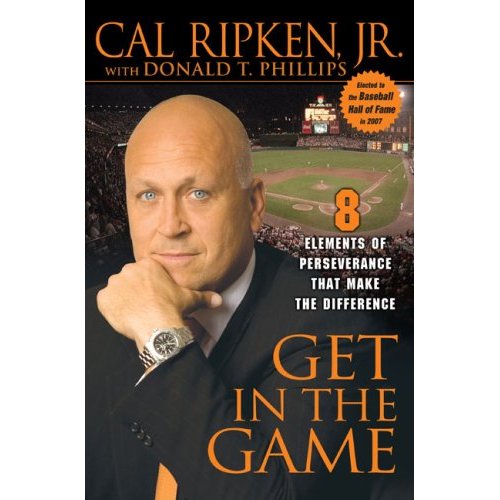 I just finished Cal Ripken, Jr.’s book, Get In The Game: Eight Elements of Perserverence That Make The Difference (2007). It was an incredible book on leadership and learning! There were so many takeaways, but the one that stood out the greatest was Ripken’s (2007) formula for learning – Awareness >; Curiosity >; Learning. This was an incredible formula that he described.
When you are aware of something you get curious. This curiosity leads to learning. We must strive to be aware of those things we don’t know. More importantly, however, we need to be aware of those things around us we need to be curious of. In my case this awareness may be what is happening with the culture of my school, new ways to bridge the learning gap with students, or more effective ways to lead. I am always curious and spend time reading, collaborating with others, and studying to satisfy this curiosity with learning.
I was particularly touched by the phrase that Ripken (2007) quoted from his father, Cal Ripken, Sr., who said: “Get in the game. Do the best you can. Try to make a contribution. LEARN FROM THE DAY. Apply it to tomorrow” (Ripken, 2007, p. 247). My favorite sentence there is, “Learn from the day!” We need to remember to take time and reflect each day on what we have learned.
My challenge to you is to be AWARE, be CURIOUS, and LEARN FROM THE DAY!


3 comments