We Have To Norm That…
We had a great norming session today for our teacher evaluation team. This has been an important monthly retreat for making sure the team is doing all they can to help our teachers on their journey of continuous improvement. Norming helps us to unpack the nuances of teaching practices that have the greatest potential for improving student achievement.
Our norming sessions prompt teachers and administrators to engage in professional conversations that make the critical link between teaching and the supports that teachers need to improve and hone their skills. This common understanding is the basis for high-quality evaluation systems that can drive professional growth. Our goal is to help all teachers grow throughout their careers.
We believe teachers and administrators need a common language and vision about what constitutes effective practice. Being able to identify and articulate these practices allows administrators to assess teachers and provide them with feedback on their strengths and areas for growth.
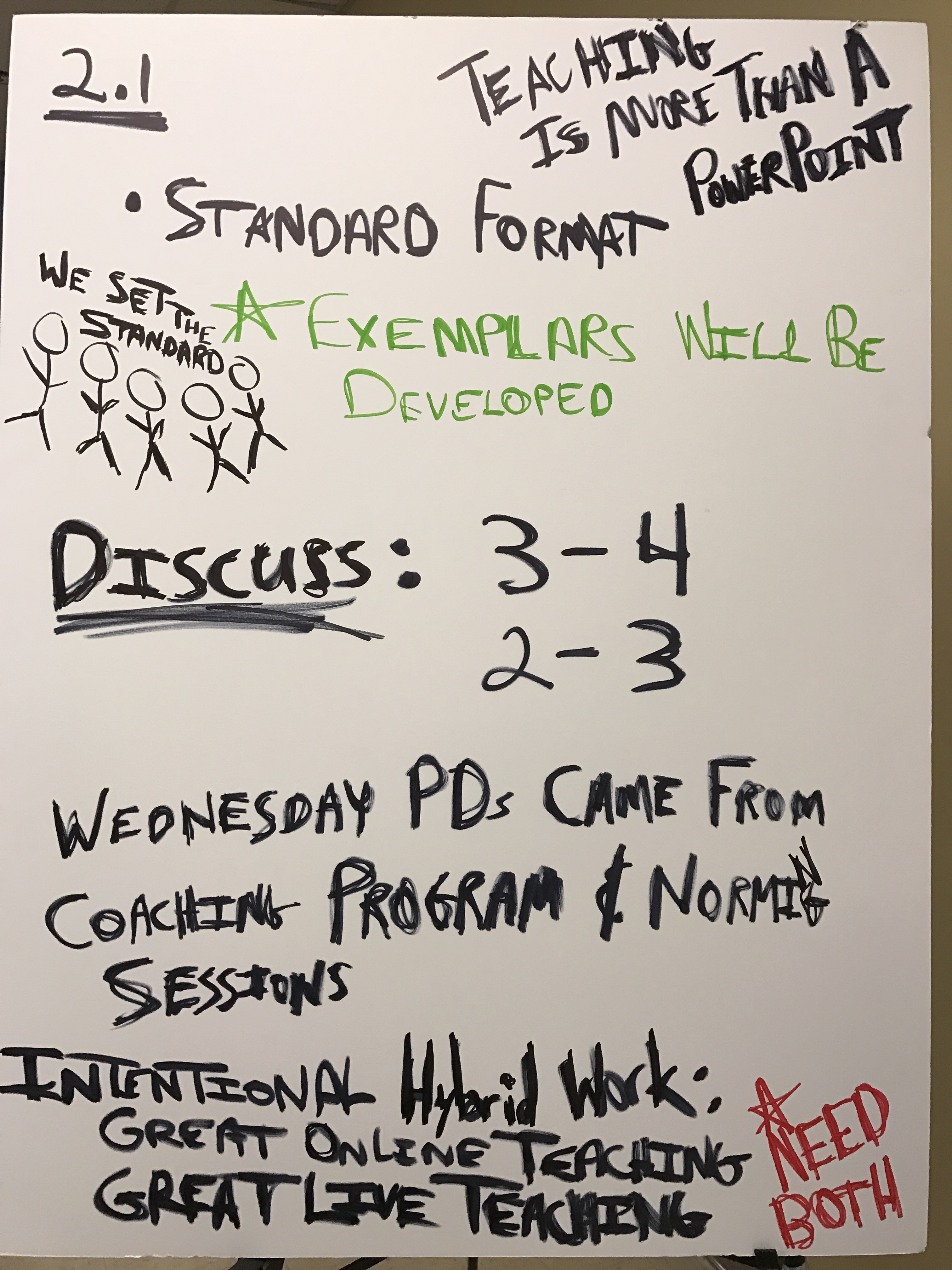
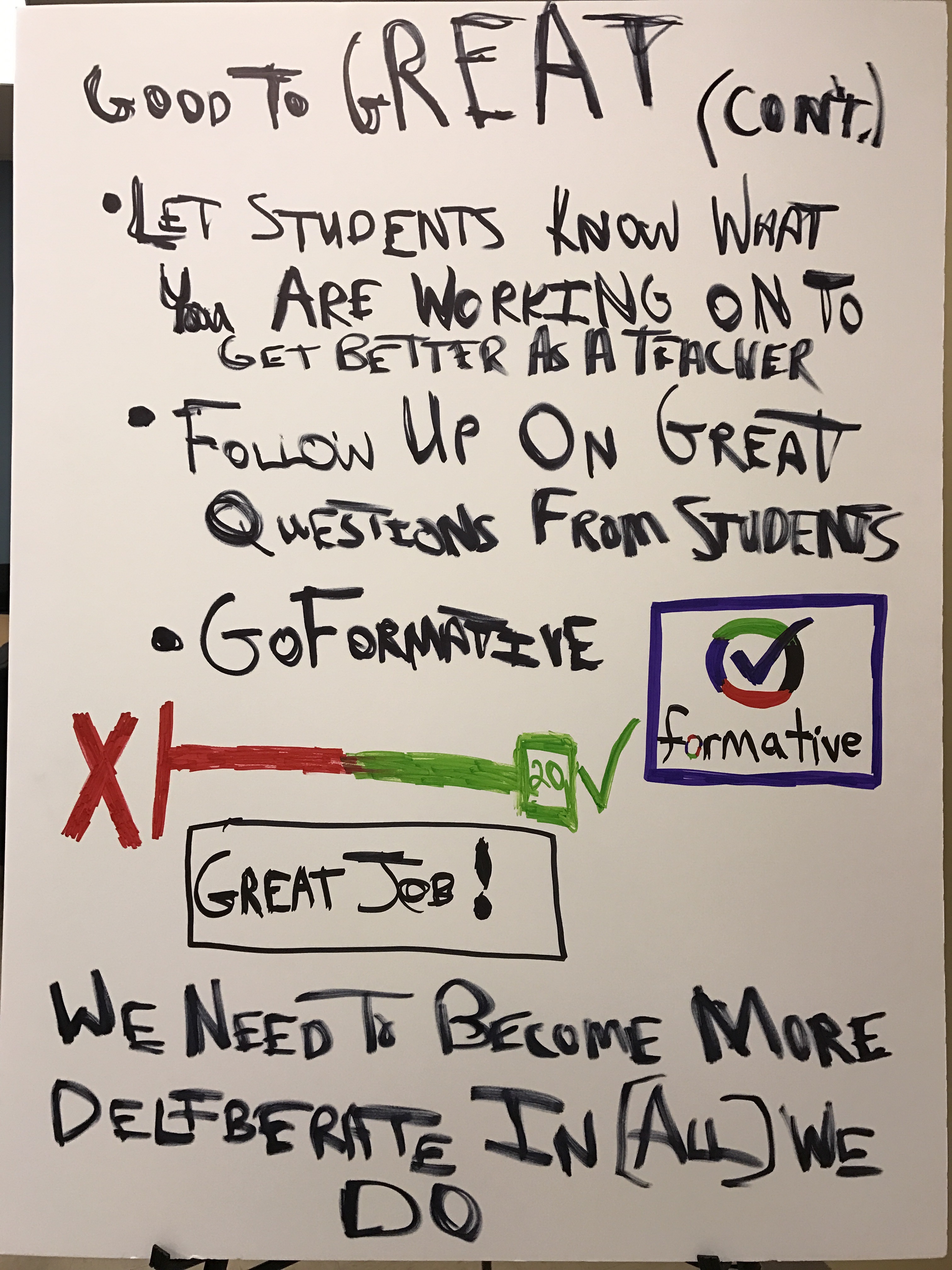
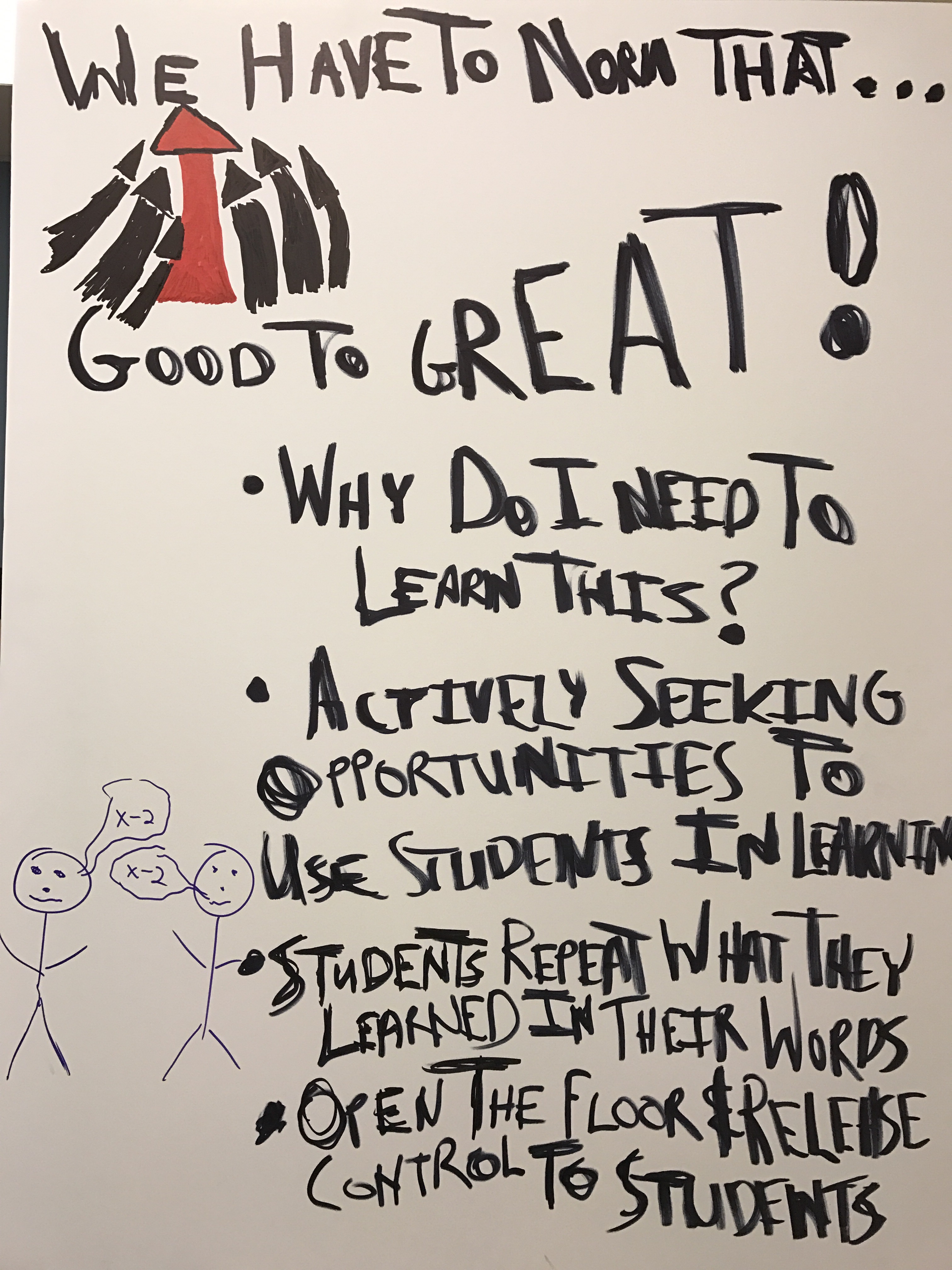
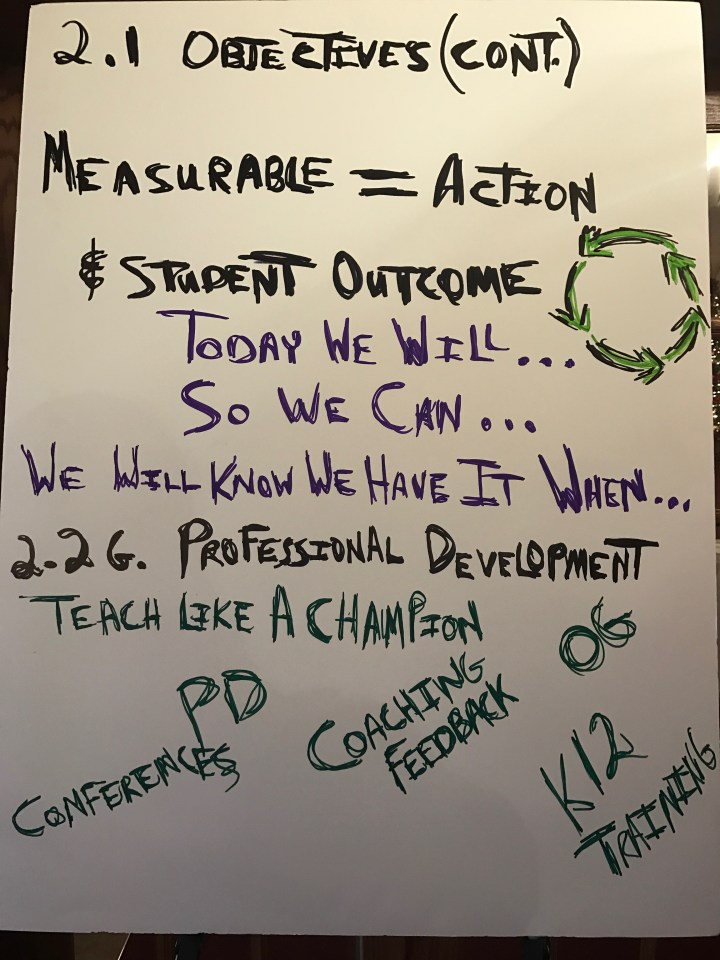
Here are our graphic notes I created from our norming session today:

Global Community: Don’t Just Stand There!
 It is said a global citizen is someone who identifies with being part of an emerging world community and whose actions contribute to building this community’s values and practices. We are going to have to learn to be effective change agents of a global future. We will need to create our own future, rather than trying to predict the outcome of all these global forces. Today the forces of global engagement are helping some people identify themselves as global citizens, meaning that they have a sense of belonging to a world community. This growing global identity in large part is made possible by the forces of modern information, communication, and transportation technologies.
“We know this much. The world is not going to be dominated by any one great power. For Americans that’s going to be a very difficult thing to accept. Most of us still see a world – the world of 1960 – in which America was the only great power, and the only functioning economy.” ~ Peter Drucker
Global citizens are also moved by a desire to make a positive contribution through their professional and personal lives. When it comes to being a member of the global community, will you be a leader, challenger, or spectator. Furthermore, we must bring global competency skills into our schools.
- Kids need skills to navigate globally!
- Kids Need To Navigate Shrinking World!
The skills and insights students can gain from interacting with people of different nations and cultures is critical as America engages more intensely with an increasingly global marketplace and interdependent world.
We must all serve as global community leaders and engage in the dialogue, to care about the issues and become a global citizen.
“To the world you may just be one person…but to one person you might just be the world.” ~ Mark Twain
I Promise
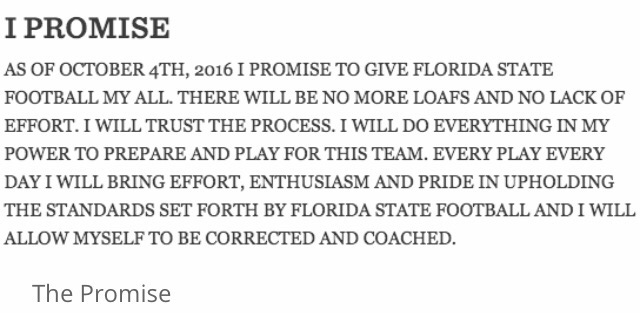 A signed copy of the promise pictured here sits in the locker of each Florida State player. After an awful start to Florida State’s season this past year, head coach Jimbo Fisher took an unprecedented step and presented his team with a promise and challenged them to sign it and live up to it.
As I read it I was struck by the simplistic way coach Fisher presented powerful points. It is really a well written combination of a mission and core values to follow. Here are the main points I take away:
- The commitment of “I promise to”
- No loafing
- Effort
- Trust the process
- Preparation
- Effort and enthusiasm in every play, every day
- Pride
- Allow myself to be corrected and coached
Just eight powerful points, but what a change in the season this battle cry brought about. The next game after the players signed the promise was a win against in-state rival Miami Hurricanes. Florida State won 20-19. “You cannot say that they did not play hard, that they did not play with fight, that they did not play with guts,” Jimbo Fisher said after the win. “We’re a work in progress but at least that heart and soul is there.” I am particularly struck by the point of “Allowing myself to be corrected and coached.” This is so important to all of us. We must continue to grow and develop each and every day.
On a day when everyone make New Year’a resolutions, I wander what would happen if we all just adjusted the promise to our own lives and then actually kept it; just like the Florida State Seminoles. Would you be willing to sign and hang in your locker?
Happy New Year!
Instant Relevance
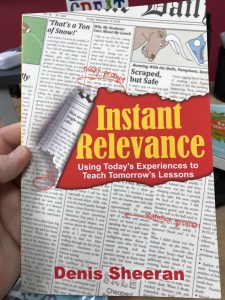 Instant Relevance: Using Today’s Experiences to Teach Tomorrow’s Lessons by Denis Sheeran
My rating: 5 of 5 stars
The first thing that struck me about this book was Denis’ use of Thinking Questions at the end of every chapter to guide the reader through the learning. As we know, questions open the door to the future and are more powerful than answers in that they demand engagement. I couldn’t help but be engaged as I read this book. As a believer in the fact that context and relevance matters, this book hits the mark.
Denis shows you how he brings his life into the classroom. Whether we like it or not, our students want to get to know us – and why not? Or, why would we not want to form that relationship? As Denis said, “We have no choice but to make learning more relevant to our students, or they will learn without us.” If you want to make school work relevant and learn along with your students, you need to read this book.
~Dr. Byron L. Ernest
Emoji: To Use or Not to Use?
 So, here is the fifth of six guest posts from our Focused Leader Academy teacher leaders. If you take a look at the parts of a good blog post we created I believe you will see that Brenda Culbertson and Amanda Case have connected with readers by finding a great hook, have included visuals, and told a story that you, as the reader, can use. Take a minute and check our their view on Emojis.

Mike Fleisch Graph
Emoji: To Use or Not to Use?
Let’s eat, Grandma.
Let’s eat Grandma!

Just like punctuation, Emojis can change the meaning of a sentence. The meaning can be changed for the better or the worse. There is a strong benefit and hindrance to using emojis in written language. The hindrance is that emojis can be misinterpreted and the benefit is that emojis can aid in the tone of the intended message.
Hindrance
Emojis can be misinterpreted when something as simple as 😉 is used. This can be a symbol of an inside joke or a flirtation. The problem is the person on the receiving may take it the opposite way you wanted them to…creating a “pinch”. Should you have used the emoji in the first place?
Benefit
The most evident benefit is that the symbol can add to the tone of your message so that the receiver reads the message as you meant. For example, in a message that seems flat, a smiley face can add a tone of happiness. Can the emoji add an emphasis to your tone?
Emojis are here to stay regardless of whether you think they are a benefit or hindrance in your communication. You need to ask yourself, does the emoji help or hurt my message?
Brenda and Amanda
Emoji Exploji
 So pumped to be bringing you the fourth of six guest posts from teacher leader participants in our Focused Leader Academy. These posts are a result of a session on blogging. No powerpoints or lists of to-dos, just co-creation of a blog post by pairs of our teacher leaders. They even created the stickers pictured at the beginning of the posts with an Emoji maker. Remember, our essential question always is “What can we create together?” Enjoy this post from Kris Phillips and Berry Wells:
Emoji Exploji
Before, you had to worry about students dropping an “F bomb”. Just wait until you get an “Emoji Exploji” in your classroom! For better or for worse, emojis have exploded in our culture. Now we must choose to embrace or reject them. 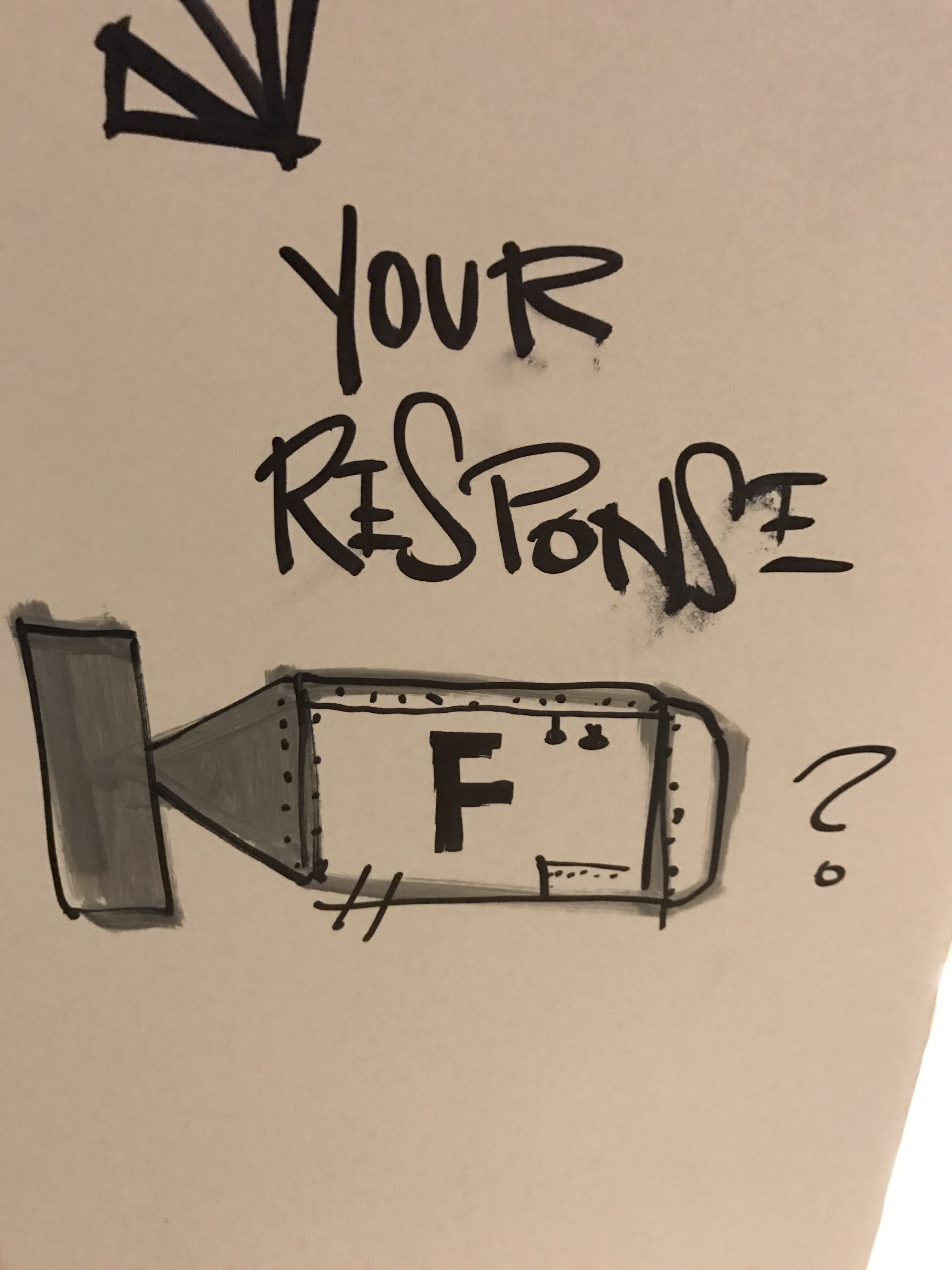
😀What are the benefits of emojis in the classroom?
• Engage students
• Popular
• Expressive
• Fast & Fun
• Easy pulse check
😕What are the drawbacks of emojis in the classroom?
• Overused
• Can be distracting
• Discourages language use
• Can be misinterpreted
• Can be inappropriate
• Can be offensive
Regardless of your personal opinion, emojis are a form of communication, and they are here to stay. The question is will you embrace society’s infatuation with this trend, or will you reject the idiocracy of the emoji exploji? The choice is yours. 😜
Top 7 Benefits of Emojis in the Classroom
 Here is the third of six guest posts submitted by our teacher leaders as part of our Focused Leader Academy this past weekend. Jena Davis and Liz Breeden decided to take the angle of how to use Emojis in the classroom. Blogging certainly takes some individuals outside of their comfort zone, including Jena and Liz. But, by working together and doing a fast creation using the “through line” of Emojis that we had been working with all day, they were able to author a great post. Here is Jena and Liz’s creation:

Smiley face! Frowny face! Heart! Emojis are everywhere. Do they help or hinder in the classroom? Used correctly, emojis can be beneficial in education. Emojis offer another method of communication between students and teachers.
1. Communication feeling or emotion: emojis can communicate feelings or emotions of students to teachers. Students who may not know the words to associate with their feelings may be able to communicate those feelings through the use of an emoji instead.
2. Visual: emojis are a graphic and visual representation of thoughts and feelings. Students are often visual learners and drawn to such representations.
3. Engaging: emojis are a way for students to engage with one another, or even with the teacher, in the classroom. Students can share thoughts and feelings with one another.
4. Check for Understanding: teachers can use an emoji to check for understanding or a student’s feeling or attitude about a particular topic.
5. Quick and Easy: emojis are a quick check and easy to use for both students and teachers.
6. Variety: there are a variety of emojis to choose from when making a selection. Students may be able to find and communicate something for which they don’t have the vocabulary to communicate.
7. Icebreaker: emojis can be used to ease the awkwardness of an uncomfortable moment or message.
How can YOU use emojis to communicate with YOUR students in a positive way?
How Do You Emoji?
 This is the second of six great guest blog posts from the teacher leaders in our Focused Leader Academy. These guest posts are a result of a session yesterday on blogging as a leadership tool. We had been using the “through line” (a theme or idea that runs from the beginning to the end of one of our design sprints that has a connecting theme or plot) of Emojis, so it made sense to have the prompt of: Emojis: Benefit or Hindrance? Participants paired up and proceeded to write a blog post kowing I would be posting it as a guest post.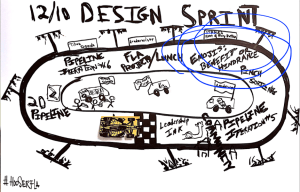

Graphic by Mike Fleisch
Enjoy Kristen and Lisa’s post:
Pick up your phone and take a look at the last emoji you used. What is it and what could it mean? My last emoji was 😬 in a tweet that reads “Don’t let perfection get in the way of a good blog 😬.”
An emoji can be beneficial or can be a hindrance. Here are our top 5 pluses and deltas of using an emoji:
- Supportive/Inspirational-Whether it be 😘 or a 👍 these simple gestures can provide support to a friend in need.
- Clarifying- An emoji can quickly add to and create the tone of the conversation.
- Telling-Did you know that Siri reads emoji’s as exactly what they are? Take for example when your teenage daughter says to Siri “Call Caleb.” And Siri responds with “Calling Caleb fire, beating heart, face blowing kiss.” 🔥, 💕, 😘. That real life situation was very telling for my husband when he overheard our teenage daughter calling her boyfriend.
- Misinterpreted-Could your emoji actually be a pinch to your reader? Have you ever gotten an unexplained winky face? 😜
- Unprofessional/inappropriate-There is a time and a place for an emoji and its probably not in the work place.
So choose your emojis wisely. ☺
Teacher Evaluation Norming: “What Can We Create Together?”
 When creating the ideal school community for meaningful teacher evaluation we must clearly define the expectations for effective teaching at our schools. We must also effectively communicate the criteria that will be used to evaluate teacher performance. Personally, I believe the most important aspect of teacher evaluation is to ensure professional growth for our teachers in order to move them toward being highly effective. Our school has become a part of the Indiana Teacher Appraisal and Support System (INTASS) and I love how Dr. Sandi Cole, Director of Center on Education and Lifelong Learning puts it: “Teacher evaluation must be something done for teachers, not to them.” This statement has become a core value of our work of overhauling our entire teacher evaluation process. The INTASS process rests on four basic elements of a quality evaluation plan: a) Clear, frequent, and transparent communication among a wide base of stakeholders; b) Professional practice measures that are mutually agreed upon by stakeholders; c) Multiple measures of student learning outcomes, and d) Fully aligned post-evaluation processes, including job-embedded professional growth and support for all educators.
Another crucial part of this process is the norming of evaluators. We have chosen to have a monthly retreat of our evaluation team to ensure that evaluators have an accurate and aligned perception of classroom practice and student growth. This norming process also guarantees assigned evaluation ratings that are accurate reflections of teacher effectiveness. During norming, evaluators align or “calibrate” their scoring so that every member of the team applies the rubric consistently across teachers, and of the team of evaluators scores consistently with one another (inter-rater reliability). Having similar scoring and uniform expectations of teacher effectiveness is critical if you want to make meaningful comparisons among teachers.
I have also found the norming to be a good time for our administrative staff to engage in professional development for the purpose supporting effective leading of learning. A healthy team culture—and ultimately the school’s performance—rely on the team’s ability to encourage individual improvement in constructive ways. Through our norming process, administrative team members are learning and practicing the skills and dispositions necessary to mentor, coach, and evaluate colleagues. Our norming process has enabled the team to practice a model of shared leadership. By having regular norming retreats, team members are able to refine their collaboration skills and dispositions to ensure the team’s ability to act according to its shared purpose of enabling and empowering all of our teachers to be highly effective.
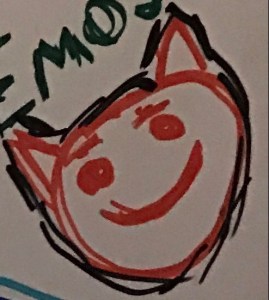
At this past week’s norming retreat I was struck by the amount of learning and professional growth that also went on with the administrative team of evaluators. There were discussions of how to more effectively use technology, sharing of best practices witnessed such as for checking for mastery, and new ways of engaging students; just to name a few. We even discussed the use of Emojis for engaging students. I couldn’t help but draw my own Emoji (shared in the picture above) as I graphically facilitated the norming retreat. We also were able to identify areas where we need to provide professional development learning opportunities for our teachers. I believe my role as a leader is not necessarily to always be a better role model or to drive change; my role is to create structures and experiences that bring our community of staff members together to identify and solve their own issues and drive improvement. Holding these norming retreats has enabled this structure of experiences for our administrative staff.
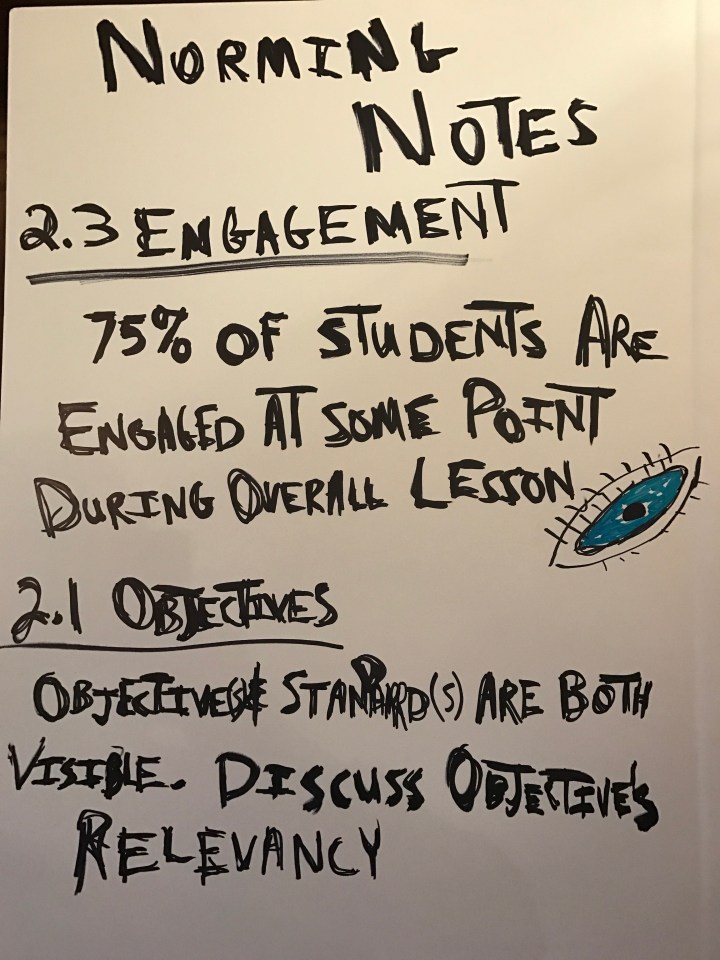
This norming process has become an important piece of being able for our school community to answer the question of “What can we create together?” I believe we are creating a community of continual improvement and one where our teachers are valued as professionals and given the feedback and resources to be the very best. I am attaching images of our notes from our latest norming retreat so you can see what went on:


Community Is The Culture
 This past week I had the opportunity with Mike Fleisch to do a design sprint (what others would call a workshop) on our school’s Focused Leader Academy. During our design sprint we built models together of what a community would look like where there is a serious commitment to developing leaders. I told the design sprint participants that I now described what we were doing as community building, not culture building. Culture emerges from the past values we develop together. I would rather us live in the context of the world we live in now and, more importantly, how do we want the world to be. With this worldview in mind, we wanted the group think about what a community of people in a school could create together.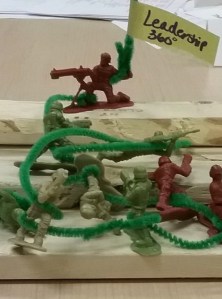
Daniel Goleman said “Executives who can effectively focus on others emerge as natural leaders regardless of organizational or social rank.” These leaders are the ones who find common ground, whose opinions carry the most weight, and with whom other people want to work.They emerge as natural leaders regardless of organizational or social rank. As leaders we need focus on others, which is the foundation of empathy and of an ability to build social relationships.
As a leader I believe it is important for me to be available to stakeholders so that I have the opportunity to meet others, engage in conversation, and share thoughts, ideas and concerns, and to build community and a sense of belonging. It has been my experience that those I serve have lots of wisdom, the ability to make connections, and to help come up with solutions. 
Peter Block said “We will never eliminate our need for great leaders and people on the stage; we just cannot afford to put all our experience and future in their hands.” To be a transformative leader we must create communities (a community can be our organization, school, or business too) that produce deeper relatedness across boundaries. Additionally we need to create new conversations that focus on the gifts and capacities of others.
“Leaders are held to three tasks: to shift the context within which people gather, name the debate through powerful questions, and listen rather than advocate, defend, or provide answers.” ~ Peter Block
I have now begun to talk in terms of community instead of culture. We need to begin to think of all the contexts we operate within are communities. Community then grows out of the possibilities of those in our communities. It is those citizens that build our communities. I have learned that the culture is the set of shared values that emerges from the history of experience and the story that is produced out of that. It is the past that gives us our identity and corrals our behavior in order to preserve that identity. Context is the way we see the world. Peter Block taught us to see the world, not remember the world. 
So, as we continue to improve the communities in which we live, work, and lead we need to continually ask the question “What can we create together?” This emerges from the social space we create when we are together.
 Byron's Babbles
leave a comment