Being Intentional About Your Relationships
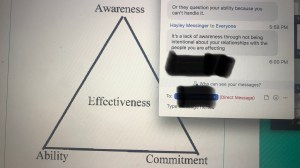
Last night during our 3D Leadership gathering of Georgia, North Carolina, and South Carolina participants we were working through leadership effectiveness. I was using a triangular model with three keys to effectiveness: 1. Awareness; 2. Ability; and 3. Commitment (see featured photo of this post). Without any of the three it is unlikely we can be effective as a leader. We began discussing how relationships and relationship building were important to all three sides of the triangle. Right about then, one of our astute members from North Carolina, Hayley Messenger, posted the following in the chat:
“It’s a lack of awareness through not being intentional about your relationships with the people you are affecting.”
Hayley Messenger
When I saw this I wanted the group to know more. Hayley explained that many times leaders will only build relationships with certain people or end up getting to know some better than others. To truly function at a high level we must be intentional to know the strengths, weaknesses, future goals, et cetera of ALL those we serve. I loved that she used the word “intentional.” The dictionary defines intentional as “done on purpose; deliberate.” This meaning plays a role in what an intentional relationship is. It involves being active instead of passive and making things happen instead of waiting for them to happen to you.
For example, as a leader, if we want to be ready when we have a position open up, we need to have the relationships with all in the organization to know who would have with the ability for, or even have interest in that position. Intentional relationships are not convenient relationships or just building relationships with those we like best. When we enter into an intentional relationship we are proving that we’re in it for the long run. Having effective communities and organizations is about co-existing and becoming acutely aware and intentional about who we share space with.
Bottom line: By being intentional about creating flourishing relationships, we positively transform every social structure on the planet.
Playing Full Out
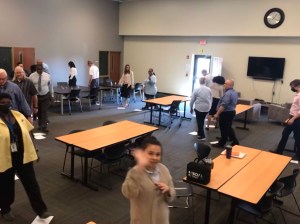
“If your life were a play, how would the audience react” (p. 348). DTK proposed this thought experiment in Chapter 51 entitled, “Strive for Excellence, of Mindset Mondays with DTK by David Taylor-Klaus (DTK). I really like the way he set this up by saying that he wasn’t suggesting we live our lives by the way we appear to others, but understanding the impact we have on others. When I think about actors in a play, movie, or even television program, they can have an impact on us. The best do. This is no different for us as leaders.

I was reminded yesterday how important the way we act is to the impact we have on others. While working my way through classroom visits in a school I do teacher coaching for I ran into a teacher in the school and he said, “I am so glad you are here. You bring such a positive vibe when you are here to us all.” I gotta say that made my day. Because along with helping teachers be highly effective for the students we serve, I want there to be positivity for all. Therefore, we need to do as DTK suggests, “…play full-out in life” (p. 348). The goal is to go as far as you can with all that you’ve got, and when you fall down, you get back up and keep going.
Excellence to me means bringing out the best in others. When we play full-out we need to bring our A-game to whatever we are doing, it has a noticeable impact on others. It raises the bar for everyone. We also need to bring excellence to the thoughts that we think and the words that we use, making sure they’re positive, supportive, and appreciative (of ourselves and others). Play full out. Don’t hold back.
Seventh Graders Know!
I spent this past week coaching teachers during their first days of school. It was so great to be in classrooms all day and then spend time leading reflection discussions after school. It has always been interesting to me how I can walk into a class and immediately know whether the teacher has the entire class engaged and the overall culture of the classroom. I think it is because I always focus on what the students are doing. I walked into a seventh grade class this past Wednesday and saw a teacher and group of students knocking it out of the park. It was one of those moments where I wanted to be back in seventh grade and a part of her class.
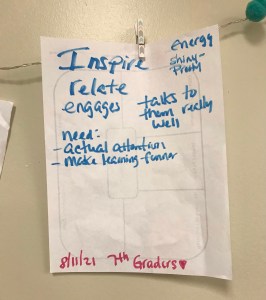
At an appropriate transition I asked the teacher and class if I could interrupt with a question. They all said yes and I asked if they all thought their teacher was doing a great job. It was a loud and resounding “YES!” I then asked a followup, “Why?” I also asked the teacher to write down what the seventh graders told us. By the way, a student pointed out I had asked two questions and not just the one I had gotten permission for – gotta live seventh graders! The list is the featured pictured of this post. What they said was:
- Our teacher inspired us.
- She can relate to us.
- She makes it exciting and engages us.
- She had a lot of energy (literally, this teacher was running from student to student).
- She helps them make everything shiny and pretty.
- She talks to us really well.
- She gives us actual attention.
- She makes learning funner (I know funner is not a word, but it should be and I told the student I would allow it).
This teacher was clearly “withit” and was building relationships with her students. Our students deserve those eight items that these seventh graders outlined. It really doesn’t matter what age group a person is facilitating, all these items apply. Our seventh graders know!
Leading Like A Hinge

I spent this week coaching teachers as the school year got started for many of the schools I work with. One of the teachers I coach told his students that he loved it when I was in the school because I was like the hinges on a door. “Without hinges the door is useless. You can have fancy doorknobs and windows, but the hinges make the door functional. Hinges attach a door to its frame, and are the pivot point for opening and closing the door.” I do hope I am helping teachers connect with their students and am serving as a hinge for the door to open for them to become highly effective facilitators of learning for their students.
Upon further reflection I was reminded of something retired Admiral James Stavridis, author of Sailing True North: Ten Admirals and the Voyage of Character, said: “Leadership is how we influence others. It is like a big door that swings. But that big door of leadership swings on the small hinge of character.” I hope that I bring a great degree of character to my leadership and that I inspire others to do the same.
I want to provide those I coach with the tools, guidance, support, and feedback they need to thrive in their teaching career. I want to be the hinge that opens the door to their success.
Imaginative Play Zones

Albert Einstein famously said, “To stimulate creativity, one must develop the childlike inclination for play.” And even Pablo Picasso said, “Every child is an artist. The problem is how to remain an artist once we grow up.” If children are more creative than adults, it’s not because they have a superior imagination. They just don’t suffer from self-doubt and fear to the extent that adults do. In this respect, at least, we could all afford to be more like children. We don’t question kids being more creative than adults; we all intuitively just know it’s true and we view it as a natural state for children.

So why do kids have the aptitude for creativity? Play! And, remember they have not yet developed, or been taught the self doubt and fear part to the extent we adults have, either. In studying the work of Dr. Stephanie Carlson, an expert on childhood brain development at the University of Minnesota, she taught us that kids spend as much as 2/3 of their time in non-reality— in imaginative play. This is why when I am providing development for adults I always try to spend some time channeling their inner child. Adults want to, and effectively, learn like kids. We want the play, time for imagination, and a safe place for trying new things.
As I worked with teachers this past week we discussed creating psychologically safe places for our students to learn and try new things (the things we are teaching are new). But, we must also not forget our adults – we need a psychologically safe place as well. How about we create imaginative play zones?
I Was Needed!

I love that a lot of what I do is helping teachers get better at their craft. Teaching is such a beautiful cross of science and art. Leonardo da Vinci would be having great fun if he were around helping us improve our teaching for learning today. He believed science and art were very tightly connected. This week I have had the honor and pleasure of facilitating professional development for teachers at Nashville Collegiate Prep and Knowledge Academies in Nashville, Tennessee. I have truly been inspired by this group of professionals. Every day I am excited to get the day of learning with them started.
“Change the audience, change the meaning.”
Leonardo da Vinci
On Wednesday I did a session entitled “Engagement Strategies: Teachers As Facilitators, Knowledge Navigators, and Co-Learners. At the beginning of this session I do an activity that begins with the prompt question, “What do you want students to say at the
end of the week about your facilitation?” The groups got five minutes to write everything that came to mind on Post-it® notes. This is part of a larger activity and participants get to share out after each part. I love walking around and looking as they are writing. There were literally hundreds of sticky notes being made, and I was inspired by all of them. But, one caught my eye and required my attention (the featured photo of this post).
On one of the Post-it® notes of Jamie Martineau, Kindergarten teacher at Nashville Collegiate Prep she had written four bullet points:
- I was part of something
- I was important or needed
- I am a part of this class
- We did it
I was blown away by the thought of every student feeling this way. After getting to know Jamie this week, I have no doubt that her students will feel that way. Going through school is where many of students begin learning to be part of something bigger than themselves. It’s during this time in our classes that we can help make our students feel valued as individuals. The developing personalities of our students need a strong and secure environment in order to flourish in academia. Let’s face it; our students learn more and behave better when they receive high levels of understanding, caring and genuineness.
We cannot underestimate the importance of cultivating a classroom culture in which students feel valued, respected, heard, and an important part of something. One way we can build this solid foundation for learning is to listen to our students. Fostering conversations about real world and relevant issues, topics, and problems ensures that our classrooms become places of academic inquiry and collaboration founded on a sense of fairness and mutual respect.
If a student considers their teacher to be caring and accepting, they’re more likely to adopt the academic and social values of their teacher. This, in turn, influences how students feel about their school work and how much (or how little) they value it. Here are some tips on how to make sure our students belong and are part of something:
- prioritising high-quality teacher-student relationships
- creating a supportive and caring learning environment
- showing interest in students
- trying to understand students’ point of view
- respectful and fair treatment
- fostering positive peer relationships and mutual respect among classmates to establish a sense of community
- positive classroom management
- Giving students a voice
We all want to belong. ALL of our students deserve to be an important and needed part of our school communities. We can do it!
Be An Explorer, Not An Expert

I am so glad I read the book, Alien Thinking: The Unconventional Path To Breakthrough Ideas. This book helped me further hone the alien that has always been in me for wild and creative thinking and innovation. In the book, authors Cyril Bouquet, Jean-Louis Barsoux, and Michael Wade presented an incredible framework using ALIEN as an acronym. I highlighted the framework in What Will You Regret When You Are 80 Years Old? Another comment the authors made in the book that caused me to do further thinking was that we need to “Approach things not as an expert, but as an explorer.” I’ve always been a critic of so called experts and this was a warning of the problem of acting like an expert.
The problem of overconfidence and closed-mindedness in areas we believe we have expertise is all the more troubling because we so generally tend to credit ourselves and many times others with having more expertise than we really do. In Alien Thinking we were taught that discoverers know what they are looking for and then go out and find it, but explorers take chances by creating new things, and looking for what they don’t even know is there. The expert status can serve as blinders keeping us from exploring for the next way of doing what we are doing well now better or differently.

Those that know me well know that I love intersectional learning and learning from outside my own industry. Bouquet et al. argued there is great value in this as well. They posited that “Leaders thus need to think like explorers, become more adventurous and steal the essence of ideas from outside their industries…” Taking an expert frame of reference keeps us from looking for what is next. We need to be looking at industries outside our own and “stealing” ideas. I believe this is an issue particularly in education. There is not enough exploration happening in other industries to learn how to best educate. We can rely on our “outsider status” and being “adjacent outsiders” to learn and discover from others.
What’s The Next Step?

“You don’t need to have all the answers but you do need to have a next step.” Sabrina Horn told us that in her great book Make It, Don’t Fake It: Leading With Authenticity For Real Business Success. I discuss this with teachers a lot. Some in the teacher development arena will tell new teachers they need to have all the answers. This advice includes faking it and not letting students know the teacher doesn’t know the answer. This is very bad advice. Just as this is not true in Sabrina’s world as a CEO, it is not true for teachers. Some of the best labs and lessons I had as a teacher were when something didn’t go as planned. I would say, “I have no idea why this didn’t work, but let’s all dig into this and figure it out together.” The students and I learned so much from this humble act. It was so much fun and I was modeling an important leadership skill for my students. All leaders would do well to learn this.
This humility does not show weakness or confidence. It shows we recognize something pretty obvious – no one knows everything. The great leaders know what they don’t know and understand there are things they don’t know they don’t know. But, learning from and with others, asking questions, and asking for help are hallmarks of an effective and humble leader. This growth mindset modeled curiosity, collaboration, and a plan for discovery with my students. This same mindset also worked for me as a principal and superintendent. Many times the next step might be pausing to learn the answers together as a team.
Developing Leadership
Yesterday, on Day 443 of the Global Pandemic, I had the opportunity of a lifetime to do a live-stream discussion with Joseph Michelli, Ph.D. of The Michelli Experience. You can watch the video here in this post. I have literally read every one of Joseph’s books. His work has had a huge impact on me as a leader and an educator. I think back to how much The Zappos Experience, Leading The Starbucks Experience, The Starbucks Experience, and When Fish Fly impacted how I led while principal of a state takeover academy. The experience that we provided for our students, families, and teachers was directly impacted by that learning. This is actually what I call intersectional learning. The learning that takes place between different contexts, industries, cultures, or experiences. Neither Zappos, Starbucks, nor the Pikes Place Fish Market are in the business of K-12 education, but there is much to be learned from how they do business and the customer experience they provide. After the books I had be be in Seattle, Washington and I made sure I spent a day of the trip experiencing the original Starbucks and the Pikes Place Fish Market. My son, Heath, even had the experience of catching one of the flying fish (on the second try – and I have the video to prove it).

It was great to reflect on this today during my conversation with Joseph. He is truly living out his Legacy Statement: “I want to be remembered as someone who captured what was right in the world and shared it for the betterment of others.” All that he has so eloquently shared in well researched and documented ways over the years has made me a better person and enabled me to serve others in a much more effective and authentic way. Joseph has suggested that we should all create legacy statements. Here is mine: “Hopefully I’ll be remembered as a thoughtful leader who showed love for those I served by providing growth and development.” If you want to know more about this, read Where Were You Era.
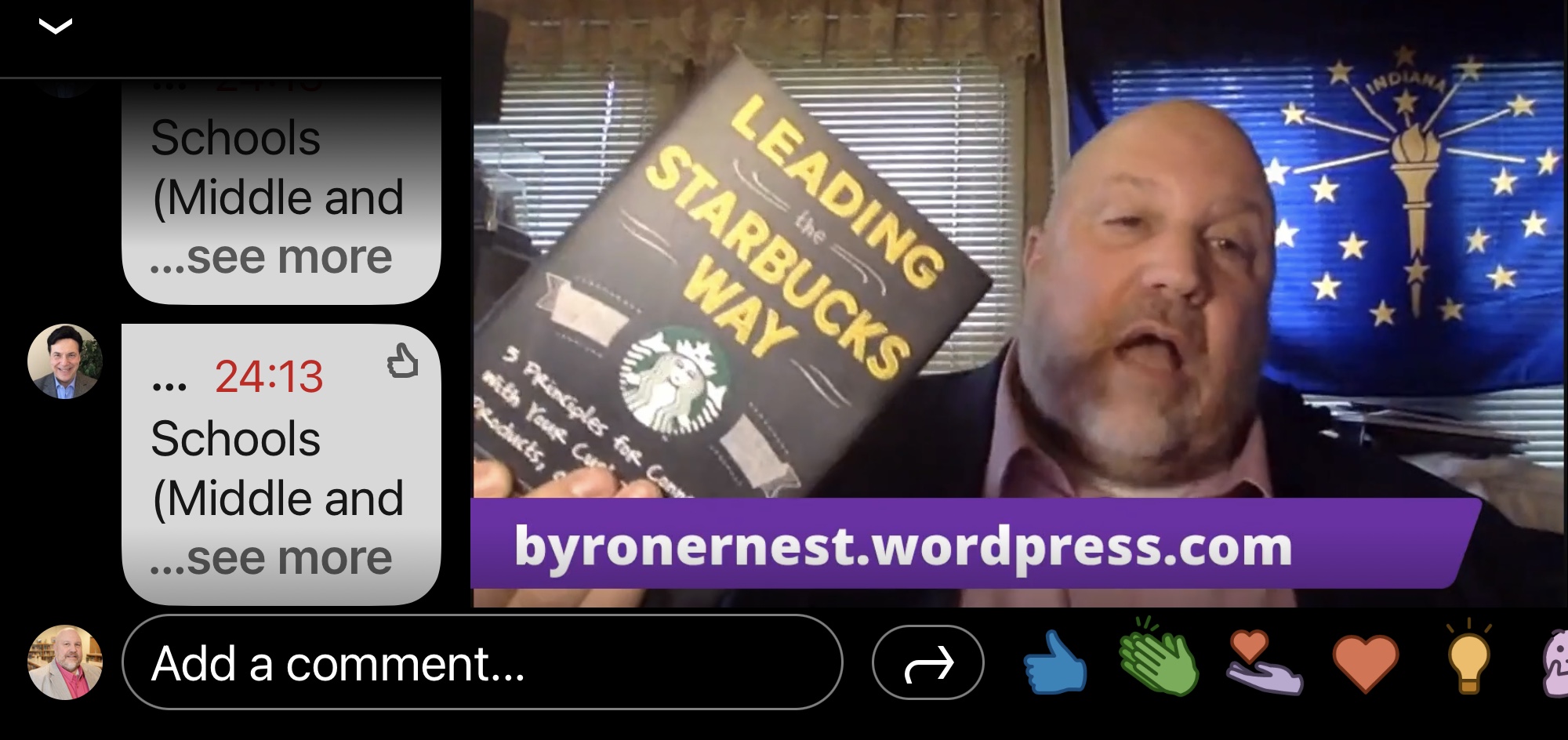
In the couple of days leading up to this live-stream discussion I pulled blogs that I had done about Joseph and his work (there were many) and took some notes of things I wanted to have brought out in the discussion. Amazingly, many of these were things he asked about or wanted to discuss as well. That was pretty cool and felt very organic and authentic given that we had not talked or prepped anything together prior to the event. I loved what he pulled from my book, The Hand In The Back Of The Room: Connecting School Work To Real Life, “Education exists in the larger context of society. When society changes – so too must education if it is to remain viable.” This was from Part I: Why A Relevant and Real World Context Matters. In one of Joseph’s “Resilience ReCaps” in his latest book Stronger Through Adversity, he says, “Leadership action, in and out of a crisis, can be viewed as operating on three levels – generalized, customized, or personalized.” I believe you could switch out “education” for “leadership” and this statement remains very true. To be effective for our students we must be spending a great deal of time in customized and personalized. That’s where the learning becomes exciting and engaging for both the student and the teacher.
Joseph also taught us in Stronger Through Adversity that, “Love is a passionate approach to work and heartfelt care for the growth and development of those you serve” (p. 265). He said this after quoting Joe Duran, CEO and Founder of Personal Financial Management at Goldman Sachs, who said, “I hope people will say love was the driving force for everything we did. Ideally, they would feel we loved our people and our clients. They would sense that we loved waking up each morning to serve them” (p. 265) Love is something very powerful that we should be exercising with those we serve. Love makes it personal, and when something becomes personal it becomes important.
Trust Is A Verb
I just finished rereading the great book Nuance: Why Some Leaders Succeed and Others Fail by Michael Fullan. I blogged about what prompted me to do this reread in “Nuance: Subtle Differences.” We are, and have been, experiencing times when complexity challenges our ability to adapt. This is particularly true in educational systems where we must meet individual student needs. Fullan offered help for thinking about systems change around three habits of nuance: joint determination, adaptability, and culture-based accountability.

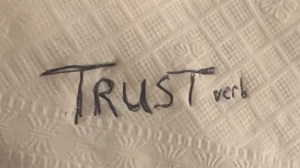
Fullan argued that “trust is a verb before it becomes a state.” Someone can’t earn your trust without you first trusting them on something. In other words you can’t talk your way into trust. Trust becomes part of the community culture in real time. It is an action. When a leader is an active participant and becomes part of the group, accountability becomes a shared norm instead of something imposed from above. This resonates with me so much because I so desire the establishment and maintaining of a culture and community of innovation and commitment. This requires deep levels of trust.
 Byron's Babbles
leave a comment