Critical Improvisations
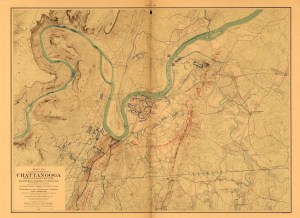
As I re-read Ron Chernow’s great autobiography Grant I keep picking up things to reflect on that I didn’t catch the first time through. I already did one such reflection in Respecting and Watching With Reverence. Yesterday while reading Chernow described the campaigns of the rebellion to take control of eastern Tennessee, specifically in Chattanooga. Much credit for success was given to “critical improvisations” and “extemporaneous routing of the enemy.” As a intent-based leadership advocate, I loved these terms. The soldiers saw opportunities that would lead to success and they took them even though they were not exactly part of the original plans. The great organizations develop every person to be ready for critical improvisation and extemporaneous routes. For example, one of the skills I developed early as a teacher was the ability to improvise during lessons according to student questions and discussions. This allowed me to make extemporaneous routes for true differentiation. Did you catch that play on words I just did? I believe I still do this while facilitating to this day. I believe this is one of the most important skills we need to be developing in education. And, educators need to feel comfortable and encouraged to make critical improvisations each and every day. The data is created with the teachers and students and that is where decisions should be made.
In any organization, our environment may change hundreds of times in a single day. This improvisation and extemporaneous routing becomes understanding the nuances of each of the new or changing environments and how those changes will impact on our ability to perform optimally and effectively. Practicing improvisational techniques allow us to quickly analyze changing environmental conditions and communicate quickly and effectively within them. In improv classes we are taught the “yes and” technique. Basically, we take what we are given and develop it further. It’s about accepting a nuanced environment and changes quickly and looking for opportunities immediately. We also have to create an environment where seeking solutions is accepted.
As leaders we need to model and reward positive and risk-taking and adaptation, the faster the organization can read the nuances and improvise. After the successful Chattanooga campaign Grant asked who had ordered the charge up the mountain against soldiers who appeared to be falling back. All officers said it had not been them. Those in the field read the opportunity and acted. Grant was proud of them. Some (well actually a lot of leaders I’ve encountered would have been upset), but not Grant. He needed every soldier to be a leader. If Grant were leading today, I don’t think he would need an email asking for permission and copied to 10 other people on every issue. Unfortunately, you all reading this know the leaders I’m talking about – I hope you’ve not experienced it, but I bet you have.
Make no mistake, however, for successful critical improvisations to happen EVERYONE in the organization must have the technical skill training and development. Otherwise it will be chaos. Grant was a stickler for drilling and training. Also, there need to be clear goals with plans that allow for agility. Then, and only then, we can allow everyone to use their talent and goal focus to seize opportunities of the moment and carry out critical improvisations and extemporaneous routes.
Subtracting Shows Competence
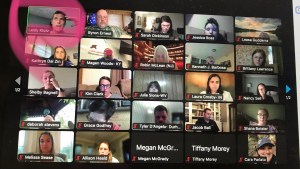
Last year I read the great book Subtract: The Untapped Science Of Less by Leidy Klotz and described the book as changing my life. Learning from the book also ends up in many of my blog posts, like Don’t Always Saticfice. Last evening I had the honor of facilitating a discussion between Leidy Klotz and National Teacher Ambassadors of the National FFA Organization. As part of their training, the teacher ambassadors received a copy of the book and Leidy was gracious enough to spend time with the group. Leidy spent some time discussing what led to the research and ultimately the book, which was fascinating, and then had a very open discussion with our teachers.
One of the points Leidy made last night, that I have heard him make before is that, “Subtracting shows competence.” We all need to reflect on this. Whether as a school principal, we show competence to remove the things teachers have to do that don’t really have anything to do with student learning, or myself as a policymaker continuing to advocate for reducing the number of standards having to be taught/tested. Or, just the competence it takes to reduce that email from four paragraphs, which by the way no one reads, to a couple of sentences. I’m sure you can think of thousands of other examples.

Leidy taught us not to focus on what we can’t get done and want/need to subtract, but focus on what we will be able to do better because of eliminating those mundane tasks that create marginal value at best. Those of us in education can really relate to this. It’s not easy. As Leidy pointed out, adding more is highly visible and easy to promote and subtracting either goes unnoticed or becomes controversial. I loved this advice from Leidy: “Give yourself a definition for what you are setting out to accomplish. This will help narrow down the necessary from the unnecessary.” Dr. Klotz’s job is to create and share knowledge and he did a great job of schooling us on subtracting.
Linked Lives
You all know I am a very reflective person. Holidays always seem to become days of reflection for me. On this Fourth if July holiday I am reflecting about my son growing up, our relationship changing from dad and lad to dad and man, and whether my dad knew how great a job he did for prepping me for life and how much I appreciated it. Circumstances have allowed me to get to be at my son’s house in Madisonville, Kentucky near where he is interning for Cal-Maine Foods, every weekend for the past five weekends in a row. Dream come true, because I love spending time with the boy, now man. I make a point of saying, man now, because he is just that. And what’s more the father-son links are now converting to an adult relationship and I am loving every minute of it. Everyone who knows me knows how close Heath and I are. I’m always in a funk for a couple of days after spending time with him.
Last weekend I had the chance to meet my son’s boss and have a great conversation. In the course of the conversation he gave me one of the greatest compliments a dad could hear. He said that he could tell how close Heath and I were and that I had not left raising him and giving him the experiences necessary to succeed in life to anyone else. He said, “All the responsibility you gave him and the modeling you did for him on the farm growing up has prepared him for this moment and his life’s work (I just teared up repeating that). I quickly deferred much of the credit to Hope, my wife and Heath’s mother, but then was very thankful that he recognized that. When Heath was born, I made a commitment that I was going to spend every moment I could with him – and I did. I had watched other people leave much of this responsibility to grandparents or hired people and I just wasn’t going to do that. I know some very wealthy and allegedly successful people who never really got to know their kids. Sad! I am so blessed to have taken Heath on so many FFA trips with me and all the time we spent working side-by-side here on the farm. Some said it was too early to have him in Washington D.C. at six months old or out helping me with horses and livestock from the time he could walk, but the research would now suggest I was on to something. My goal was to have had him in all 50 states by the time he graduated high school. We did not quite make that goal but have made it to 46 and Canada twice. This year is his senior year in college, so I have a year to get him to Utah, Idaho, New Mexico, and Alaska before he graduates from college.

Please do not take this post as a criticism of others’ parenting because it is not meant to be. It is meant to highlight the concept of “linked lives” introduced in Parent Nation: Unlocking Every Child’s Potential, Fulfilling Society’s Promise by Dr. Dana Suskind. All members of the National Association of State Boards of Education (NASBE) were given the opportunity to receive a copy of the book. So glad I got my copy! I am reading the book right now and have been inspired, as a policymaker and education leader, to want to shepherd and cheerlead the concepts introduced in the book. For example, I was recently told that some schools no longer allow their agriculture teachers to take their own children on trips. This would have seriously limited my time with Heath. At a time when teachers a seriously exploring alternative career options, shouldn’t we be finding (exploring) ways to help our teachers stay linked to their own children? In the book Dr. Suskind said, “The lives of children and parents are intertwined” (p. 139). As a policy-maker I recommit to doing all I can to create environments where parents can be all they can be. I hear parents say they appreciated the extra quality time that they had during the pandemic. Let’s learn from this and find creative/flexible ways to help.
Also, we need to think both quantity and quality. More time with our kids is great, period. So that is a start, but quality of that time really thinking about brain development is also critical. I think back to my own upbringing by two of the greatest parents of all times. I was linked to their lives. Dr. Suskind also said, “The experiences we have in childhood, as mediated by our parents, will be reflected in much of what happens years later” (p. 139). At my mom’s passing I blogged about our link in Leadership Lessons From My Mom and I am reflecting on my dad this morning and all he did to prepare me for all the moments I have been blessed with; including raising an incredible lad turned man. My dad passed away when I was 25. My hope on this holiday morning is that he knew the great job he had done at linking our lives.
Happy Accidents

I am just about half way through Volume Two of the Autobiography of Mark Twain. As I already stated in Acquired Skills it is an is an incredibly fascinating and tough read all at the same time. To be sure, the beloved humorist keeps the reader laughing as he discusses for an entire chapter about the fly being the only species that humans cannot devise a way to exterminate. When you think about the fly, that is true. But Twain also make us think with his anecdotes. One such anecdote is his discussion of accidents. Twain reminded us “There are no accidents, all things have a deep and calculated purpose; sometimes the methods employed by Providence seem strange and incongruous, but we have only to be patient and wait for the result: then we recognize that no others would have answered the purpose, and we are rebuked and humbled.” Twain calls these “happy accidents” in his autobiography. Some might call these luck, but really they are, as he defines them, accidents. Twain even defines accidents as being an event that happens at no fault or premeditated thought or action of someone else.
“There are those who imagine that the unlucky accidents of lifelife’s “experiences”are in some way useful to us. I wish I could find out how. I never know one of them to happen twice. They always change off and swap around and catch you on your inexperienced side.“
Mark Twain
When I began to think about it I could come up with accidents that have happened in my life that led to some incredible opportunities. I’ll bet you can too. Twain told the story of being in New Orleans and wanting to learn to be a steam boat pilot. He asked a captain who told him “no,” but then the captain developed pain in his body that kept him from being able to pilot. Long story short, he sat in the pilot’s house and supervise Twain piloting the boat for him. Thus, Twain became an apprentice, learned to pilot the steam ship, and became a steam boat pilot. Sure seems like a happy accident to me. In fact, that whole adventure started out with Twain accidentally finding $50 in the street! The great humorist and author taught us, “Name the greatest of all inventors. Accident.” Bob Ross taught us, “we don’t make mistakes, we just have happy accidents.” Happy accidents can give us a chance to improve or go down a new path. They are a chance to create something we didn’t even imagine before. Happy accidents can give us the opportunity to learn, a chance to grow, and a chance for you to look at new perspectives. They can turn something average into a happier thing.
Learning From Action Not Abstraction
As a person who has lived six decades now, the world feels like a more perilous place. I don’t really think the modern world is any more dangerous than it was fifty or sixty years ago. I do, however, believe we are in a much more risk averse world today. I think a lot about whether this risk aversion is inhibiting children’s development of autonomy, competence, confidence, and resilience. Growing up on a farm I had many opportunities to test observations, to experiment and tinker, to fail and bounce back. Nothing was treated like a major risk, and I was not prevented from learning how to judge the truly dangerous, from the simply unfamiliar. Please know I am not in any way suggesting putting our children in harms way. I just worry we we are ensconcing children in a life of abstraction rather than action. I guess the old agriculture teacher in me will always believe in “learning by doing.” “Doing” always comes with some inherent risk. Riding a bike carries the inherent risk of falling off. Thank goodness we have not made it illegal to ride a bike.
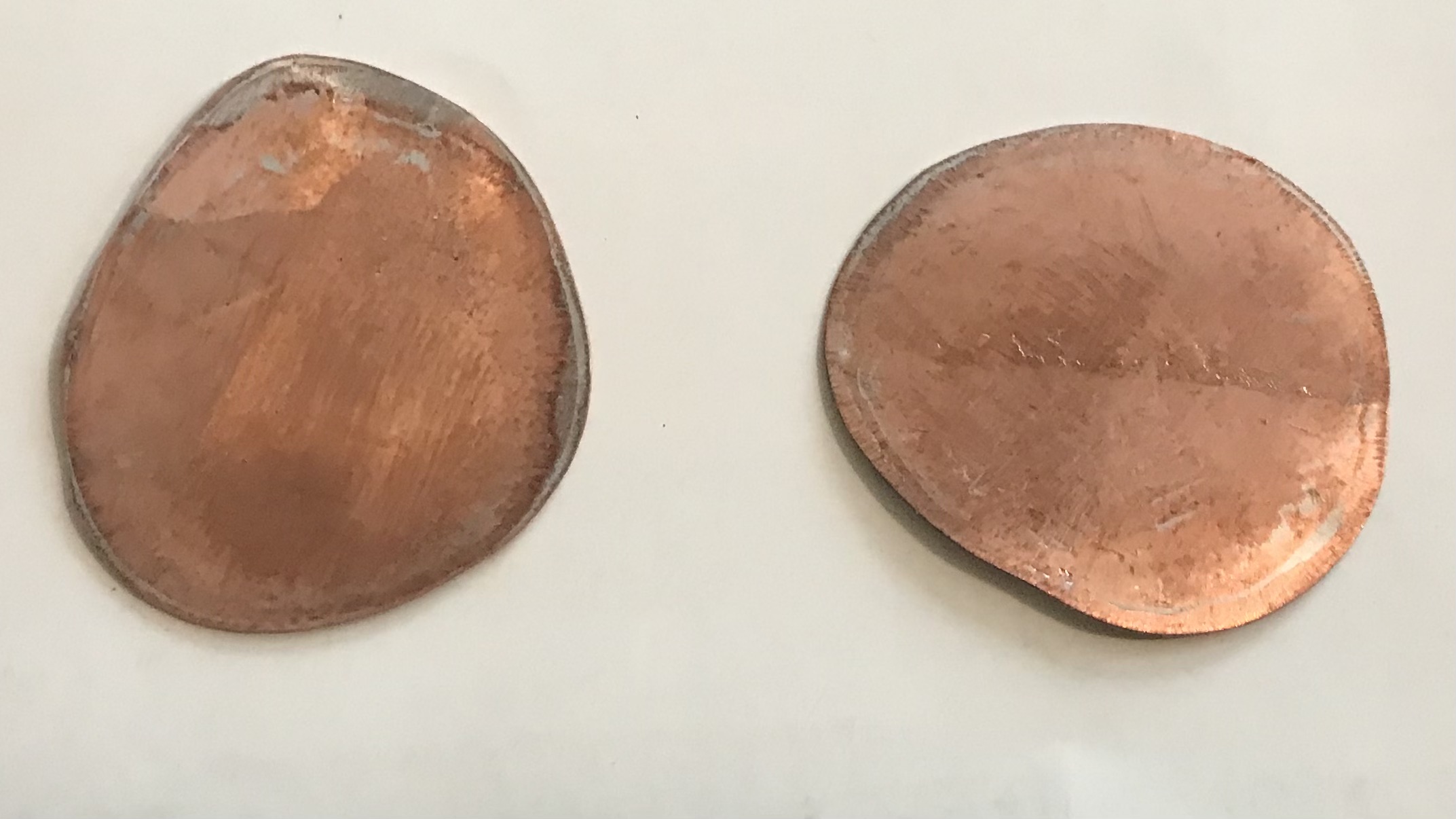
Case in point; yesterday my son was telling about things he had done as a kid growing up on our farm and his girlfriend was amazed. She asked if I knew he was doing all that. Well, yes and no. Was he doing anything bad? No! Case in point: having been in North Carolina during the recent gas shortage, I saw firsthand all the stupid ways some people were hoarding gas. I can guarantee you my son understands why you don’t put gas in a trash bag lined trash can with no lid. Enough said! And, yes I did see that done. Somehow, last evening, the subject of putting pennies on a railroad track came up. My son’s girlfriend had never heard of doing that. What? She then went on to talk about having some of those pennies you get flattened in a machine at vacation destinations. What? That’s no souvenir. I’m not going to say whether we did or did not smash pennies on a railroad track last night, but those would be a souvenir she would never forget making. Besides just plain being fun, we need to let children grapple with a little bit of healthy risk. Doing so can help teach motor skills, develop confidence, and get our young scholars acquainted with the use of tools and some of the basic principles of science. Let’s add some action to all the abstraction.
The Second Generation

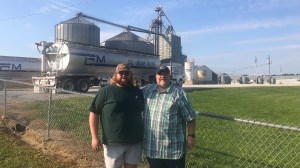
Everyone should feel satisfied and proud of the career they want to pursue. Our goal has always been for our son to make peace with his post-secondary education and career goals and, first and foremost, make himself proud. There has been quite a lot of research done studying the impact parents have on their children’s educational and career goals. I am really glad and proud of the work I have done in the policy arena to have career exploration be something that happens much earlier than the end of high school. Our young scholars need to be preparing for the next chapter of life—whether that’s higher education, industry training, directly into the workforce or another path much earlier. I also believe that parents have an influence, either positive or negative, on this. I began reflecting on this yesterday when standing outside my son’s summer internship at Cal-Maine Foods. I could not go in for bio-security reasons, but I was so proud that there stood two generations of Animal Science majors at two different universities – Purdue University and Murray State University. Check out our picture and here is the tweet I did in the moment:
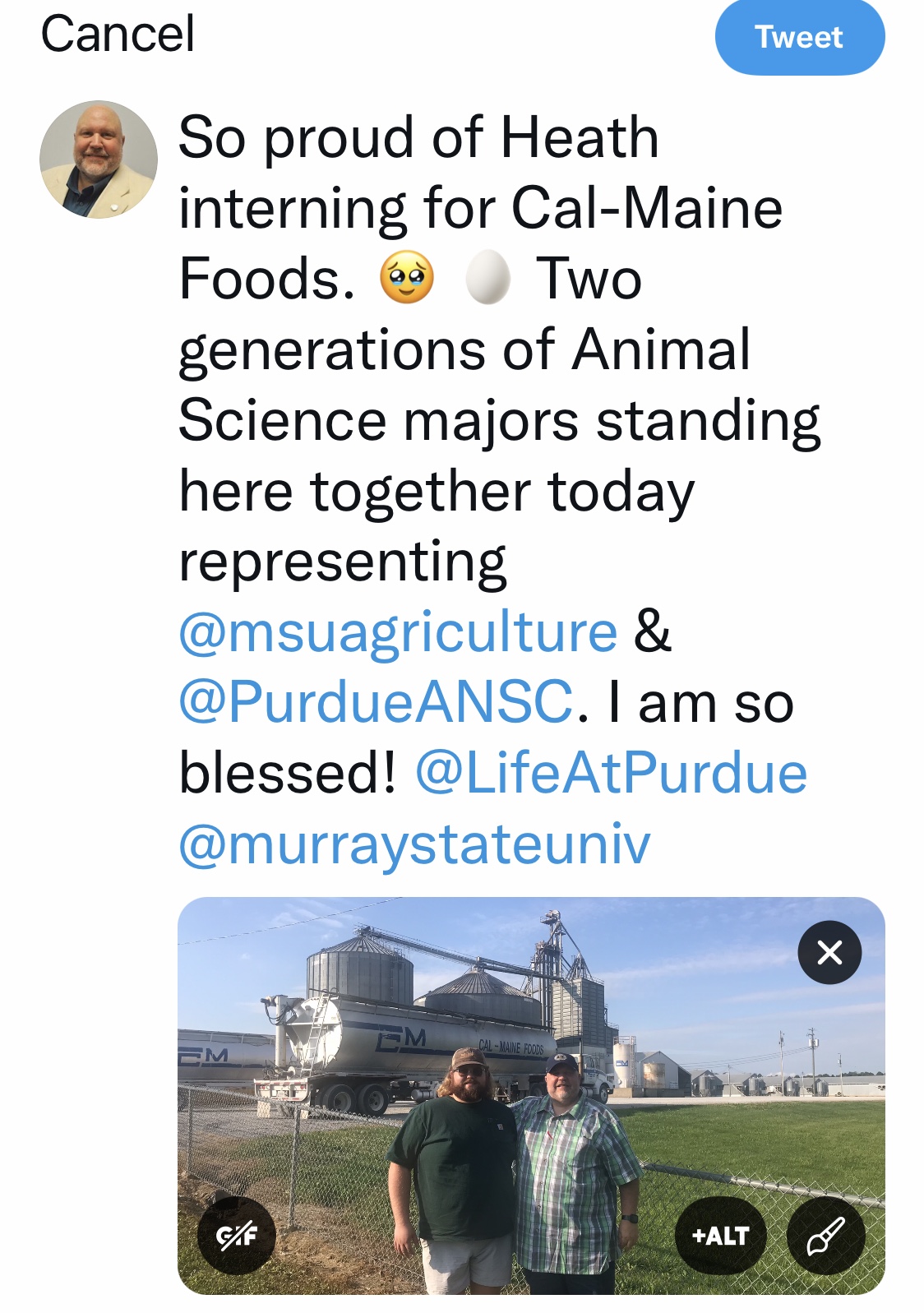
I asked Heath if he ever felt any pressure from me to be an animal science major. He answered an emphatic “no.” He did say that I had set an example because of how proud I was of having gone to Purdue and received degrees in both Animal Science and Agricultural Education. He also knows the story well of how I ended up being an agriculture science teacher and working in education my entire career. If you don’t know that story, click here. Heath also talked about all the experiences growing up on a working farm gave him. Home is where thinking ahead, dreaming big and setting goals can become normalized activities and allow all those skills to be available to our children when they come to the forks in the road. The earlier the conversations start, the better prepared they’ll be to make the best choice when that moment arrives. It’s not about applying pressure, but about being a model of making life choices that match passions and purpose.
Hatching Change
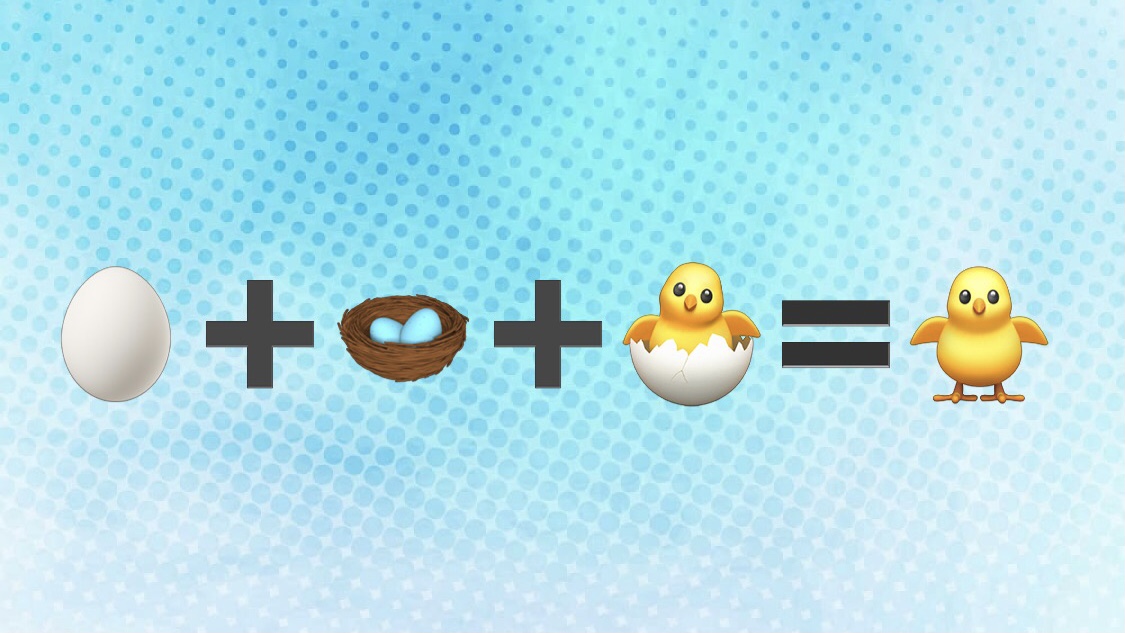
One of the things I am always saying is that I do not like the words, “buy-in.” It has been my experience that if you have to go get buy-in for some new initiative or change, you have already failed. Done correctly, the buy-in should happen organically as the change or initiative is being planned. As Ken Blanchard said in Simple Truth #22, “People Who Plan The Battle Rarely Battle The Plan” of Simple Truths of Leadership: 52 Ways To Be A Servant Leader and Build Trust, Making Common Sense Common Practice by Ken Blanchard and Randy Conley, “…people have a hard time getting behind an organizational change effort they have had no part in creating” (p. 61). That’s why I am such a believer in the Vantage Points Model (MG Taylor Corporation). The Vantage Point Model reminds us that we should gather as many stakeholders from different points of view as possible (philosophy, culture, policy, strategy, tactics, logistics, and tasks). Blanchard went on to tell us that, “When they [people] can play a part in implementing the plan and are allowed to express their concerns and contribute their ideas and feedback, they are more likely to align behind the plan and help accomplish it” (p. 61). Thus my point about “buy-in.”
If we have been inclusive during incubation phase of the change process or initiative building, then there should already be buy-in because it was the group’s initiative to start with. If all those with a stake in the change or new initiative have been represented this will get us to a better product in the end. I have witnessed initiatives in schools fail, that were good ideas, because teachers and/or students were left out of the incubation phase. After the hatching the change or initiative I heard, “That was a good idea, but failed because no-one asked the ones (teachers) that would be implementing it. We could have told them to do x, y, and z and it would have worked.” There were so many times when I was a teacher or principal that we had some school process we needed to correct or create and almost every time that we got stuck trying to figure it out, it was the students who would come up with the solution that actually worked.
So next time you need to hatch change, don’t forget to gather representatives from all groups that will be affected by the change.
It All Comes Back To Relationships
I’ve had the honor of spending the past two days in Florida facilitating professional development for teachers. It was so inspiring to work with teachers who were so positive and clear in their purpose for serving scholars. Interestingly, as we come back even better after the pandemic years one theme came out in every one of my sessions: relationships are the key to everything. No matter how tough things are, we have to remember that building the meaningful relationships with students is number one. We have known for a long time that the relationship with a teacher can be critically important to how well students learn. We also know these meaningful relationships are much deeper than social interactions. Great teachers engage with students around their curiosity, their interests, their habits of mind through understanding and approaching material to really be an effective teacher. Research also tells us that the teachers that form these relationships are happier and experience the true joy of teaching.
When I was teaching I actually had the personal mission statement of, “I strive to use rigor, relevance and relationships to be a steward of high student achievement.” I blogged about that in Drumming Up Relationships. We must learn our students and connect with them on a real level, showing respect for their culture and affirming their worthiness to receive the best education possible. Our relationships with students matter more than we might ever know. Our abilities to show empathy and compassion are crucial. We must also continually hone our skills at practicing perspective-taking: actively imagining how a student might perceive or be affected by a situation. This can help us reduce bias and deepen our relationships with students. With deeper relationships comes trust, and with trust comes more engagement in learning.
Wanna Into Gonna

As I was flying home from facilitating a leadership professional development gathering yesterday I noticed what was written on the Southwest Airlines napkin. The Southwest business model has always been intriguing to me and I was struck by what was on the napkin, “In 1971, a triangle scribbled on a napkin transformed a dream into an airline and a wanna into a gonna.” I love the thought of a wanna becoming a gonna. This is also a reminder that it takes action to make dreams realities. We also, can’t do it all ourselves.
Whether it is making the plan visible and real on a napkin or just getting to work, the point is we have to start somewhere. There is a whole lot to what Herb Kelleher had to do to get Southwest Airlines off the ground (pun intended). I’ll let you do all the reading on that, but the point is we need to plan out turning our wanna into gonna. Also, remember, in this age of crediting everything to rugged individualism, no-one accomplishes things by themselves. We all need someone that provides us with the assist. It is very disingenuous to tell our kids that if they just work hard they will succeed. That is simply not true. It is an important part, for sure, but not the end-all-be-all. We all need those that provide us with privilege for accomplishing our dreams. Yes, Kelleher had tenacity and stuck with it, but he had people all around him, including his employees who he cared for deeply helping him get it done.
What dream triangle do you need to scribble on a napkin, and who can help you turn your wanna into a gonna?
What Does Success Look Like?
“They’re not sure how to please their boss, how to behave around their teammates, or what a good job looks like” (Blanchard & Conley, 2022, p. 39). Ever been there? I’ll bet many of you reading this have experienced this. Or, after listening to a leader pontificate about all her great values have someone lean over to you and say, “All talk! She doesn’t actually do or live out any of that.” I have experienced this all first hand and it’s not a good place to be. We all need and deserve to know what the expectations are and what success looks like. In fact, that is one of my favorite questions to ask: “What does success look like?” And, as we work shoulder to shoulder with those we serve, we need to model the expectations. As a teacher, principal, and superintendent I always said, and still do, that our students will live up to our expectations – so, let’s set them high and model them.
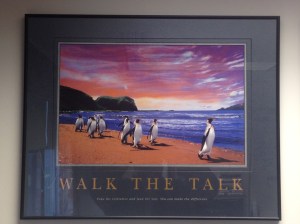
Then in Simple Truth #13, “You Get From People What You Expect”, in Simple Truths of Leadership: 52 Ways To Be A Servant Leader and Build Trust, Making Common Sense Common Practice by Ken Blanchard and Randy Conley reminded us that expectations are so much more than words. We were also reminded that “You must walk your talk, or your words are meaningless” (p. 39). This really resonated with me as I have always been such a believer in modeling by walking the talk and walking the walk. In fact I have a picture in my office of penguins walking the talk. I used it as the feature photo of the blog post Walking The Talk! and am using it again for this post because it means so much to me and is such an important reminder. We need to paint a very clear picture for all those we serve, by walking the talk, of what success looks like.
 Byron's Babbles
leave a comment