“Sticky” Learning
 I made the comment last week that relevance makes the learning “sticky.” This really caught on and caused quite a bit of discussion. As an old Agriculture Science teacher I have preached about using relevant and real-world contexts for facilitating learning for years. In fact, I even wrote a book about it: The Hand In The Back of The Room: Connecting School Work To Real Life. This book is all about how we (four agriculture science teachers at one school) went about teaching science in the relevant context of agriculture. The great part of the story is the statistically significant impact leading learning in a relevant context had on student learning. In other words, there was proof that relevance makes learning “sticky.”
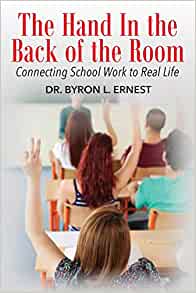 In the book I state, “It has always been my belief that there are three worlds that a student exists and learns in; school world, real world, and virtual world. While these three worlds can be drawn as three separate circles, I believe that for true learning to take place we must, as educators, help connect the circles for them. This means finding a way to facilitate learning in a way in which the student uses real world contexts where the student plays an active role” (location 320 on Kindle). Right now, during the Global Pandemic (we are in day 165) we have some real opportunities to make use of these world colliding. I wrote about this yesterday in When Worlds Collide. I also argued in the book that, “…facilitating learning in a relevant context enables the work to be student centered and for there to be a connection made between the student’s real world and school world for learning” (location 331 on Kindle). This connection is what makes the learning so “sticky.”
“We have to make sure that all our students have access to these kinds of challenging and hands-on activities. Although much of the focus has been on the new technology that is fueling the maker movement, even more important are the values, dispositions and skills that it fosters, such as creativity, imagination, problem-solving, perseverance, self-efficacy, teamwork and “hard fun.” ~ Secretary of Education, John King Jr.
I proposed at time of writing the book and would still advance six ideas for improving learning (Ernest, 2016):
- Knowing what the end product needs to be before practicing the parts
- Study content and apply it to authentic real world predictable and unpredictable problems/issues
- Applied learning opportunities must be afforded to the students
- Students must participate in active exploration of real world problems
- There must be opportunities for students to make adult connections
- We must make schoolwork more like real work and real life.
If we intentionally use the six ideas, we will make the learning be what former Secretary of Education, John King Jr. called “hard fun.” The nature of using relevant contexts makes the learning more rigorous. I love the term “hard fun” over rigor. If our students are learning to adapt what they have learned by addressing real world situations they will be more motivated and the learning will stick with them.
The bottom line is that education can be inspiring for our students. I believe agriculture education has an important place in creating a real world context for our students to learn in. I also believe that there are many ways for cross-curricular collaboration to be done in all subjects. At the very least, we have an obligation to our students to find ways to give our students hands-on, real life lessons that answer the questions of the hand in the back of the room and make the learning sticky for our students.
When Worlds Collide
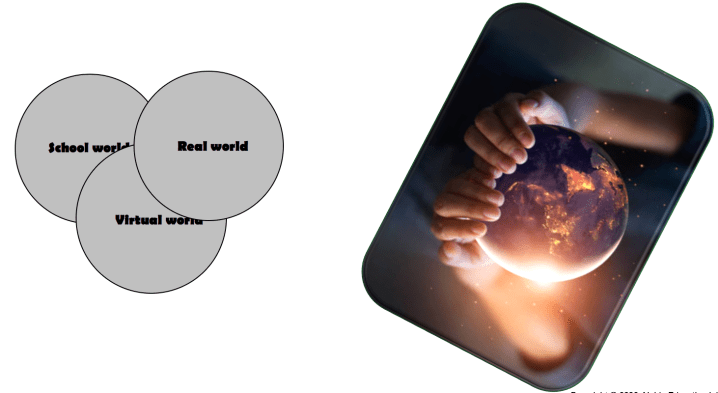 Last week I did a professional development webinar for teachers where we were talking about one of my favorite topics that I am most passionate about – making learning relevant, authentic, and engaging. As we continue to try and disrupt education as we know it and move from a teacher-centric model to a student-centered model, there are two ways to go about this:
- Focus on making learning more customized to each student
- Focus on making learning more relevant, authentic, and engaging.
At times it seems these two foci collide. We also discussed how our students live in three worlds – school world, virtual world, and real world. Right now, as we enter day 164 of the Global Pandemic, I believe these worlds have collided as well. The point is we must truly be preparing our students for the complex, rapidly changing, technology driven, increasingly connected world they will face. I said that I thought there was a song about worlds colliding that is often played at football games. A participant quickly reminded me it was When Worlds Collide by Powerman 5000. Of course I had to listen to the song and check out the lyrics. I loved that one of the lines in the song that is about being strong and not giving up was, “What is it really that motivates you?” That is what we really must find out from each of our students; or, even help them find out for themselves.
 Strategies for deeper learning that increase student engagement and produce the kinds of skills needed for today’s economy and career requirements can be improved by leveraging the practices of personalized learning allowing each student to get the kind of differentiated instruction needed to ensure that they have mastered the content. Additionally, when implementing personalized learning students benefit when we balance their computer aided learning with robust, relevant, and authentic projects. And, guess what? When taught with these strategies, in this environment, students will be more engaged.
As our students’ worlds collide we have to remember that in the world outside of school, learning happens in real time as students begin to realize they need to know something. We must remember, however, that in the real world being knowledgeable is only part of what makes a student successful. Making sense of the knowledge, communicating effectively with others about that knowledge, grappling with diverse perspectives, applying that knowledge, and validating their ideas are just as important. Our students must be able to adapt what they have learned to both predictable and unpredictable real world situations.
Where Is The “Twin”?
 Today I had the opportunity to moderate a great global webinar entitled “Creation of a Digital Twin.” The webinar was put on by GIA SMART Factory League. I am always honored to have the opportunity to work with this organization and it was incredible to be in the [virtual] room with industry representatives from over 36 different countries. And…now that we have learned we can hold these events effectively virtually and learn together apart, we can get together more often and not have the huge travel expense. Talk about holding the whole world in your hands!
 I value the opportunity to spend time learning from those in business/industry and manufacturing. It saddens me that many leaders in education talk a big game about wanting to hear from business stakeholders, but most of what happens is lip service. We need more walking the talk. Those in education must stop thinking we know more than those that hire the students we educate. It must be a partnership. There must be a true dialogue of listening to understand.
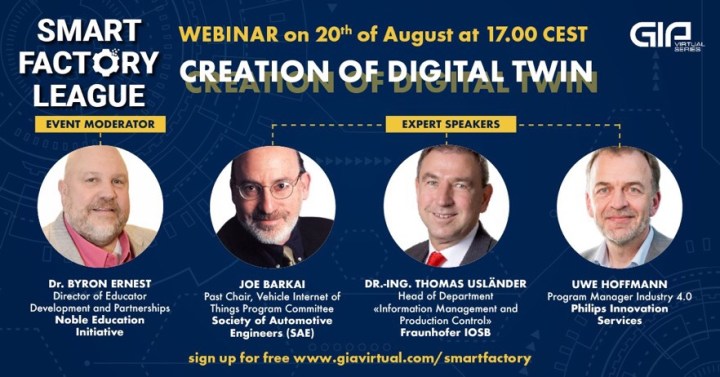 That’s why I love events like the one today where we can learn together and learn each other’s industry specific languages. Today we were learning about the “digital twin.” The creation of a digital twin enables us to simulate and assess decisions:
- Before actual assets are built and deployed
- Before maintenance
- Before a design change
- Before complex tasks
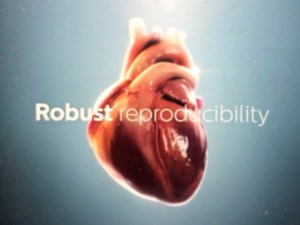 A number of industries are creating digital twins, digital replicas of products, and many other things including body parts. Today we saw a digital twin of the heart done by Philips Innovation Services. The heart digital twin performs patient specific adaptation. It was amazing. Imagine the testing of procedures and products for heart repair. Also, think of the possibilities for training and education. Endless!
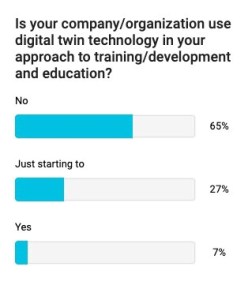 The digital twin mirrors what it is twinning in bits keeping the bit replica synchronized with the real one. I learned today that just certain parts of an asset can be selected to twin. Thus making it easier to focus in on specific functions or parts. It was pointed out that this could be of incredible use in education and training. In this sense digital twins are a new tool for education: rather than studying on the real thing you can study on its digital representation. Even though in a polling question I asked during my introductory statement today, there were only 7% of participants using digital twin technology for training/development and education, and 27% just starting too, technologies like virtual reality provide new tools for education.
Imagine if we had a digital twin of ourselves. We would still have all the flaws, but some some smart technician might find ways to help us improve. Far fetched? I think not!
Messy Creativity
 On Monday I was doing a professional development gathering for Cardinal Charter Academy in Cary, North Carolina entitled “Flat Stanley Goes Virtual: Let’s Be Engaging, Not Flat.” Of course, I used a through line: Flat Stanley’s and Flat Sarah’s. We were discussing achieving high student engagement. Participants made their very own Flat Stanley or Flat Sarah that represented their journey during the, then 156 day, journey they had spent during the COVID-19 Global Pandemic.
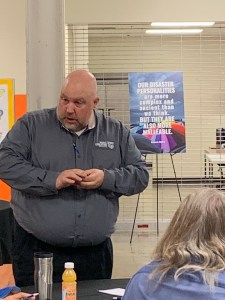
The participants were super creative and it is always interesting to hear the share out stories. One really caught my attention (see picture in this post) when the participant pointed out she had put a paint splatter on Flat Stanley’s right knee to represent the messiness of our lives right now during the COVID-19 Global Pandemic – the mixing of colors without a set plan or vision of a final piece of art. While it is true, there seems to be a lot of messiness and paint slinging, it got me to thinking that we should try to treat our current situation more like an artist.
In education we have always relied on our function being to provide clear standards and the facilitation and tools needed for student success. This function has been, and continues for the most part, done in a very rigid and standardized way. While reform attempts have been made there is still much work to be done to disrupt the status quo.
All of our lives have become messy during the now 158 days of the pandemic. Additionally, the pandemic has exacerbated the messiness of leading learning in education right now. To address an issue standing between a problematic status quo and student success, we must travel into an uncomfortable unknown territory with no signposts pointing toward the destination. Right now, in these times, we are on a quest not knowing our destination before arriving. We must recognize and accept the scariness and messiness of the unknown.
 We need to find ways to let loose and let the paint splatter, like on the knee of our participants Flat Stanley, into beautiful art. This makes me think of the paint splatter rooms that are popping up in many cities. Basically, you go, suit up in protective clothing, and sling paint (🎨 6+ colors) at each other and a canvas. What fun! Upon completion of your 30-45 minute “splattering” you have a beautiful piece of art. I really want to go do this! Leadership is so messy, and this splatter room concept makes such a great metaphor.
These splatter rooms have been used for therapy and team building because of the feeling of freedom achieved by just slinging the paint and the random mixing of colors. A messy process where the splatter artist doesn’t exactly know how the canvas will look in the end, but has created a beautiful product. There is so much we can’t predict, much less understand and control, especially right now. We need to keep leaping into an exploration of the possibilities with unscripted questions and activities – the splattering of paint.
We need to embrace the messiness and discover previously unimagined possibilities. Leadership is not about finding one’s courage. Rather, leadership is accepting the messiness and fear that goes with the new and unknown, and then finding the courage to surface its possibilities and beauty.
Become More Human & Less Machine


 One of the things that past years’ participants had recommended is that there be a book chosen to use along with all the other professional growth opportunities being provided. As an avid reader, FFA leadership deferred to me to pick the book. I was thrilled to get to do this! The theme of “making connections” rose to the top as a theme for the two week development. It is so great to have a theme developed organically from the participants. We even used the hashtag #FFAConnections on twitter. I did my due diligence thinking of books I had read and reviewing others, but a book that I had read in the past kept jumping to the top of the list: Back to Human: How Great Leaders Create Connection in the Age of Isolation by Dan Schwabel.
Dan Schawbel is a New York Times bestselling author and the Managing Partner of Workplace Intelligence, a research and advisory firm helping HR adapt to trends, drive performance and prepare for the future. He is the bestselling author of three career books: Back to Human, Promote Yourself and Me 2.0. Schawbel is also the host of the 5 Questions podcast, where he interviews world-class humans like two of my heroes Richard Branson and Condoleezza Rice; among others like Rachael Ray, Gary Vaynerchuk, and Jay Shetty. At the beginning of the book Dan said, “The point of Back to Human is to help you decide when and how to appropriately use technology to build better connections in your work life.” He also told us in the book that leaders can only be successful if we are able to create emotional connections to others – connections that allow empathy, performing acts of kindness, and avoid hurting others. Because these teachers would be making connections during the continued Global COVID-19 Pandemic (we are now in day 147), this topic was so relevant.
Because we were doing this growth opportunity virtually, I decided to take advantage and see if I could get a Zoom conversation with Dan Schawbel set up to discuss just how we could become more human and less machine. He was more than willing and we had a great conversation that we were then able to provide to our participants. Here is my conversation with Dan split into to two YouTube videos:
What an amazing conversation, don’t you think? Needless to say, our participants thought so. Our participants also loved reading the book. It is amazing to me how applicable a book that was released back in 2018 is even more applicable today than when it was released. This really is a book that I believe every human should read.
Dan was also so gracious in agreeing to answer all questions submitted by these highly engaged teachers. Here are there very thoughtful questions, and Dan’s answers:
1. How do you recommend balancing/setting boundaries when tuning out the noise of technology when so much of our work has to be completed using technology or communicate with our superiors? There is so much pressure to “look like you are working” that sometimes boundaries of not checking emails or not answering the phone after hours can make us “look bad.” When you’re working remotely, there is both external and internal pressure to work harder, longer, and deliver more value above and beyond what would be expected at the office. That’s why you have to self-manage, set expectations, and create boundaries with the people you work with. You need time away from technology or you’ll get burned out and sick from overwork and too much screen time. Block off time during the day on your calendar for walks, phone calls, reading a book, and other activities that pull you away from your screen.
2. What do you believe the long-term effects of the widespread remote working will be? The widespread effects of remote working will be more competition, yet more freedom for professionals globally. By working remotely, people have the freedom and flexibility to work when, where, and how they want. But, with remote work comes global competition because people don’t need to be at a corporate office to interview or work. For instance, if you live in Idaho you can work for a Silicon Valley technology company, which would have forced you to relocate in the past. If you are job searching in Silicon valley, now you have to compete with people who live everyone in the world including Idaho, which wasn’t your competition pre-covid.
3. Even though our students have grown up with technology, and are addicted to it, there was a lack of engagement during Distance Learning this year. Seeing that we are most likely going to have a hybrid type of classroom moving forward (distance learning and in class learning), how do we engage them in the distance/technology learning portion of that hybrid model? Can we trick their brains to make them feel like it is “cool?” I think the smartest thing teachers can do when it comes to teaching in a hybrid model is to experiment and then solicit feedback from the students. Find out what’s working and what isn’t by asking them directly and using the data you receive from virtual learning as an indicator of what changes need to be made. Make two buckets, one for virtual learning and one for in-person learning. As you experiment with your coursework, put activities into one of those buckets based on what’s working for you and the students.
4. In a world of instant gratification and praise being needed, like discussed in chapter 6, are we enabling this “addiction” by giving that praise and recognition? How do we find a balance between giving the recognition needed in order to build relationships with students, and enabling that mindset? I don’t think it’s wise to give recognition for the sake of it. I think you should be consciously awake that recognition is important to student engagement, but only do it if it makes sense and feels natural, otherwise, it could come off as being fake.
5. As teachers how can we start the new school year with better communication/connections during our new teacher inductions? During this spring I felt like I was chasing students around for attendance purchases. I recommend that you start the communication before the school year begins and when crafting the introductions be vulnerable with what you’ve been through during the pandemic, how it’s affected you, and emphasize the importance of teaching. This will help you connect emotionally to your students and also reinforce the importance of education.
6. If we practice over-communicating, how do we make sure the communication still appears authentic? You be authentic first, then over-communicate second. Come up with an important message and say it in multiple ways across multiple days or weeks.
7. How do we allow those who we are virtually meeting with trust us through what we are presenting or discussing versus being in a classroom or office setting? How do we keep their attention during that time? Trust needs to be earned overtime by being honest, dependable, competent and consistent, all of which you can display virtually but strengthen in person. Getting and keeping attention is hard virtually so you have to spend that much more energy making your teaching dynamic and interactive.
8. What long term effects do you think we will see from using zoom and the virtual communication on real in person communication in the future? Technology can be a bridge to more human interaction and trust, but I think we’re at a point where people are exhausted from it. I think the combination of technology and in-person interaction will be the prevailing hybrid in the aftermath of the pandemic.
9. I LOVE the idea about communicating once on Monday and once on Friday and I actually used this method with my students (optionally) this spring. There were incentives for them to come to my meetings though. I had a hard time making them mandatory because –I knew they had 6ish other teachers that could be expecting the same things or have different demands. What kind of system or pattern of meeting do you recommend when dealing with students in a situation like that vs. An office? Just a short meeting with each teacher -still Monday and Friday –or having like a whole grade meeting and then asynchronous meetings with individual teachers? When it doubt, put the options on the table potentially in survey form to find out what works best for them, then analyze the results and act on the most frequently chosen response as a trial. This way, you can justify your choices to the students if they ask.
10. Is it bad that I am enjoying the “break” of life with the outbreak of covid? No, we all need breaks especially during hard times.
11. What are some ways that educators can make our connections unique through virtual learning? By talking more about personal activities instead of just school work and by asking more questions instead of just lecturing.
12. The Monday/Friday video calls seems like an excellent idea! I resonate with ideal of having to “prove” your worth when working digitally. Our district has required time logs that have instilled a feeling that the district does not “trust” its teachers. How can school leaders balance expectations and trust? I think you have to run trials and then iterate because we are living through a historical time that hasn’t happened before. Everyone is experimenting to see what works and then running with the results.
13. I find it interesting that he said we are working more and harder when working digitally. Up to ten hours. Part of me felt like I was slacking just because I was working at home and I am not used to that. I also realize now that I was working more because I was checking email, Google Classroom, and other platforms ALL DAY! How will we get away from that if we are more digital next year? I’m not saying that we should be working up to 10 hours more, the data just shows remote workers have fewer boundaries between work and life so they end up working more during their life. It’s not healthy to overwork and burn out and can be counterproductive.
14. A recent impromptu poll I’ve done with my kids showed that the majority of them “cheater, or felt the urge to cheat” because of the lack of structure or supervision with FFA activities. In a period of isolation, besides meetings once a week, what are other possible strategies to promote structure in an online setting? You should equip students with their own structure and not expect them to do it for themselves. This can be done using technology like a calendar where they get alerts when they have to be in class or a homework assignment is due.
15. With so many varying backgrounds and interest levels with students/teachers, how can we keep our virtual/hybrid learning and communication relevant to those that we are communicating with? The video talked about zoom fatigue, but it seems to be something we must learn to live with. I understand communication is key to understand what your audience wants, but it’s much harder than a classroom to adjust virtually to appeal to a virtual audience. We have to adjust as we go because this is new territory for everyone, both students and teachers. Through our experience and by talking openly, and soliciting feedback from students, you should adjust your communication style. When class starts in-person again, people will naturally spend less time on Zoom since we use it by necessity right now.
16. How do you convince school leadership that beginning and ending the week together (as talked about in the video) can create a sense of community within a district? It comes down to a conversation about setting expectations, being on the same page and ensuring that there’s consistency in communication. The start and end of the week create the biggest impression.
17. How do we mimic small accountability groups with our school staff, classrooms, and FFA officer teams if we continue with virtual learning? Right now you can do Zoom breakout rooms in order to do that.
18. What are some tips and tricks for increasing digital engagement? Quizzes and facilitated discussions work really well. You want the students to participate much more than they normally would because you aren’t in a physical space.
19.How do we turn the digital/virtual/remote environment to where people will want to show up and engage? You pick the right platforms and then use the tools inside of that platform to engage students, allowing them to participate and connect with you and each other.
20.As an individual, how do you suggest employees who consumed with online learning disconnect from the digital world to create a healthier work/personal life balance? You give them time in their schedule for breaks and encourage them to take time off.
21. Are there specific ways/methods of engaging young people/students that are more effective than professionals? Use the platforms that they are currently using as a way to communicate with them and solicit interaction. For instance, Tik Tok is an iPhone app that students are using so you can use that same platform to think of creative ways to engage them.
As you can see Dan really does fulfill his role in society by making information and research universally applicable and digestible by the public. Back to Human and Dan himself really gave these teacher ambassadors useful and immediately actionable information for helping them be effective ambassadors for the National FFA Organization and agricultural education. They also will be better teachers for the students they serve because of the “back to human” experience. How about you? Do you want to become more human and less machine? I sure hope so!
“I Get To Go Be Creative”
 Today I was in Nashville, Tennessee doing what I love to do: work with teachers. We were putting on Impact Nashville; an action packed day of professional development. While I was working to inspire teachers and help them improve their craft and the craft I love, I was inspired by the photographer who was chronicling the day. As I was welcoming the participants and handing out name badges this morning I dubbed her “girl with the camera (GWC).” She really does have a name: Lisa.
I love watching great photographers as they move about working for the best shot. Probably because I’m not very talented at taking pictures. I usually need to have someone take a selfie of me. I could tell she loved her craft from watching her. During one of my sessions I was driving home the point that we must teach in a way that has our students believing they “get to” to experience great educational activities, not “have to.”
So, of course, I included GWC Lisa in the discussion. I asked her what she said to herself as she was leaving home this morning to come to our event. She said, “I get to go be creative.” I couldn’t have scripted better – which I had not. How awesome was that response? We should all strive to create environments where we, and those we serve, “get to” and not “have to.”
 I was using the game Angry Birds as a through line for my professional development. The point was using eight principles used by Rovio in the development of Angry Birds that has caused the game to become a phenomenon that people love to spend time playing and seek to improve their skills. In fact, I always say, “Everything you need to know about teaching you can learn from Angry Birds.” Here are the eight principles:
- Make it easy to start the task.
- Show, don’t tell.
- Give useful and immediate feedback.
- Make it easy to recover from feedback.
- Complicate the task gradually.
- Accessibility/Mobility: how could we leverage the cell phone for our students?
- No single answer: players explore and try different techniques. We can experiment.
- Incentives to do better: leader boards, achievement badges, certifications, et cetera.
What are you doing to encourage a “get to” mindset in your organization. What would the world be like if we all could say “I get to go be creative” every morning?
Day 💯 – Getting To Know People In A Different Way
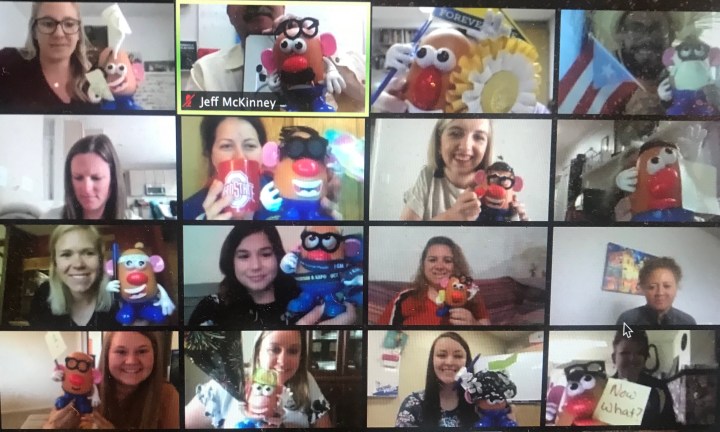 Well, here we are; day 💯 of the Covid-19 Global Pandemic. During this time of discovering a new normal, I feel more connected than ever before. I have met the children, spouses, pets, and even a grandmother of people I never would have thought possible. I’ve even introduced some of our Jersey dairy cows to others while connecting virtually. Additionally, I’ve witnessed parents attending school events virtually, while at work, that never would have been able to attend before. My point? There are things that we need to consider becoming normal. I’m not saying replace necessarily, but supplement.
Having said that, I now begin to think about what else do we need to be thinking about? How do we leverage technology? How do we stay human? How do we get the right tools in the hands of everyone? How do we decide what the right tools are?
It’s interesting to me that before the WHO (I thought that was a rock band) named this a Global Pandemic we were talking about sustainability and the environment, health care, education, and many other things. While in the education realm we have been focused on connectivity and providing meaningful virtual education, and in healthcare our actions have been around caring for Coronavirus patients and stopping the spread of the disease, we will get back to talking about the major issues in the way we were before the pandemic took over. For example, we will, no doubt, be rethinking health care and how it is delivered. In education, I continue to argue that our conversation needs to shift to the idea that school is no longer a place.
Even though I served as moderator for an awesome global event last month that was virtual with 47 countries represented, I also wonder if our assumptions about globalization have been challenged. We had been talking about distance no longer being a factor, but in some ways I’ve seen us become more isolationist and seeing us care more about the locality we operate in and what we can touch and feel. But, we’ve also seen that we can hire the best talent from anywhere and bring them onto teams. The only remaining question related to that is how to do remote working well.
I don’t think I am alone with all of this thinking and pondering. We are now entering a time of needing to decide which practices still make sense and which need to change. We need to come together as families, businesses, schools, communities, cities, states, and nations to answer the question, “What can we create together?”
Getting Comfortable With Being Uncomfortable
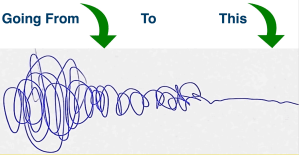 I first drew the illustration featured in this post for a webinar that I presented as a part of for the SMART Factory League back in April. Then I used it again this week for two webinars I did for teachers entitled “Embracing the Changes: Let’s Not Go Back to Status Quo.” The drawing represented how we are being nudged, pushed, or even shoved to make changes, given our current uncertain and unprecedented times. I hoped the drawing represented going from the massive, unorganized scribble that was the uncertainty and confusion we first experienced when dealing with the COVID-19 Pandemic to a very focused, straight line. On this, now day 80 of the pandemic, I would argue we are not at the focused, straight line yet, but are moving closer.


So, how do we get started? To borrow from our friend Goldilocks – we must get our focus just right. Focusing to narrowly on just one of our challenges will not work, but it also will not work to try to change everything at once, either. We need to change in a controlled fashion. But, what does that mean during this time of both the normal disruption of things and the ongoing pandemic? We are all trying to cope with unprecedented levels of uncertainty.
In fact, studies show that we are loss-averse and gain-seeking. We want the sure thing. We will accept less to lower the risk of failure. Sometimes we even give up success to not experience failure. We contemplate this a lot in athletics. Do we play to win, or play not to lose? Most teams who play not to lose, do just that – lose.
One thing I know for sure, we have done a lot of developing our “dealing with uncertainty capability.” One of the most important ways I believe that I have been able deal with the uncertainty has been to fully embrace the fact that every day was going to be a learning experience. I have literally asked myself, “What can I learn today?” These past 80 days have put the mantras of “lifelong learner” and “growth mindset” to the ultimate tests. You see, when something’s too easy or we’re not facing uncertainty, we’re not learning. Numerous scientific studies show that when we confront setbacks and we can adjust our view of these setbacks to see them as lessons, our brains literally begin to change.
None of us were trained on how to respond in a global pandemic and our immediate response to the challenges might have been “I can’t do this” or “We’ll figure it out.” As Nora Bateson (2016) so aptly put it in Small Arcs of Larger Circles: Framing Through Other Patterns, “No one is qualified to talk about uncertainty. You cannot get a degree in it yet, to the best of my knowledge.” Furthermore, she went on to say, “How, after all, can I pretend to offer you any kind of lesson on what I do not know?”
But, learn in adversity is what we did in education. While in the beginning it looked like the left had side of my scribble, we have been making our way across the page to the straight line. Wednesday and today we began to chronicle our learning by embracing the changes and discussing how to not go back to status quo. Here are two graphic recordings done by Amy Reynolds, Principal of Governors Charter Academy, during our session: “Embracing the Changes: Let’s Not Go Back To Status Quo.” Check them out:


The information in the graphics came from over 200 teachers working in breakout groups answering the following “What if?” questions:
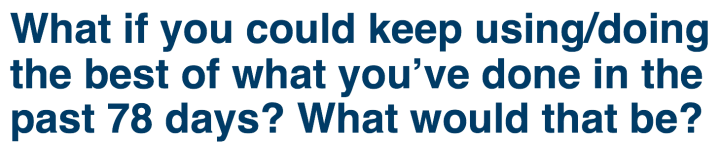
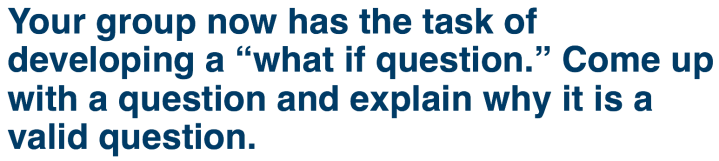

I learned to use “what if?” questions from the late Dr. Clayton Christen. These type of questions allow us to challenge assumptions, allow for innovation, and allow us to prepare. How about you? What have you been learning during these uncertain times?
Life Is A School As Well
 Today, during our “best of week” of educator professional development, I repeated my webinar, “Angry Teacher 1: What Can We Learn from Angry Birds About Engaging Students?” During the webinar a teacher made the comment in one of the discussions that “Life Is A School As Well.” This comment really struck me as we were discussing student engagement and making sure we were teaching students to adapt and use concepts to solve real world challenges and issues. We really have this opportunity right now because of the COVID-19 Pandemic. We have a socio-scientific classroom at our fingertips right now that can be easily accessed virtually with our students. Our students are living this right along with us. Therefore we must consider the intersection of our students real life and education. Right now the lines are pretty blurred.


Living through this time has taught us the that “life is a school” and that “school is no longer a place.” We need to make sure and honor living as part of the educational process. Henry Adams taught us this when he said, “Your life’s journey is your education.” I blogged about this in Your Life’s Journey is Your Education. We need to remember we are preparing citizens. Part of the answer for improving education is improving the sense of calling and commitment of students to take ownership of their learning and development. Burdens can many times create blessings and we need to keep in mind that our students have lives outside of the traditional education “walls” that we see the kids. We are learning to deal with this now more than ever. We cannot take this learning lightly and must use what we have learned to guide our path forward while we are on this path with no footprints.
If we really use “life” as part of education then we need to begin to reverse engineer how we educate using fulfilled adult lives and careers in the here and now to help inform the education content and process. We are not really doing this if we are honest. Most curricula are not designed by people who have experienced world-wide success in the areas being taught. This is why I am such a believer in the need of involving business/industry as partners in education. We must break through the barriers of:
- Teaching to deliver on, rather than change, expectations.
- Teaching to redeploy old ideas rather than originate and ideate new ones.
- Teaching about the dangers of originality.
These are the reasons why we get compliance instead of student engagement. Much of our education system teaches kids to be very good at being outwardly and entirely obedient. We need to provide an education where school work looks like real work and we have more than just very narrow parochial outcomes in mind. We need to be guiding students toward their largest, best, life-long interests; not just the narrow obstacle course we control. Life truly is a school as well.
The Day We Started Down The Path With No Footprints
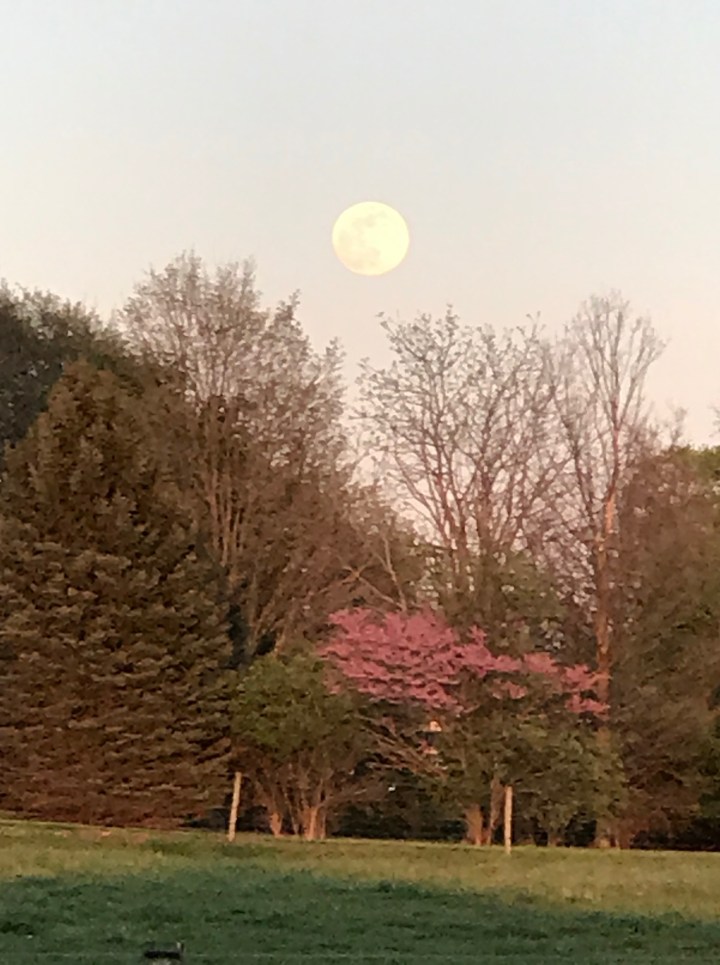 As I write this post it is day 129 of the 366 days of 2020. With 237 days left in this leap year, I felt the need to go back and reflect on the 70th and 71st days of 2020. These two days marked the start of my life being very different. In fact I was reminded that my life is not really my own, apart from everyone else. My life is a part of an entire community and ecosystem. Our world, up to and including March 10th, was really built on the premise that our world and education works off of and teaches that we are individuals and act as individuals. But, overnight from March 10th to 11th we were taught that we are all part of a ecosystem and even our own health depends on others.
 The 70th day of 2020 was March 10th. That day wasn’t much different that any other day, other than I had been invited to attend the Indiana Pacers vs. Boston Celtics game at Bankers Life Fieldhouse in Indianapolis, Indiana that evening with my Krannert School of Management friends from Purdue University. Other than the Pacers losing in a great and close game 114-111, it was a perfect evening of visiting with and networking. I do remember we had begun “elbow bumping” instead of shaking hands and there were extra bottles of hand sanitizer on the tables. Little did I know at the time I had seen the last NBA game of the season.
 I do, however, vividly remember one comment I made toward the end of the evening: “I wonder what happens if one player on one of these teams has Coronavirus?” Well, the next day, Wednesday, March 11, the 71st day of 2020, I got my answer. Rudy Gobert of Utah Jazz was the first NBA player to be diagnosed with what, that day, we began calling “COVID-19.” That same day the NBA canceled the rest of the season and the NCAA said the college basketball tournament would be played without fans (a few days later the tournament was canceled completely). On Wall Street that day, the Dow Jones Industrial Average fell 1,465 points. Also, on that day I learned that my son would be coming home from Murray State University to take his classes online till at least April 6th (later, the rest of the Murray State University semester went to online). That day we started down a path with no footprints.
Additionally, on March 11th, we officially started calling it a Global Pandemic, as declared by the World Health Organization on that day. It was that day that I came to the realization that this was for real, and this was much bigger than all of us. I also realized that if I was going to survive the weeks ahead, I would need to think in terms of self reflection instead of self evaluation. Also, it was abundantly clear on March 11th that pre-COVID-19 life and what happened next was still a path with no footprints. My existence as an individual was forever altered to make me realize how dependent we are on each other. For example that very March 11th day, the hoarding began. It became a time when we couldn’t find a bottle of hand sanitizer because someone else had hoarded a truckload of it – literally. I realized we, as a people, think and act very individualistically. Even though we were being told that there was plenty of everything, people still hoarded. I saw with my own eyes the empty shelves. We weren’t thinking about ourselves as a part of a larger community that needed to think about the next person coming down the aisle looking for toilet paper – which for some reason became the most hoarded item early on.
“My health is not my own. My health is the whole community’s, it belongs to the elderly, the youth, and even to the biome of organisms that live in my body and in the soil. This, is the opposite of everything that the last centuries of manufacturing, education and politics have forged into societal infrastructure and even the making of identity. ~ Nora Bateson
When people begin to talk about going back to normal, I cringe. I’m not sure I want to go back. I get it. You all now think I am crazy, and you’re arguing that not getting back to normal will cause the economy to crash. But, just going back to normal without having learned and grown from the experience is a huge tragedy. If it really takes a month to build a habit then we are in great shape because we have had nearly two months of developing new habits of realizing that what we do affects others and so on. We have also had a chance to slow down and ponder things like “how do we take what we have learned and make our education system better?” We’ve realized that school is no longer a place, and so how do we as Nora Bateson asked us, “What is the measurable value of changing the education system so the next generations may be more proficient at complexity and systemic understanding than their parents?” improve our education system. We do need an education system focused on developing our children to be able to deal with the complexities of our world that most of their parents don’t even realize exist.
I can truly say I have grown in ways I never thought possible in the last two months. And, a big part of that learning is the realization that we are all a part of something bigger than ourselves. As I finish writing this on May 8th, we are beginning to reopen, but hopefully we take advantage of of the clean slate of the path with no footprints to make the world a better place.
 Byron's Babbles
leave a comment