Opening The Door To Alignment
Chapter 31 entitled “Co-create Alignment” in Mindset Mondays with DTK by David Taylor-Klaus (DTK) dealt with seeking alignment when agreement is not possible. In my policymaking life I deal with this all the time. It was great to get DTK’s insight on the subject. He said, “Seeking alignment opens you onto a wide road” (p. 229). While consensus is what everyone is striving for in decision making, it is not always feasible or attainable in all situations. I would even argue it might not be the best course of action. Instead of setting consensus or full agreement as the goal, if we instead focus on finding alignment, the goal becomes finding a piece of the situation to align around as a common goal or interest. When we focus on finding alignment, conflict or disagreement can actually become a creative act that allows both parties to come to a more creative solution than either of party could come up with on their own.
We have learned much about leading through a crisis during the past year. The pandemic has challenged us to be more nimble and creative in our decision-making. When we rethink the meanings, the way we do things, philosophies, policies, and the myriad of other social issues, there’s a cascade of consequences. Therefore, alignment becomes critical. By focusing on what we and another person share in any situation, instead of what we do not, helps lead towards more creative solutions that honor both person’s ideas. By seeking alignment we can get to task-based conflict which allows us to focus on the strategies and methods for getting things done over emotions and personal dislikes. Alignment allows us to find the places we can agree and honors those disagreements we both have.
Context, as it always does, also matters here. If what we are truly seeking is collaboration then we must also have context seeking. When context is gained and clearly articulated we will be able to understand differences and account for them. This is very important and is necessary for everyone to believe they have been heard. With this clear understanding of opinions we will be able to decide whether we are or are not in alignment. Remember this, Alignment always takes precedent over the need to agree. Some of the best forms of alignment have been born out of a series of disagreements and differences. Are you opening the door to the wide road?
Play Big

“We are, after all, a work in progress.” This was the last sentence in Chapter 30 entitled “Work in Progress” of Mindset Mondays with DTK by David Taylor-Klaus (DTK). Actually, I talk about this a lot. I use the metaphor that my portrait will never be finished. Even when I die I don’t want it to be finished, but still be adding brush strokes of something significant. DTK had a drawing of success really looking like a squiggly line, as opposed to the straight line many imagine or try to achieve. So, I took a moment and roughly plotted out my life’s journey (featured image of this post). Upon further reflection I would make a few more dips in it, but you get the idea. I would encourage you to do this little exercise. It will make you reflect deeply about your journey.
Bottom-line is that a significant life takes many twists and turns. DTK taught us that we should not make our definition of success too narrow. I would argue we also need to focus on being significant over successful. Had I stayed on a straight path to, so called, success from college till now without all the twists, turns, valleys, and peaks I probably would be disappointed. By not getting caught up in what DTK called “hyper-specific outcomes” I have had some amazing experiences and opportunities I never could have planned for, or left canvas space in the portrait that has become my life. In other words, I could have never planned out those specific outcomes in my wildest dreams. Fortunately, I have had the opportunity to play big. Are you allowing your portrait to take some twists and turns of the brush as you go?
Visions & Revisions

In this week’s Mindset Mondays with DTK lesson in Chapter 29 entitled “Make ‘Em Proud,” David Taylor-Klaus (DTK) posed this question to us: “Would the child you were be proud of the adult you are?” He told us this was very complex because as kids we had all kinds of things we wanted to do and then as adults the world tells us we can’t be all those things. The problem is that none of this talk from the world is true. Somewhere along the way we lose our wonderment with the world and begin to believe the lies of our limitations. I loved how this wonder was described in Rules Of Civility by Amor Towles, “Anyone can buy a car or a night on the town. Most of us shell our days like peanuts. One in a thousand can look at the world with amazement. I don’t mean gawking at the Chrysler Building. I’m talking about the wing of a dragonfly. The tale of the shoeshine. Walking through an unsullied hour with an unsullied heart.” We must fight being constrained by other people’s truths.

DTK asks us if it could be as simple as, “The childhood you, when faced with something they didn’t like, would set out to create something different.” I believe it could be that simple. We should never stop exploring, learning, growing and evolving. I loved another description of life from Amor Towles in Rules Of Civility that said, “It is a bit of a cliché to characterize life as a rambling journey on which we can alter our course at any given time–by the slightest turn of the wheel, the wisdom goes, we influence the chain of events and thus recast our destiny with new cohorts, circumstances, and discoveries. But for the most of us, life is nothing like that. Instead, we have a few brief periods when we are offered a handful of discrete options. Do I take this job or that job? In Chicago or New York? Do I join this circle of friends or that one, and with whom do I go home at the end of the night? And does one make time for children now? Or later? Or later still? In that sense, life is less like a journey than it is a game of honeymoon bridge. In our twenties, when there is still so much time ahead of us, time that seems ample for a hundred indecisions, for a hundred visions and revisions—we draw a card, and we must decide right then and there whether to keep that card and discard the next, or discard the first card and keep the second. And before we know it, the deck has been played out and the decisions we have just made will shape our lives for decades to come.” I believe this is true, but one caveat I make is that the deck is not limited to 52 cards and is infinite. We never have to quit shaping our lives – we get to keep drawing cards till the very end.
So, in honor of that inner child that is always with us, we need to ask ourselves how we are doing in the card game of life – keeping, discarding, asking for a new card, or even shuffling the deck. Let’s make the childhood versions of ourselves proud.
What Do you Dare To Attempt?

Do you have some kind of dream trapped within you that has somehow become stifled by the fear of failure? The answer is probably yes, because we all have those. In this week’s Mindset Mondays with DTK lesson in Chapter 28 entitled “Dare Yourself,” David Taylor-Klaus (DTK) told us “The things you avoid in life hurt more than those you face” (p. 207). The problem, though, is that most things that are worth doing involve a real possibility of failure. I like to look at it this way: what do I have that is worth doing whether I succeed or fail?
“If one advances confidently in the direction of his dreams and endeavors to live the life that he has imagined, he will meet with a success unexpected in common hours.”
Henry David Thoreau

DTK told us, “The things you dare in life feed you more than those you avoid” (p. 207). I like to think of striving to make today better than yesterday. We will not develop the next great breakthrough product or create the next transformative process if we are not willing to take the risk and learn from subsequent mistakes. DTK ended Chapter 28 by asking “What do you dare to attempt?” So, I ask you: what do you dare to attempt?
The Gap Between Intent & Impact

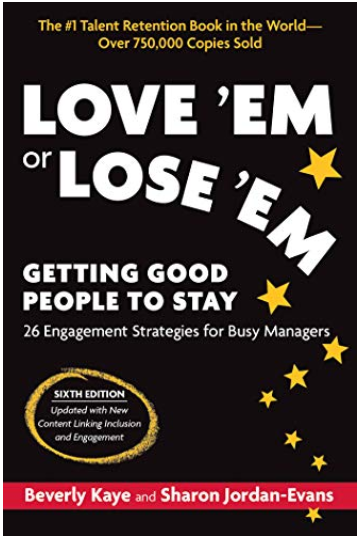
I love it when what I have been reading in one book informs what I have been reading in another, thus causing me to pause, reflect, and collect my thoughts. One of the passages that really resonated with me from Beverly Kaye and Sharon Jordan-Evans in the sixth edition of Love ‘Em Or Lose ‘Em was recognizing “the gap between intent and impact.” Many times I view this as are you really doing (impact) what you say you are (intent)? Thus the tale of the two gaps: some just talk with no intention of acting, which brings no impact and others talk the intent and just don’t do the right things for the impact to happen. What I’ve found is, the leaders who bring real impact walk the walk. They just “do” without having to tell you about it. This in turn brings up another gap discussed by Beverly and Sharon: “The gap between espoused values and practiced values.” Make no mistake, these two gaps are very real in organizations and I am going to guess you have experienced them. What resonated with me was the notion that if we really want to love ’em (those we serve) then mass customization of how we deal with those we serve does not work. There is no one policy for the workforce anymore. We need to allow for everyone to be a part of determining what is fair and right for them.
I believe we even need to use this mindset when working with students in our educational environments. I remember as a high school principal thinking how ridiculous it was to have students who were in many cases the bread winner of the family, maybe raising a child of their own at home, or caring for the younger siblings while mom or dad were at work have to ask for a pass to go to the rest room. I know, there has to be accountability, but I believe in having high standards and helping students develop their own thoughts on what is right for them. What I have found is, is that the majority of students will rise to a high standards and want that kind of accountability. I wanted our school to treat the students like adults – because in many cases they had become adults. It is our job to help them determine what is fair and right for them. In the end, won’t this help them understand and learn to do this when they are are in the workforce and leading others?
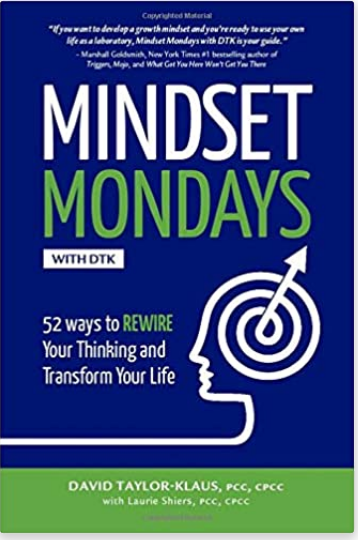
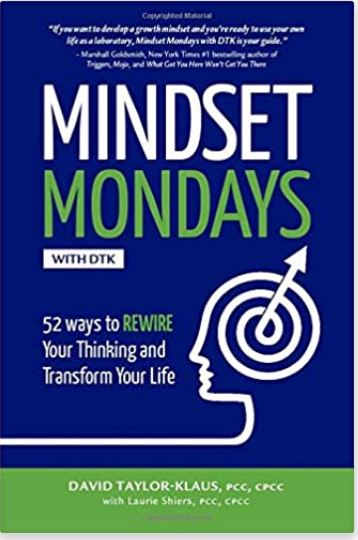
Furthermore, in this week’s Mindset Mondays with DTK lesson in Chapter 27 entitled “Love What You Do,” David Taylor-Klaus (DTK) told us “Paying attention to my impact has always helped me build my practice in a way that trying to fill the roster has not.” He went on to say, “It’s so easy to focus on getting through the list, yet when you choose to focus on what you can love, it’s amazing how much easier your checklist becomes.” Therefore it is much more important for us to be doing what we love as opposed to checking tasks off a checklist. Most importantly, finding what we love is not just important to us it is crucial to us creating an impact for those we serve. This is really essence of of Beverly and Sharon’s “loving ’em.” Are we removing the gap between intent (espoused) and impact (practiced)? Do you know what your love is? More importantly, do you know the love(s) of those you serve? If you don’t, Beverly and Sharon told us to, “Ask so you don’t have to guess.”
Flavors of Motivation

I loved chapter 26 in Mindset Mondays With DTK by David Taylor-Klaus (DTK) entitled “Seek to Build” this week. He started with “There’s the flavor of motivation that’s irritation, a move away from something; and the flavor that’s inspiration, a move towards something” (p. 193). I had never really thought about motivation in this light, or flavor if you will (pun intended), before. The bottom-line here is, however, that both being motivated by irritation or inspiration can both create positive ends. As a creative innovator, I thought about being motivated to create change because of the irritation of the thing, policy, or procedure that needed changing. This is a good thing. It’s why, many times, products get improved. Conversely, inspiration does the same thing. I am reminded of some of the blog posts I was motivated to write in the last week came from the inspiration of books I am reading.
Therefore both ways of being motivated can be powerful for us. Many times the two flavors of motivation are blended together like a chocolate and vanilla twist ice cream cone. As DTK taught us, “Judging inspiration as good energy and irritation as bad energy deprives you of a valuable source of motivation. Don’t vote. Both flavors of motivation propel into action” (p. 194)! So, use the energy created by the flavors to create positive change in all you do and for all those you serve.
Focusing On Our Why

This week’s Mindset Mondays with DTK lesson in Chapter 25 was entitled “Discover Your Why.” David Taylor-Klaus (DTK) was pointing out how important it is to find our “why.” When finding our “why” DTK taught us that “It’s something you have to sit still and ponder until it becomes clear to you” (p. 188). This made me think back to when I was a kid and I would take a magnifying glass on a sunny day and focus the sunlight on a piece of paper, burn a hole in it, and catch it on fire. The magnifying glass is the metaphor for our “why”; focusing our energy like my magnifying glass focusing the sun’s energy.
The power of our “why” is similar to the energy of sunlight focused through a magnifying glass. The Diffused sunlight provides warmth and energy for plant photosynthesis, but when its energy is concentrated—as through a magnifying glass—that same light can set fire to paper. Focus that energy even more, as with a laser beam, and it has the power to cut through steel. As DTK said, “That [our “why”] awareness is brilliant energy available to you to create something new, something next, something more” (p. 190). Our “why” means something as powerful to our lives as my magnifying glass and laser beam metaphors.
Declaring
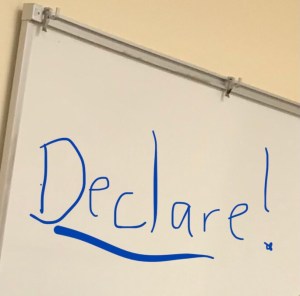
This week in Chapter 24 of Mindset Mondays With DTK, David Taylor-Klaus taught us that the only way to avoid criticism was to do, say, and be nothing. Since that won’t work for me and I hope it won’t work for those of you reading this post, let’s explore this a little. We learned from DTK in this chapter that Winston Churchill had a deep confidence in his own vision. We must have a strong point of view in order to avoid being nothing.
Again, the only way to avoid any criticism is to do, say, or be nothing. I recognize that I can be polarizing at times, but the one thing that everyone knows is where I stand on issues. Agree or disagree, you don’t have to wonder where I stand. Machiavelli told us to “declare.” I do not prescribe much of Machiavelli’s teaching, but I do believe in “declaring.” In other words, a strong and informed point of view, belief, or set of core values. Keep in mind, however, declaring a strong point of view does not mean that those beliefs can’t evolve and change. We need to be constantly evolving, learning, and growing.
DTK said, “…if we choose to share a perspective that will offend no one, it will also touch no one” (p. 183). Criticism can be painful, but if we take an attitude of learning from it we can turn it into a gift. What do you need to declare and turn into a strong point of view?
Where Do You Want To Rise Up Next?

The title of Chapter 23 in Mindset Mondays With DTK by David Taylor-Klaus (DTK) is “Rise Up.” This caught my attention and immediately made my mind go to my friends in Alter Bridge and their great song “Rise Today.” When the first sentence in the chapter was “In our house, we like to use rock & roll life style as a metaphor,” I knew we had serendipity.

DTK told us in this chapter that no matter what happens we must step up and put on the best show possible. This made me reflect on the fact that we have the opportunity to change the world every day. As it says in “Rise Today,” “Yeah, oh yeah; I want to rise today; And change this world; Yeah, oh yeah; Oh, won’t you rise today; And change this world?”
I blogged about this song before in “How Do We Change This World?” DTK told us in this chapter there are so many opportunities when things are far from perfect and that every obstacle is an opportunity. So let’s choose to show up and step up! “Oh won’t you rise today
And change this world?”
“I am what I think that you think I am”

“You will become way less concerned with what other people think of you when you realize how seldom they do.”
~ David Foster Wallace
In Chapter 22 entitled “What You Think They Think” of Mindset Mondays with DTK by David Taylor-Klaus (DTK), he told us “…people are generally not thinking of or even about you, they’re generally thinking of themselves” (p. 169). I loved this chapter because it points out something that we all do and all need to stop doing – worrying about what others think. DTK pointed out that we can’t control what others think, and what they think of us is none of our business. And, don’t forget; more than likely they’re not even thinking of you anyway. If we just remember they’re probably not even thinking of us, we can become freed of negative thinking.
“I care not what others think of what I do, but I care very much about what I think of what I do. That is character!”
~ Theodore Roosevelt
We need to worry about measuring up to ourselves, not others. It is an irrational and unproductive obsession to worry about what others think. Sociologist Charles Cooley put it this way: “I am not what I think I am and I am not what you think I am; I am what I think that you think I am.” Part of this is because we are placing undue importance on external validation, so much so that we sometimes place more emphasis on the commendation or disapproval we receive than on our actual actions. We need to do things, say things, and ask things that make sense to us. Let’s not worry about others, but care very much about what we think of what we do.
 Byron's Babbles
leave a comment