What Are You Here For?

If we want to shift from looking at the world to validate and respond to our needs and desires to serving life’s purpose, it requires us to start from within using our profound, magical, and miraculous energy to make shifts to better the world. To do this we must draw on our inner fire. This is really the essence of shifting from surviving into thriving. We must move from ambition to meaning. This life of meaning is a life where everything is primarily influenced by purpose.
Meaning is really how all the moments of our existence are evaluated. If we want to fulfill our greatest calling then we must consciously undertake the journey from ambition to meaning. Then, and only then can transform our individual lives and influence the destiny of our sacred planet as well.
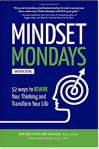
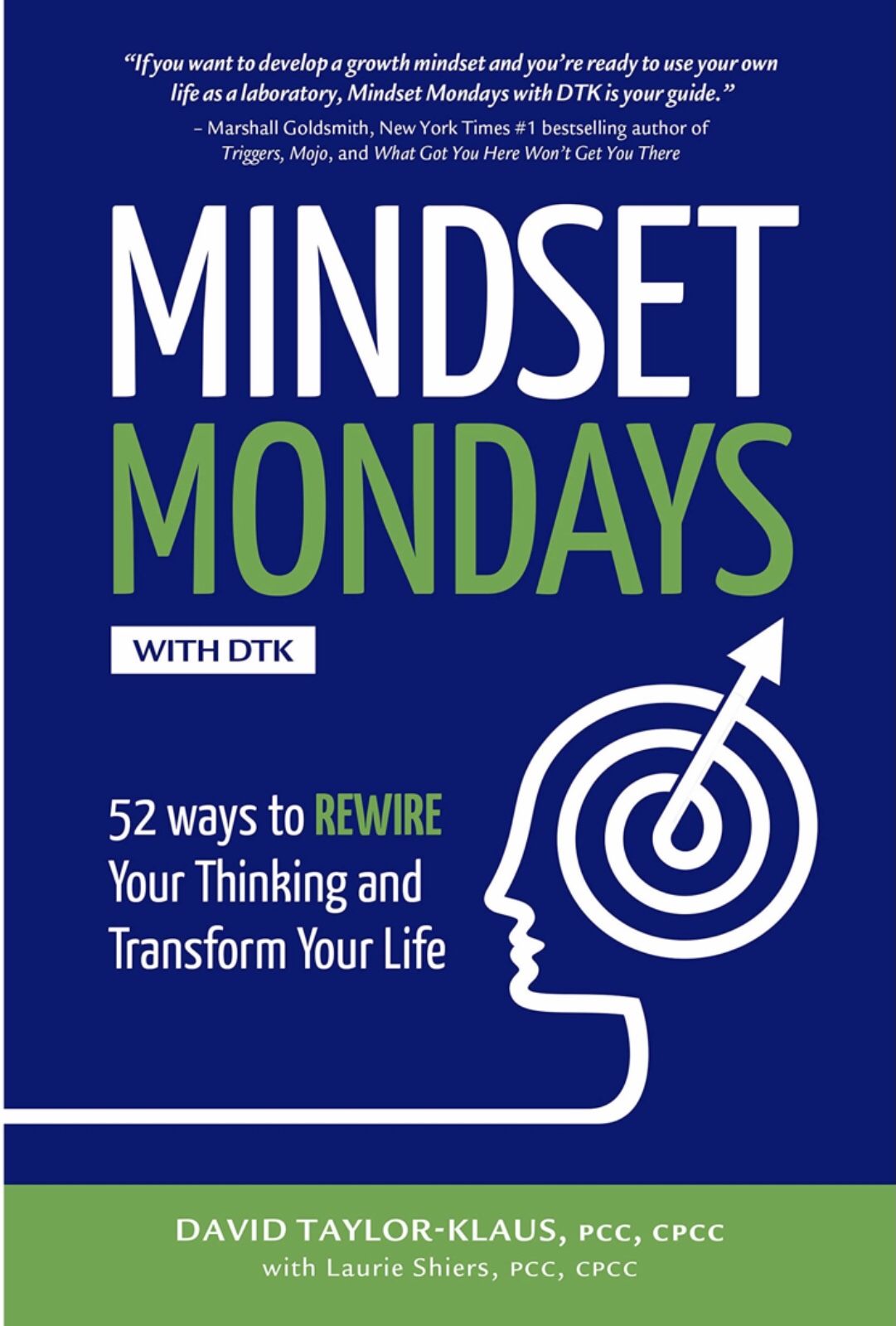
In Chapter 42, “Your Inner Fire” of Mindset Mondays with DTK by David Taylor-Klaus (DTK). He argued “Whether you call it your life purpose, mission, or quest, the work that you do in the world – that for which you are here at this time – is fueled by your inner fire” (p. 294). Only you can identify and put the accelerant on that inner fire. DTK went on to say, “I believe that every human is here to create some sort of a shift” (p. 295). I believe that too. For me, that meaning has become providing growth and development for others, either by working with them directly, or creating the policies and on-ramps to make that personal growth possible. How about you? What are you here for?
Becoming
This morning I read Chapter 41, “Constantly Becoming” in Mindset Mondays with DTK by David Taylor-Klaus (DTK). He taught us that becoming is a fulfilling journey that includes all the ways we expand along the way. There will always be new ways to expand, learn, and grow. I always use the metaphor of being a portrait that will never be finished. If I truly believe what Carol S. Dweck told us that, “Becoming is better than being” then that portrait won’t ever be finished, even on the day I die. Being or becoming depicts different outlooks on our worldview. Some people seek change and can’t wait to transform. Others often ask why they have to change.
Becoming is open and unlimited; being is structured and limiting. Just as the artist paints a portrait, we can look at our lives. Learning to live artfully has us see our lives as a process open to inquiry and learning, thus becoming. DTK reminded us that becoming takes courage. Using my portrait metaphor, I would say we don’t always know what the next brush strokes will be. But, that’s alright. The artist is always looking forward. The only way to assess if something was right is to look backward. Let’s not do that. Let’s keep becoming and make those brush strokes into another beautiful part of our life’s portrait of opportunities for exploration and growth.
Fear Is A Villain
Fear is such an interesting thing. We all experience it. It is one of our most basic emotions. The job of fear is to keep us safe and out of danger. But, fear can get in our way. Sometimes fear tells us that it is not safe to proceed when in fact, it might be wise to proceed. Therefore, fear can become an obstacle to living the life we want to live. Fear as an obstacle was the main focus of Chapter 39, “Now Hear This” in Mindset Mondays with DTK by David Taylor-Klaus (DTK). As I read the chapter I reflected on how, culturally, we hate fear. We have made fear into the enemy. Because fear is such a villain in our minds, we then have to slay the villain to get past the fear to do what scares us.
“Listen to what you know instead of what you fear.”
Richard Bach
DTK reminded us, in the face of fear, to make sure and consider what we know – what are the facts. By doing so we are able to truly listen to our inner self and create change. DTK also taught us we can find a great deal of energy and momentum available when we stick with what we know. Paying attention to fear only sucks that energy and momentum away. So, here’s my takeaway. We need to stop empowering fear to change or occupy our minds. We must control the writing of the narrative that is our story.
Recipes For Success

Obviously, no matter what you do, there is never a guarantee for success. We just use recipes and practices to increase our chances of success. Basically, we follow “recipes for success.” In other words, a number of good practices that we have either discovered for ourselves through trial and error, or others. All this popped into my mind as I read Chapter 38, “Own Your Mistakes,” in Mindset Mondays with DTK by David Taylor-Klaus (DTK). DTK taught us in the book the we need to own up to our mistakes or our credibility is undermined. By owning up to and hopefully learning from our mistakes, we become trustworthy and human.
As a believer in having a growth mindset, I began to think about the difference between a mistake and failure. In doing some research I found that the difference is in the learning, which to me is a big part of the “owning up to it” advice of DTK. Then I turned to Seth Godin who said, “A mistake is either a failure repeated, doing something for the second time when you should have known better, or a misguided attempt (because of carelessness, selfishness or hubris) that hindsight reminds you is worth avoiding” in The Difference Between A Failure and A Mistake. He went on to say, “A failure is a project that doesn’t work, an initiative that teaches you something at the same time the outcome doesn’t move you directly closer to your goal.” Guilty as charged. Using Godin’s definition, I’ve made lots of mistakes and failures.
We all make mistakes. Do not forget that mistakes are behaviors, just like experiments. We must clean up after them and own them. Failures are outcomes and all about the learning. Don’t make the mistake (pun intended) of not learning from our actions.
Finding Your Growth Edges
I love my Monday morning study time. It involves reading the next chapter in Mindset Mondays with DTK by David Taylor-Klaus (DTK). This week’s chapter (37), entitled “Uncomfortably Comfortable” did not disappoint. DTK told us that, “…growth happens when we lean into our edge” (p. 263). I love the imagery of growth edges in self-development. We are invited into a new narrative that is possible for us, but this new narrative is just being written and we have not yet embodied it. It can be uncomfortable to see a new way of being, a new way of doing something, or some new subject to learn, in front of you, understand and be inspired by the possibility of it, and yet still employ your old set of behaviors because it’s all we know to do. This is when we need to let our conscious incompetence take over. DTK reminded us that Martin M. Broadwell first described conscious incompetence as the second part of the “the four levels of teaching” model in February 1969.
I don’t know about you, but I can appreciate how huge it is to be aware of something that wasn’t even in my consciousness, but then realize the gap. This stage, however, when we become aware of the thing that needs to shift but we haven’t yet shifted, can be a little uncomfortable. It’s having the desire for change while feeling stuck being how we’ve always been. Sometimes it becomes making mistake after mistake after mistake and thinking you’re never, ever going to get it – until you do “get it.” This is where we must channel our inner child and keep falling until we learn to walk. I always tell people we must allow our self the opportunity to bad at something before we can be good at it. DTK said, “Yet juicy, exponential growth comes from breaking free and experiencing what’s out there” (p. 265). Additionally, don’t forget to ask for help. DTK also told us to “…collect allies. Most likely, if you could’ve done it alone, you already would’ve” (p. 265). When we encounter conscious incompetence, we have a choice. We could let our inner critic take over, or we can enjoy being uncomfortable and learning something new.
Finally, we need to appreciate the how huge it is to become aware of something that wasn’t even in our consciousness until now. Think about about it, in this state we know what we don’t know! So, allow yourself to fall as you learn to walk, enjoy the messes you make along the way, and then reflect on how far you’ve come. Will you allow yourself to find the growth edges in your self-development?
Incremental

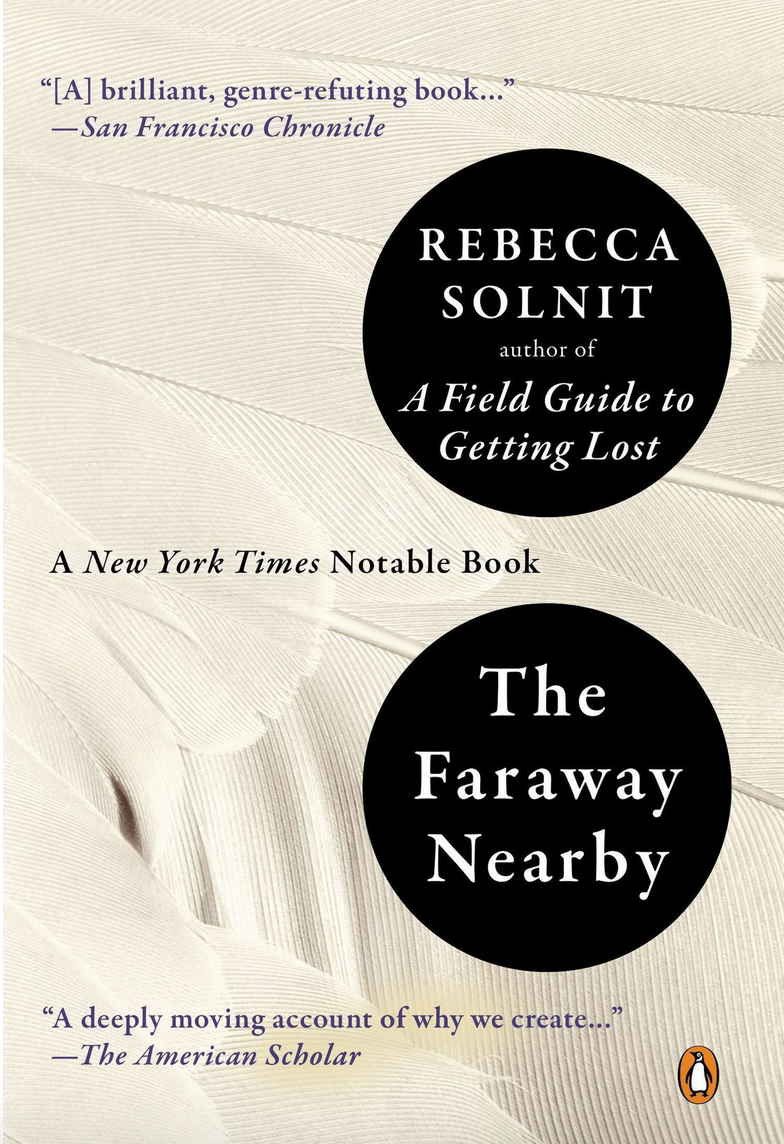
In Chapter 36 entitled “Reinvent as Necessary” in Mindset Mondays with DTK by David Taylor-Klaus (DTK) reported that recent high school graduates would have seven different careers in their lifetime. Another prediction he reported was that of those seven careers, four haven’t even been invented yet. Therefore, those graduates, or us for that matter, don’t need to know what they want to do for the rest of their lives; just what they want to do next. DTK taught us that this reinvention can happen any time and that we need to “Lean into the power that comes with the recognition that you are a choice. And since you’re at choice, now you can choose something that serves you well, instead of settling for the status quo” (p. 259). I believe this reinvention is really a gradual evolution. It’s interesting to think back on the person I was back in 1985 and began teaching and then contrast that with the person I am today supporting and developing teachers and school leaders. I love what Rebecca Solnit said in The Faraway Nearby:
“Even earthquakes are the consequence of tensions built up over long spans of time, imperceptibly, incrementally. You don’t notice the buildup, just the release. You see a sick person, an old person, a dying person, the sight sinks in, and somewhere down the road you change your life. In movies and novels, people change suddenly and permanently, which is convenient and dramatic but not much like life, where you gain distance on something, relapse, resolve, try again, and move along in stops, starts, and stutters. Change is mostly slow. In my life, there had been transformative events, and I’d had a few sudden illuminations and crises, crossed a Rubicon or two, but mostly I’d had the incremental.”
Rebecca Solnit, The Faraway Nearby
Another point to consider is that this reinvention or evolution encompasses both the personal and professional arenas of our lives. It’s hard to keep them fully compartmentalized. True self-reinvention or evolution happens from the inside out as we realign our lives with our own values, dreams, and priorities. To truly reinvent ourselves we must also go beyond just surface level changes. It goes beyond job changes or changes in the way we look. There is a difference between seeming different and becoming different. Don’t forget, self-reinvention isn’t about becoming someone else—it’s about realigning our own lives with what we want to become. It’s about becoming who we know we can be based on our own choices of what we believe, what we think, and what we will do.
Life Is Artistic Expression
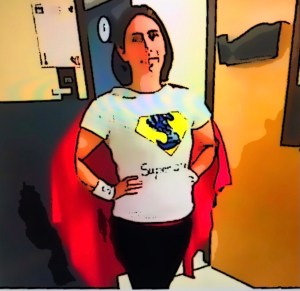
This week, Chapter 35, “Edit Your Life” in Mindset Mondays with DTK by David Taylor-Klaus (DTK) had everything needed to grab my attention. The chapter had metaphors, talked about creativity and imagination, referred to Albert Einstein, and compared our lives to artistic masterpieces. I believe this chapter resonated so much with me because I use the metaphor all the time of our lives being portraits that are never completed. Every day adds brush strokes, but we are never done. My hope and prayer is that I add brush stokes to my life’s portrait on the day I die. But, it still won’t be complete because I hope there is a legacy that continues to influence. DTK reminded us that we show up to work with our creativity and imaginations. Why don’t apply these to who we are and how we show up in the world? Our lives are our own to define and explore. Why not be imaginative with the masterpiece that is “you”?
“Edit your life frequently and ruthlessly. It’s your masterpiece, after all.”
Nathan Morris
DTK said, “I’m inspired by the idea of living a created life, a life that I chose to edit frequently and ruthlessly. I probably replace “edit” with “iterate” as I reflect on this. Edit makes me think big change and iterate makes me think about small brush strokes I’ve watched artists make that changed the entire painting. While I know some of us need big edits, iterating may be less overwhelming.
And, we haven’t even begun to think about how we have to “adapt” during our life. Think about all the adaptation strokes of the brush you’ve made to your life’s portrait in the last year, plus. A portrait is a hand crafted piece of art. We, too, are hand crafted pieces of art. Let’s all consider life as another form of artistic expression and fall in love with the possibilities.
Being The Hero Inside You

Our lives are such a dynamic experience. Sometimes we may feel like life is static and fixed, and other times we are moving and shaking. But, upon further analysis we are actually in a state of perpetual flux. I was reminded of this in Chapter 34, “Beyond The ‘Blah-teau’” in Mindset Mondays with DTK by David Taylor-Klaus (DTK). Expansion and contraction is the metaphor that comes to mind here. DTK said, “To genuinely expand what we are capable of doing, we must also expand our being” (p. 245). Back to my metaphor. When something expands it would be more spacious and able to fill up the world with its biggest and best version. On the other hand, our contracted version becomes tighter and collapses and shrinks. Thus reducing capacity.
As part of the constantly expanding universe, we too are constantly being called to expand. DTK observed, “This includes recognizing our current capacity and consciously stretching it to make room for what’s next, and for who we are becoming next” (p. 245). We must know who we are to know what we want to create in the world. DTK made reference to superheroes saying, “Dropping the superhero cape and BEING the hero inside” (p. 247). I loved that because this week and last I have been doing a leadership development session using superheroes as a through line. Just like superheroes, we all have great powers, but are also vulnerable and have doubts. We must channel who we really are and our own personal superpowers to expand and evolve to make the great impact we we put on this world to create.
Minding Our Imagery

“What and how we think shapes reality and shapes our future – no crystal ball necessary.” I love this in Chapter 33, “Mind Your Thoughts,” in Mindset Mondays with DTK by David Taylor-Klaus (DTK). “No philosophy,” William James argued, “can ever be anything but a summary sketch, a picture of the world in abridgment, a foreshortened bird’s-eye view of the perspective of events.” So it goes also with our thoughts. Our thoughts can only ever be rough drafts of what we’re perceiving, terse outlines of an unfathomably huge cosmos. But, change cannot occur without these rough drafts (thoughts) happening. If there is no imagery, then there can be no action.
Our thoughts compel us to move, to realign, to refocus and evolve. The links between the function of thought and the habits of behavior, actions, and results are our identity, beliefs, and feelings. With them we can imagine new imaginings; we can capitalize upon our identity to guide our thoughts by rearranging them into novel constructs that create new worlds for new creating.
Our thoughts become our reality. Our thoughts, affect our perception and therefore, our interpretation of reality. We need to make sure we get back to our true identity to shape our beliefs and feelings and ultimately have our thoughts be the actions we want to create in the world.
WAIT and Listen
This week in Chapter 32, “Listening Is Love,” in Mindset Mondays with DTK by David Taylor-Klaus (DTK) I was reminded of two very influential books I have read this year. I wrote these notes down while reading the second revised and expanded edition of Humble Inquiry: The Gentle Art Of Asking Instead Of Telling by Edgar H. Schein and Peter A. Schein:
- We get opinionated distortions
- We value telling over listening
- We may need to know what others know in order to solve our own problems
- We need to access our ignorance
Additionally I was reminded of some notes I took while reading the sixth edition of the great book by Beverly Kaye and Sharon Jordan-Evans Love ‘Em Or Lose ‘Em. Here are a few of the many things I wrote down:
- Ask so you don’t have to guess
- Let your people mentor you
- Think “what if” before you think “no”
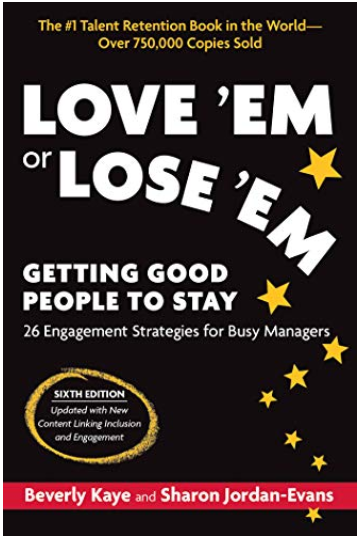
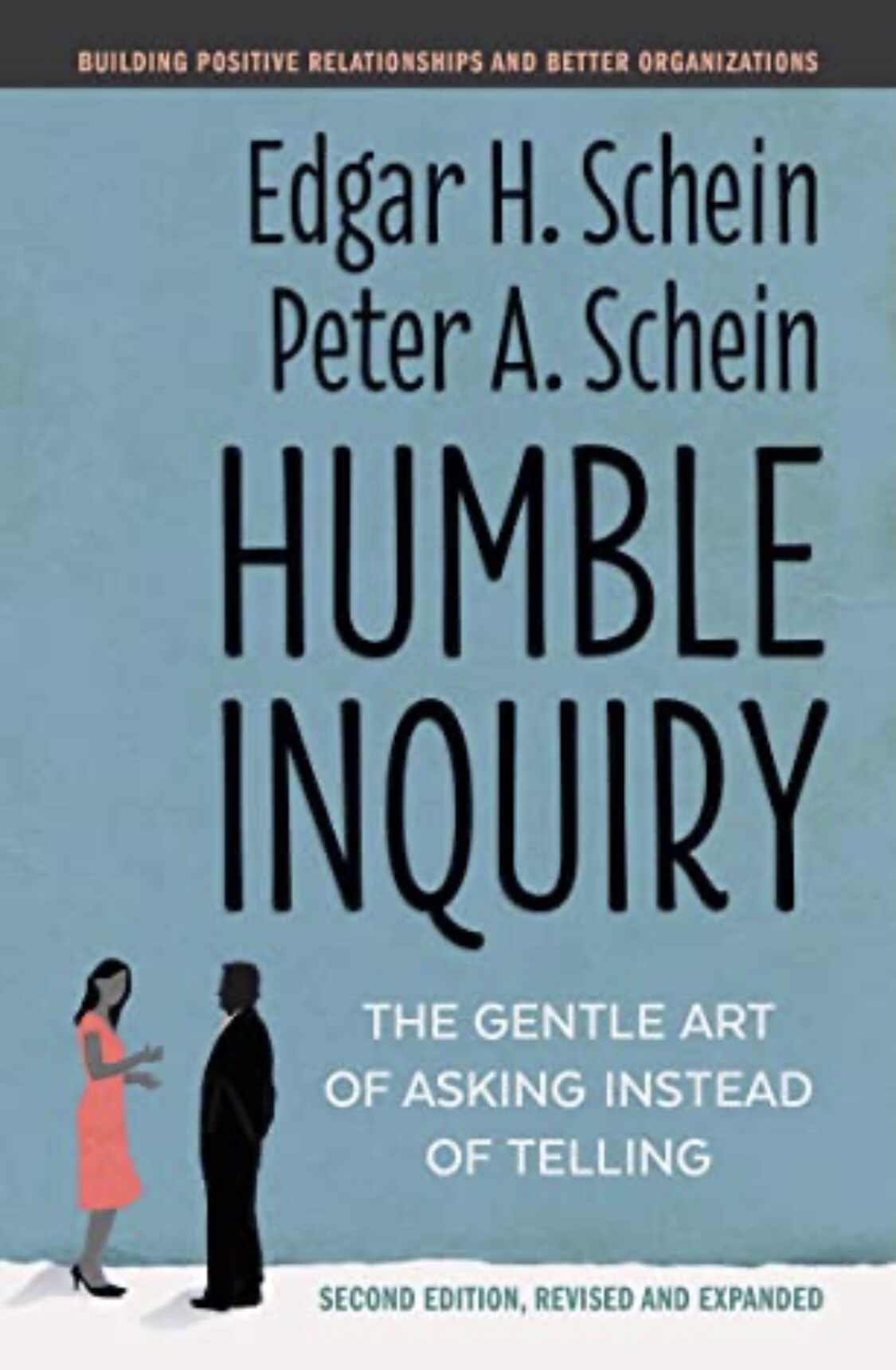
As you can see, these two books were impactful to my own development on this topic of loving others through listening. I love (pun intended) that Kaye and Jordan-Evans taught us that loving those we work with is the correct terminology. If we want to relate with others, as DTK relates, we need to form our relationships empathically, not transactionally. Here are some of my blog posts that were inspired by these books:
- The Gap Between Intent & Impact
- Do Not Forget The Small Talk
- Elegant Currency
- What if?
- Accessing Our Own Ignorance
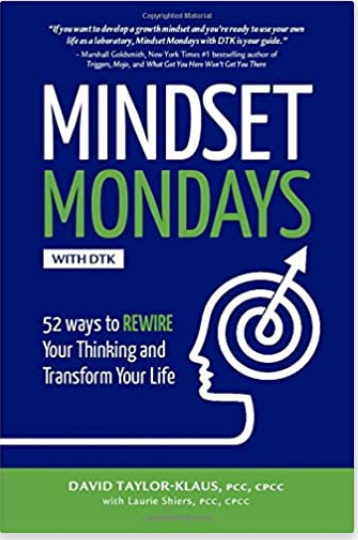
DTK said, “In coaching, our job is to put all of our attention over there (on the other person) and dance with what arises, instead of pre-planning any response or follow up” (p. 236). It was also discussed in this chapter that we need to put a focus on what we want for other individuals instead of from them. To do this we must really show our love by listening. A great tool DTK introduced was WAIT – Why Am I Talking? Many times, instead of deeply listening we start thinking about what we can ask or what we know. We start telling instead of listening. So, I love this tool of asking ourselves “Why am I talking?” In the book Working, Robert Caro discussed that when doing research interviews for his biographies, he writes “Shut Up!” in his notes to remind himself he is there to listen and not do all the talking and asking. We all need to continue to hone our skills. If you’re like me, you have gone to meetings and know that you and others won’t talk much because __________ McTalksalot (yes, I actually have nicknames for some of these people) will do all the talking. Let’s show our love by listening.
Are you showing your love for those you serve by truly hearing them?
 Byron's Babbles
leave a comment