Using The Truth From The Myths To Unleash Creativity

I’ve been thinking about myths a lot lately in my studies of C.S. Lewis and J.R.R. Tolkien. There is such power in myths and how those myths transform how we see the world. Myths often encapsulate profound insights about human nature, challenges, and triumphs, making them a rich resource for understanding how creativity manifests across different contexts. I am reading The Creative Brain: Myths and Truths by Anna Abraham right now and am impressed with how she has used myths to explore and understand human creativity and the creative process. By analyzing various cultural myths, she aimed to uncover universal themes and archetypes that resonate with the creative experience. Her approach was not to declare the myths about creativity as right or wrong, but to understand how the myths came about what we could learn from them. Tolkien would be proud!
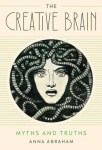
There were so many examples of how myths serve as powerful tools for understanding how interdisciplinary approaches and personal narratives can inspire creativity and foster a deeper connection with one’s work and community. Leonardo da Vinci is an example that embodied the myth of lone genius, but he worked in a crowded workshop and collaborated with others across diverse fields of study. He embodied mastery across multiple disciplines. This myth serves as a reminder that embracing diverse interests can lead to innovative thinking and problem-solving. By drawing from various fields—such as art, science, technology, and philosophy, individuals can create unique solutions and drive progress in their respective domains.
Abraham’s work also affirmed the encourage of deliberate practice. I am a big believer in and always try to create opportunities for individuals to engage in deliberate practice that includes being curious within their fields. This means setting specific goals, seeking feedback, and reflecting on their learning process, which can enhance our creative skills over time.
Finally, recognizing the value of personal experiences in the creative process is so important. We need to encourage others and ourselves to draw on life stories, challenges, and successes when being curious, brainstorming, or problem-solving.
By leveraging the principles based on Anna Abraham’s research presented in this great book, organizations and individuals can cultivate an environment that nurtures and enhances creativity.
The Unforeseen Twists & Turns

I love collaboration and I believe some of the best examples of how to do this well lie with creative performing artists and writers. We are in a time where musicians collaborate on songs and perform together. These turn out to be incredible collective products. In my own world of having a professional service firm, I am always looking for potential collaborations or cross-branding opportunities. I am reading a collaboration of books conceived and curated by Blake Crouch. Blake brought together five other authors, Veronica Roth, N.K. Jemison, Amor Towles, Paul Tremblay, and Andy Weir, to write, along with himself, six books. In a note from the curator to the Forward collection, Blake Crouch tells us the three driving questions he posed to this collaboration of authors to write about. Here are the three questions (Crouch, 2019):
1. “How does anyone know at the moment of discovery where their work will ultimately lead?”
2. “Should we let that uncertainty stop forward momentum, or do we roll the dice and let the chips fall where they may?”
3. “How does it feel to change the world?”
Having just finished Towles’ You Have Arrived At Your Destination and Weir’s Randomize, I can already tell you this collaboration was a success. Those three questions Couch posed to the authors have continued to cause me to reflect however. Therefore, the reason for today’s post and probably a couple of other future posts. Pondering the question “How does anyone know at the moment of discovery where their work will ultimately lead?” helps us contemplate and begin to understand the uncertainty and fluidity of artistic creation, promotes openness and self-reflection, and encourages us to embrace the unknown in our innovative and creative journeys. We are reminded that, no matter how well we plan or strategize, there are always unforeseen twists and turns along the way.
Asking this question encourages us, as leaders, to embrace uncertainty and remain flexible in our approach – one of the big advantages of collaboration. It challenges us to let go of rigid expectations and instead focus on exploring new possibilities and adapting to changing circumstances. By acknowledging that the ultimate outcome of our work may be unknown, leaders can foster a culture of innovation, experimentation, and learning.
Moreover, asking this question promotes self-reflection and encourages leaders to question our assumptions and biases. It challenges us to critically evaluate our own work and consider alternative perspectives and approaches. This can lead to greater creativity, as well as a deeper understanding of ourself and the world.
Relationships Determine The Creative Outcome
Another great statement in the book, The Storyteller: Expanded…Because There’s More To The Story, by Dave Grohl was, “I wholeheartedly believe that the relationships between people determine the outcome of any creative endeavor.” When you think about it, this is so true. Our interpersonal connections and dynamics among individuals involved in a creative project greatly influence its final result. He argued that collaboration, communication, understanding, and trust between team members are crucial for creating something impactful and successful.

Also being emphasized was the importance of fostering positive relationships and working together harmoniously to achieve a common goal. According to Grohl, it is not just about individual talent or skill, but how people interact and collaborate with each other that ultimately shapes the outcome of any creative endeavor. As I always say: “Relationships matter!”
Teaching Learning Ability
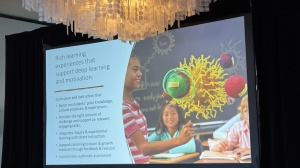
Yesterday in our National Association of State Boards of Education Annual Conference opening session, my friend, Dr. Linda Darling-Hammond made the comment that we need to teach our students learning ability. This enablement of learning is important to Linda and I and we even coauthored an article on opportunity to learn. Click here to read it. I spent some time this morning thinking on teaching learning ability. Teaching our kids learning ability means providing them with the skills and tools to become effective learners. This includes teaching them how to think critically, problem solve, and communicate effectively. It also involves fostering a growth mindset, where they understand that intelligence and abilities can be developed through hard work and effort. Additionally, teaching learning ability involves promoting curiosity, creativity, and a love for learning.
I definitely believe we can teach love for learning. Encouraging a love for learning starts from an early age by creating a positive and engaging learning environment. Providing interesting and relevant content, incorporating hands-on activities, and giving students the opportunity to explore their own interests can help foster a love for learning. Additionally, praising effort and celebrating achievements can also help motivate learners and make the learning experience enjoyable. It’s important to create a supportive and encouraging atmosphere where students feel empowered and excited about learning.
First Bubblings


As you know, I am at The Kilns in Oxford, England right now as a Scholar in Residence for the C. S. Lewis Foundation. It has been an amazing week and right now I am having my morning coffee sitting where Jack (C. S. Lewis) would have been sitting in the Common Room. I came out here intending to finish reading Out of the Silent Planet but instead looked over at the bookshelf beside me and pulled out Boxen: Childhood Chronicles before Narnia. Douglas Gresham wrote the Introduction and in it said, “So there was a sort of emotional and intellectual gap in Jack and Warnie’s literary experience” (p. 8 in Boxen). Gresham was referring to the books available in the house which were too old (advanced) for them. Their parents had no taste for faery (English spelling) tales. So, they bridged that gap. Imagine that C. S. Lewis was only eight years old when he described power and the rise and fall of nations in ‘History of Mouse-Land’ (p. 30 in Boxen).
Interestingly, Jack and Warnie did not write Boxen for anyone but themselves, but it could be a leadership book. Here’s what I mean (descriptors in parenthesis are from me):
- King Hacom used his power well and used counsel (collaborative/open minded).
- King Bublish I was conceited and full of pride (humble).
- King Benjamin was popular and knew everyone (Relationship builder).
- Governor Leppi I was a great scholar, but cruel, foolish, stubborn, and weak (pretty self explanatory).
As I reflect this morning, my mind is going in several different directions. Douglas Gresham called Boxen the “tangible and readable first bubblings forth of the springs of literature that were, years later to be the source of a great river from Jack and a healthy tributary from Warnie…” (p. 10). We talk a lot about making sure we are teaching creativity to our children and that we are making space for creativity in adults, but we need to make sure we give everyone the opportunity for “bubblings” no matter what state of life. I, in my sixth decade now am bubbling over from all the new thoughts in my head. Oh, to be sitting here having coffee with and talking to Jack!
Surprise Me
I am a huge believer in the cultivating of a collaborative and supportive work environment. The best leaders are the ones who give their teams autonomy and create a sense of ownership among their staff, instilling a greater sense of responsibility and empowering individuals to take ownership of their roles within the organization. Interestingly, this act of delegation is extremely hard for some leaders. It is tough for some to let go. When decision-making authority is given to those closest to where the data is created, it can lead to improved communication, as team members have the opportunity to have greater input and more direct interaction with each other when problem-solving. In “Empowerment Needs No Menus!” I said, “To empower someone, you have to help them feel proud of the good things they do. This is truly the essence of empowerment.” One of the best examples of this are great servers at restaurants. I first experienced this when going out to eat with my dear friend and leadership idol, David Marquet. He said, “Byron are you up for letting our server pick everything from our drinks to dessert?” I was all in and it was a wonderful experience. I now use this as a leadership exercise and it is interesting to see how everyone handles it.

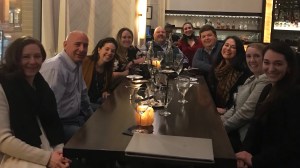
This week I was in Washington D.C. for the National Association of State Boards of Education’s (NASBE) Legislative Conference and one of the highlights is always getting a group together for dinner. No surprise, I was left with the planning of where we would be going. I picked TruLuck’s Ocean’s Finest Seafood & Crab. Here’s the deal: on their website they tell you to “Escape the ordinary!” The great experience there allowed us to do just that. On their Twitter site they tell us, “Captivating ambiance and genuine Southern Hospitality – We believe small touches inspire lasting memories. Delight in dining again.” I’ve got to tell you, the small touches that our server Lulu brought to our group from Maine, Arkansas, New Jersey, Georgia, Indiana, Texas, Kansas, and present and past NASBE staff did inspire memories that will last us the rest of our lives. Needless to say, Lulu was fantastic.

Now, back to empowerment. It was clear that Lulu knew what she was doing. She knows the menu and every item on the menu; she knows how read every individual in a group; and she understands the right questions to ask to best meet the needs of her customers and create those small touches that inspire. This was so evident that one in our group, Renée Rybak Lang, NASBE’s Communication Director, empowered Lulu by saying, “Surprise me” when it was her turn to order- leaving her entire meal in Lulu’s hands. I loved it! Lulu was excited by this declaration of empowerment, asked Renée a couple of questions, like “How hungry are you?” and away she excitedly went. Remember, empowered team members feel that they are contributing to the growth and success of the organization. Lulu is a critical part of TruLuck’s success. And since I know you are wondering; yes, Renée loved her steak and lobster. Renée allowed Lulu to utilize her own creativity, knowledge of her menu, and the relationship she had built with the customer to choose a better meal for her than she might of chosen for herself. I’m sure Renée made Lulu feel proud of the great things she does. Additionally, TruLuck’s was able to deliver on their promise of escaping the ordinary, because of Lulu. What are you doing to foster a culture of empowerment and create a sense of ownership among team members?
It Is What It Is

Those who know me well, know that I sometimes use the phrase “It is what it is.” When I use it I really do mean it. I never use it as an excuse or explanation for inaction. For those who hate the phrase, hear me out. A character, Reuben, in the great historical fiction novel, Threads West An American Saga by Reid Lance Rosenthal often uses that phrase. The context is usually that there is nothing that can be done so an alternative needs to be created. An example was wanting to use a shorter trail, but an avalanche had block the trail. Reuben commented “It is what it is” and began plotting a new way up the mountain. For me, recognizing something for what it is begins to make it possible to get creative with alternatives. I’ve always believed I use and believe the phrase because of being comfortable with the unknown. Sometimes we have to let things exist in their uniqueness. Sometimes there just is not an objective answer.
As a creative/artistic person I am okay with things being ambiguous. If something has the potential to unfold into different actual states than its current state it may very well be ambiguous. By allowing things to be ambiguous we get a richer, more nuanced understanding of them, which may lead to a new insight or invention. “It is what it is” can suggest a world of possibilities.
“It is what it is” is a statement of potential. The statement indicates acceptance of complexity and ambiguity. It can also be an anthem to accepting limitations. Sometimes we can’t control everything. Sometimes things just are what they are. By recognizing that we can add to the statement and say, “It is what it is, but we can…” Sometimes the contexts we are put in are malleable. We cannot control everything in our lives and organizations, but we can make a choice to learn, grow and become a better version of ourself.
Plum Crazy Leadership

What would happen in our busy corporate world if we had more opportunities to allow wisdom to emerge instead of either believing we have to already know everything and convince others we do, or controlling the atmosphere of our corporate cultures so we can be more productive? We can do this! In a recount of his journey through corporate life at Hallmark, Gordon McKenzie introduced a timeless analogy about plum trees and pyramids. The book is Orbiting the Giant Hairball: A Corporate Fool’s Guide to Surviving with Grace.
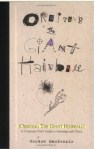
He reminded us that most organizational charts look like a pyramid. He also reminded us that the pyramids are tombs. That’s a pretty huge reminder. Important people at the top and the not so important at the bottom. A reminder of this is when organizations say they want leadership from everyone and then create “leadership teams.” I thought everyone was a leader and the whole organization was a team. These types also always want to call themselves a family when really… People don’t stay in these organizations very long because they don’t want to get crushed and entombed by the pyramid.
MacKenzie argued that great organizations were like plum trees. Great metaphor because for one thing, a plum tree is a living thing. The plums are the products or services and the branches are all the teams. The leaves (I added this part) are the people who make it all happen and keep the organization thriving and alive – just like leaves do photosynthesis. Then, the trunk supports the whole tree. Novel idea, right? Actual it’s a plum great idea! See what I did there?
MacKenzie also taught us to practice what he called “compassionate emptiness”. Compassionate emptiness is a state of nonjudgmental listening and receiving of others’ ideas, thoughts, opinions, burdens, and worries. I’ve only met a few who were truly masters at this. Fortunately, I got to work for one of the few very early in my teaching career and I believe it helped to shape me into who I am today. To practice compassionate emptiness takes courage. There are boundaries to cross, impasse to acknowledge, and the admission of idiocy.
Unlike the pyramid, the plum tree is a living organism. It is flexible and can adjust with the times. In the plum tree, the service providers, talent, and product producers make up the top of the tree. They have sunshine, they have air, and they can see from their vantage point. They produce the fruit (cash crop). The plum tree can create opportunity through support of those that are closer to the solutions. Note this is intent based leadership – those closest to where the data is created should be making the decisions. So, it’s not plum crazy to wonder why more organizations don’t operate more like a plum tree.
The Path To Brilliance
Have you ever been called brilliant? Have you ever called someone else brilliant? Have you ever looked at something and said, “Brilliant!”? Yes, you guessed it, I’m writing about brilliance. It is such a versatile word that has many meanings and connotations. Actually, brilliance is subjective. What’s brilliant to me may not be brilliant to you. What speaks to me may not speak to you. I loved the line in The Bookshop At Water’s End by Patti Callahan Henry where Mimi tells Piper, “There’s more than one way to be brilliant.” I looked up the word brilliant and found it to mean bright, radiant, clever or talented, outstanding, and impressive. Do you get the idea of why that word is so versatile? Also, I can think of people or art that fit one or two of those definitions, but not necessarily all. Brilliant people are those who stand for something larger than themselves. Brilliant people are those that have found their own niche or are creating their own niche.

We can all be brilliant. Mimi also reminded Piper that, “We all take different paths.” But, it must be on our terms – our own vision and place in the world. Each of us has a place in this world. Each of us has a different path to brilliance – that creativity and unique perspective that each of us has. For those we serve, whether teammates, employees, or student scholars, let’s not forget “There’s more than one way to be brilliant.” How are you being brilliant?
Don’t Join The Circus
Recently I heard it said that the COVID-19 Global Pandemic has made leaders into contortionists and policy making into a circus contortionist act. I thought about that comment a lot and with all the latest issues that are becoming politicized, I concluded that, yes, that is happening. We need to stop! Leaders should not be contortionists. I’ve not been to a lot of circuses in my day but I do remember one act that still sticks in my mind. A large man folded himself into a small container and was smiling and laughing while he did it. I remember thinking, “How in the world did he do that?” The whole ordeal had to be very uncomfortable! How many leaders have we seen lately that bend over backwards and in odd ways trying to be everything to everyone? We’re also seeing policies being made the same way in many cases. It really becomes like a circus act to form opinions, roles, cultures and communities that are a poor match and are ultimately awkward and far from helpful. Again, being a contortionist is not a good fit (pun intended) for leaders. During times like these, and really any time, we need to be large and in charge and do what is right, not what fits in the container of the day.
This is not to say, however, that we should not be flexible or provided flexibility. First, leaders need to recognize situations in which old behaviors are not working. Next, we need to decide how to approach problems/issues/challenges, including what new behaviors or approaches are feasible, and which will accomplish the community’s goals within the restraints of the situation. When acting on flexibility we need to be creative and take a stance of inquiry. Additionally, we need to have accountability to check our progress. Let’s stick to our core values and not contort.
 Byron's Babbles
leave a comment