Reflections From My Son On Martin Luther King, Jr.
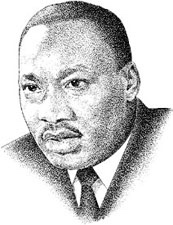 Quotations From Martin Luther King, Jr.
Last weekend my son was doing homework and asked if he could discuss his answers to an assignment with me. Of course I was a willing participant. It turned out to be a great discussion and chance for me to learn just how values driven and principled my son had become.
It was a great English class assignment where the students were given nine quotes from Martin Luther King, Jr. and asked to react with what he/she believed the meaning of the quote was or how to use the quote to make the world a better place. I thought it was a great assignment for reflection. I was so blown away by our discussion that I asked my son if I could share his answers on my blog. He said yes! So, on this day that we honor Martin Luther King, Jr., here are some quotes and some reaction from my son, Heath:
“The ultimate measure of a man is not where he stands in moments of comfort, but where he stands at times of challenge and controversy.” ~ Martin Luther King, Jr.
This shows how a person should stick to his or her core values and principles when in a time of challenge. This quote is as good today as back in his time.
“We must learn to live together as brothers or perish together as fools.” ~ Martin Luther King, Jr.
This explains how we need to get along and not fight within. We need to be united and not be separate.Because if we don’t, we will all go down as fools. This is also a good quote to relate to today in our current political environment.
“A man who won’t die for something is not fit to live.” ~ Martin Luther King, Jr.
This just shows that we need to be willing to go all in on our thoughts and beliefs. As Patrick Henry said, “Give me liberty or give me death.“ The quote is saying they you need to be committed to what you believe in and be ready to die for it.
“Faith is taking the first step even when you don’t see the whole staircase.” ~ Martin Luther King, Jr.
This shows that you have to be comfortable even when you aren’t comfortable. You have to be able to take a chance even though you don’t know how the end result will be.
“Like an unchecked cancer, hate corrodes the personality and eats away its vital unity. Hate destroys a man’s sense of values and his objectivity. It causes him to describe the beautiful as ugly and the ugly as beautiful, and to confuse the true with the false, and the false with the true.” ~ Martin Luther King, Jr.
We need to practice civilized disdain, where we understand each other’s differences and respect the different opinions of each other. This will allow us to work together and reach consensus.
“Nothing in the world is more dangerous than sincere ignorance and conscientious stupidity.” ~ Martin Luther King, Jr.
Do your research to know what all sides believe in and knowing the details of the issue.
“Injustice anywhere is a threat to justice everywhere.” ~ Martin Luther King, Jr.
Even if we see an injustice of someone or something that doesn’t affect us personally we still need to be concerned and help those who are being hurt.
“I have a dream that one day…the sons of former slaves and the sons of former slave owners will be able to sit down together at the table of brotherhood.” ~ Martin Luther King, Jr.
He wanted all cultures and races to come together and understand each other and respect each other.
“I have a dream that my four little children will one day live in a nation where they will not be judged by the color of their skin but by the content of their character. I have a dream today!” ~ Martin Luther King, Jr.
It doesn’t matter where you come from or what zip code you live in we all are fellow human beings. He wanted people to not judged by the race or color but by how good of a person you are and their skills and talents.
Hopefully you’ll take some time to reflect like we did. Today, we honor Martin Luther King, Jr., the de facto spokesman of the Civil Rights Movement, for his key role in directing our nation closer to its goal of equality for all.
Dad & Lad In The Who Dat Nation
 My son and I had the opportunity to travel to New Orleans, Louisiana last weekend to watch the New Orleans Saints beat the Philadelphia Eagles 20-14 in the NFC Divisional Game. We are huge Saints fans because of Drew Brees, but have also fallen in love with the Who Dat Nation. We had our first taste of this last year in the NFC Divisional Wildcard Game where New Orleans defeated the Carolina Panthers. I am amazed at the following of the Saints by this city. New Orleans needs the Saints and the Saints need New Orleans.

We also had the opportunity to see former Louisiana Governor Kathleen Blanco honored at the game for keeping the Mercedes Superdome Open and the Saints in New Orleans following Katrina. Blanco knew she would take a hit politically if she green-lighted the renovation of a football stadium at a time when most New Orleans residents remained displaced, businesses were shuttered and the city could not provide basic services. She also knew, however, that keeping the Saints was important to economy of New Orleans and would be an inspiration to the city. During the ceremony at the game she recalled saying, “Not on my watch will we lose the Saints.” This took incredible vision and political courage. Really it was just plain leadership at its best.
During our visit my son, Heath, and I took in all the New Orleans culture and talked about how important New Orleans was as a port for both the Gulf of Mexico and the Mississippi River. New Orleans was important to the founding of our great nation and had to be defended in the early 1800s and was won in The Battle of New Orleans in 1815. We discussed how grain would come the Ohio River out of Indiana to the Mississippi River to New Orleans in barges. Once the grain was sold the barges would be disassembled and the lumber sold because at that time there were no engines to push the barges back up the Mississippi.


This was a great discussion as we stood at the base of the bronze statue of Major General Jackson. He led our troops to victory at the Battle of New Orleans. This was really a full circle for my son and I’s study of Andrew Jackson. Last year at this same time we were at the battlefield where the Battle of New Orleans took place. Then, a month ago we were at The Hermitage in Nashville Tennessee, and now back in New Orleans.
 We love spending time learning about different cultures and history. My son even got to see his dad be a man of his word. A man walked up and told me he liked my shoes. I bit and he wanted to bet me $10 he could answer some questions about my shoes. Long story short, I lost – I knew I would. I paid him the $10 for the shoe shine. I paid him because I had given him my word. My son commented that others would have got mad, but he knew I wouldn’t because I had given him my word up front. About as high a claim you can get from your son, don’t you think? And…I got my shoes shined and waterproofed.


We immersed ourselves in the Who Dat Nation. We watched locals making cigars in the cigar factories. We took in the local architecture and culture of Bourbon Street and the French Quarter. We had breakfast at Cafe′ Du Monde – a French Market that has been in business since the early 1960s. We walked and talked to the many artists in Jackson Square.


All of us come from different zip codes ad cultures. My son and I were so blessed to have had this experience for a second year in a row for one reason to learn so much and the second to spend quality time together. I hope that opportunities like this one helps my son to understand about the different ways that people live and do things. This hopefully translates to Heath understanding that there is no single way or right way to do the same things.
Amazingly, Forbes tells us in “5 Top Reasons You Should Travel With Your Kids” that from 2008 to 2012 parents traveling domestically with their children has declined from 31% to 26%. Here are the five reasons that we should travel with our kids:
- Make them citizens of the world.
- Get them to eat weird stuff.
- Expose their brains to diverse languages.
- Build their confidence and independence.
- Increase their tolerance to discomfort.
We need to make sure our children and students have the opportunity so they understand there is a world that exists outside their own.
“Old Hickory” Leadership
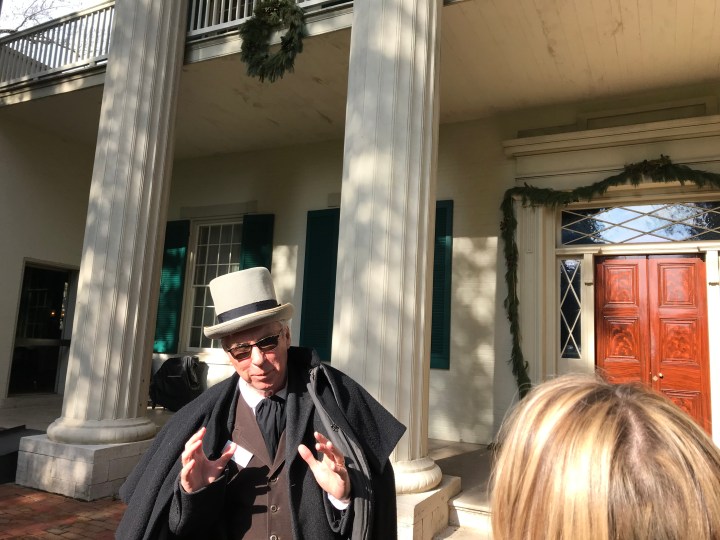
General Jackson’s Home At The Hermitage
Our family had the opportunity to visit The Hermitage, President Andrew Jackson’s farm and home, near Nashville, Tennessee, this past week. We love going to historical sites of past presidents and this one of our seventh president was awesome. General Jackson’s, as we learned he wanted to be referred as, home is very well preserved and cared for. Our tour guide, Stewart, was incredible and very knowledgeable. To be on the farm where General Jackson worked, stand outside the room where he met with other presidents, and be next to the bed where he died was awe inspiring and caused a great deal of reflection about the leadership of this great American.
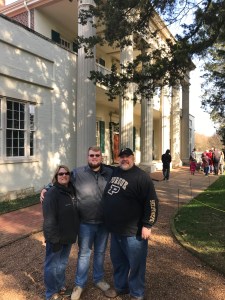 Some praise his strength and audacity. My son and I had learned about his great military leadership prowess this time last year when we walked the grounds of the Battle of New Orleans where General Jackson led the defeat of the British and soaked up all the history. We learned how his servant leadership, dedication to his troops, and toughness gain him the affectionate title “Old Hickory”. Others see our seventh President as having been vengeful and self-obsessed. To admirers he stands as a shining symbol of American accomplishment, the ultimate individualist and patriot.
 Andrew Jackson, the President, believed republican government should be simple, frugal, and accessible. As President he was very accessible and was know as the people’s President. By 1835, President Jackson had reduced the national debt to a mere $33,733.05 and would eventually pay it off, making him the only president to ever accomplish that feat. He was an ardent supporter of state’s rights, and individual liberty fostered political and governmental change, including many prominent and lasting national policies. Many believe it was his stubbornness and tenacity to keep fighting for what he believed was right that made him a great leader. There was a lot that happened in our great country under the many leadership roles that Jackson held during his lifetime. We can agree and disagree on his decisions and policies, but it is important to reflect on the General’s leadership influence and learn from our history.
We’re All Unique
 Thanks a lot Mr. Kibblewhite by Roger Daltrey
My rating: 5 of 5 stars
The author of this book, Roger Daltrey, was the founder and lead singer of The Who, one of the great British bands of the ’60s and ’70s and arguably one of the most influential bands of rock and roll development. This book grabbed a hold of me right from the start and kept me engaged right to the end. I felt as though I was there for the Nazi bombing of Britain as Daltrey was born in 1944. Peacetime followed but the food rationing and lack of opportunities followed for his young childhood. Daltrey tells all and there are certainly lessons to be learned. One statement he made early in the book really struck me. After being expelled by the headmaster of his school, Mr. Kibblewhite, whom the book is titled after, Daltrey says, “If anyone had ever once sat me down and explained that school was for me, not the teachers or the system, and there were reasons why I should stick at it, it would have been totally different. But no one ever did” (p.21). As a leader in education this really hit me like a ton of bricks. Unfortunately, it is true that some do lose site that schools are students, not the teachers or school systems themselves. I was motivated to blog about this in School Is For The Student: https://byronernest.blog/2018/11/18/s…
At the end of the book as Roger Daltrey reflects now, later in life, that his school principal was wrong to tell him he’d never do anything with his life he said: “We’re all unique. We all have our own unique lives. But seeing my life like that, I just felt overwhelmingly lucky. In the middle of this strange out-of-body experience, I said to myself, ‘Would you ever imagine the things you’ve done?’” (p. 238). Why do educators do that?
Daltrey leaves us with great lessons we all can use, no matter our profession. He said, “You can’t be mediocre. A band can be either terrible or brilliant. There is no middle ground. So you have to make tough decisions.” This lesson pretty much applies to anything.
Daltrey may be 74, but he’s still causing a sensation along with Pete Townshend as original members of the group who still tour. He’s also causing a stir with this great book that was released this past October, 2018. You should check it out.
~ Dr. Ernest
Unintended Consequences: Minimizing the ‘Oops Factor’ in Decision Making
 This guest post originally appeared on Forbes.
Unintended Consequences: Minimizing
the ‘Oops Factor’ in Decision Making
By Rodger Dean Duncan
“Unintended consequences” is the term for outcomes that are not the ones foreseen by a purposeful act.
When a manager consistently gives tough assignments to a worker who’s proven himself to be reliable, the go-to employee may begin to feel “penalized” by the additional load while the less reliable workers get a free ride. What was intended as a compliment and vote of confidence turns out to be an unwelcome burden.
In medicine, unintended consequences are called “side effects.” Have you listened carefully to television commercials for drugs? The list of side effects is often longer than the narrative promoting the medicine. Why would we be warned that a product purported to relieve a simple ailment may also produce paralysis, high blood pressure, thinning hair, skin rash, weight gain, blurred vision or even thoughts of suicide? Because the lawyers said so.
The old caution of “don’t operate heavy equipment while taking this medicine” seems to have morphed into “this pill will help your headache, but it also might kill you.” Caveat emptor indeed.
 The fine print on an over-the-counter pain remedy I bought said it caused “irritability” in one in 10,000 users. It turns out that the first day I took one of those pills I was “irritable.” (I’m relying here on the assessment of an independent observer: my wife.) Irritable or not, I felt special. At that ratio there are fewer than 32,000 of us in the entire United States. We could rent Madison Square Garden and throw a party. The capacity of Madison Square Garden is only 18,200. But I’m confident a lot of us (at least those still taking the pain remedy) would be too grouchy to attend anyway.
I should be embarrassed to admit it, but sometimes I don’t bother reading the list of possible side effects. This behavior is risky, much the same as failing to read the terms and conditions on a contract before checking the box claiming to have read the terms and conditions.
As Isaac Newton observed, “for every action there is an equal and opposite reaction.” In business, as in the rest of life, most every action we take has the potential for consequences we didn’t anticipate. Some of those consequences may be serendipitous, like the “accidental” invention of the Post-It® Note by the guy at 3M Company who brewed up a batch of sticky-but-not-too-sticky adhesive. And some consequences are unpleasant, like a profit-based bonus system that inadvertently motivates people to trim spending on maintenance and safety issues.
Is there an absolutely foolproof way to make decisions? No. But there are some common sense guidelines that can help:
Again, most decisions come with no guarantees. But remember this uncomfortable reality: failing to make a decision is, in itself, a decision. With consequences.
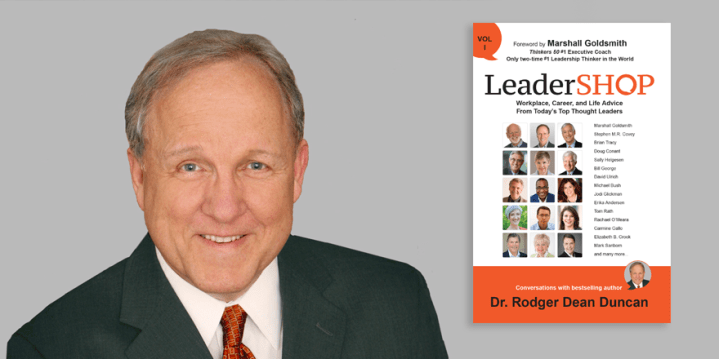 ***********************************
Rodger Dean Duncan is bestselling author of LeaderSHOP: Workplace, Career, and Life Advice From Today’s Top Thought Leaders. Early in his career he served as advisor to cabinet officers in two White House administrations and headed global communications at Campbell Soup Company. He has coached senior leaders in dozens of Fortune 500 companies.
Leading Like Theodore Roosevelt
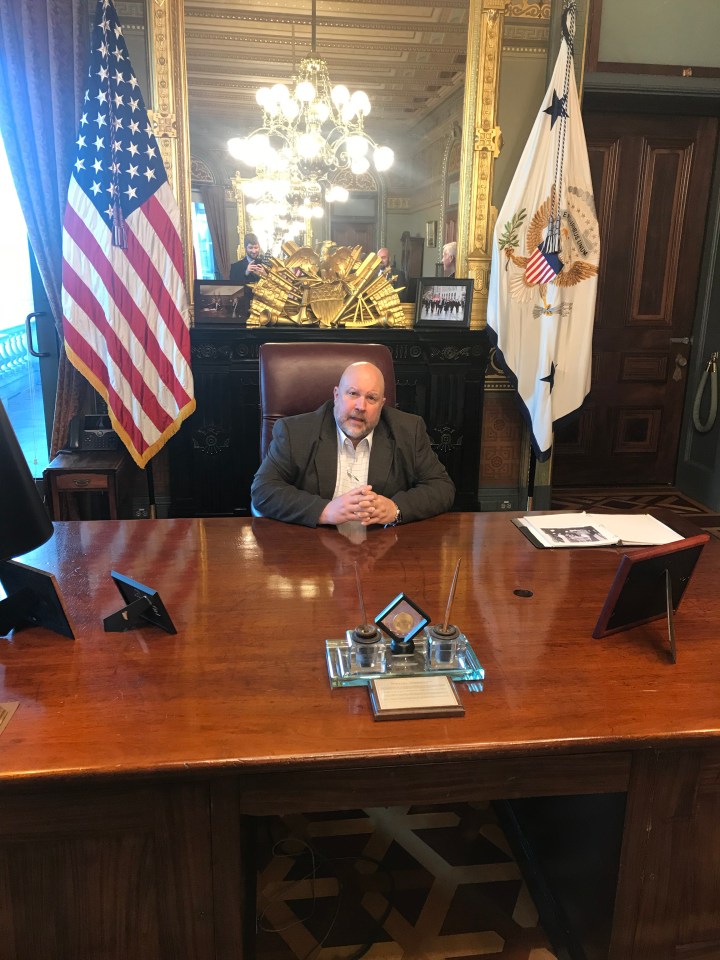 Yesterday day I had the opportunity of a lifetime while visiting the offices of our Vice President, Mike Pence. Our Vice President has offices in the Eisenhower Executive Office Building (EEOB), which is located next to the West Wing of the White House. In addition the Vice President has an office in the West Wing, on the Senate side of the Capitol Building, and Vice President Pence has one on the House Of Representatives side in honor of his service in Congress.
 When we were taken into the Vice President’s Ceremonial Office in the Eisenhower Executive Office Building I was struck by an extra large desk at one end. Then we were told it was Theodore Roosevelt’s desk when he was Secretary Of The Navy and President Of The United States. The desk was no longer extra large, it was larger than life! I was standing next to the desk of one of my heroes, Teddy Roosevelt! You know, one of the guys on Mount Rushmore!
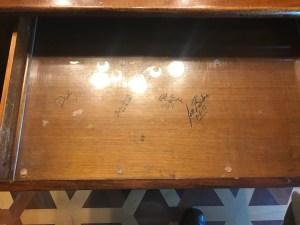 Of course, and this will be no surprise, I asked “Can I please sit at the desk?” The answer was, “Yes.” So, now I am sitting at the desk of Teddy Roosevelt and the many Vice Presidents who have signed the inside of the top drawer (see picture). Again, I am sitting at the desk of President Teddy Roosevelt! Then I look in the drawer and see the signature of Vice President Joe Biden, who also used this desk, and a leader who I greatly respect and had the opportunity to spend time with. What an experience! Thank you Vice President Pence for the opportunity!
This experience was yesterday and I still can’t get it out of my mind. I have been reflecting on why Theodore Roosevelt is such a hero. Theodore Roosevelt is recognized as a transformational leader. He defined numerous aspects of leadership that we now take for granted in the presidency as well as in private life. His inspirational vision about the economy, industry, environmental protection, and the National Parks system is still influencing our great country to this day. He had a remarkable ability to communicate his vision, not only through his well-crafted words, but even more through his indelible example. Roosevelt’s well-publicized, courageous exploits in Cuba in the brief but deadly Spanish-American War of 1898—the fateful days he viewed as the linchpin of his life—are perhaps the most apt symbol of his leadership. Roosevelt, mounted on horseback in front of his troops, showed the way—asking others to “come” rather than saying “go” in the words of his friend Henry Cabot Lodge—putting himself at risk, making himself accountable, giving more of himself than he would ask of others. I have always said that we must walk arm in arm with others, even pulling them along at times, instead of pushing!
“Reading is a disease with me.” ~ Theodore Roosevelt
Theodore Roosevelt was very curious and was continually learning. He was a voracious reader, but the book, the classroom, formal education, were far from the only venues for learning in his opinion. These forms of learning had produced many of what he called the “educated ineffectives.” Roosevelt believed in combining the life of ideas and the life of action. This was central to his project of self-creation as a leader. He was practicing project based, interdisciplinary learning.
As soon as any man has ceased to be able to learn, his usefulness as a teacher is at an end. When he himself can’t learn, he has reached the stage where other people can’t learn from him. ~ Theodore Roosevelt
Interesting this had been brought up in the great session at the ExcelinEd National Summit on Education Reform by Andreas Schleicher with what he described as “some things are caught not taught.” This is what work based learning and project based learning is all about. We must be immersed in a relevant learning environment.
 Theodore Roosevelt believed that learning is an ongoing project of self-creation – personal professional growth. He offered his life as a template for anyone who would seek to re-create themselves.
It’s amazing what effect sitting at a desk can have. Who’s desk would you like to be sitting at?
A Focus on What Is Working
 The following is an excerpt from Building Resilience with Appreciative Inquiry by Dr. Jeanie Cockell and Dr. Joan McArthur-Blair
A Focus on What Is Working
By Dr. Jeanie Cockell and Dr. Joan McArthur-Blair
In a problem-based world, it is very challenging to keep a leadership focus on what is working. We believe that focusing on what is working matters as a practice that builds appreciative resilience. Leaders are bombarded by problems every day. A focus on what is working pulls them out of that mindset of problem- and deficit-based thinking to begin to see what is right and what is good inside a team or an organization. Joan worked for a president who made this a practiced part of her leadership. She started every meeting with the question “What do we have to celebrate?” As Joan and other leaders in the room shifted their mind-set to uplift the stories worth celebrating, the entire feeling in the room shifted. The thinking shifted from “We have problems” to “Yes, we have problems needing to be solved, but we also are doing some things right.”
 This particular leader had several catastrophic events occur within the organization in a short period of time. Joan always noted that she started every conversation during those very difficult times with some version of celebrating the skills of the people handling those events.
Focusing on what is working inside a team or organization builds resilience for the individuals and the group by constantly reinforcing a drive to be excellent, not because of fear, but because their successes are celebrated. Celebrating what is working is like depositing resilience into an emotional bank account for later use. This bank account helps leaders deal with uncertainty, fear, and stress. In a crisis, a leader can tell others, verbally or through action, that their jobs, livelihood, and reputation are on the line, or they can share what is working well and uplift the drive of people to repair and rebuild.
It takes a conscious and mindful effort to focus on what is working. It takes the practice of pausing and thinking through the situation from multiple perspectives and asking powerful questions. This practice is easier in hopeful times, and we suggest that these are the times to begin the practice. If leaders practice a focus on what is working in hopeful times, they will find it much easier to do when a crisis arises. It is difficult to focus on what is working in times of despair, yet it is possible if one has practiced in times of hope. As leaders move through the element or state of despair, it is very difficult not to assign blame, seek justice, dole out retribution, or withdraw. In forgiveness, one must hold what is working close to one’s leadership heart, because a focus on what is working and forgiveness are linked together. Without leaders focusing on what is working or on what is possible, forgiveness cannot happen.
Focusing on what is working well is a practice that trains leaders to seek out the appreciative stance and, in doing so, discover what can be built on and taken into the future.
***********************************
About the authors
Dr. Jeanie Cockell and Dr. Joan McArthur-Blair, co-presidents of leadership consulting firm Cockell McArthur-Blair Consulting, are the co-authors of Building Resilience with Appreciative Inquiry. The veteran consultants’ latest book explores how leaders can use the practice of Appreciative Inquiry to weather the storms they’ll inevitably encounter and be resilient.
Why Everyone Should Read Dopesick
 Dopesick: Dealers, Doctors, and the Drug Company that Addicted America by Beth Macy
My rating: 5 of 5 stars
As soon as I finished this book I tweeted, “Anyone who is a public policy maker, educator, or citizen (in other words everyone) needs to read Dopesick: Dealers, Doctors… by Beth Macy. This book tells the history of the #opioidcrisis back to the Civil War until today like none other!” I learned so much history that I did not know. By the time the Civil War ended, addiction had already touched middle-class housewives, immigrants, veterans and even physicians hoping to soothe their own aches and pains. This is when the opioid epidemic began. Between the 1870s and 1880s, America’s per capita consumption of opiates had tripled. On March 1, 1915 a law passed by Congress and signed by one of my favorite Presidents, Woodrow Wilson, would become the first law to criminalize drug use, the Harrison Narcotics Tax Act. I also learned that opioids such as morphine and codeine are naturally derived from opium poppy plants more commonly grown in Asia, Central America and South America. Heroin is an illegal drug synthesized from morphine.
Hydrocodone and oxycodone are semi-synthetic opioids, manufactured in labs with natural and synthetic ingredients.
I really like fact that Macy also spent a great deal of time discussing and educating her readers on the public policy component of the opioid crisis. Macy argues that a big obstacle to solving the crisis is that many local, state, and federal agencies and governments are more concerned about protecting turf and budgets than solving the problem and helping people. This book pushed and stretched me to understand this very complex issue.
Independence Day Leadership Lessons From Maine & Joshua Lawrence Chamberlain
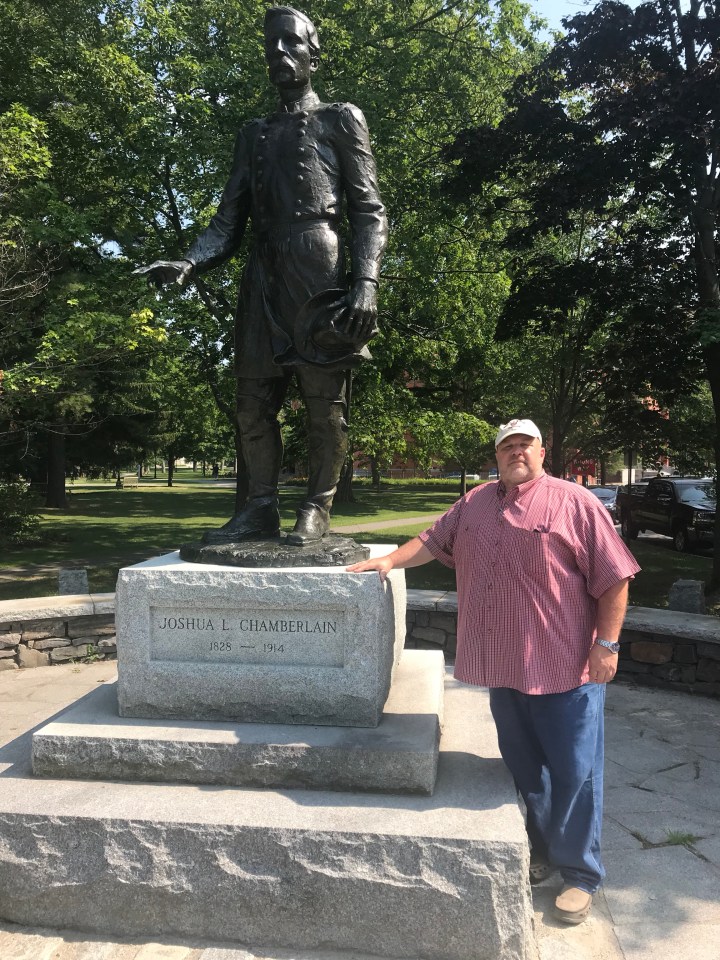 On this 2018 Fourth Of July morning I am reminded of the great leadership that has been necessary for the United States to become the great country it is. My family and I are vacationing in Maine right now so, of course, I had to do some studying of influential leaders from Maine. Boy did I come across a great one: Joshua Lawrence Chamberlain. Now I know that Independence Day is observed to honor our Declaration of Independence from the tyranny of Great Britain and those who provided the leadership during this important time of our country’s founding, but since I am in Maine I am going to honor and remember Chamberlain too.
Raised from a modest life in the small town of Brewer Maine, Joshua Chamberlain chose the professions of ministry and academia filling in the post of Professor of Rhetoric at Bowdoin College during the tumultuous 1850s. As the Civil War broke out, Chamberlain felt the impulse to serve based on his belief in preserving the union and his moral conviction against the institution of slavery. In early 1862, Chamberlain expressed his desire to serve to the Governor of Maine, who offered him the rank of Colonel in the Maine volunteers. He turned that rank down because he did not believe he had the experience necessary for the rank. This is lesson one learned from him – be modest and know what skill level you have and what you still have to learn. Believing he needed to gain experience and knowledge of the military profession, Chamberlain’s uncommon act of humility set a tone for the remainder of his service.
But the cause for which we fought was higher; our thought wider… That thought was our power. ~ Joshua Lawrence Chamberlain
Joshua Lawrence Chamberlain went on to have a very successful military career and ended that career as a Brigadier General, but two Civil War stories are worth telling in this blog post. Here they are:
Battle of Gettysburg, July 2, 1863, Little Round Top
Colonel Joshua L. Chamberlain, who he now commanded, ordered the 20th Maine Regiment to execute a daring counterattack against the 15th Alabama Regiment of the Confederate Army on July 2nd 1863 during the Battle of Gettysburg. At the extreme left flank of the Union Army, the 20th Maine fought off repeated assaults for the past several hours against the determined Confederate Soldiers. Even though the 20th regiment was outnumbered and low on ammunition, Chamberlain’s bold decision and courageous leadership led his men of Maine down the slopes of Little Round Top at Gettysburg, Pennsylvania and stopped the Confederate assault against the Union Army’s left flank. He showed tremendous insight and leadership in making this bold move. Colonel Chamberlain was inspirational to his men and as a leader, a true influencer.
Confederate surrender at Appomattox Courthouse, April, 1865
Joshua Lawrence Chamberlain taught us what it meant to be a man of character and compassion when he was personally asked by General Ulysses S. Grant to preside at the Confederate surrender at Appomattox Courthouse over the surrender detail. It was not the fact that he presided that is noteworthy here, it is the awesome act and example of leadership he performed. As the 20,000 Confederate Soldiers paraded by to turn over their arms and battle flags, Chamberlain gave the Union Army detail the command of “carry arms” to salute Confederate’s service and gallantry in battle. Many, then and now, credit this leadership gesture as the beginning for the country’s healing process toward reconciliation.
This act took courage and would bring him accolades and plagued him politically for the rest of his life. The southerners deeply respected him for this show of compassion and respect. Conversely, however, many northerners, including those in his home state of Maine, did not see it that way. They wanted to continue the humiliation of the Confederacy. Chamberlain did what was right and faced the consequences.
Congressional Medal of Honor
Joshua Lawrence Chamberlain was awarded the Medal Of Honor for his service At Gettysburg. He saw combat at Fredericksburg, Cold Harbor, Petersburg, Five Forks, and the Appomattox Campaign.
Chamberlain Leadership Lessons
Chamberlain always positioned himself in the middle of his brigade’s formation. He led shoulder to shoulder with his men. This built trust and gave him the ability to truly know what was going on. Chamberlain reassured his soldiers through his cool and calm presence during the heat of combat. He garnered the trust of his men through his actions in combat. The other thing that really impressed me as I studied this hero was his commitment to studying his new military profession, and his commitment to developing his subordinates. We need to pay attention to these lesson learned and apply them to our daily lives as leaders.
 Learn More About Joshua Lawrence Chamberlain
There are so many more leadership lessons to learn about this great man that went on to be President of Bowdoin College in Brunswick, Maine and four term (one year terms at that time in Maine). Let me suggest two ways that I did to learn more:
- Visit Bowdoin College in Brunswick, Maine and visit the Joshua Lawrence Chamberlain Museum. It is awesome! I learned a great deal from the tour and curators there. The museum is the restored home (the only home he and his wife, Fanny, ever owned). There is family history, Civil War history, history of his time as Bowdoin College President, and history of his Governorship. It is awesome!
- Read the great book by Alice Rains Trulock, In The Hands Of Providence: Joshua L. Chamberlain & The Civil War. This book is awesome and I gave it five stars. Is a very well written well told story of this great leader. This book inspired me to dig deeper and explore more to understand how this man became the great leader he did, at a crucial time in our nation’s history.
I am thankful on this Independence Day, 2018 for Joshua Lawrence Chamberlain. What leaders are you thankful for on this day of celebration of our great country, The United States Of America?
What’s Your Elevated Story?
 One of the most common questions we get when meeting new people is, “So, what do you do?” Most of us have a standard answer about our profession, but there are some people who have jobs that you might not even know existed. More importantly, everyone’s job is important and in some way improves the lives of others. Think about every job that affects your household; there are a lot.

Perkins Cove
I was reminded of this yesterday when in Perkins Cove, Ogunquit, Maine. This is a lobstering port and a beautiful place with shops and restaurants. While exploring we came across a boat named the SS Crusher that had been dry docked (see picture). It was a cool looking boat and I wondered what was up with it. Then, I found that a children’s book, The Pride Of Perkins Cove, had been written about it by Brenda Yorke Goodale about the boat.
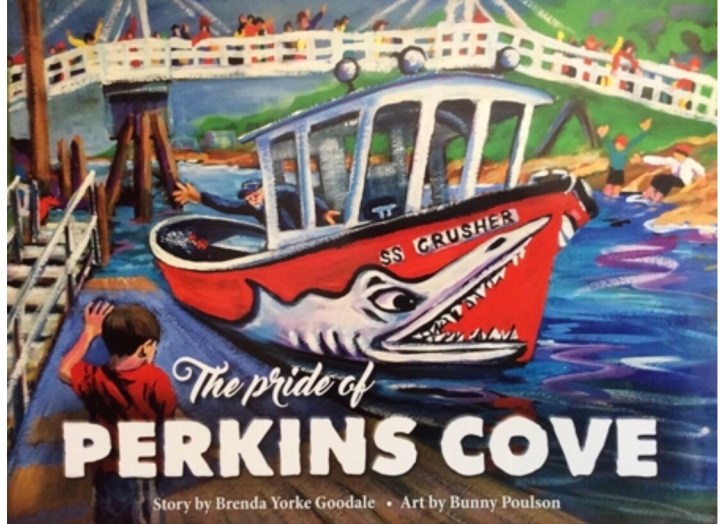
So, of course I had to dig deeper and found that the boat and it’s harbormaster have very important jobs. When it gets cold, and it gets cold in Maine; Perkins Cove freezes. Because the Cove is a working port, it has to stay open, so Harbormaster Fred Mayo spends hours every day breaking the ice. The town’s special boat, the SS Crusher, is built for the task of “crushing” through the ice. Before yesterday I did not even know what a lobstering port looked liked, let alone that freezing was a problem.
If we asked Fred Mayo what he does, he might give the same kind of answer we all would: “I’m a harbormaster.” But, wow, is it so much more. In fact, here, according to Wikipedia, is truly the world of a harbormaster: “A harbormaster is an official responsible for enforcing the regulations of a particular harbor or port, in order to ensure the safety of navigation, the security of the harbor and the correct operation of the port facilities.” Think about all the other colorful details that a harbormaster like Fred Mayo could add. I’ll bet there are some great stories of ice crushing in Perkins Cove. Here are a couple of pictures of Fred Mayo and the SS Crusher doing their job:


A few weeks ago I read a great book by Shawn Achor entitled Big Potential: How Transforming The Pursuit Of Success Raises Our Achievement, Happiness, and Well-Being. In the book, Achor points out that we usually just give a very quit and boring answer of what we do for our job. He argued, however, that we need to quit this and give what he calls the “elevated speech;” not to be mistaken with the elevator speech. The “elevated speech” should be us telling what we really do and why what we do is so important. The example I like to give here is the answer that we hear so many times from teachers: “Oh, I’m just a teacher.” I’ll admit I’m guilty of having done this. But, are you kidding me, “just a teacher?” I think not! Actually, I hope not!
 Let’s take a look at teaching as a very significant profession, or “job.” Here is my elevated version: “Teachers have been given a great gift – the power to change lives, each day I must be inspirational. I am a significant human being helping other human beings to realize their full potential and go on and make a positive difference in their world.” What do you think?
Achor posited that our beliefs create our world. He argued that if we elevate the story of what we do, we will get a new spring in our step and renewed inspiration for what we do each day. He’s right because Gallup (2017) told us that 60% of employees say the ability to do what they do best in a role is “very important” to them. Here’s the challenge, though, in 2016, only 33% of U.S. employees were
engaged – involved in, enthusiastic about and committed to their work and workplace (Gallup, 2017). This translates to only 4 in 10 U.S. employees strongly agreeing that in the last year, they have had opportunities to learn and grow (Gallup,2017). This is a huge engagement issue. Gallup (2017) results suggested that by moving that ratio to eight in 10 employees, organizations could realize 44% less absenteeism, 41% fewer safety incidents, 24% higher retention, and 16% higher productivity. I guess it is time to elevate those we serve.
Just like the story of the SS Crusher, we all have unique gifts, jobs to do, and make a significant difference in the world. Let’s get engaged and elevated! What’s your elevated story?
Reference
Gallup (2017). State of the American Workplace. Gallup, Inc. Washington D.C
 Byron's Babbles
leave a comment