Building A Community

As I reflected on the post I wrote yesterday, Imagining The Unimaginable, my mind went to just how powerful a community can be. In the case of an FFA Chapter, the students coming together to figure out how to hold events virtually during the pandemic; or in the case of agriculture teachers, coming together to discuss ideas for engaging students. It could also be a school community coming together to decide how to best educate children during a pandemic. It has been interesting to me to witness just how powerful a close knit community can be.
As I watch the classrooms that have continued to thrive during the fluid changes of going back and forth from virtual to in person to blended and then back to virtual, it has been the classrooms where the teacher had a clear community developed with her students. I have also witnessed a strong community of virtual students in a school come together to help each other learn how to become effective virtual teachers. Positive experiences with communities allow individuals to feel more connected to their environment and the people in it. Further, the connection that comes with being in a community can act as a support system for members when they require encouragement or help.
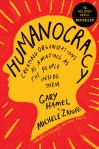
I have been fascinated with the power a community can bring for a long time. Check out what I wrote about community in Community: Aggregating for Innovation. Humans are made to live and work with others in a community where we can thrive. We are social beings that have evolved to exist within communities. In the great book Humanocracy, authors Gary Hamel and Michele Zanini told us that success depends on local improvisation. Try and tell me we are not seeing that during the pandemic. Hamel and Zanini said, “When interdependencies are varied, multidisciplinary, and difficult to specify in advance, you need a community” (p. 210). Is that a description of education, or what? A community gives us the opportunity for mining the wisdom of several people and helping each other out along the way.
“To solve unprecedented problems, individuals have to surmount unforeseen obstacles and extend the frontiers of human knowledge. That’s best accomplished by a community—a band of physically proximate compatriots who trust one another, are unmindful of rank and unencumbered by petty rules, and are mutually accountable and knit together by a common goal.”
Hamel & Zanini, 2020, Humanocracy, p. 210.
Organizations which emphasize community create a sense of belonging and foster transparency while reducing feelings of isolation. Having a strong community is so important right now as people and students alike are working and studying remotely. Hamel and Zanini also taught us that “At crunch times, silos and titles disappear” (p. 223). So, if we already have a strong community, void of bureaucracy, we are that much more prepared for a crisis. Overall, educational entities and workplaces who have a strong community have one major thing in common: they’re people centered. If the events of the last 255 days have shown us anything, it’s that the ever-changing work world and culture at large are ready for a more human-centered approach to the way we live, work, and relate to one another.
An Invitation
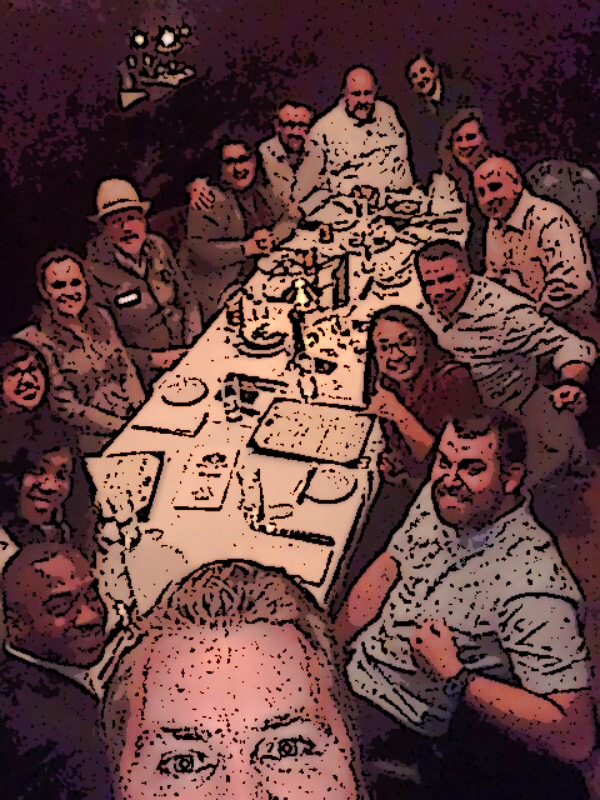
“It is such an honor to be part of a community of citizen leaders who seek conversations by showing up through invitation rather than mandate, and the diverse gifts of each person are acknowledged and valued. Together we will answer the question, ‘What can we create together?’ so students of all backgrounds and circumstances are prepared to succeed in school, work, and life.”
~ My remarks on October 22, 2020 when accepting the gavel as Chair of the National Association State Boards of Education Board (NASBE) of Directors
The remarks above come from the personal core values I have developed from being a student of Peter Block. Peter Block’s name is synonymous with “Community” and he literally wrote the book on it: Community: The Structure of Belonging. I first became acquainted with Peter through my great friend Mike Fleisch. Mike kept telling me that everything I believed in was aligned with Block’s values as well. Mike told me I just had to read the book, Community, and that I would learn so much from Peter Block. So, I began reading and studying, and have since had the chance to visit with Peter Block a couple of times. The bottom line is that everything we do is as part of a community whether it is an organization, neighborhood, city, country, or world that works for all. We need to take our membership in these organization, truly belong, and then be accountable for the leadership of making communities great to be part of.
So, my post here deals with an organization, the National Association of State Boards of Education (NASBE) – let’s call the organization a community. A week ago I took the helm as Chair of the Board of Directors and I reflected back on how I really came to be so involved and belong in this organization. It all happened because of one of the most powerful tools that Peter Block says we have in a community in the power of the invitation. The question becomes “Whom do we choose to invite into the room?” In our case as an organization made of state boards of education and their members, that’s who we want to invite, right?
“If the artist is one who captures the nuance of experience, then this is whom each of us must become.” ~ Peter Block
(Block, 2008, p. 9)
That is where my story begins. Shortly after being appointed to the Indiana State Board of Education back in 2015, fellow board member, Gordon Hendry, personally invited me to attend the NASBE New Member Institute. Peter Block would remind us how powerful the invite is “because at the moment of inviting, hospitality is created in the world” (Block, 2008, p. 117). Gordon told me about NASBE and how valuable the organization would be to my development as a board member and how awesome the New Member Institute is. Here’s the deal: any new state member can go to New Member Institute. But, here’s the big deal: Gordon Hendry had asked me to attend and raved about how great it was. How could I refuse? I couldn’t abdicate my responsibility to the communal structure. I registered and I attended. I didn’t just attend, however, I became a part of the fabric of NASBE and was woven into the fabric of a collective community of great citizen leaders from all over the United States, including Guam.
This transformation from thread to fabric happened because another group from Delaware (without consulting me, I might add) nominated me during the Institute to serve as the New Member Representative to the Board of Directors. First of all, how cool is that? Quite an honor coming from my new east coast friends. Secondly, how cool is it that an organization has a new member sit on their board? What a way to truly get to know customer needs, right? Anyway, the members from Delaware nominated me and a day later somehow I was elected to serve on the Board of Directors (and there were even three other candidates). The rest is history or history that is still being written. I served two years as New Member Representative, then two years as Secretary-Treasurer, then a year as Chair-Elect, will serve this year as Chair, and then next year my final year on the Board will be as Past-Chair.
Again, what a ride that is still running. Here’s my point in all this: none of this would have happened without the invitation from Gordon Hendry to be at the “table” and then the Delaware delegation further weaving me into the social fabric by nominating (a form of invitation) me as a New Member Representative on the Board. Peter Block taught us that, “To build community, we seek conversations where people show up by invitation rather that mandate, and experience an intimate and authentic relatedness” (Block, 2008, p. 93). We need to have diversity of thinking, dissent encouraged and valued, and the gifts of everyone valued.
Our NASBE community is an asset-based community that is continually evolving because of the tremendous aptitude of our members. Together we continue to advance education equity and excellence for students of all races, genders, and circumstances by answering the question, “What can we create together?”
What do you have going on, and who do you need to invite? Go ahead and bring some more hospitality to the world!
Do Not Look Outside Yourself

Too often we wait on others to do for us, our communities, or the world what we should be doing for ourselves. In other words we need to step up and be the leaders that we have, for so long, been hoping for. Our choices do not, and have never just affected ourselves. I am reminded of what I have heard Gene Simmons say of what drove him during the founding years of KISS; he wanted KISS to be the band he’d never seen. Mission accomplished! We need to become the leader we’ve been hoping for.

In chapter nine this week, entitled “Take the Lead“ in Mindset Mondays with DTK, the Hopi Elder’s Prophecy was referenced. DTK quoted the Hopi elders, “we are the one we’ve been waiting for.” This caught my attention because I spent some time in the late ‘80s learning about the Hopi in Arizona. The Hopi are a Native American tribe located in northeast Arizona. They are believed to have one of the oldest living cultures in the world. They are referred to as “the oldest of people” by other Native American nations. It was incredible to visit and learn in the Hopi lands.
A Hopi Elder’s Prophecy
“You have been telling the people that this is the Eleventh Hour, now you must go back and tell the people that this is the Hour. And there are things to be considered . . .
Where are you living?
What are you doing?
What are your relationships?
Are you in right relation?
Where is your water?
Know your garden.
It is time to speak your Truth.
Create your community.
Be good to each other.
And do not look outside yourself for the leader.”Then he clasped his hands together, smiled, and said, “This could be a good time!”
“There is a river flowing now very fast. It is so great and swift that there are those who will be afraid. They will try to hold on to the shore. They will feel they are torn apart and will suffer greatly.
“Know the river has its destination. The elders say we must let go of the shore, push off into the middle of the river, keep our eyes open, and our heads above water. And I say, see who is in there with you and celebrate. At this time in history, we are to take nothing personally, Least of all ourselves. For the moment that we do, our spiritual growth and journey comes to a halt.
“The time for the lone wolf is over. Gather yourselves! Banish the word struggle from your attitude and your vocabulary. All that we do now must be done in a sacred manner and in celebration.
“We are the ones we’ve been waiting for.”
Hopi Elders’ Prophecy, June 8, 2000
I’m glad I took the time to look up the Hopi Elder’s Prophecy and read and study it in its entirety because I found another stanza that jumped out at me: “And do not look outside yourself for the leader.” This is a call to be the leaders that we have, for so long, been hoping for. Our choices affect so many more than just ourselves. True leaders lead from inspiration and purpose. We need to seek guidance from within, rather than from without. And share with others in the spirit of servant leadership. As DTK told us, “Leadership starts with you. It’s time to take the lead in your own development” (p. 93). If we are to do this we must take DTK’s advice and lead ourselves first so we can grow to then lead others. We can become the one’s we’ve been waiting for.
Open Your Mind To The Past & All Of This May Mean Something
 Late last night I found myself flipping through the television channels. Actually, using the term channels probably really ages me – are they even called channels anymore? Anyway, I came across an old episode of Star Trek: The Next Generation (TV Series). This was my favorite of the Star Treks because I love the character Captain Jean-Luc Picard (played by Patrick Stewart). My favorite line of his that is in almost every episode is “Make it so.” I practice “Make it so!” leadership and just realized I haven’t really blogged specifically about that. Maybe tomorrow.
As I surfed and found Star Trek, the episode was just beginning. The episode was Season 2, Episode 17 and was titled Samaritan Snare. There were two throughlines established early: Captain Picard needed heart replacement surgery (routine in the 24th Century) so was traveling with Wesley Crusher in a small craft to far away Starbase 515. The Enterprise was on a rescue mission to a Pakled vessel that turned into an attempt to steal computer knowledge.
On their journey to the medical facility and surgery Picard and Crusher had a deep and revealing conversation where Picard shared how his heart had been damaged in a fight with Nausicaans as a young ensign. While at the base Crusher will be taking Starfleet exams. Here is the conversation:
Captain Jean-Luc Picard: There’s no greater challenge than the study of philosophy.
Wesley Crusher: But William James won’t be on my Starfleet Exams.
Captain Jean-Luc Picard: The important things never will be. Anyone can be trained in the mechanics of piloting a starship.
Wesley Crusher: And Starfleet Academy…
Captain Jean-Luc Picard: Takes more. Open your mind to the past – art, history, philosophy. And this all may mean something.
Star Trek has taught generations of us how great humanity could be if we study and learn from our past, learn to deal with our biases, and work together (I bolded that for emphasis) to create a better future. People have always faced difficult times and situations, and Star Trek always reminds us that when smart people come together they can come up with smart answers. It would be interesting to know just how many have been inspired to leadership, science, engineering, medicine, or many other careers because of Star Trek. As Edmund Burke taught us, “People will not looking forward to posterity, who never look backward to their ancestors.” Thus, pretty good advice from Captain Picard to open our minds to the past so that all this does mean something. Pretty good advice indeed in the 21st Century year of 2020!
I hadn’t thought about philosopher William James for a long time. William James, the father of psychology and a leading thinker of the 19th Century, actually laid the groundwork for the study and research that continues on leadership. James asserted that individuals do make a difference in history, and that the study of influential people an important pursuit. Interestingly, as I studied more and more on this I came back across the work of Thomas Carlyle and the “great man” theories I talked about in Leaders Crashing and Flying Higher. It also had me looking at studies on “hero-worship.”
According to James (1880, 1884, 1890/1956) any change that happens can be attributed to an individual or multiple individuals. The potential of a group, organization, business/industry, community, or country will be brought out not by just one individual leader, but by a collective of leaders. Thus why I believe everyone is a leader. I really believe James believed this too. No one leader has the power to determine change. No one has that kind of power. Instead a leader must work within the context she is given. Leadership then brings together individuals with circumstances.
And, I really got to thinking that this theory was modeled by the entire Enterprise crew. It took leadership from all to solve the issue with the Pakled vessel and Picard’s surgery that ended up having complications. The head surgeon said that the complication was out of his realm of knowledge and that Picard was dying. He then said that he knew someone who could solve the issue – she was summoned and did. Nothing happens in a vacuum. This is why the context matters and everyone’s expertise matters and must be brought to the “table.” This is why everyone must be a leader.
Seeking Opportunities To Observe & Update Our 🌎Worldview🌍
 We create our own beliefs, they don’t happen to us. We choose what and how we believe. As we grow up, we see the world and ourselves in a particular way. This “way” is based on environmental influences, our parents/families, and our peers. Whether we like it or not, we are responsible for developing our own belief system.
“To argue with someone else’s experience is futile. To add their experience to your own is possibly useful.”
One of my favorite quotes by an unknown author is, “To argue with someone else’s experience is futile. To add their experience to your own is possibly useful.” To me this is what empathy is about – understanding how another person’s experiences have shaped them. If we take time to truly study the experiences of others, those experiences can help give us information free of confirmation bias.
One Machiavelli principle I prescribe to is that we should always “declare” what we believe. This does not, however, mean that those beliefs can’t evolve and change. Thus, why declaring is important. In fact, sometimes we must grapple with contradictory evidence. As our society becomes more and more global, we have more and more of our own experiences and the experiences of others to process. This contemplation of dealing with opposing views and possibly believing parts of both has always intrigued me. F. Scott Fitzgerald taught us, “The rest of a first-rate intelligence is the ability to hold two opposed ideas in mind at the same time and still retain the ability to function.” I see this as an ability of great empathy, openness, humility, and leadership.
“It’s not what you don’t know that gets you into trouble, it’s what you know for sure that ain’t so.” ~ Mark Twain
This trait of openness was reinforced in an awesome book I’m reading right now, Creative Confidence: Unleashing The Creative Potential Within Us All by Tom Kelley and David Kelley. In the book we are taught that building on the ideas of others requires humility. We must first acknowledge to ourselves the we don’t have all the answers. The upside to this is that it takes the pressure off of us to know we don’t have to generate all the ideas on our own.
 Mark Twain taught us that, “It’s not what you don’t know that gets you into trouble, it’s what you know for sure that ain’t so.” We need to be diligent to not be fooled by what we “know for sure” about ourselves, our customers, our students, those we serve, our communities, or the world. We must seek out opportunities to observe and update our worldview.
Boom! Hang On Tight! Oooooh So Close! Woohoo! Go Enjoy Your Time!
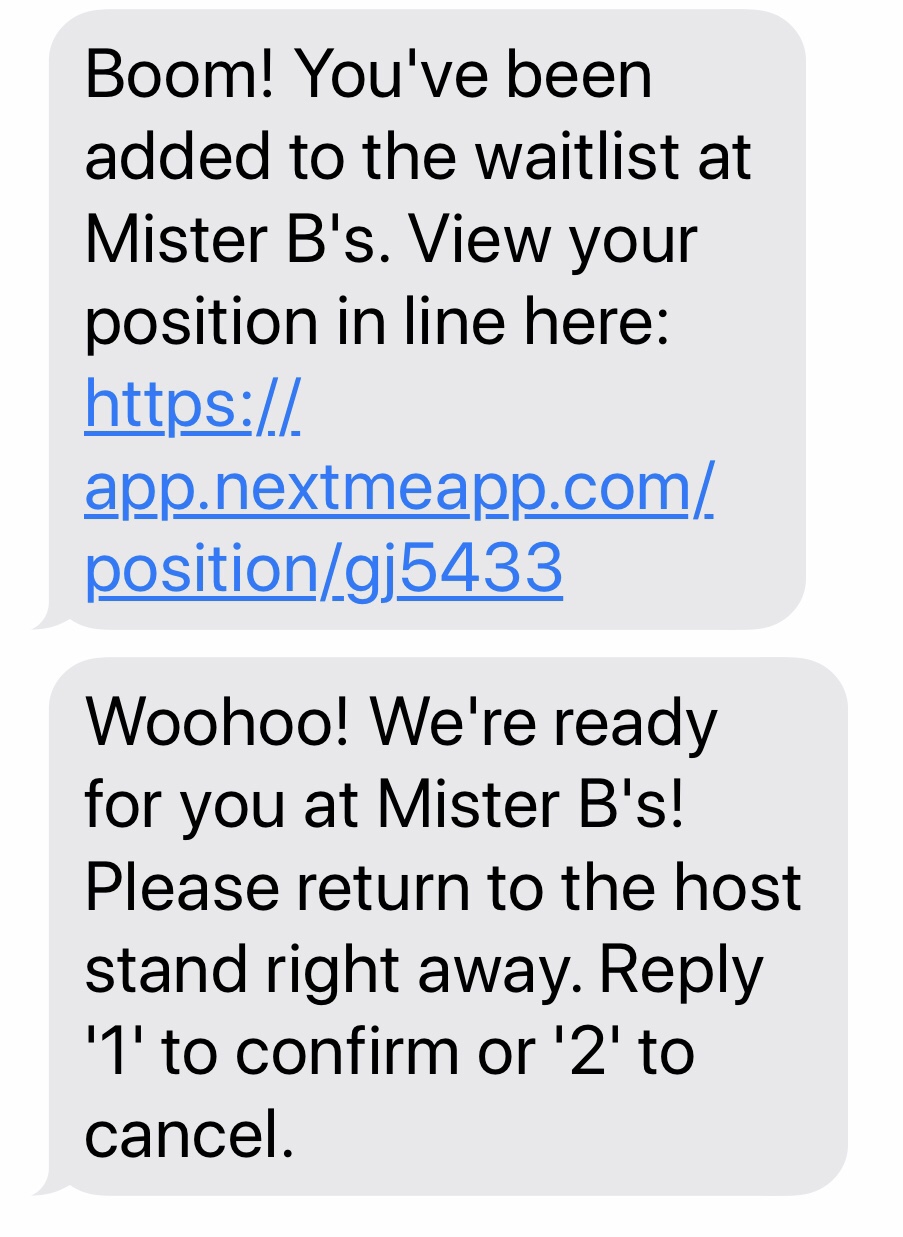
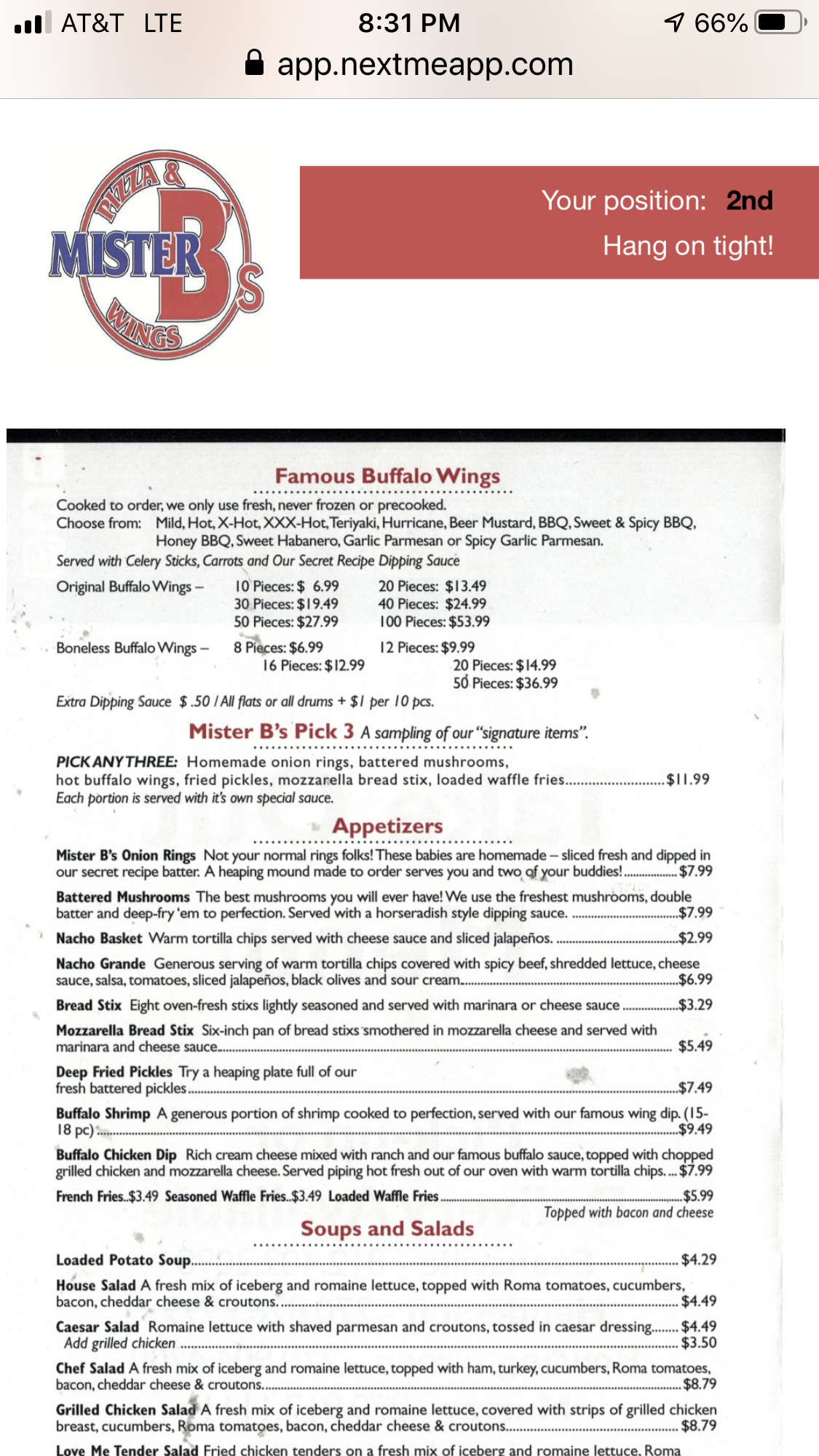 “Boom! Hang on tight! Oooooh so close! Woohoo! And… Go Enjoy your time!” were all descriptors I was receiving on my phone last night in Murray, Kentucky. We were at Mister B’s Pizza and Wings. Because of the need for physical distancing this great restaurant has an app that tells you where you are in the seating process. Once we gave them our number, a text was sent with a link to our personalized app. It gives you how many parties are ahead of you and an approximate time for seating. Genius, right? It also gave us the menu so we could be thinking about that.
I loved the descriptors along the way:
- Boom! Let me know we were in the system and to click on the app
- Hang On Tight! Meant we had one party ahead of us.
- Ooh So Close! Meant we were next.
- Woohoo! Was our text telling us they were ready for us.
- Go Enjoy Your Time! The app’s message telling us they were ready to seat us.
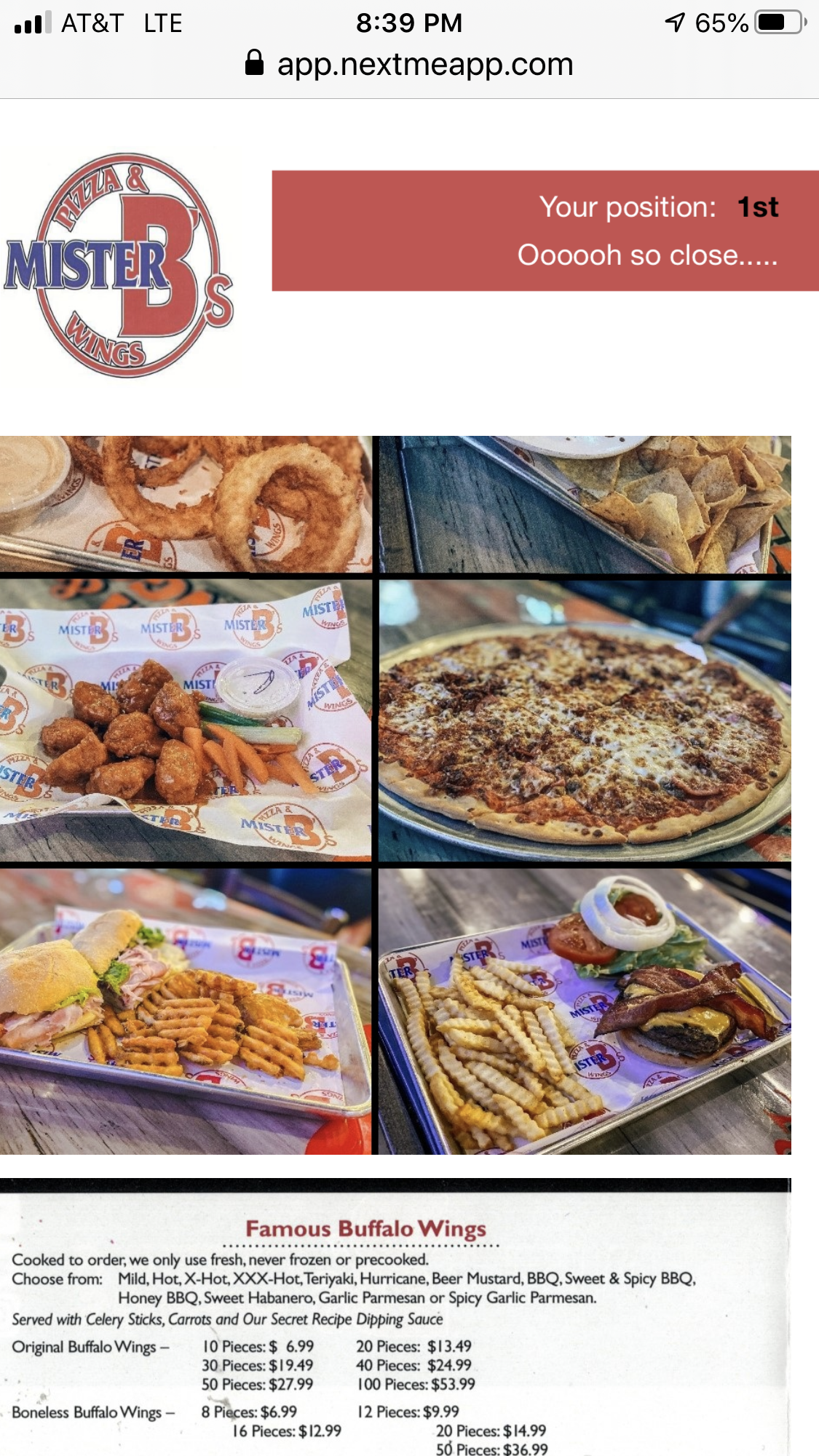 Now, I know some of you are saying, “Big deal, Byron! Other restaurants do that too.” I get it. Others use QR codes to go to their menu, but I just thought the descriptors and the design of the app was cool. It may have also been the fact that we were eating at my son’s favorite go to place (data shows he can eat 15 Mister B’s famous buffalo wings in one minute – I guess there was a contest) in the home of Murray State University.
My point here really is just how far we’ve come during this, as of today, 155 day journey of the COVID-19 Global Pandemic. Business have adapted and created new ways, including our experience I described above, to enhance the customer experience; while at the same time doing their best to keep us safe. Those of us in the education world are constantly navigated the fluidity of school no longer being a place. And, individuals and families are making adjustments we never dreamed of.
I believe we need to take a moment and acknowledge and appreciate some of the great things that have been done during these 155 days, such as:
- Telephone befriending services to keep communities together
- Supermarkets, banks, and other businesses offering “elderly/senior only” times for shopping.
- We’ve become comfortable having virtual gatherings where we can come together globally without the expense and fuss of travel (I had the opportunity to spend and hour and a half with neighbors from 42 different countries, recently). We wouldn’t have even thought of that a few years ago.
- Finally, leaders are realizing working remotely can be effective. Let’s face it, big egos are the only reason for fancy buildings, offices, and “places” to work in many cases.
- Our abilities to provide professional development have improved greatly – the way we time them out, delivery, access to more people, et cetera.
- Creative money raising events
- Creative virtual concerts with some of our favorite artists. Some great artists, like Mark Tremonti, send out regular clips of personal recorded music with a message. In some ways we can feel closer to these artists than ever before.
- A chance to break routine and restructure our lives. We’ve gotten back to do some of the things we want to do, but never had the time to.
- We have learned to access culture without having to travel.
- Demand has made the internet providers make improvements; along with all technology providers.
- Educators have been allowed to be, and have risen to the challenge I might add, creative.
 I know we all want the Pandemic to be over, but I believe we need to take a moment and celebrate the accomplishments from around the world. This has given us a chance to grow and improve in so many ways as a global community. Let’s not ever fully go back to the way it was 155 days ago – let’s keep the improvement momentum going and strengthen our community. Let’s keep asking, “What can we create together?” Perhaps the biggest positive emerging from this crisis, though, is the realization that we humans are capable of global, collective action. If the stakes are high enough, we can take on these challenges together and, most importantly of all, rapidly abandon business as usual. I would love to hear about other positives you believe should be added to the list.
“Getting It Right” Before “Being Right”
 “Pride goeth before destruction, and an haughty spirit before a fall” (Proverbs 16:18 KJV). A good daily growth exercise to read a chapter of Proverbs every day each month. There is a lot of wisdom to be gained from King Solomon. The difference between “getting it right” and “being right” with this statement, is not to suggest that we are more often than not wrong in our thinking. Despite the religious origin, people use this nowadays without religious overtones. People can say this simply as a warning not to be too arrogant.
To me “getting it right” before “being right” means having humility and an ability to consider all sides of an issue or question. Being humble does not mean that you diminish your value or take a subordinate position in terms of presenting your ideas or perceptions. It does, however, as a leader, mean than we should listen to others’ ideas before always presenting our own. And acknowledging when those ideas are better than our own. True humility is a sign of wisdom, knowledge, confidence, and strength.
“When given the choice between being right and being kind, choose kind.” ~ Dr. Wayne Dyer
“Getting it right” is a core value I practice to remind myself that making a contribution as part of a bigger team means that you have the humility to accept that others also have something worthwhile to contribute. I truly believe there is no such thing as an “expert.” But, I do talk about the “collective expertise” in the room all the time. We should all strive to be an important part of a “collective vision.” When we give up the need to always be right, we communicate and listen on a deeper level, with more understanding and acceptance, and with less judgment and resistance.
Day 💯 – Getting To Know People In A Different Way
 Well, here we are; day 💯 of the Covid-19 Global Pandemic. During this time of discovering a new normal, I feel more connected than ever before. I have met the children, spouses, pets, and even a grandmother of people I never would have thought possible. I’ve even introduced some of our Jersey dairy cows to others while connecting virtually. Additionally, I’ve witnessed parents attending school events virtually, while at work, that never would have been able to attend before. My point? There are things that we need to consider becoming normal. I’m not saying replace necessarily, but supplement.
Having said that, I now begin to think about what else do we need to be thinking about? How do we leverage technology? How do we stay human? How do we get the right tools in the hands of everyone? How do we decide what the right tools are?
It’s interesting to me that before the WHO (I thought that was a rock band) named this a Global Pandemic we were talking about sustainability and the environment, health care, education, and many other things. While in the education realm we have been focused on connectivity and providing meaningful virtual education, and in healthcare our actions have been around caring for Coronavirus patients and stopping the spread of the disease, we will get back to talking about the major issues in the way we were before the pandemic took over. For example, we will, no doubt, be rethinking health care and how it is delivered. In education, I continue to argue that our conversation needs to shift to the idea that school is no longer a place.
Even though I served as moderator for an awesome global event last month that was virtual with 47 countries represented, I also wonder if our assumptions about globalization have been challenged. We had been talking about distance no longer being a factor, but in some ways I’ve seen us become more isolationist and seeing us care more about the locality we operate in and what we can touch and feel. But, we’ve also seen that we can hire the best talent from anywhere and bring them onto teams. The only remaining question related to that is how to do remote working well.
I don’t think I am alone with all of this thinking and pondering. We are now entering a time of needing to decide which practices still make sense and which need to change. We need to come together as families, businesses, schools, communities, cities, states, and nations to answer the question, “What can we create together?”
Advanced Consulting
 Advanced Consulting: Earning Trust at the Highest Level by William A. Pasmore
My rating: 5 of 5 stars
When it comes time to write my end of the year blog post about the top books I’ve read in the last year, this book will be in the top tier of that list. As a person who does leadership training and coaching/mentoring of leaders, I learned a great deal from spending time studying every page of the this insightful book. My copy of the book looks like what my mom always told me a Bible should look – used. I have the pages dog-eared, highlighted, notes in the margin, and the spine is all broken back, and this book will continued to get used in a reference capacity.
Advanced Consulting starts the reader off with a great story, as great leaders do. Then the reader is reminded that we should not always be looking for the most glaringly obvious things to fix, but the opportunities unaddressed that would slip up. This book drove home the fact that, “Every change is an experiment” (p. 111) and that “More pressure won’t produce progress, less pressure and more understanding may” (p. 109). This kind of candid and authentic information from Bill Pasmore helps us to understand why he argued there is no perfect knowledge in the real world. That is why this book is so timely right now in these uncertain times with the COVID-19 Pandemic. There are things, like this, that cannot be predicted, and this book gives us incite in how to help leaders to find ways to work interdependently to find solutions.
Lastly, as a curious person and leader, I loved the part of the book where Pasmore admitted, “I learn something I should have already known” (p.143) when accepting a new assignment with a new organization. He reminded us to be genuinely curious and humble. Whether you consult leaders or are a leader (remember, I believe everyone is a leader) you need to read and study the insights of this book.
Change Is A Coming!
 There is one thing for sure as I sit and write this post on this Sunday morning; change is a coming. My son is coming home from college till at least April 6th, and learning remotely and online (since I miss him being at home every day, I am excited for him to be home). The students at the schools I serve will be learning remotely. The teachers and school leaders I serve will be learning and creating best practices for remote and online student learning. Also, we must develop best practices for caring for the non-academic needs of our students (eg. food, social emotional, et cetera). I need to consider what limiting social contact means for mean personally. Additionally, I am positive that there will be things on the policy side of my life, as an Indiana State Board of Education member, that will have to be decided. So, as I said, times are changing. The coronavirus (COVID-19) pandemic is bringing change to all the world and all our lives.
As I contemplate all the constant and fluid change going on around me, I continue to remind myself that change is a never-ending process. Change is not a journey or a one-time event. Additionally, as a person who doesn’t like the term expert, or am not even sure there is such a thing, we need to remember that, right now, there are no experts – we’ve never been through this before. So, we have a bunch of people doing the best we can. The changes we are experiencing due to the coronavirus (COVID-19) pandemic need to be continuous and participatory. We must communicate and collaborate. This can’t become about who can tweet what they are doing the fastest to feed their own ambition. Or, who can blast someone else for what they haven’t done.
The problem with thinking of change as a journey is that travel is sequential. We move from one leg of the journey to the next. Change, in contrast, isn’t a series of steps; it is not a map you can follow. There is no Maps App for change, particularly not for coronavirus. As a lover of metaphors, let’s imagine pouring cream (I prefer coconut flavored) into a mug of coffee. Almost immediately as the liquids merge, there is a color change from black to brown to a light tan depending on how much cream we add. Change needs to look more like that. Instead of someone trying to come up with a well-executed plan on their own, it becomes what I call triageformational. Yes, triageformational is a term I coined. I first blogged about it in Triageformational Leadership: New Hybrid Definition of Triage and Transformational Leadership. I believe it applies more now, with our coronavirus situation, than ever before. Here is what I said in that blog post:
“Those that I believe that would make great triageformational leaders place a high value on fostering an environment or community of collaboration. This community is balanced, diverse, and equitable. These leaders build community and culture by truly living out their own core values and the organization’s core values. Just like doing triage in an emergency situation, these leaders are prioritizing what gets done next by matching core values to the situation. This in turn brings about transformation and service oriented leadership.”
We must change the way we change. We cannot have all change initiatives coming from on high. CEOs and other bureaucratic leaders who decree the values they created alone have already failed. Those values must be collaboratively developed. So, how should we change? Well, change must be continuous and participatory, and we must look for those who know more than ourselves.
 Byron's Babbles
1 comment