Flocking Together: How Community and Camaraderie Boost Creative Success

Those that follow me know that I love Pelicans. They are amazing birds and there are so many leadership lessons we can learn from them. I have blogged previously about them in Pelican Leadership Lessons and Leading From The Optimal Height. I am in Georgia doing some work right now and yesterday was watching these incredible creatures while spending some time on Tybee Island.
Lately, I have been doing a lot of studying the literary discussion group from the 1930s and 1940s at Oxford University that included C. S. Lewis and J. R. R. Tolkien – the Inklings. As the tide came in yesterday morning there were groups of Pelicans putting on a show of their collaboration and holding each other accountable. Both the Inklings and Pelicans served, in my mind, as analogies to each other, and leadership.
The Inklings were known to be a close-knit, supportive community where members shared and critiqued each other’s works regularly, fostering mutual growth. The accountability that came from this included honest feedback, but the strong relationships and camaraderie enabled encouragement, cheerleading, and a collective pursuit of artistic and intellectual excellence—much like a flock of pelicans working together while fishing or migrating.
Pelicans are social birds that travel and hunt in groups, relying on cooperation for survival. They often communicate and coordinate their actions, holding each other accountable to stay organized and effective. Pelicans collaboratively move fish into groups for successful hunting of food. Pelicans, just like the Inklings did, thrive on their relationships to collaborate and work together toward a common goal —literary creation or efficient foraging.
The synergy of the relationships encouraged the support of one another in the Inklings. This support provided accountability; not in the form of punitive pressure, often associated with accountability, but by ensuring progress through collaboration. The Inklings shared purpose can be compared to that of the Pelicans. While the Pelicans shared purpose is survival, we know from research that many of the great literary works from Inkling authors would not have happened without their social group of accountability.
So, let’s be cognizant of the power of cooperative, communicative, and mutually supportive relationships that enhance our efforts through camaraderie and shared accountability.
Planting Ourselves In A Tall Forest

I have been described as being eclectic and I would have to say that I am guilty as charged. I do have very diverse interests and influences that span various fields, ideas, and cultural perspectives. This eclectic approach allows me to draw from multiple sources, styles, or traditions rather than adhering to a single framework or ideology. I describe this as having a blend of ideas. This eclecticism grants the incorporation of different philosophies, methodologies, and subject matters to create a more comprehensive learning experience for both myself and my clients.
Iconic poet T. S. Eliot created rich tapestries of meaning and emotion, making his work resonate on multiple levels. Thomas R. Rees described Eliot as a “master of eclectic synthesis.” This highlights Eliot’s unique ability to draw from a wide variety of influences and styles, melding them into a cohesive and innovative body of work. Eliot’s poetry often incorporates diverse cultural, literary, and philosophical elements, reflecting his deep engagement with different traditions and his skill in reinterpreting them.
Eliot believed that to find our own “originality” we need to surround ourselves with strong, supportive individuals who can help us grow and thrive. If we use the metaphor of the distillation process, we are taking everything we are exposed to, think of that as the corn, rye, barley, and yeast, and creating the original us, or metaphorical bourbon. In The Sacred Wood Eliot said, “One of the surest of tests [of greatness] is the way in which a poet borrows. Immature poets imitate; mature poets steal; bad poets deface what they take, and good poets make it into something better, or at least something different.” We all need to have deep engagement in incorporating the diverse cultural, literary, and philosophical elements we are exposed to and reinterpreting them.
Karen Burke Lefevre put it this way in Invention As a Social Act:
“There will always be great need for individual initiative, but no matter how inventive an individual wants to be, he will be influenced for better or for worse by the intellectual company he keeps. On top of Mt. Mansfield in Vermont, there are thirty-year-old trees that are only three feet tall. If a tree begins to grow taller, extending beyond the protection of the others, it dies. The moral for inventors [and artists]: Plant yourself in a tall forest if you hope to have ideas of stature.”
Competing Vs Collaborating

Competition can drive individuals to improve, an overemphasis on it at the expense of collaboration can hinder progress and create a less harmonious environment. I was reminded of this while watching the new Matlock television series last night. Olympia (Skye P. Marshall) told Sarah (Leah Lewis) that she was, “too busy competing and not collaborating.” Olympia was pointing out that Sarah was focused primarily on outperforming others rather than working together for mutual benefit.
The constant competition Sarah created led to stress and burnout. Sarah felt the pressure of always wanting to be ‘the best’ and missing out on the supportive network that collaboration provides. Individuals become isolated, as they prioritize their own success over building relationships and fostering teamwork.
Don’t forget, personal growth is stunted when there is no collaboration, as sharing knowledge and resources lead to better outcomes.
A Purrfect Blend: How Kittens Inspire Creativity and Collaboration in Leaders
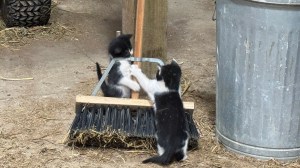
I have blogged about kittens and cats many times, and now must add another. We have a new litter of kittens in the barn (see featured photo) that I am mesmerized by every morning and evening. You’ll notice in the photo, two of the kittens are exploring a broom and have made it into a toy. These kittens are the poster felines for curiosity and exploration. Kittens are naturally curious and often explore their environment without fear. We can learn a lot from them on how to embrace curiosity, encourage exploration, and remain open to new ideas, which can lead to innovation and growth. Combine that with play and observation, and we have summed up how kittens learn.
Kittens engage in play, which is vital for their development. For us, as leaders, incorporating playfulness and humor into the work environment can enhance team morale, foster creativity, and strengthen relationships among team members.
We can also learn from kittens the art of observation and importance of openness to learning. Kittens learn by observing their surroundings and each other. We can benefit from being keen observers, taking time to understand team dynamics and individual strengths, allowing us to make informed decisions.
I love watching these kittens play together. Play is a very important part of them learning important social skills and how to interact with others. Effective leaders should promote collaboration and teamwork, when possible incorporating play, helping individuals understand the value of working together towards common goals.
Finally, kittens are amazingly resilient. They can bounce back quickly from falls or mistakes during play. This resilience is essential for leaders; setbacks are inevitable, but maintaining a positive attitude and learning from experiences can lead to personal and professional growth.
Passing The Baton For The Grand Slam Homer
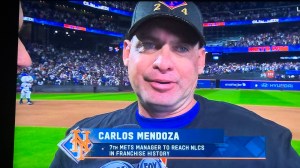
Of course I was watching postseason baseball last night as the New York Mets clinched the Division Series beating the Philadelphia Phillies 4-1. In that game Mets shortstop, Francisco Lindor, who I blogged about yesterday in We Are Never Bigger Than The Moment, hit a grand slam home run. In baseball that is a huge deal – scores four runs. In Mets postseason history that had only been done once before. The thing about this that I want to point out is that for Lindor to bring in the other three runs beside himself, there had to be three other players get on base ahead of him. Everyone was doing their job.
Following the game the Mets incredible manager, Carlos Mendoza, made the comment that the players were, “Passing the baton, no one is trying to do too much.” I loved this comment in the context of how this Mets team is winning in the postseason. As Derek Jeter said after the game, speaking of the Mets team, “They don’t rely on any one person to do it all.” This was referring to the collaborative culture and approach to teamwork and leadership that Mendoza and the Mets have created. Mendoza’s quote used the metaphor of a relay race, where team members pass the baton to one another, indicating that they are working together and supporting each other rather than trying to overshadow or outshine one another.
In this context, it suggests:
- Team Collaboration: Each member plays their part and trusts others to take over when necessary, fostering a sense of unity and shared responsibility.
- Shared Success: The emphasis is on collective achievement rather than individual glory, highlighting that everyone’s contributions are valuable to the team’s success.
- Balance of Effort: It points to a balanced workload where no single person is overwhelmed by responsibilities. Instead, tasks are shared appropriately among team members.
- Empowerment and Trust: It signifies that leaders empower their team members to take charge of their roles, trusting them to perform without the need for micromanagement.
Overall, Mendoza was highlighting a healthy team dynamic where collaboration, trust, and mutual respect are prioritized, leading to greater overall success. Are your team members passing the baton around?
Rolling The Dice of Uncertainty

I am reading a great collaboration of six books conceived and curated by Blake Crouch called Forward. Blake and five other authors, Veronica Roth, N.K. Jemison, Amor Towles, Paul Tremblay, and Andy Weir, wrote the six books. I wrote about one of the driving questions used as inspiration for the series yesterday in The Unforeseen Twists & Turns. The first question was, “How does anyone know at the moment of discovery where their work will ultimately lead” (Crouch, 2019)? Now I’m tackling the second question, “Should we let that uncertainty stop forward momentum, or do we roll the dice and let the chips fall where they may” (Crouch, 2019)?
As leaders, it’s important to embrace the uncertainty that comes with the creative process. While we are tempted to let the fear of the unknown hold us back, taking calculated risks and being open to new possibilities can lead to breakthroughs and unexpected success. It’s about finding a balance between being proactive in moving forward and being adaptable to changing circumstances. By staying curious, learning from failures, and remaining open to feedback, we can navigate through uncertainty and make informed decisions. Ultimately, we have to decide how much risk we are comfortable with, but we must remember that great achievements often come from stepping outside of our comfort zones.
The Unforeseen Twists & Turns

I love collaboration and I believe some of the best examples of how to do this well lie with creative performing artists and writers. We are in a time where musicians collaborate on songs and perform together. These turn out to be incredible collective products. In my own world of having a professional service firm, I am always looking for potential collaborations or cross-branding opportunities. I am reading a collaboration of books conceived and curated by Blake Crouch. Blake brought together five other authors, Veronica Roth, N.K. Jemison, Amor Towles, Paul Tremblay, and Andy Weir, to write, along with himself, six books. In a note from the curator to the Forward collection, Blake Crouch tells us the three driving questions he posed to this collaboration of authors to write about. Here are the three questions (Crouch, 2019):
1. “How does anyone know at the moment of discovery where their work will ultimately lead?”
2. “Should we let that uncertainty stop forward momentum, or do we roll the dice and let the chips fall where they may?”
3. “How does it feel to change the world?”
Having just finished Towles’ You Have Arrived At Your Destination and Weir’s Randomize, I can already tell you this collaboration was a success. Those three questions Couch posed to the authors have continued to cause me to reflect however. Therefore, the reason for today’s post and probably a couple of other future posts. Pondering the question “How does anyone know at the moment of discovery where their work will ultimately lead?” helps us contemplate and begin to understand the uncertainty and fluidity of artistic creation, promotes openness and self-reflection, and encourages us to embrace the unknown in our innovative and creative journeys. We are reminded that, no matter how well we plan or strategize, there are always unforeseen twists and turns along the way.
Asking this question encourages us, as leaders, to embrace uncertainty and remain flexible in our approach – one of the big advantages of collaboration. It challenges us to let go of rigid expectations and instead focus on exploring new possibilities and adapting to changing circumstances. By acknowledging that the ultimate outcome of our work may be unknown, leaders can foster a culture of innovation, experimentation, and learning.
Moreover, asking this question promotes self-reflection and encourages leaders to question our assumptions and biases. It challenges us to critically evaluate our own work and consider alternative perspectives and approaches. This can lead to greater creativity, as well as a deeper understanding of ourself and the world.
Leading With Collective Aspirations

I had the honor of watching the sunrise and having breakfast at the top of Dubai’s iconic Burj Khalifa yesterday morning. It was absolutely breathtaking. Plus getting to learn about the dream and building of the Burj Khalifa was amazing. The Burj Khalifa is such a great story because it represents human innovation, engineering marvel, and the ability to push boundaries. It is the tallest building in the world, standing at a height of 828 meters (2,716 feet) with 163 floors. The construction of the Burj Khalifa was massive undertaking that required cutting-edge technology, advanced engineering techniques, and a highly skilled workforce.
I loved the words and meaning in the “I am Burj Khalifa” poem. This is projected on one of the walls as visitors enter. These words really describe great leadership. See what you think:
“I am the power that lifts the world’s head proudly skywards, surpassing limits and expectations.
Rising gracefully from the desert and honouring the city with a new glow. I am an extraordinary union of engineering and art, with every detail carefully considered and beautifully crafted.
I am the life force of collective aspirations and the aesthetic union of many cultures. I stimulate dreams, stir emotions and awaken creativity.
I am the magnet that attracts the wide-eyed tourist, eagerly catching their postcard moment, the centre for the world’s finest shopping, dining and entertainment and home for the world’s elite.
I am the heart of the city and its people; the marker that defines Emaar’s ambition and Dubai’s shining dream. More than just a moment in time, I define moments for future generations.
I am Burj Khalifa.”

The building’s design was inspired by traditional Islamic architecture, with a distinctive spiral shape that resembles a desert flower. The construction process involved overcoming numerous challenges, such as extreme temperatures, strong winds, and the need for a strong foundation to support the immense height.

The Burj Khalifa has become an iconic symbol of Dubai and showcases the city’s ambition and progress. It has attracted millions of visitors from around the world who come to admire its beauty and experience its breathtaking views from the observation deck. The building also houses luxury residences, hotels, offices, and entertainment facilities, making it a versatile and dynamic structure.
Overall, the Burj Khalifa represents human ingenuity, architectural excellence, and the ability to achieve the seemingly impossible. Its story inspires people to dream big and strive for greatness.
Two Heads Are Better Than One

I’ve never heard anyone describe C.S. Lewis as a teacher of leadership, but in the exhaustive study I am doing of him and all his writings I continually find nuggets that are quite genius and related to leadership in some way. Here is one such nugget I found this morning as I finished reading A Mind Awake: An Anthology of C. S. Lewis:
“People were no cleverer then than they are now; they made as many mistakes as we. But not the same mistakes. . . . Two heads are better than one, not because either is infallible, but because they are unlikely to go wrong in the same direction” (p. 290).
C. S. Lewis, reprinted from Introduction to St Athanasius’s The Incarnation of the Word of God in A Mind Awake
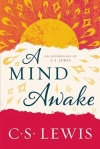
I believe we can break this statement down into two parts. Let’s first examine, “People were no cleverer then than they are now; they made as many mistakes as we. But not the same mistakes. . . .” When C.S. Lewis made this statement, he meant throughout history and across different time periods, humans have always possessed the same level of intelligence and made similar numbers of mistakes. However, the nature of these mistakes may differ. Lewis was highlighting the idea that while humans may make different types of mistakes in different eras, the fundamental capacity for error remains constant. This perspective suggests that we can learn from the mistakes of the past and strive to avoid repeating them in the present and future.
Now let’s examine the last part of the statement, “Two heads are than one, not because either is infallible, but because they are unlikely to wrong in the same direction.” Here, Lewis was emphasizing the value of collaboration and different perspectives. He believed that when multiple individuals come together to solve a problem or make a decision, their collective knowledge and diverse viewpoints can help to minimize errors and ensure a more balanced outcome. Rather than relying solely on one person’s judgment, having multiple perspectives can lead to a more comprehensive understanding and contribute to better decision-making overall.
Notice Lewis was promoting ‘collaboration’ long before it was a cool leadership buzz word. Of course, now we realize just how important collaboration is and how important relationships are to successful collaborations. I just blogged about that is Relationships Determine The Creative Outcome.
Finding Our Own Place To Apply Our Vision

“Unfortunately, he had a strong aversion to the status quo whenever the status quo wasn’t as good as he thought it should be.” This was said of Dee Hock, founder of the Visa Credit Card, in VISA: The Power of An Idea by Paul Chutkow. This young leader didn’t have the resume’ yet and was searching for his place in the financial industry. Long story short, to solve a number of issues with credit cards, at the time, in 1979 he brought together a global group of friends called the visa family and rebranded a credit card called Visa. This enabled this young leader and entrepreneur to find a place to apply his vision.
Finding our place to apply our vision involves self-reflection, exploration, and a willingness to take risks. Here are a few steps that can help:
- Self-reflection: We must take the time to understand our passions, values, and strengths. What drives us? What are our core beliefs? This self-awareness will guide us in finding a cause or field that aligns with our vision.
- Explore different areas: Trying out different experiences, internships, or volunteer opportunities in fields of interest will give us a taste of different environments. This helps us understand what resonates the most.
- Seek mentorship: Find mentors or individuals who are already working in areas aligned with our vision. In Hock’s case, he put together his Visa family. They can provide guidance, share their own experiences, and help navigate the path toward goals.
- Embrace a growth mindset: Be open to learning and adapting along the way. Our visions will involve learning and evolve as we gain more knowledge and experience. We must stay curious and embrace new opportunities that come our way.
- Take calculated risks: Applying our personal vision may require us stepping outside of our comfort zone. We must not be afraid to take calculated risks and pursue opportunities that align with our goals. Remember, setbacks and failures are part of any journey, so don’t get discouraged.
- Connections and collaboration: Build connections with like-minded individuals or organizations. Again, think back to Hock’s Visa family. Collaborating with others who share a similar vision can help amplify our impact and open doors to new opportunities.
- Stay committed: Finding our place to apply our vision(s)can take time and persistence. We need to stay committed to our goals and keep taking steps towards them, even if the path is not always clear. If we trust in our abilities and believe in the impact we can make, we will make a difference.
Remember, finding our own place to apply our vision is a personal journey. It may take time and experimentation, but with determination and perseverance, we can find the right path to fulfill our vision.
 Byron's Babbles
leave a comment