Finding Our Own Place To Apply Our Vision

“Unfortunately, he had a strong aversion to the status quo whenever the status quo wasn’t as good as he thought it should be.” This was said of Dee Hock, founder of the Visa Credit Card, in VISA: The Power of An Idea by Paul Chutkow. This young leader didn’t have the resume’ yet and was searching for his place in the financial industry. Long story short, to solve a number of issues with credit cards, at the time, in 1979 he brought together a global group of friends called the visa family and rebranded a credit card called Visa. This enabled this young leader and entrepreneur to find a place to apply his vision.
Finding our place to apply our vision involves self-reflection, exploration, and a willingness to take risks. Here are a few steps that can help:
- Self-reflection: We must take the time to understand our passions, values, and strengths. What drives us? What are our core beliefs? This self-awareness will guide us in finding a cause or field that aligns with our vision.
- Explore different areas: Trying out different experiences, internships, or volunteer opportunities in fields of interest will give us a taste of different environments. This helps us understand what resonates the most.
- Seek mentorship: Find mentors or individuals who are already working in areas aligned with our vision. In Hock’s case, he put together his Visa family. They can provide guidance, share their own experiences, and help navigate the path toward goals.
- Embrace a growth mindset: Be open to learning and adapting along the way. Our visions will involve learning and evolve as we gain more knowledge and experience. We must stay curious and embrace new opportunities that come our way.
- Take calculated risks: Applying our personal vision may require us stepping outside of our comfort zone. We must not be afraid to take calculated risks and pursue opportunities that align with our goals. Remember, setbacks and failures are part of any journey, so don’t get discouraged.
- Connections and collaboration: Build connections with like-minded individuals or organizations. Again, think back to Hock’s Visa family. Collaborating with others who share a similar vision can help amplify our impact and open doors to new opportunities.
- Stay committed: Finding our place to apply our vision(s)can take time and persistence. We need to stay committed to our goals and keep taking steps towards them, even if the path is not always clear. If we trust in our abilities and believe in the impact we can make, we will make a difference.
Remember, finding our own place to apply our vision is a personal journey. It may take time and experimentation, but with determination and perseverance, we can find the right path to fulfill our vision.
The Push & Pull Of Collaboration
On Friday I heard Tom Morello’s Radio Comandante Show on SiriusXM Octane. If you like hard rock music like me, you will know who he is. If you don’t, you should check him out. He has had multiple Grammy nominations and wins. Also, he has a BA in political science from Harvard University. I really want to hang out with him someday – I’ll bet we could have an awesome discussion on leadership and education. On his show on Friday, Tom said, “I love collaborations with other great artists because it pushes and pulls me in different directions.” He was expressing his tremendous enthusiasm for working with talented individuals and bands. I believe he enjoys the dynamic nature of collaborating with others, as it challenges him creatively and allows for a wider range of ideas and perspectives.
I loved that he called out collaborations because this showed his appreciation for the diversity of input and the growth that can come from being influenced by other artists’ unique styles and approaches. We all need these collaborations. I just got asked to chair/facilitate a big event in Berlin, Germany in November that will involve leadership from companies in several different countries. I love working for this convener because it becomes a collaboration where I get pushed and pulled to learn so many new things – not to mention all the great people I get to meet and collaborate with from around the world. We need to seek out and embrace being pushed and pulled to grow.
Of collaborations, Morello also said it, “Forces me to try things I wouldn’t otherwise try.” This was a great point to hammer home how collaborating with others can stretch us in ways we never imagined. We use stretch lessons in education to take our students learning to new heights and we need to embrace this as adults as well. Let’s all take a page from Tom’s playbook and step up our collaboration game.
Don’t Lead With Handcuffs

Having been involved with organizations in the past who’s “rumor mills” were the most efficient thing they had going, this week’s Simple Truth #47, “People Without Accurate Information Cannot Act Responsibly, But People With Accurate Information Are Compelled To Act Responsibly” in the great book Simple Truths of Leadership: 52 Ways To Be A Servant Leader and Build Trust, Making Common Sense Common Practice, Ken Blanchard and Randy Conley really resonated with me. The so called leader kept everyone in a state of wondering. Then, there always seemed to be the “chosen one” of the month who was just dying to make sure that everyone knew that they knew what was going on, and around and around we go. Thus, the rumor mill is formed.
It comes down to a lack of self confidence, being on a power trip, and as Randy Conley taught us; trust. As Conley said, “When people don’t have accurate information, it’s as if their leader is handcuffing them from being their best” (p. 121). I get the argument that sometimes there is information that cannot be shared, but there still needs to be clarity. Literally tell those you serve what you can’t share and why. Bottom-line is if you are not communicating and providing information, the rest of us will make it up.
Organizations with a high trust are where collaboration and transparency are at their best. That lack of self confidence and sense of power I mentioned earlier causes some to do what is called “knowledge hiding.” There has been research done that argues some feel they gain status and power by knowing unique information that know one else knows. I kind of chuckled to myself as I read the research. The metaphor of a Queen on her thrown throwing out little breadcrumbs at her weekly meeting – just enough to make you want more. Again, not the organization you want to be a part of. How about you? Are you hiding knowledge?
Attracting Successful People

If I had heard the story of H.B. Reese, I had forgotten it. He actually started a rival candy company in Hershey, Pennsylvania while still working in chocolatier Milton Hershey’s factory. Can you imagine what would happen with most leaders? There would be inevitable envious fit, and then there would be the immediate firing. Not with Milton Hershey. He supported Reese in creating that very special candy cup we all so enjoy. Not Sorry!
In fact the Hershey factory supplied the chocolate for the experiments as Reese developed the peanut butter cup. Of course Reese became successful and he and Hershey collaborated forever after till both their deaths. In fact the two companies were merged after their deaths. This is such a strong reminder that we all need to be aiding in the success of others. And, as others see this happening, it will attracted more talented people our way.
Even though they were competing, Hershey and Reese were inspiring each other. Who are you helping to be successful? Don’t be sorry!
What’s The Next Step?

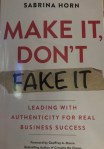
“You don’t need to have all the answers but you do need to have a next step.” Sabrina Horn told us that in her great book Make It, Don’t Fake It: Leading With Authenticity For Real Business Success. I discuss this with teachers a lot. Some in the teacher development arena will tell new teachers they need to have all the answers. This advice includes faking it and not letting students know the teacher doesn’t know the answer. This is very bad advice. Just as this is not true in Sabrina’s world as a CEO, it is not true for teachers. Some of the best labs and lessons I had as a teacher were when something didn’t go as planned. I would say, “I have no idea why this didn’t work, but let’s all dig into this and figure it out together.” The students and I learned so much from this humble act. It was so much fun and I was modeling an important leadership skill for my students. All leaders would do well to learn this.
This humility does not show weakness or confidence. It shows we recognize something pretty obvious – no one knows everything. The great leaders know what they don’t know and understand there are things they don’t know they don’t know. But, learning from and with others, asking questions, and asking for help are hallmarks of an effective and humble leader. This growth mindset modeled curiosity, collaboration, and a plan for discovery with my students. This same mindset also worked for me as a principal and superintendent. Many times the next step might be pausing to learn the answers together as a team.
Great Collaboration or Great Competition

I am reading the great book Founding Brothers: The Revolutionary Generation by Joseph J. Ellis right now and he spoke of the “odd couple” of the revolution being Thomas Jefferson and John Adams. Both were very different in their tactics and personalities, and were unlikely friends. Before Washington’s presidency, they collaborated to solve multiple political issues. Then, as Ellis put it, the “great collaboration” turned into the “great competition” because the two intimate friends soon found themselves running for the presidency against each other. Probably no relationship in this country’s history carries as much baggage as that of John Adams of Massachusetts and Thomas Jefferson of Virginia.

This got me to thinking about the age old topic of how much competition is healthy. Pursuing individual goals alongside others can, at times, lead to counterproductive behaviors that can be harmful to both sides. This sense of competition can shift teammates (let’s consider Jefferson and Adams teammates of our democracy) focus from improving themselves or the vision of the organization to defeating a pseudo-opponent, which can lead to sabotaging behaviors. We saw these sabotaging behaviors in the case of Adams an Jefferson and I’ll bet you have seen this happen to others or yourself.
In a work setting, having read extensively about this topic, I believe in providing individualized performance statistics can help reduce competitiveness as well as its negative consequences. Competition at its best helps us to be better. At its worst, it can create unhealthy self-comparison or judgment. I am not advocating for doing away with competition. I am, however, advocating for us to not let collaborators becoming competitors stifle progress, both for the individual and the organization. Competition can actually change our world view. Never forget, everybody in an organization has something to say and undoubtedly has some value to contribute. Do we see the world as a place to grow and collaborate with others?
Keep Getting Better By Always Striving To Go Somewhere New

Yesterday marked the 18th week of reading Mindset Mondays With DTK by David Taylor-Klaus (DTK). Chapter 18 entitled “Work On Yourself” did not disappoint. Interestingly, I am reading Peter Frampton‘s incredible book Do You Feel Like I Do? A Memoir right now, too, and there are some parallel’s. DTK told us that “When we look at where others are in their life and compare that with where we are, it’s not apples to apples” (DTK, p. 146). One of the things that really stuck out in Frampton’s (I really want to become friends so I can call him Peter) book was how much he valued getting to play, collaborate, and learn from other superstars in the business. Never once do you ever get the hint of him comparing himself to Ringo Starr, George Harrison, David Bowie, Bill Wyman, Jimi Hendrix, Billy Preston, Kenny Wayne Shepherd, B.B. King, Rick Derringer, Robert Cray, Roger McGuinn, David Hidalgo, or Dean DeLeo, just to name a few. Now, regardless of what kind of music you like you better have recognized a couple of names on that list.
Frampton is so humble that he always believed the collaborations were chances for him to learn and get better. This is a huge takeaway for me from the book. Others would have just seen these opportunities through vanity’s eye. He used the metaphor (and you know how I love metaphors) of being in a fishbowl at a very young age of English rockers. Frampton went on to say, “I’m asking about touring and what they do and everything, so I’m learning how a successful band works. But just seeing this person [Bill Wyman] who’s a Rolling Stone, who’s now my friend, and he’s friends with my parents and was this regular guy – so okay, I don’t have to be something other than who I am. It was kind of like an apprenticeship. I was learning as I went, and getting these amazing opportunities along the way” (Frampton, p. 33). We need to make use of our “apprenticeships” to become the best we can become. That best needs to be authentic. We have to find our own sound, pun intended. Frampton described it like this: “I just wanted my own style. I wanted to be one of those guys who,they play one note, and you know who they are” (Frampton, p. 59). Frampton was, and still is, working to get better each day.

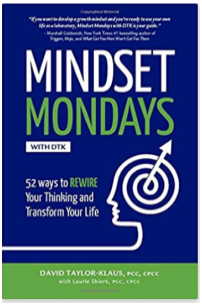
“Humility is not thinking less of yourself, but thinking of yourself less.” ~ Peter Frampton
p. 261 in Do You Feel Like I Do? A Memoir
Finally, I love how DTK tied it all together at the end of Chapter 18 by saying, “Comparing how you are being, what you are doing, and what you are accomplishing in any given moment to your best in that moment is the ONLY valid comparison. It’s the only comparison that serves. It’s the only comparison consistently worth making” (DTK, p. 147). Frampton says he is one lucky guy, but I do not think that luck has anything to do with it. What I learned from Peter Frampton was humility, perseverance, passion, purpose before ambition, collaborative learning, working hard, and always reinventing yourself.
“Getting It Right” Before “Being Right”
 “Pride goeth before destruction, and an haughty spirit before a fall” (Proverbs 16:18 KJV). A good daily growth exercise to read a chapter of Proverbs every day each month. There is a lot of wisdom to be gained from King Solomon. The difference between “getting it right” and “being right” with this statement, is not to suggest that we are more often than not wrong in our thinking. Despite the religious origin, people use this nowadays without religious overtones. People can say this simply as a warning not to be too arrogant.
To me “getting it right” before “being right” means having humility and an ability to consider all sides of an issue or question. Being humble does not mean that you diminish your value or take a subordinate position in terms of presenting your ideas or perceptions. It does, however, as a leader, mean than we should listen to others’ ideas before always presenting our own. And acknowledging when those ideas are better than our own. True humility is a sign of wisdom, knowledge, confidence, and strength.
“When given the choice between being right and being kind, choose kind.” ~ Dr. Wayne Dyer
“Getting it right” is a core value I practice to remind myself that making a contribution as part of a bigger team means that you have the humility to accept that others also have something worthwhile to contribute. I truly believe there is no such thing as an “expert.” But, I do talk about the “collective expertise” in the room all the time. We should all strive to be an important part of a “collective vision.” When we give up the need to always be right, we communicate and listen on a deeper level, with more understanding and acceptance, and with less judgment and resistance.
Advanced Consulting
 Advanced Consulting: Earning Trust at the Highest Level by William A. Pasmore
My rating: 5 of 5 stars
When it comes time to write my end of the year blog post about the top books I’ve read in the last year, this book will be in the top tier of that list. As a person who does leadership training and coaching/mentoring of leaders, I learned a great deal from spending time studying every page of the this insightful book. My copy of the book looks like what my mom always told me a Bible should look – used. I have the pages dog-eared, highlighted, notes in the margin, and the spine is all broken back, and this book will continued to get used in a reference capacity.
Advanced Consulting starts the reader off with a great story, as great leaders do. Then the reader is reminded that we should not always be looking for the most glaringly obvious things to fix, but the opportunities unaddressed that would slip up. This book drove home the fact that, “Every change is an experiment” (p. 111) and that “More pressure won’t produce progress, less pressure and more understanding may” (p. 109). This kind of candid and authentic information from Bill Pasmore helps us to understand why he argued there is no perfect knowledge in the real world. That is why this book is so timely right now in these uncertain times with the COVID-19 Pandemic. There are things, like this, that cannot be predicted, and this book gives us incite in how to help leaders to find ways to work interdependently to find solutions.
Lastly, as a curious person and leader, I loved the part of the book where Pasmore admitted, “I learn something I should have already known” (p.143) when accepting a new assignment with a new organization. He reminded us to be genuinely curious and humble. Whether you consult leaders or are a leader (remember, I believe everyone is a leader) you need to read and study the insights of this book.
Mingling At High Tables
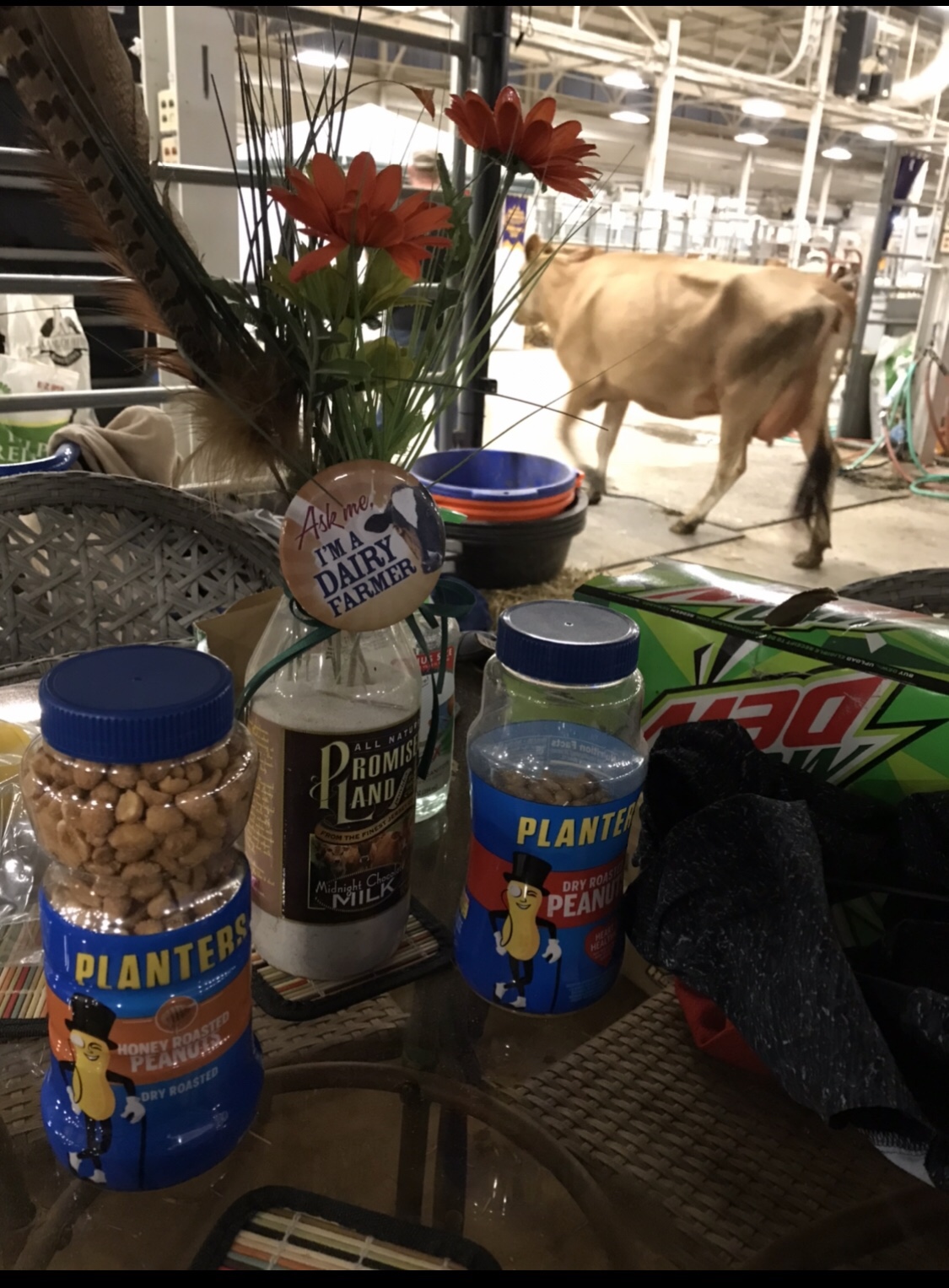
Indiana State Fair
This will be a little different type of post for me, but fits with my belief that the physical environment is just as important to a gathering of any type to the formation of a community as the facilitation or the invites. I love high tables. I love to go to events that have tables. I love to host gatherings that have high tables. There are many advantages to to using high top tables that are many times referred to as bar tables, cocktail tables, pub tables, or bistro tables.
If you want to encourage people to mingle, meet and start conversations with others, then high top tables might be the best choice. The big advantage I see is the ability to have an infinite sized group standing around them. With low tables the group size is very fixed. Think about it; if you are at a gathering with low tables and a table only had four chairs and all four are occupied you go to another table. It is awkward, unless you are asked, to pull up a chair. Even more awkward to stand next to the table and talk with everyone else sitting.
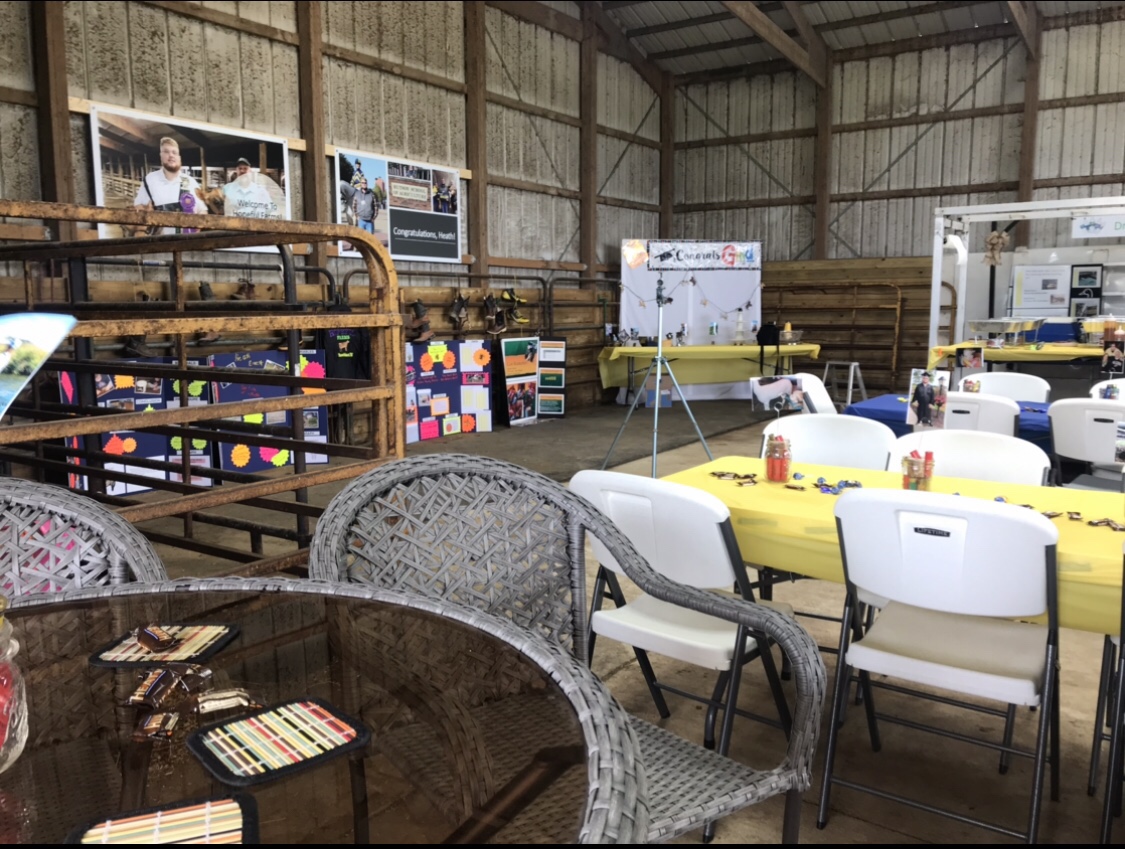 Besides allowing more people to huddle around them, the high tables create a more intimate space for attendees to gather close for engaging conversations that encourage involvement of all. I love the encouragement of people to converse with each other and huddle closer together.
 I am so obsessed with high tables that for our son’s graduation party, which was held in one of our barns, I made sure we had an area for high tables. We had the barn set up for seating for 100 people, but then had an area for high tables. Amazingly, those tables had a large group around them for the duration of the five hour gathering. It was an interesting dynamic, some around those high tables stayed almost the whole time and others came and went. I couldn’t help but watch those who gravitated to the regular table and chairs would sit, eat, and visit for a while and then gravitate to the high tables. I also noticed my son moving throughout the high tables and enjoying all the conversations. At the time the party ended we still had a large group of guests huddled around those high tables.
Then, we could one of the high table and chairs set to our county fair and Indiana State Fair where we were showing dairy cows. We are know for always having peanuts and snacks out for anyone to share. We were amazed at the amount of friends and new acquaintances the high table brought into our show camp. We had such a great time visiting and became believers in the power of mingling at high tables.


leave a comment