Space Shuttle Challenger: 35 Years Ago Today
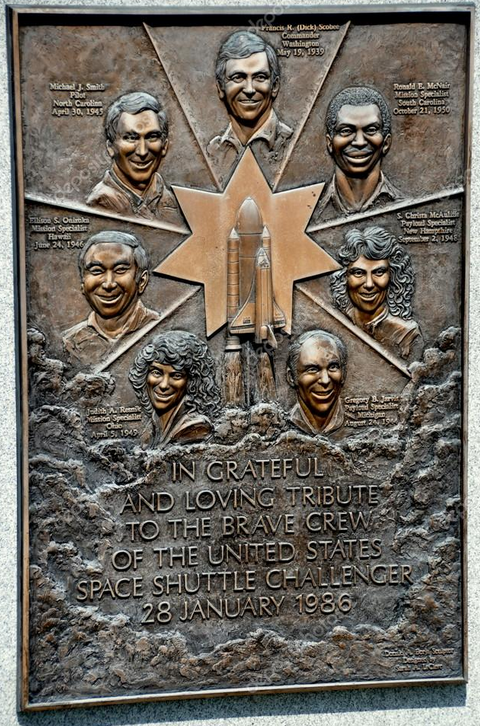
It was 35 years ago today, January 28, 1986, that the United States space shuttle, Challenger, exploded shortly after launch. As I write this it is 11:38 a.m. Easter Standard Time; the exact time that the Challenger exploded. It was certainly one of those “remember where you were” moments in my life. I was in my very first year of teaching and was teaching a class of freshmen agriculture science students. We had turned on the television in the room right before launch to watch. It was such an exciting time because Christa McAuliffe was on her way to becoming the first ordinary U.S. civilian to travel into space. And, she was a teacher, chosen through the NASA Teacher in Space Project.
So, here I was watching liftoff with my students and 73 seconds after taking off, the Challenger exploded. This is the first time I have written about that experience during my first year of teaching. There was no teacher prep class that prepared me for this, no student teaching activity that allowed me to experience something like this, or no case study lesson that would have helped me answer the students’ questions. The quietness of the explosion was very confusing. We all watched in a kind of concerned silence. A few students asked what had happened. I didn’t answer, because I didn’t know. I had chills. I am getting chills right now as I think and write about it. The television reporters announced that the Challenger had exploded and after a few minutes I turned the television off. Honestly, I do not remember what I said or anything the students said after the explosion. I can remember up to and including the explosion, but after that it is very fuzzy. We were all stunned, confused, and devastated.
At 5:00 p.m. Eastern Standard Time that evening President Ronald W. Reagan spoke to the nation and ended his remarks with some of the most moving words ever spoken: “The crew of the space shuttle Challenger honored us by the manner in which they lived their lives. We will never forget them, nor the last time we saw them, this morning, as they prepared for their journey and waved goodbye and ‘slipped the surly bonds of earth’ to ‘touch the face of God.'” He was supposed to be giving the State of the Union address that evening. The State of the Union, for the first time in modern history, was postponed.
As a teacher, another part of what President Reagan said really spoke to me and every other teacher and all the students of the United States: “And I want to say something to the schoolchildren of America who were watching the live coverage of the shuttle’s takeoff. I know it is hard to understand, but sometimes painful things like this happen. It’s all part of the process of exploration and discovery. It’s all part of taking a chance and expanding man’s horizons. The future doesn’t belong to the fainthearted; it belongs to the brave. The Challenger crew was pulling us into the future, and we’ll continue to follow them.” I love the thought of the future not belonging to the fainthearted. This was so true then and is very true today, and will always be true.
So today, as we reflect on that day 35 years ago, let us be brave, look to the future and not be afraid or fainthearted to do our part in advancing the horizons of this great world we live.
“I am what I think that you think I am”

“You will become way less concerned with what other people think of you when you realize how seldom they do.”
~ David Foster Wallace
In Chapter 22 entitled “What You Think They Think” of Mindset Mondays with DTK by David Taylor-Klaus (DTK), he told us “…people are generally not thinking of or even about you, they’re generally thinking of themselves” (p. 169). I loved this chapter because it points out something that we all do and all need to stop doing – worrying about what others think. DTK pointed out that we can’t control what others think, and what they think of us is none of our business. And, don’t forget; more than likely they’re not even thinking of you anyway. If we just remember they’re probably not even thinking of us, we can become freed of negative thinking.
“I care not what others think of what I do, but I care very much about what I think of what I do. That is character!”
~ Theodore Roosevelt
We need to worry about measuring up to ourselves, not others. It is an irrational and unproductive obsession to worry about what others think. Sociologist Charles Cooley put it this way: “I am not what I think I am and I am not what you think I am; I am what I think that you think I am.” Part of this is because we are placing undue importance on external validation, so much so that we sometimes place more emphasis on the commendation or disapproval we receive than on our actual actions. We need to do things, say things, and ask things that make sense to us. Let’s not worry about others, but care very much about what we think of what we do.
Hank Aaron: A Pillar Of Baseball

Yesterday we lost one of my childhood heroes, Henry “Hank” Aaron. I will never forget getting to watch him play, in person, as a kid. And, I can still recreate the room, in my mind, sitting with my dad on April 8, 1974 watching the baseball game that everyone anticipated to be “the one.” The one where Hank Aaron hit number 715 and broke Babe Ruth’s record. He did not disappoint that night. That was probably the most famous home run ever.
The part of the story that still has an impact on me was all the hate that surrounded Aaron as he approached the 715 milestone. All of the racial hatred that surrounded that moment, the hate mail, the death threats, and fear of his teammates at that time were just unbelievable. At age 11, I was having trouble processing these stories and, in reality, most of those stories didn’t come out till later, but here was this great man that would not be defined by fear or hate. We have come so far and made great strides in terms of equity, but there is still so much to be done. As we reflect on and honor the life of Hank Aaron we need to pledge our continued resolve on the promising path toward equity.
After his retirement, Aaron joined the Braves’ front office working in a variety of jobs, including player development and community relations. He would always remain a blunt and unflinching advocate for civil rights in this country.
“Each time Henry Aaron rounded the bases, he wasn’t just chasing a record, he was helping us chase a better version of ourselves — melting away the ice of bigotry to show that we can be better as a nation. He was an American hero. God bless, Henry “Hank” Aaron.”
President Joe Biden on Twitter
I’ll end this tribute to Hank Aaron with his 755th and final home run that came on July 20, 1976, when he was a member of the Milwaukee Brewers, off Angels right-hander Dick Drago. His home-run mark stood until Barry Bonds hit his 756th on Aug. 7, 2007. The ever gracious Hank Aaron recorded this message to Bonds that was played on the jumbotron that evening, “I move over now and offer my best wishes to Barry and his family on this historical achievement. My hope today, as it was on that April evening in 1974, is that the achievement of this record will inspire others to chase their own dream.” That was him, always encouraging others to work hard toward their dreams regardless of any circumstance. How about you, are you chasing your dream? Let us not remember this great man for what he did on the baseball field, but for the way he lived his life and the example he set for us. Thanks, Hammerin’ Hank!
Leading Like Yahtzee
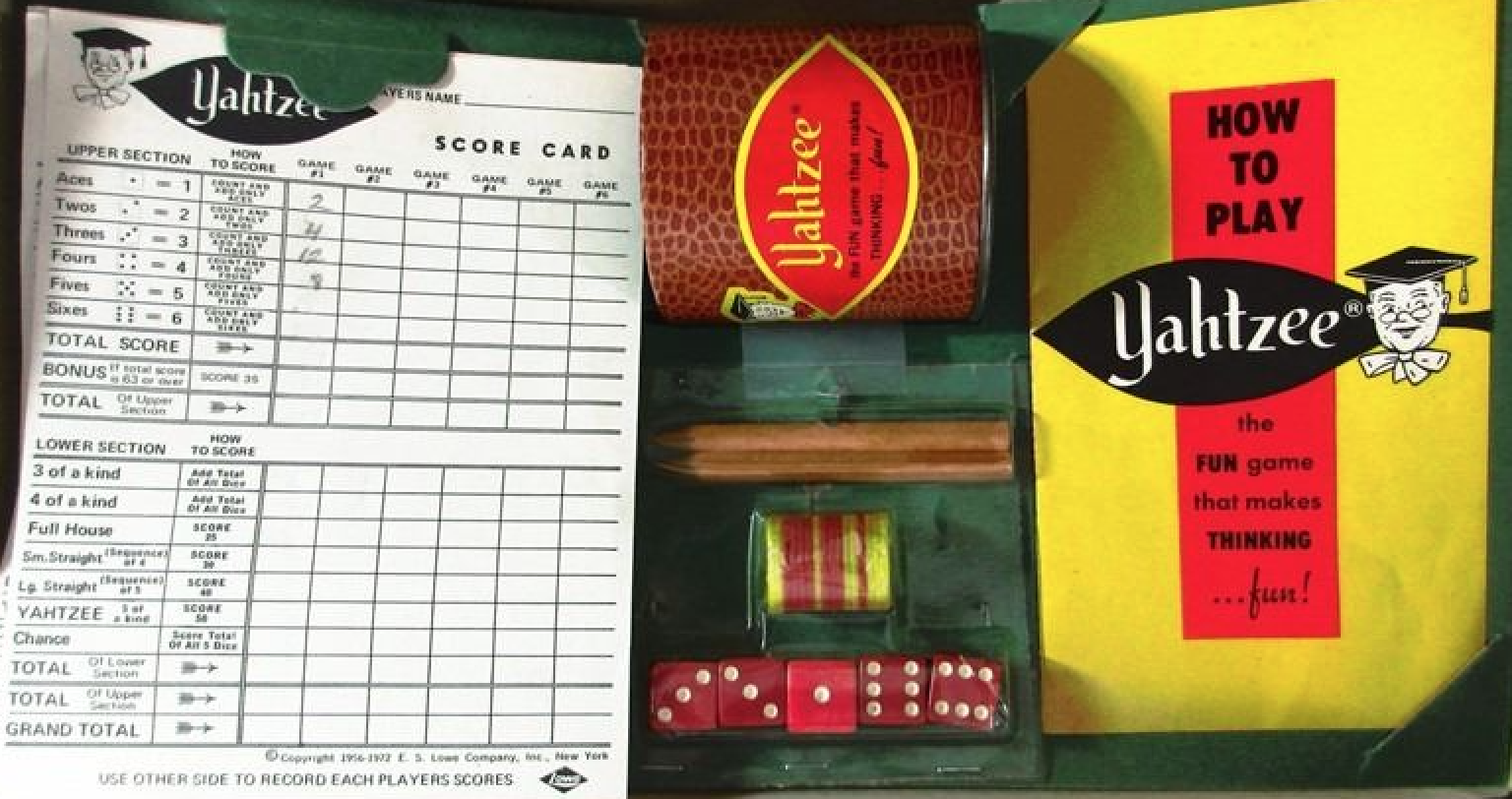
Last week in our first gathering of our newest cohort of Florida 3D Leadership Program participants, we were discussing leadership being like chess or checkers. The participants even played chess and checkers while having the discussion. We had some great discussion related to this considering things like you must know your opponent, players have limited movements, checkers is at a smaller level, checkers and chess have different missions, playing chess is more like be a principal, playing checkers is more like being a teacher leader, and strategic movement/placement. Then, one group discussed that they thought leadership was more like playing Yahtzee. The game of Yahtzee then came up again in another discussion. I finally had to come clean with the group and admit I had never played Yahtzee or even knew how the game was played. Of course after the gathering was over I had to look up the game of Yahtzee and found that the group was right, there are leadership characteristics contained in the game of Yahtzee.
Actually, on the surface Yahtzee appears to be a simple game. Each player gets thirteen turns to complete their score card. The top section of the score card consists of numbers 1 thru 6. You need to roll three ones, three twos, three threes, etc. to get your “minimums.” You could also roll four fives (or four of anything), which comes in handy if you were only able to roll two threes on a previous turn. The idea on the top section is to score at least 63 total points, so you can get the 35-point bonus. If you get a “Yahtzee!” you score 50 points. That’s when you get all five dice to be the same during your turn. Some players focus solely on getting Yahtzee at the expense of everything else. Some people really work hard count on getting the Yahtzee. From my studying, however, a balanced scorecard is more beneficial to winning the game. Balance is important in leadership as well. In education for example there must be balanced effectiveness in governance, financial health, student performance and achievement, or teacher effectiveness. Concentrating on any one of these and forgetting the rest would be disastrous to the school.
Yahtzee seems like a game of chance. It’s much more. It’s a game of decisions and imperfect trade-offs. Wow, doesn’t that sound a little like leadership. So, there is actually some genius in comparing leadership to the game of Yahtzee. We must at some point fully form our approach to decision making. Success, failure, decisions, and sacrifices are in play with every turn while playing Yahtzee. Excellent practice for leading in real time. The game of Yahtzee is completely random. But, as leaders we know that sometimes completely random things happen. Therefore, something completely random and driven by chance can be, as we can learn from playing Yahtzee, be managed within a solid set of priorities and strategies. Do you have other ways you would compare playing Yahtzee to leading effectively?
Irrational Exuberance
As an artistic leader versus being a technocrat, I have always been that one focusing on how great things were going to be; how great that lesson I just planned would go, how that next webinar would go, how many gazillion people would want to be part of a new leadership program, or how much everyone would love that latest workshop activity I just planned. Sometimes, because of this focus, I am viewed as not being detail oriented enough, or not being realistic enough. Some of that might be true, but as David Taylor-Klaus (DTK) pointed out Chapter 21 of Mindset Mondays with DTK entitled “What Could Go Right?”, nothing can ruin an organization quicker than not planning for success.
I’ve actually seen and experienced this with new schools that weren’t prepared for the large number of students who enrolled. It is tricky to not be prepared for great things. Without thinking through what could go right, we won’t be ready to handle great things when they happen.
“Stop being afraid of what could go wrong, and focus on what could go right.”
~ Unknown
DTK pointed out that companies buckled under the pressure of not being able to handle what Alan Greenspan called, “irrational exuberance,” during the dot-com era. Bottom-line: we must focus on what could go right. I like the quote above because while we need to have operational awareness of challenges and obstacles, we must not fear them. What are the next things that will go right for you?
Tomorrow. And The Day After Tomorrow.

I am reading a great novel right now about an alien from the planet Vonnadoria who takes over the body of Professor Andrew Martin. I’m not going to tell you much more than that about The Humans: A Novel by Matt Haig because I would recommend reading it and I don’t want to spoil it for you. What I can tell you is that it is eye opening to think about some of the stupid things we do, or don’t do, when seen through the eyes of a much more advanced species. Just to give you a for instance, have you ever thought about the fact that contemplating about the weather is the chief human activity?
This morning as I was reading I was struck by something the alien said, “I mean, this was the species whose main excuse for not doing something was ‘if only I had more time.’ Perfectly valid until you realized they did have more time. Not eternity, granted, but they had tomorrow. And the day after tomorrow. And the day after the day after tomorrow. In fact I would have had to write ‘the day after’ thirty thousand times before a final ‘tomorrow’ in order to illustrate the amount of time on a human’s hands” (p. 197). This made me think that sometimes we don’t appreciate “tomorrow” near enough. I realize that we don’t know for sure if we have tomorrow, but I have to say, the odds are in our favor. Research even shows that putting something down, taking a break from a creative session, or just sleeping on something can help our imagination or creativity. So why don’t we do it?
The alien went on, “The problem lying behind the lack of human fulfillment was a shortage not just of time but of imagination. They found a day that worked for them and then stuck to it and repeated it, at least between Monday and Friday. Even if it didn’t work for them—as was usually the case—they stuck to it anyway. Then they’d alter things a bit and do something a little bit more fun on Saturday and Sunday” (p. 197). If you’re like me when I read this, I felt a little stupid. Kind of spot on, don’t you think? By the way, the alien proposed a pretty good solution when he said, “One initial proposal I wanted to put to them was to swap things over. For instance, have five fun days and two not-fun days. That way—call me a mathematical genius—they would have more fun” (p. 197). So, why do we, as a species, admittedly, have a lack of imagination?
We need to think beyond fulfilling the bare minimum requirements with what we bring to the table. What can we do that is a bit more memorable, with a bit more flavor and a bit more of an impact on everyone, the basic just won’t cut it. We’d be better off experimenting. The cost of bringing something new to the metaphorical table is, of course, you’re going to make someone uncomfortable, change someone’s routine, or upset somebody. The trade-off for experimenting with new ideas, creating new ways of doing things, or working on something new is that you will make something valuable and unique, but what you create won’t be for everybody.
Having just said that about being creative and experimenting I have to include the last thing the alien said about our week, “But as things stood, there weren’t even two fun days. They only had Saturdays, because Mondays were a little bit too close to Sundays for Sunday’s liking, as if Monday were a collapsed star in the week’s solar system, with an excessive gravitational pull. In other words, one seventh of human days worked quite well” (p. 197). As I write this on Sunday morning I’m thinking, yep, that’s about right. If we want to be comfortable and blend-in, doing what we’ve always done is the safe bet and a great way to do just that. But if we want to stand out and do things more uniquely, we must embrace the fact that we’re going to be uncomfortable and make others uncomfortable doing so. We must understand and be okay with the fact that the cost of valuable and unique might be turning off somebody, somewhere, who doesn’t want to be uncomfortable themselves, or who don’t believe their comfort should be the cost of a great idea.
Do you have style?
“Madison’s style was not to have one” (Ellis, 2002). I’m reading Founding Brothers: The Revolutionary Generation by Joseph L. Ellis and this was a statement by the author about our fourth President, James Madison. From Ellis’ book and now digging a little deeper about Madison I find that Madison showed a blend of abilities in all he did. All of this got me thinking, however, is it possible to not have a style. I actually do a teacher leadership session on developing and embracing your own style. So, my initial thought here is that to not have a specific style, might just be a style. Hopefully you’re catching what I’m pitching.
Some have called James Madison a philosopher statesman. After all, he was one of the principal architects of the constitutional and political institutions that continue to shape our nation’s life today. Madison could take ideas and put them into action – a hallmark of American citizenship. Leadership is the ability to persuade others to follow a certain path. Leadership as a concept was demonstrated in the life of James Madison through intellect, fairness, hard work, and pursuit of excellence in everything that he did. Therefore, we could list all the leadership traits that Madison had, and there were many, but that still doesn’t answer the question of style?
To answer this question I had to uncover what is even meant by personal style. After reading quite a bit about style, I concluded it is how a person influences their everyday life, how they look, behave and present themselves to the world. True style is a very personal thing. Style is a personal consideration. Nor does style belong to the crowd or to the norm. Style is a natural expression of the self.
Madison possessed the ability to come up with a solution to a complex problem. His leadership skill in this department was tested during the American Revolution and the time when the United States government was still in its infancy. For all of his leadership acumen, however, Madison lacked many of physical and oration attributes we are obsessed with today. He was only 5’4” tall, pale, and was said to have trembled when he delivered his first inauguration speech. Madison’s long list of exemplary leadership traits, understanding that leaders are followers first, and his desire to be a lifelong learning enabled him to develop out of mediocrity to be considered a Founding Father.
So, is it possible to not have a style? I don’t think so. Here’s how I see it: Who we are includes our style. Our style reflects the coherence between all levels of the self – what we desire, what our habits are, our thinking, our intentions, what we say and what we do, as well as how we reflect. Glad I had this chance to reflect. Do you have any thoughts on this?
What Lies Beyond Your Imperfections?

Funny how things work out. I’m reading the great book Flawsome: The Journey To Being Whole Is Learning To Be Holey by Georgia Murch right now. Her book teaches us that being the best you you can be requires us to accept our flaws. As she said, “Your unique flaws draw people to you.” I love that and have been enlightened over the years to understand that people want me for who I am, not someone else. It is about being authentic.

So what’s funny? I’m also reading Mindset Mondays With DTK by David Taylor-Klaus (DTK). DTK’s book is is set up in 52 chapters set up to be read on, you guessed it, Mondays. This week I’m on Chapter 20 entitled Beyond Imperfections. So, some of the same stuff I was learning from Murch. DTK told us that trying to present ourselves as perfect is inauthentic. I have known organizations that have also got caught up in believing they are perfect. DTK wrote, “The fantasy that we’ll become perfect leaders, perfect partners, or perfect people is just that – a fantasy.” Remember, no organization or person is perfect. My imperfections make me, well, me.
So by recognizing our flaws and imperfections we can also find and develop our perfections. This is why I am such a believer in finding our strengths. Let’s recognize our weaknesses and grow our strengths. You be you!
Remembering Tommy Lasorda Leadership
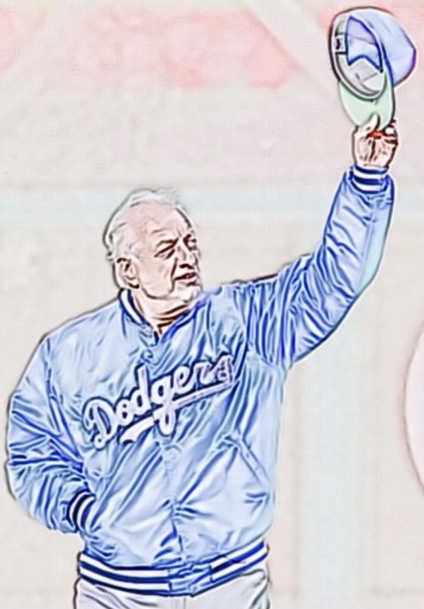
The world of baseball lost a great one this past Thursday with the passing of Tommy Lasorda at his home at the age of 93. He won his first World Series as a major league manager the year I graduated from high school. I remember his antics on the field and off the field. He was such an enthusiastic and animated person. His players loved and respected him. Under Lasorda’s leadership his teams won 1,630 games in the major leagues. This figure includes his postseason wins as well. He was at the helm of the Dodgers for seven division titles, four World Series appearances and two world championships, in 1981 and 1988. After he retired, he managed the United States baseball team to gold at the Sydney Olympics in 2000. Lasorda had said in interviews that the Olympics gold medal was won of his proudest moment.
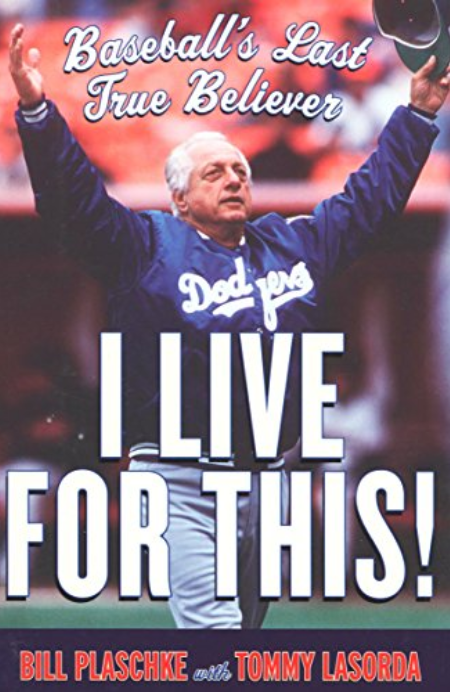
The point I want to make in this post comes from Lasorda’s great biography, I Live For This: Baseball’s Last True Believer. Lasorda told of his experience playing for the Triple-A Denver Bears and learning from manager Ralph Houk, who became his role model. Lasorda reflected, “Ralph taught me that if you treat players like human beings, they will play like Superman.” He went on to write, “He [Ralph Houk] taught me how a pat on a shoulder can be just as important as a kick in the butt.″ Tommy Lasorda had a gift of knowing what his players needed. Lasorda was a human-centric leader. Some leaders treat their people as resources, to be used. These same leaders see their team members as mere handles to be cranked to complete tasks. The leaders I have most respected, on the other hand, treat others like human beings, form relationships that are about the whole person, going beyond just treating people as a supply. It’s about being people oriented and people centered.
The loss of Tommy Lasorda leaves a big void in the world. Let’s remember him by honoring his legacy of treating his players like human beings and make sure we are doing that as leaders as well.
Insight From All Vantage Points

In leadership development I talk a lot about using all Vantage Points©️ (MG Taylor Corporation) in order to get to the right decisions when making changes, developing new initiatives, or any decision that involves people. The Vantage Points Model©️ has us making sure we have insight from seven distinct, yet not mutually exclusive, vantage points: philosophy, culture, policy, strategy, tactics, logistics, and tasks. In other words, we can never understand the philosophy of a system or enterprise until we are immersed in the tasks that comprise its daily functions. Conversely, only immersing ourselves in daily tasks can blind us to culture and philosophy, or cause us to accept it too casually. I am such a believer is using the Vantage Points Model©️ as a guide for all decisions. Any decision should have representation from all seven areas before being finalized. I contend that if we always get all seven areas represented the initiative or change had a much greater chance of succeeding. In schools, for example, I have seen good ideas fail because someone dictated the idea to teachers without finding out that the plan for implementing just wouldn’t work when actually used in the classroom.
Last night on Blue Bloods (I really like that show) Erin Reagan, played by Bridget Moynahan, after prosecuting a case had to make a tough decision about a sentence recommendation. She was agonizing over it trying to make the decision all by herself. Finally, her wise New York City Police Chief father, Frank Reagan, played by Tom Selleck, gave her some of that great fatherly advice. He advised her, “If you gotta make a decision that affects people’s lives you might want to talk to all the people whose lives are going to be effected by that decision.” Bingo! Exactly the point of making sure every decision is viewed from all vantage points.
 Byron's Babbles
leave a comment