What Do You Look Forward To?

While reading Rules Of Civility by Amor Towles, I was struck by this comment made speaking of her father by the character, Katey Kontent: “Whatever setbacks he had faced in his life, he said, however daunting or dispiriting the unfolding of events, he always knew that he would make it through, as long as when he woke in the morning he was looking forward to his first cup of coffee. Only decades later would I realize that he had been giving me a piece of advice.” This got me to thinking about how today many people don’t seem to be driven by purpose and passion like in the past. They also don’t seem happy. We’ve always been taught that purpose and passion bring happiness and the desire to get out of bed each morning. What if it takes more than purpose and passion for happiness? What if there is more to it?

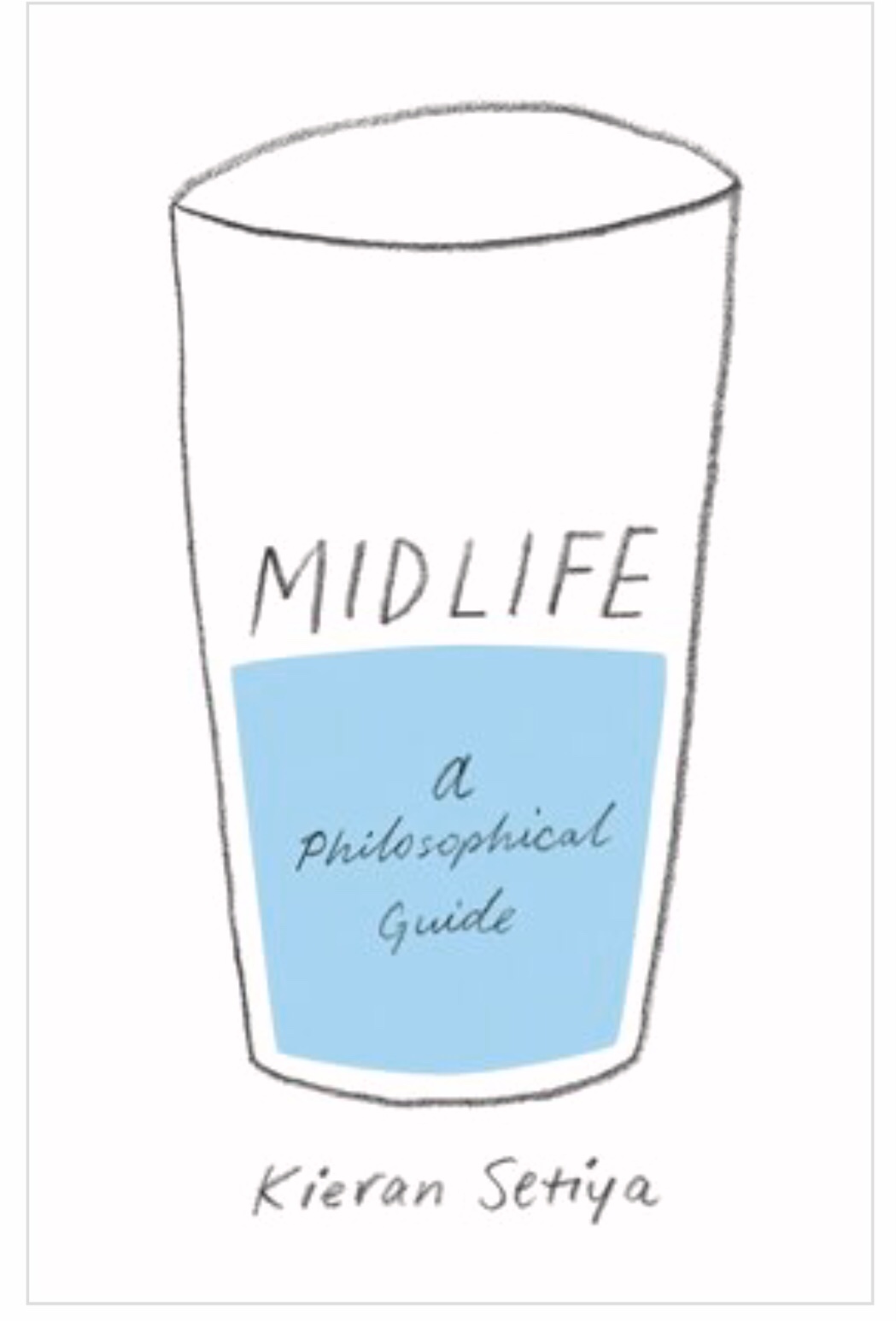
According to Kieran Setiya, in Midlife: A Philosophical Guide, it also takes looking past our own happiness to “something else.” John Stuart Mill, the famous nineteenth century British philosopher, realized that people who are happy always have their minds fixed on some object other than their own happiness. “Aiming thus at something else.” Setiya taught us that “The “something else” that you aim at can be any kind of hobby, interest, or pursuit – like watching baseball, cooking, or collecting stamps. All that matters is that it interests you.” It could also be as simple as looking forward, as Katey’s dad from Rules of Civility looking forward each day to his first cup of coffee. Or, Katey’s looking forward to reading each day.
Mill also realized that chasing his passion of changing the world through social reform had caused him to not recognize many of life’s pleasures that had nothing to do with solving problems. Happiness means learning from Katey Kontent and valuing the aspects of life that don’t involve problems and solutions. For you, as it did for Katey, that might mean reading. Or, it may mean that cup of coffee and newspaper each morning. For me, this has reminded me how important my trip to the barn every morning and evening is to my day. Spending time caring for the animals brings happiness to my day – every day. Setiya reminded us that “What matters is making time for passions that involve more than addressing life’s misfortunes.” What are the things that make you happy and keep you excited to get out of bed each morning?
The Gap Between Intent & Impact

I love it when what I have been reading in one book informs what I have been reading in another, thus causing me to pause, reflect, and collect my thoughts. One of the passages that really resonated with me from Beverly Kaye and Sharon Jordan-Evans in the sixth edition of Love ‘Em Or Lose ‘Em was recognizing “the gap between intent and impact.” Many times I view this as are you really doing (impact) what you say you are (intent)? Thus the tale of the two gaps: some just talk with no intention of acting, which brings no impact and others talk the intent and just don’t do the right things for the impact to happen. What I’ve found is, the leaders who bring real impact walk the walk. They just “do” without having to tell you about it. This in turn brings up another gap discussed by Beverly and Sharon: “The gap between espoused values and practiced values.” Make no mistake, these two gaps are very real in organizations and I am going to guess you have experienced them. What resonated with me was the notion that if we really want to love ’em (those we serve) then mass customization of how we deal with those we serve does not work. There is no one policy for the workforce anymore. We need to allow for everyone to be a part of determining what is fair and right for them.
I believe we even need to use this mindset when working with students in our educational environments. I remember as a high school principal thinking how ridiculous it was to have students who were in many cases the bread winner of the family, maybe raising a child of their own at home, or caring for the younger siblings while mom or dad were at work have to ask for a pass to go to the rest room. I know, there has to be accountability, but I believe in having high standards and helping students develop their own thoughts on what is right for them. What I have found is, is that the majority of students will rise to a high standards and want that kind of accountability. I wanted our school to treat the students like adults – because in many cases they had become adults. It is our job to help them determine what is fair and right for them. In the end, won’t this help them understand and learn to do this when they are are in the workforce and leading others?
Furthermore, in this week’s Mindset Mondays with DTK lesson in Chapter 27 entitled “Love What You Do,” David Taylor-Klaus (DTK) told us “Paying attention to my impact has always helped me build my practice in a way that trying to fill the roster has not.” He went on to say, “It’s so easy to focus on getting through the list, yet when you choose to focus on what you can love, it’s amazing how much easier your checklist becomes.” Therefore it is much more important for us to be doing what we love as opposed to checking tasks off a checklist. Most importantly, finding what we love is not just important to us it is crucial to us creating an impact for those we serve. This is really essence of of Beverly and Sharon’s “loving ’em.” Are we removing the gap between intent (espoused) and impact (practiced)? Do you know what your love is? More importantly, do you know the love(s) of those you serve? If you don’t, Beverly and Sharon told us to, “Ask so you don’t have to guess.”
Do Not Forget The Small Talk

I have finished two great books this week that have caused me to do a great deal of thinking about how we communicate with each other and how, now on day 351 of the global pandemic, we need to be communicating with others. Pre COVID we had ample opportunities to casually chat with our colleagues. Now, much of the time we pop up on a screen and must talk to everyone, or not at all. In A Gentleman In Moscow by Amor Towles, the protagonist, The Count Alexander Ilyich Rostov, exclaimed “We all have many small details about ourselves that we can put together to make a mosaic of who we are.” These small details are important to relationship building. The Count used conversation to elaborate on the smallest of details. Even in our virtual interactions we must build in time (or let it happen organically) for small talk. This does not mean asking a single question that everyone in the group must answer – that is not small talk.

Growing up we raised a lot of White Pekin Ducks. It was always interesting to me that when a group of ducks got separated from each other, once they got back together there was a great deal of chattering and quacking like they were getting caught up on all the latest news. It was amazing to watch and listen to this loud interaction. Boy would I have loved to speak White Pekin Duck. Ducks are like us, very social. In fact, they do not like to be alone and should never be raised as singles. I believe we have found how much we are like that. Therefore, I always like to get on to virtual gatherings I facilitate about 15 minutes early and will leave the room open for a short time afterward. This mimics the time that we all do small talk before and after meetings. This gives us a chance to sort through what was called “our vast catalog of casual questions” in A Gentleman In Moscow. This needs to be unstructured time to be worthwhile. Many leaders have real trouble just letting this happen naturally.
As chair of board for the National Association of State Boards of Education (NASBE) I have had to get comfortable with meetings starting a little late (maybe 10 minutes) because participants from all over the country are Zooming in and want to talk about the personal things we would all talk about if in the literal room together. Clearly, there is a balance to reach, but if I didn’t allow for this it would be irritating to the members. We must create space for small talk.
If we use the interrogatives for conversation, we can learn so much about those we serve. Sharing a space is not always sharing an experience. Allowing space for small talk will also allow for us to, as Beverly Kaye and Sharon Jordan-Evans told us in the sixth edition of Love ‘Em Or Lose ‘Em to “Ask so you don’t have to guess.” These interactions help us to understand how to love those we serve. I love how The Count did it in A Gentleman In Moscow. He used the phrase “So tell me…” Don’t you love it when someone starts with “So tell me…” instead of “Let me tell you…”?
Finally, if you’re one that needs a little more structure, ask questions that those gathered will have an opinion about. But, don’t forget, you may not have the same opinion. This is okay and fun. Let’s not forget just how important small talk is to really knowing those we are associated with.
Flavors of Motivation

I loved chapter 26 in Mindset Mondays With DTK by David Taylor-Klaus (DTK) entitled “Seek to Build” this week. He started with “There’s the flavor of motivation that’s irritation, a move away from something; and the flavor that’s inspiration, a move towards something” (p. 193). I had never really thought about motivation in this light, or flavor if you will (pun intended), before. The bottom-line here is, however, that both being motivated by irritation or inspiration can both create positive ends. As a creative innovator, I thought about being motivated to create change because of the irritation of the thing, policy, or procedure that needed changing. This is a good thing. It’s why, many times, products get improved. Conversely, inspiration does the same thing. I am reminded of some of the blog posts I was motivated to write in the last week came from the inspiration of books I am reading.
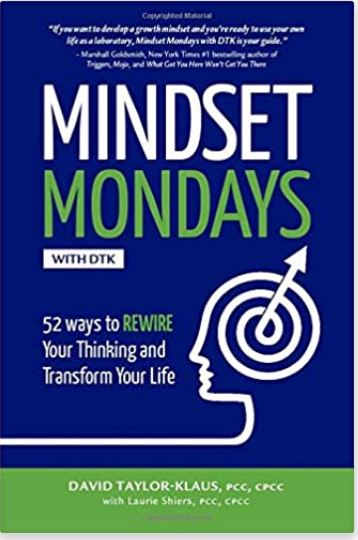
Therefore both ways of being motivated can be powerful for us. Many times the two flavors of motivation are blended together like a chocolate and vanilla twist ice cream cone. As DTK taught us, “Judging inspiration as good energy and irritation as bad energy deprives you of a valuable source of motivation. Don’t vote. Both flavors of motivation propel into action” (p. 194)! So, use the energy created by the flavors to create positive change in all you do and for all those you serve.
Elegant Currency

Successful leaders identify by asking questions, the critical needs and issues of those they serve. The greatest leaders that I’ve experienced are highly creative on currencies and concessions. Currencies are tangible or intangible resources that our team members value. When assessing the potential value of a currency, keep in mind that currencies tend to have value in proportion to how well they satisfy the needs of the other party. In other words, what you value highest, may not be of value to me at all. If “prime currency” is money, then there is also the need to provide for “elegant currency.”
Again, “elegant currency” is a concept used to describe something that may be of importance to a person, however, it has no value for someone else. In negotiating a job offer, for example, a person can give the elegant currency to someone else at no cost or loss on their side. This can be a great tool when there is no room to budge on a salary. Don’t forget this is also an important part of retaining top talent as well. For example, I offer my time each year to work with the Indiana House of Representative’s interns. Those that are interested in education and education policy can take advantage of the experiences I’ve had and become a part of my network. The leadership of the internship program are developing this network in other areas besides education, and it really has become an elegant currency for some of the interns to expand their knowledge at no cost to a very limited budget.

I was reminded of just how important elegant currencies are when reading in the sixth edition of Love ‘Em Or Lose ‘Em by Beverly Kaye and Sharon Jordan-Evans. We all possess Elegant Currencies. Think about the many elegant currencies held by the people you work with that you are totally unaware of and how incredibly powerful it would be if we all shared and connected in more meaningful and helpful ways with one another. What elegant currency might you have, or could offer, that could just be the deciding factor of retaining one of your rock star team members?
In your career it is important to understand what may be elegant currency for the people you work with and what is elegant currency for you. We must all go to the trouble of learning what the elegant currencies we personally need, those needed of all in our organization, and any individuals we might be recruiting. Are there those you might recruit or a deal you might close through an “elegant currency transaction”?
What If?

I love it when authors come out with new and revised editions of their books. I am reading Love ‘Em Or Lose ‘Em by Beverly Kaye and Sharon Jordan-Evans for the sixth time right now. I’m reading the new and revised sixth edition that will be released on March 2nd. TIP: if you want it now and just can’t wait, you can get the sixth edition in audiobook version from Audible here. This new edition has content linking inclusion and engagement. This edition is awesome and I need the new content and the sixth time reading for a refresher.
One of the things that Beverly and Sharon pointed out is that we need to embrace or be embraced as that employee that questions things. They used the example of my heroes, the Wright Brothers. They questioned the notion of whether humans were meant to fly. Our authors encourage us to respond to these notions with “What if?” instead of “No!”. “What if” can enable desired outcomes while remaining discovery driven.
I propose the single greatest obstacle impeding the transition from a “what is” or “no” attitude to a “what if” driven community is allowing ourselves to fall into the trap of either/or thinking. The best leaders I’ve experienced realize there’s rarely a good reason to only look at one good option or pit one option against another. Great leaders can weigh out the best of multiple good options. The best news for your teams is that “What if?” doesn’t require special skills or abilities, just the desire to question of what presently is exists is as good as it can be.
So next time you find yourself preparing to say “no,” why not respond with “What if?” Be a creator, not a copier!
Focusing On Our Why

This week’s Mindset Mondays with DTK lesson in Chapter 25 was entitled “Discover Your Why.” David Taylor-Klaus (DTK) was pointing out how important it is to find our “why.” When finding our “why” DTK taught us that “It’s something you have to sit still and ponder until it becomes clear to you” (p. 188). This made me think back to when I was a kid and I would take a magnifying glass on a sunny day and focus the sunlight on a piece of paper, burn a hole in it, and catch it on fire. The magnifying glass is the metaphor for our “why”; focusing our energy like my magnifying glass focusing the sun’s energy.
The power of our “why” is similar to the energy of sunlight focused through a magnifying glass. The Diffused sunlight provides warmth and energy for plant photosynthesis, but when its energy is concentrated—as through a magnifying glass—that same light can set fire to paper. Focus that energy even more, as with a laser beam, and it has the power to cut through steel. As DTK said, “That [our “why”] awareness is brilliant energy available to you to create something new, something next, something more” (p. 190). Our “why” means something as powerful to our lives as my magnifying glass and laser beam metaphors.
Explore And Heighten On President’s Day

Interestingly, the holiday we celebrate today is officially Washington’s Birthday, not President’s Day. In 1971 when Congress passed the Uniform Monday Holiday Law, Washington’s Birthday (February 22) was moved to the third Monday in February. This put the holiday in between Abraham Lincoln’s birthday (February 12) and Washington’s. It also gave us another three day weekend – the intent of the Uniform Monday Holiday Bill. There was a push to change the name from Washington’s Birthday to President’s Day, but that did not pass – we just all call it President’s Day.
As I take a moment to reflect on this day, I remind myself of advice I give to others: study humans, not heroes. I believe this is important in teaching history and civics as well. While we have the advantage of hindsight when studying the past, always remember those who lived it, did not. One of my favorite authors, David McCullough, put it this way, “Nor was there ever anything like the past. Nobody lived in the past, if you stop to think about it. Jefferson, Adams, Washington—they didn’t walk around saying, ‘Isn’t this fascinating, living in the past?’ They lived in the present just as we do. The difference was it was their present, not ours. And just as we don’t know how things are going to turn out for us, they didn’t either. It’s very easy to stand on the mountaintop as an historian or biographer and find fault with people for why they did this or didn’t do that, because we’re not involved in it, we’re not inside it, we’re not confronting what we don’t know—as everyone who preceded us always was” (McCullough, February 15, 2005, in Phoenix, Arizona, at a Hillsdale College National Leadership Seminar on the topic, “American History and America’s Future.”). We need to remember that history was not created in a vacuum and could have gone a bunch of different ways.
As we reflect on our Founders and past Presidents we need to remember they were human beings, just like us, with flaws, sins, and both terrible and good qualities. We’ve had leaders do some terrible things and we need to study those things and call them out to make sure and not repeat them. We also need to learn, grow, and continue to improve and get better. In the world of improvisation there are the five syllables “explore and heighten.” This is where we usher in our imagination, where ideas are born, where our power finds its source, and where we discover what’s waiting for us. I believe this to be the genius of our American community. We know everything can and should be improved upon. So, on this day of reflection, let’s renew our resolve recognizing our errors of the past and continued improvement for making the world a better place for ALL.
Leading Like Valentine’s Day

Because Valentine’s Day is on Sunday this year, I hope you are spending a Happy Valentine’s Day with those you care most for. And, I hope that tomorrow you will continue to lead like Valentine’s Day with those you work with. The American clergyman, and personal effectiveness writer and speaker, Norman Vincent Peale, considered a burning conviction and contagious enthusiasm to be the most critical factors in successful living and leadership. You, no doubt, probably have someone on this Valentine’s Day you have that kind of passion for. How about in your professional life? Do you have a cause, a passion, or a why that makes you contagious with enthusiasm? Do you have a burning conviction for those you serve?
“Your enthusiasm will be infectious, stimulating and attractive to others. They will love you for it. They will go for you and with you.”
~ Norman Vincent Peale
Valentine’s Day makes us think of love. What comes with the thought of love? Passion and desire. Great leaders have passion. Passion for the work they do. They love leading a team to success. Great leaders also have great desire. They desire to lead a successful organization. So be contagious with your enthusiasm and burn with conviction.
Lastly, don’t do like some do in the romantic realm of Valentine’s Day and only show your love one day a year with flowers or a box of chocolate. That’s not what love is. Love is treating people well every single day of the year. Find ways to treat your people well, with respect, and show them your appreciation. Treating people well will inspire them to new heights. Happy Valentine’s Day!
Accessing Our Own Ignorance

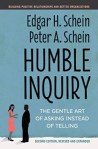
Many times our own knowledge, or love for our own knowledge gets in the way of our ability to grow and learn. We must always remember that we may need to know what others know in order to solve our own problems. I am reading an advance copy of the second revised and expanded edition of Humble Inquiry: The Gentle Art Of Asking Instead Of Telling by Edgar H. Schein and Peter A. Schein. The book reminded me that when we want to influence others we need to “access our own ignorance.” It helps to come to the conversation with a genuine desire to learn; a belief that the other person has information we need in order to be successful. This gives us the potential for new knowledge to emerge that just might enhance our decisions.
If we can open ourselves to learning from others, we can collaborate to help each other. When we access our ignorance we come to conversations both confident about what we know, and humble about what we don’t know. To me, accessing our own ignorance is like becoming a sponge and soaking up all the knowledge and wisdom from those around us. In order to learn through collaboration we must acknowledge that we all need each other to accomplish our goals.
 Byron's Babbles
1 comment